
Industrial Engineering Whitepaper: Precision Spiral & Helical Quartz Tubing
In high-throughput thermal processing, fluid condensation, photochemical synthesis, and metallurgical off-gas digestion, cylindrical straight tubing frequently encounters thermodynamic limitations. The geometry of a spiral quartz tube (also referred to as a helical quartz coil or quartz heat-exchanger sleeve) solves these critical flow-dynamic constraints by drastically increasing fluid contact duration and radiant surface area within a compact spatial footprint.
As an internationally verified manufacturer headquartered directly in Donghai County—the global center of high-purity natural silica synthesis—we engineer and export bespoke spiral quartz tubes specifically tuned for industrial facilities, mineral processing hubs, and regional testing laboratories across Taunggyi, Shan State, and broader Myanmar. By pairing automated CNC cold mandrel processing with high-temperature oxy-hydrogen torch lathe winding, we deliver helical coils that guarantee laminar fluid distribution, negligible mechanical micro-strains, and exceptional longevity under intense chemical and thermal cycling.
Engineering Whitepaper Insight: Why do standard borosilicate spirals fracture in heavy-duty Shan State mineral processing lines? Standard borosilicate begins structural relaxation around 500°C and has a thermal expansion coefficient of ~33 × 10⁻⁷ /°C. In contrast, our high-purity electric-fused silica spiral coils operate continuously at 1100°C (with peaks to 1450°C) and maintain a near-zero thermal expansion coefficient of 5.5 × 10⁻⁷ /°C, completely eliminating catastrophic failure caused by sudden temperature deltas.
Thermodynamic & Geometric Advantages of Helical Fused Silica
Helical quartz configurations introduce secondary fluid circulation (Dean Vortices), disrupting the boundary layer that naturally occurs in straight piping. In gas-phase catalytic cracking, acid recovery condensers, and rapid heating chambers, this geometry achieves up to a 280% improvement in heat transfer rates compared to conventional straight-tube jackets. When manufacturing custom spiral tubes for buyers in Taunggyi, our engineering team considers five critical parameters:
Uniform Pitch Precision
Precise helical pitch tolerances (±0.5 mm) prevent localized heat build-up and guarantee even thermal radiation distribution around central heating filaments or UV emission arcs.
Wall Thickness Integrity
Elimination of wall thinning along the outer bend radius during flame-forming, maintaining burst pressures up to 4.5 MPa under cyclic operational loads.
Hydroxyl [OH⁻] Control
Tightly controlled hydroxyl content (<20 ppm for standard thermal, <5 ppm for electrical infrared series) ensures structural immunity against premature cristobalite devitrification.
Localized Industrial Applications in Taunggyi & the Shan Highlands
Taunggyi serves not only as the administrative capital of Shan State but as the central logistical and commercial corridor bridging the fertile southern agricultural valleys with the mineral-dense highlands of Kalaw, Hopong, Lawksawk, and Bawsaing. Industrial procurement in Taunggyi exhibits unique requirements shaped by regional mineral composition, high altitude atmospheric conditions, and specialized gemological processing:
1. Bawsaing Lead-Zinc-Silver Metallurgy & Mineral Assay Laboratories
The historical and active mining sectors around the Bawsaing fault zone generate consistent demand for precise metallurgical assaying. Mining assay labs throughout Taunggyi utilize our spiral quartz tubes in induction digestion systems, acid condensing columns, and atomic absorption spectroscopy (AAS) gas pre-heaters. When analyzing sulfide concentrates using boiling concentrated aqua regia, hydrofluoric-free nitric acid, and perchloric acid, our 99.999% fused silica tubes withstand prolonged chemical exposure without trace metal leaching (Fe < 0.2 ppm, Al < 14 ppm), protecting assay baseline calibration from false contamination.
2. Gemstone Heat-Treatment Facilities (Mogok & Monghsu Corridor Logistical Hub)
Shan State remains world-renowned for corundum, ruby, and sapphire extraction. Raw rubies and sapphires from nearby mining regions require thermal enhancement (heating between 1200°C and 1650°C under controlled oxidizing or reducing atmospheres) to dissolve rutile silk and enhance color saturation. Our heavy-walled spiral quartz heating jackets provide clean, inert envelopes that isolate gemstones from combustion soot, electrical element vapor, and volatile cross-contaminants.
3. Photochemical Water Purification & Regional Food Processing
Taunggyi’s expanding agro-industrial sector—encompassing high-altitude tea processing, specialized Inle agricultural processing, and beverage bottling plants—relies on high-output ozone generation and UV-C sterilization systems. Our ozone-free and synthetic deep-UV fused quartz spiral coils maximize water dwell time around 254 nm germicidal lamps, delivering pathogen elimination without the taste alteration or chemical residues associated with chlorination.
4. Thermal Pyrometry & Industrial Kiln Thermocouple Sheathing
In local lime kilns, cement operations, and brickworks operating in the Southern Shan industrial tracts, spiral and fluted quartz tubes serve as protective sleeves for platinum-rhodium thermocouples. Their exceptional mechanical shock resistance and thermal conductivity provide rapid thermal response times without risking furnace shutdowns caused by brittle thermal shock fractures.
Comparative Material Thermodynamics: Spiral Quartz vs. Alternative Materials
When selecting thermal tubes for demanding regional applications, plant engineers must weigh material performance against initial investment costs. The following empirical comparison demonstrates the operational window of our fused silica vs. borosilicate and alumina ceramic:
| Engineering Property | Vulra Fused Quartz Spiral | Borosilicate Glass 3.3 | Alumina Ceramic (Al₂O₃ 99%) |
|---|---|---|---|
| Continuous Operating Temp | 1,100 °C | 450 °C | 1,600 °C |
| Maximum Peak Temp (Short term) | 1,450 °C | 520 °C | 1,750 °C |
| Coeff. of Thermal Expansion (20-300°C) | 5.5 × 10⁻⁷ /°C | 33 × 10⁻⁷ /°C | 80 × 10⁻⁷ /°C |
| Thermal Shock Resistance (ΔT) | Drop from 1100°C into 20°C water (No Crack) | Fractures at ΔT > 150°C | Prone to thermal spalling at ΔT > 200°C |
| Optical Transmittance (190-2500 nm) | > 92% (UV-VIS-NIR Spectrum) | Opaque below 320 nm | Completely Opaque |
| Acid Resistance (except HF & H₃PO₄ >300°C) | Class 1 / Extreme Inertness | Class 1 | High (vulnerable to acidic slags) |
Emerging Industrial & Renewable Energy Trends in Shan State
As Shan State transitions toward higher domestic value addition in mineral refining and agricultural processing, local enterprises in Taunggyi are increasingly replacing legacy low-efficiency equipment. Three strategic trends are currently driving the modernization of quartz components in the region:
Decarbonized Mineral Roasting: Legacy charcoal and heavy fuel oil reverberatory furnaces are systematically being phased out in favor of electric induction tube furnaces and solar-assisted pyrometry. Fused silica spiral tubes serve as crucial thermal recuperators, recapturing waste thermal energy from furnace exhaust streams and returning clean, pre-heated air to the reaction chamber at up to 75% thermal efficiency.
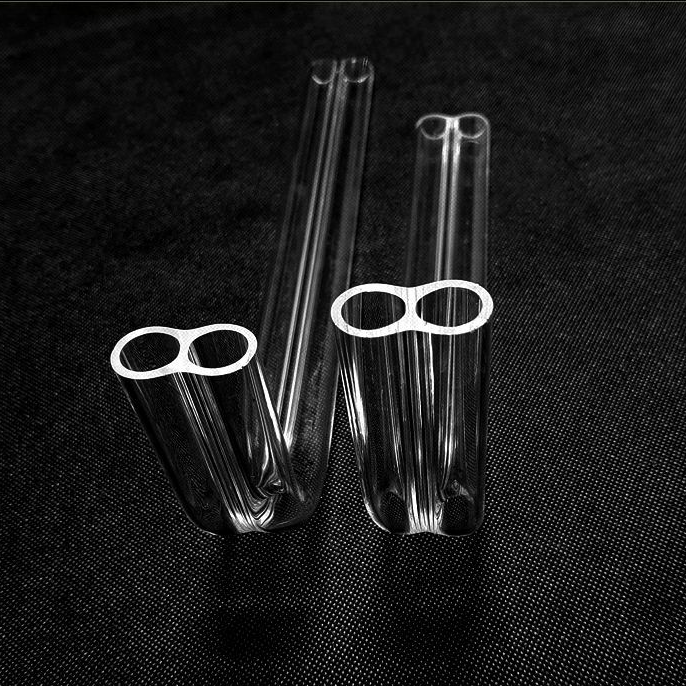
Mini-Grid Photovoltaic & Green Energy Adoption: Given regional power grid instability, Shan industrial facilities are heavily adopting decentralized off-grid solar infrastructure. Our semiconductor-grade quartz double-tube right angle elbows and customized spiral tubes support regional solar panel recycling, polysilicon CVD experimental chambers, and localized battery chemical synthesis.
Standardization of Analytical Laboratory Quality Control: Export protocols for agricultural products (such as Shan coffee, tea, and essential oils) and metallurgical ores heading to Southeast Asian and Chinese markets require compliance with stringent ISO/IEC 17025 testing standards. Local laboratories can no longer tolerate batch-to-batch variation caused by low-grade glassware; they demand certified purity, precise dimensional tolerances, and trace-element guarantees.