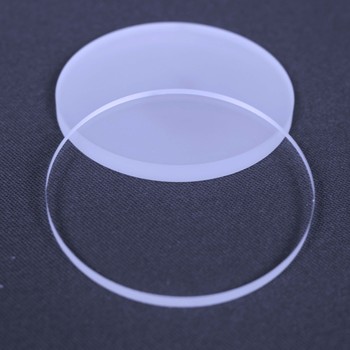
Zero-Background Single-Crystal Quartz Disc
Flush top surface, orientation-cut blank for ultra-thin powder films, micro-droplet depositions, and colloidal suspensions. Completely flat baseline without Bragg peaks.
Get a Quote
In modern powder X-ray diffraction (PXRD), grazing-incidence XRD (GIXRD), and non-ambient in-situ phase characterization, data fidelity hinges entirely upon minimizing extraneous background scattering and eliminating artifact peaks. An XRD Quartz Sample Holder manufactured from single-crystal oriented-cut quartz or ultra-high purity synthetic fused silica represents the scientific benchmark for zero-background specimen support.
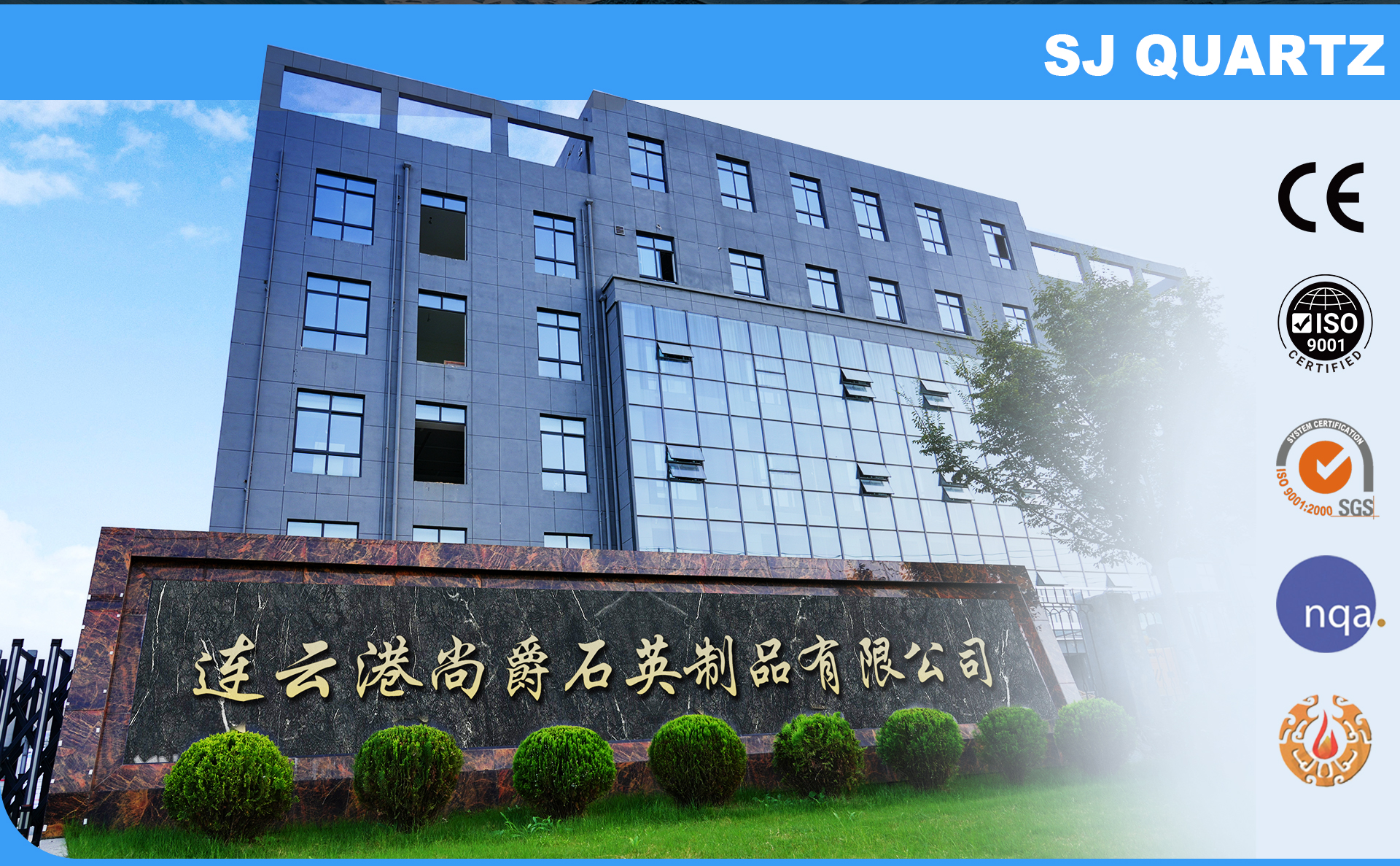
Lianyungang Vulra Quartz Products Co., Ltd. is a globally verified custom quartz glass manufacturer headquartered in Donghai County, Jiangsu Province—internationally celebrated as the world's crystal capital. Leveraging direct access to pristine crystalline feedstock and pairing it with subterranean diamond wafering, double-sided optical chemical-mechanical polishing (CMP), and sub-micron ultrasonic cavity milling, we provide OEM/ODM custom XRD holders that satisfy the rigorous analytical demands of materials science, active pharmaceutical ingredient (API) polymorphic screening, solid-state battery engineering, and semiconductor metallurgy.
Whether your instrumentation operates on classic Bragg-Brentano reflection geometry, transmission capillary configurations, or high-temperature environmental stages, our engineered quartz specimen plates deliver baseline silence across critical 2θ ranges, mechanical resilience, and drawing-matched dimensional tolerances from a single prototype to multi-thousand piece batch production.
Off-axis miscut single crystals ensure complete absence of crystalline Bragg diffraction peaks across normal working 2θ sweeps.
Ultrasonic diamond micro-milling enables ultra-shallow wells (0.05 mm to 2.0 mm) perfectly suited for microgram specimen analysis.
High-purity fused silica holders withstand rigorous thermal shock and continuous furnace loading up to 1100°C for non-ambient in-situ XRD.
Drawing-based custom fabrication for Bruker, Panalytical, Rigaku, and custom benchtop sample wheels with rapid international dispatch.

Understanding why precision oriented single-crystal quartz outperforms conventional silicon zero-background plates and amorphous standard glass slides in analytical diffraction.
In standard powder diffraction setups, laboratory analysts frequently encounter problematic diffuse scattering between 15° and 30° 2θ when utilizing standard amorphous glass slides. This broadband background bulge easily obscures weak diffraction peaks characteristic of trace active pharmaceutical ingredients (APIs), nanomaterials, thin polymer matrices, and lightweight organic crystals.
Conversely, conventional metallic sample holders (such as aluminum or copper) yield intense crystalline diffraction peaks of their own, contaminating patterns and compromising automated phase identification. A specially oriented XRD Quartz Sample Holder solves this dilemma through rigorous crystallographic engineering.
By precision-slicing high-purity single-crystal quartz along an orientation deliberately misaligned from normal diffracting planes (off-axis miscut, typically oriented along non-reflecting planes relative to the goniometer angle), the incident X-ray beam satisfies no Bragg condition ($\lambda = 2d \sin\theta$) within the standard detector angular domain. As a direct result, zero coherent crystalline diffraction strikes the detector, while the absolute crystalline rigidity eliminates the amorphous broad scattering hump observed in fused glass.
Zero Background Crystalline Polish | Performance Characteristic | Oriented Single-Crystal Quartz (Vulra) | Silicon Zero Background (Si-510) | Standard Borosilicate Glass Slide |
|---|---|---|---|
| Inherent Background (15°–35° 2θ) | Flat, near-zero scattering baseline | Flat, zero scattering (unless Cu-Kβ leak) | Broad, intense amorphous hump (~20° 2θ) |
| Chemical Inertness & Acid Resistance | Resistant to all mineral acids (except HF) | Susceptible to basic etching and strong oxidizers | Moderate resistance; prone to leaching |
| High-Temperature Non-Ambient Max Temp | Up to 1100°C (fused silica carrier models) | Limited to ~600°C before surface oxidation occurs | Softens and deforms at ~550°C |
| Mechanical Scratch Resistance | Mohs Hardness 7.0 (high scratch resilience) | Mohs Hardness 6.5 (prone to abrasive chipping) | Mohs Hardness 5.5 (readily scratched by spatulas) |
| Custom Cavity Machining Capability | High precision ultrasonic CNC milling (0.05–2.0 mm) | Fragile during deep cavity laser/wet etching | Easily molded but exhibits severe background noise |
Engineered to match automatic sample changers and manual stages for Bruker D8 Advance/Discover, Malvern Panalytical Empyrean/Aeris, Rigaku SmartLab/MiniFlex, and Thermo Fisher ARL EQUINOX.
Flush top surface, orientation-cut blank for ultra-thin powder films, micro-droplet depositions, and colloidal suspensions. Completely flat baseline without Bragg peaks.
Get a Quote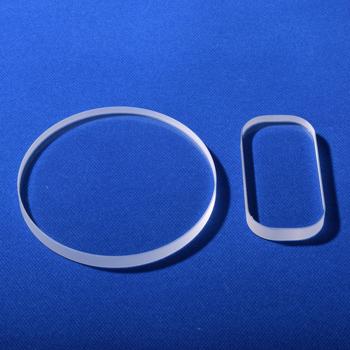
Featuring micro-machined circular or rectangular wells (depths: 0.1 mm, 0.2 mm, 0.5 mm, 1.0 mm). Prevents specimen displacement errors and guarantees reproducible sample fill.
Get a Quote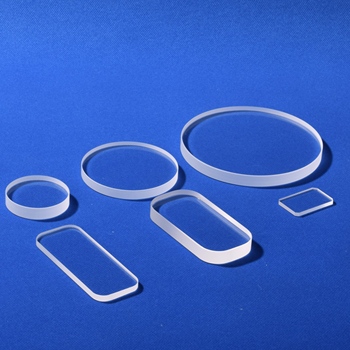
Manufactured from semiconductor-grade fused silica for Anton Paar HTK, MRI, and custom hot-stages. Operating stably up to 1100°C with near-zero thermal expansion coefficient.
Get a Quote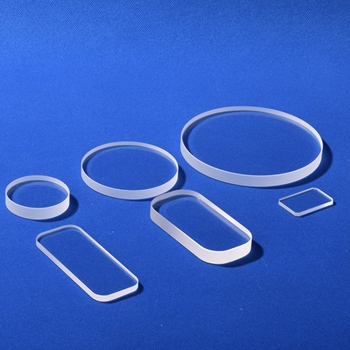
Engineered with specialized multi-well arrays, narrow channel micro-grooves, and alignment notches for combinatorial screening and automated robotics autosamplers.
Get a QuoteAs materials characterization shifts toward operando tracking, high-throughput robotics, and micro-crystallography, global procurement directors must navigate key technological transitions.
Modern crystallographic research no longer relies solely on static ex-situ powder patterns. Battery researchers, electrochemists, and catalyst engineers demand XRD holders capable of functioning simultaneously as hermetic windows, electrochemical cells, and non-ambient heating substrates.
The future standard involves hybrid quartz carriers combining chemical inertness with thermal longevity up to 1100°C without devitrification. Vulra Quartz is pioneering specialized thin-window fused quartz cells that allow uninterrupted beam penetration while preserving inert environmental containment.
Automated combinatorial discovery demands dimensional consistency with goniometer z-height alignment within ±5 μm across entire multi-well quartz plates to eliminate sample displacement peak shifts.
With synthesized novel compounds, pharmaceutical actives, and forensic trace samples frequently restricted to sub-milligram quantities, the industry is transitioning away from standard 0.5 mm-deep wells toward shallow 20-50 μm micro-cavities. These wells preserve specimen planarity while minimizing parasitic substrate interaction.
Tier-1 instrument brands often charge substantial markups for standard consumable holders. Global buyers are increasingly choosing factory-direct procurement from verified original manufacturers like Vulra Quartz in Donghai, securing ISO-traceable quality at a fraction of catalog replacement costs with 1-piece custom ODM availability.
Combining world-class raw crystal reserves with high-precision optical grinding, polishing, and TÜV Rheinland-verified manufacturing infrastructure.
| Substrate Material | High Purity Crystalline Quartz / Synthetic Fused Silica |
|---|---|
| SiO₂ Purity Level | 99.99% – 99.999% trace-metal certified |
| Surface Roughness (Ra) | < 0.5 nm (CMP double-sided optical polish) |
| Surface Flatness | λ/4 to λ/10 per inch @ 632.8 nm |
| Parallelism & Wedge | ≤ 15 arcseconds (±0.005 mm wedge tolerance) |
| Cavity Depths Available | 0.05 mm, 0.1 mm, 0.2 mm, 0.5 mm, 1.0 mm, 2.0 mm (Custom) |
| Max Continuous Temp. | 1100°C (Fused Quartz Series) |
| Diffractometer Compatibility | Bruker, Malvern Panalytical, Rigaku, Shimadzu, Thermo Fisher |
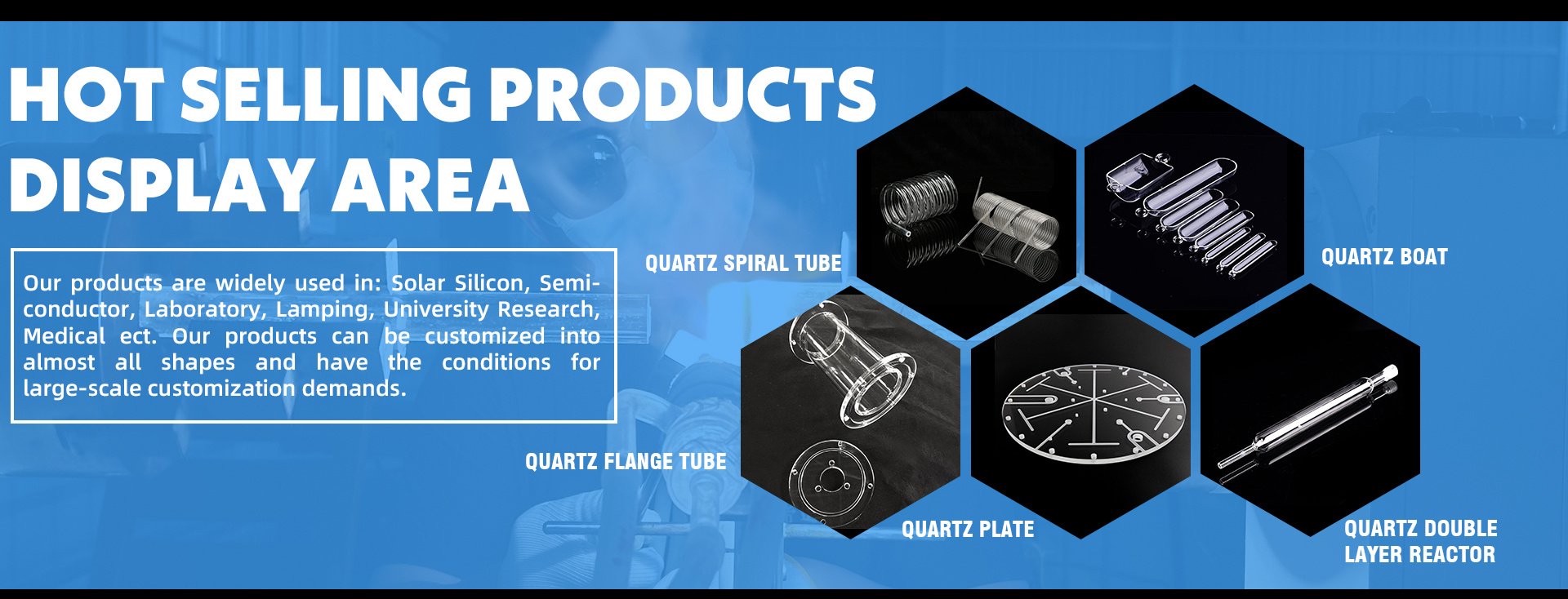 Optical Grade Precision Processing


Based in Donghai County, we source directly from the core of the global crystal supply chain, guaranteeing ultra-low impurity levels and flawless internal crystalline lattice integrity.
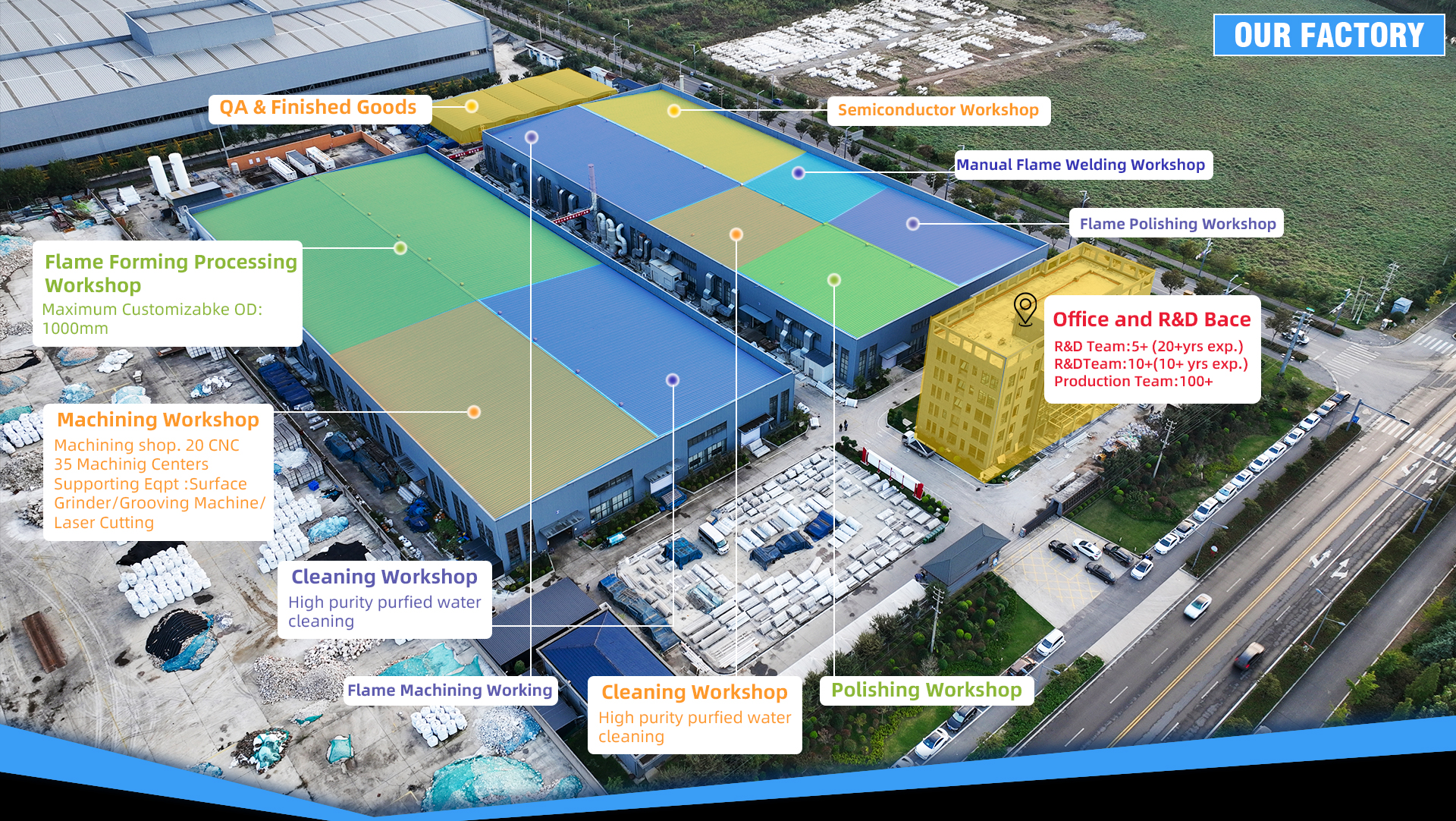
Our integrated facilities encompass cutting, flame-working, CNC drilling, surface grinding, ultrasonic cavity milling, and chemical-mechanical polishing without external outsourcing.
Every drawing sent to [email protected] undergoes strict engineering review for aspect ratios, goniometer clearance, thermal tolerance, and well dimensional repeatability.
XRD holders undergo multistage ultrasonic de-ionized water cleansing and are sealed within cleanroom-grade antistatic packaging to guarantee zero airborne particulate contamination upon arrival.
Explore our end-to-end production pipeline ensuring zero-defect optical flatness and pristine crystalline purity for XRD holders and laboratory quartzware.
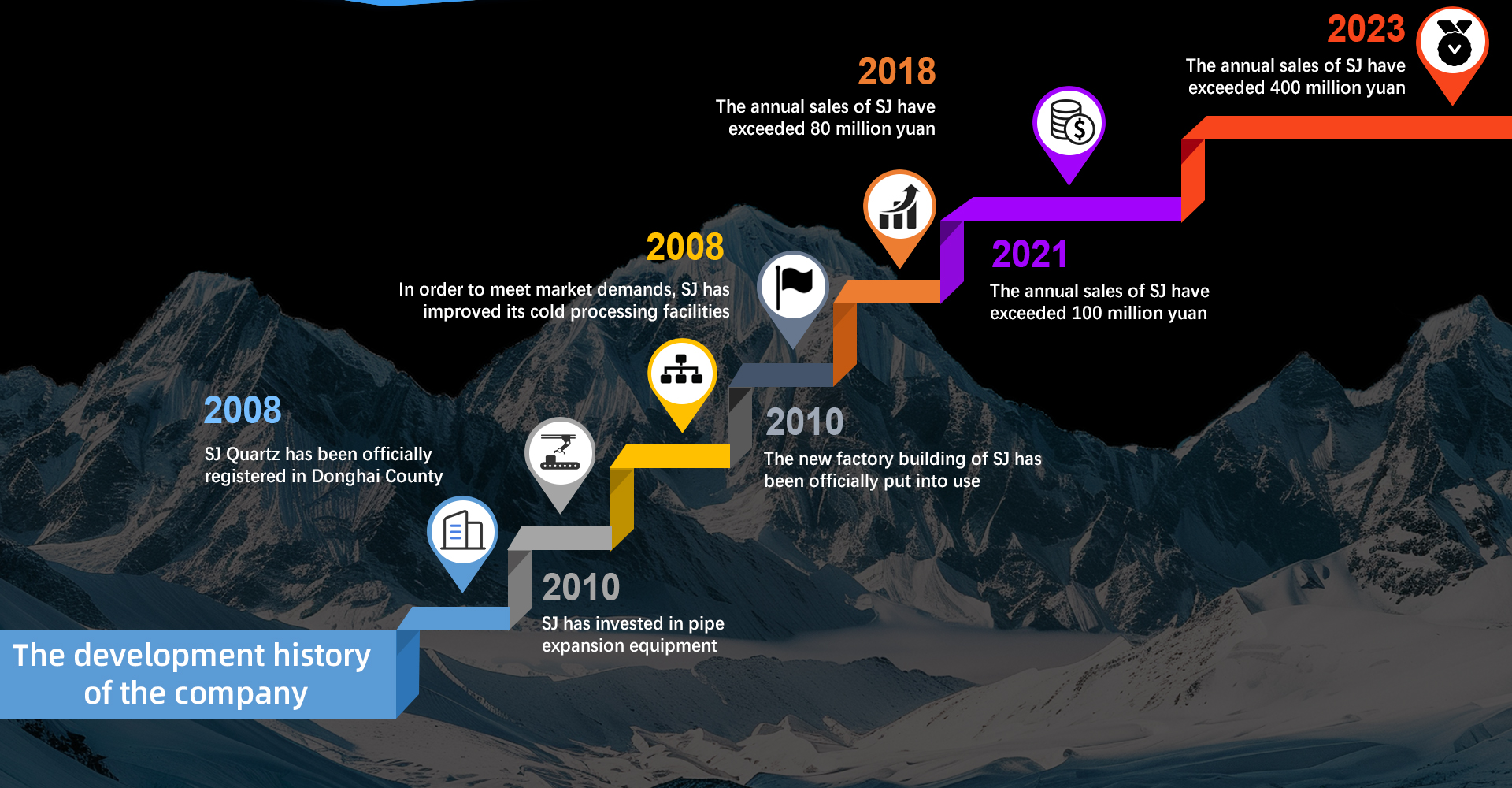
Subterranean precision wire and diamond blade wafering along verified crystallographic angles.
Surface planarization attaining Ra < 0.5 nm and parallelism within 15 arcseconds.
Programmable high-temperature annealing eliminating internal mechanical birefringence.
Specialized oxy-hydrogen torch shaping for non-ambient high-temperature in-situ reaction cells.
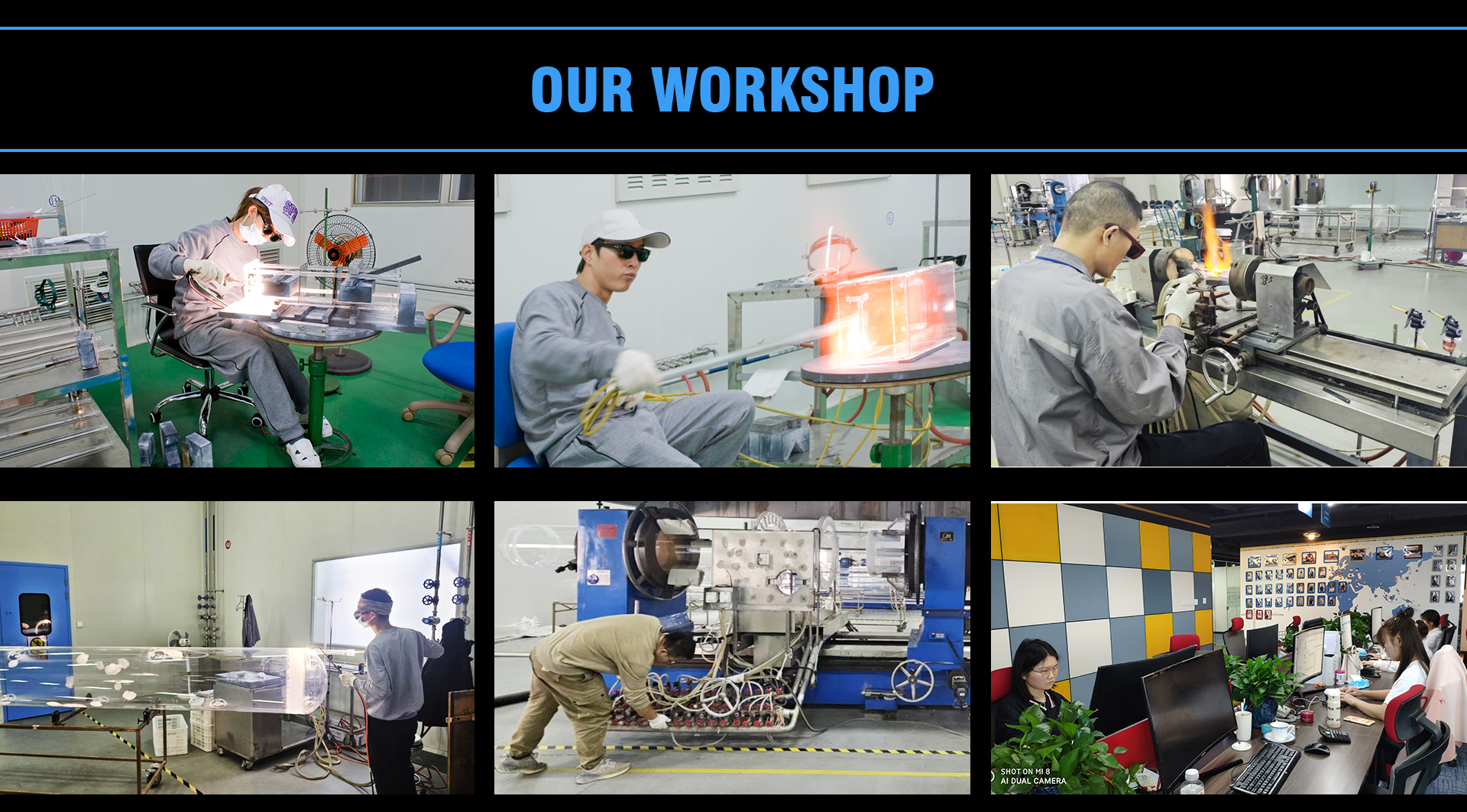
Ultra-pure acid wash and de-ionized water baths eliminating ionic and trace dust contaminants.

Laser flatness testing, micrometer depth verification, and X-ray baseline validation.
In-depth responses curated by our senior crystallographic manufacturing engineers to address critical technical questions asked by global procurement teams and laboratory specialists.
Get a QuoteWhile single-crystal silicon cut along the (510) plane is a widely recognized zero-background material, silicon is vulnerable to chemical oxidation, mechanical surface scratching by metal spatulas, and aggressive chemical attack by basic solutions. High-purity single-crystal quartz possesses superior Mohs hardness (7.0 vs. 6.5 for Si), significantly higher abrasion resistance during repeated sample mounting and scraping, and outstanding resistance to virtually all acids. Furthermore, in non-ambient thermal stages, quartz maintains structural stability without surface oxidation artifacts that commonly affect silicon above 600°C.
We slice our single-crystal quartz along strict crystallographic miscut orientations (specifically tilted away from major diffracting planes such as (0001) or (10-10)). Each crystal ingot is verified prior to fabrication using goniometric X-ray orientation. When mounted in symmetrical reflection geometry diffractometers (such as Bragg-Brentano $\theta-\theta$ or $\theta-2\theta$), no reciprocal lattice points intersect the Ewald sphere within the scanning range, delivering an exceptionally quiet, flat baseline with zero unwanted peak interference.
The optimal well depth is governed by sample quantity, X-ray absorption coefficients, and sample transparency. For highly absorbing heavy-metal powders or microgram quantities (such as expensive organic syntheses or pharmaceuticals), shallow wells of 0.05 mm to 0.1 mm are strongly recommended to prevent peak displacement errors while reducing the required specimen volume. For low-absorbing organic materials, polymers, or light elements where beam penetration is significant, deeper cavities of 0.5 mm to 1.0 mm prevent the beam from penetrating through to the substrate.
Yes. As a verified custom manufacturer, we routinely fabricate round discs (standard diameters: 25 mm, 28 mm, 30 mm, 32 mm, 51.5 mm), square plates (e.g., 20x20 mm, 25x25 mm), rectangular slides, and grooved chips tailored exactly to instrument holders from Bruker, Malvern Panalytical, Rigaku, Shimadzu, Thermo Fisher, and specialized synchrotron beamline stages. We accommodate non-standard outer diameters, notchings, multi-well layouts, and asymmetric steps with precision CNC tolerances down to ±0.02 mm.
Because our quartz holders are optically polished and chemically inert, residues should be rinsed immediately after analysis using analytical-grade ethanol, acetone, or deionized water, followed by drying with oil-free nitrogen gas. For stubborn organic residues, mild ultrasonic baths or immersion in dilute nitric acid is safe. Avoid abrasive cleaning powders or hydrofluoric acid (HF), as mechanical scouring or HF etching damages the optical planar finish, introducing diffuse background scattering.
Our minimum order quantity starts at just 1 piece for prototypes and custom configurations, with batch manufacturing scaling to thousands. Standard prototypes ship within 7–12 business days. Every optical XRD holder is individually enclosed in a cleanroom antistatic gel-pack container, multi-layer bubble wrapped, shock-isolated, and packed into reinforced export cartons or wooden crates for guaranteed safe global transit via FedEx, DHL, or UPS.
Send your dimensional drawings, target diffractometer model, or custom cavity specifications directly to our engineering department at [email protected].