
Why Material Purity Dictates Crucible Longevity
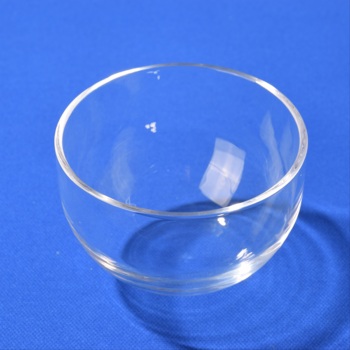
In high-temperature thermal processing, the life cycle of a fused quartz crucible bowl is directly governed by vitreous phase stability. When natural quartz crystals are melted under vacuum electric arc or oxy-hydrogen environments, the random amorphous structure of fused silica is locked into place. However, the presence of even parts-per-million (ppm) levels of alkali ions—such as Lithium (Li), Sodium (Na), and Potassium (K)—acts as a powerful catalyst for devitrification.
At Lianyungang Vulra Quartz Products Co., Ltd., our raw sand beneficiation techniques isolate silica to 99.99% – 99.999% purity. By maintaining total metallic impurities under tightly specified limits, our crucibles prevent the early crystallization of silica into cristobalite at the inner crucible surface. This ensures high structural stability, negligible chemical leeching into high-value melts, and uniform thermal conductivity throughout protracted heating campaigns.
Furthermore, our crucibles maintain exceptional optical transparency across ultraviolet, visible, and infrared spectra, allowing in-situ optical pyrometry and optical melt monitoring during critical growth stages.