Featured High-Purity Fused Quartz Series
Engineered from Grade-A natural crystal sand in Donghai, China. Seamlessly integrated into distillation columns, vacuum reflux setups, BET analyzers, and tube furnaces across Central European research corridors.
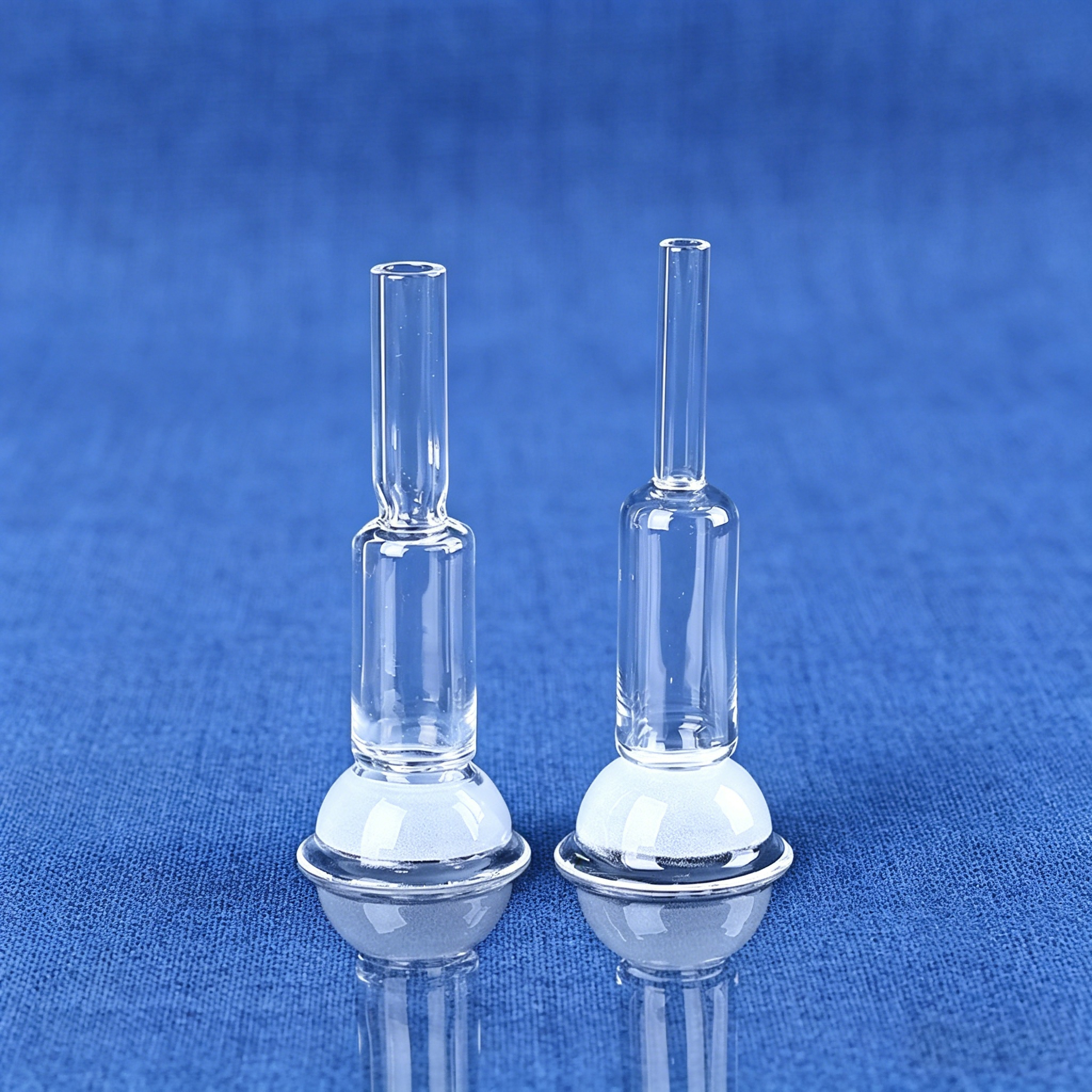
Custom High Purity Quartz C-shaped Small-sized BET Tube
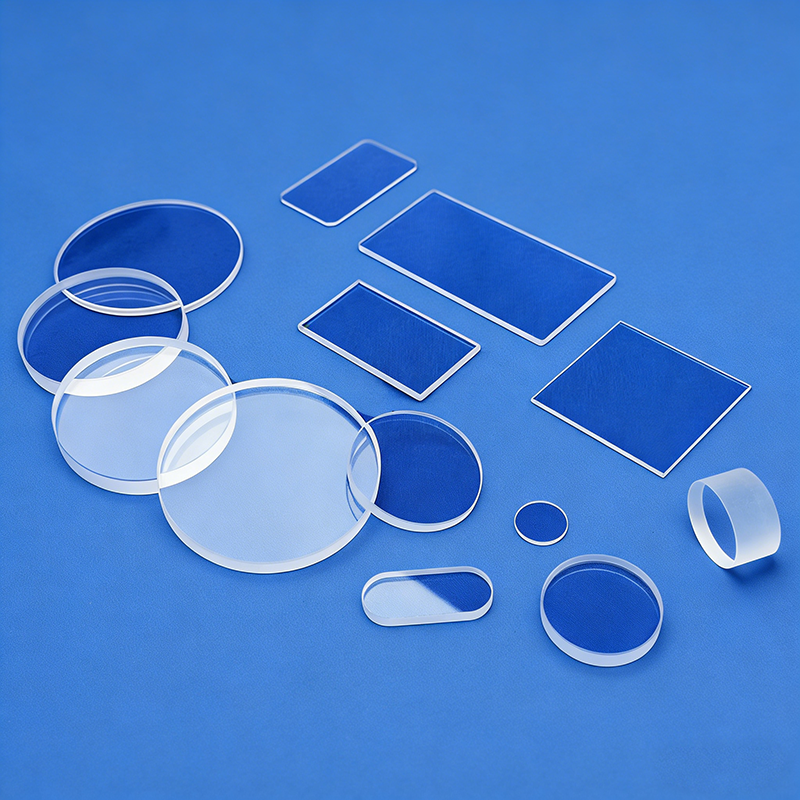
Translucent Natural Fused Quartz Arc-Welding Cutting Services
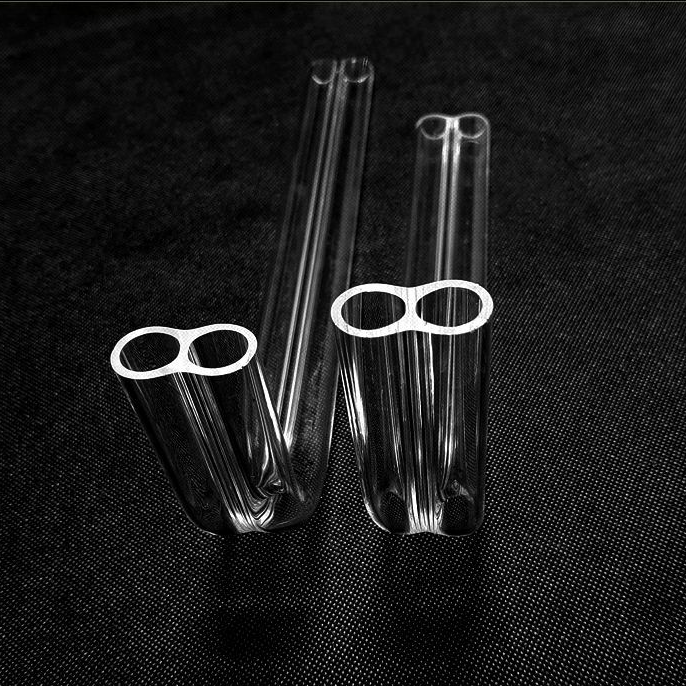
99.999% Purity Ozone-Free Double-Tube Right-Angle Elbow
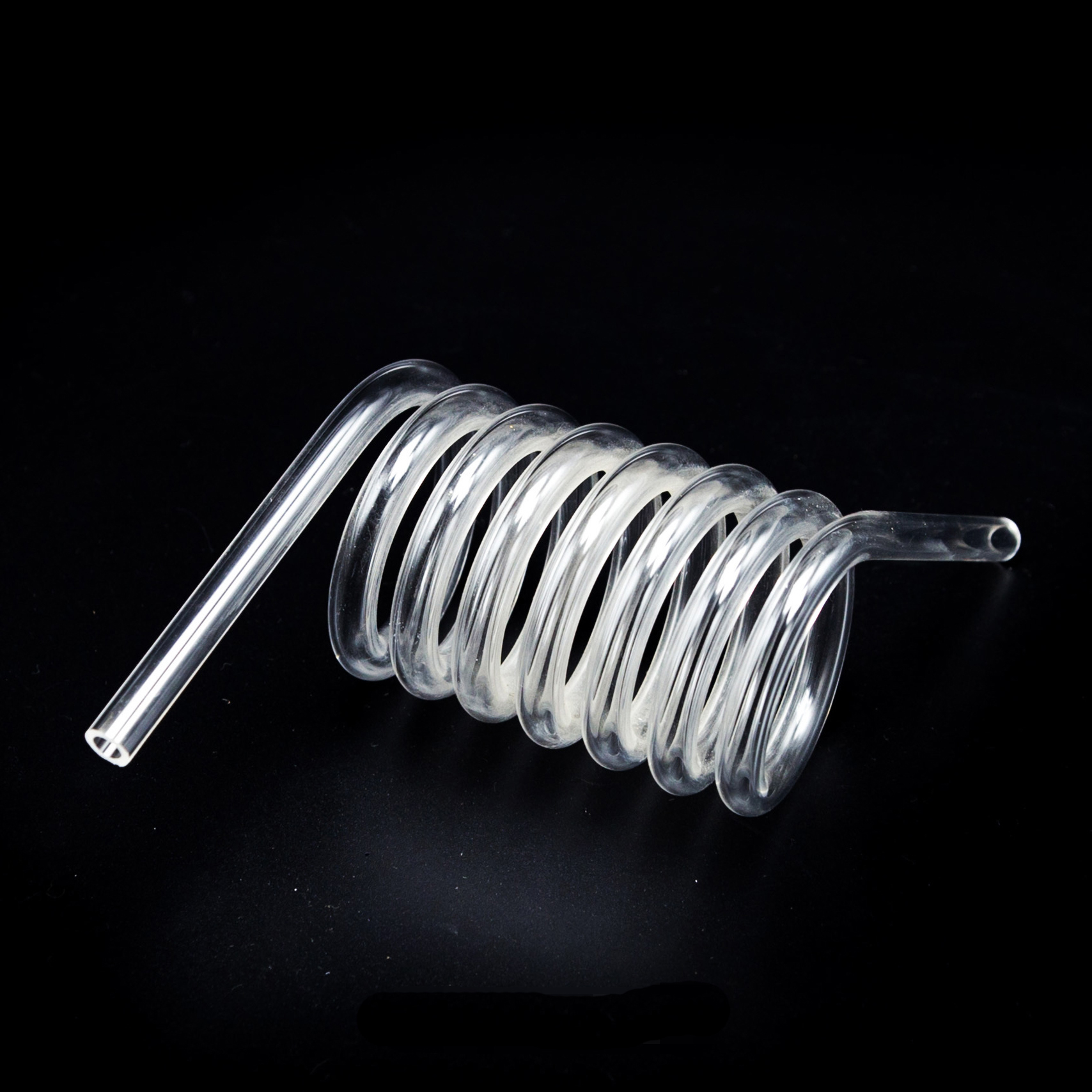
High Purity Clear Quartz C-Shape & Spiral Bent Condenser Tubes
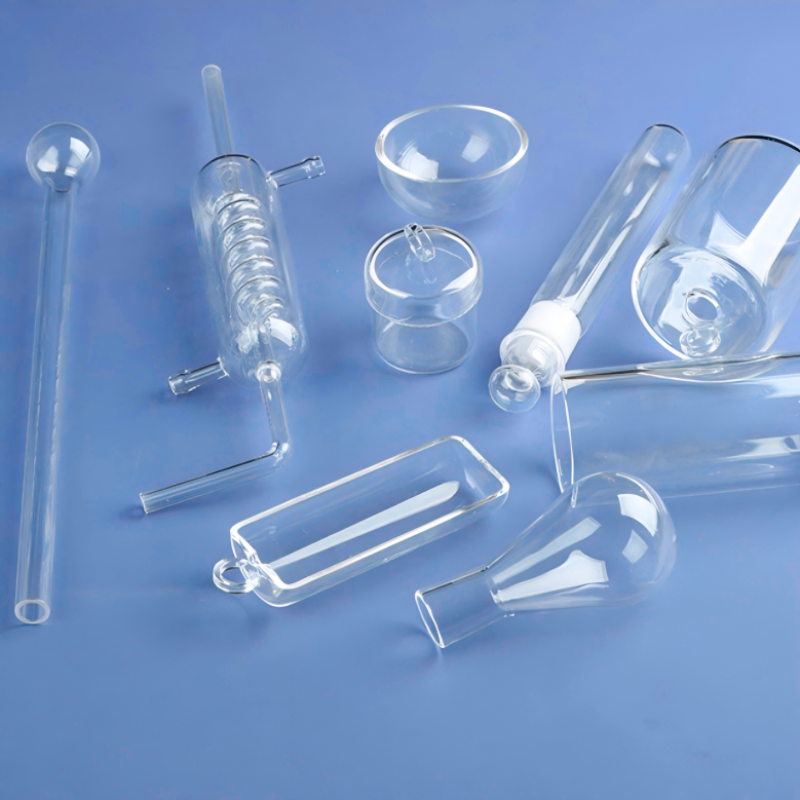
Quartz Glass Tube Plugging Rod & Heating Test Boat
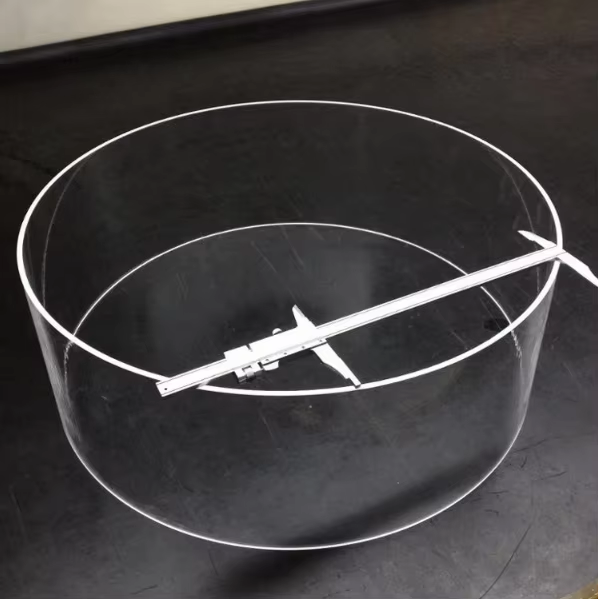
Optical Quartz & Sapphire Tubes for Powder Sintering
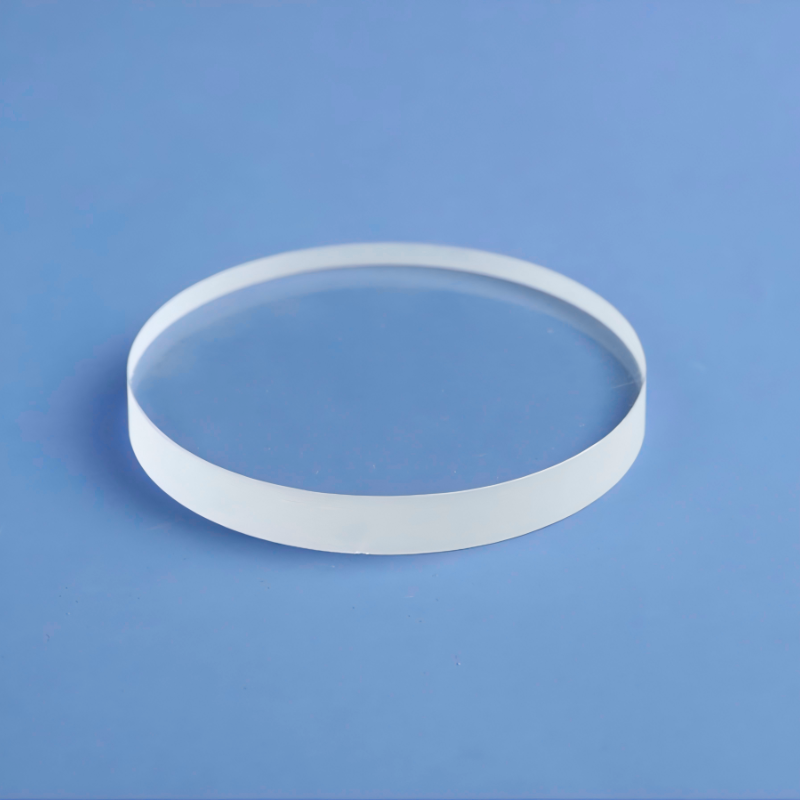
Fused Silica Quartz Glass Sheets & Optical Tablets
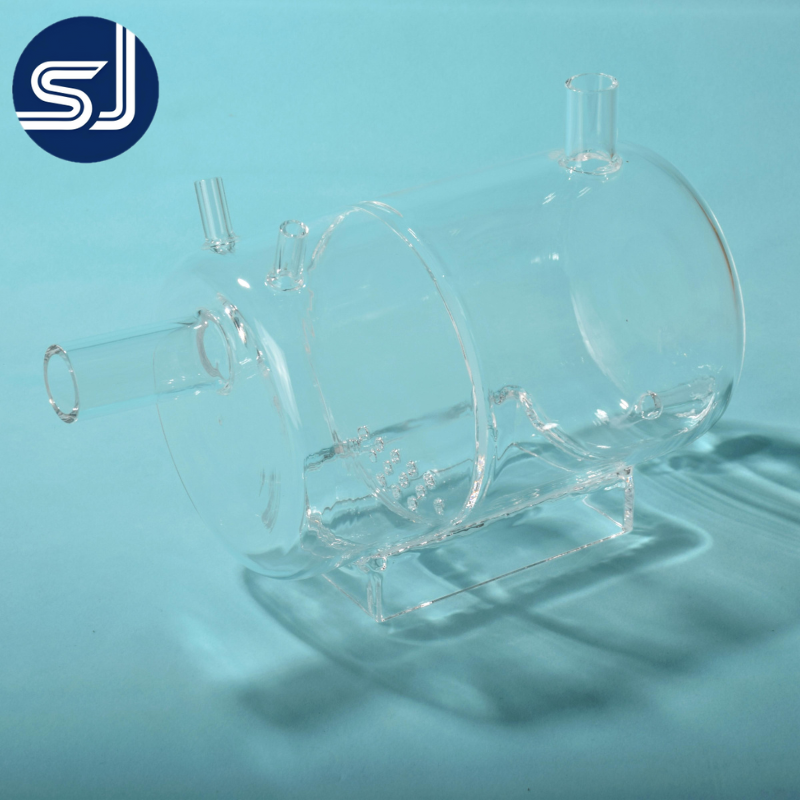
Laboratory Quartz Flow Splitting Distillation Bottle
Thermodynamic Mechanics & Material Superiority of Fused Quartz Condensers
Why leading chemical process engineers in Slovenia are transitioning from technical borosilicate to high-purity amorphous fused silica (SiO₂ > 99.99%) for critical condensation, distillation, and reflux systems.
In thermal process engineering, the condenser acts as the primary heat-transfer barrier between volatile superheated vapors and liquid distillates. Standard borosilicate 3.3 laboratory glass has long served general commercial uses. However, modern high-potency active pharmaceutical ingredient (HPAPI) synthesis, aggressive gas scrubbing, and ultra-trace metallurgical refining impose operating conditions that quickly exceed borosilicate's physical limits.
Fused quartz exhibits an extraordinarily low thermal expansion coefficient of approximately 5.5 × 10⁻⁷ K⁻¹ (between 20°C and 320°C). This is nearly an order of magnitude lower than that of borosilicate 3.3 (33 × 10⁻⁷ K⁻¹). This singular thermodynamic characteristic delivers unmatched thermal shock resistance ($\Delta T > 1000^\circ\text{C}$). A red-hot quartz condenser tube heated to 1100°C can be quenched instantly in ice water without catastrophic brittle fracturing.
Critical Structural Integrity: Annealing, Transformation & Strain Thresholds
The operational lifespan of a custom-welded quartz tube condenser depends directly on precise post-flame annealing. During thermal fabrication of Graham-style coiled inner cores, Allihn bulb jackets, or Liebig straight jackets, differential cooling introduces localized internal tensile stresses. At Vulra Quartz, all welded condensers undergo closed-loop digital electric furnace annealing at 1150°C (Annealing Point: 1210°C; Strain Point: 1120°C), followed by controlled slow cooling. This process reduces residual birefringence to under 5 nm/cm, preventing stress-corrosion cracking when exposed to boiling acids under deep vacuum.
| Physical & Thermal Parameter | Fused Quartz (Vulra Standard) | Borosilicate 3.3 (Lab Grade) | Aluminosilicate Glass |
|---|---|---|---|
| Silicon Dioxide (SiO₂) Content | ≥ 99.99% – 99.999% | 80.5% – 81.0% | 55.0% – 60.0% |
| Thermal Expansion Coeff. (20–300°C) | 0.55 × 10⁻⁶ K⁻¹ | 3.3 × 10⁻⁶ K⁻¹ | 4.2 × 10⁻⁶ K⁻¹ |
| Maximum Continuous Service Temp. | 1100 °C | 450 °C | 650 °C |
| Peak Short-Term Thermal Limit | 1450 °C (Softening: 1683°C) | 500 °C (Softening: 820°C) | 780 °C (Softening: 910°C) |
| Thermal Shock Resistance ($\Delta T$) | > 1000 °C (Direct Water Quench) | ≈ 150 °C | ≈ 180 °C |
| Heavy Metal / Alkali Leaching | < 0.1 ppm (Virtually Zero) | Sodium, Boron, Calcium Leaching | Alumina, Alkali Extraction |
| UV-Visible Optical Transmittance | > 90% (200 nm – 2500 nm) | Opaque below 310 nm | Opaque below 320 nm |
Beyond structural resistance to heat, fused silica provides absolute chemical passivity. With the exception of hydrofluoric acid (HF) and hot concentrated phosphoric acid ($> 150^\circ\text{C}$), quartz is immune to attack from aggressive solvents, halogenated vapors, nitric acid, hydrochloric acid, and fuming aqua regia. For Slovenian cleanroom facilities operating under EU cGMP standards, our condensers guarantee zero ion contamination, preserving API yield purity down to parts-per-billion (ppb) thresholds.
Localized Industrial Integration Across Slovenia
From pharmaceutical distillation in Novo Mesto to advanced materials laboratories in Ljubljana and metallurgical testing in Koroška, Vulra quartz condensers provide dependable thermal efficiency across Slovenia's industrial ecosystem.
Pharma & API Synthesis (Novo Mesto, Ljubljana, Mengeš)
Slovenia's world-class pharmaceutical corridor relies on continuous solvent recovery and high-purity reflux systems. Standard borosilicate glassware risks micro-leaching alkali ions into acidic synthetic intermediates. Vulra's high-purity quartz condensers (99.999% SiO₂) provide a non-reactive contact surface, preventing elemental boron or sodium contamination in active pharmaceutical ingredients (APIs).
Advanced Materials Research (Jožef Stefan & NIC)
At prestigious institutions like the Jožef Stefan Institute (IJS) and the National Institute of Chemistry (KI), researchers conducting chemical vapor deposition (CVD), gas-phase sorption, and photocatalytic water-splitting depend on custom-bent quartz manifolds, BET analysis tubes, and optical-grade viewing condensers with superior UV transmittance down to 190 nm.
Specialty Metallurgy & Chemical Recycling (Celje, Maribor)
Industrial pyrometallurgical testing and closed-loop acid distillation units in Slovenia’s northeastern industrial corridors run continuously under harsh thermal gradients. Our double-jacketed quartz condenser tubes and right-angle elbows handle hot acid fumes ($> 400^\circ\text{C}$) while chilled brine cooling prevents internal condensation fouling or thermal-shock cracking.
Macro Trends Shaping Slovenian Quartz Procurement
Slovenia’s strategic position as an advanced Central European export manufacturing hub drives strict criteria for specialized glass and quartz component sourcing.
Green Transition & Energy Efficiency
With industrial facilities in Koper, Kranj, and Ljubljana aligning with EU decarbonization targets, quartz condensers offer superior thermal transfer and extended operating lifecycles, reducing downtime and frequent glass replacement waste.
Direct Factory Sourcing vs. EU Resellers
Slovenian procurement teams increasingly bypass European multi-tier distributors. Partnering directly with certified Chinese manufacturing facilities reduces component costs by 35% to 55% while securing custom, drawing-based tolerances.
REACH & RoHS Regulatory Alignment
All quartzware imported into Slovenia must comply with EU chemical safety legislation. Vulra Quartz provides full traceability, CE marking, RoHS certifications, and heavy-metal-free raw material documentation for every shipment.
Rapid Multimodal Logistics (Luka Koper)
Leveraging the deep-water Port of Koper and Ljubljana Jože Pučnik Airport (LJU), bulk orders and urgent custom prototypes arrive quickly via streamlined, duty-cleared European freight channels.
Why Slovenian Engineers Trust Vulra Quartz
Headquartered in Donghai County—the world-renowned hub of high-purity natural silica sand—Lianyungang Vulra Quartz Products Co., Ltd. combines premier raw material reserves with cutting-edge hot-working and cold-machining infrastructure.
-
TÜV Rheinland Assessed & Verified: Independent on-site audits verify our legal status, cleanroom assembly zones, and complete export manufacturing workflows.
-
Advanced Hot-Working & Glass Lathes: Oxy-hydrogen flame lathes precisely control concentricity, jacket wall uniformity, and seamless coil welds on complex quartz condensers.
-
Integrated Cold CNC Machining: Diamond cutting, cylindrical grinding, ultrasonic drilling, and optical polishing ($Ra < 0.2\,\mu\text{m}$) executed under strict quality standards.
-
Polariscopic Stress Testing: Every custom condenser undergoes optical polariscope inspection to confirm zero residual stress before cleanroom chemical acid washing and crating.
-
Zero-Breakage Export Packaging: Engineered multi-layer suspended EPE foam, custom-molded inner shells, and heavy-duty ISPM-15 compliant plywood crates guarantee safe arrival in Slovenia.
Accredited Quality Credentials
We support our Slovenian partners with certified spectrometer chemical assay reports (ICP-MS), optical transmission curves, and complete dimensional tolerance mapping with every consignment.
Purchasing Quartz Glass Condensers in Slovenia
Answers to common technical, logistics, and compliance questions asked by procurement teams and plant engineers in Slovenia.
Why should Slovenian pharmaceutical processors choose fused quartz over borosilicate 3.3 for condensers?
What is the standard delivery timeline for custom-engineered quartz condensers to Ljubljana or Maribor?
Can Vulra Quartz fabricate replacement quartz glassware matching European ground joints (e.g., NS 29/32, NS 45/40)?
How do you manage customs clearance, VAT, and import documentation for Slovenian buyers?
What is your minimum order quantity (MOQ) for custom-welded quartz condensers?
How do you prevent breakage during international transit to Slovenia?
What is the maximum operating vacuum and pressure range for your jacketed quartz condensers?
Request Your Customized Quartz Condenser Solution
Discuss your process parameters with our quartz glass technicians. We evaluate operating temperatures, chemical exposure, joint configurations, and dimensional tolerances to deliver high-performance, cost-effective quartz components for your facility in Slovenia.