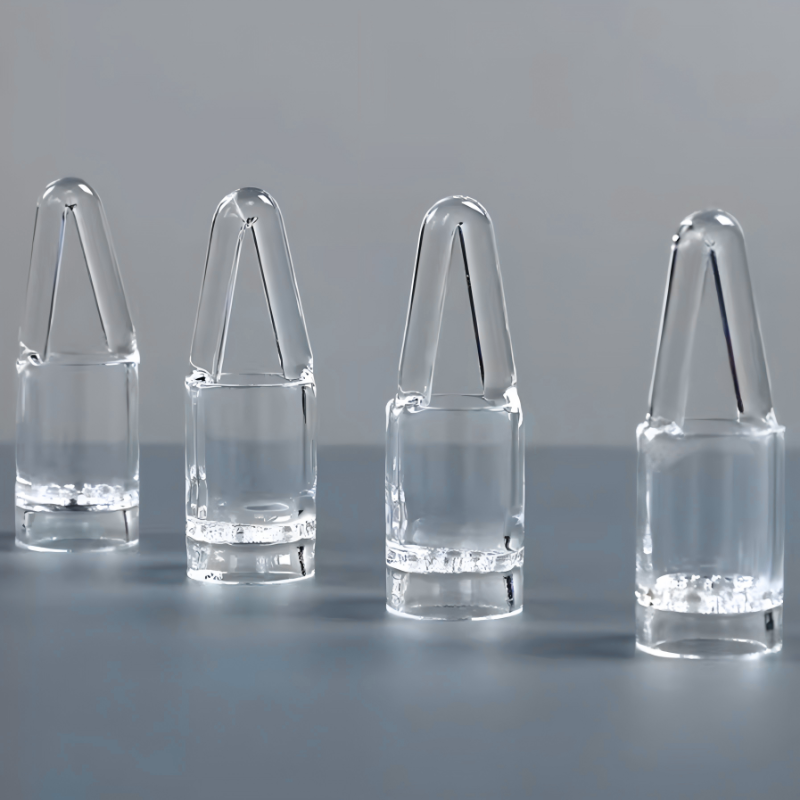
High-Temperature Sight Glasses & Optical Labware
Engineered Fused Quartz Solutions for Industrial Monitoring
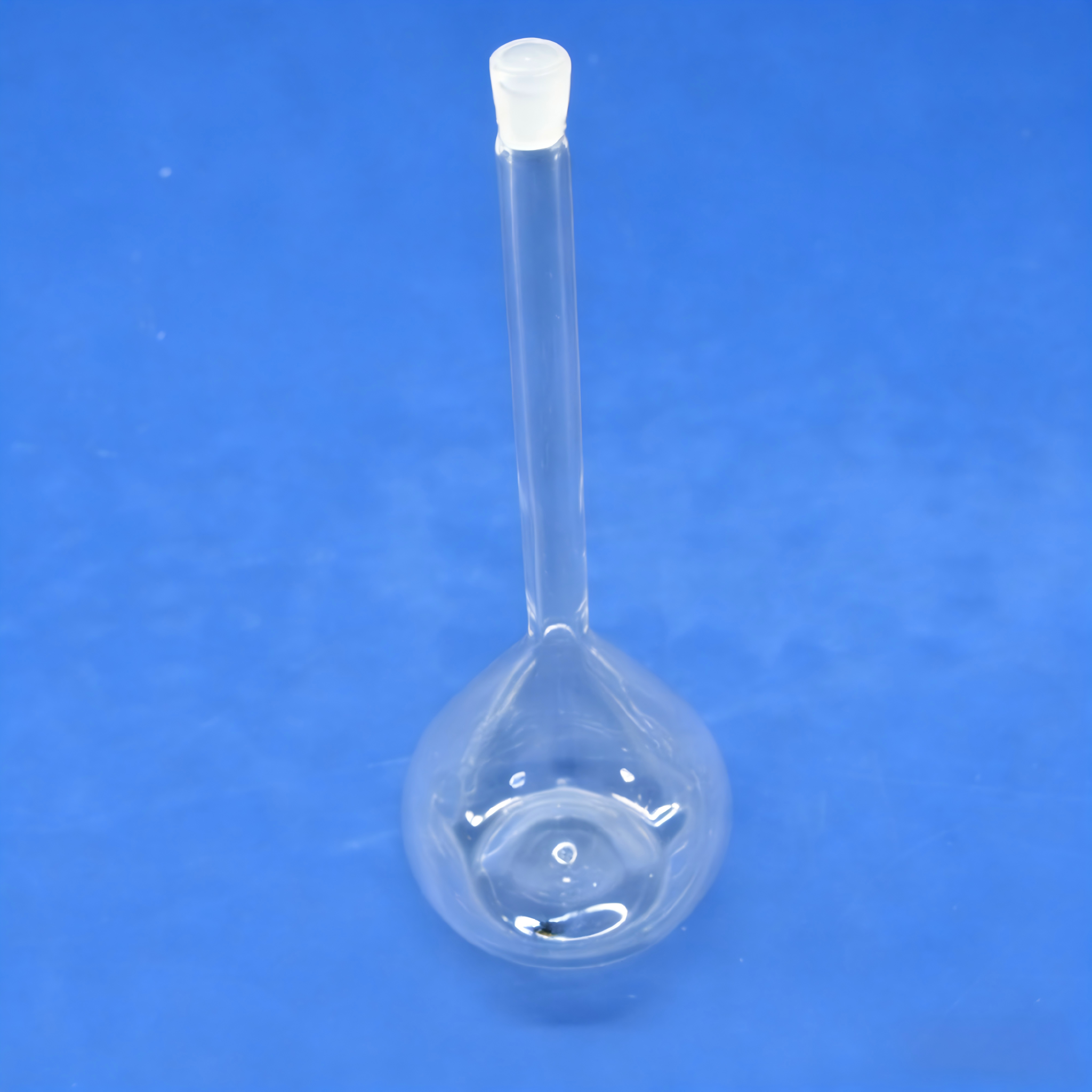
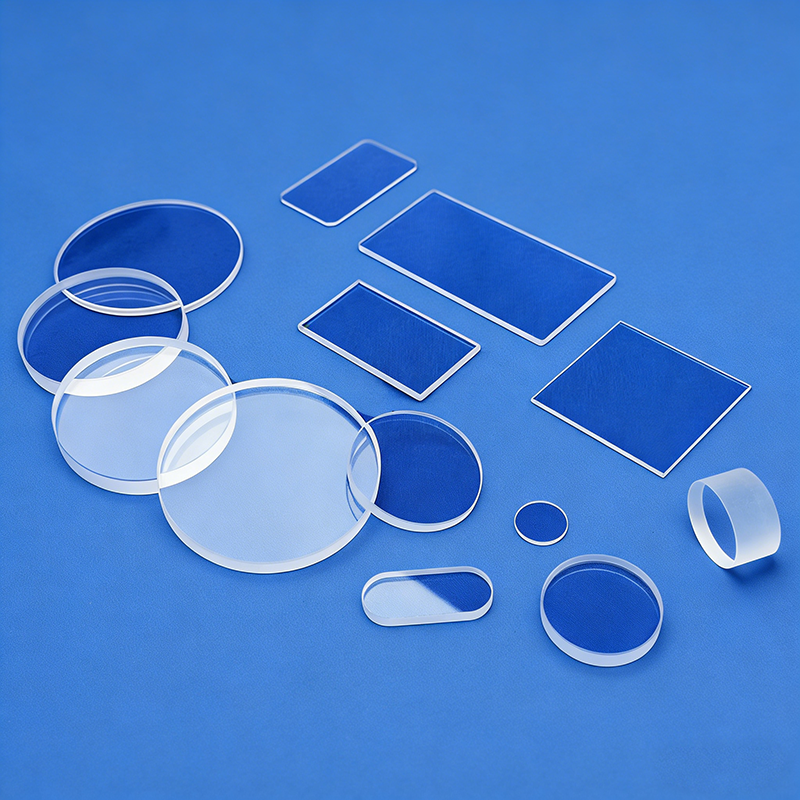
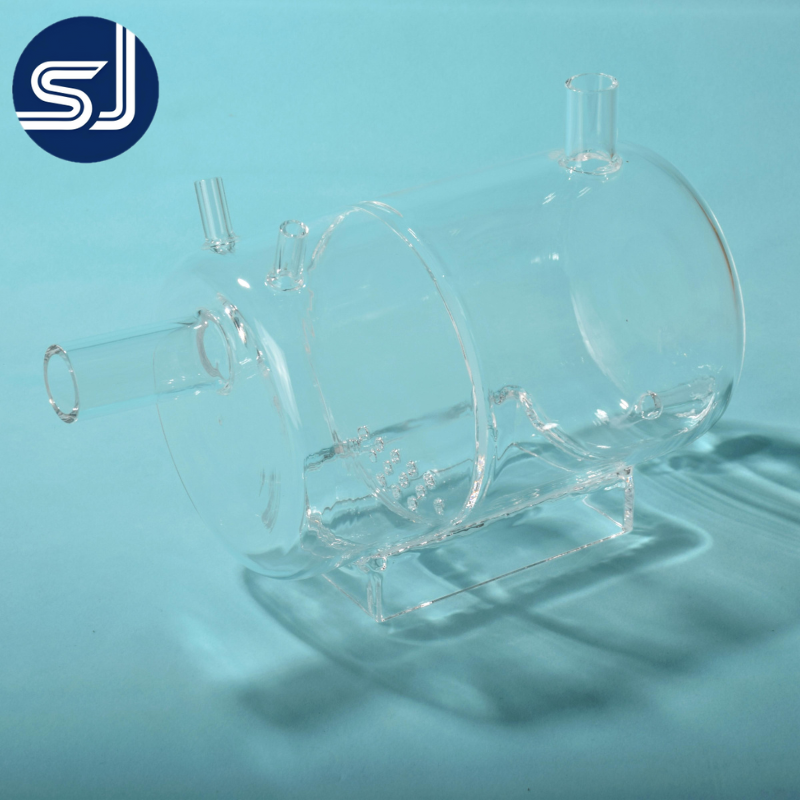
Precision-polished quartz pyrometer windows, crucibles, diffusion tubes, and spectroscopic vessels engineered for thermal stability up to 1450°C and unmatched spectral transmission.
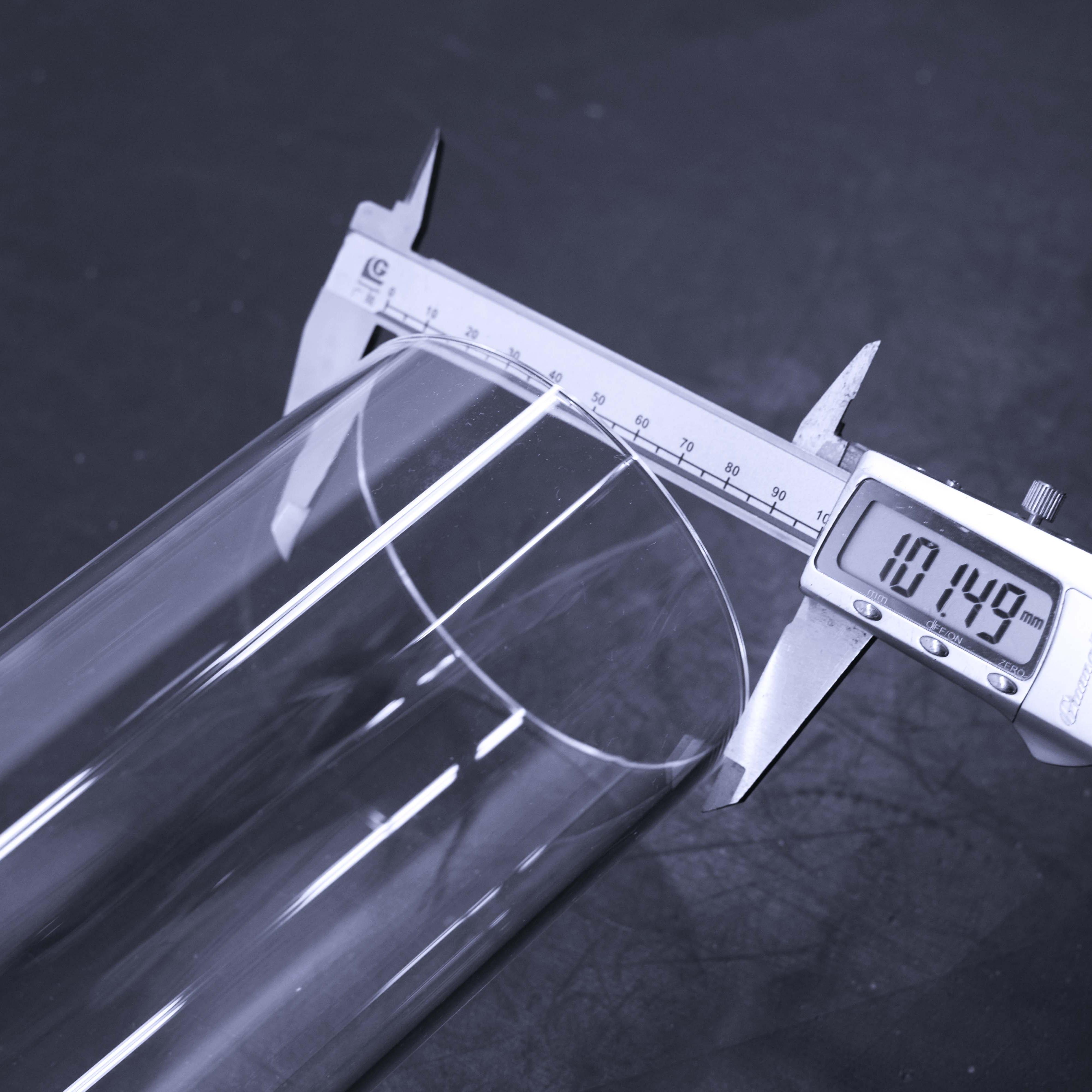

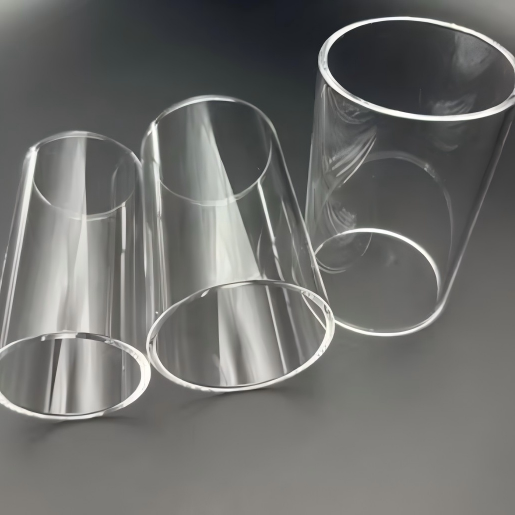
Technical Engineering Whitepaper
Precision Pyrometer Sight Glasses in Extreme Industrial Environments
A comprehensive examination of optical pyrometry, infrared thermography transmission, and material longevity in demanding thermal processing setups.
Non-contact temperature measurement via optical and infrared pyrometry represents the cornerstone of modern process control in metallurgy, smelting, cement clinker production, and petrochemical processing. However, the integrity of pyrometric data depends entirely on the optical interface separating the harsh furnace interior from sensitive instrumentation. A sub-standard window distorts optical signals, alters spectral emissivity calculations, and poses dangerous containment failure risks under high pressure and thermal cycling.
Lianyungang Vulra Quartz Products Co., Ltd. manufactures high-transmission fused silica and quartz pyrometer sight glasses engineered specifically to satisfy strict radiometric and thermodynamic demands. Fabricated from natural quartz crystal sand derived from China's crystalline hub in Donghai, our pyrometer windows deliver an exceptional silica purity profile (99.99% to 99.999% SiO₂). This low-impurity chemical architecture eliminates micro-bubble inclusions, minimizes metallic trace contamination (Fe < 0.2 ppm, Al < 15 ppm), and prevents premature devitrification under sustained operational temperatures reaching 1100°C, with short-term resistance extending to 1450°C.
Broadband Spectral Flatness
Our optical-grade fused silica provides flat, predictable transmittance from ultraviolet (UV 260 nm) through visible to near-infrared (NIR 2500 nm), preventing spectral slope distortions in single-color and dual-color ratio pyrometers.
Near-Zero Thermal Expansion
Boasting an ultra-low coefficient of thermal expansion (α ≈ 5.5 × 10⁻⁷ /°C), our quartz viewing ports survive abrupt temperature differentials exceeding 1000°C without mechanical fracturing or thermal micro-crazing.
Precision Double-Side Polishing
CNC diamond-edge grinding and chemical-mechanical optical polishing achieve parallel tolerances < 30 arcseconds, surface flatness of λ/4, and scratch-dig standards of 40/20 to eliminate scattered reflection losses.
Key Material & Optical Specifications
Quantitative benchmarks of Vulra Fused Quartz pyrometer viewing interfaces.
| Property Parameter | Standard Fused Quartz (JGS2) | Optical Fused Silica (JGS1) | Industrial Borosilicate Glass (Reference) |
|---|---|---|---|
| SiO₂ Purity Level | ≥ 99.99% | ≥ 99.999% | ≈ 80.5% (with B₂O₃, Na₂O) |
| Operating Range (Continuous) | 1100 °C | 1150 °C | 450 °C (Max Peak 500 °C) |
| Short-Term Peak Temperature | 1450 °C | 1450 °C | 550 °C |
| Transmission Range (τ > 80%) | 260 nm – 2500 nm | 185 nm – 2500 nm | 350 nm – 2000 nm (Attenuated IR) |
| Thermal Expansion (0–300°C) | 5.5 × 10⁻⁷ K⁻¹ | 5.4 × 10⁻⁷ K⁻¹ | 32.5 × 10⁻⁷ K⁻¹ |
| Thermal Shock Resistance | 1100°C into cold water quench | 1100°C into cold water quench | Fractures above 180°C gradient |
| Refractive Index (nd, 589.3 nm) | 1.4585 | 1.4584 | 1.4740 |
Localized Regional Application Analysis
Quartz Sight Glasses & Pyrometry in Myanmar's Industrial Landscape
Addressing operational requirements across Yangon, Mandalay, Shan State, and the Special Economic Zones.
As Myanmar advances its heavy infrastructure and processing industrial zones—including the Thilawa Special Economic Zone (SEZ), Mandalay industrial clusters, and mineral extraction corridors in Shan and Kachin States—the requirement for rugged, high-reliability measurement hardware has grown exponentially. Process instrumentation engineers throughout Myanmar face unique operational parameters: extreme seasonal ambient humidity, tropical monsoons, voltage fluctuations affecting electrical thermometry, and high-particulate kiln exhausts.
Cement Clinker Kilns (Mandalay & Kyaukse)
Myanmar's cement production facilities operate large-scale rotary kilns where clinker burning temperatures exceed 1400°C. Pyro-inspection ports fitted with Vulra thick quartz discs withstand caustic alkali dust and abrasive clinker particulates while providing clear optical paths for two-color pyrometric burning zone monitoring.
Non-Ferrous Smelting & Refining
From tin and antimony refining to nickel roasting complexes, molten metal thermal management requires inert viewing interfaces. Our 99.999% fused silica shields instruments from sulfurous fumes, molten splash, and acid corrosion while transmitting critical near-infrared radiation without spectral drift.
Biomass, Gas Boilers & Energy Plants
Thermal power utilities, textile mill boilers, and rice-husk biomass plants in Bago and Ayeyarwady regions utilize quartz sight windows for visual flame detection and optical pyrometric burner control, ensuring combustion efficiency and emission compliance under continuous 24/7 cycles.
Emerging Procurement & Operational Trends in Myanmar
Key market factors guiding the shift toward high-purity optical fused quartz across Myanmar's industrial sectors.
Transition from Borosilicate to Quartz
Industrial procurement teams in Myanmar are systematically replacing borosilicate glass sight windows with fused quartz. While borosilicate fails under rapid thermal shocks above 200°C or sudden rainwater contact during monsoon seasons, quartz eliminates thermal fracturing risks, reducing unbudgeted furnace shutdowns.
Retrofitting Automation & Non-Contact Sensors
Faced with volatile fuel costs, Burmese smelters and glassmakers are upgrading manual draft burners to automated optical pyrometers and thermal imaging cameras. These instruments necessitate calibrated quartz windows with documented transmissive indices to ensure programmable logic controller (PLC) accuracy.
Direct Factory OEM Sourcing
Industrial operations in Myanmar are shifting away from intermediate regional distributors in favor of direct engagement with verified Chinese quartz factories. Direct procurement secures custom dimensional tolerances (from ∅10mm to ∅800mm), verified material test certificates, and expedited sea/air delivery schedules.
Verified Factory Credential
Why Myanmar Industrial Buyers Partner with Vulra Quartz
Direct production control, TÜV Rheinland verified capabilities, and specialized export packaging for delicate optical components.
Source-Cluster Advantage
Situated in Donghai County—the crystal center of China—our facility has immediate access to premium silica sand, guaranteeing batch-to-batch chemical purity and cost advantages passed to overseas customers.
TÜV Rheinland Audited
Our workshop, production equipment, cold-machining lathes, and QA infrastructure are on-site assessed and certified by TÜV Rheinland, assuring full traceability, CE certification, and RoHS compliance.
Full Drawing Customization
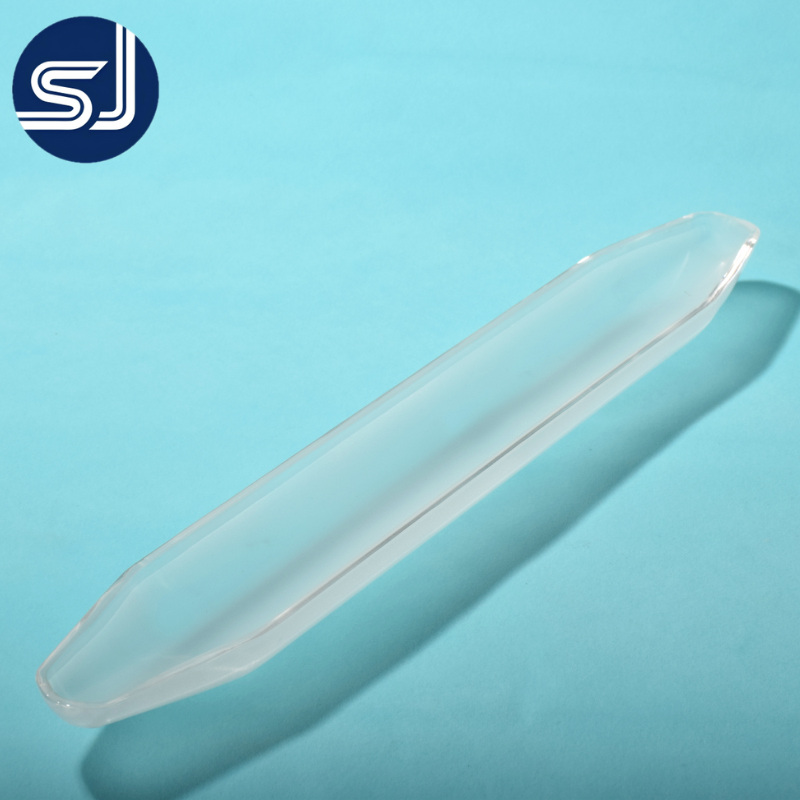
We produce customized pyrometer windows, viewing sight discs, and furnace boats starting from 1 piece. Our technical team evaluates mechanical tolerances, pressure ratings, and thermal gradients directly from your CAD files.
Heavy-Duty Export Crating
Every quartz glass window undergoes ultrasonic cleaning, optical coating protection, multi-layer shock foam separation, and vacuum sealing inside treated wooden export cases built for long-haul maritime or air transit to Myanmar.
Procurement Guidance
Frequently Asked Questions for Myanmar Buyers
Engineering responses covering pyrometer calibration, pressure ratings, logistics, and material selection.
How does a quartz window affect pyrometer temperature calibration?
Standard quartz glass exhibits an optical transmission of approximately 92% across visible and NIR wavelengths, with roughly 8% lost to Fresnel reflections at both air-glass interfaces. When installed in front of an infrared pyrometer, the instrument’s emissivity (ε) or transmission factor must be adjusted (typically calibrated between 0.90 and 0.93) to prevent an artificial reading decrease of 15°C to 40°C depending on target temperatures.
Can your quartz pyrometer windows withstand pressurized vessels?
Yes. By calculating the diameter-to-thickness aspect ratio based on vessel working pressures, we produce pressure sight discs from 3 mm up to 35 mm in thickness. Fused quartz exhibits a compressive strength of over 1100 MPa, making it far superior to tempered soda-lime glass in pressurized boilers, autoclaves, and reactor sight flanges.
How do you ship fragile quartz optics to Yangon or Mandalay without breakage?
We employ certified export-grade packaging engineering. Each quartz disc or tube is wrapped in anti-static protective film, isolated in high-density polyethylene (EPE) shock absorption foam cavities, and secured within reinforced multi-wall cartons or custom fumigated plywood crates with tilt/impact indicators. We routinely ship to Yangon Port (maritime) and Yangon International Airport (air express) with near-zero breakage rates.
What is the difference between JGS1, JGS2, and JGS3 quartz glass?
JGS1 is synthetic fused silica offering superior deep-UV transmission (down to 185 nm) with virtually no bubbles, ideal for laser optics and semiconductor UV lithography. JGS2 is optical fused quartz melted from high-grade natural crystal sand, offering excellent visible and near-infrared transmission (260–2500 nm), which represents the industrial standard for optical pyrometers and furnace windows. JGS3 provides infrared transmission extending to 3500 nm but lacks deep-UV capability.
What is the minimum order quantity (MOQ) for custom-cut shapes?
We support prototype validation and maintenance replacements with an MOQ of just 1 piece for custom-cut square or circular sight windows, furnace boats, and crucibles. Standardized tubes and laboratory quartzware are supported from 5 to 10 pieces, accommodating small-batch factory maintenance as well as recurring OEM production runs.
How should sight windows be maintained in high-dust Burmese cement or smelting plants?
High concentrations of airborne lime, slag, or metal dust cause surface deposits that diminish optical pyrometry accuracy. We recommend incorporating a positive-pressure air-purge collar (vortex cooler or clean dry instrument air purge) in front of the quartz window. For periodic manual maintenance, clean the optical surface using high-purity isopropyl alcohol or mild 5% hydrofluoric acid solution, followed by deionized water rinse.