Quartz Immersion Well Factory & Suppliers in the Indianapolis Market
Precision Fused Silica Engineering, Photochemical Reaction Vessels, and Specialized Industrial Glassware Tailored for Central Indiana's Advanced Life Sciences and High-Temperature Manufacturing.
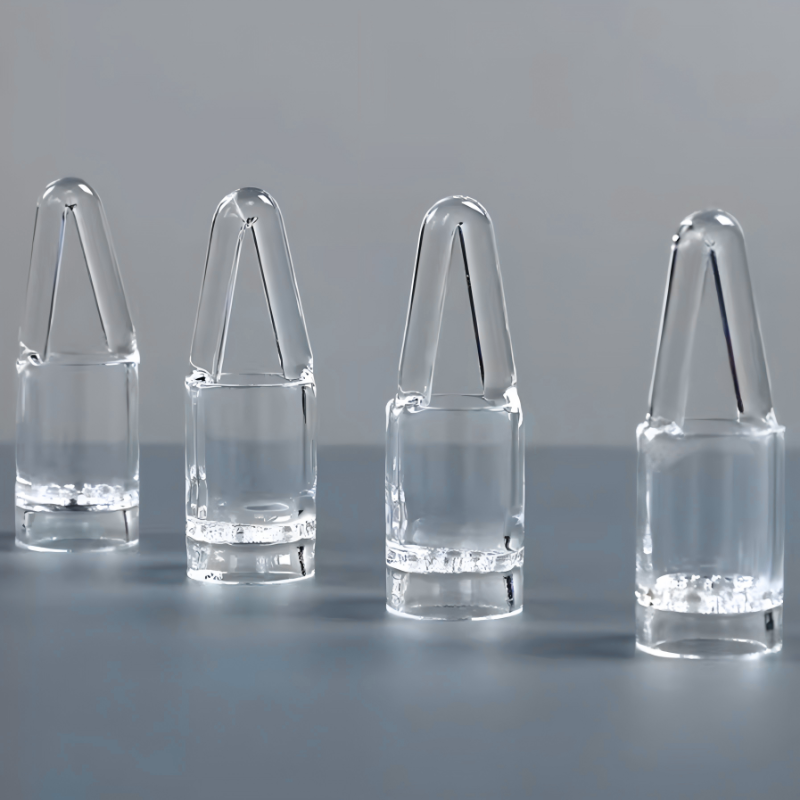
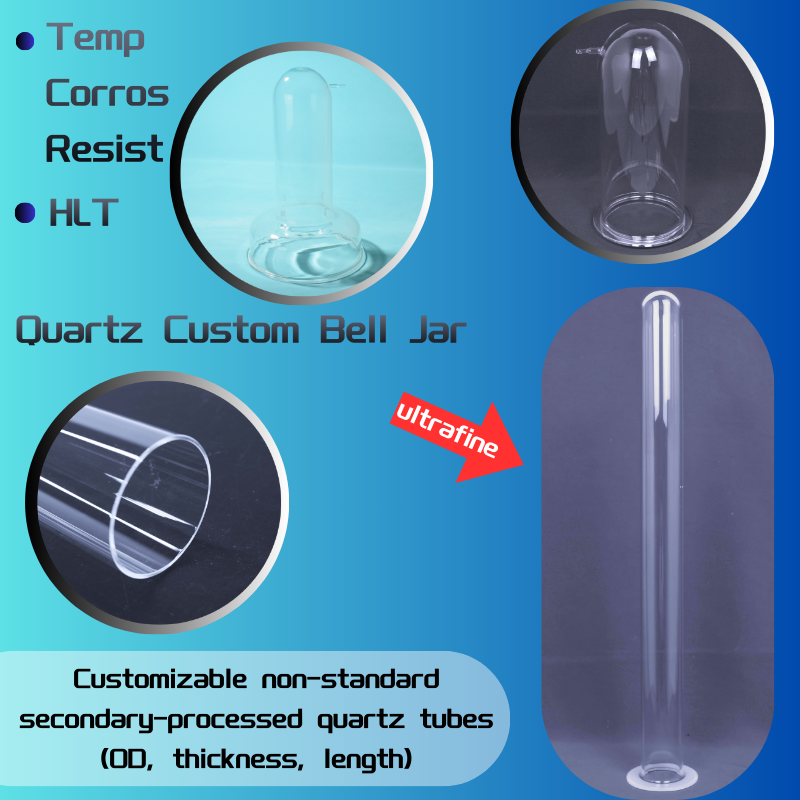
Acid/alkali-resistant polished fused quartz vessel with dome-closed end, 200 mesh thermal endurance, designed for aggressive metallurgical digestion and calcination.
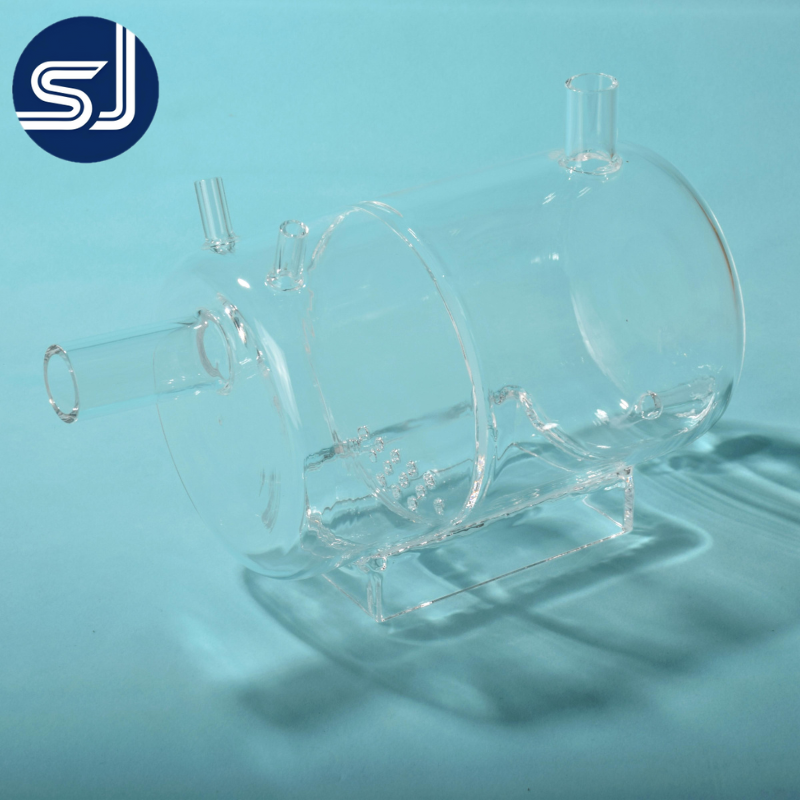
Optical-grade photocatalytic dome reactor engineered for closed electrochemical evaluation, deep ultraviolet transmission, and inert atmospheric containment.
Heavy-wall transparent quartz cylinder with precision-ground plugging rod assembly, tested under high-frequency inductive load up to 1100°C continuous service.
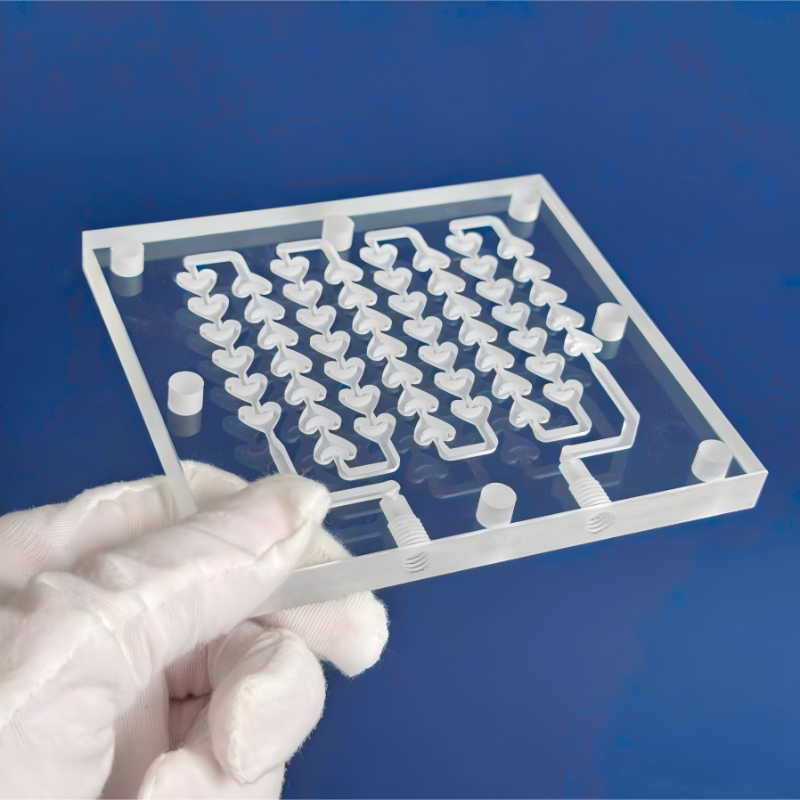
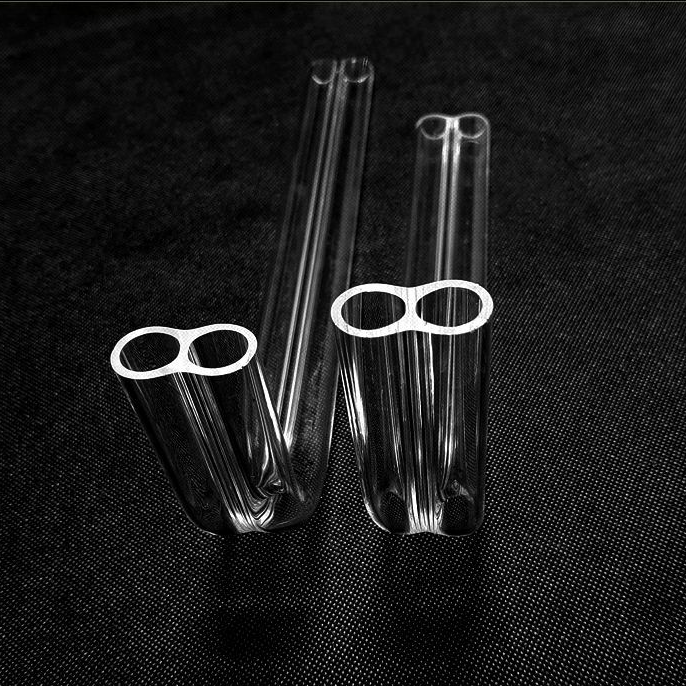
Corrosion-proof multi-channel distribution apparatus featuring optical transparency >85%, thermal resistance to 1100°C, designed for continuous-flow synthesis.
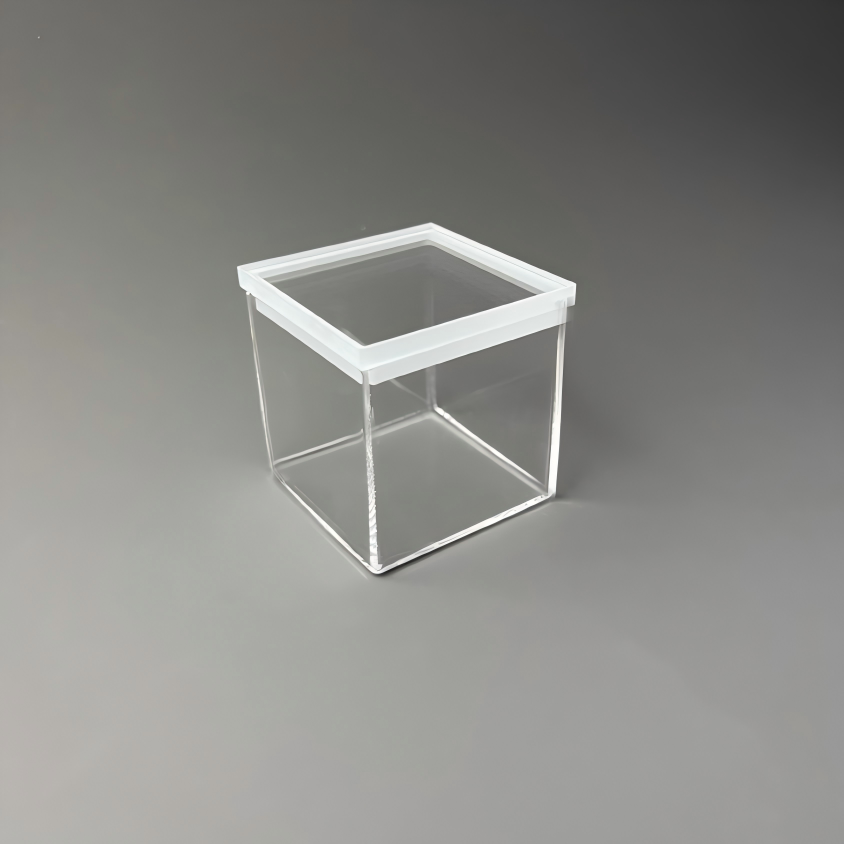
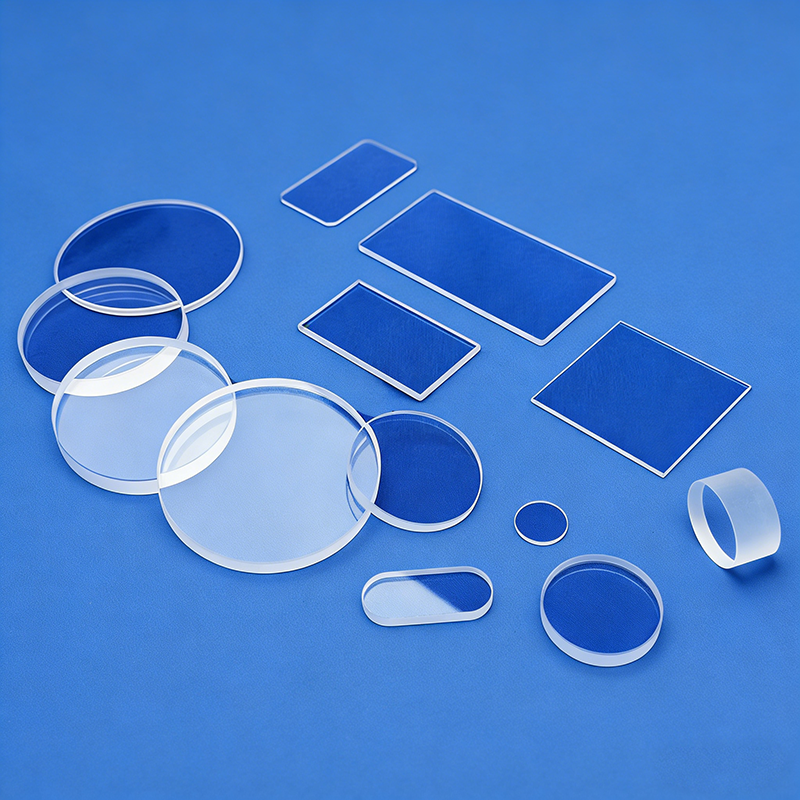
Precision-milled translucent and clear quartz substrates processed via ultrasonic drilling and flame beveling, serving as sight windows and reactor baffles.
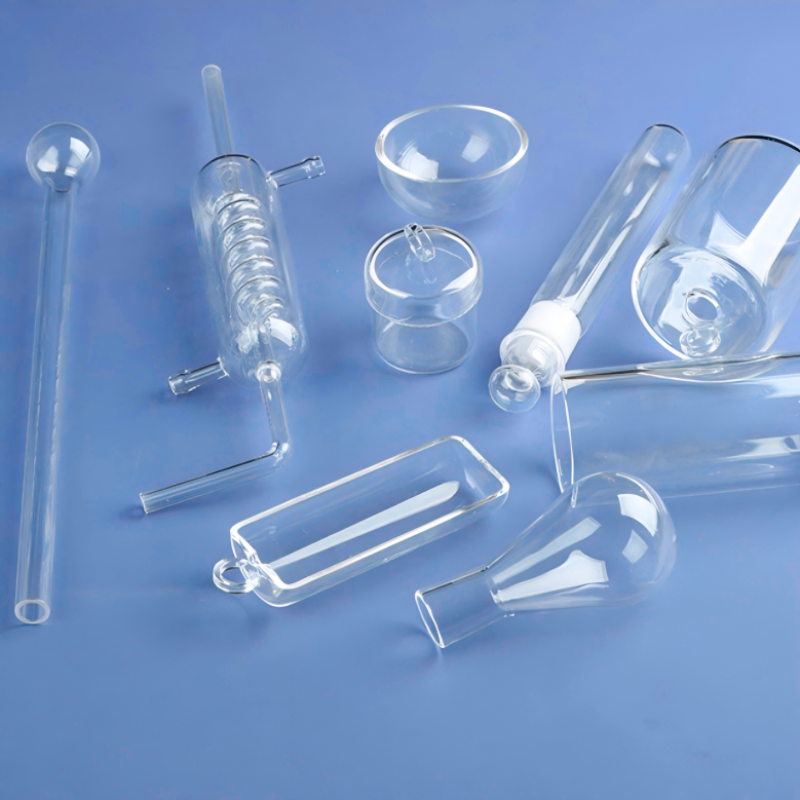
Zero-bubble, leak-proof fused silica process column constructed for negative-pressure sub-micron vapor deposition, epitaxial growth, and vacuum degassing.
Engineering White Paper: Industrial Fused Quartz Immersion Wells in Photochemical and Thermal Systems
In modern chemical processing, advanced oxidation procedures (AOP), and precision pharmaceutical catalysis, the choice of reactor enclosure governs reaction kinetics, photon efficiency, and process safety. A quartz immersion well functions as the foundational optical and thermal boundary between high-intensity radiation sources (such as medium-pressure mercury arc lamps, excimer lasers, or high-flux UV-C LED arrays) and the fluid reaction media. Because photochemical reactions are mediated by the direct absorption of specific light quanta (typically within the 185 nm to 365 nm spectrum), standard borosilicate glassware is insufficient due to its optical cutoff below 300 nm. Synthetic fused silica and optical-grade fused quartz (JGS1, JGS2) exhibit ultraviolet transmittance exceeding 85% to 92% at critical 254 nm germicidal and catalytic wavelengths.
Furthermore, immersion well assemblies operating in high-throughput chemical production face punishing exothermic conditions, localized temperature spikes exceeding 800°C near the lamp arc, and simultaneous contact with chilling fluids circulating through double-jacketed cooling envelopes. Fabricating these vessels demands an exceptionally low linear coefficient of thermal expansion (α ≈ 5.5 × 10⁻⁷ /K), near-zero bubble inclusion per DIN 58927 Class 0/1 standards, and molecular-level structural homogeneity to eliminate internal stresses that provoke catastrophic mechanical failure under pressure cycling.
99.999%
Maximum SiO₂ Purity
1683°C
Softening Point
>90%
UV Transmittance @ 254nm
1100°C
Continuous Working Temp
Localized Industrial Applications Across the Indianapolis & Central Indiana Ecosystem
The greater Indianapolis metropolitan area—anchored by Marion County, the I-65 Life Sciences Corridor, and neighboring advanced research hubs in West Lafayette and Bloomington—represents one of the United States' dense concentrations of chemical synthesis, pharmaceutical manufacturing, and technical metallurgy. Industrial operations across this territory require localized supply chains capable of delivering custom-machined quartzware with verifiable quality documentation.
Active Pharmaceutical Ingredient (API) Synthesis
Indianapolis biopharma and contract manufacturing organizations (CMOs) utilize custom jacketed immersion wells for late-stage continuous-flow photochemical functionalization, C-H activation, and UV-initiated peptide crosslinking without metallic leaching.
Municipal & Industrial Wastewater AOP
Water reclamation facilities throughout the White River basin apply heavy-wall quartz protective sleeves in high-output ozone/UV destruction reactors to oxidize recalcitrant endocrine disruptors and per- and polyfluoroalkyl substances (PFAS).
Advanced Battery & Nanomaterial Sintering
Indiana's rapidly scaling electric vehicle battery supply ecosystem leverages high-purity quartz reaction tubes and immersion vessels to prevent iron, nickel, and sodium contamination during lithium precursor calcination at >1000°C.
Academic & Clinical Research Laboratories
Laboratories across IUPUI, Purdue Research Park, and regional clinical consortia require single-piece custom photochemical reactor inserts, cold-cut circular quartz observation ports, and vacuum-sealed electrochemical cells.
Semiconductor & Optoelectronic Processing
Supporting microelectronics sub-assembly in Central Indiana, our semiconductor-grade negative-pressure tubes and high-conductance chips offer dielectric isolation and ultra-low outgassing under deep vacuum.
Automotive & Aerospace Heat Treating
Thermal processing facilities in Speedway, Kokomo, and Anderson rely on high-frequency transparent quartz sight windows and pyrometer wells to monitor induction melting and turbine component sintering without optical distortion.
Material Science Benchmark: Fused Quartz vs. Alternative Reactor Media
Specifying materials for photochemical immersion wells requires an understanding of silica glass categories. Natural fused quartz is produced by fusion of high-purity crystalline quartz sand (SiO₂ ≥ 99.99%), offering high mechanical stability and resistance to devitrification. Synthetic fused silica, synthesized via vapor-phase hydrolysis of silicon tetrachloride, provides higher transmission in the deep UV (185 nm VUV) and contains virtually no metallic impurities, making it ideal for photon-limited photo-oxidation.
Physical / Optical Property
Optical Grade Fused Quartz (JGS2)
Synthetic Fused Silica (JGS1)
Borosilicate Glass 3.3
SiO₂ Content (%)
≥ 99.99%
≥ 99.999%
≈ 81%
UV-C Transmission @ 254 nm (10mm)
≥ 88% - 90%
≥ 92%
≤ 0.5% (Opaque)
Working Temperature (Continuous)
1100°C
1150°C
450°C
Softening Point
1683°C
1730°C
820°C
Thermal Expansion (α, 20-300°C)
5.5 × 10⁻⁷ /K
5.2 × 10⁻⁷ /K
33 × 10⁻⁷ /K
Thermal Shock Resistance
Drop from 1100°C to 20°C water without fracture
Drop from 1100°C to 20°C water without fracture
ΔT ≈ 150°C maximum
Midwest Market Trends: Transitioning to Continuous Photoflow & Ozone Control
In conversation with plant engineers and laboratory directors throughout Marion County and the broader East North Central manufacturing region, three technological transitions are shaping procurement standards for quartz reaction equipment:
Shift from Batch to Continuous Annular Reactors: Traditional large-volume immersion well vessels (5L to 20L batch vessels) are increasingly supplemented by narrow-gap annular continuous-flow reactors. These designs require thin-walled, high-precision concentric quartz tubes (±0.05 mm dimensional tolerance) to maximize light penetration depths in highly absorbing reaction mixtures.
Ozone-Free Doped Formulations: When operating high-intensity mercury lamps in unpurged environments, 185 nm radiation converts ambient oxygen into hazardous ground-level ozone. Indianapolis manufacturers are specifying titanium-doped ozone-free quartz immersion wells, which block radiation below 220 nm while allowing the primary 254 nm and 365 nm bands to pass through unimpeded.
Direct-to-Factory Prototyping: Supply chain managers are actively bypassing multi-tier regional brokers in favor of direct collaboration with verified primary quartz manufacturers. Access to CAD-driven engineering review, fast one-piece prototyping, and direct technical consultation mitigates costly machining errors and shortens custom glassware procurement from months to days.
Factory Strengths: Certified Engineering from the Crystal Capital
Located in Donghai County—the globally recognized epicenter of high-purity natural silica reserves—our manufacturing facility combines raw quartz sand beneficiation with precision cold-cutting, flame lathe synthesis, and cleanroom annealing operations. For commercial and scientific buyers in the Indianapolis market, we offer measurable technical and commercial advantages:
TÜV Rheinland Assessed
Our production facilities, machine capacities, legal credentials, and export testing methods are verified on-site by TÜV Rheinland, ensuring international traceability.
1-Piece Custom Prototyping
We eliminate prohibitive minimum order quantities. Custom double-jacketed wells, complex flow-splitting manifolds, and domed cells start from a single test unit.
Integrated Hot & Cold Tooling
From hydrogen-oxygen glass lathes to CNC diamond slotting, multi-axis surface grinding, and optical flame polishing, every stage occurs under one roof.
Controlled Annealing
Every welded joint and jacketed transition undergoes programmed thermal de-stressing in electronic annealing furnaces, eliminating micro-fracture propagation.
Strict Bubble Class Control
Optical process columns conform to high transmittance and low-inclusion classifications, ensuring zero beam deflection and uniform photon flux.
Shock-Proof Export Crating
High-fragility quartz products destined for the United States are packed using multi-layer molded EPE foam buffers and ISPM-15 certified wooden containers.
Central Indiana Procurement: Frequently Asked Questions (FAQ)
What wall thickness is recommended for double-jacketed quartz immersion wells?
For photochemical applications involving internal coolant circulation, we typically engineer the inner lamp sleeve with a 1.8 mm to 2.2 mm wall to maximize optical transmission and thermal dissipation. The outer cooling jacket is commonly specified at 2.5 mm to 3.0 mm to resist fluid pressure (typically up to 1.5 bar) and thermal cycling. For higher pressures or aggressive agitation, finite element analysis (FEA) is conducted to adjust jacket spacing and wall thickness accordingly.
How does your factory prevent thermal shock failure between the hot lamp core and chilling coolant?
Fused quartz possesses an extraordinarily low thermal expansion coefficient (α ≈ 5.5 × 10⁻⁷ /K), roughly 1/6th that of borosilicate glass. This gives it virtually unmatched thermal shock resilience. To eliminate weak points, all weld joints between the inner sleeve, cooling jacket, and hose connections undergo multi-stage oxy-hydrogen flame smoothing followed by a 1150°C soak-and-ramp annealing cycle to relieve mechanical strain.
Can we order custom immersion wells matching non-standard lab glassware joints (#50 Ace-thread, standard taper, or spherical)?
Yes. We fabricate custom ground-glass joints, including Standard Taper (24/40, 29/42, 45/50), spherical ball-and-socket joints, flange fittings (NW/KF, ISO), and threaded quartz necks (GL-14, GL-25, #50 Ace). We match your existing reactor vessel drawings or supply complete matched glass reactor bodies.
What is the typical shipping lead time and customs process for Indianapolis deliveries?
Custom prototypes generally complete fabrication within 7 to 14 business days following CAD drawing sign-off. Air express delivery (FedEx, DHL, or air freight to Indianapolis International Airport - IND) takes approximately 4 to 7 business days. We provide complete commercial documentation, Harmonized Tariff Schedule (HTS) codes, and export compliance paperwork for efficient US Customs clearance.
How do you verify quartz purity and prevent chemical leaching in pharmaceutical synthesis?
Our quartz items are manufactured from tested natural crystalline quartz sand with trace metal content (Fe, Al, Ti, Ca, Mg) strictly controlled below ppm levels, verified via ICP-MS spectral analysis. Finished parts undergo high-concentration nitric/hydrofluoric acid leaching and 18.2 MΩ·cm deionized water rinses prior to packaging, ensuring clean validation in GMP and FDA-regulated environments.
What is the protocol for cleaning photochemical deposits or solarization films from immersion wells?
Organic fouling on the exterior reactor surface can be cleaned using piranha solution (3:1 H₂SO₄ to H₂O₂) or standard organic solvents (acetone, ethanol) without damaging the quartz substrate. To remove calcification inside the water jacket caused by hard cooling water, circulate a 5% to 10% citric or dilute hydrochloric acid solution. Never use hydrofluoric acid or hot concentrated phosphoric acid, as both chemically etch silica glass.
Request a Technical Drawing Review & Quote
Whether you require a replacement double-jacketed photochemical well, custom flow-splitting apparatus, or high-volume semiconductor process tubes for your facility in the Indianapolis region, our engineering team is ready to evaluate your specifications.