Featured Quartz Protection Tubes & Custom Glassware
Precision-fabricated in Donghai, Jiangsu using ultra-pure natural fused quartz and synthetic fused silica. Each configuration is tailor-made to resist aggressive thermal shock, high-vacuum mechanical loading, and reactive atmospheric etching.
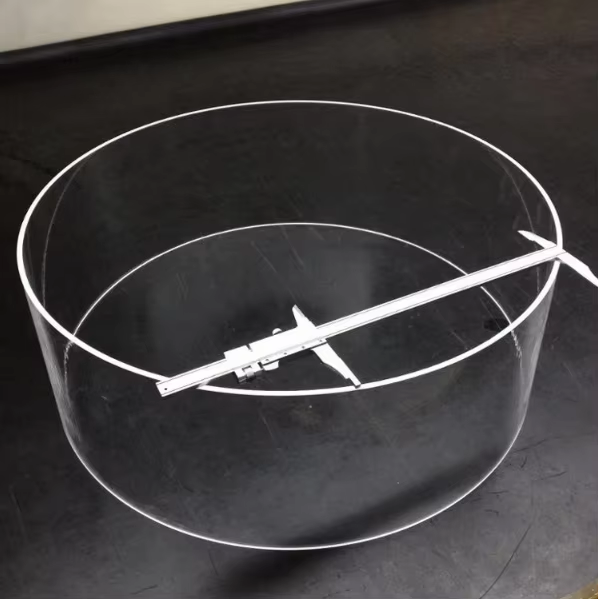
Factory Supply Optical Quartz Sapphire Tubes High Temperature Resistant UV Glass Test Pipe
Specialized for powder sintering, oxy-hydrogen flame welding, tight-radius bending, and multi-spectral optical pyrometry observation.
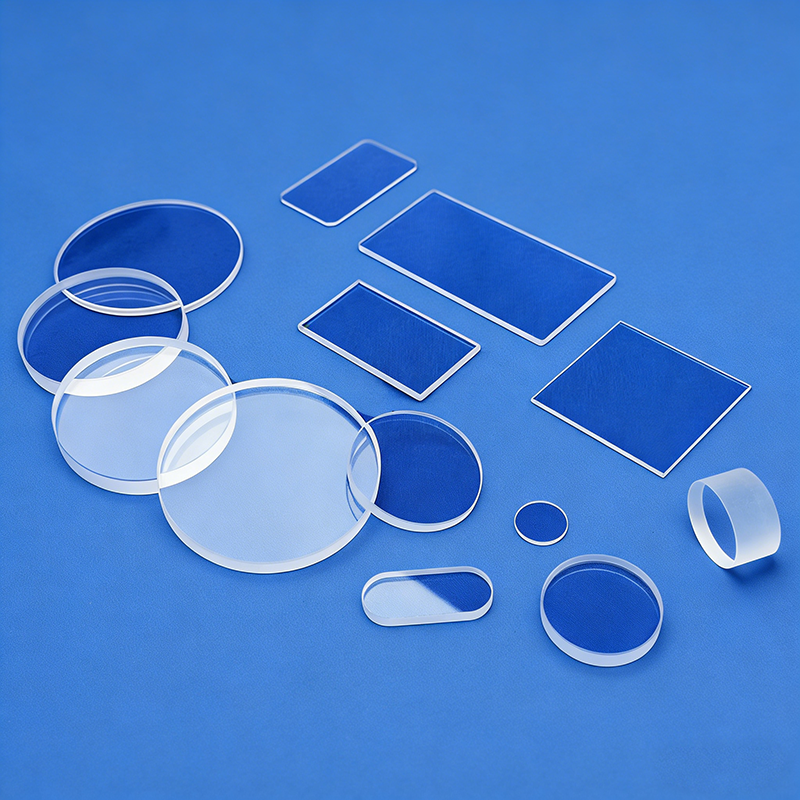
SJ QUARTZ Customized Translucent Natural Fused Quartz Arc-Welding Cutting Services
Opaque and translucent fused silica protection sheaths providing high diffuse reflectivity, heat retention, and severe acid tolerance.
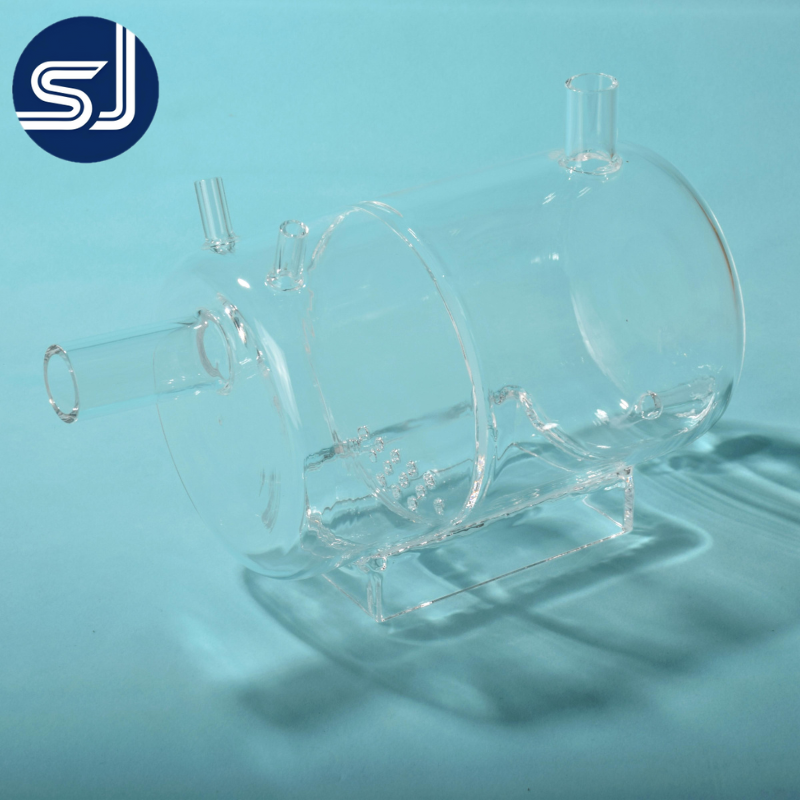
SJ QUARTZ High-Temperature Corrosion-Resistant 99.99% SiO2 1100°C Quartz Flow Splitting Bottle
Custom fluidic splitters with >85% high optical transparency, continuous 1100°C resistance, and non-reactive acid surfaces.
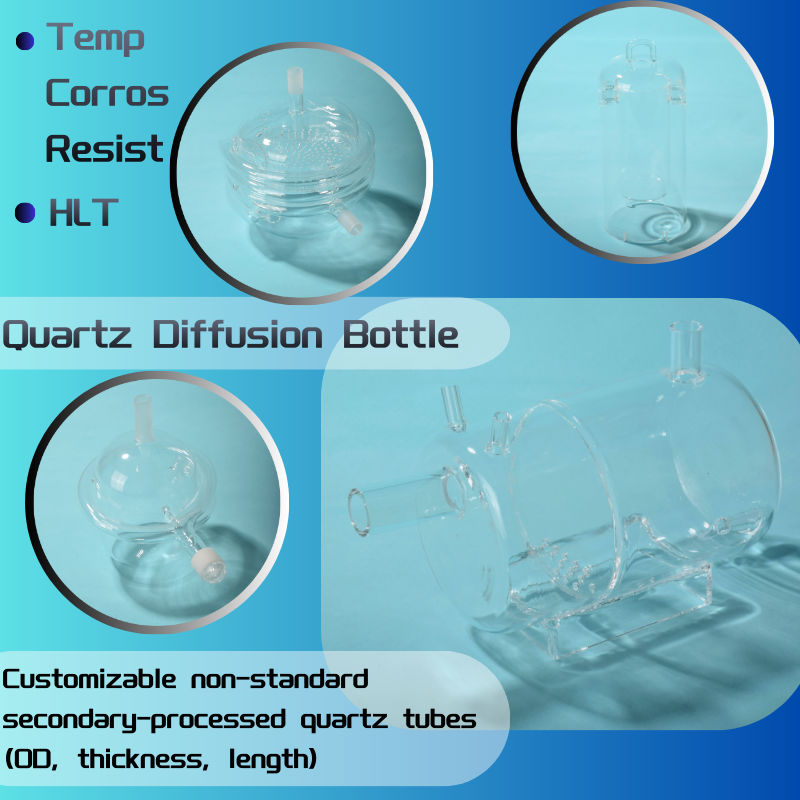
SJ 135 Custom High Purity Clear Quartz Tube Condensers Separatory Funnels Purification Units
Semiconductor-grade clear quartz condensation columns and waste containment units engineered with zero trace metallic leaching.
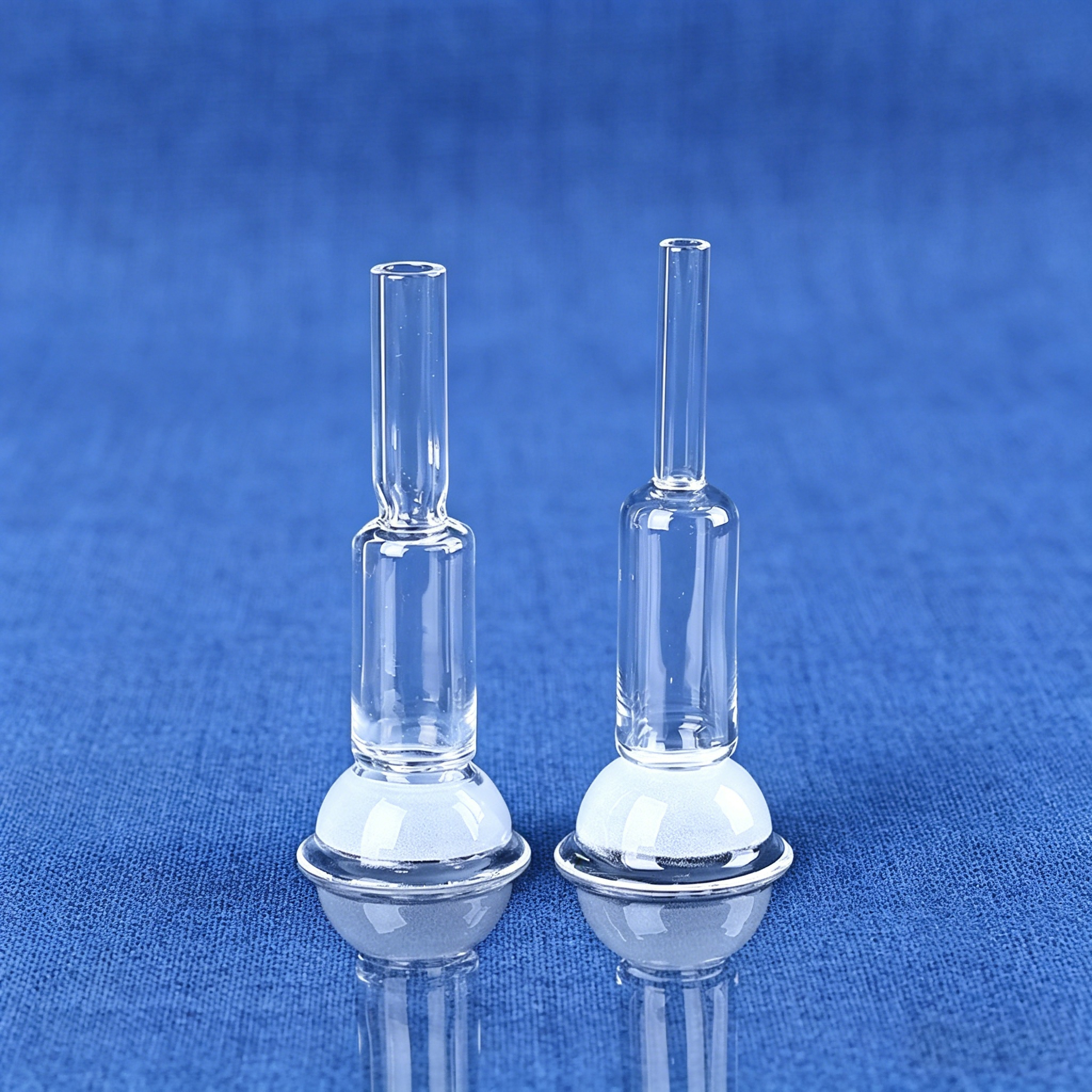
Custom High Purity Quartz C-shaped Small-sized BET Tube Welding Bending Cutting
Precision flame-bent C-tubes for BET specific surface area analyzers, vacuum degas manifolds, and miniature high-temperature cells.
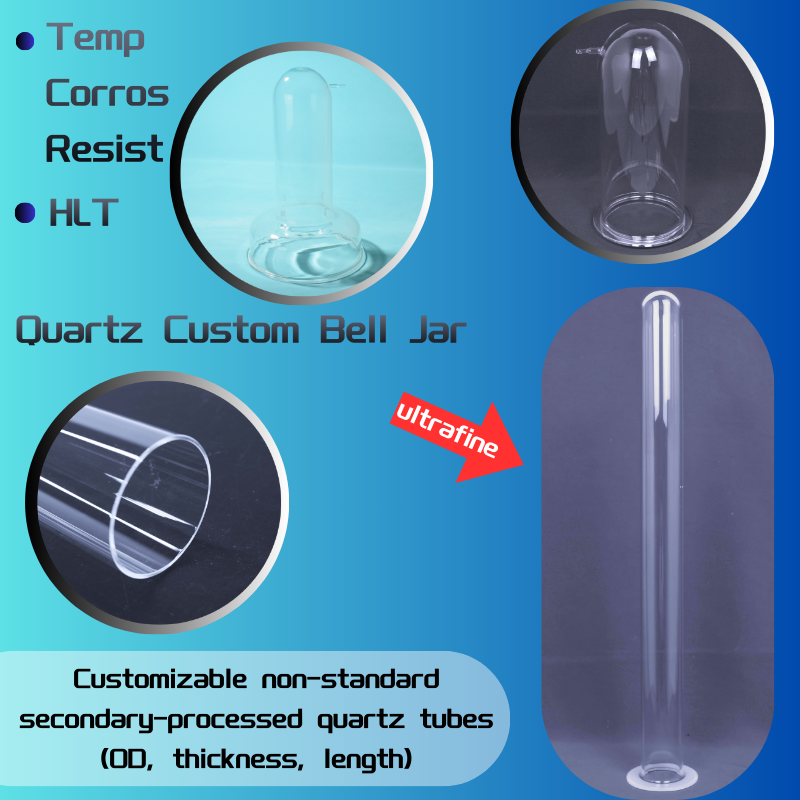
SJ 130 QUARTZ Clear Customizable High-Precision Negative Pressure Leak-Proof Vacuum Tube
99.99% SiO₂ heavy-wall vacuum reaction chambers tested for ultra-low helium leak rates in advanced low-pressure wafer processing.
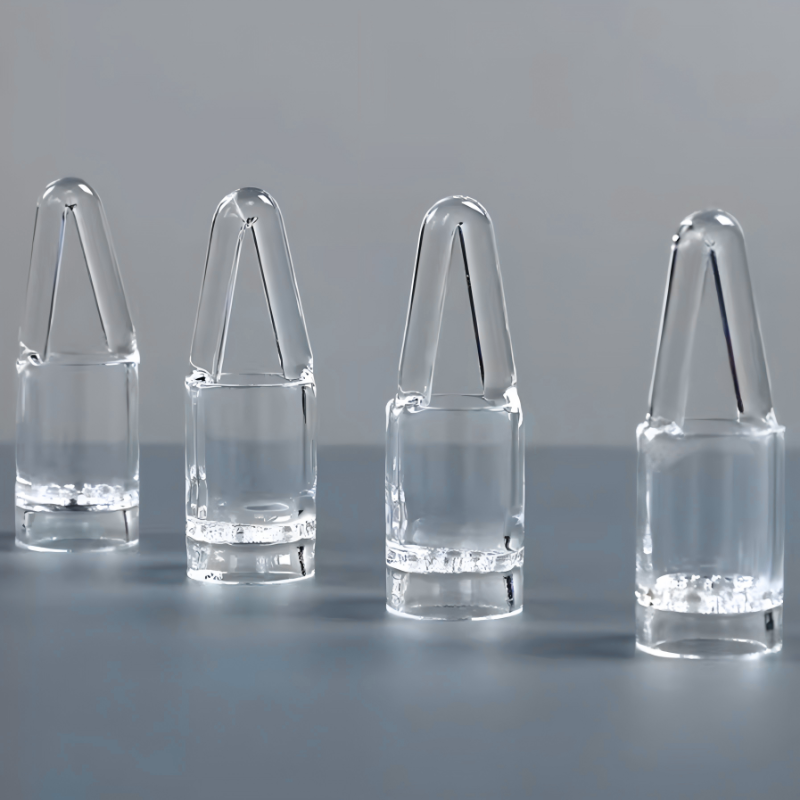
Quartz Crucible Acid/Alkali Resistant Polished Ozone Free Glass Basket Beaker Dome Closed End
Closed-end domed protection sheaths and sintered mesh filter crucibles built to withstand metallurgical slag and thermal shock cycling.
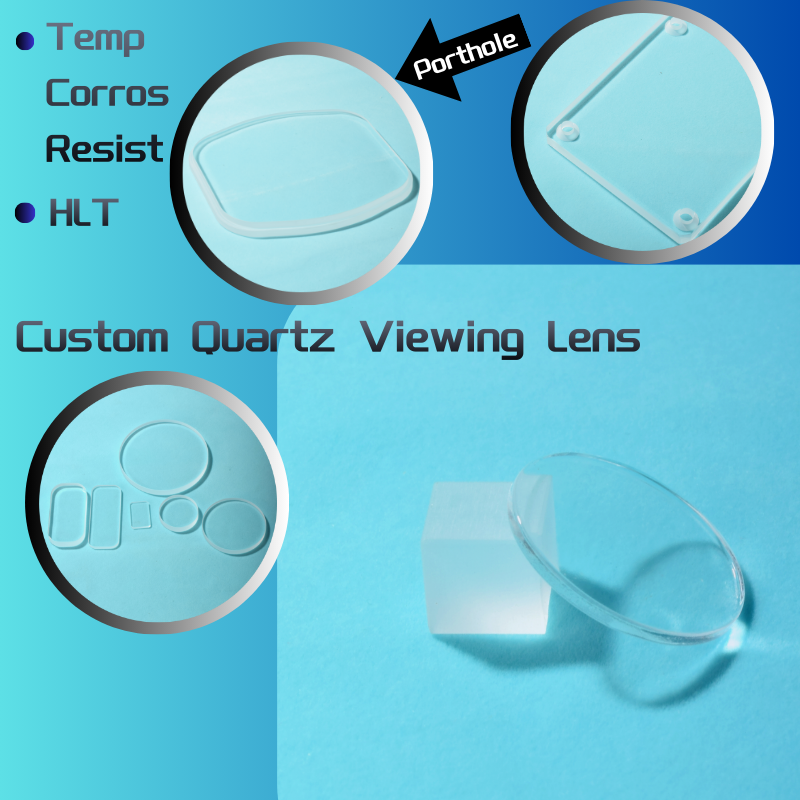
SJ SJ 126 Natural Fused Quartz Square Thin Glass Slide Optics High Transparency Laboratory Use
Laser-cut, micro-polished optical windows and protection slides with minimal bubble count and exceptional deep UV-to-NIR spectral transmission.
Vitreous Silica Science: Physics of Quartz Protection Tubes in Aggressive Thermal Regimes
A material-level investigation into crystallographic stability, hydroxyl (OH) concentration kinetics, devitrification thresholds, and thermo-mechanical endurance in industrial furnace environments.
In high-temperature industrial processing, selecting thermocouple sheaths, pyrometry sight windows, and reaction furnace barriers demands an uncompromising balance between thermal shock resistance, chemical inertness, and structural rigidity. Fused quartz protection tubes—manufactured by melting high-purity natural silica sand ($\text{SiO}_2 \ge 99.99\%$) under high-temperature oxy-hydrogen or electric vacuum conditions—represent the premier vitreous material for shielding sensitive temperature probes and reactive wafer chemistry.
Unlike polycrystalline refractory ceramics (such as alumina, mullite, or silicon carbide), vitreous silica possesses an amorphous network consisting of cross-linked silicon-oxygen tetrahedra ($\text{SiO}_4$). Because this random network exhibits no grain boundaries, quartz protection tubes offer near-zero thermal expansion ($5.5 \times 10^{-7}/\text{K}$ from $20^\circ\text{C}$ to $1000^\circ\text{C}$). This extraordinarily low coefficient allows an operator to extract a quartz protection tube glowing at $1100^\circ\text{C}$ and plunge it immediately into ice water without micro-cracking, catastrophic thermal fatigue, or wall rupture.
Critical Devitrification Mechanics (High-Temperature Cristobalite Phase Transformation)
The operational ceiling of a quartz protection tube is governed by devitrification—the transition from an amorphous metastable glass back into crystalline $\beta$-cristobalite above $1150^\circ\text{C}$. This phase inversion accelerates when alkaline elements (sodium, potassium, lithium) or surface particulates act as nucleation catalysts. Once cristobalite forms, subsequent cooling past $270^\circ\text{C}$ induces a volumetric contraction of approximately $5\%$, causing localized micro-spalling and tube failure. Vulra Quartz minimizes this risk by implementing ultra-clean raw-sand leaching, ultrasonic hydrofluoric de-contamination, and precise flame polishing to yield atomic-grade surface passivity.
Furthermore, internal hydroxyl ($\text{OH}^-$) radical content serves as the principal plasticizer within the silicate structure. Hydroxyl groups cleave the bridging $\equiv\text{Si}-\text{O}-\text{Si}\equiv$ bonds into non-bridging terminal silanol ($\equiv\text{Si}-\text{OH}$) groups. This atomic cleavage lowers the viscosity of the tube, depressing the annealing point ($1140^\circ\text{C}$ standard) and causing accelerated structural sagging under mechanical load or vacuum draw. Vulra Quartz strictly controls the synthesis environment—differentiating standard thermal protection tubes ($\text{OH} \approx 150-200\text{ ppm}$) from low-hydroxyl electrically fused quartz ($\text{OH} < 20\text{ ppm}$)—guaranteeing structural integrity during extreme horizontal furnace operations.
| Quartz Grade | SiO₂ Purity | Trace Metals (Total) | Hydroxyl [OH⁻] | Softening Point | Primary Industrial Use-Case |
|---|---|---|---|---|---|
| Semiconductor Grade (SJ-135) | ≥ 99.999% | ≤ 8 ppm | < 30 ppm | 1683 °C | LPCVD, PECVD, Epitaxy, Wafer Carriers |
| Thermal Sheath Grade (SJ-130) | ≥ 99.99% | ≤ 20 ppm | < 150 ppm | 1665 °C | Type S/R Thermocouples, Industrial Pyrometry |
| Optical Precision (SJ-126) | ≥ 99.998% | ≤ 10 ppm | < 5 ppm (Synthetic) | 1710 °C | UV/IR Sight Windows, Spectrophotometer Cells |
| Ozone-Free Doped Series | ≥ 99.95% (Ti-doped) | ≤ 30 ppm | < 100 ppm | 1650 °C | UV Curing, Corona Discharge, IR Heater Sheaths |
| Translucent Arc-Fused | ≥ 99.95% | ≤ 35 ppm | < 50 ppm | 1670 °C | Diffused Heat Shields, Metal Smelting, Foundry |
The Donghai Advantage: Integrated Engineering & Purity Control
Headquartered in Donghai County—the crystal and silicon capital of China—Lianyungang Vulra Quartz Products Co., Ltd. combines geological feedstock superiority with certified European and American standard fabrication.
TÜV Rheinland Audited Facility
Our production plants at No. 9 Dingxin Road undergo stringent annual on-site third-party verifications by TÜV Rheinland. We guarantee authenticated legal status, dedicated ODM export capacity, and ISO-aligned production documentation.
Dual-Stream Hot & Cold Machining
From CNC diamond-wire multi-axis cutting, high-speed core drilling, and optical edge grinding to precision glass-lathe bench welding, dome capping, and oxy-hydrogen tube necking—every conversion occurs entirely under one roof.
Stress Annealing & Cleanroom Acid Wash
Every hot-worked quartz protection tube undergoes monitored electrical oven annealing to eliminate residual wall stress, followed by a concentrated cleanroom $\text{HF}/\text{HNO}_3$ de-greasing bath and high-purity $18\text{ M}\Omega\cdot\text{cm}$ DI water rinse.
Future Procurement Trends: Where Industrial Quartz Is Heading
As photovoltaic wafer diameters expand and sub-3nm semiconductor fabrication nodes tighten purity parameters, B2B procurement leaders must anticipate rapid technological shifts in fused silica protection sheaths.
Transition to Sub-ppm Ultra-Low Alkali Feedstocks
Advanced silicon wafer manufacturing and next-generation power electronics (SiC/GaN) have made trace copper, sodium, and iron migration intolerable. Procurement is pivoting from 99.99% standard clear tubing to synthetic 99.999% fused silica sheaths where total metallic impurities remain strictly below 1 ppm, preventing gate-dielectric degradation during 1250°C diffusion.
Expansion to Jumbo Diameters (Ø300mm to Ø800mm)
With photovoltaic manufacturers adopting massive TOPCon, HJT, and Perovskite-tandem cells, the scale of horizontal quartz reaction tubes has increased exponentially. Tubes must support heavier furnace boats without wall deflection. Buyers are demanding thick-wall (8mm–14mm) continuous arc-cast tubing featuring tailored internal stress profiles.
Laser-Glazed Anti-Devitrification Surface Treatments
In aggressive coal gasification, molten metal pyrometry, and cement kiln monitoring, standard mechanical polishing leaves sub-micron fissures that trigger cristobalite growth. Automated $\text{CO}_2$ laser-glazed vitrification seals superficial fissures, tripling the functional lifespan of quartz protection tubes subjected to cyclic thermal shocks.
Closed-Loop Sustainable Re-Manufacturing & Tracking
European and North American regulatory mandates on corporate carbon accounting are driving enterprise procurement to choose suppliers with closed-loop recycling protocols. Spent, unbroken tubes are acid-stripped, ground into high-purity cullet, and melted into non-contact outer sheaths, cutting scope-3 greenhouse emissions by up to 38%.
Frequently Asked Questions: Sourcing Quartz Protection Tubes
Direct technical clarifications from our chief glassblowers and quality-assurance engineers to eliminate specification errors prior to batch fabrication.
What is the absolute maximum operating temperature for your quartz protection tubes?
Our standard fused quartz protection tubes operate continuously at up to 1100°C and handle short-duration thermal excursions up to 1450°C. The softening point is approximately 1683°C. For long-duration vacuum operations above 1150°C, we advise increasing the tube wall thickness to forestall plastic sagging under atmospheric differentials.
How does Vulra Quartz prevent catastrophic breakage during international ocean and air freight?
Fragile quartz demands specialized engineering packaging. Each individual tube is wrapped in anti-static PE film, placed inside shock-absorbing closed-cell EPE foam channels, boxed within multi-wall corrugated sleeves, and finally locked within reinforced, fumigated plywood crates built to sustain rough handling and drop-impacts.
What dimensional tolerances can you guarantee on custom OEM drawing specifications?
For outer diameters ($\text{OD}$) below 50mm, our precision mechanical grinding and drawing lines hold tolerances of ±0.05mm. For large tubes (>100mm to 800mm), standard tolerance is ±0.5% of diameter or tighter upon agreement. Wall thickness concentricity is held within 5%, and straightness is controlled within ≤1.5mm per meter.
What is the chemical resistance of fused silica against severe industrial acids and alkalis?
Quartz is completely inert to almost all organic and mineral acids—including hydrochloric ($\text{HCl}$), sulfuric ($\text{H}_2\text{SO}_4$), and nitric ($\text{HNO}_3$) acids—even at elevated temperatures. The only chemical exceptions that dissolve vitreous silica are hydrofluoric acid ($\text{HF}$) and concentrated phosphoric acid ($\text{H}_3\text{PO}_4$) above 150°C. Strong caustic alkalis will slowly etch quartz at temperatures above 100°C.
Can you provide closed-end, domed, or threaded quartz protection sheaths?
Yes. We specialize in hot flame-worked closed ends, including hemispherical domed closures, conical ends, and dead-flat ground terminations. We also machine quartz screw threads, precision-ground ball/socket joints, and quartz-to-metal transition flanges for immediate integration into vacuum instrumentation.
What is your prototyping policy, and what is the typical delivery timeframe?
We support fast R&D validation with a 1-piece Minimum Order Quantity (MOQ) on most custom-machined protection tubes. Standard prototype fabrication typically completes within 3 to 7 working days, followed by priority international express dispatch (DHL/FedEx/UPS), while bulk container production runs on a 15–20 day cycle.
Ready to Engineer Your Custom Quartz Protection Tubes?
Submit your 2D CAD sketches, 3D STEP files, or technical purity parameters directly to our senior glass engineering desk. Receive a comprehensive DFM (Design for Manufacturability) review and transparent factory quotation within 12 hours.
Get a Quote