Featured Fused Quartz & Optical Components
Explore our verified high-purity quartz product line engineered for thermal stability, optical clarity, and semiconductor-grade vacuum sealing.

Custom Clear Fused Quartz Tube With/Without Handle 99.999% Purity
View Details →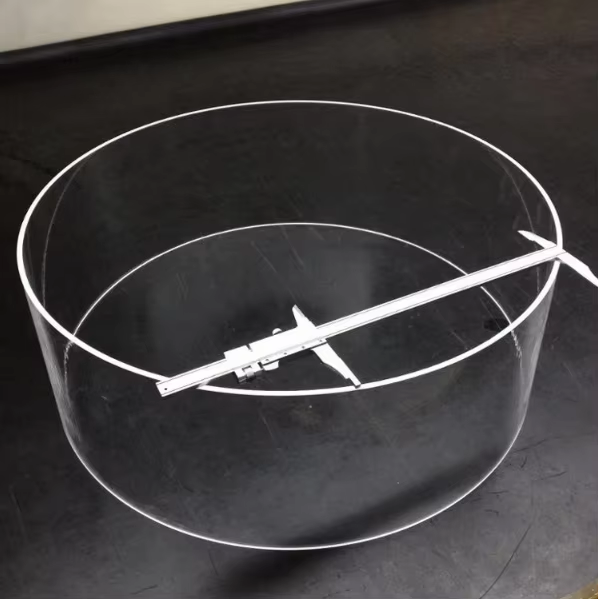
Factory Supply Optical Quartz Sapphire Tubes High Temperature UV Glass
View Details →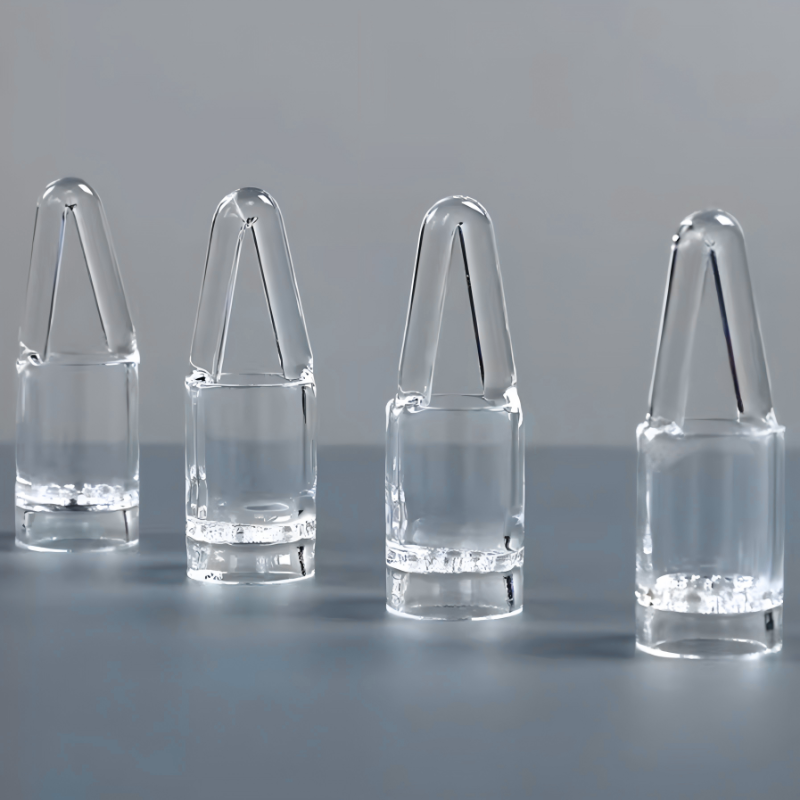
Quartz Crucible Acid/Alkali Resistant Polished Ozone Free Glass Basket
View Details →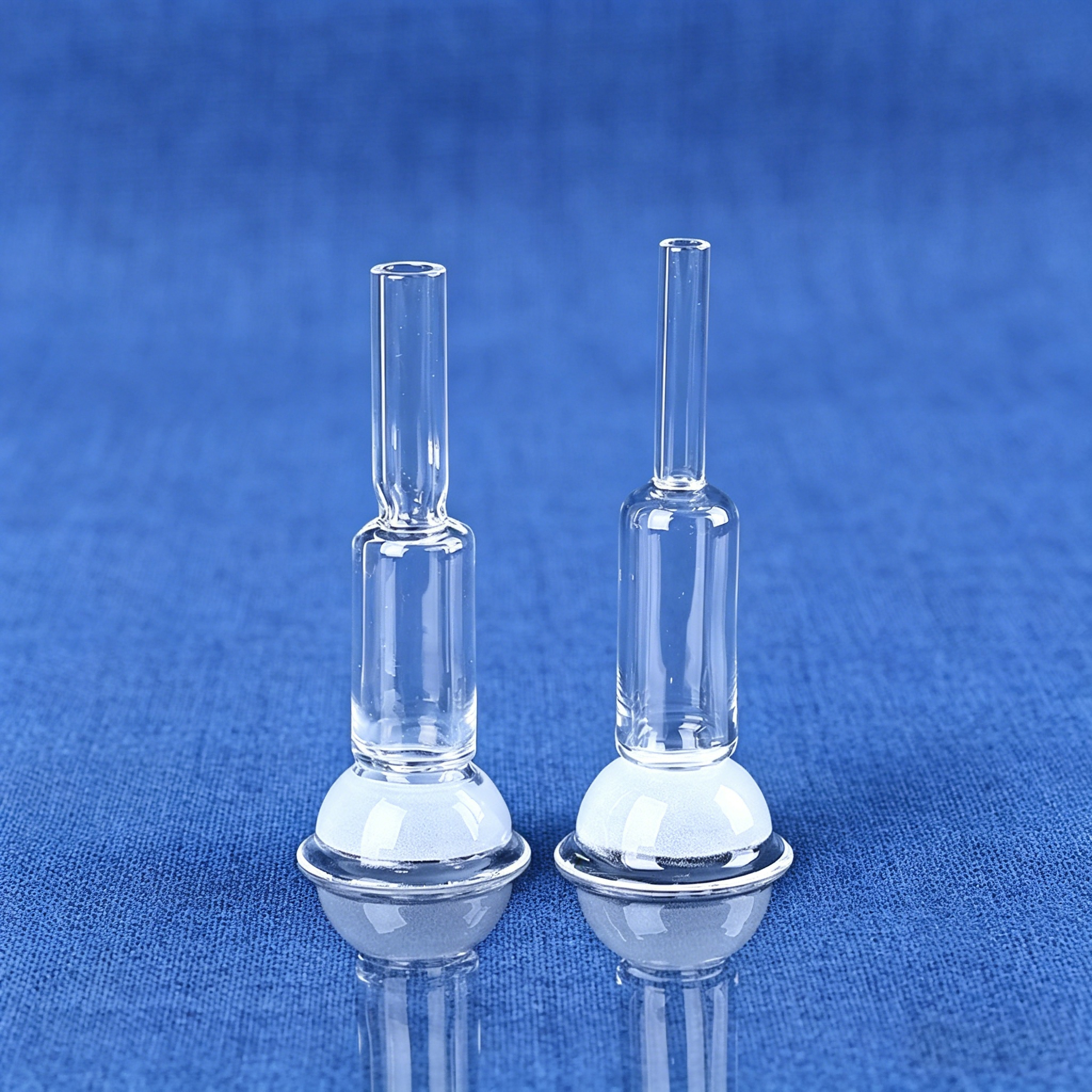
Custom High Purity Quartz C-shaped Small-sized BET Tube Welding
View Details →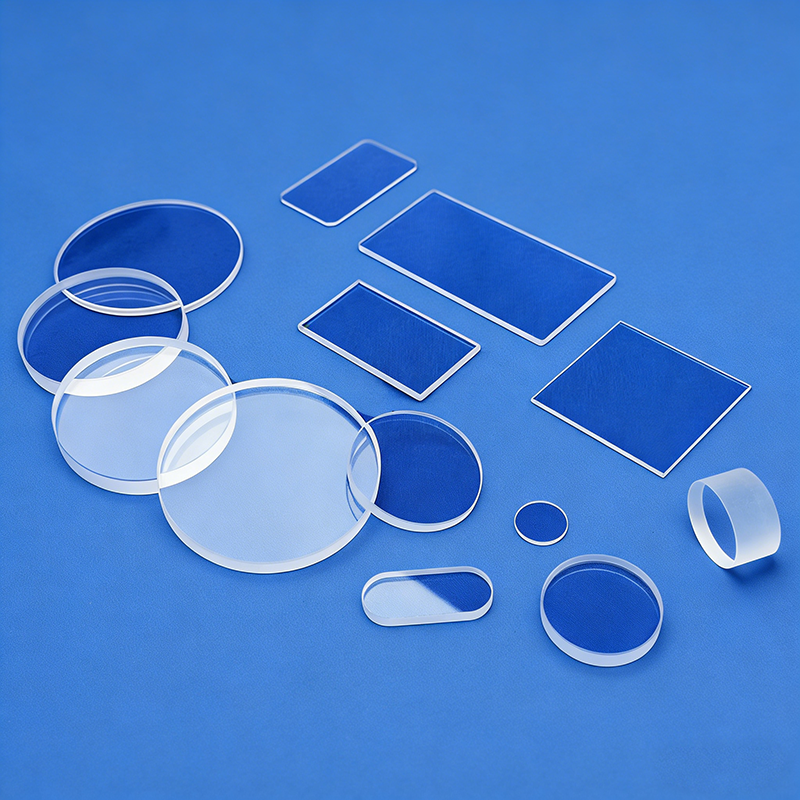
Customized Translucent Natural Fused Quartz Arc-Welding Cutting Services
View Details →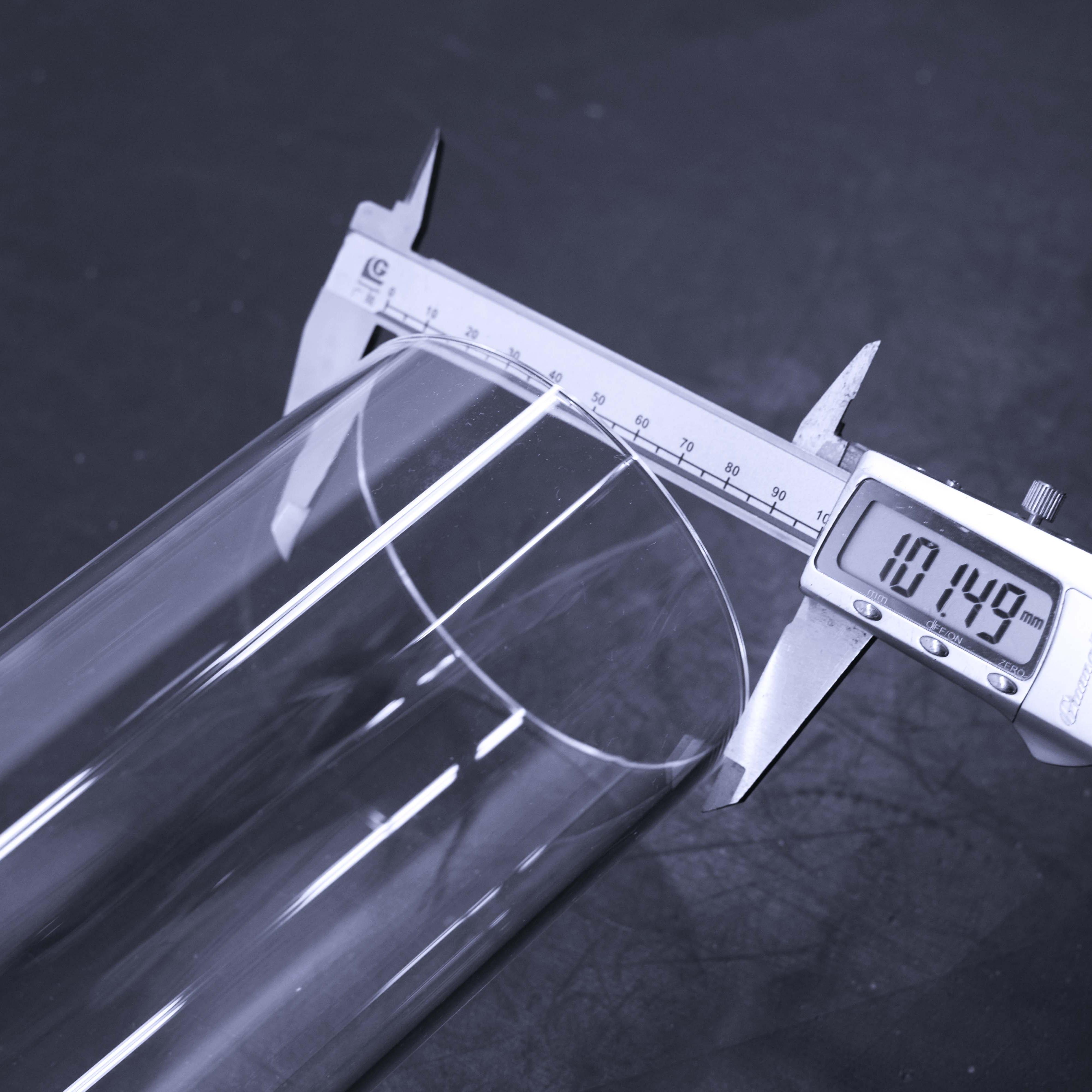
High Purity Quartz Transparent Polished Glass Tube Hollow High Temp
View Details →
Clear Refractory Fused Quartz Crucible Bowl 1683°C Softening Point
View Details →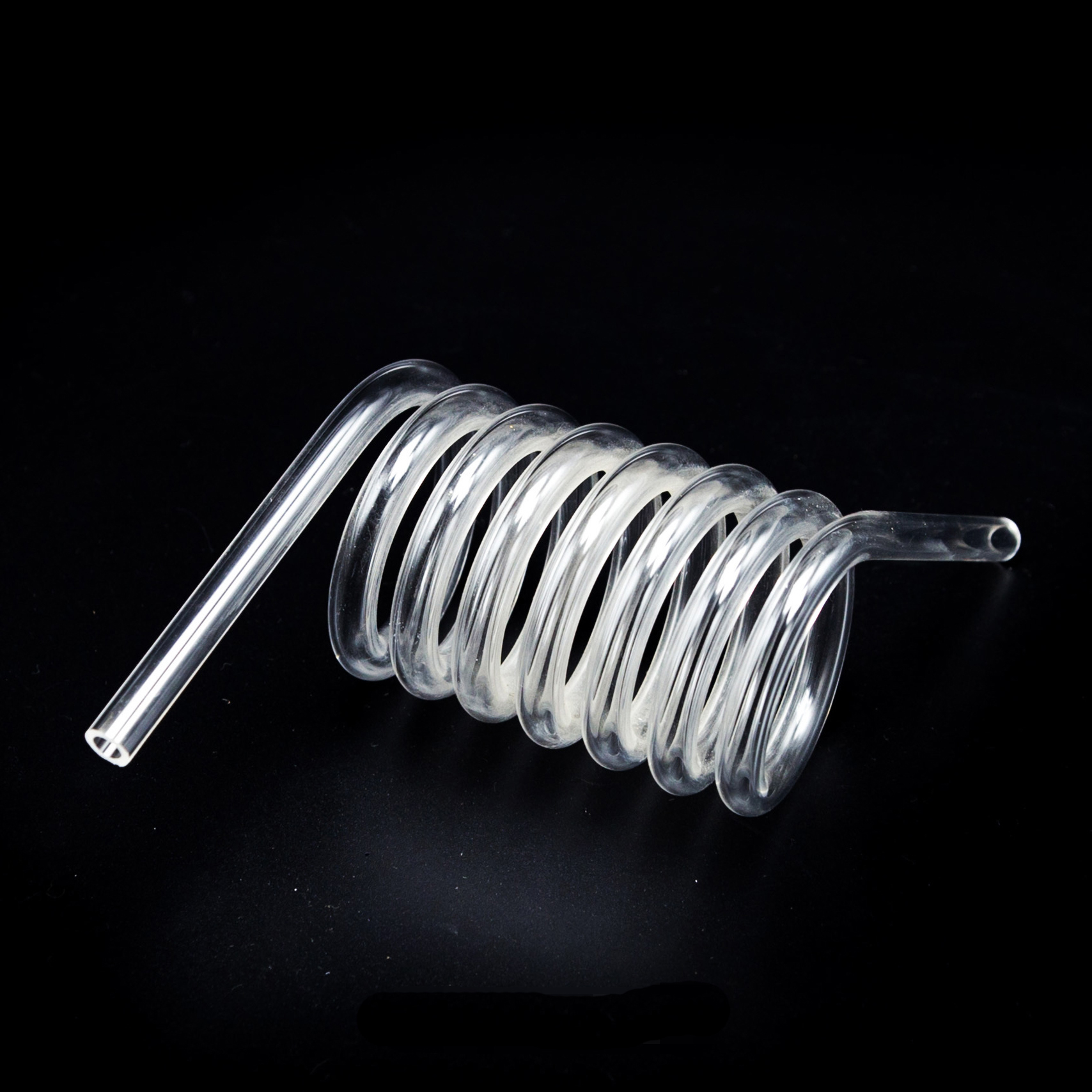
High Purity Polished Clear Quartz C Shape Spiral/Bent/Custom Tubes
View Details →Comprehensive Engineering Guide: Fused Quartz Sight Glasses for Infrared Pyrometry
In high-temperature thermal processing industries—ranging from semiconductor crystal growth and steel metallurgy to glass melting and petrochemical pyrolytic cracking—accurate non-contact temperature monitoring is paramount. Pyrometers and infrared thermal imaging cameras rely on direct line-of-sight vision into pressurized furnaces, vacuum chambers, and high-temperature reactors. The critical link in this optical measurement chain is the Quartz Pyrometer Window (also known as a pyrometer sight glass or optical viewport).
As a premier China wholesale quartz pyrometer window factory and exporter, Lianyungang Vulra Quartz Products Co., Ltd. (operating as SJ Quartz) specializes in precision-machined, high-purity fused silica viewports engineered to withstand extreme thermal shocks, aggressive corrosive gases, and immense differential pressures without distorting non-contact pyrometric readings.
1. Optical Transmittance & Spectral Considerations in Pyrometry
Pyrometers measure thermal radiation emitted by hot bodies based on Planck’s Law of Radiation. Standard optical glass absorbs light severely outside the visible spectrum. Fused quartz ($SiO_2$), conversely, offers an exceptionally broad spectral transmission window extending from the deep ultraviolet ($0.19\ \mu m$) through the visible band and well into the near-infrared and short-wave infrared (SWIR/MWIR) spectrum up to $3.5\ \mu m$.
| Quartz Material Grade | OH Content (ppm) | Primary Transmission Wavelength Range | Ideal Pyrometer Application |
|---|---|---|---|
| JGS1 (Synthetic Fused Silica) | < 5 ppm (Deep UV) / ~1000 ppm | 0.185 $\mu m$ – 2.5 $\mu m$ | UV Spectrophotometry & High-Precision UV Pyrometers |
| JGS2 (Fused Natural Quartz) | < 30 ppm | 0.22 $\mu m$ – 2.7 $\mu m$ | Standard Industrial Pyrometers (1.0–2.5 $\mu m$) & Sight Glasses |
| JGS3 (Infrared Grade Fused Silica) | < 1 ppm (Ultra-low OH) | 0.26 $\mu m$ – 3.7 $\mu m$ (No 2.7 $\mu m$ OH-absorption band) | MWIR Pyrometers, Thermal Cameras & Laser Sensing |
For most industrial non-contact pyrometers operating at wavelengths around $0.9\ \mu m, 1.55\ \mu m$, or $2.1\ \mu m$, JGS2 and JGS3 high-purity fused quartz offer an optical transmission rate exceeding 92–93% (uncoated). When coated with custom Broadband Anti-Reflective (BBAR) optical thin films, transmission efficiency can reach 98.5% or higher, minimizing reflection losses and eliminating thermal calculation drift in calibrated pyrometer software.
2. Thermal Resistance & Mechanical Shock Resilience
Industrial pyrometer viewports installed on furnace walls face severe thermal gradients—the interior side exposed to temperatures up to 1200°C–1400°C while the exterior side is cooled by ambient factory air or forced water jackets. Standard borosilicate sight glass suffers catastrophic thermal stress cracking under such conditions.
Fused quartz possesses an exceptionally low coefficient of thermal expansion ($\alpha \approx 0.54 \times 10^{-6}/\text{K}$ between 20°C and 320°C). This negligible thermal expansion endows fused quartz pyrometer windows with unmatched thermal shock resistance. A red-hot quartz sight glass at 1000°C can be plunged into ice water without fracturing.
Engineering Calculation: Pressure Differential Rating for Circular Quartz Windows
To ensure zero risk of sight glass blowout in high-pressure autoclaves or vacuum chambers, our engineering department calculates minimum required window thickness ($t$) using the clamped circular plate safety formula:
Where d = unsupported sight aperture diameter (mm), P = maximum operating pressure (MPa), SF = safety factor (typically 4.0 to 6.0), and M3 = modulus of rupture for fused quartz (~48 MPa).
Future Procurement & Technology Trends in Quartz Pyrometer Sight Glasses
How Industry 4.0 automation, smart thermal monitoring, and green energy transformations are shifting buyer specifications for quartz viewports worldwide.
1. Rise of Dual-Band AR Coated Windows
Next-gen industrial pyrometers use ratioed dual-wavelength sensors ($1.3\ \mu m / 1.6\ \mu m$) to ignore window fouling. Buyers increasingly request quartz windows coated with anti-reflective films tuned specifically for dual IR peaks to maintain 99%+ optical efficiency.
2. Hermetic Metalization & Brazed Assemblies
To support semiconductor MOCVD and ultra-high vacuum (UHV) epitaxy, procurement teams are transitioning from rubber-gasketed sight glasses to quartz windows with titanium/gold metallized edges brazed directly into CF or KF stainless steel flanges.
3. Ultra-Low Hydroxyl (OH) Infrared Demands
With pyrometers expanding into $2.7\ \mu m - 3.2\ \mu m$ bands for plastic film and glass melt temperature sensing, demand for JGS3 infrared quartz sight glasses with < 1 ppm $OH^-$ content is growing at over 18% annually across North America and Europe.
4. Stringent Surface Quality (Scratch/Dig 20/10)
High-resolution thermal camera sensors require laser-grade optical polish. Modern RFQs require surface quality specifications of 40/20 or 20/10 Scratch/Dig per MIL-PRF-13830B to eliminate scattering artifacts in IR camera images.
5. Sourcing Consolidation with Direct OEM Factories
Global distributors are bypassing middle traders to source directly from primary Chinese manufacturing clusters like Donghai County, achieving 30-40% cost reductions while securing direct drawing-based OEM custom fabrication.
Enterprise Capabilities & OEM Manufacturing Benchmarks
Located in Donghai—the world's crystal capital—Lianyungang Vulra Quartz Products Co., Ltd. integrates raw silica purification, CNC cold machining, and optical polishing under one roof.
TÜV Rheinland Verified Factory Operations
Our manufacturing facility has undergone rigorous on-site audit by TÜV Rheinland. We maintain strict ISO-compliant quality control throughout every step of production:
- ✓ 100% Raw Sand Purity Spectrometry (>99.999% $SiO_2$)
- ✓ High-Precision CNC Diamond Grinding & Waterjet Cutting
- ✓ Double-Sided Planetary Optical Lapping & Polishing
- ✓ Thermal Stress Relieving Annealing Furnaces (up to 1150°C)
- ✓ Laser Interferometer & Spectrophotometer Quality Sign-off
Custom OEM/ODM Drawing-Based Fabrication
Whether you require a single standard sight disc for emergency maintenance or 10,000 custom step-beveled pyrometer windows for an equipment production line, we support flexible volume ordering from 1 piece minimum order quantity (MOQ).
Precision Tolerances: Outer Diameter: ±0.05 mm | Thickness: ±0.02 mm | Parallelism: < 30 arc seconds | Surface Roughness: Ra < 0.5 nm | Clear Aperture: > 90%
Quartz Pyrometer Window Sourcing FAQ
Expert answers from our senior optical glass engineers to help you select the optimal glass grade, thickness, and mounting options.
Request a Custom Quartz Pyrometer Window Quote Today
Send us your engineering technical drawings or dimensional specifications (OD, Thickness, Tolerance, Optical Grade). Our technical sales engineering team responds within 12 hours with factory-direct pricing and lead times.