Industry White Paper
Material Science Benchmarks: Why Transparent Fused Silica Outperforms Borosilicate 3.3 in Tropical Industrial Operations
For research institutes, bio-processing facilities, and agro-industrial refining laboratories throughout Camagüey, glass breakdown represents significant consumable expense, production halting, and contamination risk. Industrial plants operating under Cuba’s humid, high-salinity ambient coastal conditions require materials that resist both external atmospheric oxidation and extreme internal process stress.
Standard borosilicate glassware (such as Pyrex or 3.3 expansion glass) softens at 820°C and contains substantial alkaline flux modifiers (B2O3 ~13%, Na2O/K2O ~4%). At continuous temperatures above 500°C, or when exposed to acidic vapors in sugar juice sulfitation, alkali ions leach into reagents, triggering surface devitrification and catastrophic mechanical fracture.
"Vulra Fused Quartz exhibits a thermal expansion coefficient of only 5.5 × 10⁻⁷ /°C—approximately 1/6th that of borosilicate 3.3. This near-zero expansion allows a red-hot quartz tube at 1100°C to be instantly plunged into ice water without structural failure."
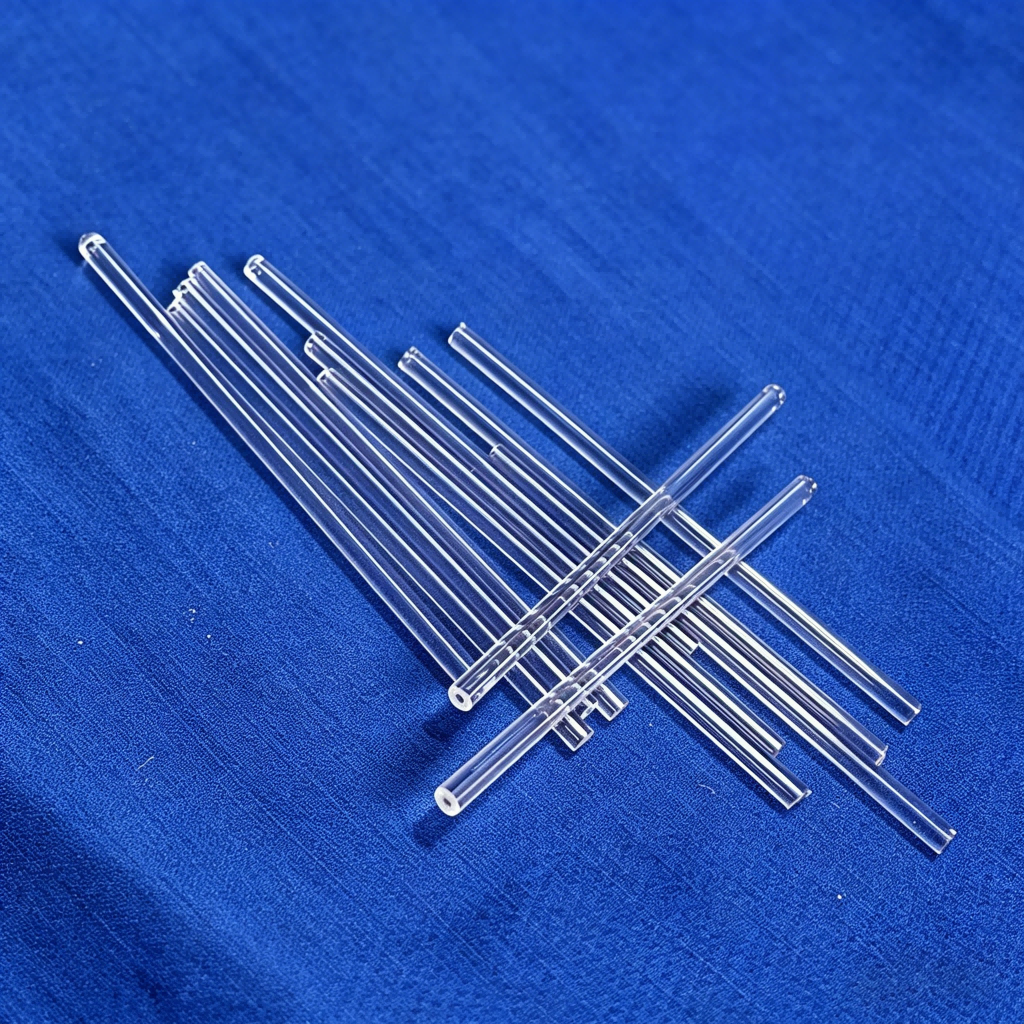
By eliminating network modifiers and refining high-grade Donghai natural silica crystal sand to a certified 99.99%–99.999% SiO₂ matrix, our tubing prevents structural distortion, maintains broadband optical transparency from 190nm deep ultraviolet through 3500nm near-infrared, and ensures absolute chemical passivity.