Featured BET Analyzers & Laboratory Quartzware Series
Direct OEM manufacturing from Donghai crystal hub to the Greater Los Angeles testing laboratories. Fully compatible with Micromeritics, BELSORP, Quantachrome, and custom high-vacuum physisorption manifolds.
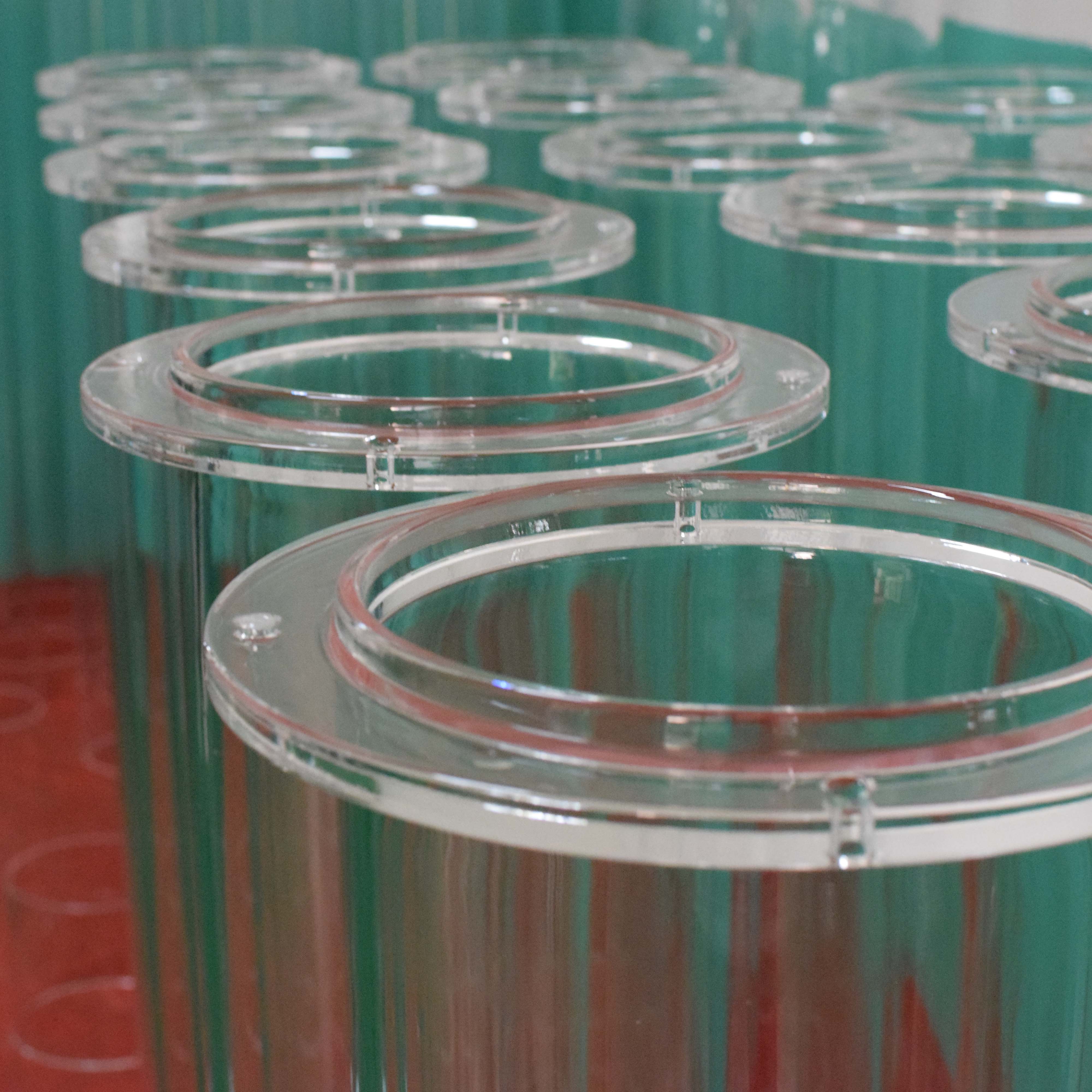 99.999% Purity
High Purity 99.999% Single Crystal Quartz Glass Tube Flange Re-feeder
Flanged re-feeder vessel with ultra-low thermal expansion, high temperature precision welding, and zero outgassing for high vacuum adsorption rigs.
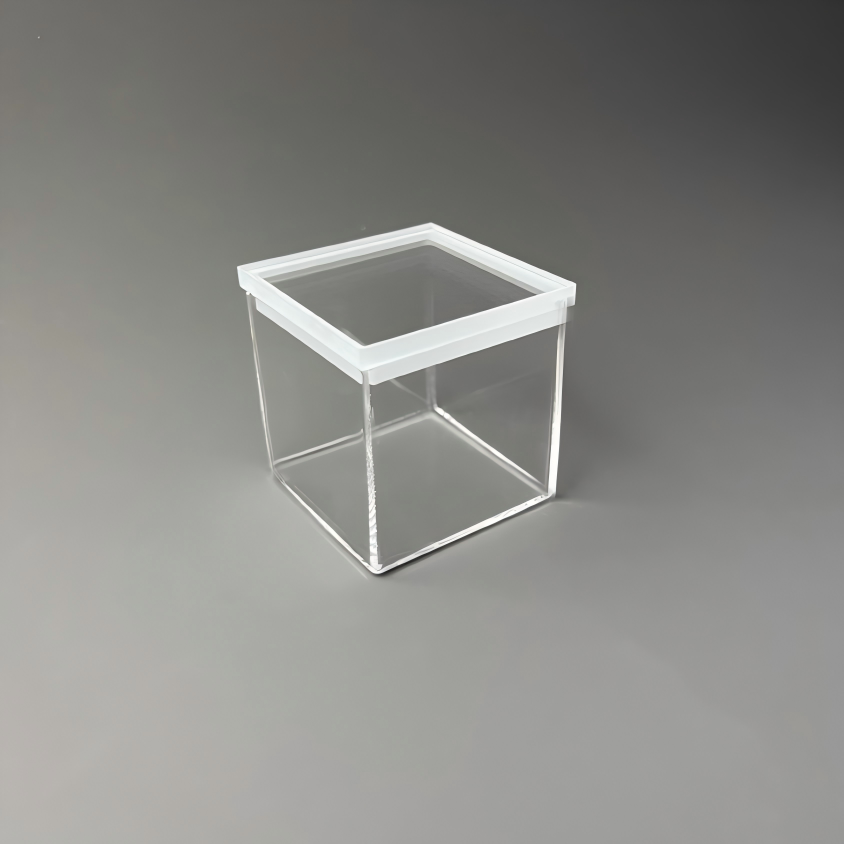 Photoelectrochemical
Quartz Glass Sealed Electrolytic Cell Dome Closed End Custom Dimensions
Dome-sealed optical reactor engineered for in-situ catalytic characterization, photochemical sorption, and volatile electrolyte containment.
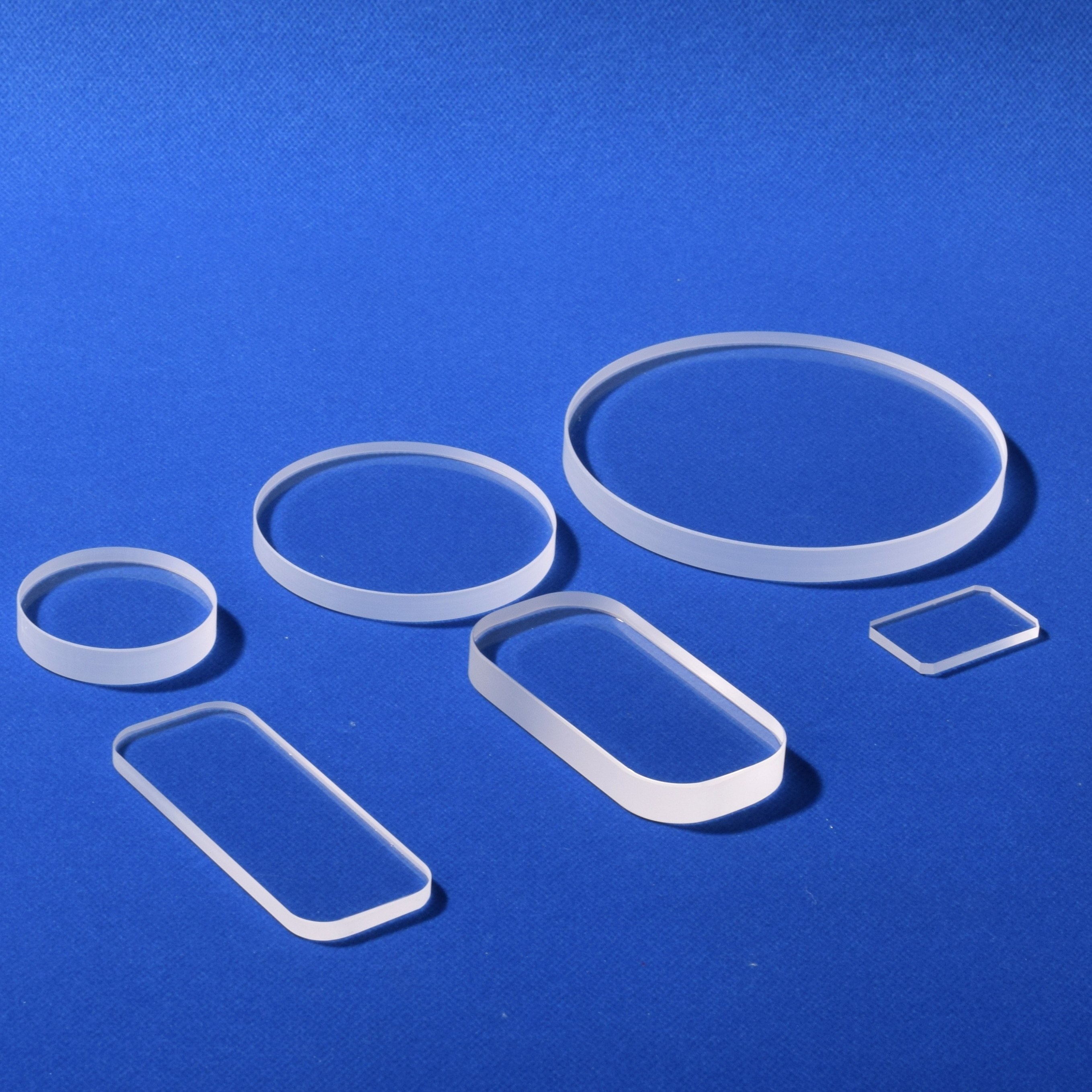 Optical Grade
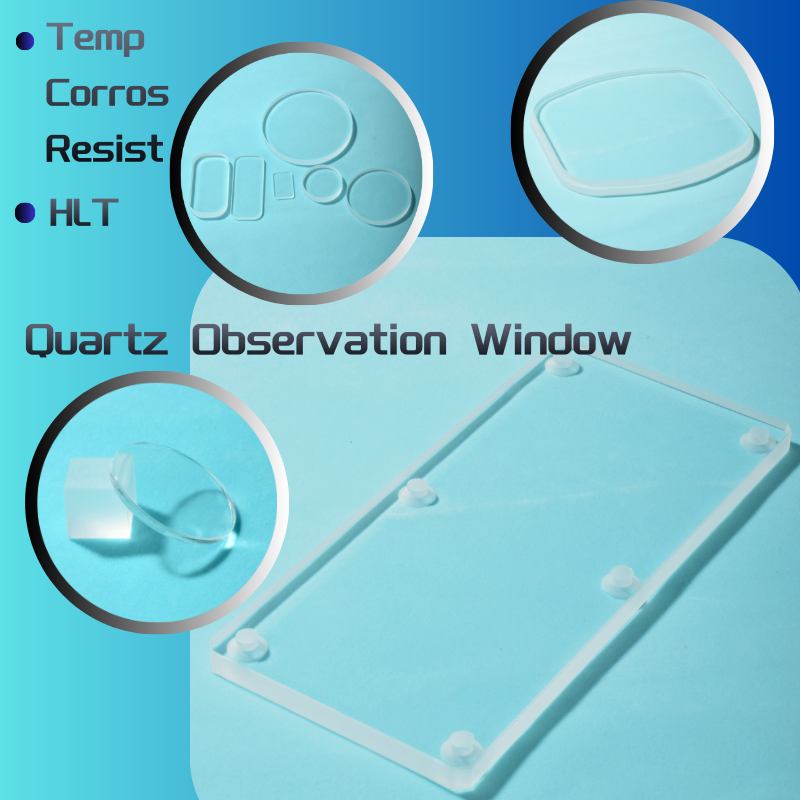
High Transmittance Customized Heat Resistant Transparent Quartz Watch Window
Optically polished viewports for high-pressure cryogenic chambers, visual degassing verification, and laser particle sizing setups.
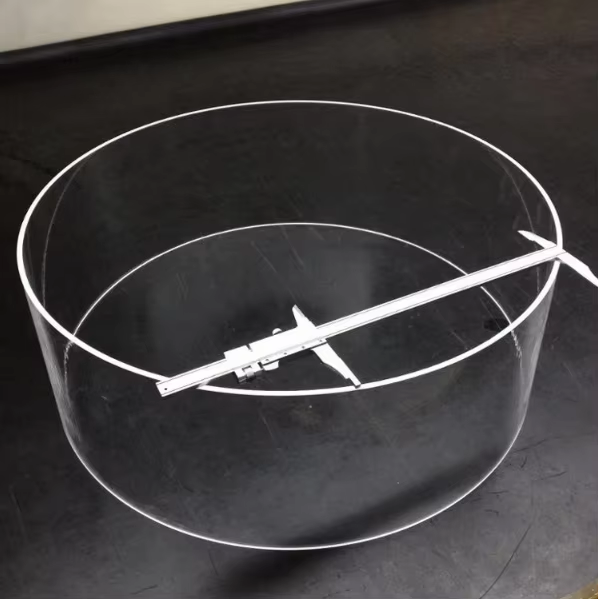 Sintering & Test
Optical Quartz Sapphire Tubes High Temperature Powder Sintering Pipe
Heavy-wall fused quartz and sapphire composite pipes designed for calcination, pre-sorption powder degas heating up to 1200°C under vacuum.
 Surface Flatness
SJ Natural Fused Quartz Polished Plate Chemical-Resistant Cutting Laser Plate
Micro-polished quartz substrate plates for thin-film gas barrier testing, porous membrane clamping, and high-frequency analytical balances.
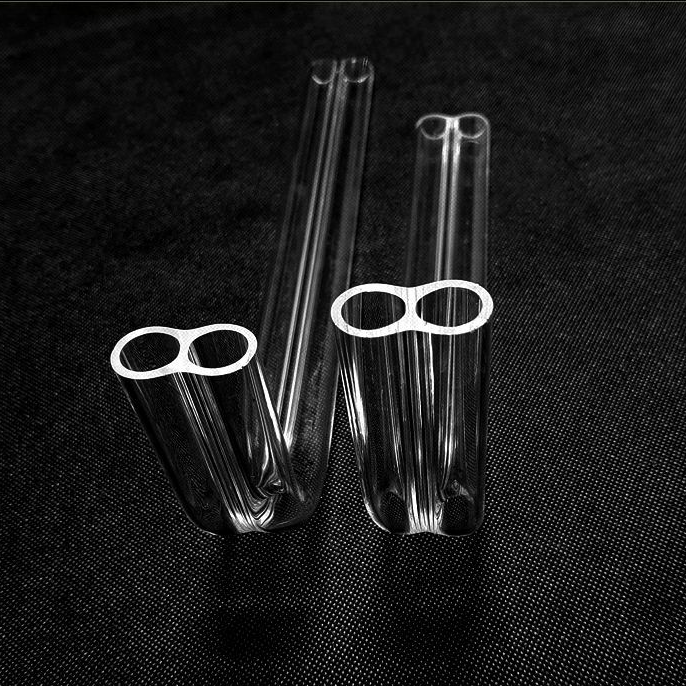 Complex Manifold
High-Temp Fused Quartz Double-Tube Right-Angle Elbow Bending Cutting
Jacketed dual-path quartz manifold engineered for isotherm nitrogen dosage lines, minimizing dead volume and eliminating cold-zone condensation.
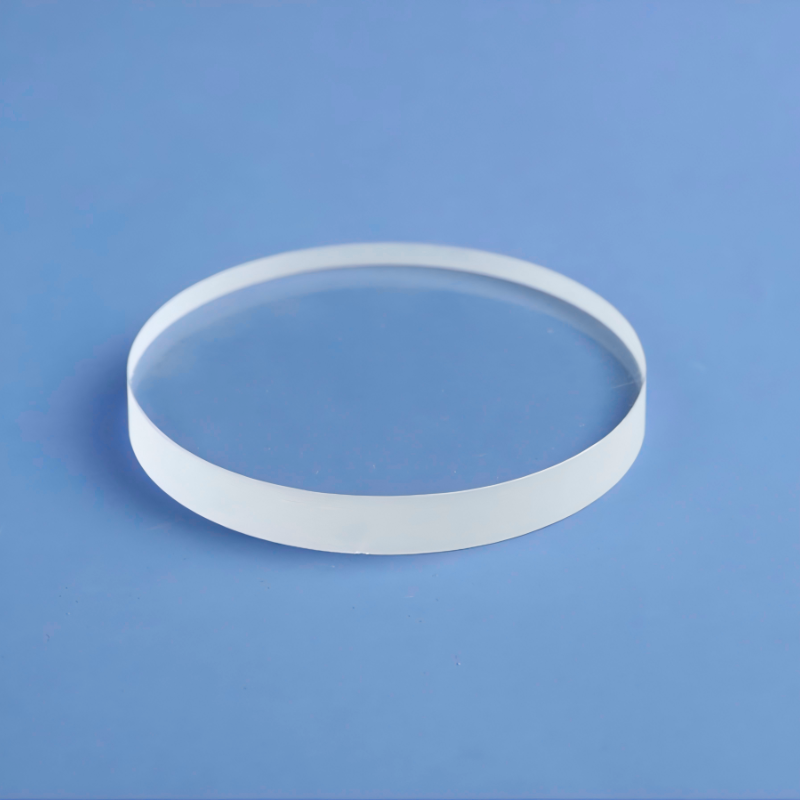 Precision Discs
High Temp Resistant Clear Sapphire Quartz Tablets Fused Silica Sheets
Custom thickness sample disc carriers and thermal barriers designed to prevent bed fluidization inside high-temperature dynamic vapor sorption chambers.
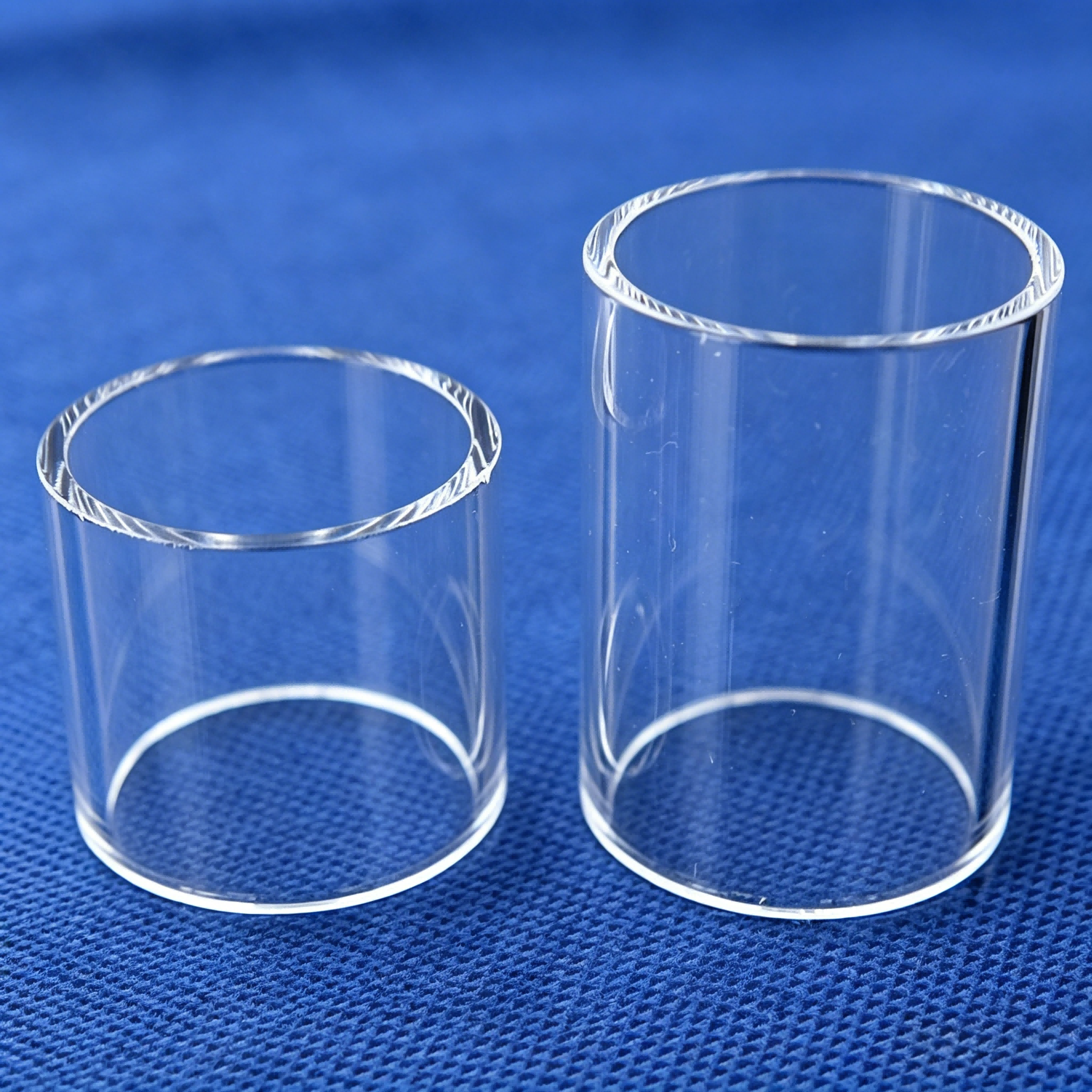 Twin-Tube Design
Custom High Temp Clear Quartz Glass Pipe | Twin Tube Polished Surface SJ 210
Parallel dual-bore sample degas tube enabling simultaneous reference analysis and differential pressure adsorption measurements.
Metrological Precision in Brunauer-Emmett-Teller (BET) Quartz Cell Fabrication
Specific surface area determination and pore size distribution analysis under ISO 9277 and ASTM D3663 hinge fundamentally on the geometric and thermal stability of the sample container. When characterizing sub-nanometer pores in metal-organic frameworks (MOFs), battery graphite anodes, or aerogels, even micro-cubic-millimeter fluctuations in the tube's internal free-space (dead volume) propagate massive errors into the multipoint adsorption isotherm calculation.
Traditional borosilicate sample cells experience significant helium permeability and non-negligible thermal expansion between liquid nitrogen temperatures (-196°C / 77 K) and degas preparation states (up to 400°C). Lianyungang Vulra Quartz Products Co., Ltd. resolves this metrological bottleneck by fabricating BET test tubes from semiconductor-grade fused silica possessing a near-zero coefficient of thermal expansion (CTE of 5.5 × 10⁻⁷ /°C). This ensures that cold-zone and warm-zone volume calibrations remain invariant throughout multi-hour nitrogen, argon, or krypton dosing protocols.
Furthermore, our Donghai hot-working facilities utilize specialized computer-controlled glass lathes equipped with oxy-hydrogen micro-torches. This completely eliminates heavy metal inclusions, hydroxyl (OH⁻) structural banding, and micro-bubbles along the stem-to-bulb junction. The result is a glass interior with negligible outgassing kinetics under ultra-high vacuum (<10⁻⁶ Pa), ensuring rapid degas cycles and pristine baseline retention for precision laboratories across California.
Key Critical Engineering Standards
- Wall Thickness Homogeneity: Maintained within ±0.03 mm to ensure uniform conductive heat transfer from heating mantles and liquid cryogen dewars.
- Stem OD Concentricity: Strict 6.00mm, 9.00mm, or 12.00mm outside diameter tolerances (±0.02 mm) guaranteeing vacuum-tight O-ring sealing without port gasket shearing.
- De-Hydroxylation Process: Vacuum furnace bake-out reduces internal OH levels below 5 ppm, preventing water desorption interference during krypton physisorption.
- Annealing Protocol: Comprehensive polariscope verification ensures absolute zero residual birefringent stress, eliminating implosion risks under deep vacuum cycles.
Fused Quartz vs. Standard Lab Glasses for Physisorption
Understanding why high-precision California research institutions specify Vulra 99.999% Fused Quartz over standard laboratory Borosilicate 3.3 for analytical porosimetry.
| Performance Parameter | Vulra Semiconductor Quartz (Grade A) | Standard Fused Silica | Borosilicate 3.3 (Pyrex Equivalent) | Impact on BET Analysis Accuracy |
|---|---|---|---|---|
| SiO₂ Purity Level | > 99.999% (< 10 ppm total metals) | > 99.99% (< 50 ppm impurities) | ≈ 80.5% (contains B₂O₃, Na₂O, Al₂O₃) | Eliminates chemical matrix leaching and baseline drift. |
| Thermal Expansion (CTE) | 5.5 × 10⁻⁷ /°C (0 to 1000°C) | 5.5 × 10⁻⁷ /°C | 33.0 × 10⁻⁷ /°C (6x higher) | Guarantees stable cryogenic dead-space calibration at 77K. |
| Helium Permeability @ 300°C | Virtually Zero / Negligible | Extremely Low | Moderate Outgassing Rate | Crucial for exact warm-zone helium dead volume determination. |
| Max Service Temperature | 1100°C (Continuous) / 1450°C (Peak) | 1050°C (Continuous) | 450°C (Continuous) / 500°C (Peak) | Permits high-temperature degas of refractory ceramics and carbon. |
| Internal Surface Smoothness | Flame Polished (Ra < 0.05 µm) | Standard Drawn | Mechanical Finish | Prevents sample powder clinging; simplifies gravimetric tare weighing. |
Serving the Greater Los Angeles High-Tech Innovation Arc
Southern California hosts one of the world's dense clusters of aerospace propulsion giants, electric vehicle energy innovators, and tier-one academic institutes requiring daily surface characterization.
Hawthorne & El Segundo Aerospace
Propulsion and space-structure leaders throughout Hawthorne, Long Beach, and El Segundo demand reliable BET cells for testing carbon-carbon composites, ablative thermal protection shields, and additive metal powders. Our high-wall thickness tubes resist aggressive furnace outgassing up to 1050°C without vitrification.
Pasadena & Westwood Research Labs
Researchers at Caltech, UCLA, USC, and the Jet Propulsion Laboratory (JPL) spearhead nanostructured materials, mesoporous zeolites, and MOFs for carbon-capture. We furnish customized micro-sample bulb tubes (down to 0.5 cm³ volume) preventing excessive dead space on sub-milligram synthesized specimens.
SoCal Clean Energy & Battery R&D
From Irvine to the San Fernando Valley, next-generation solid-state battery ventures and silicon-anode startups utilize our BET tubes to measure active specific surface area (m²/g), directly correlating particle geometry with solid electrolyte interphase (SEI) growth kinetics and coulombic efficiency.
San Pedro Bay Decarbonization
Environmental mitigation testing at the Ports of Los Angeles and Long Beach depends on industrial catalyst regeneration studies. Our chemical-resistant quartz elbow tubes and sealed photoelectrochemical dome cells enable precise tracking of NOx and SOx particulate sorbent saturation.
Rapid LAX Air Freight Delivery
Recognizing the fast-paced timelines of California contract research organizations (CROs), our dedicated export packaging permits shock-proof air shipments arriving at Los Angeles International Airport (LAX) via DHL/FedEx Express within 3 to 5 business days from order release.
Full OEM Specification Matching
Avoid expensive instrument-vendor markups. We produce direct replacements for part numbers across Micromeritics (e.g., 240/26000 series), Quantachrome Autosorb, and Microtrac BELSORP, with certified drawing-to-part compliance and batch-traceable purity certs.
Market & Technical Trends Shaping Quartz Sourcing in Los Angeles
How evolving regulatory, analytical, and logistics dynamics in California drive demand for specialized Chinese fused quartz products.
1. Transition to Krypton Adsorption for Low Surface Area Powders
With Los Angeles EV battery labs focusing on micron-scale single-crystal cathode architectures, total measured surface areas frequently dip below 0.5 m²/g. At these thresholds, standard nitrogen adsorption is invalidated by saturation vapor pressure limitations, requiring krypton physisorption at 77 K. This elevates the demand for ultra-low volume, bulb-less 6 mm quartz stems with laser-calibrated inside diameters that compress dead-space to absolute physical minimums.
2. Zero-Contamination Requirements under California Clean Energy Mandates
California's stringent mandates for green hydrogen production and fuel cell durability have expanded testing of platinum group metal (PGM) catalyst meshes. Research teams cannot afford sample contamination from alkaline earth metal migration out of cell walls. Vulra's high-purity single-crystal fused quartz, with total metallic impurities below 10 ppm, safeguards against analytical artifact generation.
3. De-Risking Institutional Supply Chains via Direct Manufacturer OEM
Academic procurement offices across California face tightening grant cycles and inflated distributor pricing from domestic laboratory suppliers. By contracting directly with Vulra Quartz—an authentic manufacturer located in Donghai County—institutions bypass middle-tier markups while achieving custom dimensional freedom from 1-piece sample minimums.
California Analytical Compliance Benchmarks
- RoHS & REACH Compliance: 100% heavy-metal-free borosilicate/lead-free quartz compounds compliant with California Proposition 65 workplace health regulations.
- Deep Vacuum Hermeticity: Helium mass spectrometer leak tested to < 1 × 10⁻⁹ mbar·L/s across ground joint interfaces.
- Clean Packaging Protocol: Double PE bag packaging inside class-1000 cleanrooms to eliminate particle accumulation during ocean or air transit.
Why Engineering Teams Choose Vulra Quartz
Operating from China's world-renowned quartz epicenter in Donghai County, Jiangsu, we bridge mineral wealth with advanced CNC glass machining.
Geographic Cluster Advantage
Situated in Donghai, the global capital of high-purity natural crystal sand. We maintain upstream supply integration, ensuring consistent high silica grading (SiO₂ 99.99% - 99.999%) and continuous bulk ingot stock.
TÜV Rheinland Verified
Our complete premises, production capabilities, and foreign trade capacity have undergone rigorous on-site verification by TÜV Rheinland, assuring international buyers of reliable OEM authenticity.
Drawing-Based Prototyping
Send CAD, SolidWorks, or PDF drawings with custom tolerances. Our engineering group performs thermal expansion and joint stress reviews prior to flame cutting, with prototypes starting from just 1 piece.
Full Hot & Cold Machining
From precision diamond-wheel grinding, ultrasonic drilling, and optical polishing to oxy-hydrogen flame lathe welding and full-cycle annealing furnaces—all processes remain 100% in-house.
Los Angeles Buyer FAQ
Practical technical and commercial answers directly from our export engineering department for research managers and laboratory purchasing agents in California.
Require custom drawings or immediate quotation?
Inquire NowAre your BET quartz tubes compatible with Micromeritics, Quantachrome, and BELSORP instruments?
What lead times and shipping options are available for deliveries to Los Angeles?
How do you guarantee that fragile quartz tubes arrive undamaged across transpacific transit?
Can you accommodate non-standard custom shapes, such as seal-off quartz tubes or inside thermocouple wells?
What is the continuous operating and softening temperature limit of your quartzware?
What documentation and certifications are provided with our quartz shipment?
Equip Your California Laboratory with World-Class Fused Quartz
Upload your 2D/3D component drawings or standard analyzer part numbers for a comprehensive quote within 6 hours.