99.999% SiO₂
Explore our hot-selling fused silica components, chemical separating containers, testing sheets, and thermal reaction hardware calibrated for extreme chemical resistance and zero metal leaching.
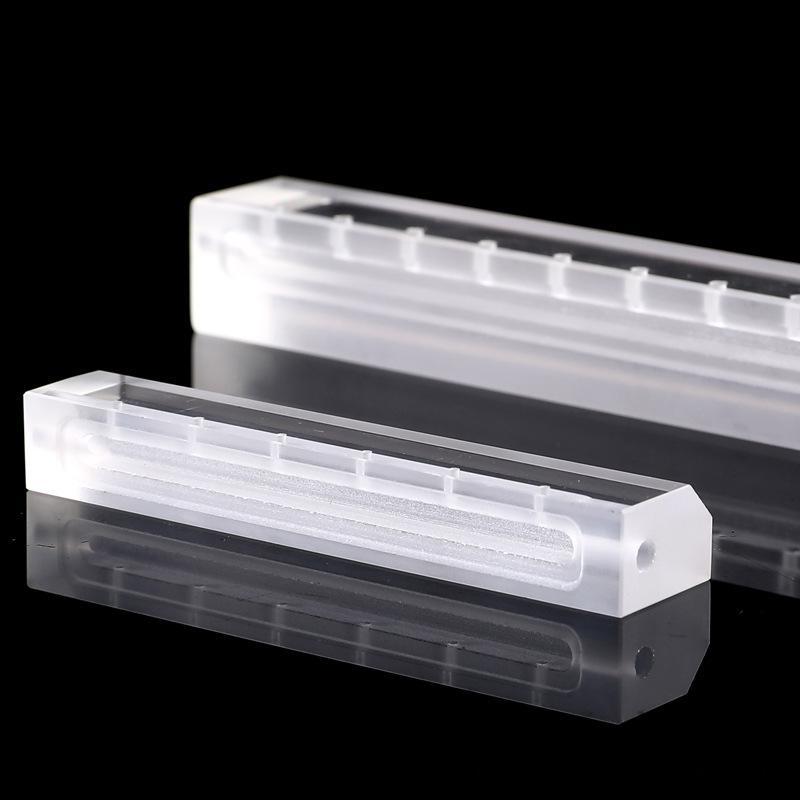
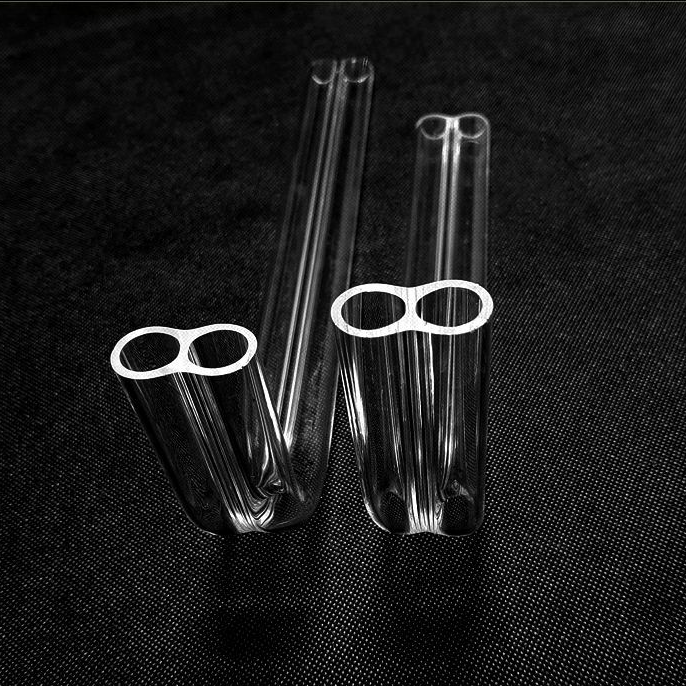
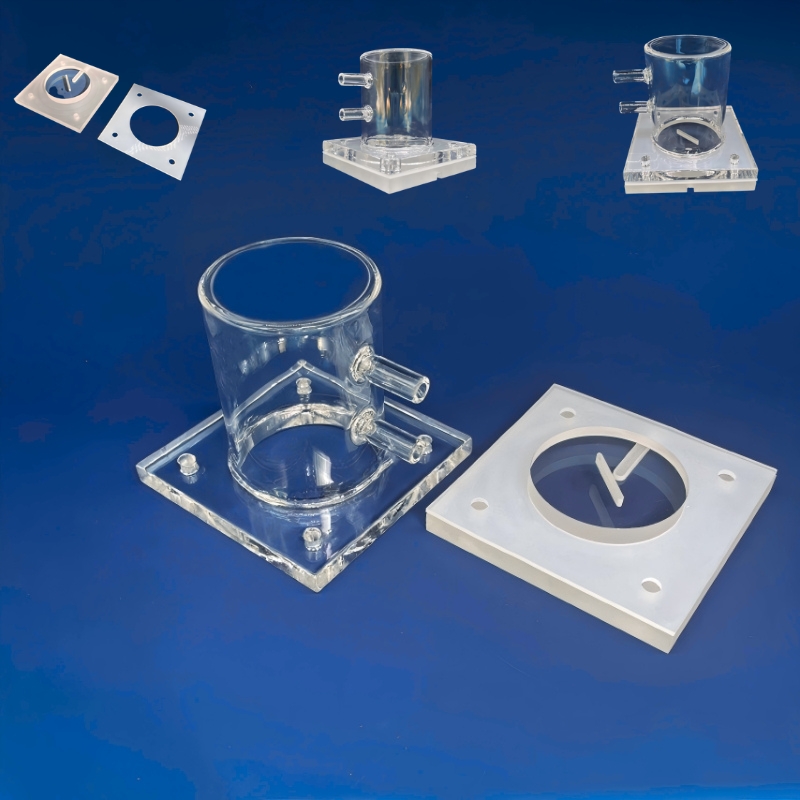
A rigorous metallurgical and chemical evaluation on replacing conventional 3.3 borosilicate funnels with synthetic and natural fused quartz in ultra-clean partitioning processes.
In high-precision wet chemistry, analytical chromatography, and semiconductor etching preparation, the separatory funnel is far more than a passive liquid-holding vessel. It is an active boundary interface where critical phase partition occurs. Laboratories across Wrocław—from academic research institutions along the Odra river to contract testing labs in Dolnośląskie (Lower Silesia)—have encountered persistent yield and purity bottlenecks traced back to the ionic dissolution of standard 3.3 borosilicate glass.
Standard borosilicate glass contains significant molar percentages of fluxing oxides, predominantly B₂O₃ (approx. 12-13%), Na₂O/K₂O (approx. 4-5%), and Al₂O₃ (approx. 2-3%). When an analyst conducts liquid-liquid extractions using aggressive fluorinated acids, boiling mineral acids (such as 65% HNO₃ or 37% HCl), or trace-chelated organometallic solvents, these alkali and metal cations leach across the phase boundary into the analyte layer. In ultra-trace ICP-MS (Inductively Coupled Plasma Mass Spectrometry) or IC (Ion Chromatography), this background noise ruins calibration curves at the parts-per-billion (ppb) and parts-per-trillion (ppt) thresholds.
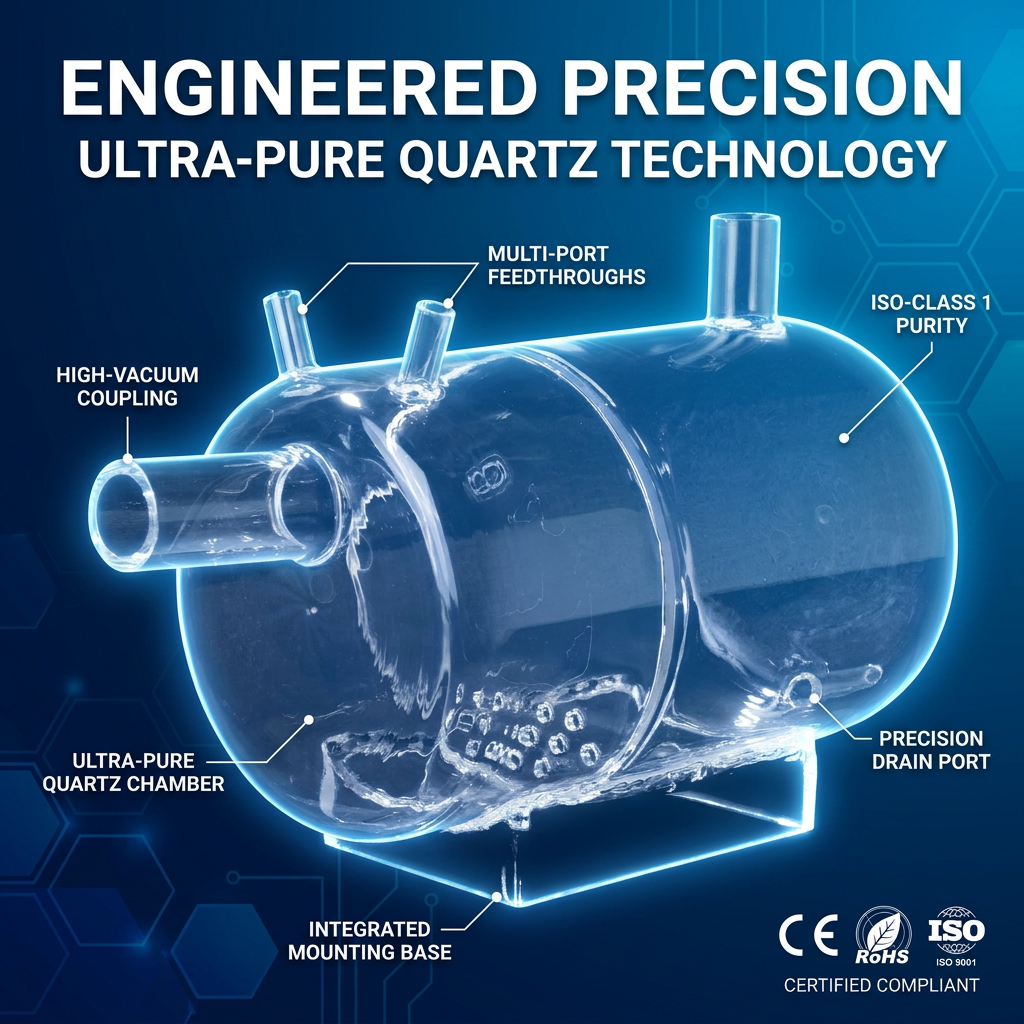
Our engineered fused quartz separatory funnels eliminate this vulnerability entirely. Fabricated from refined crystal sand harvested and processed in Donghai, the global capital of natural silicon dioxide, our vessels feature a minimum purity of 99.99% SiO₂ (with semiconductor grades scaling to 99.999%). By utilizing purely covalently bonded tetrahedral [SiO₄] networks without modifier alkali ions, the vessel provides near-absolute chemical inertia, virtually zero leaching, and remarkable physical resilience under rapid thermal transitions.
| Performance Characteristic | Standard 3.3 Borosilicate Glass | Vulra Fused Quartz (SJ Grade) | Impact on Wrocław Separation Processes |
|---|---|---|---|
| SiO₂ Content (%) | 80.0% – 81.0% | 99.99% – 99.999% | Eliminates extraneous oxides entering sensitive chemical mixtures. |
| B (Boron) Contamination | 120,000 – 130,000 ppm | < 0.2 ppm | Crucial for semiconductor dopant-level extractions and ICP-MS testing. |
| Na/K Alkali Metal Leaching | High (> 40,000 ppm bulk) | < 1.0 ppm total alkalis | Prevents sodium phase-poisoning in catalyst recovery & organic synthesis. |
| Coeff. of Thermal Expansion (CTE) | 3.3 × 10⁻⁶ / K | 0.54 × 10⁻⁶ / K | Withstands instant thermal shock from 1100°C directly into ice-cold water. |
| Maximum Working Temperature | Approx. 490°C (Softening ~820°C) | 1100°C Continuous (Softening 1683°C) | Permits aggressive hot refluxing, hot acid digest separation, and flame sterilization. |
| UV Transmittance (254 nm, 10mm) | < 1% (Opaque to Deep UV) | > 90% (Optical Clear Fused Silica) | Enables in-situ photochemical reactions and UV-induced phase boundary separation. |
Bridging local academic excellence with the rapid microelectronics and pharmaceutical industrial expansion across Lower Silesia.
As the Wrocław metropolitan area positions itself as the silicon heart of Central Europe—anchored by major investments in nearby Miękinia and Środa Śląska—our high-purity quartz separatory funnels and extraction apparatus provide the critical sub-ppb purity needed to separate recycled fluorinated solvents, etching matrices, and semiconductor precursors without trace ionic contamination.
Within the modern biotech laboratories at the Wrocław Technology Park (WPT) and the Łukasiewicz Research Network – PORT Polish Center for Technology Development, scientists employ our clear fused quartz separation vessels for isolating high-value pharmaceutical active ingredients (APIs). The non-porous, perfectly polished quartz walls prevent cross-batch adsorption and carry-over of sensitive peptides.
The mineral processing industry and copper-refining ecosystem in the Lubin-Głogów-Legnica copper basin rely heavily on laboratories in Wrocław for solvent extraction (SX) benchmarking. Extracting rare earth elements (REEs), germanium, and rhenium from strongly acidic leach liquors requires quartz vessels capable of resisting continuous contact with boiling concentrated nitric and hydrochloric acids.
Every separating unit is custom-blown, vacuum annealed, and diamond ground to eliminate operational risks during hazardous solvent partition.
Choose between high-precision virgin PTFE needle metering valves (grease-free, zero chemical cross-reaction with aromatic hydrocarbons) or hand-lapped solid quartz ground stopcocks (designed for ultra-pure fluorinated acid extractions where fluoropolymers are prohibited).
For air-sensitive, pyrophoric, or volatile organic extractions under argon or nitrogen counter-flow, our customized separatory funnels integrate fused silica pressure-equalizing arms with precision ground NS standard conical joints (compatible with DIN 12242 / ISO 383).
Separatory funnels endure significant torsional torque when stopcocks are operated. Every piece undergoes programmatic furnace annealing at 1150°C followed by controlled cooling to permanently eliminate thermal stress birefringence along the cone-to-neck transition.
How shifting EU environmental mandates and domestic semiconductor industrialization are reshaping procurement standards in Poland.
Poland's National Recovery Plan (KPO) and the European Chips Act are directing billions of euros into regional innovation corridors, with the Dolnośląskie voivodeship emerging as the prime beneficiary. Consequently, procurement protocols across Wrocław laboratories are transitioning from basic catalog orders to audited, certified component manufacturing.
Three distinct trends define the contemporary demand profile in Wrocław:
1. Transition to Cleanroom Class 100 (ISO 5) Packaging: With local research teams interfacing directly with commercial semiconductor fabs, incoming glassware must not introduce airborne particulates or surface salts. Our export processing includes multi-stage hot deionized water ultrasonic scrubbing, ultra-pure nitric acid surface passivation, and double vacuum-sealed cleanroom bagging before crating.
2. Adoption of Standardization with Custom Tolerances: While Wrocław laboratories adhere strictly to European metric standards—specifically standard taper ground joints NS 14/23, NS 19/26, NS 24/29, and NS 29/32—they increasingly demand custom wall thicknesses (from 2.5 mm up to 4.5 mm) to provide mechanical strength in agitated pilot extraction rigs.
3. Traceable Impurity Certification: Leading analytical chemistry laboratories at institutions such as the University of Wrocław and Wrocław University of Science and Technology (Politechnika Wrocławska) no longer accept generic glass certificates. Procurement orders now require batch-specific Glow Discharge Mass Spectrometry (GDMS) or ICP-OES elemental analysis data verifying total heavy metals below 20 ppm.
Operating from No. 9, Dingxin Road in Donghai County—the globally recognized epicenter of high-purity natural silica geology—Vulra Quartz combines deep mineral raw-material dominance with advanced Swiss/German automated glass lathe engineering. We bridge direct factory pricing with precision OEM manufacturing for international research and production enterprises.
Key information regarding international logistics, customs compliance in Poland, technical tolerances, and chemical safety.
Consult directly with our quartz glass technicians. We review your chemical parameters, design requirements, and dimensional drawings to deliver high-performance quartz solutions directly to your Wrocław facility.
Inquire Now