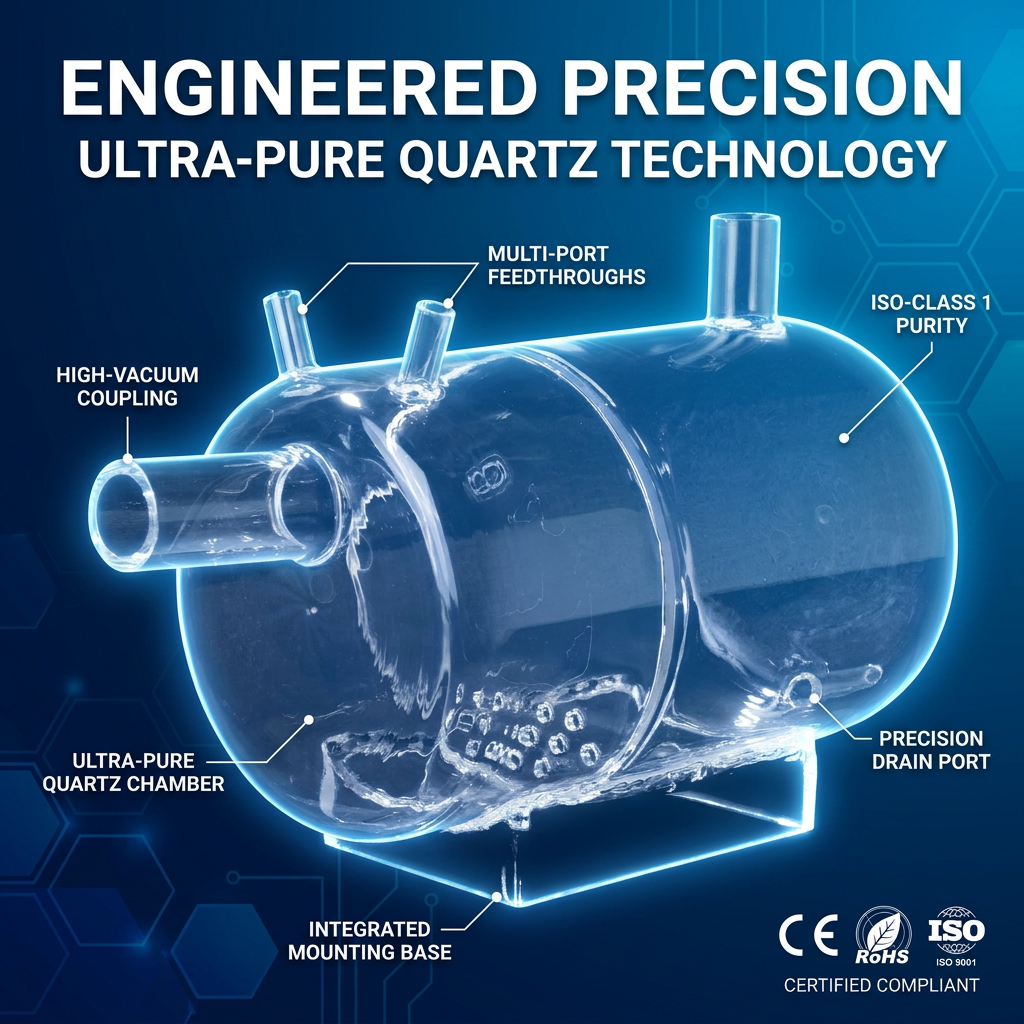
JGS1 / JGS2
99.999% SiO₂
Engineered for extreme thermal shock, 99.999% SiO₂ optical purity, and high infrared transmittance. Compliant with EN 10204 3.1 inspection certification and tailored to Central European engineering tolerances.
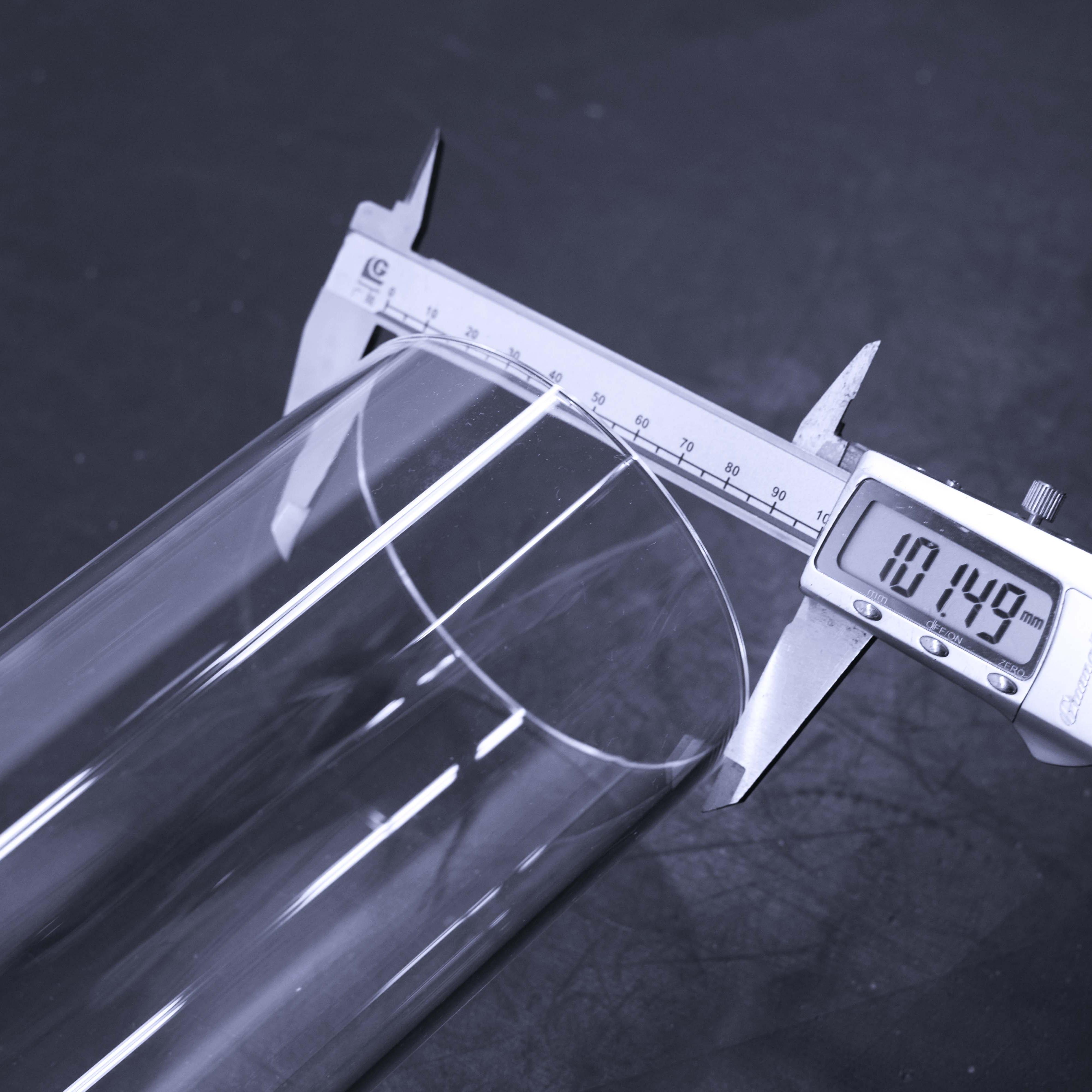

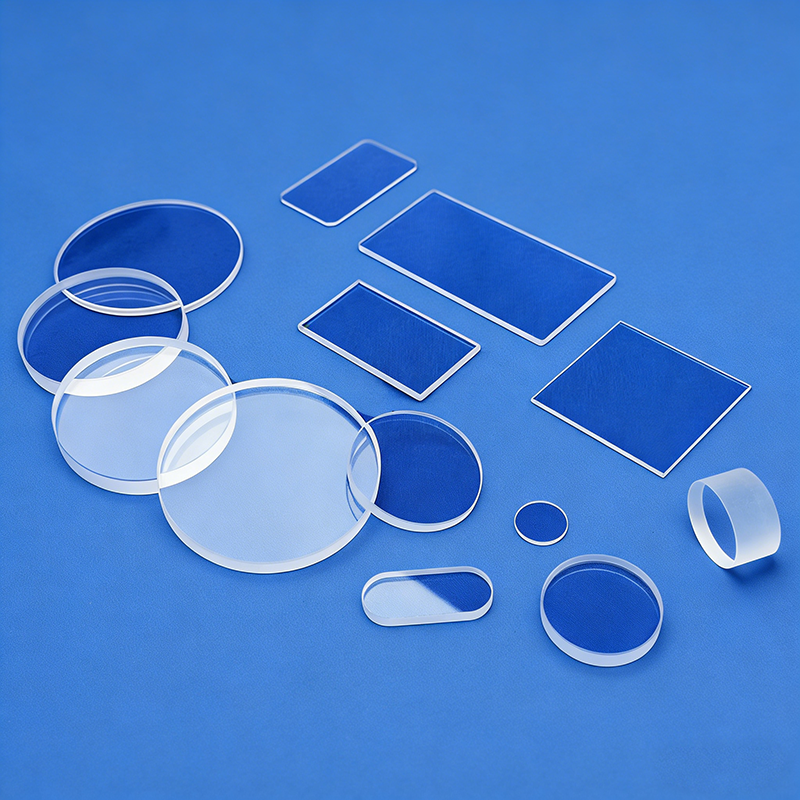
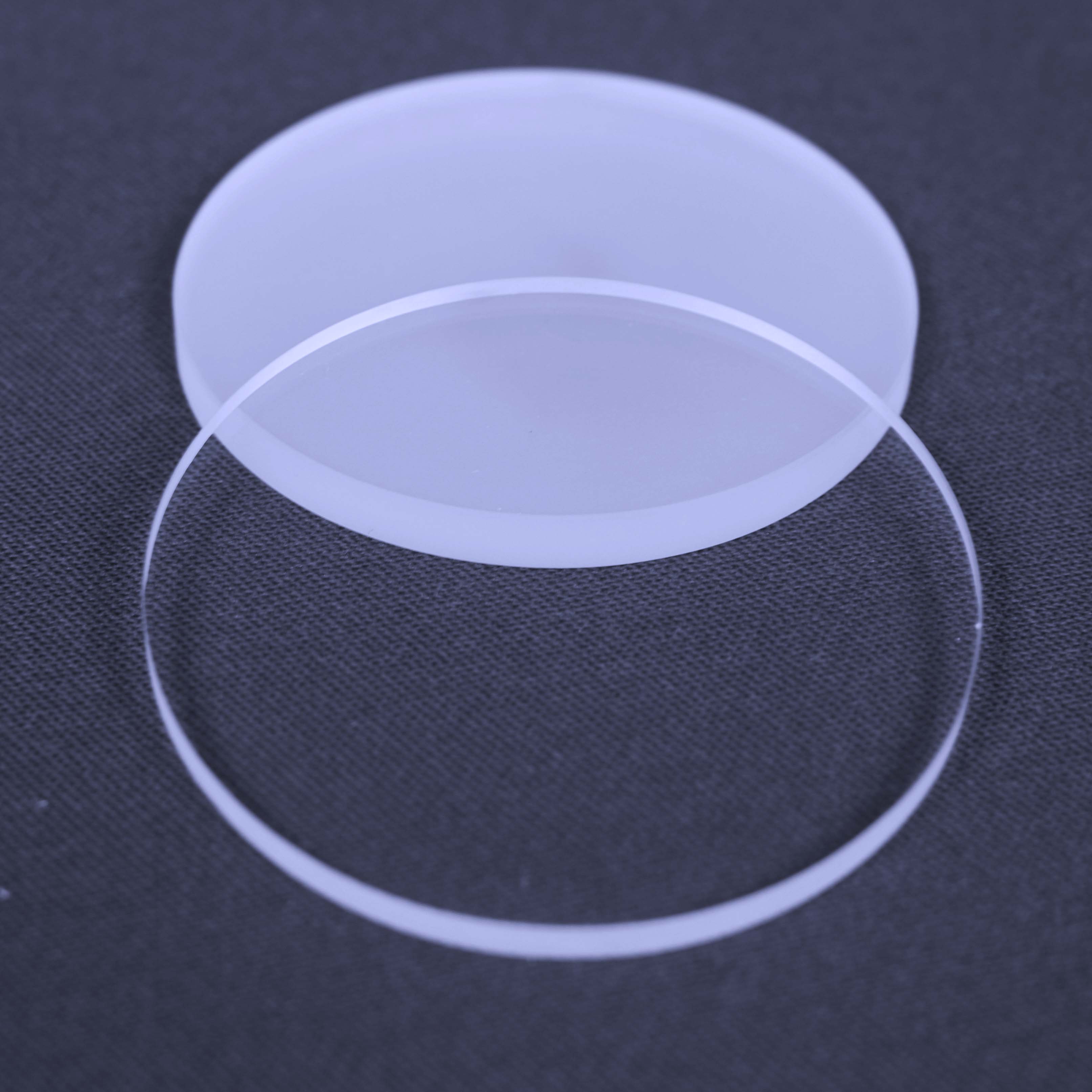
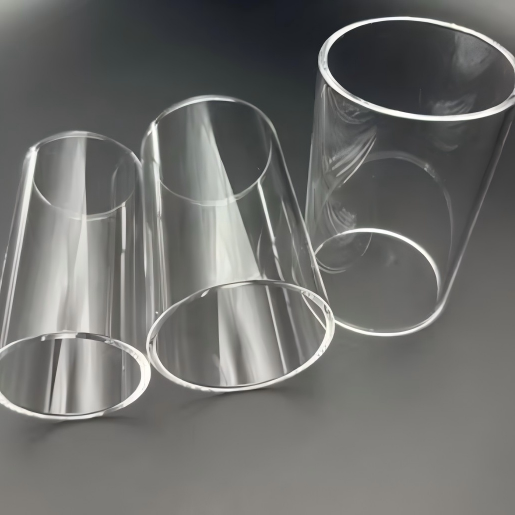
Non-contact pyrometric thermometry relies entirely on the unimpeded, stable transmission of electromagnetic radiation emitted by target hot bodies through an optical sight glass to an infrared sensor. In precision thermal monitoring—such as induction hardening, electric arc furnace slag control, or forehearth glass molding—standard borosilicate observation glasses fail rapidly. Borosilicate undergoes severe solarization, devitrifies above 500°C, and exhibits an uneven transmission curve that shifts with thermal fluctuations, introducing fatal calibration drift into infrared pyrometers.
By contrast, fused silica and high-purity natural fused quartz (SiO₂ ≥ 99.99% to 99.999%) maintain an extraordinarily flat transmission plateau across both the visible spectrum and the Short-Wavelength Infrared (SWIR) to Mid-Wavelength Infrared (MWIR) regions. Depending on whether your installation operates single-wavelength ratio pyrometers (typically measuring at 0.9 µm, 1.05 µm, or 1.6 µm) or broadband pyrometric sensors (2.0 to 2.5 µm), material grade selection dictates measurement accuracy.
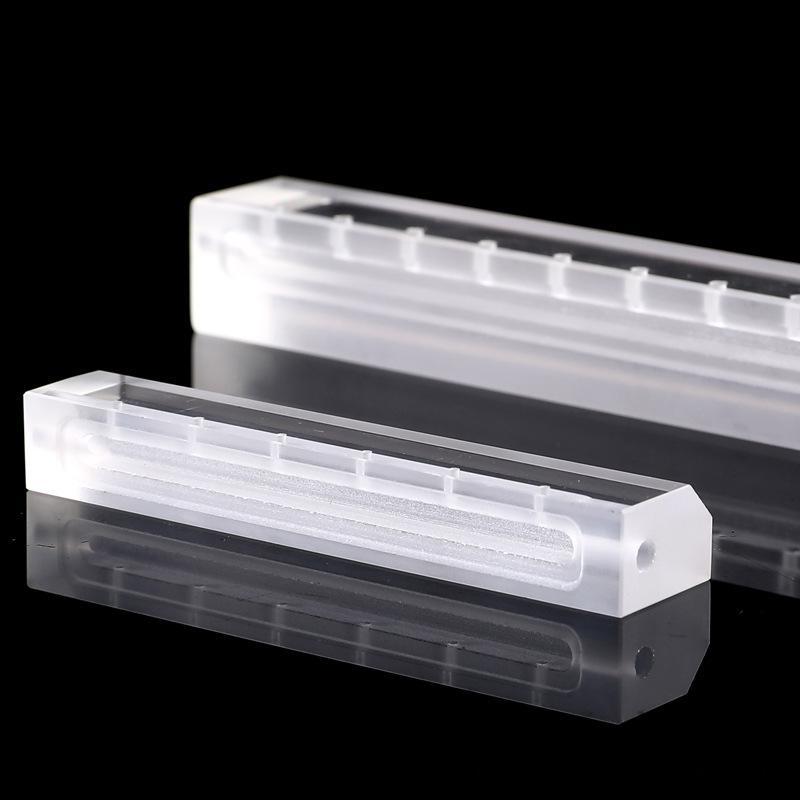
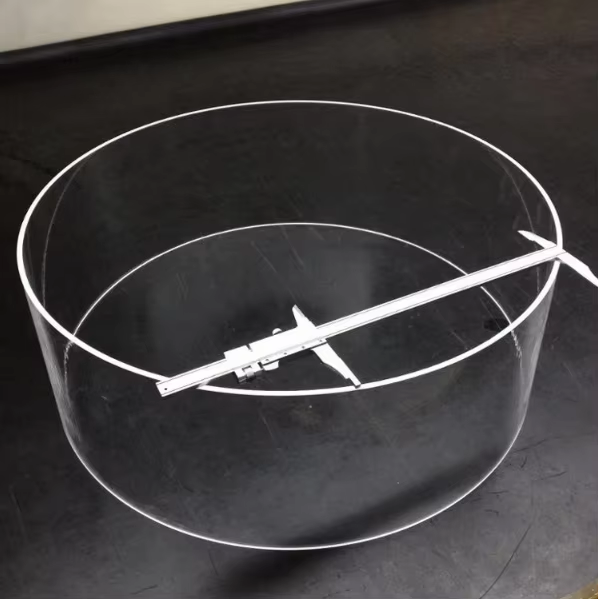
Vulra Quartz supplies custom circular, square, and flanged pyrometer viewports cut from premium JGS1 (synthetic fused silica), JGS2 (optical quartz), and JGS3 (low-OH water-free infrared quartz). Each optical blank undergoes rigorous double-sided optical diamond-lapping, chemical flame polishing, and laser interferometry inspection to ensure transmitted wavefront distortion does not distort optical pyrometer focal planes.
| Quartz Grade | Primary Spectral Transmission | OH Content (ppm) | Continuous Service Temp | Thermal Expansion Coeff. | Recommended Pyrometer Application |
|---|---|---|---|---|---|
| JGS1 (Synthetic Fused Silica) | 185 nm – 2500 nm (>92% visible/UV) | < 5 ppm to 1200 ppm | 1100 °C (Short peak 1350°C) | 5.5 × 10⁻⁷ / K | Semiconductor & Laser Pyrometry |
| JGS2 (Standard Optical Fused Quartz) | 260 nm – 2500 nm (High transmission in NIR) | < 30 ppm | 1150 °C (Short peak 1450°C) | 5.4 × 10⁻⁷ / K | Steel, Metallurgy & Foundry Sight Glasses |
| JGS3 (Infrared Grade Fused Quartz) | 260 nm – 3500 nm (Eliminated 2.73 µm OH- dip) | < 5 ppm (Water-Free) | 1100 °C (Short peak 1400°C) | 5.5 × 10⁻⁷ / K | SWIR & MWIR Multi-Wavelength Pyrometers |
| Industrial Clear Fused Silica | 300 nm – 2200 nm (Economic viewport) | < 50 ppm | 1050 °C (Short peak 1300°C) | 5.6 × 10⁻⁷ / K | Boiler & Incinerator Direct Viewports |
The Czech Republic possesses one of Central Europe's most concentrated manufacturing landscapes. From heavy metallurgical plants in Silesia to precision automotive fabrication in Bohemia, our custom quartz pyrometer windows operate reliably in aggressive thermal and chemical atmospheres.
Metallurgical heavyweights such as Třinecké Železárny and regional steel mills in Ostrava require non-contact optical pyrometers mounted above ladles, torpedo cars, and induction holding furnaces. Molten steel at 1550°C emits destructive radiant heat, while basic slag dust violently attacks standard sight glasses. Vulra's high-purity JGS2 pyrometer discs resist slag vapor etching and feature extreme thermal gradient resilience, preventing catastrophic blowouts during continuous smelting shifts.
In the automotive manufacturing corridor surrounding Mladá Boleslav and Kolín, tier-1 suppliers to Škoda Auto rely on rapid induction hardening of drive shafts, gears, and engine cams. Optical pyrometers monitor microsecond thermal escalation to verify metallurgical crystalline transition. Our optical quartz discs withstand aggressive cooling quenches and high-cycle thermal pulsing without micro-fracturing, safeguarding pyrometer lens sensors from oil sprays.
The Czech Republic's world-famous crystal making corridor—spanning Nový Bor and Jablonec nad Nisou—relies on precise forehearth temperature control to guarantee optical homogeneity. Standard sight glasses dissolve under high alkali boron-silicate gas clouds. Our pure fused quartz windows, inert to virtually all acids and salts except HF, provide uninterrupted optical sight paths into 1380°C glass tanks without surface devitrification or discoloration.
Operated by ČEZ Group, the nuclear power plants at Temelín and Dukovany, alongside conventional steam generation plants, utilize radiation-hardened pyrometric infrared monitoring across turbine bearings, boiler headers, and high-pressure steam pipes. Vulra supplies synthetic fused silica blanks with virtually zero micro-bubble counts (DIN 3140 class 0/0) that maintain dimensional and optical stability under high ambient ionizing environments.
At research clusters like CEITEC Brno and ELI Beamlines in Dolní Břežany, laser-plasma physics and silicon-carbide epitaxial wafer growth require extreme vacuum (UHV) sight windows. Our precision ground and polished quartz sheets feature ultra-low wavefront distortion (≤ λ/4) and precision stepped edges, allowing elastomeric or metal knife-edge sealing for precise thermal sensor imaging inside high-vacuum chambers.
Plzeň's long-established mechanical engineering complexes manufacture industrial turbines and heavy forgings. Pyrometers mounted through furnace walls must endure mechanical vibration, thermal expansion gradients, and positive chamber pressures up to 16 bar. We fabricate DIN 7080-compliant high-pressure quartz discs up to 35 mm thickness with ground and chamfered edges to eliminate stress concentration fractures.
Modernization pressures, European decarbonization mandates, and the shift toward Industry 4.0 are reshaping procurement requirements for high-temperature optics in the Czech Republic.
Under the European Modernisation Fund (Modernizační fond) and National Recovery Plan (Národní plán obnovy), Czech foundries and ceramic factories are retrofitting gas-fired kilns with hydrogen-blended natural gas burners. Hydrogen combustion generates significantly higher peak flame temperatures (over 2100°C) and generates an atmosphere saturated with superheated steam (H₂O vapor). Standard viewports degrade rapidly under steam oxidation. Fused silica pyrometer windows engineered with ultra-dense SiO₂ lattices prevent surface vapor hydration, providing stable optical access for ratio pyrometers controlling clean combustion.
Czech automotive suppliers are aggressively deploying automated thermal imaging cameras (FLIR, Optris, Micro-Epsilon) coupled to multi-axis robotics. These automated setups mandate optical windows with zero optical aberration and high surface parallelism (< 30 arc seconds). If a window introduces refractive distortion, robotic laser welding or hot-stamping thermal control loops experience positional measurement drift, producing costly scrap rates. Our CNC diamond-polished flat quartz discs eliminate focal shift.
Procurement directors across Czech industrial parks are actively diversifying their supply chains away from high-markup German and Austrian catalog distributors. Sourcing directly from verified manufacturers like Vulra Quartz delivers a 35% to 50% cost advantage on replacement sight glasses and custom viewport flanges, coupled with rapid custom drawing-to-part production cycles from 1 piece.
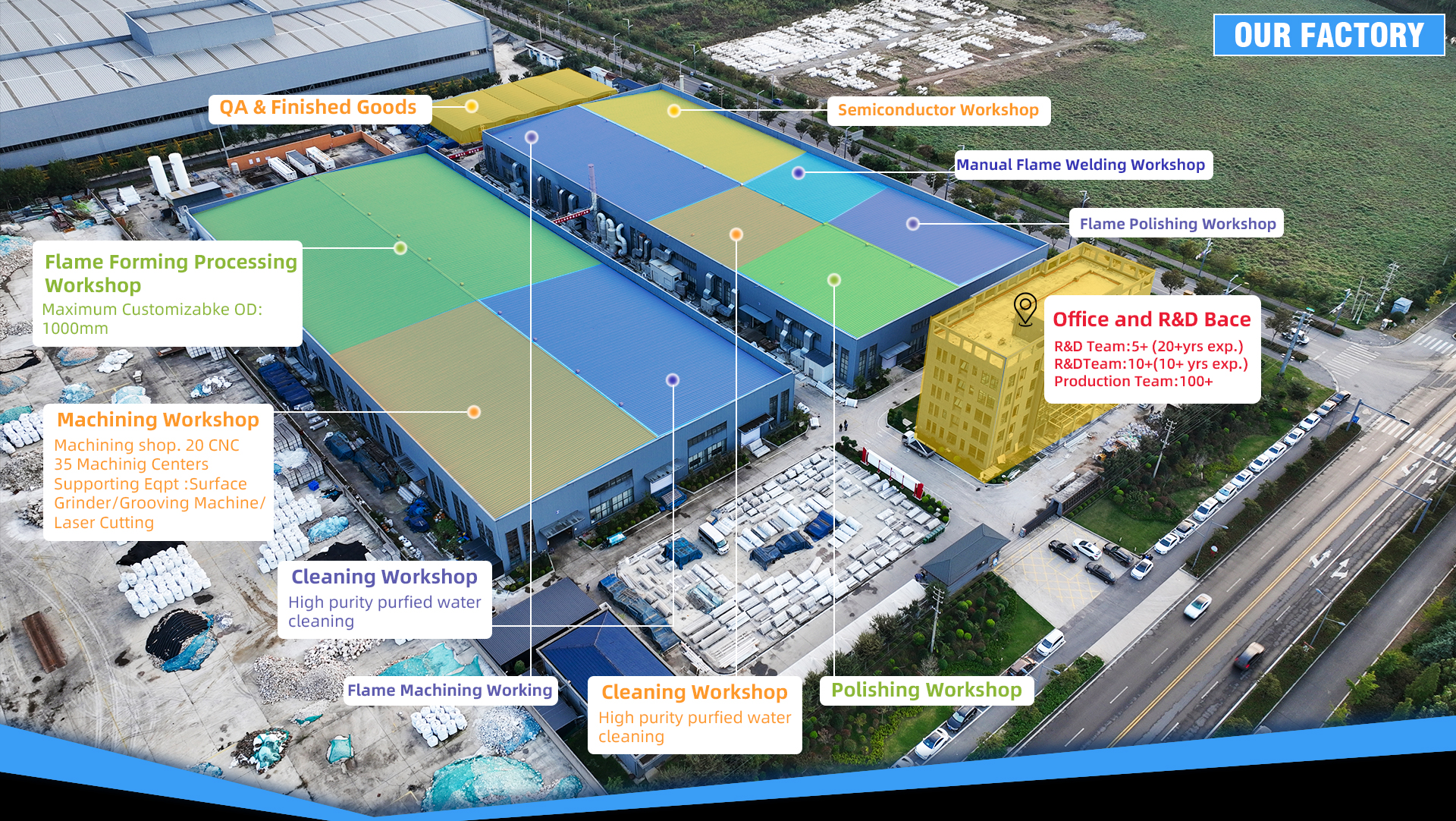
Lianyungang Vulra Quartz Products Co., Ltd. combines raw material sovereignty in Donghai County with rigorous European quality certifications, providing custom pyrometer optics engineered to your precise drawing tolerances.
Situated in Donghai County—the global epicenter of quartz reserves—we maintain direct upstream access to natural quartz sand with purity levels up to 99.999% SiO₂. This eliminates metallic trace impurities (Fe < 0.2 ppm, Al < 5 ppm) that cause optical discoloration or thermal devitrification.
Our manufacturing plant, machining accuracy, quality management systems, and export trade compliance are independently assessed and certified on-site by TÜV Rheinland. Full traceability records and material batch inspection reports accompany every shipment.
We do not enforce prohibitive minimum order quantities on custom components. Whether your thermal engineers require a single prototype quartz flange with drilled bolt holes or 5,000 serialized pyrometer discs, we machine directly from your 2D/3D CAD drawings.
From CNC diamond core-drilling, double-sided optical lapping, and chamfering to high-temperature oxy-hydrogen flame welding, fire polishing, and annealing ovens (1215°C stress relief), all critical processing stays in-house to maintain stringent dimensional tolerances.
 TÜV On-Site Verified
 Verified Custom Manufacturer
 CE Directive Compliant
 RoHS Certified Clean
Direct answers to the most common technical, logistics, and compliance questions raised by Czech procurement teams and maintenance engineers.
Submit your 2D/3D technical drawing (PDF, DWG, STEP) or dimension parameters. Our quartz application engineers will review tolerance limits, recommend the optimal optical quartz grade, and provide a competitive quote within 24 hours.