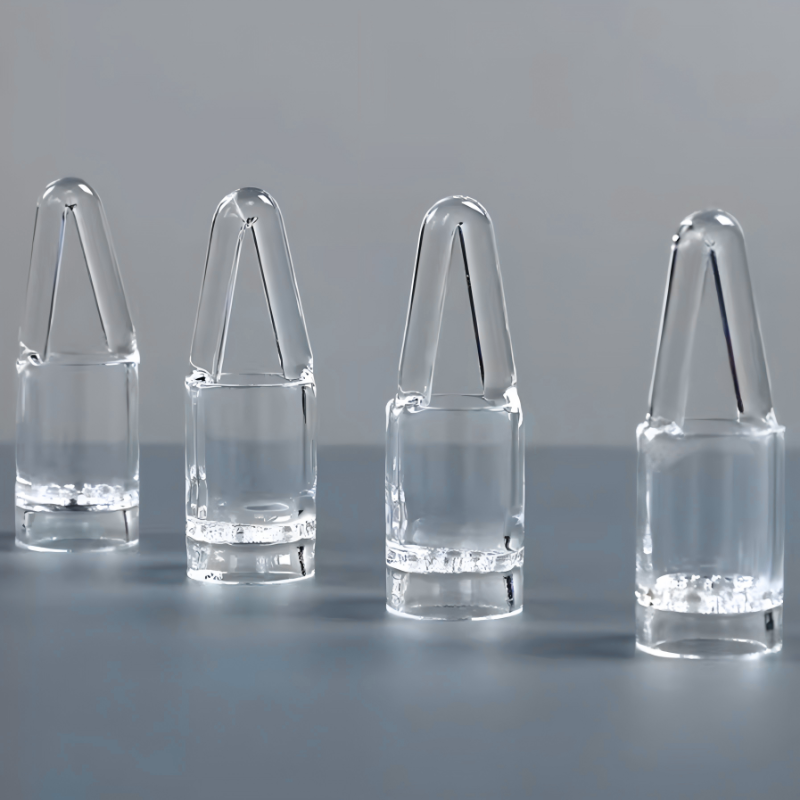
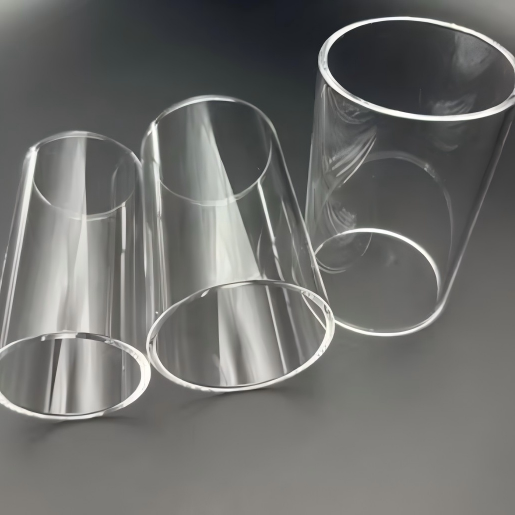
Closed-End Quartz Inspection Pyrometer Sheaths
Ozone-free one-end closed tubes (5–800mm) engineered for infrared thermal inspection, sensor isolation, and high-temp marine furnace chambers.
Direct from our TÜV Rheinland-assessed manufacturing base in Donghai to Nassau ports and industrial zones. Engineered to withstand corrosive marine chloride atmospheres, cyclic thermal gradients, and intense pressures.
Ozone-free one-end closed tubes (5–800mm) engineered for infrared thermal inspection, sensor isolation, and high-temp marine furnace chambers.
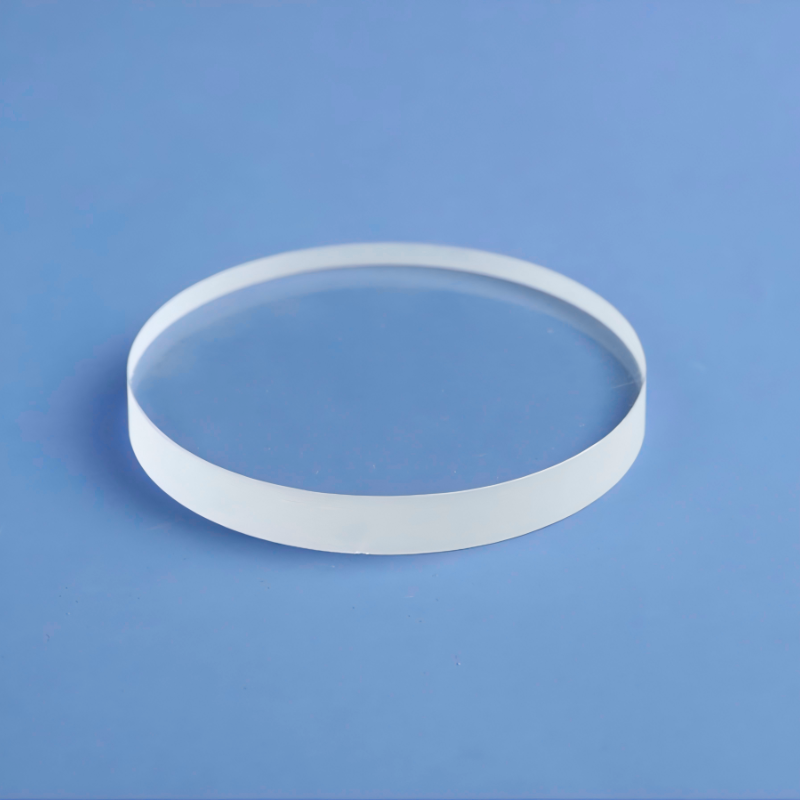
Double-sided optically polished quartz tablets and flat discs. Extreme pressure resilience, parallel edge grinding, and customized flange bolt-hole drilling.
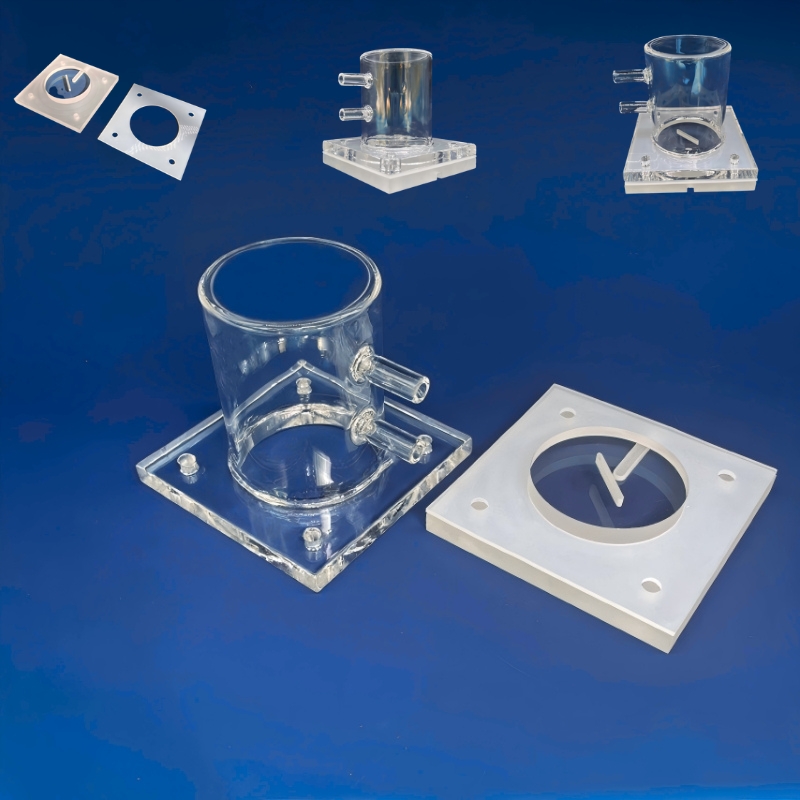
Ozone-free translucent and transparent photochemical reactors for advanced oxidation, UV water purification, and marine wastewater treatment validation.
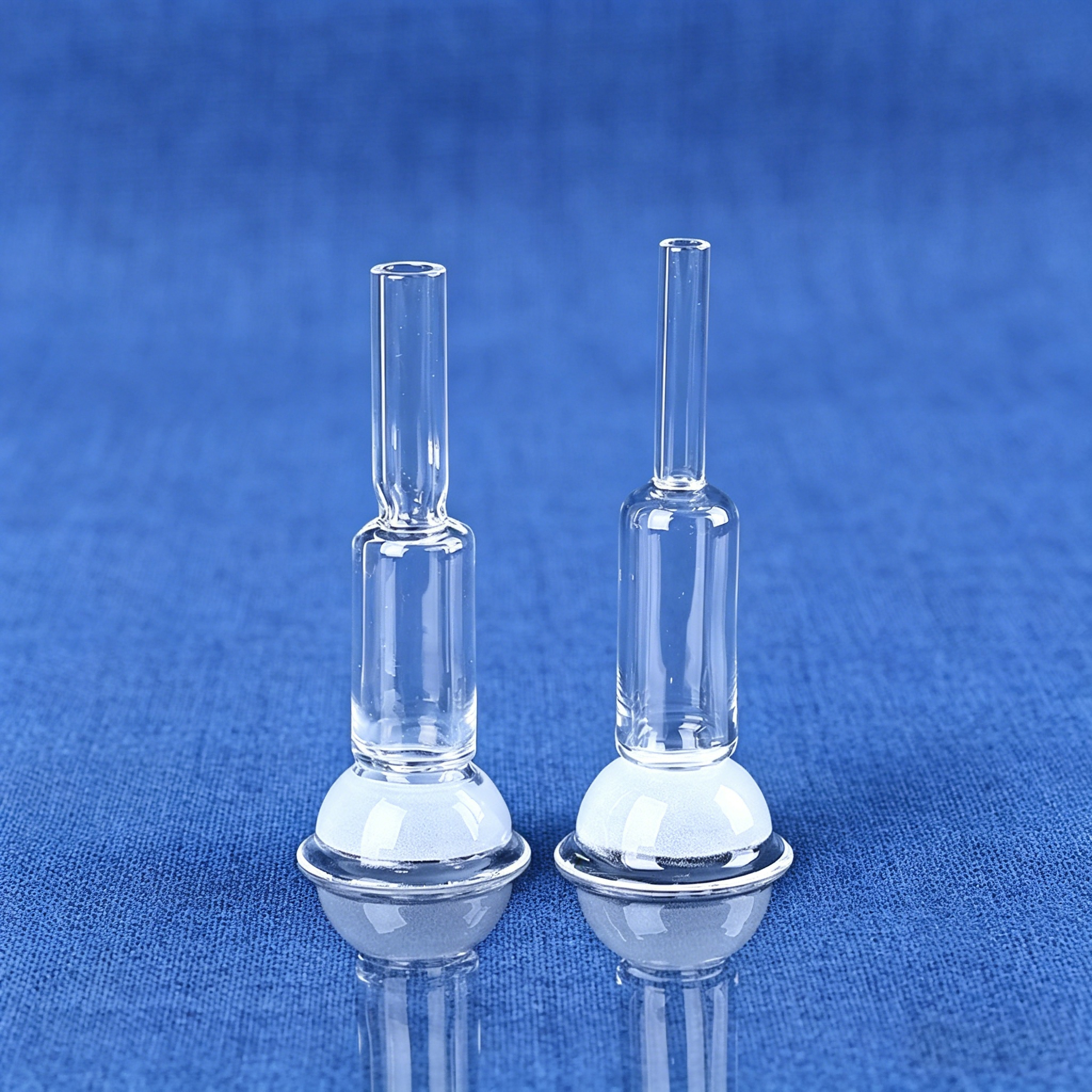
Specialized BET surface-area testing cells and small-bore curved quartz apparatus with vacuum-tight glass-to-metal fusion tolerances up to 1100°C.
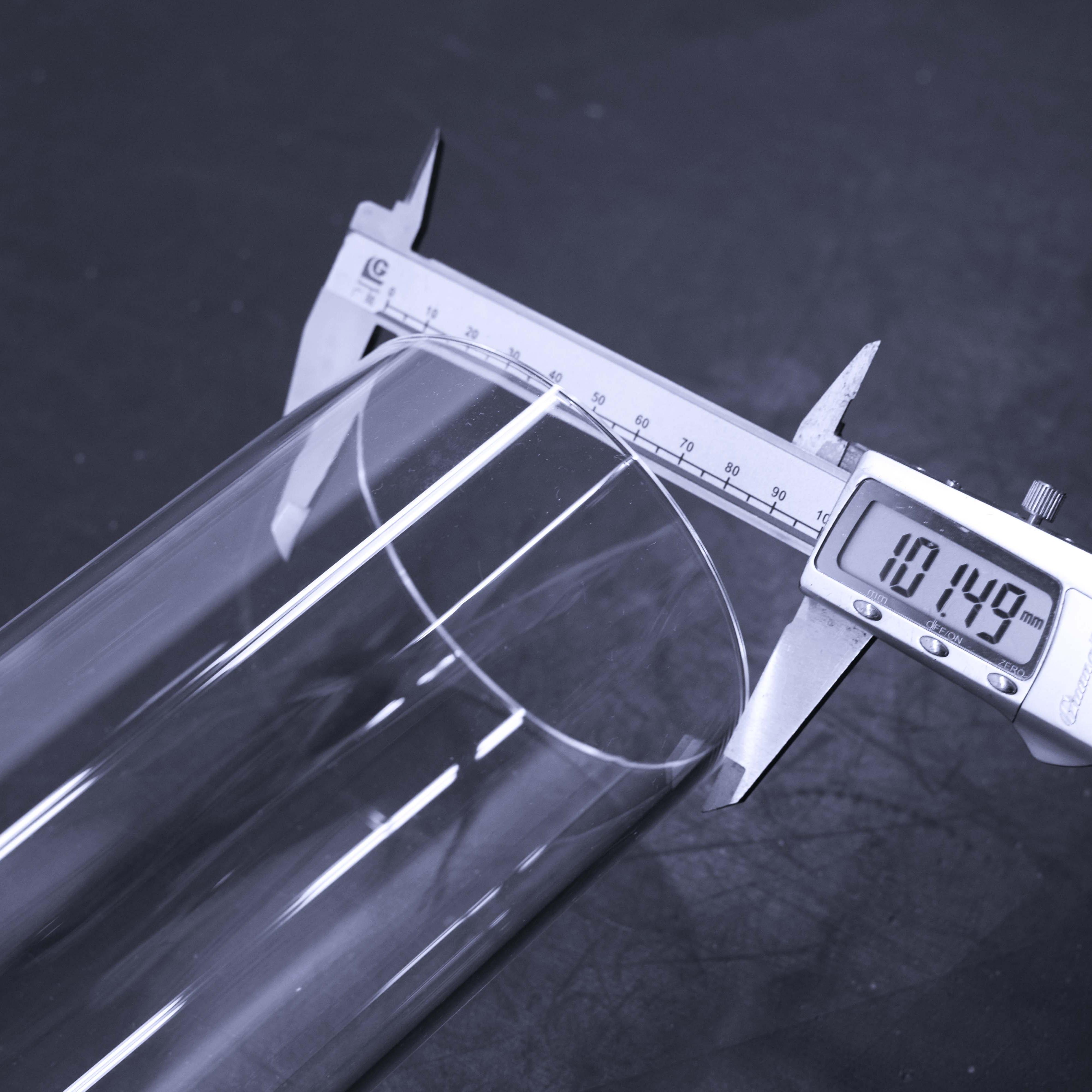
Heavy-wall fused quartz transparent tubes for inline liquid telemetry, boiler feedwater observation, and high-pressure steam view assemblies.
Corrosion-resistant crucibles, domed observation baselines, and closed-end sampling beakers designed for petrochemical analysis and high-salinity assays.
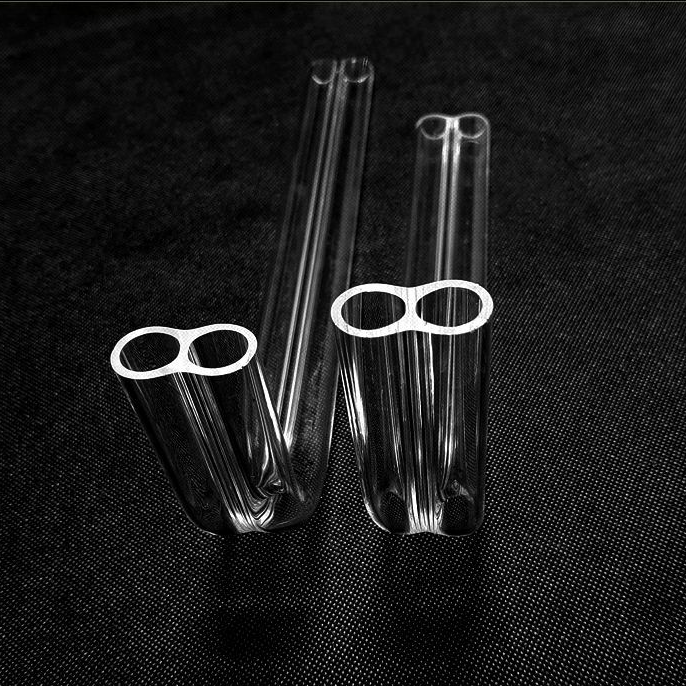
Double-tube 99.999% purity right-angle quartz elbows for jacketed coolant observation, exhaust gas recirculation lines, and marine vacuum manifolds.
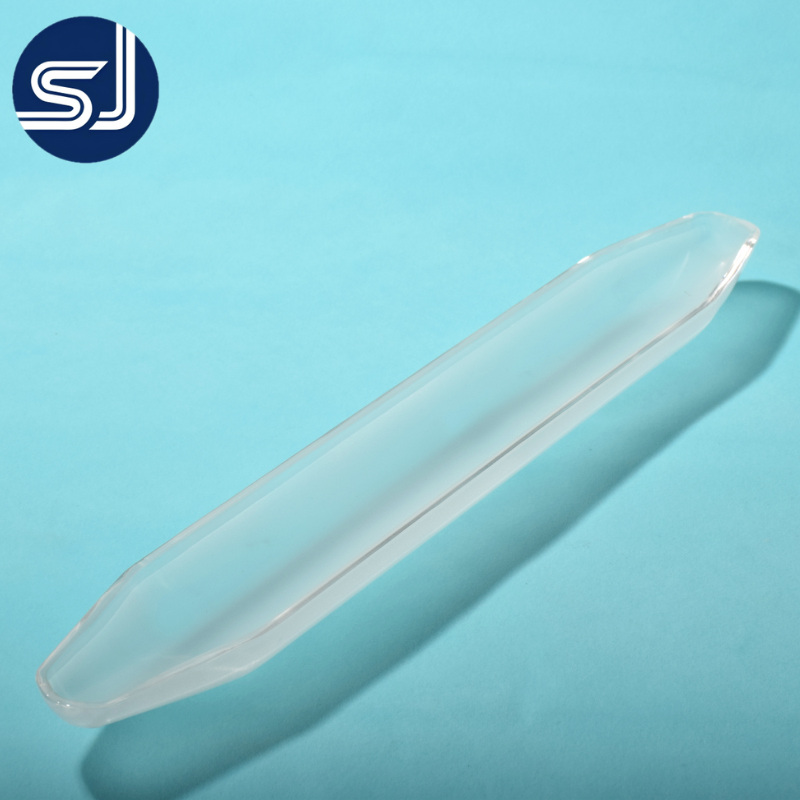
Flat-bottom optical test boats with >85% deep ultraviolet transmission. Custom slotted geometry for analytical laboratories and high-temp tube furnaces.
Why maritime and thermal infrastructure engineers in Nassau specify amorphous synthetic and natural fused silica over standard borosilicate and sapphire viewports.
Industrial sight glasses operating within the maritime subtropical environment of Nassau are simultaneously exposed to internal process extremes (high thermal loads, acidic steam, volatile hydrocarbons) and external environmental aggression (salt-fog chloride condensation, tropical storm ambient shock, and intense solar UV radiation). Fused quartz inspection windows produced by Vulra Quartz consist of three-dimensionally cross-linked silicon-oxygen tetrahedra without crystal grain boundaries. This lack of grain boundaries eliminates cleavage planes, offering exceptional resistance against mechanical cleavage, micro-fissuring, and catastrophic blowout under erratic pressure cycles.
Unlike borosilicate glass (which incorporates B₂O₃ and Na₂O fluxing agents that readily leach out when exposed to hot steam or saline air, causing progressive clouding and structural degradation), high-purity fused silica (purity grade 99.99% to 99.999% SiO₂) is chemically inert across the entire pH spectrum, except against hydrofluoric and concentrated phosphoric acids at elevated temperatures. For process managers at the Clifton Pier Power Station or offshore bunkering facilities in New Providence, this translates to maintenance-free optical clarity and zero wall-thinning over thousands of operational hours.
The defining physical metric of fused quartz is its extraordinarily low coefficient of thermal expansion (α = 5.5 × 10⁻⁷ / °C from 20°C to 320°C). This thermal expansion rate is roughly 1/6th that of premium borosilicate glass and 1/15th that of soda-lime glass. When an engine exhaust sight port or auxiliary boiler inspection port in Nassau experiences a flash rain shower from a Caribbean tropical storm while internal flue gases are at 750°C, the external thermal shock parameter ($R$) of the quartz viewport prevents tensile fracture:
R = (k × σ_f) / (α × E)
Because the denominator product (α × E) remains infinitesimally small due to the near-zero expansion coefficient, the window can endure water-quenching from 1000°C down to 20°C without developing surface crazing, micro-voids, or structural failure.
| SiO₂ Chemical Purity | 99.99% (Standard Industrial) – 99.999% (Semiconductor Grade) |
|---|---|
| Continuous Service Temp | 1100 °C (1373 K) |
| Peak Short-Term Service Temp | 1450 °C (1723 K) |
| Softening Point / Annealing Point | 1683 °C / 1180 °C |
| Thermal Expansion (α) | 5.5 × 10⁻⁷ / °C (20°C – 320°C) |
| Compressive Strength | ≈ 1150 N/mm² (Superior under hydraulic pressure) |
| Flexural Bending Strength | ≈ 67 N/mm² (Annealed flame-polished finish) |
| Refractive Index (n_d) | 1.4585 at λ = 589.3 nm |
| Optical Transmission Range | 190 nm (Deep UV) to 2500 nm (Near Infrared) ≥ 91% |
| Parallelism / Surface Quality | < 30 arcsec | 60/40 or 40/20 Scratch-Dig |
From maritime bunkering terminals along Arawak Cay to municipal energy substations and desalination skids, our fused silica windows guarantee zero-failure process telemetry.
Nassau Harbor welcomes high volumes of international cruise vessels and inter-island container ships. Continuous marine exhaust scrubbers, heavy marine fuel oil (HFO) purifiers, and auxiliary diesel turbochargers require rugged circular sight ports to monitor soot blowdown, fuel viscosity, and flame luminescence.
Power generation facilities on New Providence operate steam turbines, industrial thermal boilers, and dual-fuel peaking generators under punishing ambient humidity. Quartz pyrometer observation windows provide optical pathways for non-contact infrared thermal scanners monitoring furnace fireboxes.
Freshwater security in Nassau depends on high-capacity SWRO facilities (such as Windsor and Clifton desalination stations). High-pressure quartz viewports allow plant operators to inspect pre-treatment chlorination flow, membrane manifold integrity, and UV-C biocide disinfection banks.
Commercial spirits production (such as world-renowned Bahamian rum distilleries), biopharmaceutical quality testing, and environmental testing labs at the University of The Bahamas utilize custom quartz distillation viewports and spectrophotometric flow cells.
How international regulatory mandates and Bahamian clean-energy goals are transforming quartz sight glass specifications for regional contractors and procurement agents.
With Nassau Container Port positioning for eco-maritime regulations and cruise liners shifting to liquefied natural gas (LNG), bunkering terminals require dual-spectrum inspection windows. These components must withstand extreme cryogenic shock at -162°C on fuel lines, transitioning to high-temp flame exposure during boil-off gas burning.
The Solution: Synthetic fused silica with zero low-temperature embrittlement and uniform Young's modulus across a 1300°C span.
The Bahamas Ministry of Works and private hotel resorts across Paradise Island and Cable Beach are transitioning commercial swimming facilities and potable water reclamation systems toward chemical-free UV Advanced Oxidation Processes (AOP) to protect fragile coral ecosystems from halogen discharge.
The Solution: JGS1-grade synthetic optical quartz windows offering >92% internal transmission at the critical 253.7 nm germicidal wavelength.
New building codes and industrial specifications in New Providence mandate exterior equipment viewports rated for Category 5 hurricane pressures, flying debris deflection, and 24/7 salt aerosol exposure without hazing, micro-pitting, or gasket creep.
The Solution: Chemically tempered and diamond-edge-ground quartz sight discs with CNC custom bolt bevels for high-torque mechanical gasketing.
Combining the mineral heritage of Donghai (China's Crystal Capital) with certified optical engineering and comprehensive export packaging for long-distance maritime freight.
Our production premises, engineering competencies, and quality control systems are verified independently by TÜV Rheinland. Full traceability from raw Donghai crystal sand to the finished export crating.
Every viewport undergoes multi-hour programmable electric annealing to eliminate internal cooling stresses, followed by polariscope birefringence inspection to prevent spontaneous cracking under pressure.
High-precision planetary lapping machines achieve surface flatness up to λ/4 per inch, scratch-dig ratings of 40/20 or 20/10, and surface roughness (Ra) < 0.5 nm for distortion-free laser or optical inspection.
Send 2D CAD drawings or 3D STEP models. We machine circular sight glasses, oval slotted liquid-level gauges, stepped flange discs, and chamfered sight glasses with custom-drilled bolt circles.
Quartz sight glasses destined for Nassau are individually vacuum-sealed with desiccant packs, suspended in custom high-density EPE foam cradles, and crated in fumigated ISPM-15 wooden boxes for zero-breakage ocean or air transit.
We supply full commercial invoices, Packing Lists, Certificates of Analysis (COA), and precise HS Code classifications (7002.31 / 7002.39) to facilitate rapid Bahamas Customs Service clearance at Nassau Container Port or Lynden Pindling Airport.
Actionable technical answers addressing logistics, installation, material grades, and customs requirements for importing high-performance quartz into The Bahamas.
While borosilicate sight glasses are adequate for low-pressure steam up to 280°C, fused quartz supports continuous service up to 1100°C and short peaks at 1450°C. In coastal environments like Nassau, borosilicate tends to leach alkaline components when exposed to marine salt fog and aggressive flue condensation, resulting in surface clouding. Fused quartz is 99.99%+ pure SiO₂, completely non-porous and chemically inert, retaining crystal clarity and structural strength permanently.
Yes. We specialize in custom drawing-based manufacturing from 1 piece. Whether you require a replacement sight glass disc of 100mm diameter × 15mm thickness for a marine boiler, or an oversized 350mm × 25mm viewport with beveled perimeter edges, our CNC waterjet and diamond grinding benches fabricate parts exactly to your requested tolerances (±0.05 mm standard, or ±0.01 mm upon request).
For urgent breakdown maintenance, express air shipments (via DHL, FedEx, or UPS air freight) arrive at Lynden Pindling International Airport (NAS) in Nassau within 5 to 8 business days following fabrication. For scheduled plant overhauls or bulk contractor stock, ocean consolidated shipments route via major transatlantic hubs directly to the Nassau Container Port (Arawak Cay) in approximately 28 to 35 days.
We implement a strict 4-layer export packing standard: (1) Surface micro-film cleaning and dust-free wrapping; (2) Multi-cavity shock-absorbing closed-cell EPE foam inserts tailored to each piece; (3) Heavyweight double-wall corrugated inner boxes; and (4) Steel-strapped, moisture-sealed, fumigated ISPM-15 export wooden crates engineered to survive severe offshore sea conditions and crane handling.
For UV-C disinfection viewports and spectrophotometric flow cells requiring deep ultraviolet transmission down to 190 nm, specify JGS1 (Synthetic Fused Silica). For standard furnace sight glasses, marine boiler inspection ports, and pyrometry windows operating across visible and near-infrared bands (260 nm to 2500 nm), JGS2 (Fused Quartz) is the most cost-effective and structurally durable solution. JGS3 is tailored for infrared-only applications without UV requirements.
Yes. Every shipment is accompanied by a comprehensive Quality Inspection Certificate confirming exact dimensional measurements, surface roughness (Ra), and scratch-dig standards. Upon request, we provide Spectrophotometric Transmission Curves, Raw Material Chemical Purity Assays (ICP-MS testing documenting impurity levels in ppm), and CE / RoHS compliance certificates.
Have a custom dimension, technical drawing, or replacement sight glass specification? Connect with our senior optical and materials engineers. We analyze bolt torque distribution, thermal parameters, and pressure safety margins, delivering a full feasibility assessment and DDP/CIF Nassau quote within 24 hours.