Engineered Quartz Products for Industrial & Analytical Systems
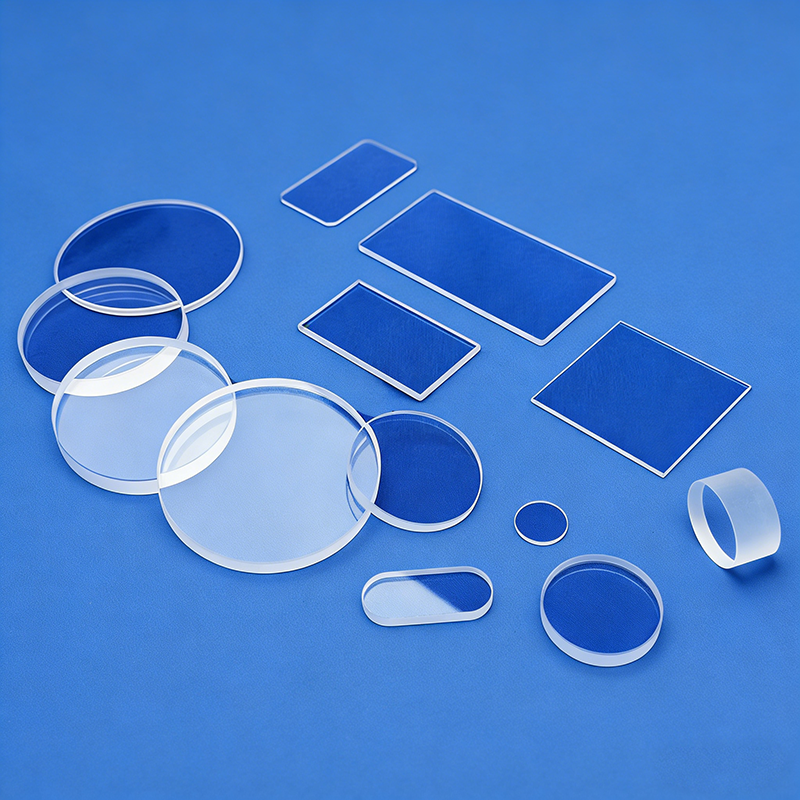
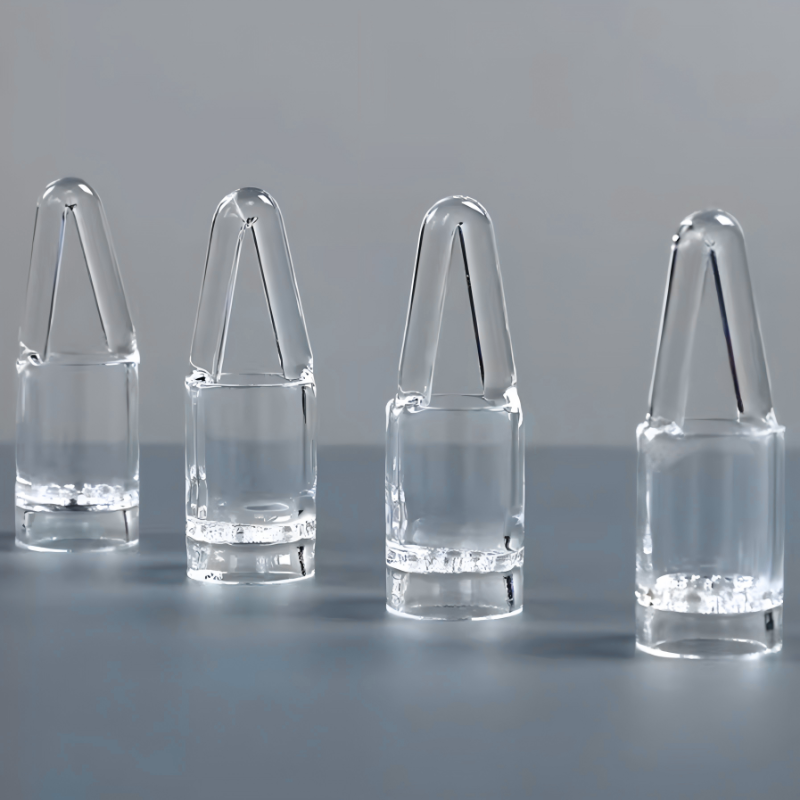
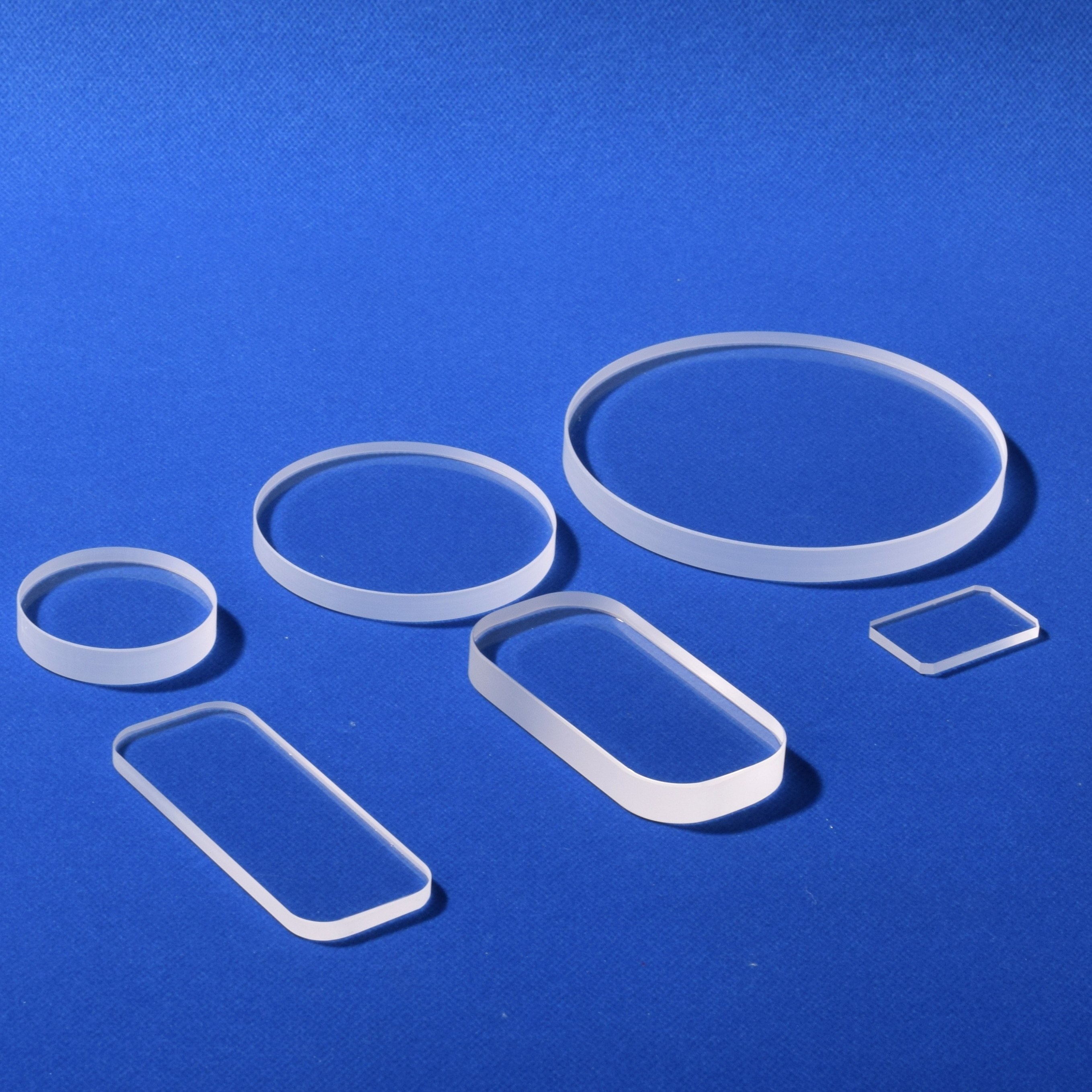
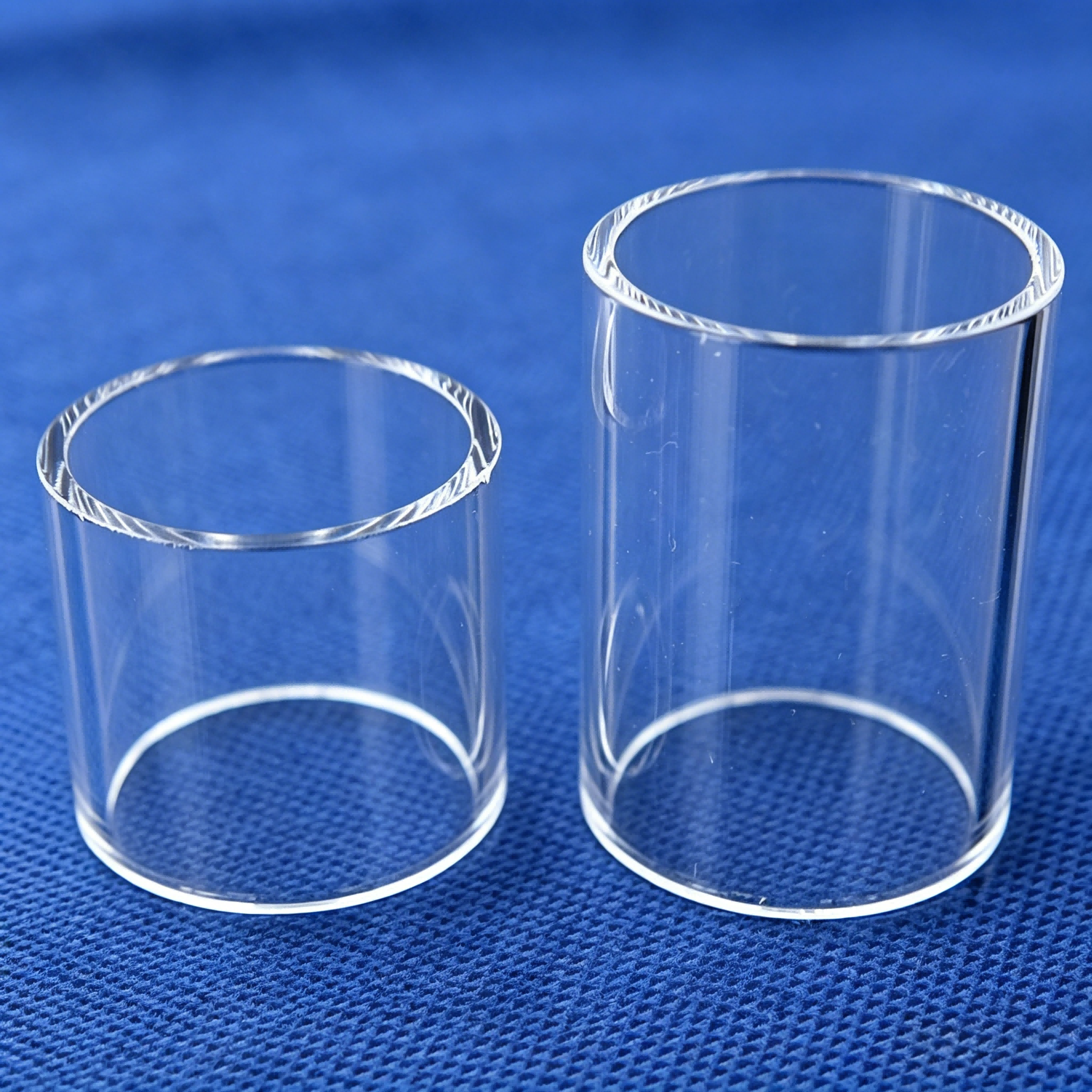
Browse our core high-temperature, acid-resistant quartz tubes, plates, crucibles, and customized helical components. All units undergo stringent annealing and dimension inspection to ISO/DIN precision tolerances.
The Mechanics of Spiral Quartz Coils in Hostile Industrial Operations
Understanding why helical-wound fused silica tubing supersedes traditional metal alloys, PTFE, and borosilicate 3.3 in high-temperature, hyper-corrosive, and high-purity continuous processes.
Spiral quartz tubes (also classified as helical fused silica condensing coils or coiled glass reactors) are precision heat-exchange and fluid-conveyance vessels engineered from 99.99% pure natural crystalline silica (SiO₂). Fabricated by continuous oxy-hydrogen glass-lathe winding, the helical geometry introduces distinct thermodynamic and fluid-mechanical advantages: it exponentially expands the contact surface-area-to-volume ratio within a compact envelope while creating secondary Dean vortices that continuously mix process fluids, dramatically reducing thermal boundary layers without mechanical agitation.
Unlike metallic heat exchangers constructed of AISI 316L, titanium, or Hastelloy C-276, fused silica exhibits an almost non-existent coefficient of linear thermal expansion (5.5 × 10⁻⁷ /°C between 20°C and 1000°C). This gives spiral quartz tubes near-absolute immunity to thermal shock. A helical coil heated to 1100°C can be immediately doused in ice water without lattice fracture or micro-crack propagation. For facilities in La Romana and the Eastern Dominican Republic, where processing conditions involve alternating cycles of extreme temperature and sudden coolant introduction, fused quartz guarantees zero system down-time and eliminates metallic ion leaching into high-purity chemical streams.
| Material Property | Vulra Fused Quartz (SiO₂ 99.99%) | Borosilicate Glass 3.3 | PTFE (Polytetrafluoroethylene) | Hastelloy C-276 |
|---|---|---|---|---|
| Continuous Working Temperature | 1100°C (1450°C peak) | ≈ 450°C (500°C peak) | ≈ 260°C maximum | ≈ 650°C (oxidation limits) |
| Coefficient of Thermal Expansion (20-300°C) | 5.5 × 10⁻⁷ / °C | 33 × 10⁻⁷ / °C | 100–160 × 10⁻⁶ / °C | 11.2 × 10⁻⁶ / °C |
| Thermal Shock Resistance (ΔT) | > 1000°C water quench | ≈ 150°C water quench | High (ductile deformation) | Moderate (risk of stress cracks) |
| Corrosion Resistance (Hot Acidic Solutions) | Immune to all acids (except HF & hot H₃PO₄) | Susceptible to alkaline attack | High, but subject to gas permeation | Pits in concentrated wet chlorides |
| Optical / Deep-UV Transmission | > 90% (190 nm – 2500 nm) | Opaque below 310 nm | Zero (opaque) | Zero (opaque metal) |
| Heavy Metal Ion Contamination | Zero ion release (<0.1 ppm trace) | Traces of Boron, Sodium, Alumina | Fluorinated organic shedding | Nickel, Chromium, Molybdenum leach |
Field Applications: Deploying Spiral Quartz in La Romana & DR
From agro-industrial furfural digestion at Central Romana to ISO 13485 cleanroom sterilization within the Zona Franca, customized helical silica coils satisfy rigorous local process demands.
Agro-Industrial Byproduct & Furfural Refining
La Romana is the heart of the Dominican sugar industry. In high-temperature acid hydrolysis of sugarcane bagasse to produce furfural, pentosan streams react with hot sulfuric acid vapors at 160°C–220°C. Standard alloys corrode within months. Custom spiral quartz condenser coils handle aggressive boiling acid vapors indefinitely without chemical embrittlement.
- Zero wall erosion from sulfuric & acetic acids
- Extended 18-turn spiral path for vapor knock-down
- Direct flanged connections to distillation columns
Zona Franca Precision Medical & Electronics
The Parque Industrial Zona Franca La Romana hosts world-class manufacturing for catheters, diagnostic cartridges, and electrical components. Our helical quartz tubes are utilized inside high-intensity UV-C curing spirals, solvent evaporation chambers, and precision plasma cleaning manifolds where trace metal contamination causes catastrophic lot rejections.
- 99.999% purity eliminates cation leach into sensors
- Deep-UV 254 nm transmission for fast adhesive cures
- Custom pitch spacing to optimize UV beam focus
Coastal Marine Atmosphere Analytical Digestion
Facilities along the Chavón River and coastal La Romana face intense ambient salinity and humidity. Environmental control and metallurgical testing labs require quartz digestion vessels, spiral reflux condensers, and Kjeldahl apparatus that maintain integrity when testing saline effluent, fuel oils, and maritime bunker discharges without sodium cross-contamination.
- Impervious to atmospheric chloride & salt spray
- Optical clarity for visual boiling monitoring
- Annealed stress relief prevents joint failure
Hospitality & Luxury Resort Water Purification
Across Casa de Campo and luxury resorts in the East, large-scale potable water systems and swimming lagoons deploy high-capacity ozone generators and advanced oxidation processes (AOP). Helical ozone-free quartz sleeves and fluid path spirals maximize contact time under high pressure, maintaining sanitary standards without chemical scaling.
- Engineered ozone-free doping absorbs 185 nm
- Burst test rated for continuous water line pressure
- Smooth fire-polished internal bore prevents fouling
Dominican Industrial Trends: The Sourcing Pivot to Direct Tier-1 Factories
How Caribbean procurement managers are bypassing intermediate distributors to optimize lead times, lower BOM costs, and secure custom glass engineering for rapid equipment overhauls.
The Free Zone (Zona Franca) Value Chain Upgrade
Under the Dominican Republic's Free Trade Zone incentives and DR-CAFTA framework, manufacturing clusters in La Romana, San Pedro de Macorís, and Haina are shifting from low-complexity assembly to sophisticated medical device prototyping and analytical testing. This evolution requires direct OEM drawing execution (DWG/STEP files) with tight tolerances (±0.05 mm) that local stockists cannot provide.
Direct-from-Source Supply Chain Compression
Historically, Caribbean facilities purchased fused silica through regional resellers in Miami or San Juan at markups of 40%–70%. By partnering directly with Vulra Quartz in Donghai, plants in La Romana access wholesale factory pricing, custom drawing modifications from 1 piece, and tailored crating that withstands multimodal ocean and air transit.
Continuous-Downtime Prevention & Spares Buffering
Seasonal sugar cane harvesting (zafra) and scheduled cleanroom shutdowns allow zero margin for component failure. Dominican procurement teams are increasingly specifying pre-annealed, vacuum-tested spiral quartz spares held on consignee reserve, ensuring identical thermal properties across multi-year production runs.
Why International Engineers Specify Lianyungang Vulra Quartz
Located at Dingxin Road in the Jiangsu Donghai Economic Development Zone—the recognized epicenter of the world's natural high-purity quartz reserves—we combine geological raw material dominance with verified CNC glass-forming craftsmanship.
TÜV Rheinland Assessed
Our manufacturing plant, legal registration, production lines, and testing equipment have undergone rigorous on-site inspection and verification by TÜV Rheinland, assuring authentic factory-direct compliance.
Custom Drawing OEM from 1 PC
Whether you require a single bespoke replacement helical condenser for a pilot reactor or continuous containerized production of semiconductor tubes, we accept prototypes from 1 piece with complete engineering reviews.
Hot & Cold Integrated Processing
Our facility houses high-precision oxy-hydrogen glass-blowing lathes, automated diamond cutting saws, ultrasonic CNC drilling, laser profiling, and double-side chemical-mechanical polishing (CMP) under one roof.
Thermal Annealing & Stress Relief
Every bent, welded, or lathe-coiled quartz spiral passes through our programmable electric annealing furnaces (1150°C soaking cycle) to extinguish residual mechanical stress, preventing spontaneous shattering during thermal cycling.
CE & RoHS International Standards
All finished quartz tubes, crucibles, and observation windows carry CE markings and comply fully with RoHS restrictions, meeting the strict validation audits of multinational medical device clients in the Caribbean.
Export Shock-Proof Crating Guarantee
Coiled and thin-walled quartz requires specialized protection. We employ custom-molded high-density EPE foam cradles, vacuum poly-barrier liners, and fumigated reinforced plywood crates built to survive maritime and air transit.
Frequently Asked Questions for Sourcing to the Dominican Republic
Direct technical, logistical, and customs answers from our export engineering department to streamline your international procurement process into La Romana.
Request a Technical Feasibility Review & Quotation
Have an engineered drawing, CAD file, or replacement specification for your La Romana facility? Our glass masters and thermal engineers review coil diameter, wall thickness, pitch spacing, and port seals within 24 hours.