Precision High-Purity & Low OH Quartz Components
Engineered from natural crystal silica and synthetic precursors to withstand continuous thermal loads above 1100°C while suppressing NIR water-band absorption for Busan's advanced industrial ecosystem.
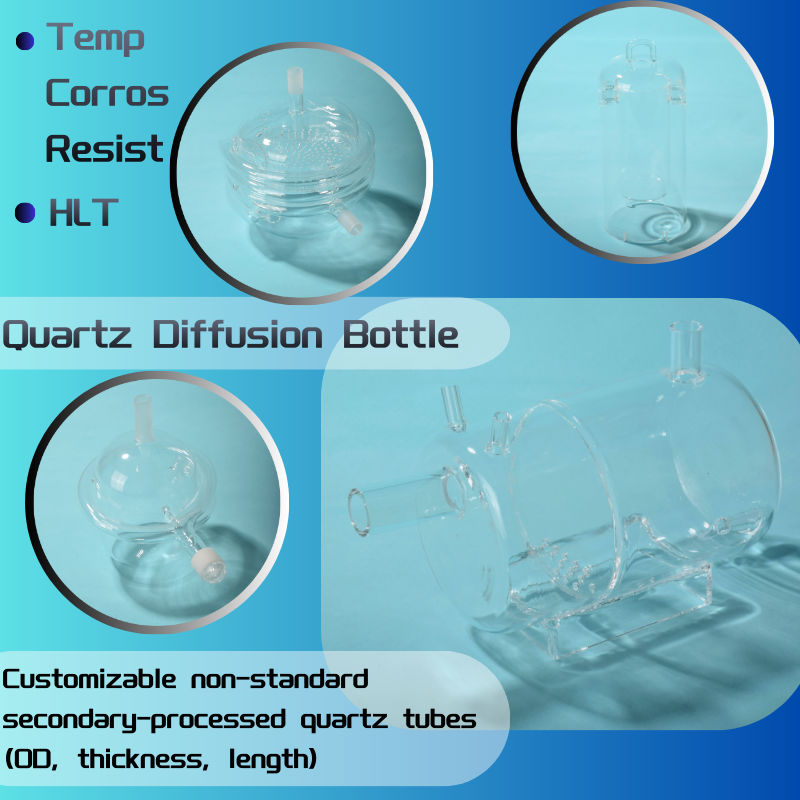
SJ 135 Quartz Purification Units & Condensers
- Purity: SiO₂ ≥ 99.995%
- [OH⁻] Content: < 15 ppm (Low OH Avail.)
- Application: Wet Bench Acid Stripping
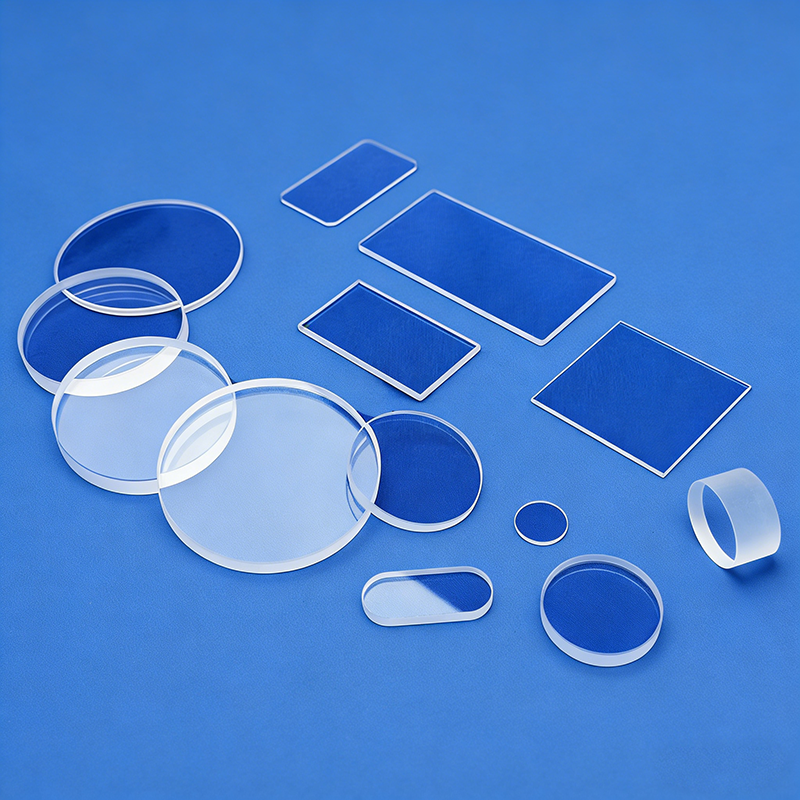
Translucent Natural Fused Quartz Arc Plates
- Thermal Limit: 1200°C Continuous
- Structure: Opaque/Translucent Sintered
- Customizing: CNC Diamond Waterjet
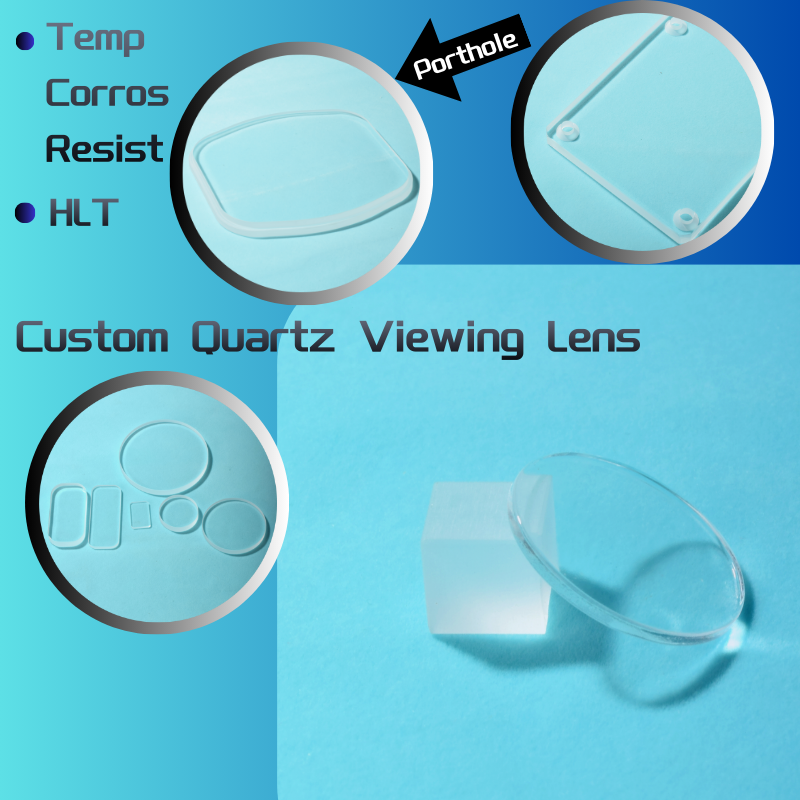
SJ 126 Precision Optical Fused Quartz Slides
- Surface Quality: 40/20 or 20/10 Scratch-Dig
- Thickness: 0.3mm – 25.0mm
- Parallelism: < 30 arcsec
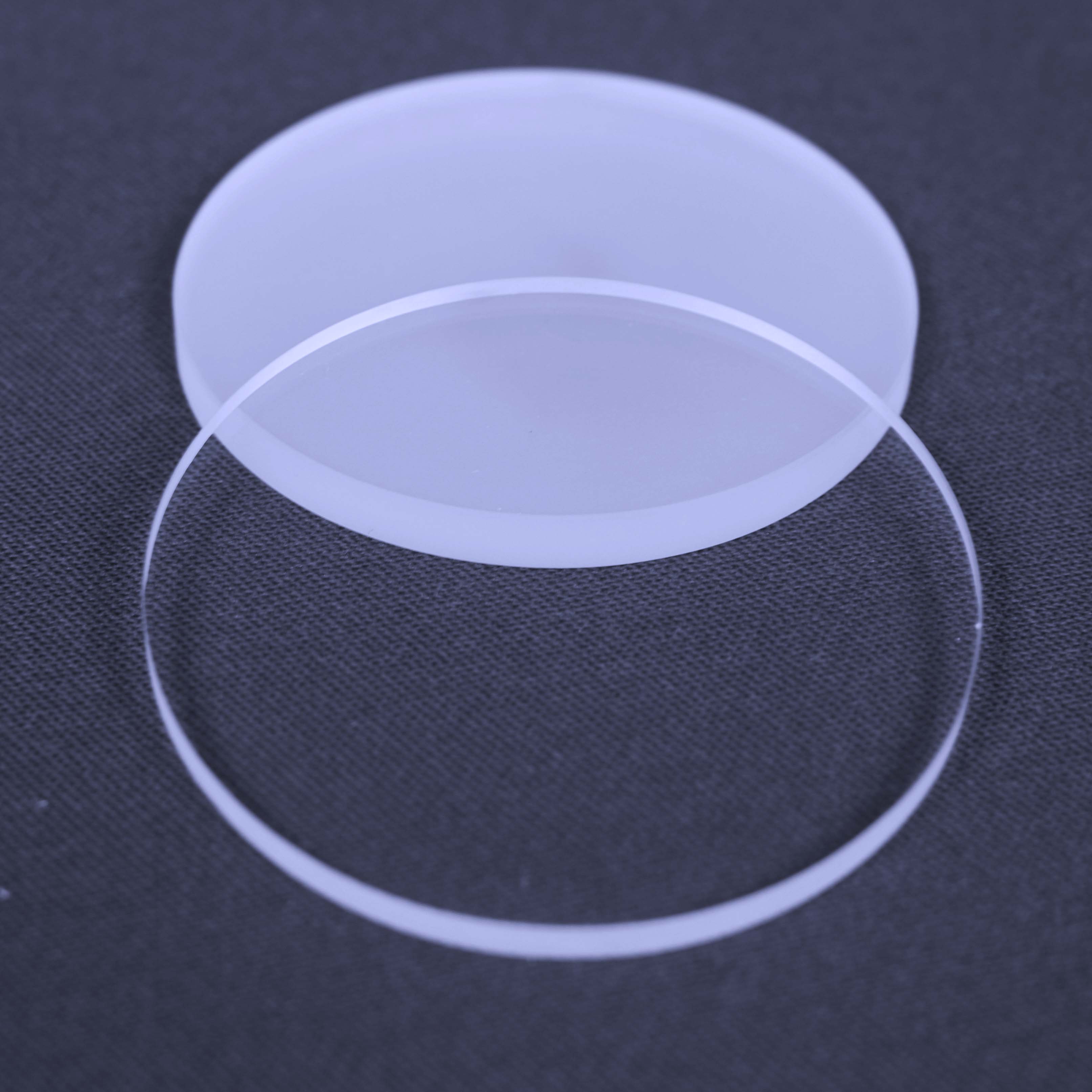
High-Transmittance XRD Quartz Sample Holder
- Cut Plane: Zero-Background Diffraction
- Softening Pt: 1683°C
- Geometry: Cavity & Flat Circular Discs
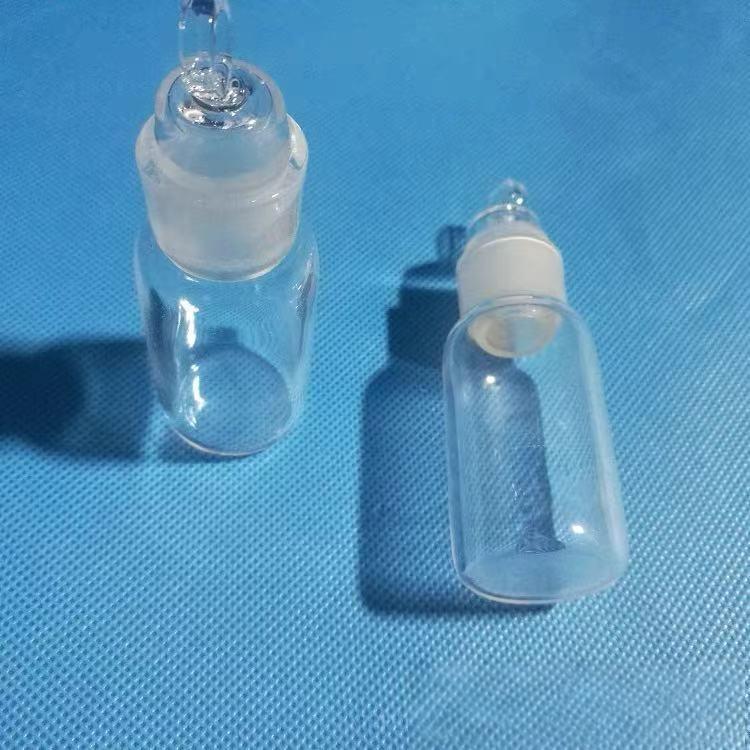
Semiconductor 400 Mesh Quartz Components
- Acid Resistance: 99.9% in Boiling Acids
- Thermal Shock: 1100°C to 20°C ΔT
- Application: Plasma Etching & Ashing
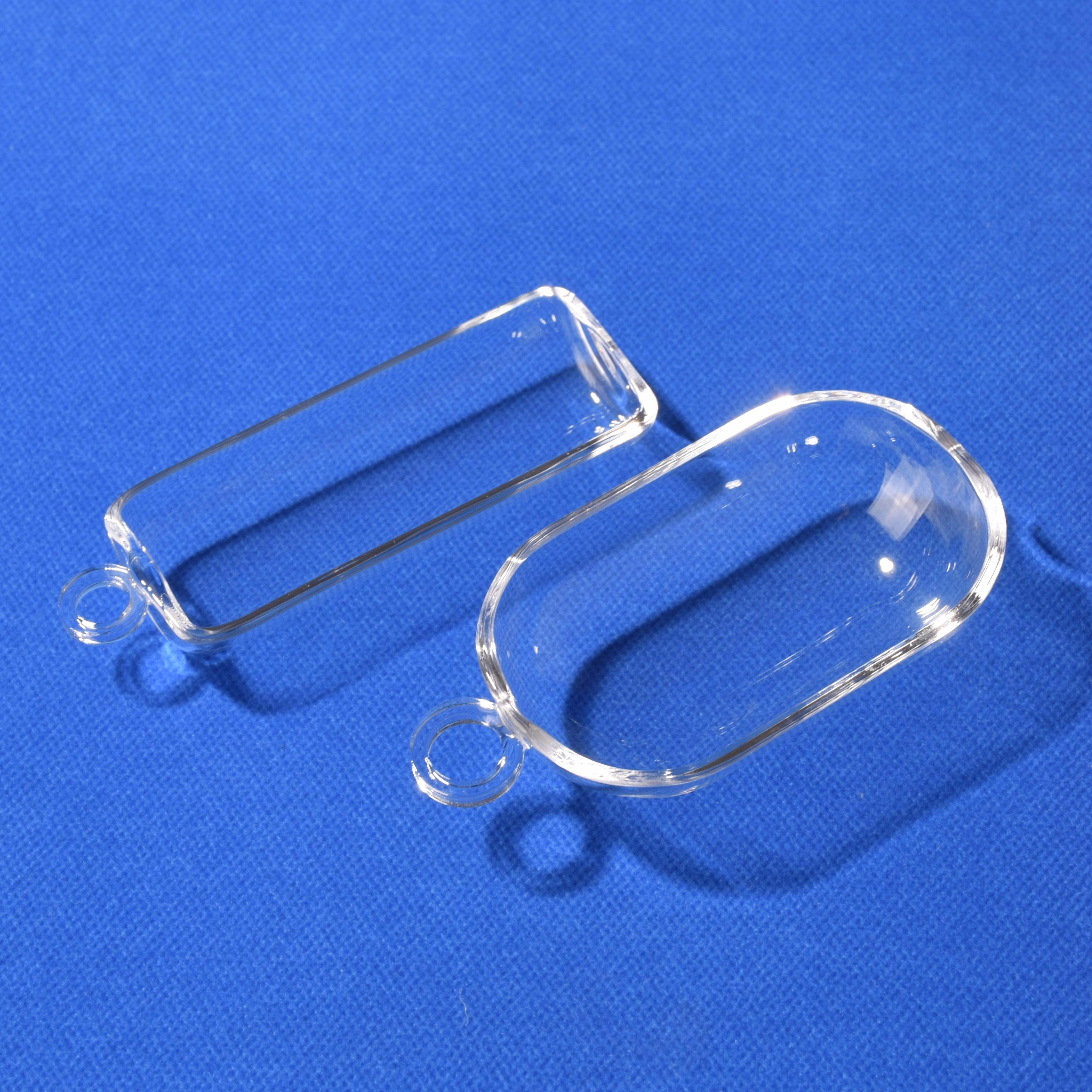
Semi-Circular Flat-Bottom Furnace Boats
- Max Temp: 1450°C Short-term Peak
- Shape: Semicircular Flat Base
- Welding: Seamless Micro-Torch Joint
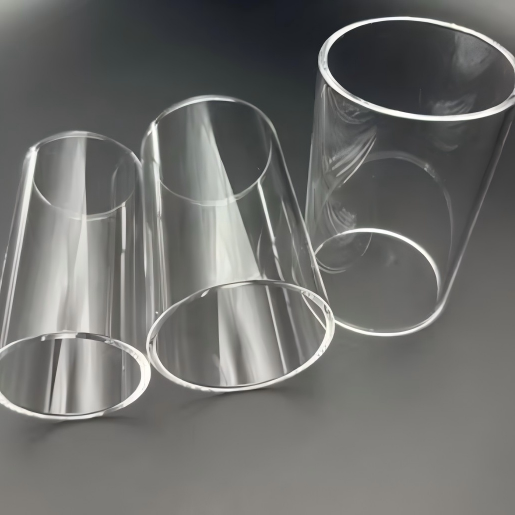
One End Closed Fused Quartz Process Tubes
- OD Range: 5mm to 800mm Diameter
- Wall Tol.: ±0.08mm to ±0.20mm
- Bottom Dome: Hemispherical / Flat
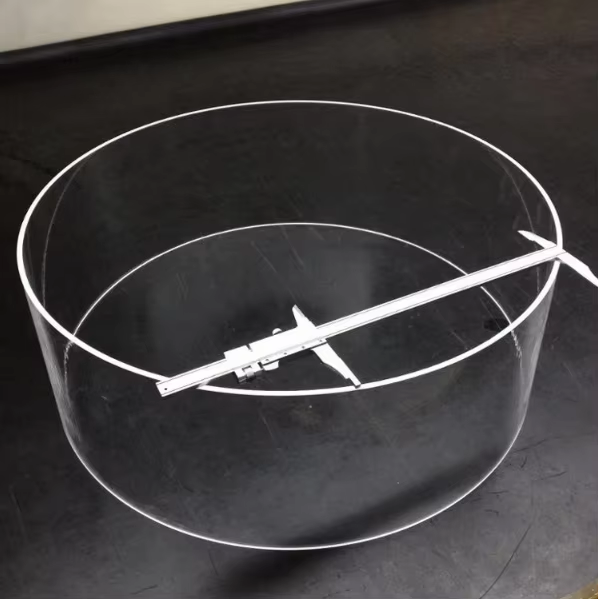
Optical Quartz & Sapphire Sintering Tubes
- Spectral: DUV 190nm to NIR 3500nm
- Chemical: Non-reactive with Al₂O₃
- Process: Precision Lathe Fire Polished
The Material Science of Low Hydroxyl (Low OH) Quartz Glass in Precision Engineering
In high-precision thermal synthesis, semiconductor epitaxial growth, and infrared laser optics, standard fused quartz often encounters catastrophic failure modes caused by a microscopic constituent: the hydroxyl ion (OH⁻) bound silanol group (Si-OH). While standard commercial fused quartz contains hydroxyl concentrations ranging between 150 ppm and 450 ppm due to oxy-hydrogen flame melting processes, Low OH Fused Quartz (< 5 ppm, and synthetic grades < 1 ppm) is processed under controlled electric vacuum fusion or plasma gas synthesis to systematically strip water radicals from the silicon dioxide tetrahedral matrix.
Infrared Transmission (NIR)
Eliminates the intense molecular water absorption dip at 2.73 µm, along with secondary harmonic overtones at 1.38 µm and 2.22 µm. Essential for IR heaters, optical spectroscopy, and Yb/Nd:YAG laser transmission.
Suppressed Devitrification
Silanol bonds disrupt the continuous random network of SiO₄ tetrahedra, lowering viscosity. Low OH quartz elevates the annealing point by 50°C–80°C, dramatically retarding α-cristobalite nucleation above 1150°C.
Ultra-High Vacuum Sag Resistance
High-temperature structural stiffness under negative pressure. Low OH tubes maintain cross-sectional roundness and dimensional integrity during long-duration LPCVD cycles in Busan fab lines.
Comparative Material Chemistry: Low OH Quartz vs. Standard Commercial Grades
For Busan's R&D engineers evaluating materials across Noksan, Mieum, and Gijang, selecting the correct quartz glass requires understanding the trade-offs between thermal viscosity, transmission bands, and elemental trace impurities:
| Property Parameter | Electrically Fused Low OH Quartz | Gas-Fused Standard Clear Quartz | Synthetic Fused Silica (IR Grade) | Test / Standard Protocol |
|---|---|---|---|---|
| Hydroxyl [OH⁻] Content | < 2 ppm to < 5 ppm | 150 ppm – 350 ppm | < 0.2 ppm to < 1 ppm | FTIR Spectrometry @ 2.73 µm |
| SiO₂ Purity Ratio | ≥ 99.995% (4N5) | ≥ 99.99% (4N) | ≥ 99.9999% (6N) | ICP-MS Trace Element Analysis |
| 2.73 µm IR Transmittance (10mm) | > 88% (No Water Notch) | < 12% (Deep Absorption) | > 90% (Broadband Flat) | PerkinElmer Lambda 1050+ |
| Transformation Point (Tg) | 1180 °C | 1120 °C | 1195 °C | Dilatometric Expansion |
| Annealing Point (10¹³ dPa·s) | 1215 °C | 1140 °C | 1225 °C | Beam-Bending Viscosimeter |
| Softening Point (10⁷·⁶ dPa·s) | 1683 °C | 1630 °C | 1710 °C | Fiber Elongation Method |
| Thermal Expansion (0–300°C) | 5.5 × 10⁻⁷ / °C | 5.4 × 10⁻⁷ / °C | 5.2 × 10⁻⁷ / °C | ASTM E228 Interferometry |
| Refractive Index (nd @ 589.3nm) | 1.4585 | 1.4584 | 1.4580 | Abbe Refractometer (V-Block) |
The Devitrification Dilemma in High-Temperature Silicon & Compound Semiconductor Processing
Devitrification is the phase transformation of metastable amorphous fused silica into thermodynamically stable crystalline cristobalite. The reaction occurs predominantly above 1150°C at surface boundary interfaces. High concentrations of internal hydroxyl acts as a mobile fluxing agent: at operating temperatures, silanol groups migrate, break bridging oxygen bonds (Si-O-Si), and catalyze the reorganization of the network into the high-cristobalite lattice. During thermal cool-down through the 200°C–275°C window, β-cristobalite converts displacively to α-cristobalite accompanied by an abrupt 4.8% volumetric contraction. This volume collapse generates severe micro-cracking, crazing, particulate shedding, and eventual shattering of furnace tubes. By utilizing Low OH fused quartz, the concentration of mobile catalytic OH groups is curtailed by over 95%, expanding structural component lifespans by up to 300% in thermal oxidation and annealing environments.
Low OH Quartz Applications Across the Busan Industrial Corridor
From the Gijang Power Semiconductor Special Complex to the heavy maritime engineering zones of Gangseo and Noksan, precision quartz serves as a silent enabler of South Korea's high-technology output.
SiC & GaN Epitaxial CVD Reactors
Silicon Carbide power switches require processing temperatures exceeding 1350°C. Low OH quartz liners, gas nozzles, and wafer cradles prevent sagging under vacuum while eliminating OH off-gassing that could inadvertently dope compound epi-layers.
Process: SiC / GaN Thermal AnnealingMarine Spectroscopy & Subsea Sight Glass
Deep-sea exploration rigs, autonomous oceanographic vehicles (AUVs), and marine exhaust scrubber monitoring systems deploy thick-wall Low OH optical sight discs capable of withstanding 600 bar hydrostatic pressure without IR signal distortion.
Testing: Hydrostatic & NIR SensingHigh-Power Fiber Laser Optical Heads
In Busan’s shipbuilding and laser cutting automation plants, multi-kilowatt fiber lasers (1064nm – 1080nm) transmit through Low OH protective cover glasses. The absence of water radical absorption bands eliminates thermal lensing and focal shift.
Optics: 10kW+ Protective WindowsHydrogen Reformers & Fuel Cell Testing
Supporting next-generation eco-ship fuel cell fuel trains and clean hydrogen cracking prototypes. High-corrosion, ozone-free quartz tubes host steam methane reformers and high-temperature electrochemical evaluation cells.
Energy: SOFC Reaction ChambersBusan's Transition into an Advanced Semiconductor & Sensor Hub
How shifting supply chain dynamics, regional specialization, and high-frequency trade logistics between Donghai and Busan Port create a resilient sourcing ecosystem for South Korean engineering leaders.
The Rise of the Dongnam-kwon Compound Semiconductor Nexus
Historically concentrated in Gyeonggi-do (Yongin, Pyeongtaek, and Hwaseong), South Korea's semiconductor landscape is experiencing geographical diversification. Busan Metropolitan City, through the establishment of the Gijang Specialized Power Semiconductor Complex, has emerged as the national focal point for wide-bandgap (WBG) semiconductors (SiC and GaN). These devices require processing regimes far hotter and harsher than legacy silicon CMOS lines.
Because compound semiconductors operate under aggressive epitaxy chemistries (silane, dichlorosilane, ammonia, and high-flow hydrogen), quartz hardware must exhibit exceptional purity (99.999%) and virtually zero silanol radical outgassing. Localized Korean fabs increasingly demand fast-response, drawing-based OEM fabrication partners who can deliver prototypes and customized batch components without the exorbitant overheads and multi-month lead times of traditional domestic suppliers.
Maritime Trade Corridor: Donghai to Busan Port
Geographical Proximity Advantage: Vulra Quartz’s centralized manufacturing facility in Donghai (China's Crystal Capital) is directly linked to the Port of Lianyungang. Fast containerized ocean transit to Busan Port (Gamman and Shinsundae Terminals) takes only 48 to 72 hours on direct maritime routes.
- Zero transshipment risk for brittle, oversized 800mm quartz tubes
- Streamlined customs clearance via Korean K-Customs UNI-PASS portal
- Duty-efficient supply chain under RCEP / Korea-China trade protocols
- 1-piece custom prototyping dispatched via international air express (CJ Logistics / DHL Korea) within 5 working days
Integrated Engineering, Annealing & Quality Control
Combining Donghai’s raw crystal supply security with European-standard certified quality management and comprehensive drawing-to-part fabrication.
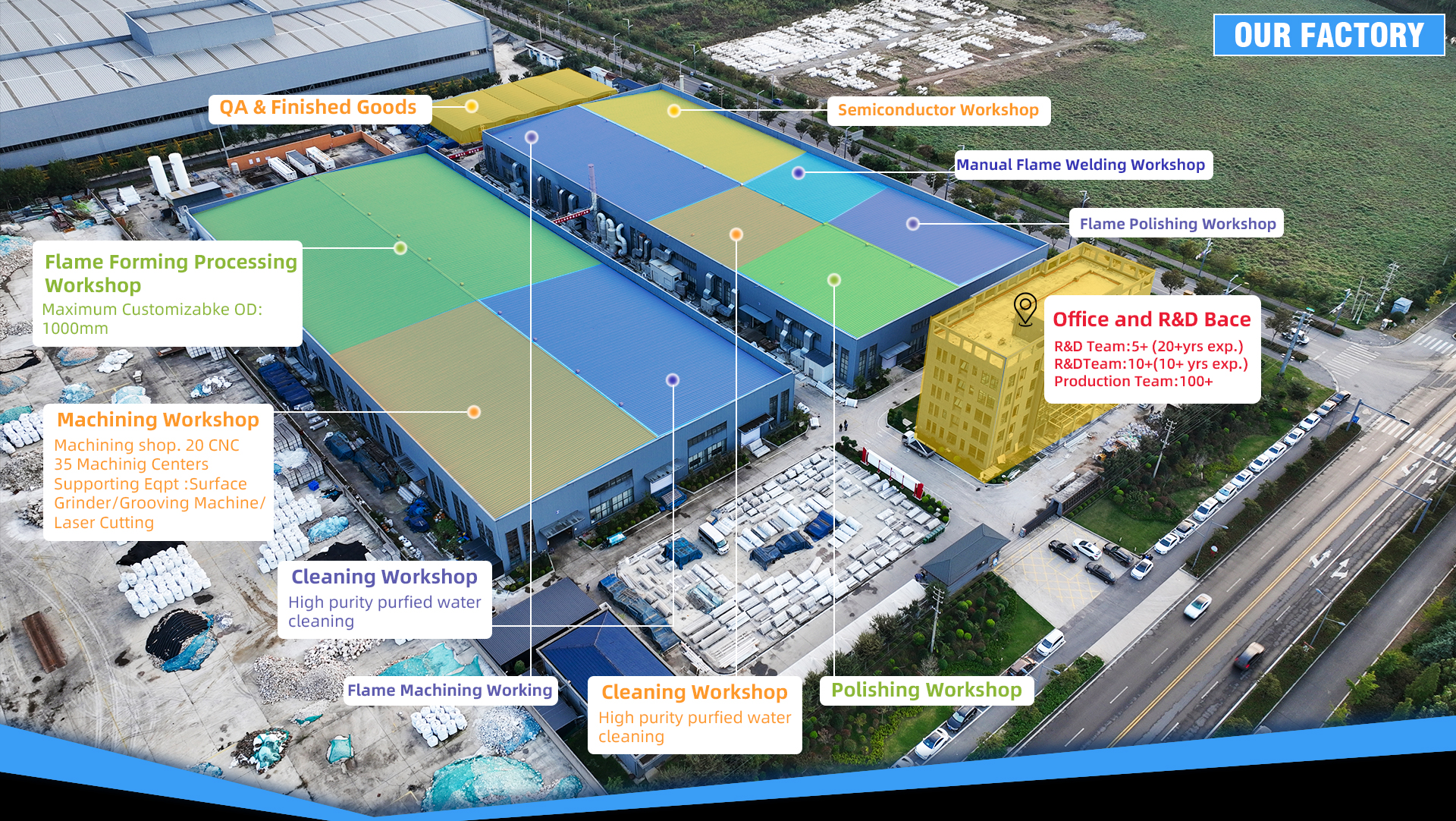
Precision Flame Glass Lathes
Oxy-hydrogen dynamic burner benches capable of flanging, doming, necking, and multi-port branch welding on quartz tubes up to 800mm OD with zero internal bubble entrapment.
5-Axis CNC Diamond Machining
Ultrasonic core drilling, diamond-wire slicing, CNC planar milling, and precision slotting for semiconductor wafer carriers, boats, and slotted showerheads to ±0.02mm tolerances.
Controlled Thermal Annealing
Every hot-worked and welded assembly undergoes programmed thermal soaking at 1180°C followed by controlled cooling to guarantee optical birefringence extinction and zero residual stress.
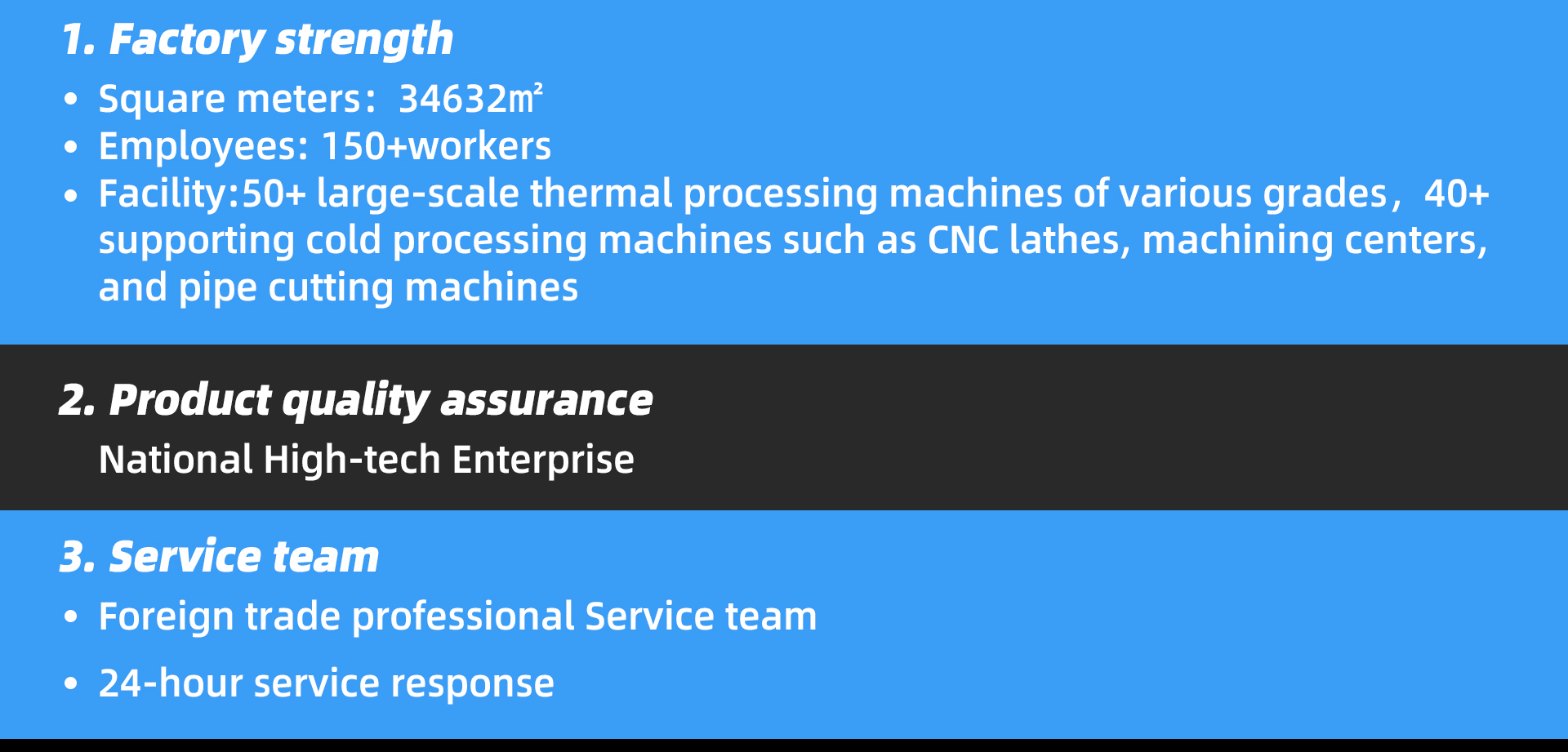
TÜV Rheinland Assessed & CE / RoHS Verified
Comprehensive on-site facility validation: certified physical production lines, quality inspection records, and full traceability of raw natural silica quartz sand.
Frequently Asked Questions by Busan Procurement & Process Teams
In-depth technical answers addressing material grade selection, drawing tolerances, quality certification, and Korean logistics protocols.
How do we quantitatively verify the [OH⁻] hydroxyl content of imported quartz parts in South Korea? +
C = (1 / (ε · d)) · log₁₀(I₀ / I)
Where C is OH concentration in ppm (wt), d is sample thickness in cm, and ε is the molar extinction coefficient (typically taken as 77.5 L·mol⁻¹·cm⁻¹ for fused quartz at 2.73 µm / 3670 cm⁻¹). For parts delivered to Busan clients, Vulra Quartz provides calibrated FTIR spectral transmission transmission charts and third-party spectroscopic certificates validating [OH⁻] levels under 5 ppm (or under 1 ppm upon request for synthetic grades).
What is the fundamental operational difference between Electrically Fused Low OH Quartz and Synthetic Fused Silica? +
Synthetic Fused Silica, conversely, is synthesized through chemical vapor deposition (CVD) of gaseous silicon precursors (such as SiCl₄). It contains negligible metallic impurities (< 0.1 ppm total metals), providing flawless transmission down into the deep ultraviolet (DUV 193nm), but typically exhibits lower viscosity unless specially plasma-treated to remove OH.
Can Vulra Quartz fabricate complex semiconductor components according to our proprietary 2D/3D CAD drawings? +
What thermal profile and continuous operating temperature can our Busan furnace operators safely maintain? +
How are fragile and oversized quartz tubes protected against micro-fractures during maritime shipment to Busan Port? +
What is the standard production and delivery lead time for orders delivered to industrial complexes in Busan and Gyeongsangnam-do? +
Ready to Validate Your Custom Quartz Specifications?
Submit your 2D/3D engineering drawings or technical requirement sheet. Our materials engineers will review thermal tolerances, purity grades, and provide an official quotation within 12 hours.