Featured Precision Fused Quartz Components
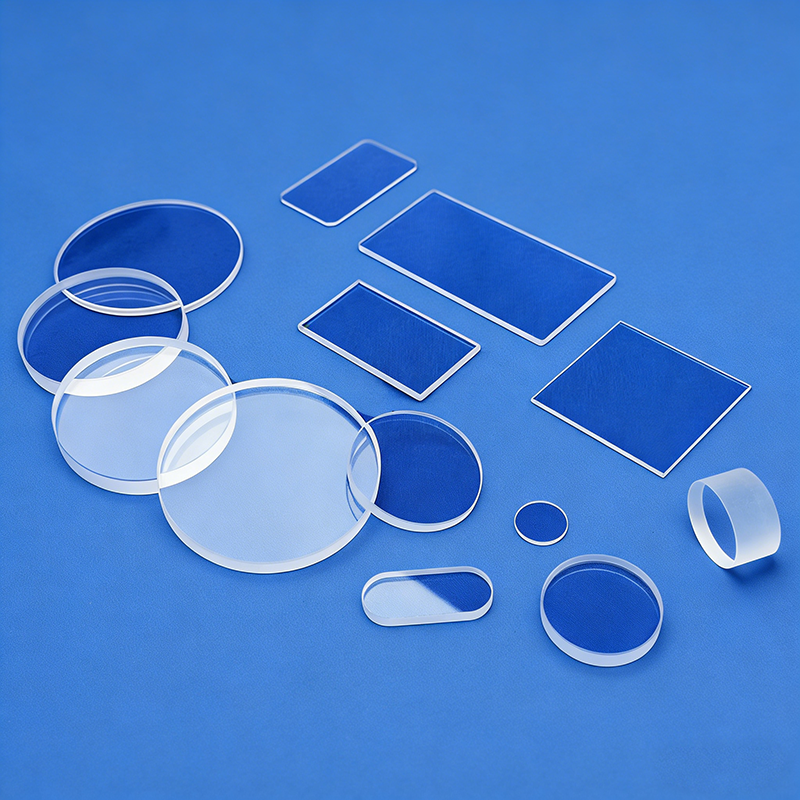
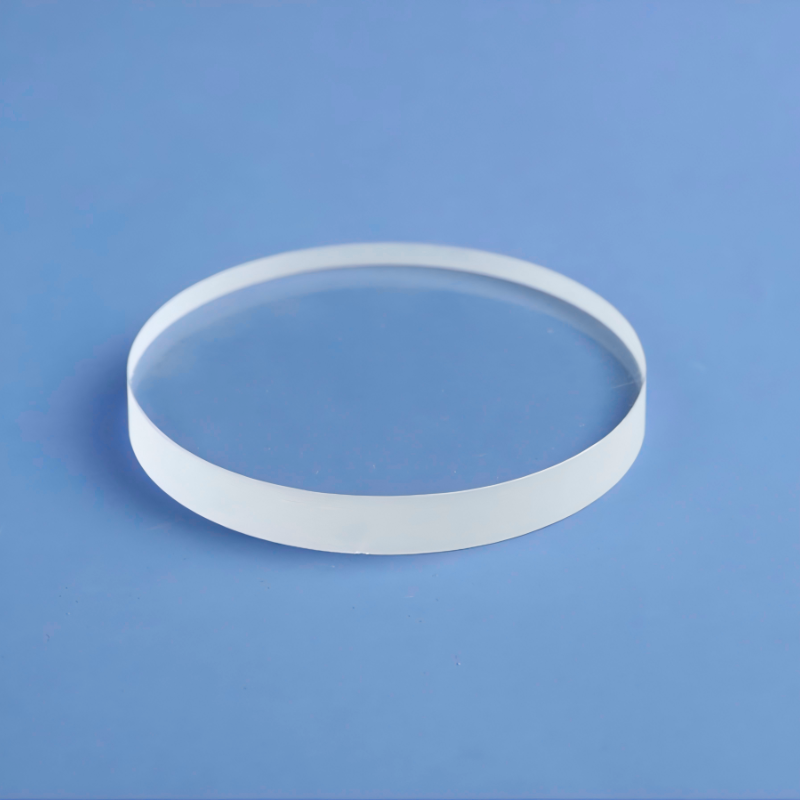
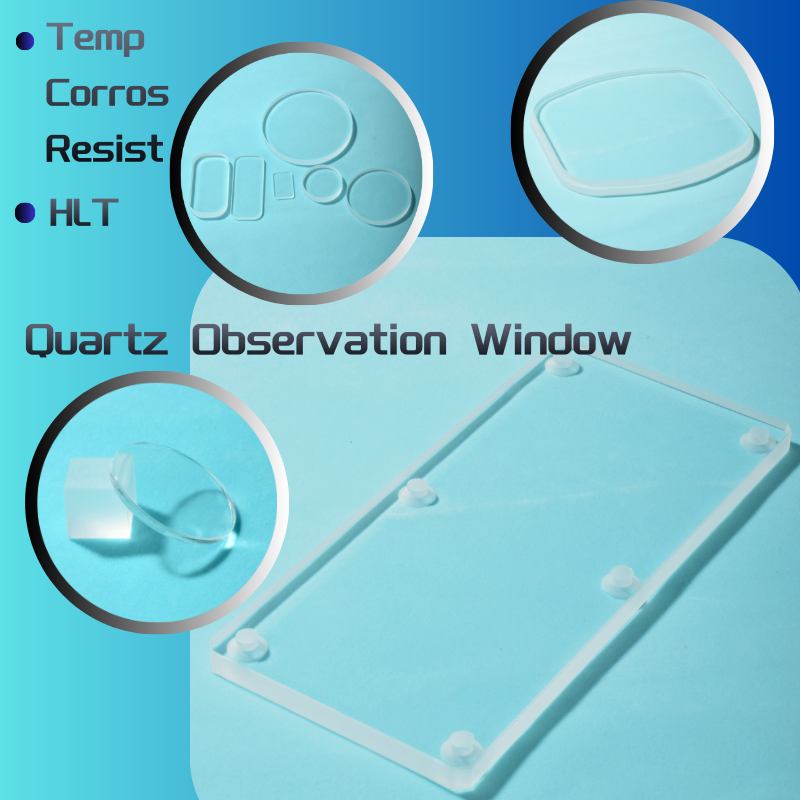

Engineering Overview: High-Purity Fused Quartz Square Plates for Industry
In the rapidly evolving industrial landscape of Malmö and the broader Greater Copenhagen Öresund region, advanced materials serve as the critical foundation for next-generation technological breakthroughts. Fused quartz square plates—engineered from natural high-purity quartz crystal sand containing greater than 99.99% SiO2—represent an essential component in environments characterized by ultra-high operating temperatures, extreme thermal shock, harsh chemical exposure, and uncompromising optical clarity requirements.
Unlike standard soda-lime or borosilicate glass, natural fused quartz is produced through the controlled thermal fusion of purified silica crystals at temperatures exceeding 2000°C. This intensive manufacturing process yields an amorphous material with an extraordinarily low coefficient of thermal expansion (CTE) of approximately 0.55 × 10⁻⁶ /°C from room temperature up to 1000°C. As a result, a fused quartz square plate can withstand instantaneous thermal quenching—such as being heated to 1100°C and plunged into ice water—without experiencing structural fatigue, micro-fracturing, or catastrophic failure.
| Physical / Thermal Parameter | Standard Natural Fused Quartz | Optical Grade Fused Silica | Test Method / Benchmark |
|---|---|---|---|
| Silicon Dioxide (SiO₂) Content | ≥ 99.99% (4N) | ≥ 99.999% (5N) | ICP-MS Spectrometry |
| Continuous Working Temperature | 1100 °C | 1200 °C | Long-term thermal stability |
| Peak Service Temperature | 1450 °C | 1500 °C | Short-duration exposure |
| Softening Point | 1683 °C | 1710 °C | Viscosity 10^7.6 poise |
| Refractive Index (nD @ 589nm) | 1.4585 | 1.4589 | Spectroscopic Ellipsometry |
| Mohs Hardness Grade | 5.5 – 6.5 | 6.0 – 6.5 | Indent Hardness Scale |
| Dielectric Strength (20°C) | 25 – 40 kV/mm | > 40 kV/mm | High-voltage electrical testing |
For procurement officers, cleanroom managers, and system designers sourcing Fused Quartz Square Plates in Malmö, understanding the microstructural purity and optical transmission band is vital. Natural fused quartz provides outstanding transparency across the visible spectrum and into the near-infrared region (up to 3.5 µm), while specialized synthetic fused silica delivers deep ultraviolet (UV-C down to 190 nm) transmission with virtually zero internal metallic trace impurities.
Localized Application Scenarios in Malmö's Industrial Ecosystem
Malmö has transformed into a premier Scandinavian hub for high-technology research, life sciences, green energy technology, and advanced precision manufacturing. The city's strategic proximity to world-class research infrastructure—such as the European Spallation Source (ESS) and the MAX IV Laboratory in neighboring Lund—creates unprecedented demand for high-spec, custom-engineered quartz components.
Synchrotron & Beamline Optics
In high-vacuum sample chambers and x-ray diffraction setup points surrounding MAX IV and ESS, fused quartz square plates act as ultra-flat observation windows, cryo-stage substrate holders, and low-attenuation beam isolation barriers resistant to radiation browning.
Biotech & Life Science Analytics
Malmö's thriving Medicon Valley cluster utilizes optical-grade quartz square plates as inert coverslips, multi-well microplate bases, and optical flow cell covers where zero autofluorescence and complete chemical resistance to aggressive solvents are non-negotiable.
Photovoltaic & Semiconductor Processing
Regional green-tech wafer fabrication and solar module development require heavy-duty quartz plates as furnace pedestals, batch wafer carrier bases, and plasma etching protective liners capable of enduring continuous 1100°C thermal cycles without outgassing.
Regional Development Trends & Sourcing Shift in Southern Sweden
The Nordic industrial market is experiencing a profound shift toward sustainable, high-precision supply chains. Companies operating across Skåne County are prioritizing suppliers who can guarantee strict environmental compliance (RoHS, REACH), full batch-level chemical traceability, and minimal scrap rates through precision diamond CNC machining.
Key trends shaping the procurement of fused quartz square plates in Malmö include:
1. Micro-Machining & Custom Geometry Demand
Engineers no longer accept standardized off-the-shelf square dimensions. There is an increasing requirement for integrated bevels, high-precision CNC counter-bored mounting holes, laser-etched alignment grids, and edge chamfering to prevent stress concentration points during thermal cycling.
2. Uncompromising Optical Surface Flatness
With laser cutting and optical sensing becoming standard in Swedish automation lines, quartz plates are routinely specified with double-side lap polishing achieving surface flatness of λ/4 to λ/10 per inch and scratch-dig specifications of 60/40 or 20/10 optical grade.
3. Low-Lead-Time Prototype-to-Volume Direct Delivery
Swedish tech startups and research institutes demand rapid prototyping options (from 1 piece) without incurring massive tooling charges, backed by seamless door-to-door express air freight directly into Malmö industrial parks.
Enterprise Advantages: Why Malmö Buyers Partner with Vulra Quartz
As a leading verified custom manufacturer based in Donghai County—the world-renowned crystal and high-purity quartz manufacturing capital—Lianyungang Vulra Quartz Products Co., Ltd. provides an unparalleled competitive edge for international enterprise buyers in Sweden.
TÜV Rheinland Audited Quality
Our manufacturing facilities, legal standing, production lines, and quality management systems are independently audited on-site by TÜV Rheinland, offering Swedish buyers complete peace of mind.
Full In-House Cold & Hot Processing
From raw silica melting to diamond blade slicing, CNC edge grinding, ultrasonic drilling, laser cutting, double-sided optical polishing, and computer-controlled annealing ovens, every step is executed under one roof.
Zero-Risk Export Packaging
Quartz plates require rigorous logistics protection. Every item is cleanroom washed, sealed in anti-static film, cushioned in multi-layer custom PE foam, and shipped in reinforced export wooden crates.
Frequently Asked Questions: Sourcing Fused Quartz Plates in Malmö
What are the standard dimensional tolerances for custom fused quartz square plates?
How does fused quartz compare to borosilicate glass in high-temperature environments?
What is the lead time and shipping process for orders delivered to Malmö, Sweden?
How can I ensure there are no internal bubbles or inclusions in optical quartz plates?
Can Vulra Quartz execute custom drawings with holes, steps, and rounded corners?
What chemical cleaning protocols should be used for quartz plates in cleanrooms?
Request a Custom Quote & Engineering Review for Malmö Delivery
Whether you require a single high-precision optical quartz plate for laboratory research or ongoing batch supply for industrial machinery production, our engineering team is ready to analyze your drawings, confirm tolerances, and deliver factory-direct pricing.
Contact Us