Precision OEM Quartzware for High-Temperature & Corrosive Environments
Manufactured from natural and synthetic vitreous silica in Donghai County. Available for direct export to Montego Bay facilities, analytical laboratories, processing plants, and energy infrastructure projects.
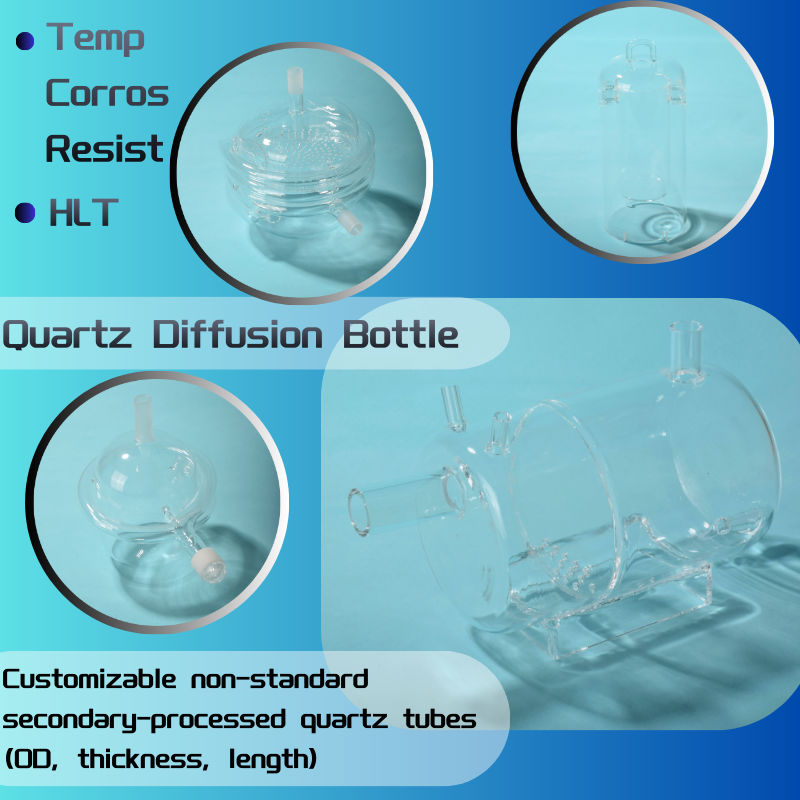
- Purity: 99.99% – 99.999% SiO₂
- Continuous Temp: Up to 1100°C
- App: Chemical Purification Systems
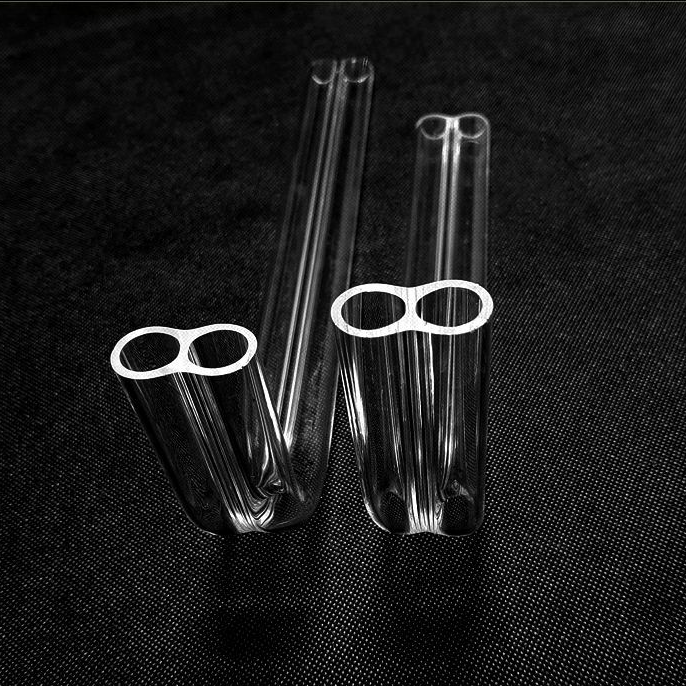
- Structure: Precision Twin Elbow
- Profile: Ozone-Free Doped Silica
- Thermal Softening: 1683°C
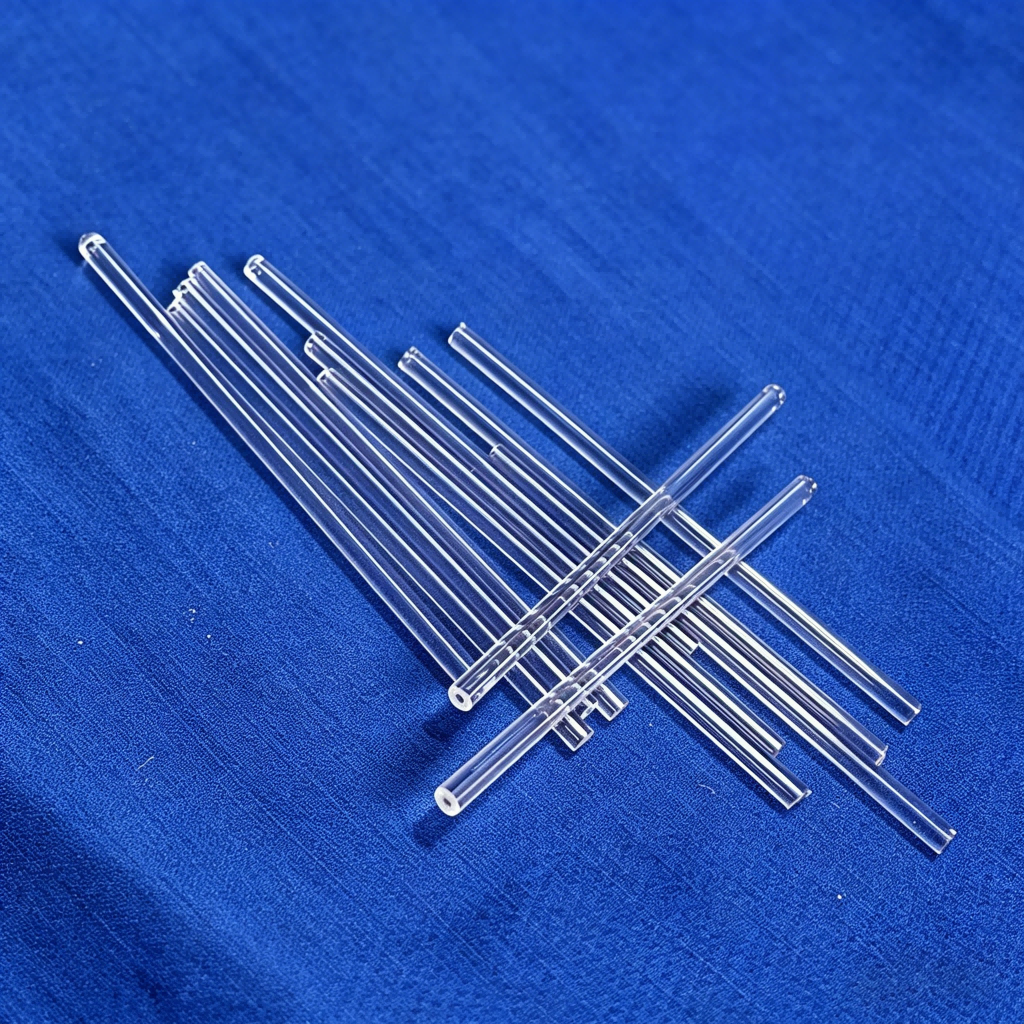
- Outer Diameter: 2.0mm – 10.0mm
- Material: Opaque Sintered Silica
- Feature: Superior Heat Insulation
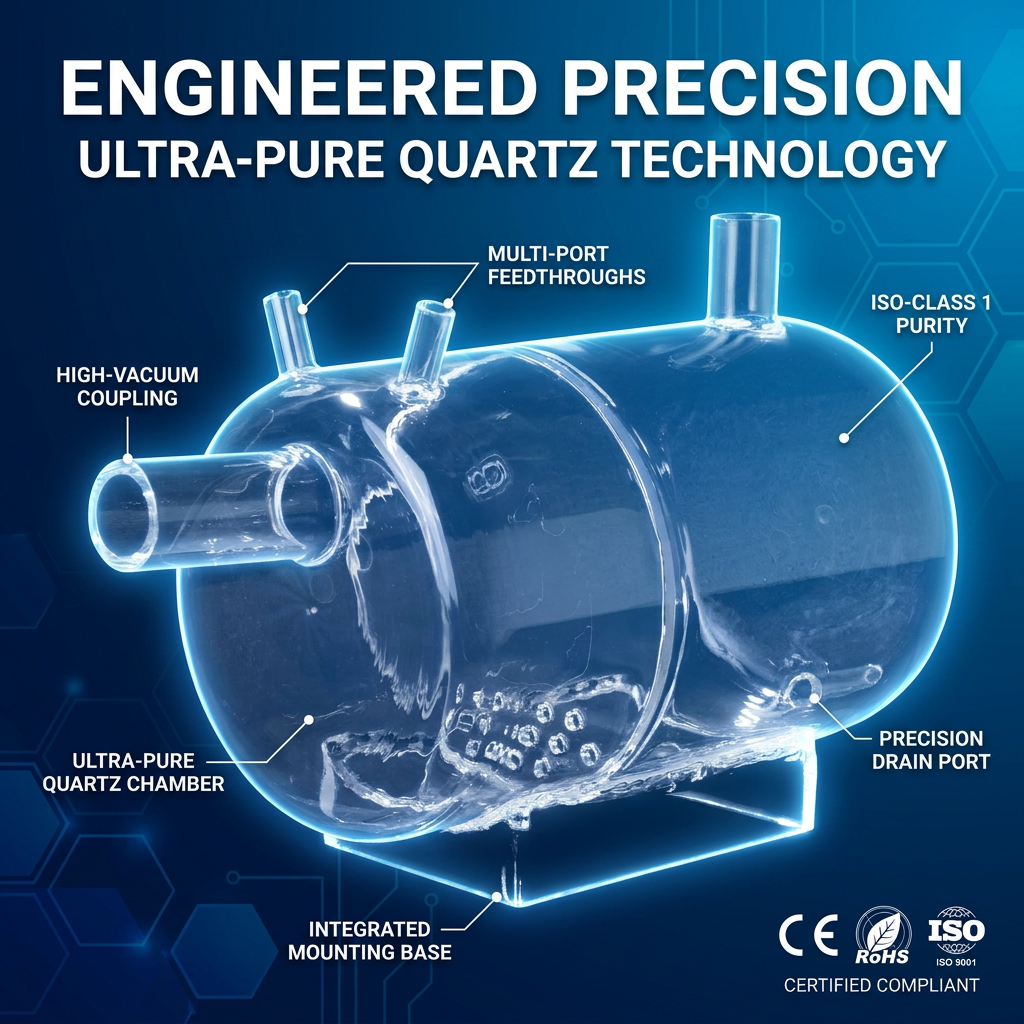
- Tolerance: ±0.05mm Precision
- Finish: Optical Fire Polished
- Application: Reagent Separation
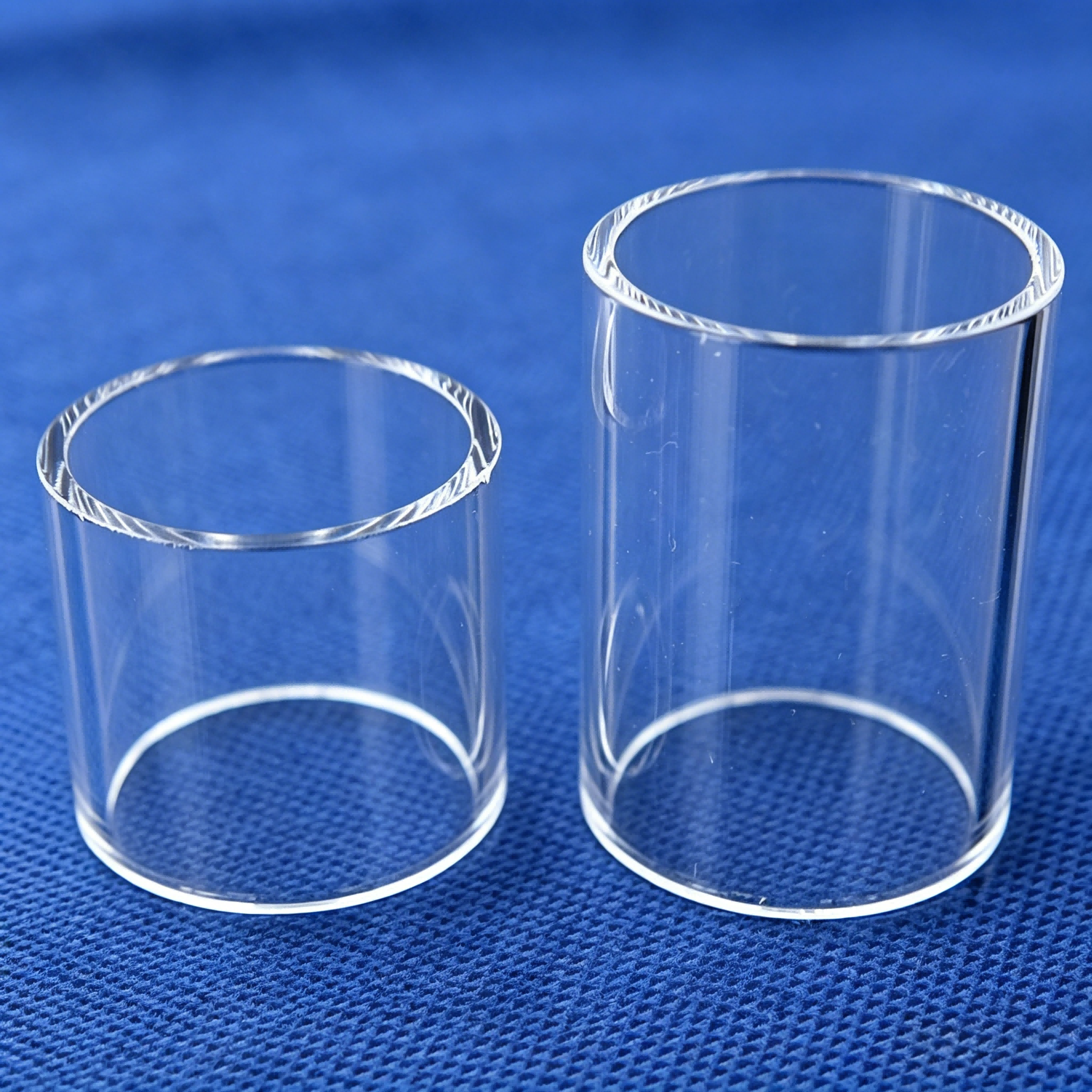
- Design: Parallel Sensor Channels
- Processing: CNC Slit & Welded
- Resistance: Acid & Halogen Proof
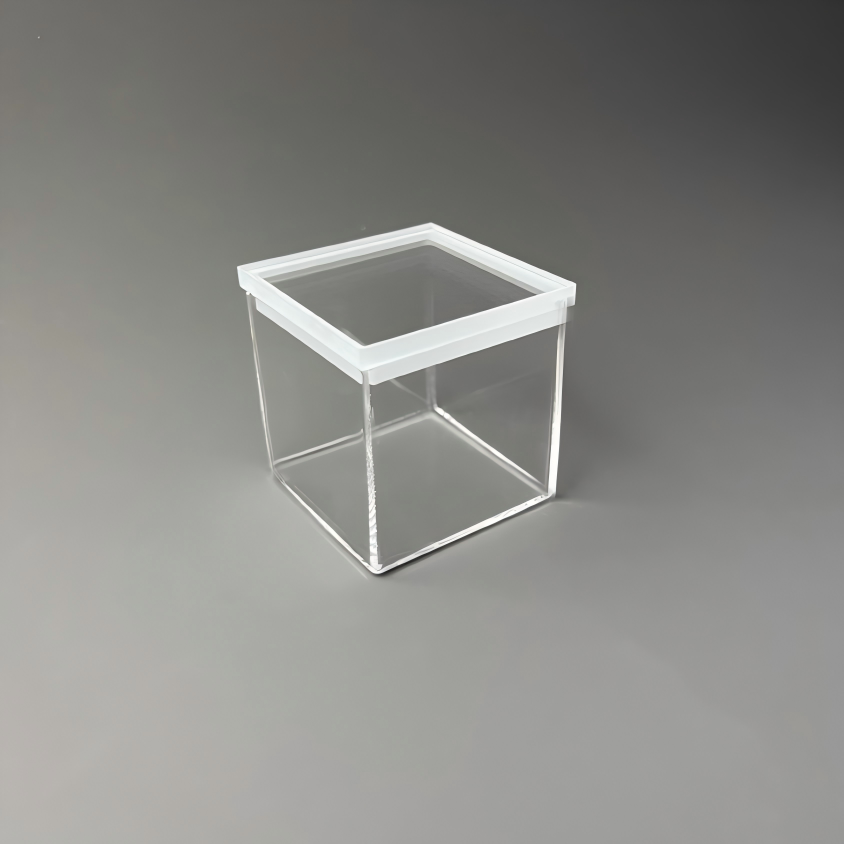
- Bottom: Uniform Hemisphere Dome
- Optical: Deep-UV Transmitting
- Seal: Hermetic Ground Taper Joint

- Workmanship: Hot Lathe Blown
- Thermal Delta: ΔT = 1100°C Shock
- Purity: 99.999% Natural Crystal
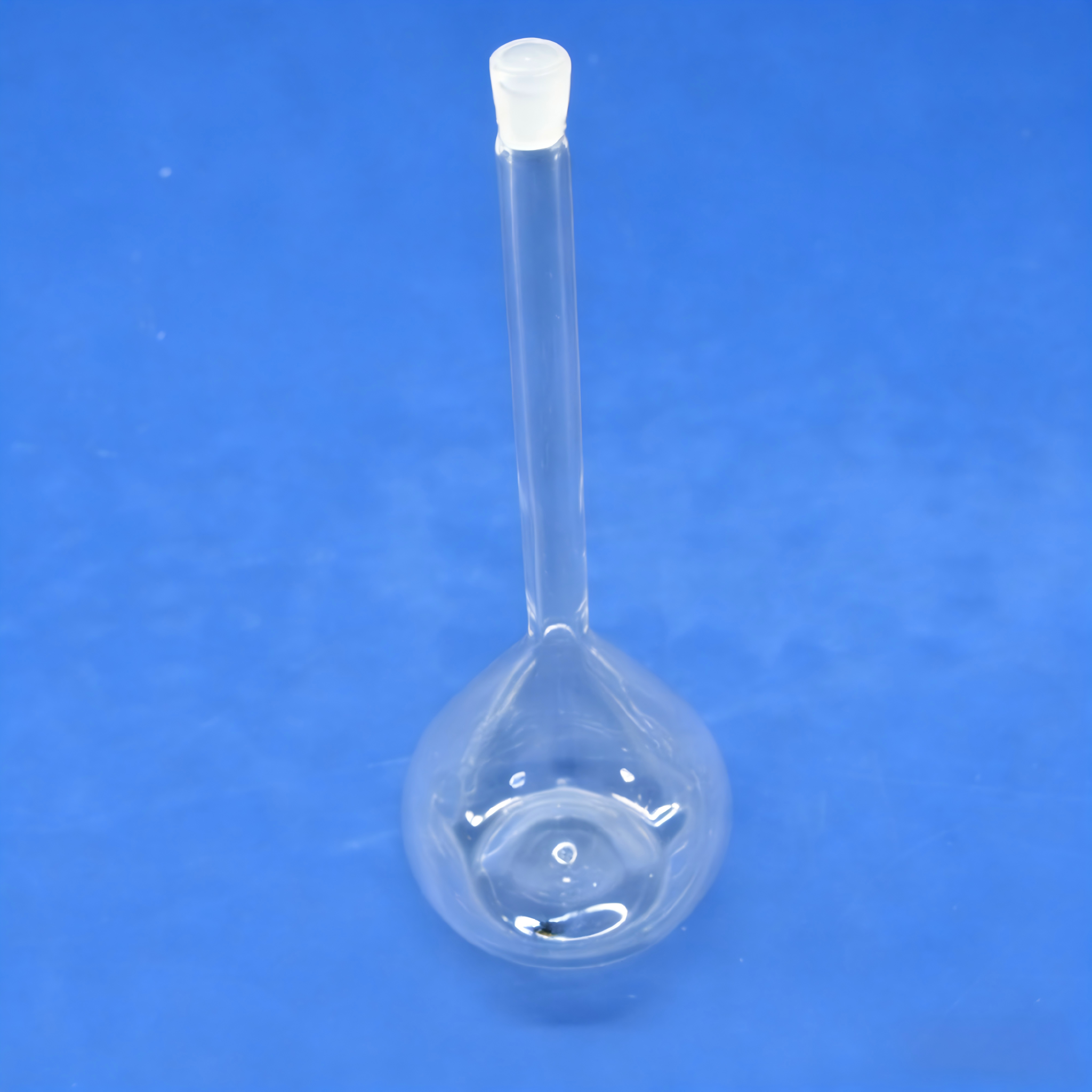
- Wall: Heavy-Duty Pressure Wall
- Sealing: Flame Torch Neck Sealable
- Certification: CE / RoHS Verified
1. Technical Architecture of High-Purity Fused Quartz Protection Tubes
In high-temperature thermal processing and corrosive chemical analysis, standard metallic alloys, stainless steels, and conventional borosilicate glasses degrade rapidly due to creep, thermal fatigue, or oxidation. Custom fused quartz protection tubes (vitreous silica sheaths) serve as the primary containment barrier between sensitive analytical sensors—such as Type R, S, B platinum-rhodium thermocouples, pyrometers, and optical level probes—and destructive operating environments.
Manufactured by melting high-purity natural silica sand in electric or oxy-hydrogen gas fusion chambers at temperatures exceeding 2000°C, fused quartz features an amorphous non-crystalline structure composed of three-dimensionally crosslinked silicon-oxygen ($SiO_4$) tetrahedra. This vitreous state confers an ultra-low linear coefficient of thermal expansion ($\alpha = 5.5 \times 10^{-7} \text{ cm/cm}\cdot\text{°C}$ between 20°C and 320°C). Consequently, our quartz protection tubes withstand thermal shock events, including instantaneous quenching from an operational temperature of 1100°C directly into room-temperature water without micro-fracturing or catastrophic failure.
For procurement engineers and industrial plant managers in Montego Bay, St. James, and across Jamaica, sourcing protection tubes with certified trace-impurity thresholds is essential. Low-grade commercial quartz contains alkali metal traces (sodium, potassium, lithium) and hydroxyl groups ($OH^-$), which trigger high-temperature devitrification—the phase transformation of amorphous silica into crystalline cristobalite above 1150°C. Cristobalite undergoes a volume reduction during phase transition, inducing structural micro-cracking and loss of structural strength. Lianyungang Vulra Quartz Products Co., Ltd. utilizes refined raw quartz crystals to maintain total heavy metal contaminants below 5 ppm, suppressing devitrification and providing long operational campaigns in continuous thermal cycles.
2. Localized Industrial Applications in Montego Bay & Greater Jamaica
Montego Bay represents not only Jamaica's primary tourism and logistics corridor but also an expanding hub for agro-industrial processing, maritime utility engineering, and Caribbean bauxite and power generation support. The unique convergence of a humid maritime tropical atmosphere containing airborne saline chlorides, paired with high-temperature industrial infrastructure, accelerates stress-corrosion cracking on conventional metal thermowells. Fused quartz protection tubes provide complete chemical inertness to chlorides, sulfates, and moisture.
Bauxite Refining & Calcination
Jamaica's alumina refineries rely on rotary calcination kilns and digestor autoclaves operating above 1000°C. High-purity closed-end quartz protection tubes isolate noble metal thermocouples from abrasive alumina particulate, sulfur fumes, and caustic sodas, eliminating sensor drift.
Sugar & Rum Distillation
Western Jamaica’s historic sugar mills and premium distilleries utilize bagasse-fired boilers and distillation columns. Fused silica thermowell jackets resist sulfurous flue gas, steam condensates, and organic acids, preventing product contamination in high-purity spirits.
Maritime UV Water Disinfection
Montego Bay’s municipal water authorities and mega-resorts deploy high-flux ultraviolet sterilizers. Our ozone-free and high-transmittance (>90% at 254 nm) quartz sleeves protect UV lamps from high-saline coastal waters and hydrodynamic pressure surges.
Power Generation & Heavy Diesel
Local utility stations like Bogue Power Station use combined-cycle and diesel turbines requiring precision pyrometric monitoring. Quartz sight windows and thermocouple tubes resist exhaust impingement and rapid thermal ramp rates.
Tropical Solar Testing
Regional clean-energy research initiatives along Jamaica's North Coast utilize precision quartz cells and ampoules for photoelectrochemical hydrogen generation and optical weatherization under Caribbean solar UV exposure.
Clinical & Testing Laboratories
Diagnostic laboratories across St. James use our micro-capillary tubes, quartz absorption cells, and ash analysis crucibles for trace mineral diagnostics, wastewater monitoring, and export product compliance testing.
3. Material Science Comparative Performance Matrix
When engineering high-temperature assemblies, selecting the appropriate material requires balancing thermal tolerance, mechanical integrity, chemical compatibility, and replacement cycles. The technical table below outlines the performance advantages of high-purity fused quartz over alternate engineering materials commonly deployed in Caribbean industrial sites:
| Performance Metric | Vulra Fused Quartz (>99.99%) | Alumina Ceramic (Al₂O₃ 99.5%) | Borosilicate Glass 3.3 | Inconel 600 Alloy |
|---|---|---|---|---|
| Continuous Operating Temp | 1100°C (Short peak: 1450°C) | 1600°C | 450°C | 1090°C |
| Softening / Melting Point | 1683°C (Softening) | 2050°C (Melting) | 820°C (Softening) | 1370°C – 1425°C |
| Thermal Shock Resistance | Extreme (ΔT > 1000°C quench) | Poor to Moderate (ΔT ≈ 200°C) | Moderate (ΔT ≈ 150°C) | High (Subject to creep/warp) |
| Coefficient of Expansion | 5.5 × 10⁻⁷ / °C | 8.0 × 10⁻⁶ / °C | 3.3 × 10⁻⁶ / °C | 13.3 × 10⁻⁶ / °C |
| Resistance to Marine Chlorides | Immune (Zero galvanic corrosion) | High | High | Susceptible to pitting & SCC |
| Electromagnetic / RF Shielding | Completely transparent (Dielectric) | Transparent | Transparent | Reflective / Shielded |
| Trace Impurity Contamination | Zero metallic outgassing (<5 ppm) | Low to Medium (Binder dependent) | High (Boron, Na leaching) | Severe (Fe, Ni, Cr migration) |
4. Strategic Industrial & Procurement Trends in Montego Bay
As Jamaica advances its national renewable energy goals and modernization of manufacturing clusters along the Freeport and Montego Bay marine trade routes, distinct procurement shifts are emerging:
Decarbonization and Electrification of Thermal Process Units: Traditional heavy fuel oil (HFO) combustion systems are being replaced by high-efficiency electric infrared (IR) furnaces, induction kilns, and biomass boilers. Electric process heating requires quartz tubes to function simultaneously as structural element jackets and infrared transmission windows. Clear fused quartz transmits up to 93% of near-infrared and mid-infrared radiation, enabling rapid heat transfer while protecting electrical elements from combustible vapors.
Transition from Regional Stockists to Direct-from-Factory OEM Sourcing: Historically, Jamaican facilities relied on third-party supply brokers operating out of Florida or Central America, incurring 100% to 300% markups and extended lead times for specialized glass components. The modern procurement trend among plant engineers in Montego Bay is to collaborate directly with verified manufacturers like Vulra Quartz. By supplying exact CAD or 2D technical drawings, facilities obtain custom outer diameters (from 2mm to 800mm), engineered wall thicknesses, closed-end configurations (spherical or flat), and bespoke joint seals with short fabrication cycles and factory direct pricing.
Enhanced Demands for Harsh Coastal Environmental Survival: High relative humidity combined with saline ocean winds along Montego Bay's coastline induces stress cracking in metallic thermowells within weeks of installation. Fused silica provides a non-porous, chemically inert barrier that remains unaffected by salt-laden ambient environments, significantly lowering plant downtime and calibration maintenance.
Precision Chinese Craftsmanship Rooted in the World Crystal Capital
Headquartered in Donghai County, China, Lianyungang Vulra Quartz Products Co., Ltd. blends access to high-purity natural silica sand reserves with advanced hot and cold precision manufacturing.
TÜV Rheinland Verified
Independently audited and assessed on-site. Legal registration, high-temperature flame lines, cold CNC grinding, and QA protocols are verified to international standards.
Rapid Prototyping (1 PC MOQ)
We eliminate high minimum batch quantities for custom jobs. Review single-piece prototypes for custom thermocouple tubes, distillation vessels, or optical windows before scale production.
Integrated Hot & Cold Processing
Equipped with glass lathes, high-purity oxy-hydrogen torches, diamond cutting mills, ultrasonic CNC drillers, and double-sided lapping machines for comprehensive tube processing under one roof.
Seaworthy Export Packaging
Every tube is acid-etched, ultrasonically cleaned, individually sealed in shock-absorbing foam, and packed into reinforced multi-ply plywood export crates certified against long-distance transshipment drops.
Frequently Asked Questions by Montego Bay Buyers
Direct technical guidance from our senior production engineers regarding international logistics, material selection, custom tolerances, and import workflows into Jamaica.
How do you ship fragile quartz protection tubes to Montego Bay without breakage?
We implement a triple-tier protection standard: each tube is wrapped in PE film, enclosed in custom-cut pearl cotton (EPE) sleeves, isolated within heavy corrugated cartons, and crated in fumigated export-grade wooden cases. Consignments shipped via DHL/FedEx air freight to Sangster International Airport (MBJ) or ocean freight to Montego Bay Port / Kingston Container Terminal arrive safely, with full insurance and door-to-door tracking.
What is the difference between transparent clear quartz and opaque silica tubes?
Clear quartz is fused from transparent crystal sand and offers maximum optical clarity, high transmission across deep UV, visible, and infrared spectra, and continuous operation at 1100°C. Opaque quartz is produced using micro-bubble trapping techniques; it acts as a thermal radiation shield and diffuser, providing enhanced insulation against radiant heat loss in furnace walls and pyrometry sleeves.
Can you manufacture protection tubes with customized closed ends and flanges?
Yes. Our automated glass lathes and master glassblowers can fabricate hemispherical (dome) closed ends, flat polished closed bottoms, test-tube lips, standard ground taper joints (e.g., 24/29, 29/32), precision drilled holes, or fused quartz disc flanges based on your exact 2D drawings (PDF, DWG) or 3D CAD step files.
How does high humidity and coastal salt spray affect quartz tubes in Jamaica?
Fused silica ($SiO_2$) is an inorganic non-metallic oxide with zero chemical reactivity toward sodium chloride ($NaCl$), magnesium chloride, atmospheric sulfur oxides, or moisture. Unlike stainless steel or nickel-based thermowells, quartz will not experience pitting, oxidation, rust, or galvanic degradation in marine industrial atmospheres.
What documentation and quality certifications accompany each shipment?
Every commercial consignment includes our Factory Certificate of Analysis (CoA) confirming SiO₂ purity (>99.99%), Certificate of Conformity for CE and RoHS directives, dimensional inspection sheets verifying OD/ID and wall thickness tolerances, and commercial shipping invoices specifying HS Code 7017.10 for Jamaican Customs clearance.
What are the standard dimensional tolerances we can expect for custom tubes?
For standard drawn tubing, outer diameter tolerances are held within ±0.2mm to ±0.5mm depending on diameter. For critical sensor fits or optical ports, precision cold grinding and fire polishing achieve tight tolerances down to ±0.05mm on outer diameter and wall thickness consistency, ensuring snug fits without mechanical play.