99.999%
Maximum SiO₂ Purity
1100°C
Continuous Working Temp
1:10 Standard
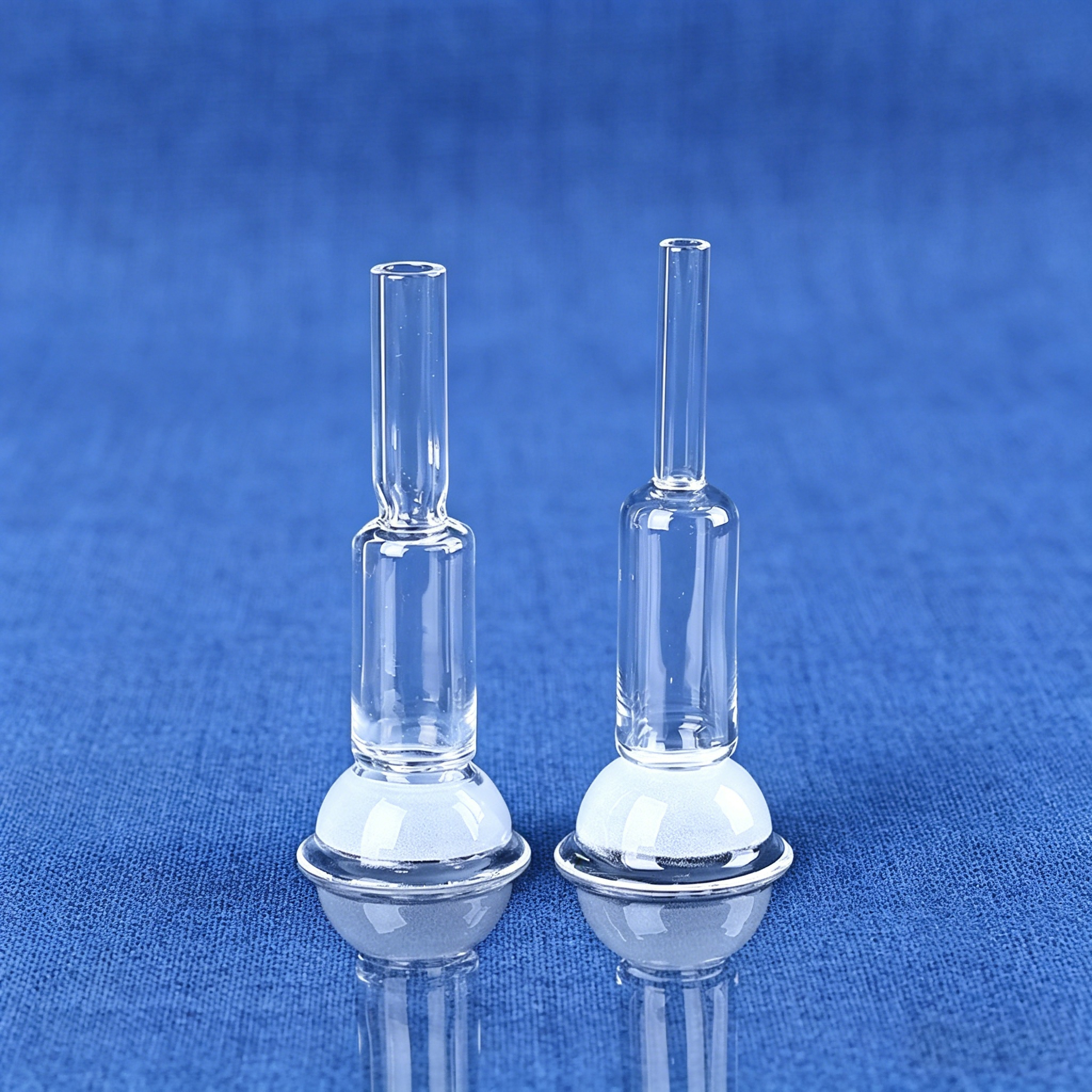
Conical Joint Precision Taper
TÜV Assessed
Verified OEM Production
Engineered Quartz Glass & Joint Systems
Explore high-purity laboratory glassware, micro-capillaries, reaction funnels, and ground joint compatible components manufactured to international standard tolerances.
Engineering Whitepaper: Quartz Ground Joint Metrology
A technical assessment on why high-purity natural fused silica joints outperform borosilicate 3.3 in high-temperature vacuum chemistry and semiconductor manufacturing.
1. Tribological Precision & Vacuum-Tight Sealing Mechanics
In analytical, semiconductor, and synthetic industrial processes, standard borosilicate connections fail when exposure temperatures surpass 500°C or when thermal shock gradients exceed 150°C. Custom OEM quartz ground joints (comprising standard conical taper joints, spherical ball-and-socket joints, and flat O-ring flanged joints) rely on natural fused silica refined to an SiO₂ content exceeding 99.99% to 99.999%.
The ground surface is processed through precise abrasive lapping with tailored diamond and silicon carbide slurries to create an average surface roughness (Ra) strictly calibrated below 0.8 μm to 1.2 μm. This micro-topographical uniformity guarantees leak rates under 1 × 10⁻⁸ mbar·l/s in high-vacuum envelope applications, even without the use of hydrocarbon grease that would otherwise contaminate ultra-clean chemical synthesis or CVD precursors.
2. Thermal Expansion Disparity & Structural Resistance
The coefficient of thermal expansion (CTE) of high-purity fused quartz is exceptionally low at 5.5 × 10⁻⁷ /°C (between 20°C and 1000°C), roughly one-sixth of borosilicate 3.3 glass (3.3 × 10⁻⁶ /°C). When rapid thermal cycling occurs inside high-temperature reactors or tube furnaces, borosilicate ground joints frequently experience hoop-stress cracking, thermal seizing (freezing of male and female joints), or irreversible micro-fissuring. In contrast, Vulra Quartz joints withstand operational environments up to 1100°C continuously and brief thermal excursions reaching 1450°C without dimensional warping or joint lockup.
| Physical / Chemical Property | High Purity Fused Quartz Joint | Standard Borosilicate 3.3 Joint | Engineering Advantage in OEM Applications |
|---|---|---|---|
| Silicon Dioxide (SiO₂) Content | > 99.99% (Up to 99.999%) | ~ 81.0% | Eliminates alkali-metal leaching in semiconductor & high-purity etching |
| Continuous Operating Temperature | 1100 °C | 450 °C - 500 °C | Supports ultra-high temperature CVD, vacuum pyrolysis, and thermal synthesis |
| Thermal Expansion (CTE, 20-300°C) | 5.5 × 10⁻⁷ K⁻¹ | 3.3 × 10⁻⁶ K⁻¹ | Immune to thermal shock; can be heated to 1100°C and quenched in water without fracture |
| Softening Point | ≈ 1683 °C | ≈ 820 °C | Zero taper elongation or socket deformation under mechanical load at elevated temps |
| Chemical Resistance | Resistant to concentrated acids (except HF, H₃PO₄ >300°C) | Vulnerable to strong alkaline solutions and high-temp acids | Maximum operational longevity in Bien Hoa industrial chemical lines |
Industrial Application Scenarios Across Bien Hoa
Addressing the exact operational, environmental, and engineering challenges encountered by manufacturing plants and laboratories across Dong Nai Province.
Electronics & PCB Manufacturing in Amata Industrial Park
The concentration of multinational semiconductor assembly, packaging, and PCB etching facilities in Amata requires high-integrity gas extraction lines and custom quartz distillation condensers. Precision ground taper joints provide airtight, grease-free junctions for transport lines handling nitric, sulfuric, and hydrofluoric acid precursors, preventing volatile toxic fumes from breaching cleanroom standards.
Specialty Chemical & Polymer Plants in Bien Hoa I & II
Processing aggressive petrochemical intermediates, solvents, and specialty polymers creates severe thermal and corrosive stresses. Standard glassware joint fittings degrade or jam due to trace chemical attack. Custom fused quartz spherical ball joints (sizes 13/5 through 65/40) accommodate angular alignment variations in high-vibration pilot reactors while remaining chemically inert against aromatic compounds and hot mineral acids.
R&D Testing & Material Analysis in Long Binh Techno Park (LOTECO)
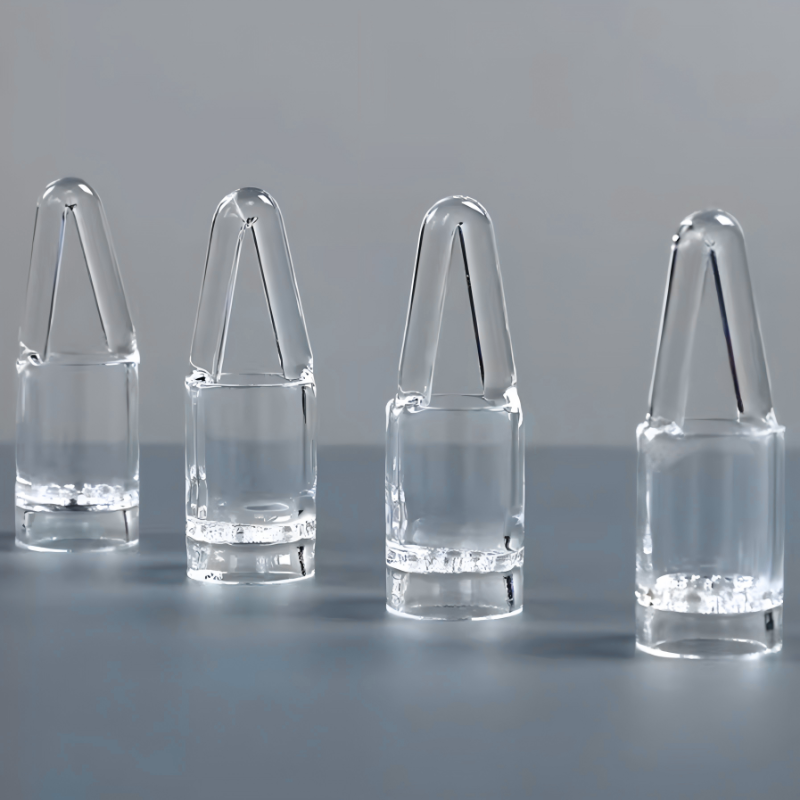
Analytical laboratories deploying BET surface-area analyzers, XRD sample characterization, and high-frequency induction furnaces demand quartz sample vessels and C-shaped BET tubes with standard 1:10 ground cone configurations. Vulra Quartz guarantees micron-grade dimensional repeatability so that local lab instruments maintain calibration across long test cycles.
Regional Sourcing Trends in Dong Nai & Southern Vietnam
How the industrial transition toward high-tech manufacturing, localized supply chains, and green energy is shaping quartz procurement in Bien Hoa.
Shift from Borosilicate to Fused Silica in Cleanrooms
As tier-1 component suppliers expand in Bien Hoa to serve Southern Vietnam's export ecosystem, cleanroom purity thresholds are tightening. Process engineers are replacing borosilicate apparatus with 99.999% fused silica to eliminate trace sodium and boron contamination during high-temperature semiconductor wafer baking and laser etching cycles.
Fast Custom OEM Prototyping Without Excessive MOQs
Vietnamese R&D units and equipment OEMs have traditionally faced high import thresholds from Japanese and European manufacturers (MOQs of 50–100 pieces). The emerging procurement trend in Dong Nai emphasizes flexible tier-1 manufacturers who offer drawing-based custom quartz ground joints starting from a 1-piece prototype with rapid technical turnaround.
Zero-Ozone & Sustainable Thermal Processing
Driven by strict environmental and workplace safety protocols within Dong Nai's industrial zones, factories are upgrading to synthetic and ozone-free quartz tubes and jointed fluid manifolds. Filtering UV radiation below 220 nm while handling corrosive exhaust ensures compliance with local environmental monitoring agencies.
Why Industrial Leaders Partner with Vulra Quartz
Headquartered in Donghai County—the crystal and high-purity silica sand capital—Lianyungang Vulra Quartz Products Co., Ltd. integrates raw material beneficiation, precision glass lathe hot working, automated CNC cold lapping, and stress-relieving annealing under one roof. Our verified manufacturing facility directly supplies customized fused quartz joints and scientific quartzware to industrial corridors across Bien Hoa, Ho Chi Minh City, and global OEM buyers.
TÜV Rheinland Assessed: Independently inspected factory lines, verified manufacturing credentials, and CE/RoHS certified products.
Drawing-to-Part OEM: Direct CAD/SolidWorks engineering reviews evaluating wall thickness ratio, weld seams, and taper angles.
MOQ Starting from 1 PC: Prototype testing support for custom ground joints, distillation units, crucibles, and reaction flasks.
Industrial Export Packing: Custom-cut shockproof foam cradles, multi-layer corrugated boxing, and sealed export wooden crates.
Procurement & Technical FAQ for Bien Hoa Buyers
Comprehensive solutions to common challenges faced by sourcing specialists, chemical engineers, and import teams in Southern Vietnam.
1. What taper angle and standard joint dimensions can Vulra Quartz produce for custom OEM orders?
We manufacture ground joints conforming to all major international standards, including ISO standard taper (1:10 taper ratio), ASTM E676/E677 standards, and European DIN 12242 specifications. Common conical ground joint sizes include standard 10/19, 14/23, 19/26, 24/29, 29/32, 34/35, 45/40, and 60/46. We also fabricate spherical ball-and-socket joints (e.g., S13, S19, S29, S35) and flat O-ring flanged joints with customized bolt circles or quick-release clamp flanges. Bespoke angles, stepped tapers, and non-standard diameters are readily machined per your technical drawings.
2. Can a quartz ground joint connect directly to an existing borosilicate glass system?
Yes, a male or female quartz ground joint can physically mate with a borosilicate joint of identical standard taper size at ambient temperatures. However, because their coefficients of thermal expansion differ significantly (fused quartz at 5.5 × 10⁻⁷ /°C versus borosilicate 3.3 at 3.3 × 10⁻⁶ /°C), direct glass-to-glass welding is impossible without graded transition glass seals. Furthermore, if the joint interface experiences rapid temperature swings above 150°C while coupled, differential thermal expansion may cause mechanical binding or taper fracture. In high-temperature configurations, we recommend complete quartz-to-quartz assemblies or graded transition seals.
3. How do you prevent joint seizing (freezing) during dry, grease-free vacuum operations?
In ultra-clean semiconductor, analytical BET, and high-vacuum lines where hydrocarbon or silicone high-vacuum greases cannot be tolerated, joint freezing can be prevented through specialized precision micro-lapping (fine Ra polishing) or by utilizing high-purity virgin PTFE joint sleeves and O-rings. For extreme temperature vacuum applications reaching up to 1000°C where PTFE would degrade, we polish both cone and socket mating zones with sub-micron diamond grit to ensure micro-planar contact that releases smoothly upon cooling without surface galling.
4. What is the typical lead time and shipping route to Bien Hoa, Dong Nai, Vietnam?
For standard sizes or prototype orders (1 to 10 pieces), production generally requires 7 to 12 working days following drawing sign-off. Bulk OEM production runs are completed within 15 to 25 days. For fast deliveries to industrial zones across Bien Hoa, we offer expedited air express freight (DHL, FedEx, UPS) directly to Ho Chi Minh City / Tan Son Nhat Airport, clearing customs and delivering to Dong Nai premises in 3 to 5 transit days. For recurring volume supply, sea freight consolidation through Cat Lai Port or Cai Mep Port is available with comprehensive export packing.
5. How do you guarantee the ground quartz pieces do not arrive broken or chipped?
Ground joint rims are the most vulnerable parts of laboratory glassware. Every single male cone and female socket is capped with soft protective plastic sleeves immediately after final ultrasonic cleaning and optical inspection. Items are vacuum-sealed in shock-absorbing bubble envelopes, cradled inside high-density expandable polyethylene (EPE) foam cutouts, and packaged within reinforced multi-wall corrugated cartons. Shipments exceeding 20 kg or containing delicate long-stem apparatus are further secured inside ISPM-15 compliant fumigated plywood export crates with internal shock dampeners.
6. Can you supply full mill test certificates and third-party inspection documents?
Yes. Every production batch can be supplied with complete material test reports confirming SiO₂ purity (99.99%–99.999%), trace metal impurity breakdowns (Fe, Al, Ti, Na, K, Li content analyzed via ICP-MS), CE conformity declarations, and RoHS compliance certificates. Our manufacturing premises have been audited and verified on-site by TÜV Rheinland, giving purchasing departments and quality auditors across Bien Hoa complete assurance of traceability and operational reliability.