High-Purity Quartz Solutions Serving Reykjavik & Greater Iceland
Manufactured in Donghai—the world's crystal capital—under rigid DIN/ISO specifications. Every quartz tube, optical cell, and furnace vessel undergoes strict hydroxyl ([OH⁻] < 5-20 ppm) reduction and fire-polishing to resist extreme sub-arctic thermal shock.
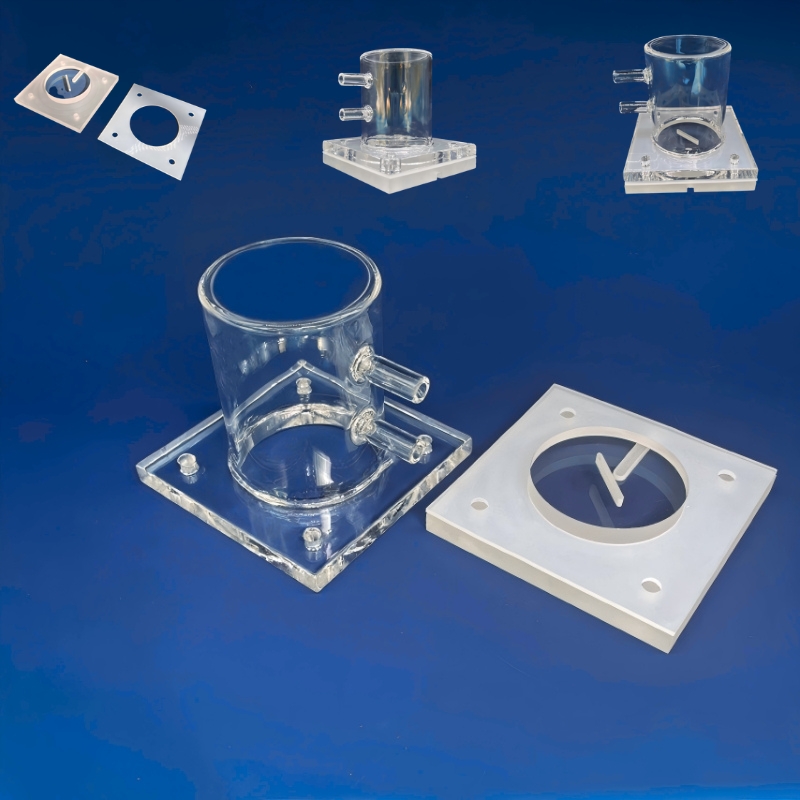
Quartz Photocatalytic Reactor for Green Hydrogen & Oxygen Production
Engineered for sub-arctic cleantech research, direct air carbon capture (DAC) synthesis, and UV-photodegradation with ozone-free optical wall configurations.
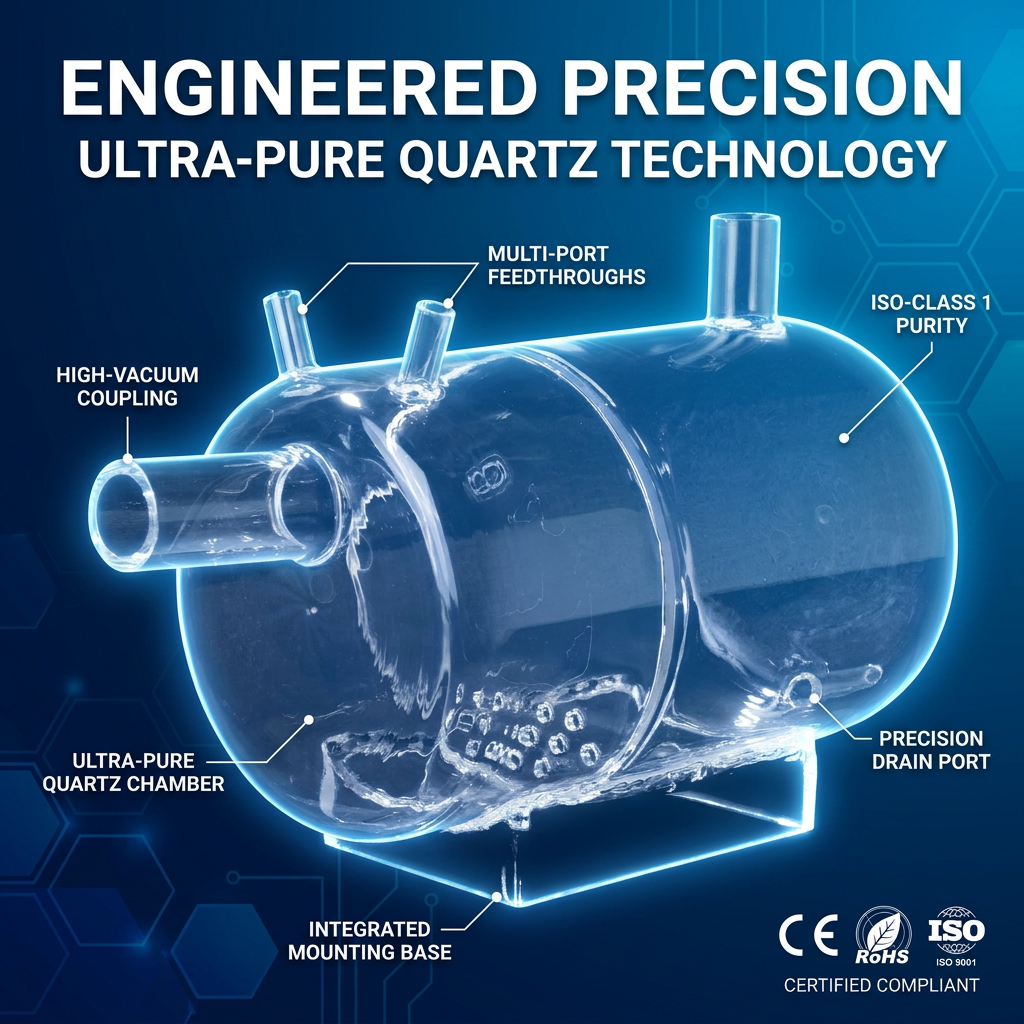
Semiconductor-Grade High Purity Quartz Separating Container
Designed for corrosive geothermal condensate distillation, volcanic heavy metal trace assays, and ultra-pure chemical separation up to 99.999% purity.
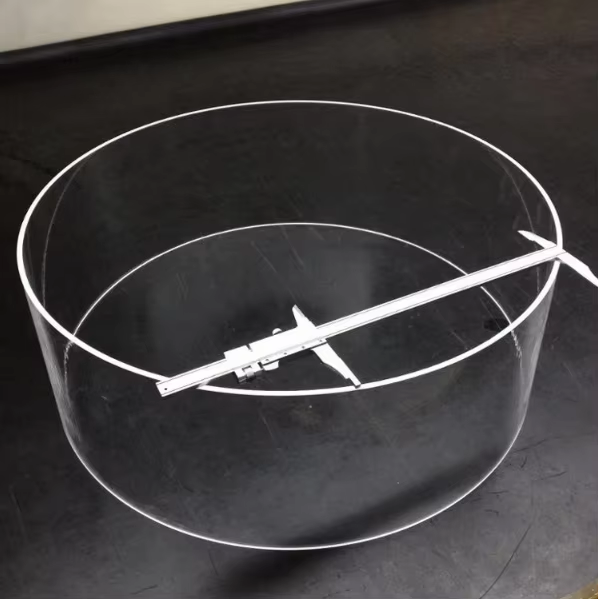
High-Temperature Optical Quartz Sapphire Tubes for Powder Sintering
Precision-drawn vitreous silica furnace tubes tailored for aluminum alloy analysis, refractory testing, and horizontal vacuum powder calcination.

Custom Clear Fused Quartz Tube & Fire-Polished Specialized Glassware
Hand-blown, stress-relieved quartz tubing featuring zero-bubble visual clarity and chemical resilience against boiling geothermal brines and acid mixtures.
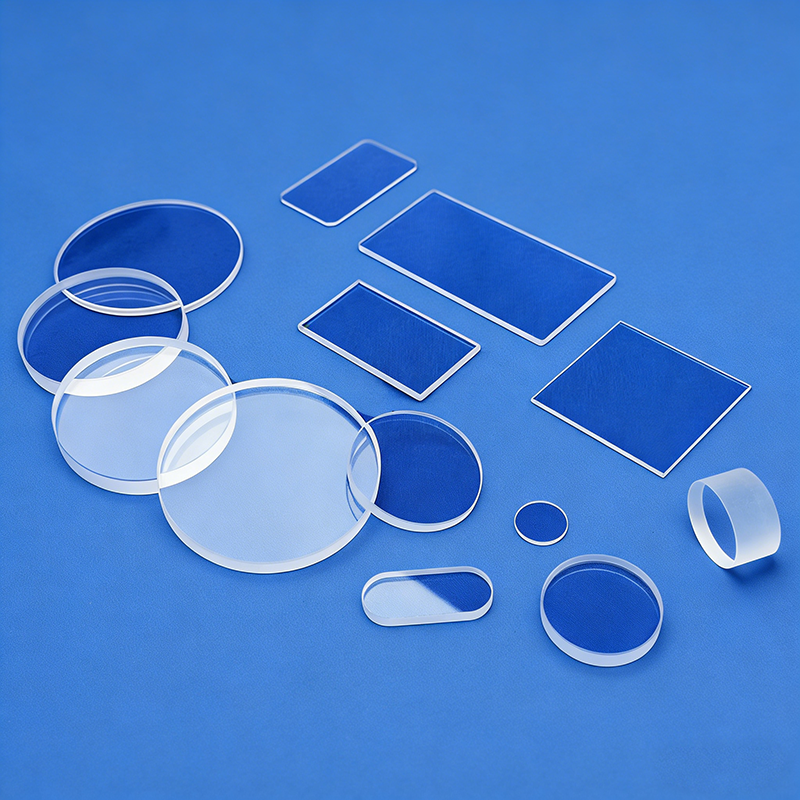
Translucent Natural Fused Quartz Plate & Custom Cutting Services
Opaque and translucent silica heat shields cut to custom CNC tolerances for geothermal burner enclosures, metallurgical view ports, and heating muffles.
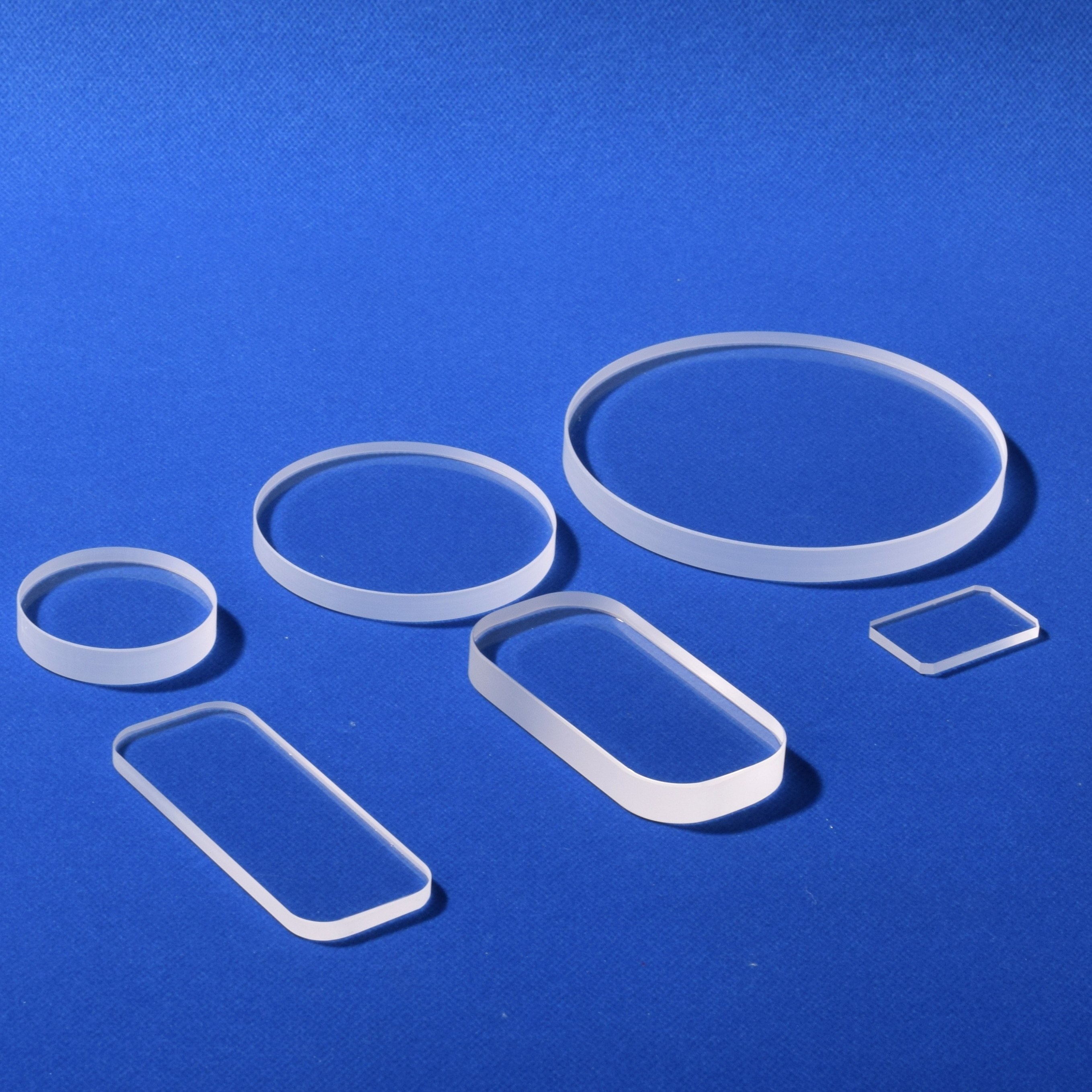
High-Transmittance Heat-Resistant Transparent Quartz Sight Windows
Double-sided optically polished sight glass discs designed for deep-well geothermal steam inspection and high-pressure sub-arctic autoclave observation.
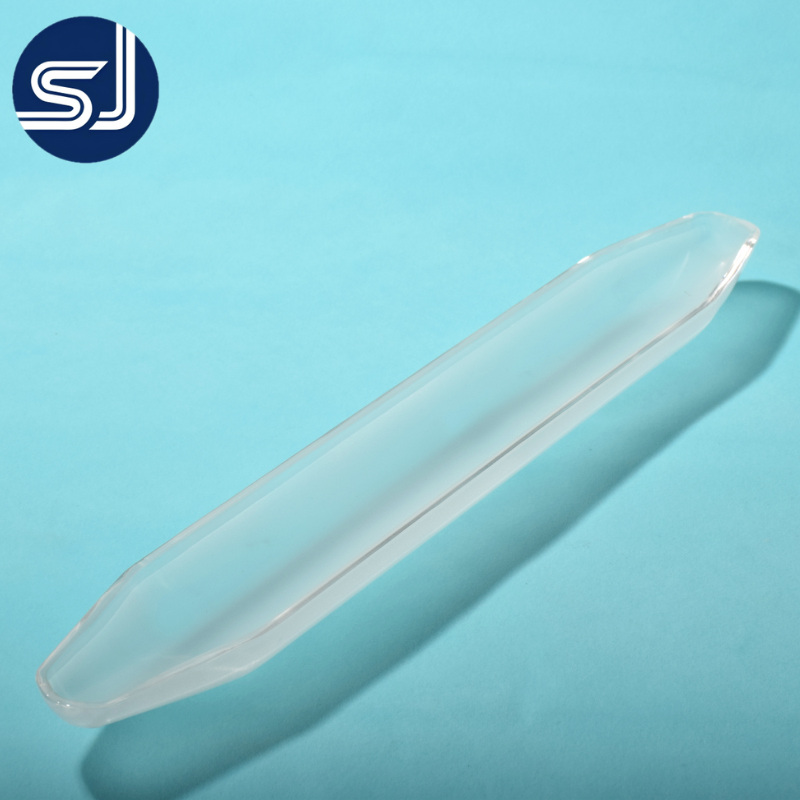
Precision Polished Quartz Combustion Boat for Metallurgy & Ashing
Ultra-clean quartz combustion carrier boats capable of sustained cycles at 1100°C for volcanic ash characterization and aluminum production trace-metal testing.
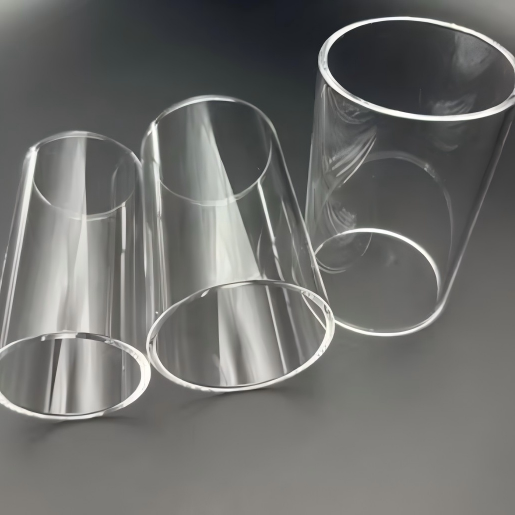
High-Temperature Polished Ozone-Free One-End Closed Quartz Tubes
Continuous draw diameters 5mm to 800mm. Standard protection sheaths for halogen heating elements, immersion heating, and thermocouple protection in harsh brines.
Engineering Halogen Quartz Emitter Tubes for High-Gradient Sub-Arctic Conditions
A comprehensive metallurgical and glass-matrix evaluation for procurement engineers in Reykjavik, Hafnarfjörður, and the Reykjanes Industrial Corridor.
In sub-arctic industrial sectors across Greater Reykjavik, equipment components face an uncompromising physical reality: severe thermal gradient divergence. Whether operating in the Hellisheiði geothermal fields where steam flash vessels operate above 300°C alongside sub-zero ambient Atlantic blasts, or in high-output horticultural assimilation greenhouses throughout South Iceland, conventional borosilicate glass fails catastrophically due to thermal expansion stress fatigue. Vitreous silica (Fused Quartz) provides the only material foundation capable of surviving continuous temperature cycles exceeding 1100°C with an extraordinarily low coefficient of thermal expansion ($\alpha \approx 5.5 \times 10^{-7}/\text{K}$).
1. The Thermodynamics of Halogen Quartz Envelopes
Halogen heating tubes utilize a high-density tungsten filament enclosed within a compact quartz sleeve backfilled with inert gas (argon/krypton) mixed with trace halogens (iodine or bromine). For the halogen regenerative cycle to function without envelope blackening, the inner envelope wall temperature must remain above 250°C, while peak surface temperatures often surpass 850°C.
When deployed in Reykjavik’s maritime sub-polar climate, rapid cold downdrafts create localized radial temperature differentials along the quartz wall. Ordinary industrial glass develops intense hoop stresses, inducing microcrack propagation. Vulra Quartz resolves this failure mechanism through:
- Ultra-Pure Synthetic & Natural Donghai Crystal Refinement: Raw quartz sand is processed via vacuum thermal fusion to eliminate trace alkali metals (Lithium, Sodium, Potassium < 1.5 ppm total), preventing high-temperature devitrification into brittle cristobalite phases.
- Deep Dehydroxylation: Standard fused quartz holds residual hydroxyl ions ($[OH^-]$) up to 150–200 ppm, which triggers structural foaming and wall thinning under heavy infrared radiation. Our halogen quartz tubes undergo vacuum bake-out annealing reducing $[OH^-]$ below 5 to 20 ppm, elevating continuous structural stability.
- Controlled Spectral Doping (Ozone-Free Formulations): For industrial drying and indoor horticulture in Iceland, human occupational safety mandates zero tropospheric ozone production. By doping the silica melt with selective titanium/cerium oxides, our quartz tube walls completely attenuate ultraviolet wavelengths below 220 nm (specifically cutting off the 185 nm ozone-generating line) while sustaining >92% transmittance in the short-to-medium infrared band (780 nm – 2,500 nm).
2. Material Science Benchmark: Quartz Glass vs. Alternative Industrial Envelopes
Procurement directors evaluating supply chains for Icelandic geothermal monitoring, smelter bake ovens, and laboratory pilot lines must compare physical tolerances under operational loads:
| Physical Property | Vulra Halogen Quartz (Donghai) | Standard Fused Silica | Borosilicate 3.3 Glass |
|---|---|---|---|
| Silicon Dioxide ($SiO_2$) Purity | 99.99% – 99.999% | 99.9% | ≈ 81% |
| Coefficient of Thermal Expansion (20–300°C) | 5.5 × 10⁻⁷ cm/cm·°C | 5.8 × 10⁻⁷ cm/cm·°C | 33 × 10⁻⁷ cm/cm·°C |
| Continuous Service Temperature | 1100 °C | 1000 °C | 450 °C |
| Softening Point | 1683 °C | 1650 °C | 820 °C |
| Thermal Shock Tolerance ($\Delta T$) | Quench 1100°C to 20°C Ice Water (No Fracture) | Quench 950°C to 20°C | Fractures at $\Delta T > 150^\circ\text{C}$ |
| Hydroxyl ($[OH^-]$) Concentration | < 5 – 20 ppm (Dehydroxylated) | 120 – 180 ppm | N/A (Complex Borate Network) |
| Resistance to Geothermal $H_2S$ & $SO_2$ | Chemically Inert (Zero Leaching) | Inert | Surface Etching & Leaching Observed |
The operational data confirms: in harsh, rapid-chill Icelandic operations, high-purity halogen quartz tubes manufactured with precise dimensional concentricity ($\pm 0.05 \text{ mm}$) eliminate tube deformation, filament sag, and unexpected envelope blowout, generating dramatic maintenance life-cycle savings.
Specialized Quartz Applications Across Reykjavik & Icelandic Industry
Targeted thermal, chemical, and optical engineering tailored to Iceland's unique geothermal, agricultural, and industrial infrastructure.
High-Enthalpy Geothermal Wells & Power Generation
Reykjavik Energy (Orkuveitan) and surrounding geothermal fields (Hellisheiði, Nesjavellir, Svartsengi) operate under intense supercritical steam conditions enriched with aggressive hydrogen sulfide ($H_2S$), carbon dioxide ($CO_2$), and volatile silica. Our one-end closed quartz protective sleeves and custom distillation condensers protect downhole sensor arrays and provide corrosion-free fluid sampling without ionic contamination.
Greenhouse Horticulture in Hveragerði & Flúðir
Iceland's controlled-environment agriculture relies on geothermally powered greenhouses requiring high-efficiency supplemental infrared radiation during dark sub-arctic winter months. Our clear fused short-wave halogen infrared quartz emitters deliver 93% radiant efficiency, directing thermal energy directly to plant canopies without wasting power on air circulation loss, while the ozone-free formulation safeguards indoor workers.
Primary Aluminum Smelting (Straumsvík & Grundartangi)
In massive electrolytic reduction smelters along Faxaflói bay, our high-temperature quartz tubes, observation windows, and combustion boats serve as pyrometer sight glasses and thermocouple well sheaths. They offer impervious resistance against cryolite bath fumes, molten metal splashback, and electrical induction fields up to 1200°C.
Carbon Mineralization & Green Hydrogen Synthesis
Iceland leads global direct air capture (DAC) initiatives like Climeworks and Carbfix, alongside emerging geothermal hydrogen pilot plants. Vulra supplies precision-machined quartz photocatalytic reaction cylinders and high-vacuum degassing tubes engineered for UV photolysis and pressurized mineral precipitation test rigs.
Land-Based Salmon Aquaculture & Water Purification
High-tech RAS (Recirculating Aquaculture Systems) along the Reykjanes coast require continuous water biosecurity. Our thin-wall, high-transmittance UV quartz sleeves (254 nm germicidal wave transmission > 90%) protect high-output UV-C lamps against thermal chilling and cold sea-water scaling, destroying pathogens without chemical additives.
Geochemical Volcanology & XRD Laboratory Analysis
Serving the University of Iceland (Háskóli Íslands) and geoscience research bodies, Vulra manufactures optical quartz discs, zero-background XRD sample holders, and fused silica crucibles that withstand rapid thermal cycling during tephra, basalt, and geothermal mineral fusion spectroscopy.
Reykjavik Industrial Trends Transforming Quartz Sourcing (2025–2030)
How the Nordic green transition, energy optimization, and supply-chain nearshoring dictate technical specifications.
Decarbonized Thermal Electrification
Icelandic industrial directives mandate phasing out residual fossil auxiliary burners. Heavy industry and food processing facilities across Reykjavik are retrofitting traditional boilers with high-flux halogen infrared quartz emitters powered by 100% renewable geothermal and hydro energy, demanding quartz envelopes that withstand rapid instant-on electrical ramp rates without thermal shock fatigue.
Expansion of Deep Geothermal Exploration (IDDP)
With the Iceland Deep Drilling Project targeting superheated fluids up to 450°C–500°C under extreme pressures, downhole logging instruments require thicker-walled vitreous quartz containment vessels (up to 800 mm lengths with wall concentricity tolerances below 0.1 mm) capable of resisting acidic geothermal gas embrittlement.
Supply Chain Traceability & Circular LCA
Icelandic enterprises adhere to strict Nordic and European Economic Area (EEA) eco-procurement frameworks. Buyers require certified compliance under CE and RoHS, accompanied by third-party audited chemical assay sheets verifying the absence of lead, cadmium, or radioactive trace elements ($Th, U < 1 \text{ ppb}$) in optical components.
Direct Manufacturing Powerhouse in China’s Crystal Capital
Lianyungang Vulra Quartz Products Co., Ltd. sits at No. 9 Dingxin Road, Donghai Economic Development Zone. We bypass broker markups, delivering verified manufacturer excellence directly to Reykjavik ports.
TÜV Rheinland Audited
Our production facilities, machine tolerance capacity, and legal compliance are independently inspected and certified on-site by TÜV Rheinland, providing complete operational transparency.
Prototype From 1 Piece
Rapid R&D turnaround for Icelandic research teams. We support drawing-based custom prototyping for single custom vessels, custom-bent tubes, and specialized quartz boats with no prohibitive minimums.
Hot & Cold In-House Lines
Complete integration under one roof: automatic glass lathes, oxy-hydrogen bench welding, cold diamond CNC drilling, surface optical lapping, cleanroom acid etching, and laser dimensional profiling.
Sub-Arctic Export Packing
Multi-layered polyethylene foam separation, shock-isolated inner containers, and ISPM-15 export-stamped reinforced plywood crates designed to survive rough North Atlantic air and sea transit routes.
Frequently Asked Questions: Sourcing Quartz Glass for Reykjavik
Direct engineering and commercial answers to simplify procurement for Icelandic engineering firms, plant managers, and laboratory purchasing directors.
How do Vulra halogen quartz tubes endure sudden sub-zero Icelandic thermal shock?
Unlike standard borosilicate or aluminosilicate glasses, our quartz glass is composed of over 99.99% pure $SiO_2$, yielding an ultra-low linear thermal expansion coefficient of only $5.5 \times 10^{-7}/\text{K}$. Even if an infrared halogen heating tube operating at 1000°C is hit by a sub-zero Arctic air draft or icy water condensation, the stress differential within the vitreous matrix remains far below the critical tensile fracture threshold. In factory testing, our tubes undergo rapid water-quench cycles from 1100°C into 20°C water baths with zero structural failure.
What is the standard transit lead time and shipping route to Keflavík (KEF) or Sundahöfn Port?
For urgent engineering replacements and prototypes, express air cargo via Keflavík International Airport (KEF) takes typically 5 to 8 business days door-to-door from our Donghai facility. For bulk industrial shipments and heavy furnace runs, consolidated sea-freight routing through European hubs (such as Rotterdam or Hamburg) with direct connection into Sundahöfn or Hafnarfjörður Port averages 32 to 38 calendar days. All shipments include full transit tracking and export documentation.
How does Vulra guarantee zero transit breakage for high-aspect-ratio quartz tubes?
We implement a proprietary multi-tier packaging system developed over six years of international exports. Each tube is vacuum-bagged, sleeved in custom-molded high-density EPE foam channels, packed within reinforced corrugated inner sleeves, and suspended inside heavy-duty, fumigated plywood crates lined with vibration dampeners. Our global transit damage rate is strictly under 0.2%. In the rare event of damage, our insured replacement guarantee dispatches replacement components immediately upon receipt of photo verification.
Are your quartz tubes and laboratory glassware compliant with Icelandic and EEA standards?
Yes. As Iceland is part of the European Economic Area (EEA), all products comply with applicable European directives. Vulra’s quartz products carry authentic CE markings and comply fully with EU RoHS (Restriction of Hazardous Substances) directives. We furnish comprehensive Certificates of Analysis (CoA) specifying batch purity, trace metal breakdowns (ICP-MS reports), and dimensional inspection sheets for seamless clearance through Icelandic Customs (Skatturinn).
Can we order customized dimensions or bespoke end-terminations according to CAD drawings?
Yes, customized fabrication is our primary manufacturing focus. We operate automated high-precision glass lathes and 5-axis CNC diamond grinding workstations. We regularly manufacture custom tube diameters from 5 mm up to 800 mm, custom flange rings, ground-taper joints (standard taper, spherical, or o-ring grooves), custom-bent elbows, and precision ceramic/metal halogen end caps. Simply send your 2D PDF or 3D STEP drawing for an engineering tolerance check within 24 hours.
Why choose an ozone-free quartz envelope over clear transparent quartz for indoor applications?
Standard quartz transmits vacuum and deep UV light down to 180 nm. The 184.9 nm emission band ionizes atmospheric oxygen ($O_2$), generating high concentrations of toxic ozone ($O_3$), which corrodes sensitive electronics and creates serious respiratory hazards in enclosed spaces like horticultural greenhouses or processing plants. Our ozone-free quartz tubes are doped with proprietary metal oxides that strictly filter out emissions below 220 nm while allowing maximum infrared and visible spectrum pass-through, completely eliminating ozone production.