Precision Quartz Core Product Portfolio
Direct from verified manufacturer: Ultra-pure fused quartz tubes, optical plates, crucibles, and customized laboratory quartzware featuring thermal shock resistance up to 1450°C.
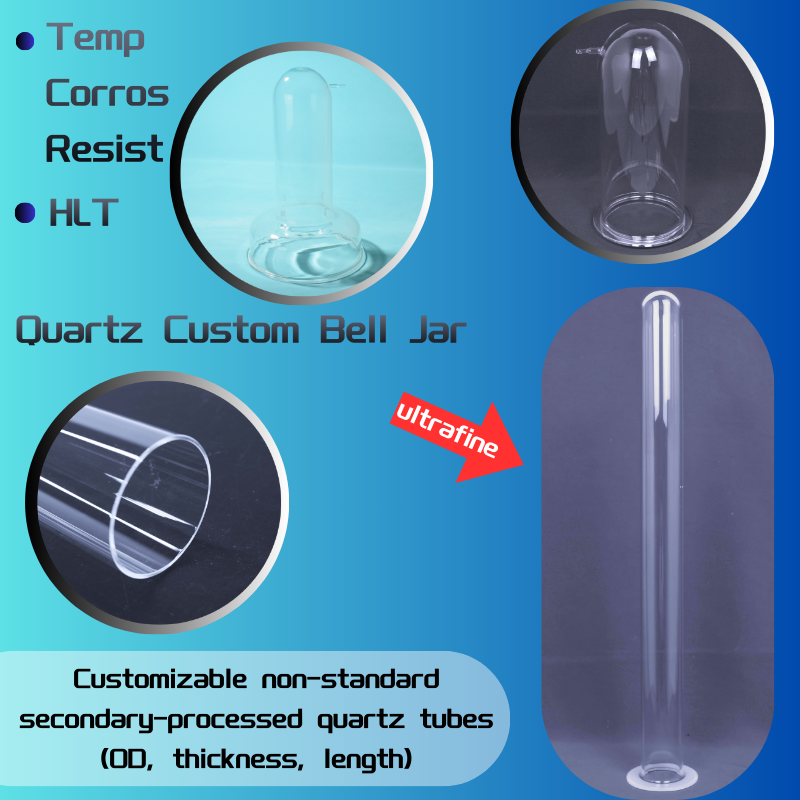
SJ 130 High-Precision Quartz Vacuum Tube
Negative pressure leak-proof clear quartz tube tailored for semiconductor diffusion and chemical vapor deposition processes.
View Specifications →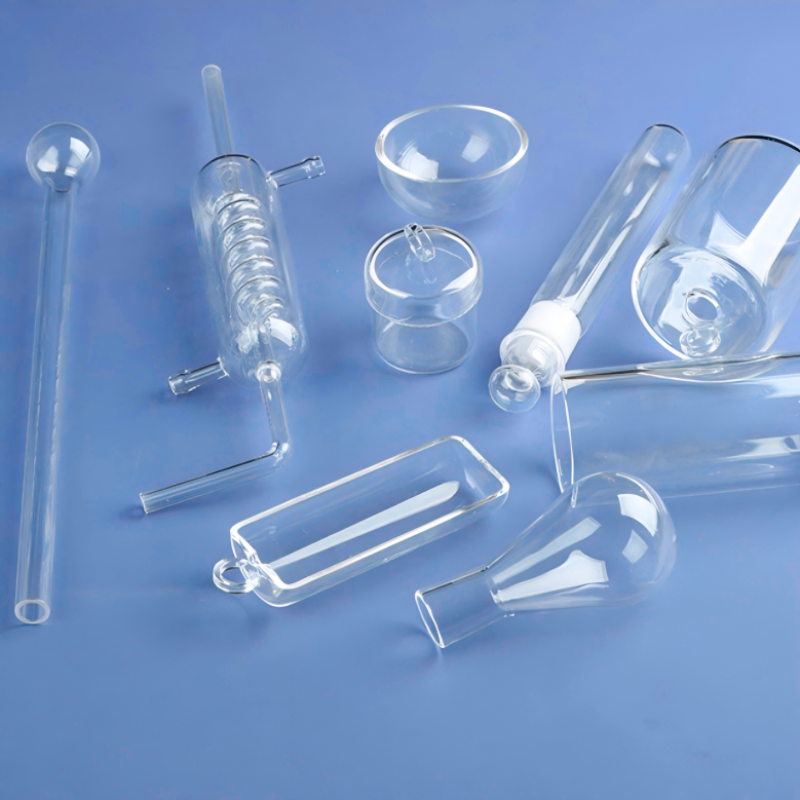
Quartz Glass Plugging Rod & Heating Tube Boat
Polished surface quartz heating test tube boats engineered for high-temperature thermal processing and high-frequency testing environments.
View Specifications →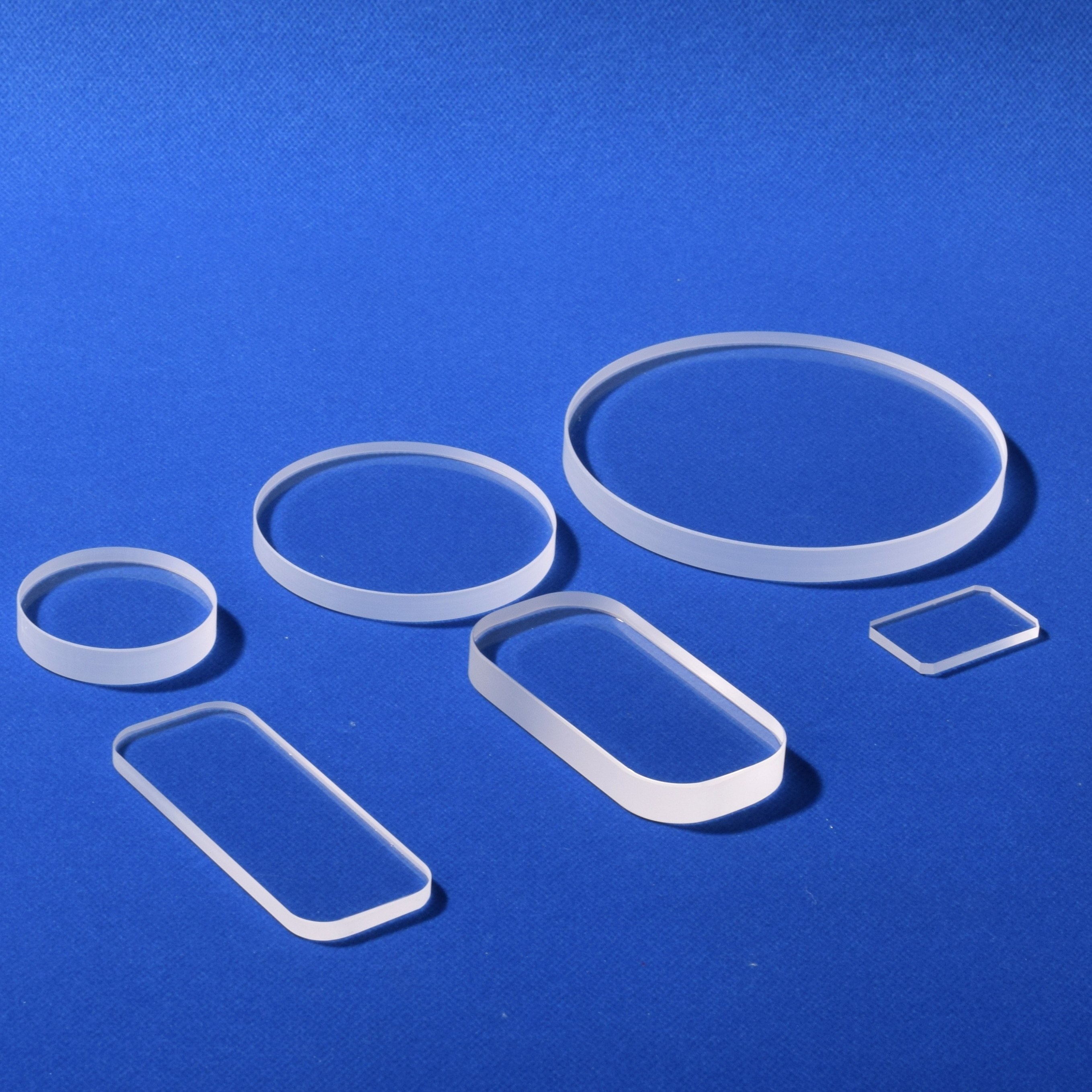
Heat-Resistant Quartz Glass Sight Watch Window
Sophisticated optical-grade transparent quartz window disc offering extreme thermal insulation and high UV-IR light transmission.
View Specifications →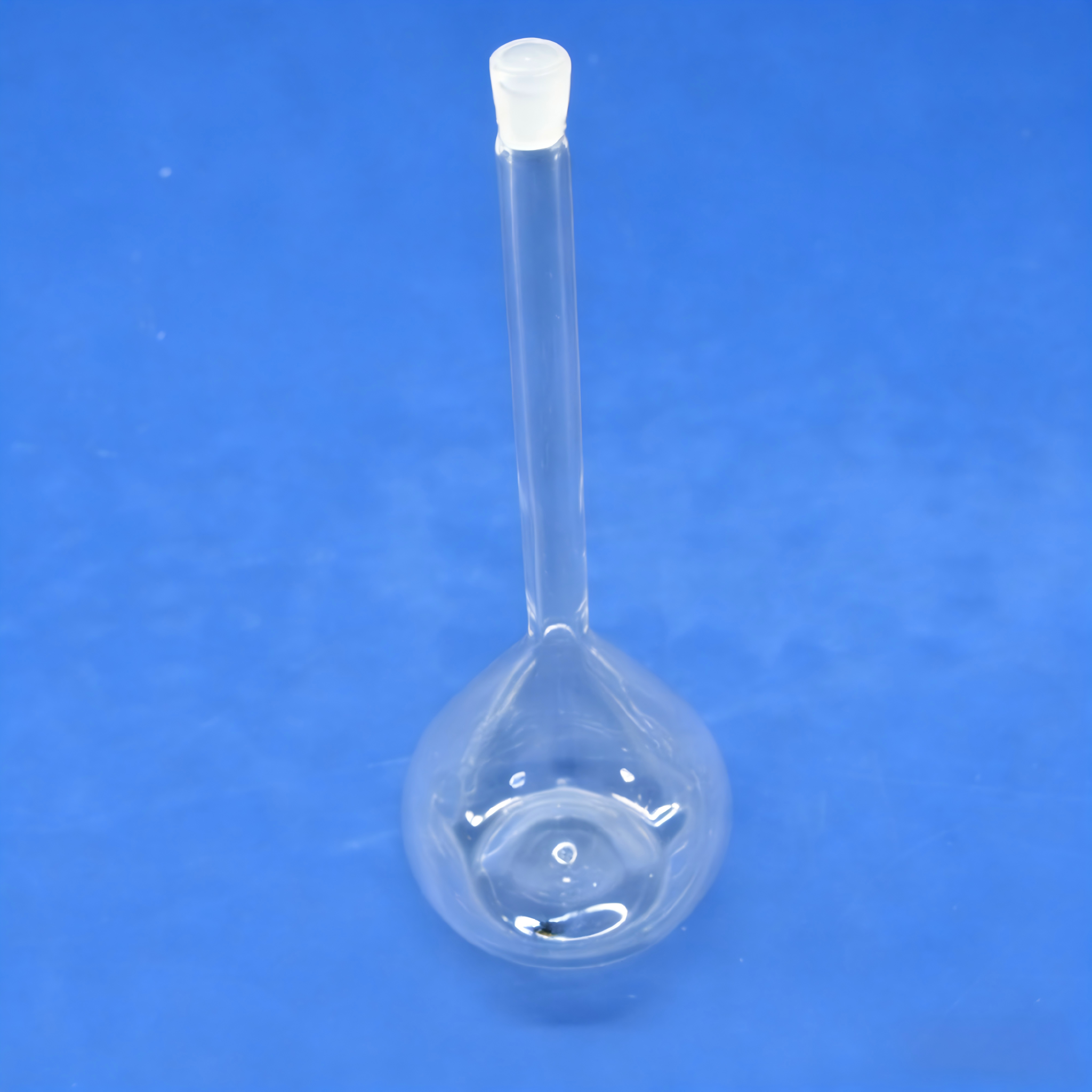
Customized High-Purity Quartz Glass Lab Flask
Precision bent, cut, and welded transparent quartz ampoules and distillation flasks for specialized laboratory research applications.
View Specifications →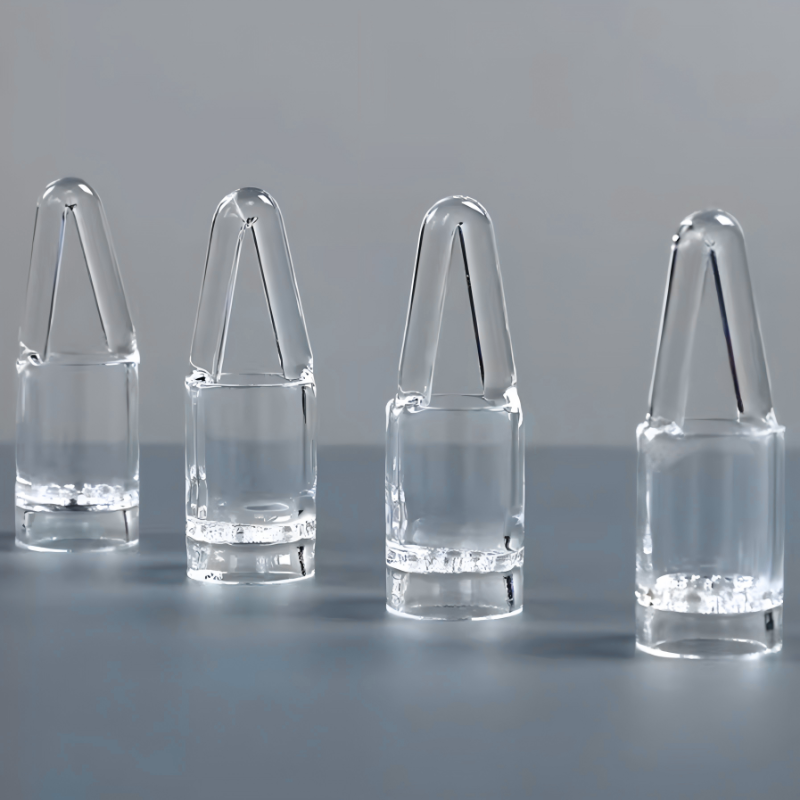
High-Temperature Polished Quartz Crucible & Beaker
Heavy-duty ozone-free quartz crucible dome basket, resistant to harsh acids and alkalis up to 1100°C continuous working temperature.
View Specifications →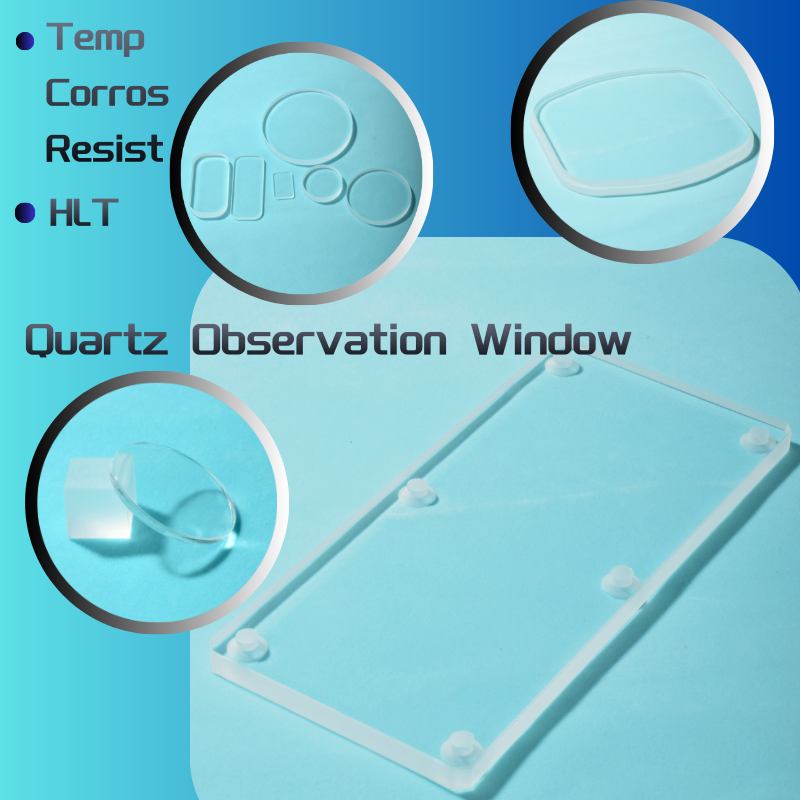
SJ Natural Fused Quartz Clear Polished Plate
High melting point optical-clear quartz substrate plate with outstanding laser damage threshold and chemical resistance.
View Specifications →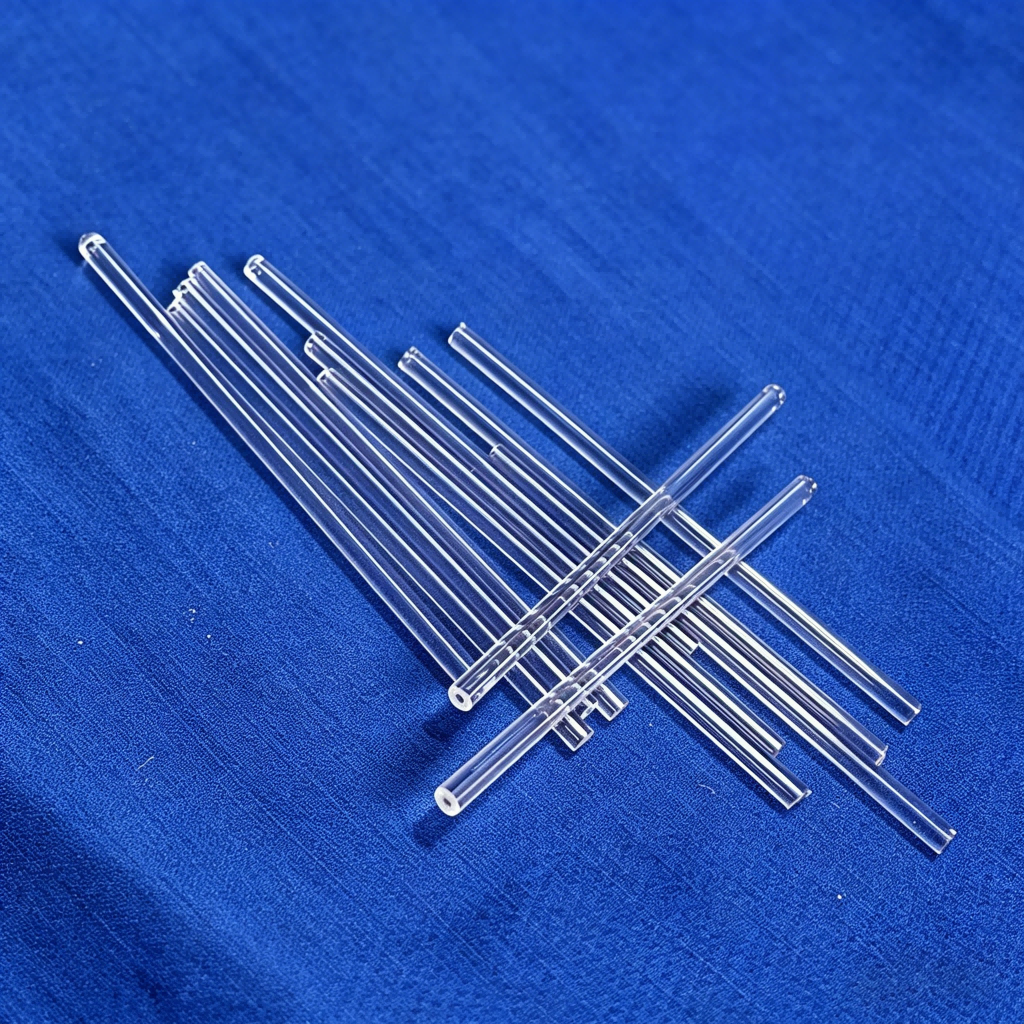
Opaque Micro Capillary Quartz Glass Tube
High-purity 99.9%-99.999% silicon dioxide laboratory exhaust micro capillary tubes engineered with precise micro-bore tolerances.
View Specifications →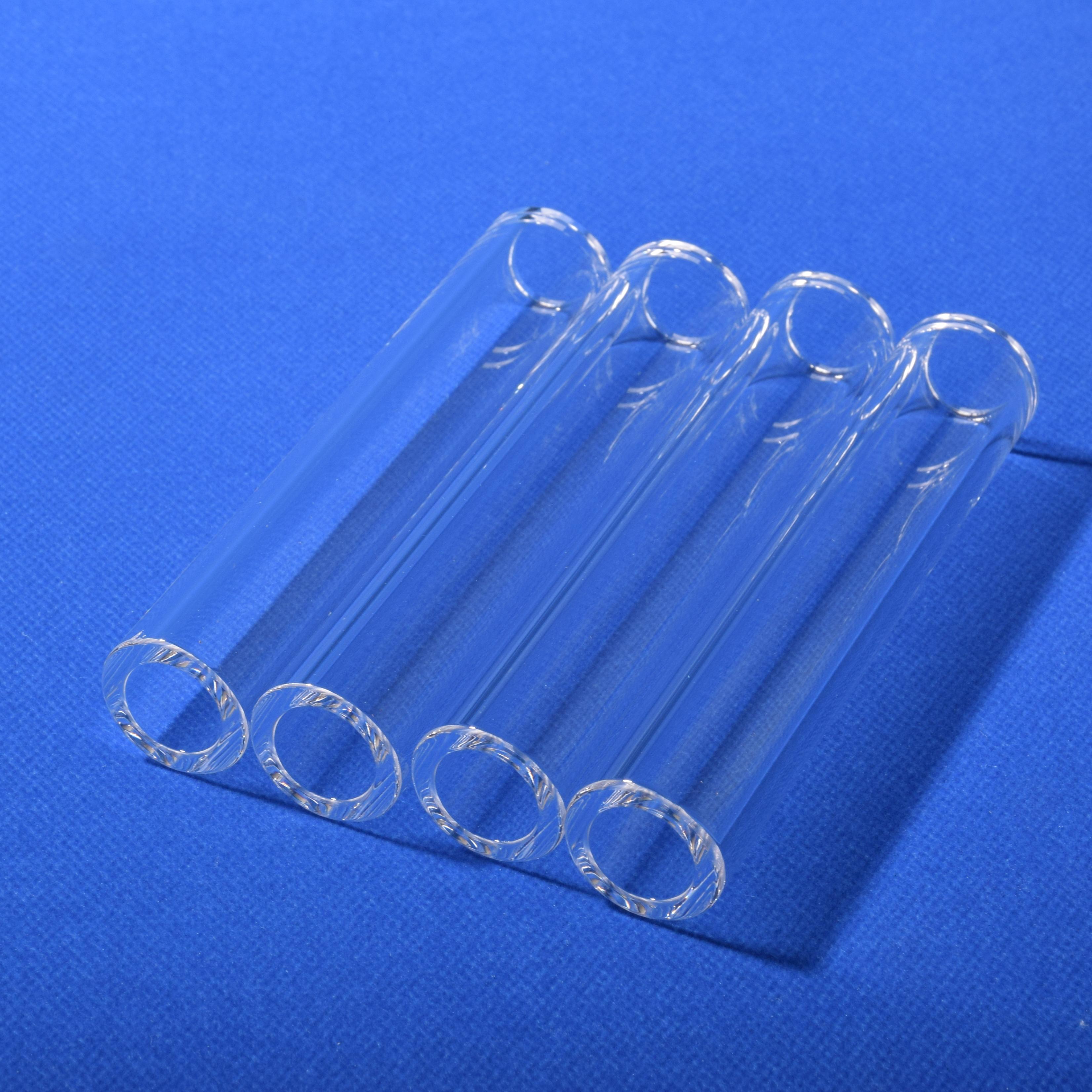
SJ 150 Translucent Thick Wall Polished Quartz Tube
Corrosion-resistant oversized quartz tubing rated for 1100°C service, ideal for heavy industrial diffusion furnaces and heating jackets.
View Specifications →1. Material Science & Hydroxyl (OH) Physics in Advanced Fused Quartz
In modern semiconductor fabrication, high-power fiber laser optics, and chemical spectroscopy, high-purity fused quartz ($SiO_2$) serves as an irreplaceable baseline material. However, the operational efficiency and thermal longevity of quartz components depend fundamentally on a single chemical indicator: the concentration of residual structural hydroxyl groups (bound $OH^-$ ions).
During traditional oxy-hydrogen flame synthesis, hydrogen combustion releases water vapor that incorporates into the silica network as silanol groups ($Si-OH$). At high thermal thresholds ($>900^\circ C$), these silanol bonds weaken the glass structural matrix, causing a dramatic decrease in viscosity, lowering the softening point, and accelerating structural devitrification (cristobalite phase transformation). Furthermore, bound $OH$ groups generate significant absorption bands in the infrared spectrum at $2.73\,\mu m$, causing thermal dissipation loss and optical distortion in optical system applications.
Hydroxyl Attenuation Mechanism & Thermal Properties
At Lianyungang Vulra Quartz Products Co., Ltd., located in Donghai County—China's renowned crystal capital—our engineering facilities utilize specialized electrical vacuum melting and chemical vapor dehydration processes. By removing atmospheric moisture during synthesis and executing prolonged thermal vacuum degassing cycles, the silanol concentration is driven down to negligible levels.
| Quartz Grade Category | Typical OH Content | Infrared (2.73µm) Transmittance | Softening Point (°C) | Primary Industrial Applications |
|---|---|---|---|---|
| Standard Flame Fused Quartz | 100 – 200 ppm | < 40% (Strong OH Band) | ~1660°C | Standard laboratory glassware, basic heating tubes |
| Electric Vacuum Fused Quartz | 15 – 30 ppm | ~75% | ~1680°C | Diffusion furnace tubes, halogen lamp envelopes |
| Vulra Low OH Electric Fused | < 5 ppm | > 88% | 1683°C | Semiconductor etching, IR heaters, UV cure equipment |
| Vulra Ultra-Low Synthetic Fused Silica | < 1 ppm | > 92% | 1700°C | Laser windows, deep UV optics, EUV lithography components |
2. Enterprise Manufacturing Advantage & Quality Verification
As a verified manufacturer audited on-site by TÜV Rheinland, Lianyungang Vulra Quartz Products Co., Ltd. combines geographic raw-material advantages with rigorous, precision manufacturing engineering. Operating from No. 9, Dingxin Road in the Jiangsu Donghai Economic Development Zone, our facility maintains direct control over high-purity natural quartz sand processing ($99.99\% - 99.999\%\,SiO_2$).
Full OEM/ODM Drawing Agility
Complete custom fabrication from 2D/3D CAD drawings with 1-piece prototyping support for R&D labs and trial runs.
TÜV Rheinland Verified
Authenticated production capacity, verified business status, and international quality management protocols.
CE & RoHS Compliant
Fully compliant with international environmental and safety standards for high-temperature and electronics supply chains.
Integrated Cold & Hot Processing
In-house precision cutting, CNC diamond drilling, fire polishing, lap grinding, and thermal annealing furnaces.
Trace Element GDMS Assurance
Rigorous ICP-MS and GDMS spectrographic validation guaranteeing total metallic impurities below 10-20 ppm.
Export-Grade Protective Packaging
Multi-layer shock-absorption foam, individual anti-static wrapping, and reinforced vacuum wooden crates.
3. Technology Evolution & Procurement Trends in Low OH Quartz
As global high-technology sectors advance toward smaller semiconductor node geometries (sub-3nm lithography) and higher-power optical lasers, material expectations for quartz fabricators have shifted dramatically. Procurement strategies are moving away from commodity off-the-shelf components toward specialized, low-OH engineering glass tailored for harsh chemical plasma and high thermal loads.
Trend 1: Sub-PPM Hydroxyl Synthetic Silica in Plasma Etching
In modern fluorine-based halogen plasma etching environments ($CF_4, C_4F_8, SF_6$), standard fused quartz suffers from preferential boundary degradation caused by silanol outgassing. The industry trend strongly favors ultra-low OH synthetic fused silica ($OH < 1\,\text{ppm}$). Removing structural $OH^-$ reduces particle generation, extends component lifetime inside process chambers, and prevents unwanted wafer contamination.
Trend 2: Transition to Large-Scale Oversized Thick-Wall Quartzware
To meet the scaling demands of 300mm/450mm silicon wafer processing and photovoltaic ingot casting, furnace tubes, crucibles, and boats must withstand prolonged thermal exposure at temperatures up to 1200°C under vacuum without sagging. Low-OH thick-wall quartz tubes (such as our SJ 150 oversized series) provide enhanced structural rigidity and elevated creep resistance, significantly lowering total cost of ownership (TCO) for fabrication plants.
Trend 3: Strict Optical Uniformity and Laser Damage Thresholds (LDT)
For industrial laser cutting, LiDAR optics, and photochemical research, light transmittance across the deep ultraviolet (UV) and short-wave infrared (SWIR) spectra must remain high. Low-OH quartz eliminates deep IR attenuation dips, allowing uniform optical density, minimal thermal lensing, and ultra-high laser damage thresholds ($> 10\,\text{J/cm}^2$ at 1064nm).
4. Technical Procurement FAQ: Low OH Quartz Sourcing
Answers to critical engineering and procurement queries regarding material properties, mechanical tolerances, and application feasibility.
How is hydroxyl (OH) content quantified and verified in your factory?
We calculate OH content using Fourier Transform Infrared (FTIR) Spectroscopy based on the infrared absorption band at $2.73\,\mu m$ ($3670\,\text{cm}^{-1}$). Using the standard absorption coefficient equation $C_{OH} = \frac{1}{d} \log_{10} \left(\frac{T_{2.5}}{T_{2.73}}\right) \times 2650$, where $d$ is sample thickness in millimeters and $T$ represents transmittance, we certify batch-specific OH concentration on all technical inspection sheets.
What are the continuous and peak working temperatures for Vulra Low OH quartz products?
Our low-OH electric vacuum fused quartz has a continuous service temperature rating of 1100°C and can withstand short-duration thermal peaks up to 1450°C. Because removing hydroxyl ions raises the glass viscosity, our low-OH products offer superior resistance to thermal deformation compared to standard flame-fused tubing.
What custom machining dimensional tolerances can Vulra Quartz achieve?
For standard cold CNC grinding and cutting, we routinely achieve dimensional tolerances of $\pm 0.05\,\text{mm}$. For specialized optical plates, micro-capillary tubes, and ground joints, precision polishing can achieve surface flatness down to $\lambda/4$ and dimensional tolerances up to $\pm 0.01\,\text{mm}$ upon drawing agreement.
Why should ozone-free quartz tubing be selected over standard clear quartz?
Ozone-free quartz tubing is intentionally doped with micro-elements (such as titanium) to absorb short-wavelength ultraviolet radiation below $220\,\text{nm}$, specifically suppressing the $185\,\text{nm}$ emission line that converts atmospheric oxygen into toxic ozone ($O_3$). It is widely specified in UV sterilization, heating, and curing systems where ozone generation must be controlled for safety and equipment protection.
What is your minimum order quantity (MOQ) for custom engineered quartz parts?
We maintain a flexible sourcing model: Minimum Order Quantity starts at 1 piece for custom drawings, prototypes, optical plates, crucibles, and specialized laboratory quartzware. Standardized tubing and capillary parts typically start at 5–10 pieces depending on outer diameter and wall thickness specifications.
How does Vulra Quartz handle fragile export shipping risks?
We employ engineered protective export packaging protocols: Every quartz piece undergoes ultra-clean acid washing and drying, is vacuum-sealed in protective foam layers, separated by custom shock-absorbent cell grids, and fitted inside heavy-duty multi-wall cartons or custom IPPC-certified wooden crates engineered for long-distance international air and ocean transport.
Request Custom Low OH Quartz Engineering Catalog & Quotation
Need specialized quartz tubing, optical windows, furnace boats, or custom lab components? Contact our material engineers for a 24-hour drawing review and competitive direct-factory pricing.