Standard & Custom Quartz Products
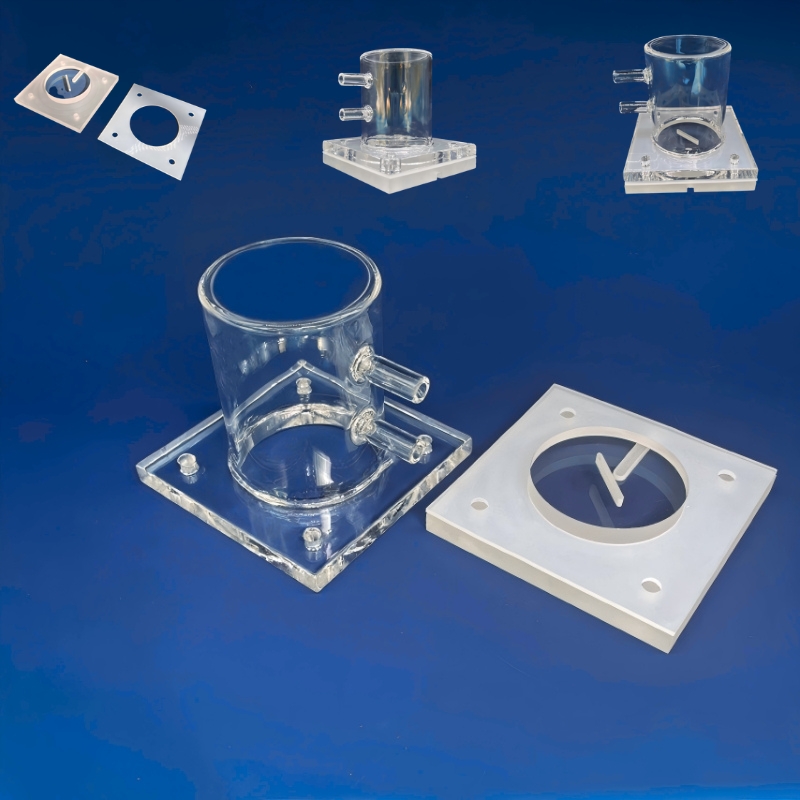
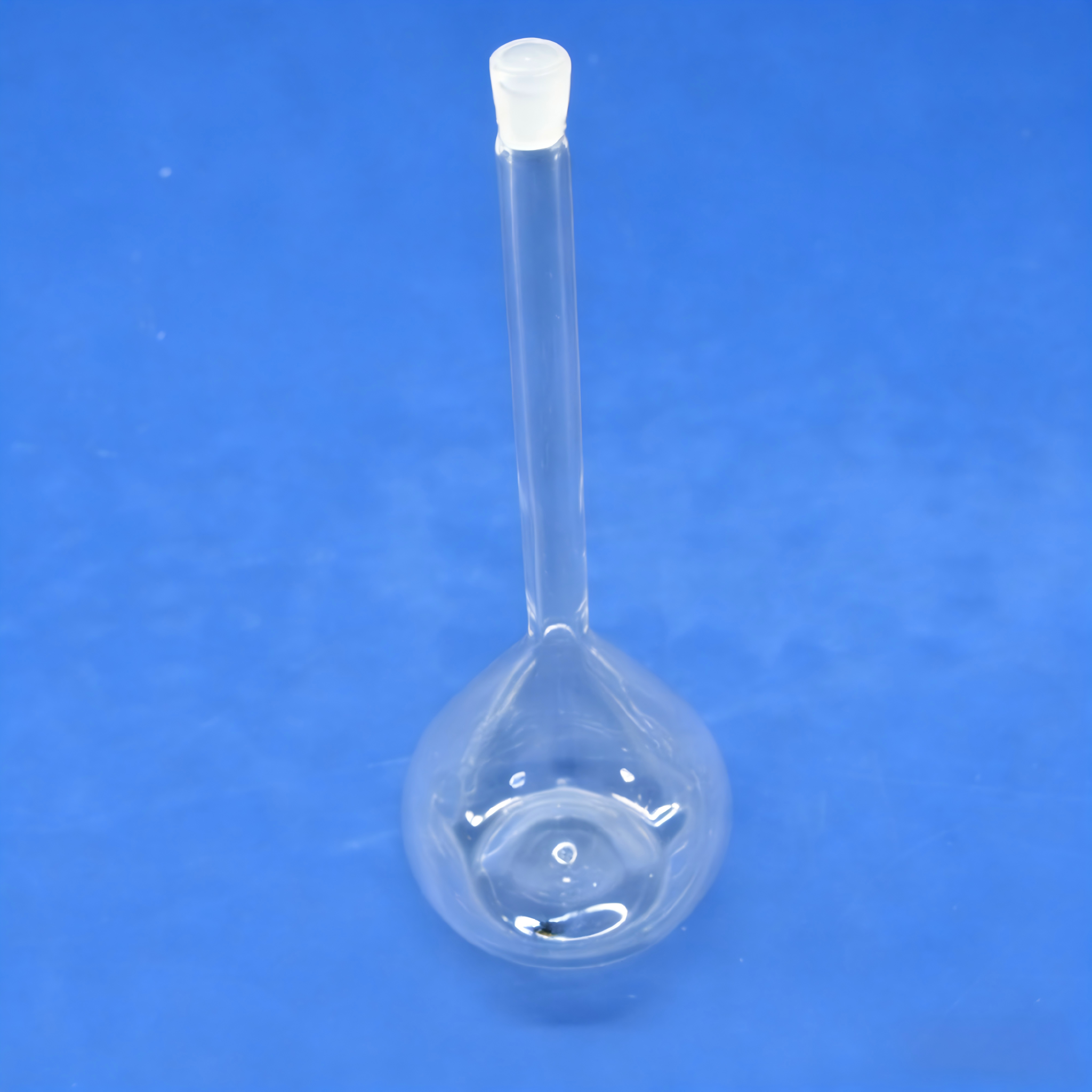
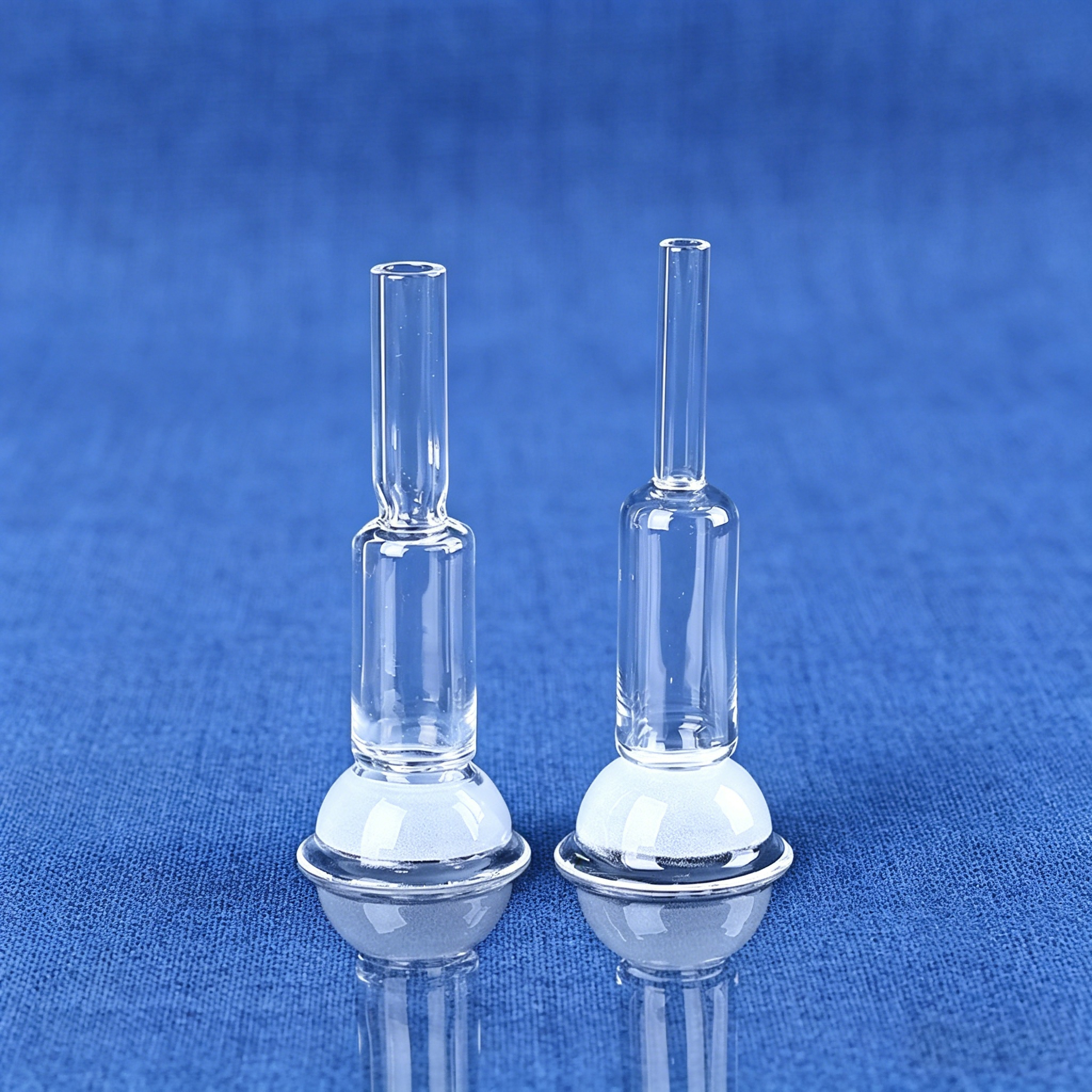
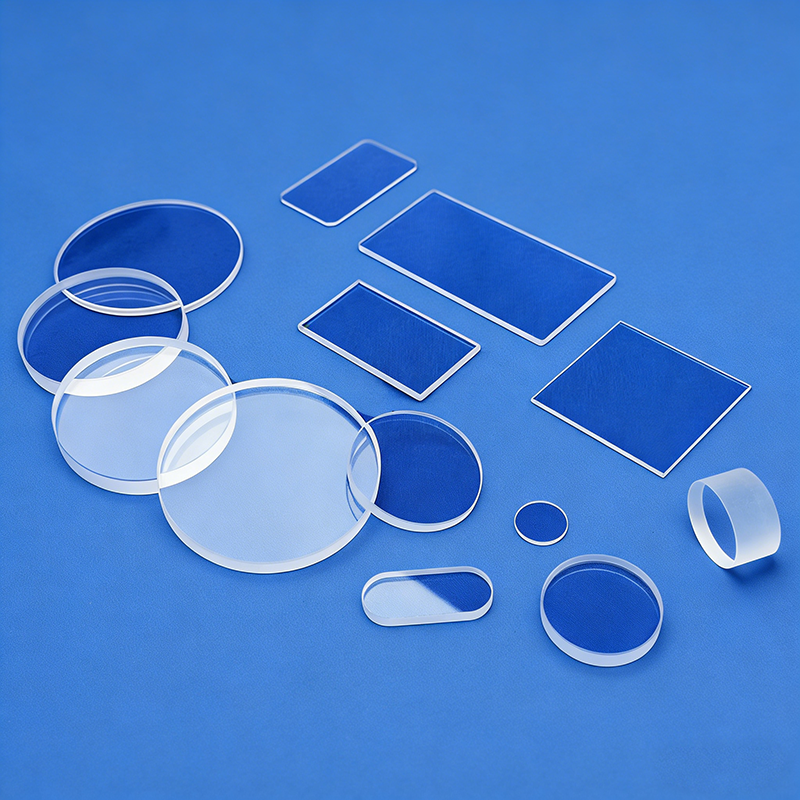
Directly manufactured at our Donghai Crystal Hub facility. Each component undergoes automated thermal stress annealing, spectrophotometric optical verification, and precision dimensional QA.
The Physics of Doped Ruby Fused Silica Tubing
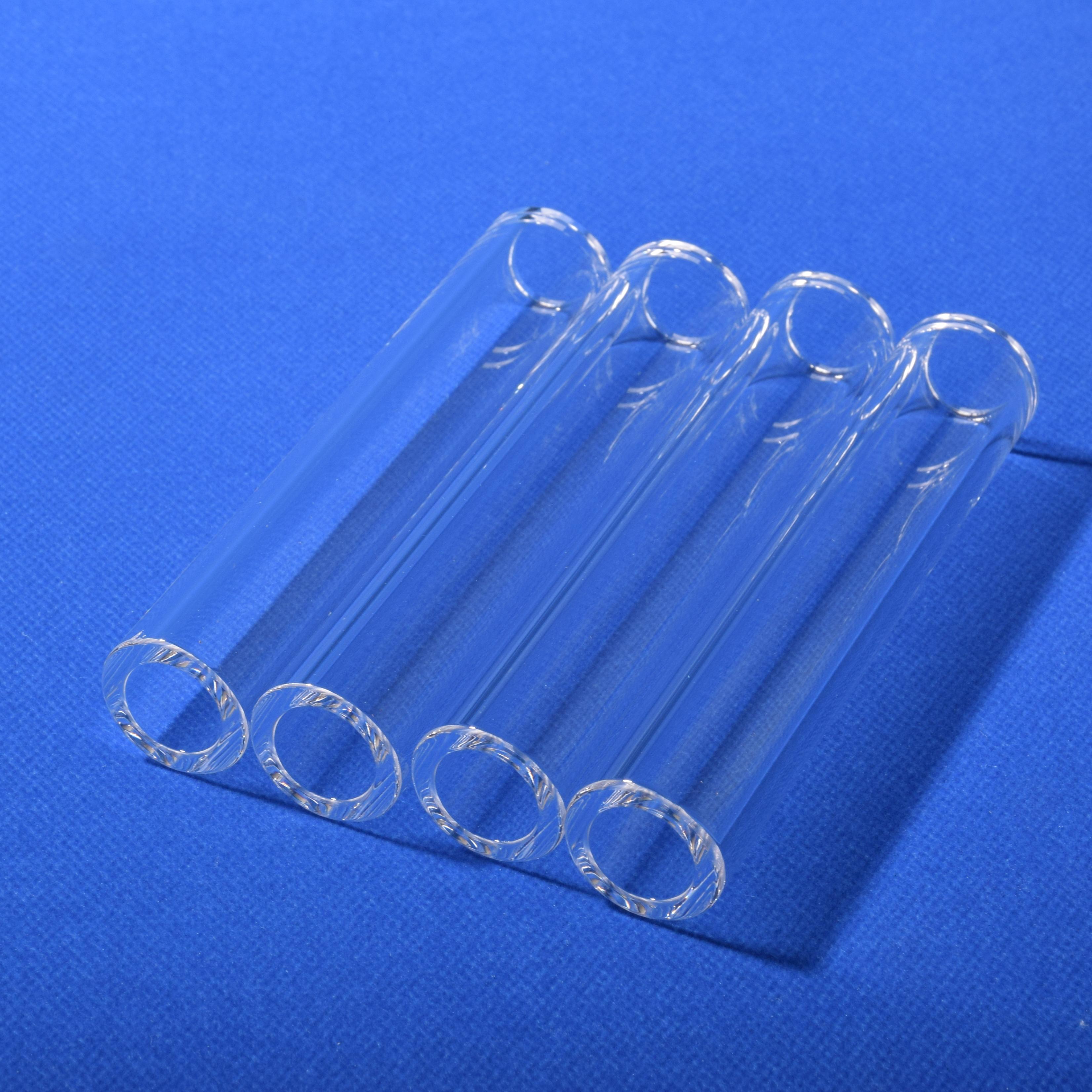
In contemporary photothermal and industrial infrared heating applications, standard clear fused silica presents a critical thermodynamic limitation: excess emission in the visible spectrum. This results in severe optical glare (λ = 380–600 nm) alongside suboptimal energy transfer density. Ruby Quartz Tubes (commonly designated as ruby red silica glass) solve this via homogeneous atomic-level doping during the thermal plasma fusion process.
By integrating controlled transition metal dopants into the tetrahedral silicon dioxide (SiO&sub2;) amorphous lattice, our metallurgical facilities achieve sharp spectral edge filtering. Wavelengths beneath 600 nm—specifically ultraviolet emissions (UV-A, UV-B, UV-C) and eye-fatiguing blue/green visual light—are selectively absorbed or reflected. Concurrently, near-infrared (NIR: 780–1400 nm) and short-to-medium-wave infrared (SWIR/MWIR: 1.4–3.0 μm) experience exceptional transmission efficiencies exceeding 92%.
This unique spectral transmission window directly elevates the thermal conversion coefficient of tungsten halogen and carbon filament heating elements. Industrial processors experience up to 18.4% faster photothermal equilibrium in curing, drying, and silicon wafer annealing protocols, with immediate mitigation of operator glare hazards in compliance with international occupational safety directives.
Optical & Thermal Performance Envelope
Material Comparison: Ruby Quartz vs. Standard Silica Glass Formulations
Quantitative physical, thermodynamic, and dielectric comparison between Vulra CE Certified Ruby Quartz, standard transparent fused silica, and borosilicate 3.3.
| Performance Metric / Property | Vulra CE Ruby Quartz Tube | Clear Fused Quartz (Natural) | Synthetic Fused Silica | Borosilicate 3.3 Tube |
|---|---|---|---|---|
| Primary Base Composition | Doped SiO&sub2; (>99.98% SiO&sub2; equivalent) | High Purity SiO&sub2; (≥99.99%) | Chemical Precursor SiO&sub2; (≥99.9999%) | SiO&sub2; 81% / B&sub2;O&sub3; 13% |
| Visible Glare Attenuation (λ 400–550 nm) | > 92% Absorption & Reflection | < 7% (High Glare Transmitted) | < 6% (Maximum Glare Transmitted) | < 8% (Standard Transmission) |
| Peak Infrared Transmittance (λ 1.0–2.8 μm) | 92% – 94% | 90% – 93% | 92% – 95% | 65% – 78% (Structural Absorption) |
| Continuous Operating Temperature | 1100 °C | 1100 °C | 1150 °C | 450 °C |
| Softening Point (ASTM C338) | 1683 °C | 1683 °C | 1730 °C | 820 °C |
| Coefficient of Thermal Expansion (CTE) | 5.5 × 10‾7 K‾1 | 5.5 × 10‾7 K‾1 | 5.2 × 10‾7 K‾1 | 33 × 10‾7 K‾1 |
| Thermal Shock Resistance (ΔT Quenching) | 1100°C into 20°C H&sub2;O Without Failure | 1100°C into 20°C H&sub2;O Without Failure | 1150°C into 20°C H&sub2;O Without Failure | 150°C Differential Limit |
| CE Certification & Safety Directives | LVD 2014/35/EU, RoHS 2011/65/EU | LVD Compliant | LVD Compliant | General Commercial Standard |
| Available Dimensional Envelope | OD 8mm – 280mm | L Up to 3000mm | OD 5mm – 800mm | L Up to 3500mm | OD 10mm – 300mm | L Up to 2000mm | OD 6mm – 300mm | L Up to 1500mm |
* Tested under ISO 9001:2015 laboratory conditions. Data points verified via spectrophotometric analysis (Varian Cary 5000 UV-Vis-NIR) and dilatometric expansion tracking.
Why Tier-1 International OEMs Partner With Vulra Quartz
Located at No. 9 Dingxin Road in China's Silicon & Crystal Capital (Donghai County), Lianyungang Vulra Quartz Products Co., Ltd. blends geographic supply chain dominance with stringent European quality management.
Donghai Crystal Raw Material Primacy
Direct integration into the world-class Donghai quartz sand belt guarantees continuous supply of 99.99%–99.999% pure silica feedstock. Our raw materials undergo strict chemical leaching to suppress transition metal contaminants (Fe < 0.2 ppm, Al < 14 ppm, Ti < 1.0 ppm) except where intentionally doped.
TÜV Rheinland Assessed & Verified
Our complete operational footprint—including premises, manufacturing lines, dimensional inspection chambers, and export compliance protocols—is fully verified via independent on-site audit by TÜV Rheinland. Full ODM/OEM qualification eliminates third-party supply risks.
Integrated Hot & Cold Machining
Unlike simple re-sellers or cut-only processors, Vulra maintains fully integrated hot-working glass lathes (oxy-hydrogen flame bending, bulb expansion, closed ends, and fire polishing) coupled with CNC diamond cutting, precision cylindrical grinding, ultrasonic drilling, and optical surface lapping.
Drawing-Based Prototyping from 1 PC
We respect the iterative R&D cycle of advanced hardware engineers. Send us 2D DXF/DWG or 3D STEP files: our engineering staff verifies wall-thickness ratios, thermal gradient distributions, and mechanical tolerances, delivering custom prototype units from a single piece before volume scaling.
Export Shockproof Packaging Engineering
Industrial quartz requires specialized intercontinental crating. Every batch of Ruby Quartz tubes is individually decontaminated with high-purity deionized water, acid-passivated, wrapped in non-static foam sheaths, suspended in cellular honeycomb cartons, and crated in fumigated reinforced timber boxes.
Full CE & RoHS Regulatory Attestation
All quartz tube series, including doped ruby red compositions, fully comply with EU Low Voltage Directive (LVD) 2014/35/EU and RoHS Directive 2011/65/EU. Complete material purity certificates (ICP-MS reports) and CE declarations of conformity are provided with each export dispatch.
Target Application Recommendations for Ruby Quartz Tubing
Selecting the appropriate quartz tubing profile requires matching spectral characteristics, wall thicknesses, and connection geometries to your exact thermal processing window.
1. High-Efficiency Industrial Infrared Emitters
Recommended Grade: CE-Standard Ruby Red Doped Quartz Tube, OD 10–20 mm, Wall 1.0–1.5 mm.
Application Scope: Automotive paint baking tunnels, coil coating drying, paper pulp dewatering, and plastic thermoforming ovens. Ruby quartz suppresses eye-searing yellow/white glare while directing focused shortwave radiant energy precisely into the substrate.
2. Semiconductor Rapid Thermal Processing (RTP)
Recommended Grade: High-Purity Ultra-Low OH‾ Doped Ruby Quartz (<10 ppm OH‾), Fire-Polished.
Application Scope: Wafer annealing, silicide formation, and implant activation. High structural rigidity at 1050–1100°C prevents tube sag over thousands of fast-ramp thermal cycles, while strict trace element binding eliminates wafer cross-contamination.
3. Photovoltaic Solar Cell Metallization & Diffusion
Recommended Grade: Heavy-Wall Ruby Sheath Tube, OD 25–50 mm, Precision Welded Flanges.
Application Scope: Contact firing furnaces and screen-printed paste drying. The selective infrared wavelength peak matches the absorption spectrum of organic binders in silver/aluminum paste, accelerating binder burn-off without micro-cracking silicon wafers.
Procurement Trends Shaping the Global Quartz Industry (2025–2030)
The global transition toward electrified industrial heating is accelerating an irreversible shift from fossil gas convection furnaces to electrified precision infrared heating arrays. In this macroeconomic environment, industrial procurement directors are re-engineering their quartz glass supply chains across three critical axes:
- Decarbonization Driven by Targeted Photothermal Conversion: Conventional gas-fired drying systems forfeit 40–60% of input energy as convective flue exhaust. CE-certified ruby quartz IR systems deliver up to 88% electrothermal radiant efficiency directly to process surfaces, reducing energy consumption and carbon tariffs.
- Total Cost of Ownership (TCO) vs. Initial CapEx: Modern procurement frameworks look past per-tube invoice prices. Premium-doped ruby quartz with structural annealing yields over 5,000 continuous hours at 1100°C without devitrification (crystallization into cristobalite), preventing catastrophic mid-cycle furnace downtime.
- Traceability, ESG & Supply Chain Localization Auditing: As international sanctions and environmental reporting rules expand, verified factory credentials like TÜV Rheinland on-site audit verification and direct origin sand processing have become mandatory qualification criteria for global buyers.
Next-Generation Ruby Quartz Development Vectors
At Vulra Quartz, our Materials R&D Division is pioneering several continuous advancements in fused silica performance:
Nanoscale Dopant Uniformity Control
Eliminating local hot spots and micro-banding through computerized gaseous precursor vapor injection during flame synthesis. This guarantees identical transmittance curves across every square millimeter of a 3000 mm tube.
Hydroxyl Radical (OH‾) Deep Attenuation
Standard electrical fusion yields hydroxyl concentrations of 150–250 ppm, causing structural water-absorption dip bands in the mid-infrared region (2.73 μm). Vulra’s vacuum dehydroxylation thermal treatment lowers OH‾ content to < 5 ppm, maximizing optical transmission in heavy industrial heating regimes.
Plasma Polishing & Mechanical Edge Fortification
Replacing purely mechanical diamond cutting with secondary hydrogen-oxygen plasma thermal edge-rounding, which eliminates microscopic surface micro-fissures and boosts mechanical tensile resistance against thermal shock by over 35%.
Frequently Asked Questions: Ruby Quartz Tube Procurement
Technical answers authored by Vulra senior process engineers to assist international procurement managers, equipment designers, and lab directors.
What chemical dopants give Ruby Quartz its distinctive red hue, and does doping alter thermal integrity?
How does CE certification apply to industrial quartz glass tubes?
What is devitrification, and how does Vulra prevent early crystallization?
What dimensional tolerances can be guaranteed for custom diameter and wall thickness?
What is the lead time and Minimum Order Quantity (MOQ) for custom-engineered prototypes?
Can Vulra provide secondary fabrication like cutting, slotting, bending, or ground joints?
Request Engineering Support & Detailed Catalog
Connect directly with Vulra Quartz production engineers. Send your CAD drawings, dimensional specifications, or target infrared thermal requirements for prompt quotation and feasibility assessment.