Precision Fused Quartz Products Serving Miskolc Industrial Plants
Manufactured from high-purity natural crystal sand from Donghai, featuring ≥99.99%–99.999% SiO&sub2;, softening points up to 1683°C, and micrometer-controlled wall thicknesses designed for thermal-shock stability.
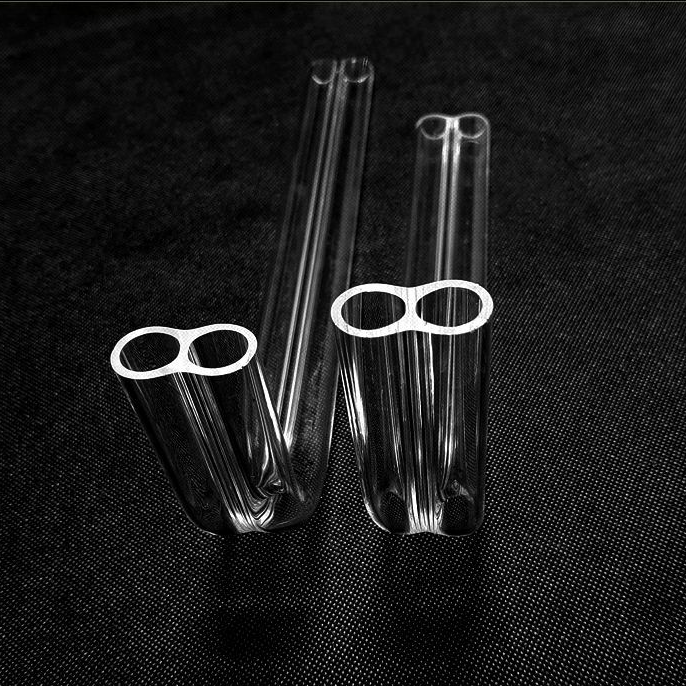
High-temperature (1100) Corrosion-resistant 99.999% Purity Ozone-Free Fused Quartz Double-tube Right-angle Elbow Bending Cutting
Oxy-hydrogen flame-bent elbow geometry with zero-bubble welded transition zones. Rated for continuous corrosive gas containment up to 1100°C.
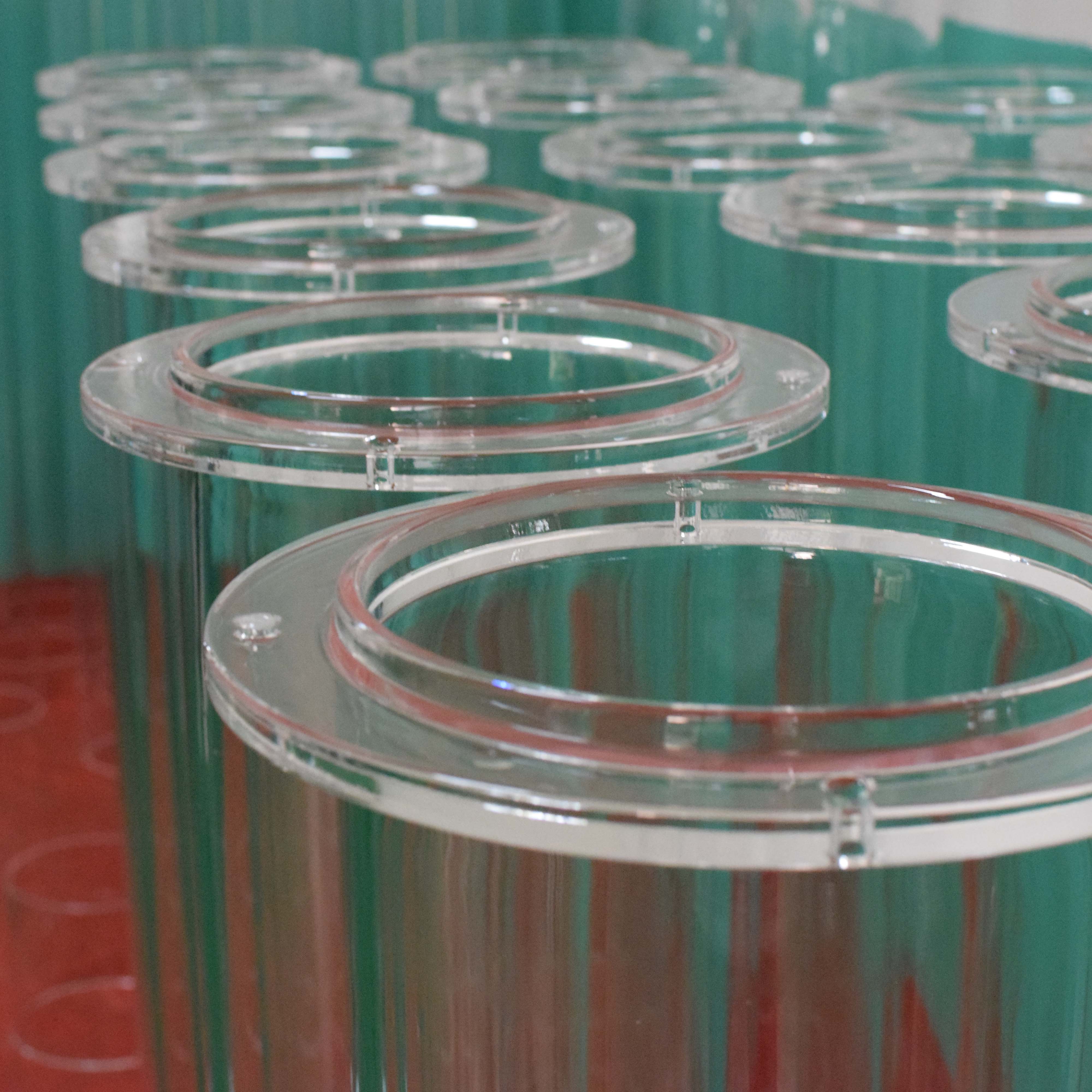
High Purity 99.999% Single Crystal Quartz Glass Tube Flange Re-feeder Container Welding Bending Cutting Ozone Free Quartz
Optical-finish ground sealing face with vacuum-grade fused joint. Specifically deployed in automated re-feeder systems and reactor vacuum ports.
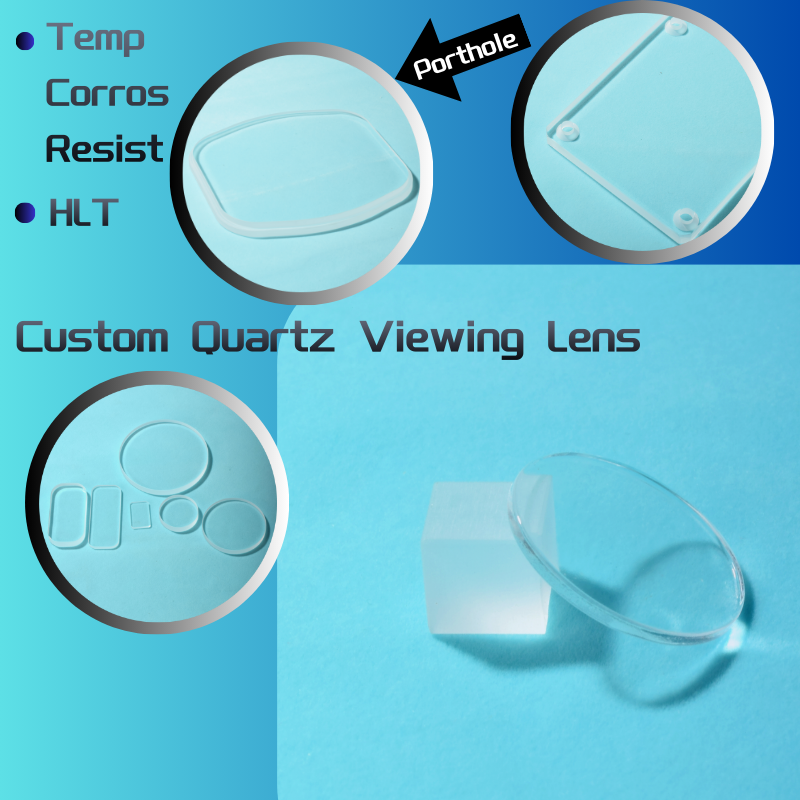
SJ SJ 126 Natural Fused Quartz Square Thin Glass Slide Optics-High Transparency Precision Laboratory Use High Purity Cutting
Double-sided precision lapping yielding >90% transmission at 260–2500 nm. Ideal for spectroscopy and high-temperature optical viewing windows.
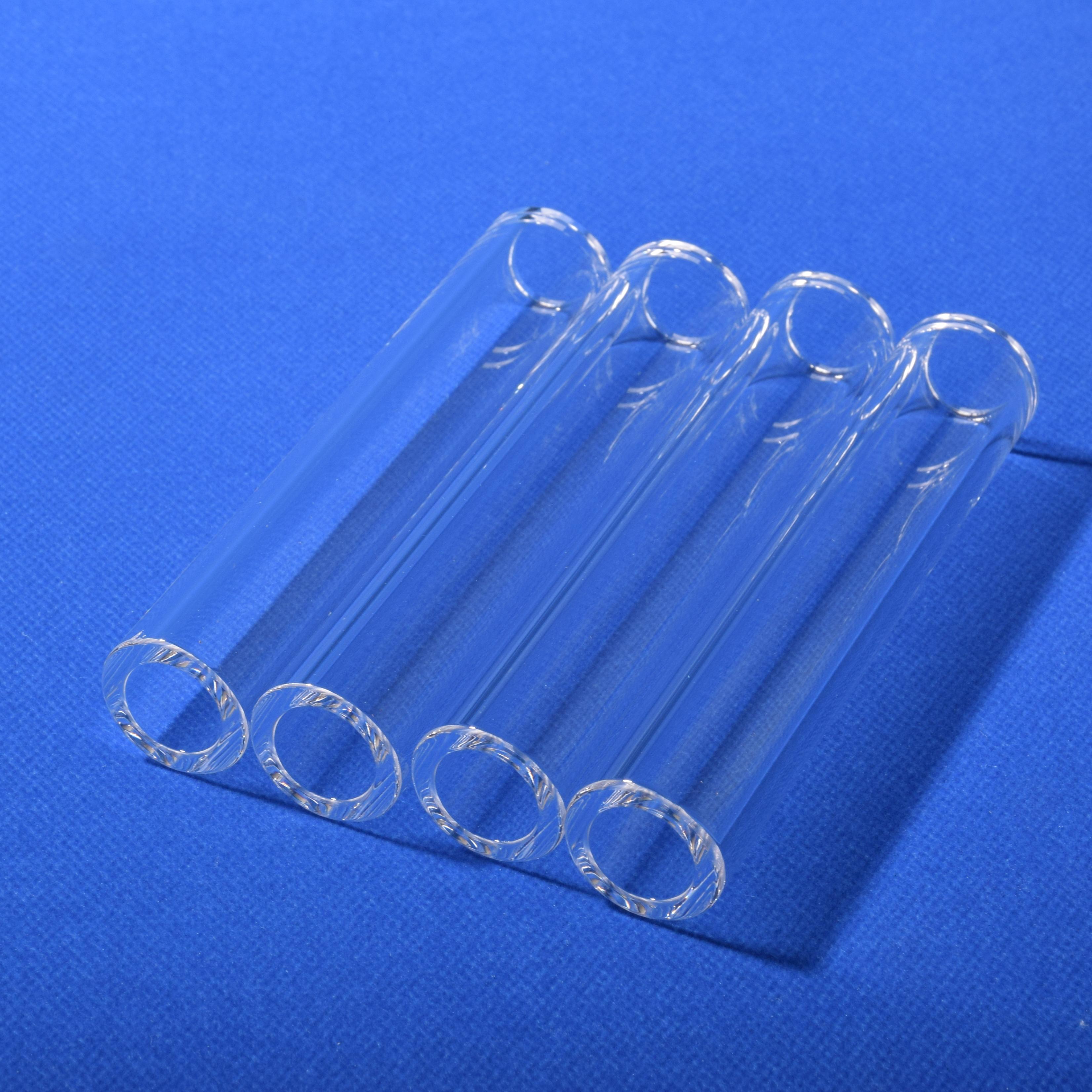
SJ 150 Translucent Oversized Thick Wall Polished Quartz Tube Heat Resistant 1100 Corrosion Resistant Ozone Free Welding
Heavy-gauge structural wall thickness engineered to counteract mechanical deflection and furnace sagging during sustained vacuum thermal processing.
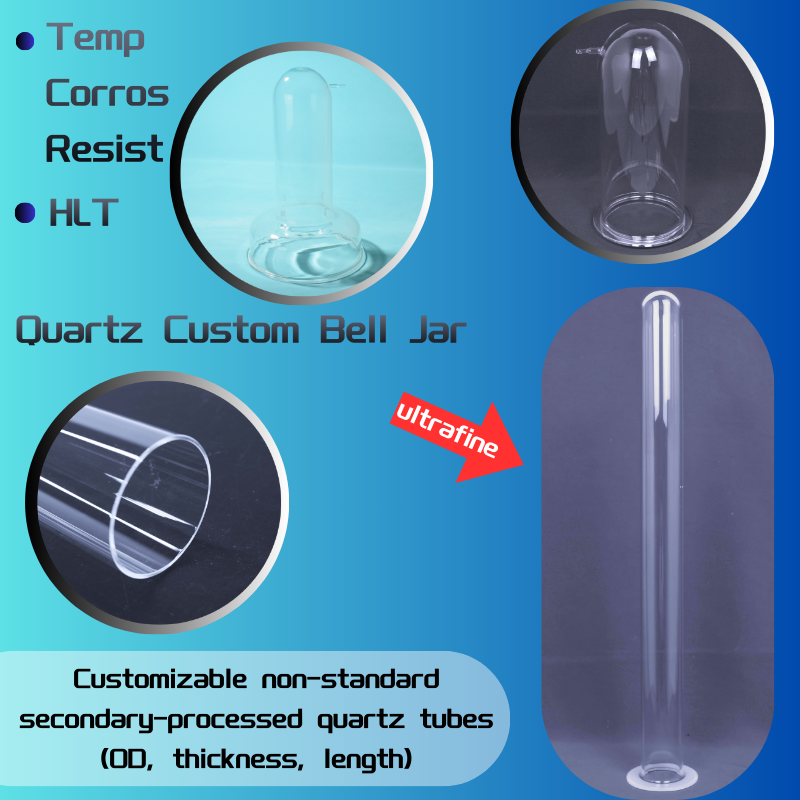
SJ 130 QUARTZ Clear Customizable High-Precision Quartz Negative Pressure Leak-Proof Vacuum Tube 99.99% SiO2 Semiconductor
Helium leak tested to 1×10&supmin;&sup9; mbar·l/s with micron-scale dimensional roundness. Optimized for low-pressure chemical vapor deposition (LPCVD).
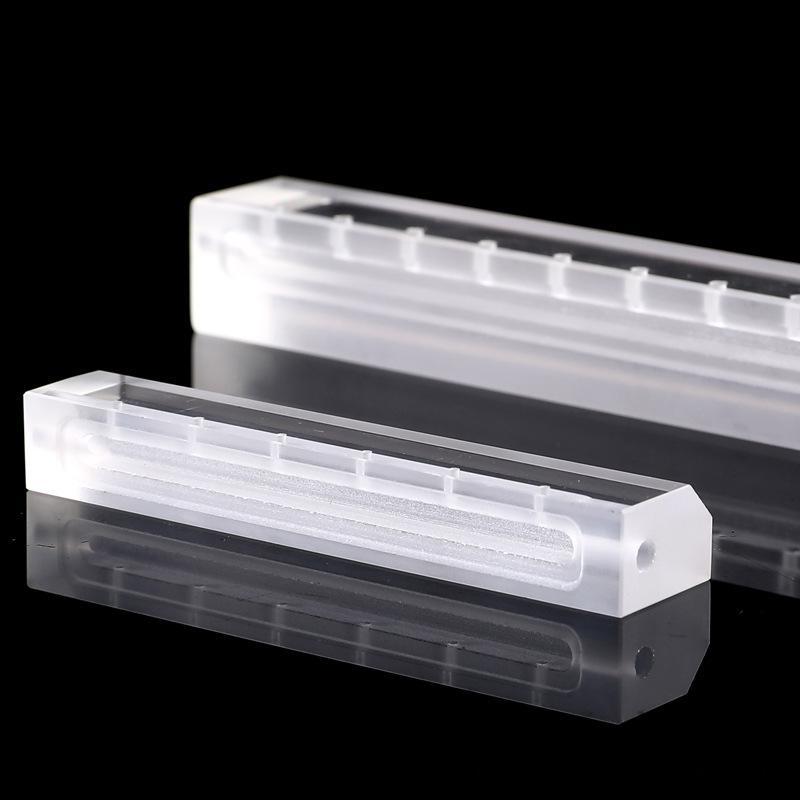
Clear Quartz Testing Sheet Ultra-thin Optical Grade Circular Shape SJ Brand Model SJ 077 High Thermal Conductance Welding
Micro-machined disk substrates down to 0.2 mm thickness with minimal internal striations and pristine surface roughness (Ra < 0.5 nm).
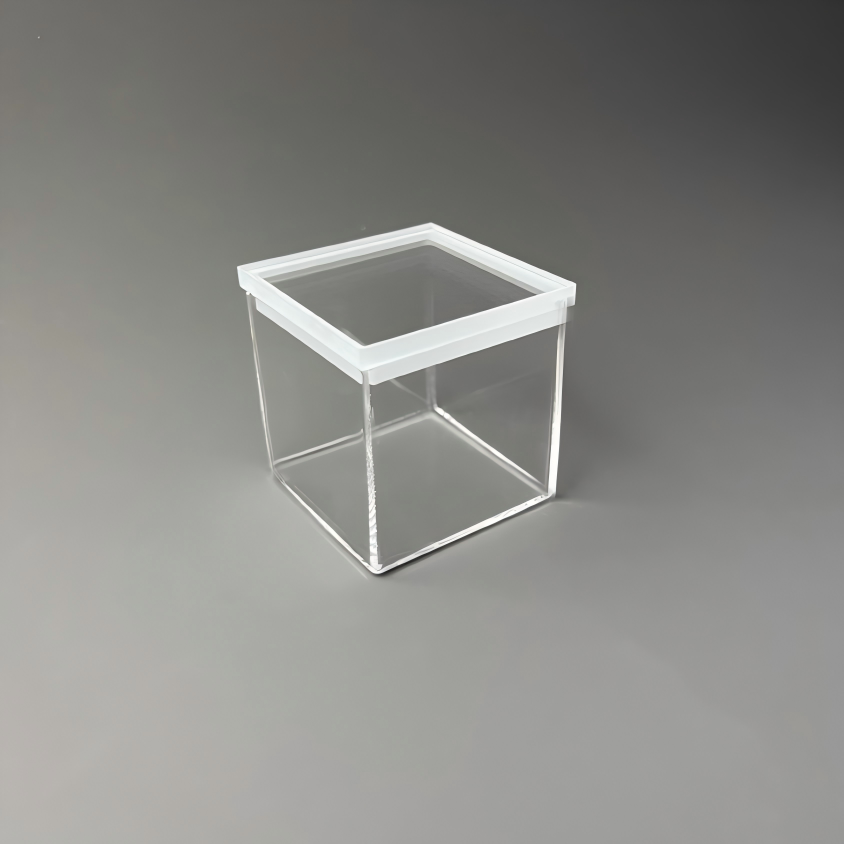
Quartz Glass Sealed Electrolytic Cell Dome Closed End Custom Dimensions Photocatalytic Photoelectrochemical Ozone Free Polished
Hermetically sealed domed quartz cell designed for water electrolysis, hydrogen fuel research, and analytical UV-photocatalytic degradation testing.
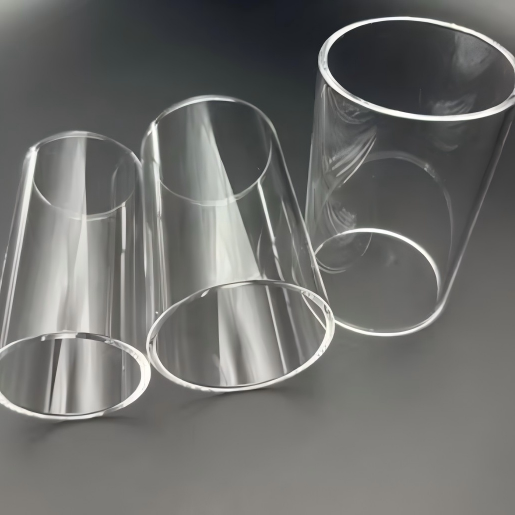
High Temperature Transparent Polished Ozone Free One End Closed Quartz Tube 5-800mm Diameter Bending Welding Cutting
Seamless hemispherical or flat-bottom closure. Standard diameters from 5 mm to 800 mm, configured for pyrometer sheaths and immersion thermocouples.
Engineering Credentials & Traceable Quality Metrics
Vulra Quartz combines raw mineral deposits in Donghai with automated oxy-hydrogen flame lathes and CNC cold diamond machining to meet the exact specifications of the European market.
Technical Whitepaper: Physicochemical Properties & Trace Impurity Limits
Understanding trace elemental composition is vital for Miskolc metallurgy and semiconductor vacuum furnace installations where ion diffusion causes premature failure or contamination.
| Property Parameter | High-Purity Natural Quartz (Standard) | Semiconductor Grade 99.999% (Vulra SJ-Series) | Test Methodology / Standard |
|---|---|---|---|
| Silicon Dioxide (SiO&sub2;) Content | ≥ 99.99 % | ≥ 99.999 % | X-ray Fluorescence (XRF) / ICP-OES |
| Hydroxyl (OH¯) Content | ≤ 20 – 30 ppm | ≤ 5 ppm (Vacuum Annealed, Non-bubbling) | FTIR Spectrometry (2.73 μm absorption) |
| Iron (Fe) Impurity | ≤ 0.8 ppm | ≤ 0.05 – 0.1 ppm | Inductively Coupled Plasma Mass Spectrometry (ICP-MS) |
| Aluminum (Al) Impurity | ≤ 12.0 ppm | ≤ 3.0 – 5.0 ppm | ICP-MS Method DIN 51086 |
| Alkali Metals (Na, K, Li total) | ≤ 2.5 ppm | ≤ 0.3 – 0.5 ppm | Prevents High-Temp Devitrification (Cristobalite growth) |
| Coefficient of Thermal Expansion (CTE) | 5.5 × 10&supmin;&sup7; / °C (20°C – 320°C) | 5.4 × 10&supmin;&sup7; / °C (Zero micro-cracking) | Dilatometric Measurement |
| Max Short-term Thermal Resistance | 1350 °C | 1450 °C (Peak withstand ≤ 2 hours) | High-Temperature Vacuum Soak Test |
| Continuous Operating Temperature | 1050 °C | 1150 °C | Tube Furnace Continuous Exposure Test |
High-Purity Quartz Glass in Miskolc: Engineering Integration & Applications
Miskolc, the historic heart of Hungarian heavy metallurgy, has transformed into a strategic European hub for mechatronics, battery materials, and chemical processing. Fused quartz tubing serves as a core enabling component across these local industry sectors.
Advanced Metallurgy & University of Miskolc R&D
Miskolc maintains deep domain leadership in metallurgical sciences, led by the Faculty of Materials and Chemical Engineering at the University of Miskolc (Miskolci Egyetem). As traditional steelmaking evolves into technical alloy development, titanium powder metallurgy, and additive manufacturing wire synthesis, process chambers require reliable transparent containment.
Vulra's SJ-150 thick-wall quartz tubes and closed-end pyrometer sheaths serve induction furnaces and hot isostatic pressing (HIP) calibration jigs. High-temperature resistance to 1100°C continuous and negligible thermal expansion allow instantaneous molten metal sampling and optical pyrometry without risking tube fracture.
- Vacuum induction melting (VIM) observation sightports.
- Custom thermal analysis crucibles and high-purity single crystal boats.
- Direct thermal shock quenching from 1100°C into cold water baths.
EV Battery Materials & Chemical Corridors
The Northern Hungary industrial corridor—connecting Miskolc, Kazincbarcika (BorsodChem), and Tiszaújváros—is a primary center of Eastern European specialty chemicals and lithium battery cathode/anode production. Battery precursor synthesis demands inert calcination tubes that emit zero ionic contamination.
Alkali metal contamination (≤ 0.5 ppm Na, Li, K) in Vulra's 99.999% fused silica tubing prevents premature devitrification when exposed to corrosive lithium hydroxides and cobalt sulfates. Tube furnace liners isolate active cathode chemistries from heating coils, preventing micro-scale contamination.
- Rotary and horizontal quartz reactor tubes for NCM/LFP precursor drying.
- Sealed quartz electrolytic cells for electrochemical cell degradation studies.
- Corrosion-proof acid digestion vessels and condenser tubes for analytical QC.
Automotive Mechatronics & Cleanroom UV Curing
The Miskolc Mechatronics Industrial Park hosts global automotive tier-1 suppliers producing electric powertrains, sensors, and steering systems. Clean manufacturing in these facilities requires infrared (IR) heating modules and high-intensity ultraviolet (UV) curing stations.
Vulra's ozone-free quartz tubing incorporates precise titanium doping to truncate vacuum-UV wavelengths below 220 nm. This eliminates ambient ozone generation while sustaining 90%+ transmission in the 254 nm and 365 nm bands, ensuring operator safety and preventing degradation of delicate automotive optics and conformal coatings.
- High-intensity UV adhesive curing lamps for micro-electronic sensor bonding.
- Twin-tube quartz infrared emitters for paint drying and composite thermoforming.
- High-precision negative pressure vacuum chambers for hermetic sealing validation.
Regional Trends Shaping Quartz Sourcing in Northern Hungary
Analyzing the industrial, regulatory, and technical shifts across Miskolc, Debrecen, and the wider Borsod region driving direct factory quartz glass procurement.
Transition Toward Decarbonized Metallurgy & Green Hydrogen
Under Hungary’s National Clean Development Strategy and Horizon Europe framework initiatives, Miskolc metallurgical research facilities are retooling for hydrogen-plasma reduction of iron ore and green steel fabrication. Hydrogen reduction furnaces require quartz reactor vessels capable of sustained 1150°C service without reacting with reducing gases.
Fused silica’s exceptional chemical inertia ensures it remains non-reactive in high-pressure hydrogen and carbon monoxide atmospheres. Vulra provides welded gas manifolds, flanged double-tube right-angle assemblies, and customized photoelectrochemical testing domes that empower engineering teams in Miskolc to lead regional decarbonization trials.
Supply Chain Regionalization & Direct Factory OEM/ODM Sourcing
Industrial procurement in Borsod-Abaúj-Zemplén has faced escalating price volatility from domestic and European intermediaries. As production runs become more tailored, plant managers increasingly bypass local distributors to partner directly with certified original equipment manufacturers.
By connecting directly with Vulra Quartz's engineering team, Miskolc facilities secure TÜV Rheinland-verified production tolerances (±0.05 mm on precision diamond cuts), custom CAD drawing validation within 24 hours, and substantial cost advantages for batch consumable replacements (such as tube furnace combustion boats and observation windows).
Why Miskolc Facilities Partner with Lianyungang Vulra Quartz
Combining primary mineral reserves from Donghai—the world's crystal capital—with full-cycle hot and cold quartz processing under one roof.
Direct Donghai Mineral Integration
Situated in Donghai County, China, Vulra Quartz sources silica directly from high-purity natural crystal sand reserves. This direct access guarantees consistent SiO&sub2; purity (≥99.99% to 99.999%), minimizing metallic contamination (Al, Fe, Ti < 5 ppm combined) across every manufacturing batch delivered to Europe.
Integrated Hot & Cold Machining
We eliminate subcontractor delays by consolidating flame blowing, oxy-hydrogen CNC lathe welding, automatic grinding, diamond wire sawing, drilling, and optical polishing in a single certified production facility. Seamless transitions ensure tight geometric tolerances and rapid turnaround.
TÜV Rheinland On-Site Verification
Our production facilities, commercial status, and custom production lines are thoroughly inspected on-site by TÜV Rheinland. Products comply with CE marking requirements and EU RoHS Directive 2011/65/EU, ensuring compliant industrial operation within Hungary and the wider EU.
Precision Annealing & Stress Relief
Every welded or flame-shaped component undergoes cycle annealing in programmable electric kilns to relieve internal thermal stresses. Polarization analysis ensures residual optical path difference ≤ 5 nm/cm, preventing mechanical failure under rapid temperature cycling.
Export-Grade Shockproof Packaging
Fragile quartz tubing requires specialized packaging for long-distance transport to Central Europe. We pack each piece with custom shock-absorbent EPE foam nests, vacuum-sealed interior wraps, and reinforced multi-layer honeycomb cartons or ISPM-15 compliant export plywood crates.
Drawing-to-Part Rapid Prototyping
From university research inquiries at Miskolci Egyetem to high-volume manufacturing lines, our engineering desk accepts DWG, DXF, STEP, or hand-dimensioned PDF drawings. We provide DFM (Design for Manufacturability) reviews within 24 hours, with initial sample runs from just 1 piece.
Frequently Asked Questions: Sourcing Quartz Tubing in Miskolc
Clear, practical answers prepared by our production and logistics engineers for Hungarian purchasing departments, research staff, and OEM technical teams.
What is the standard delivery timeline and customs procedure for shipments to Miskolc, Hungary?
How do Vulra quartz tubes resist high-temperature furnace sagging and devitrification?
What are the mechanical and dimensional tolerances achievable on custom fabricated tubing?
Can our engineers order customized prototypes in quantities as low as 1 piece?
What are the key technical criteria when choosing between clear fused quartz and synthetic fused silica?
- Clear Fused Quartz (Natural, e.g., Vulra SJ-Series): Sourced from natural crystal sand. Offers higher viscosity, higher softening point (1683°C), and superior sagging resistance at temperatures above 1000°C. It is the cost-effective and structurally durable choice for thermal tube furnaces, chemical diffusion reactors, pyrometry, and general industrial sight glasses.
- Synthetic Fused Silica: Synthesized by chemical vapor deposition using silicon tetrachloride gas precursors. It provides superior deep-UV transmission down to 185 nm and negligible metallic trace impurities (< 0.1 ppm total), making it ideal for deep-UV lithography optics, excimer laser windows, and specialized sub-nanometer semiconductor processing.
How are zero-breakage deliveries guaranteed across long-distance freight to Borsod-Abaúj-Zemplén?
Connect with Our Quartz Technical Team for Miskolc Projects
Whether you need an urgent replacement for an analytical furnace tube, a CAD-engineered double-flanged chemical reactor, or volume pricing for standard transparent quartz tubing, our engineering team provides rapid DFM reviews and detailed quotations.
Send an Inquiry