Featured Precision Fused Quartz Tubing & Components
Precision-drawn transparent tubing, thick-walled reaction tubes, BET sorption vessels, and custom quartzware fabricated to European DIN & ISO tolerances for direct delivery to Salzburg and Upper Austrian industrial centers.
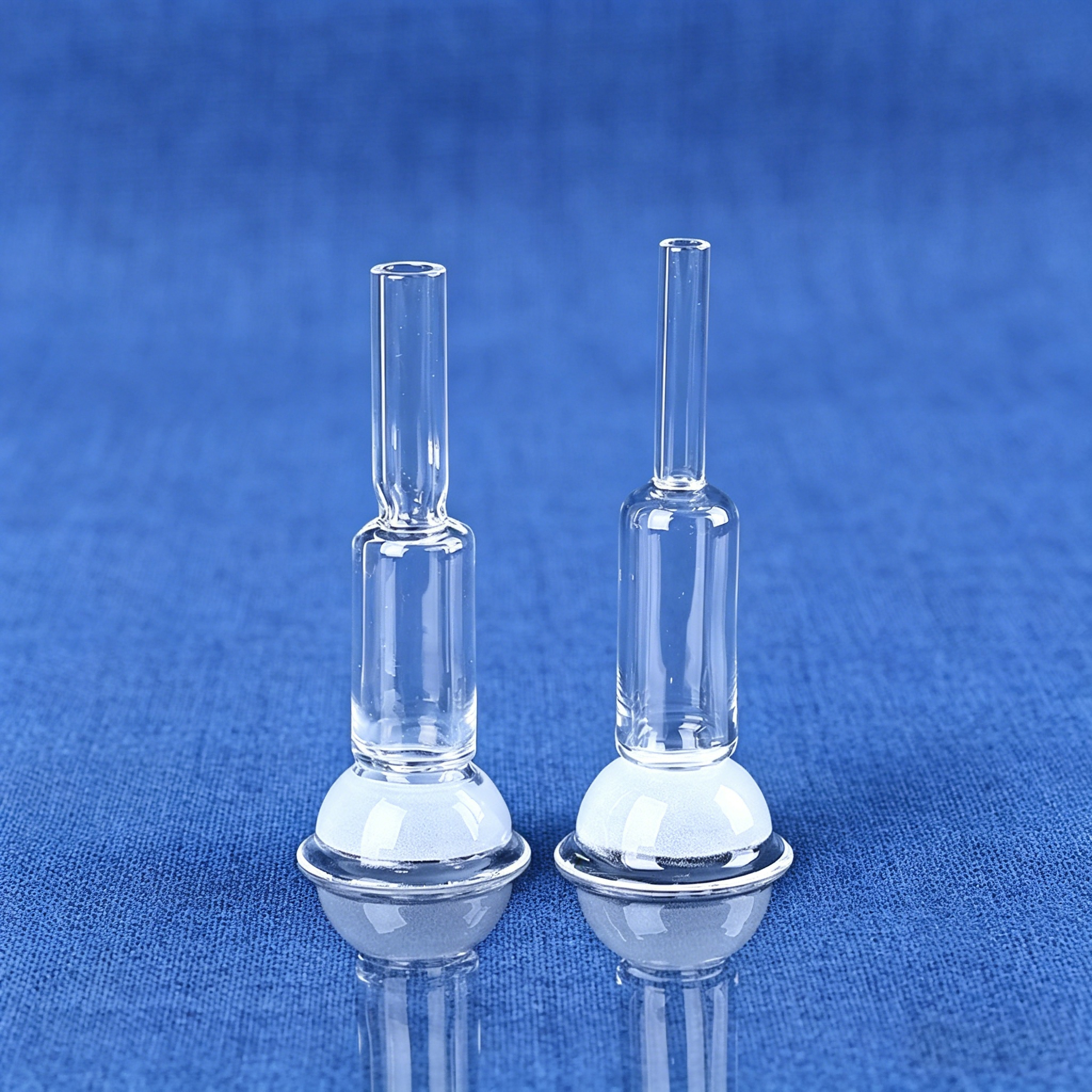
Precision C-shaped small-sized sorption tube designed for high-vacuum gas physisorption and chemisorption up to 1100°C.
View Details
High-tensile strength (48 N/mm²) fused quartz crucible bowl with 1683°C softening point for clean semiconductor metal melting.
View Details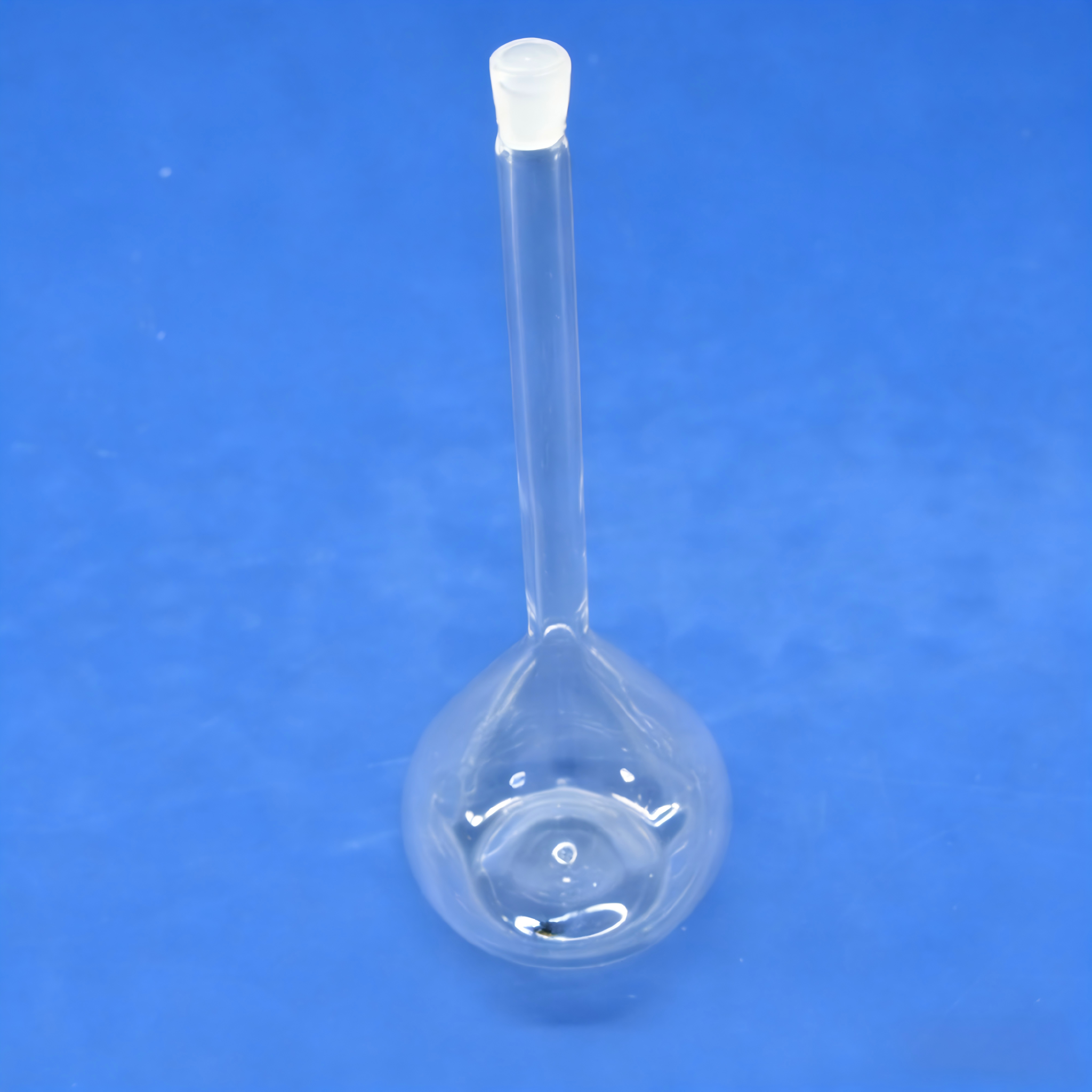
Fire-polished ozone-free clear quartz ampoules and customized boiling flasks for sample sealing, crystallization, and reflux.
View Details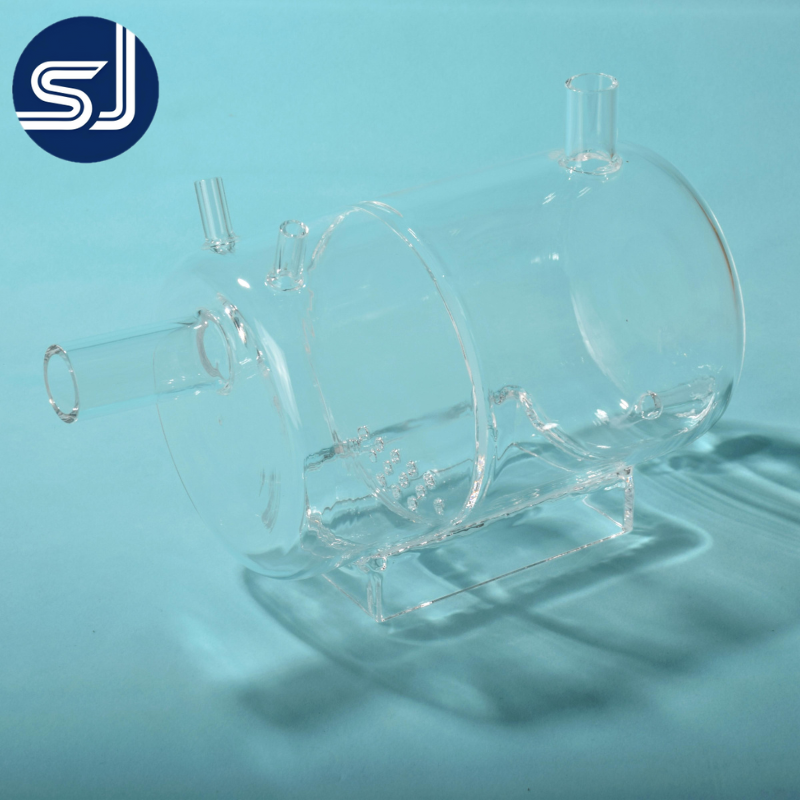
Multi-port acid corrosion-resistant splitting bottle with >85% optical clarity for laboratory gas distribution and fractional distillation.
View Details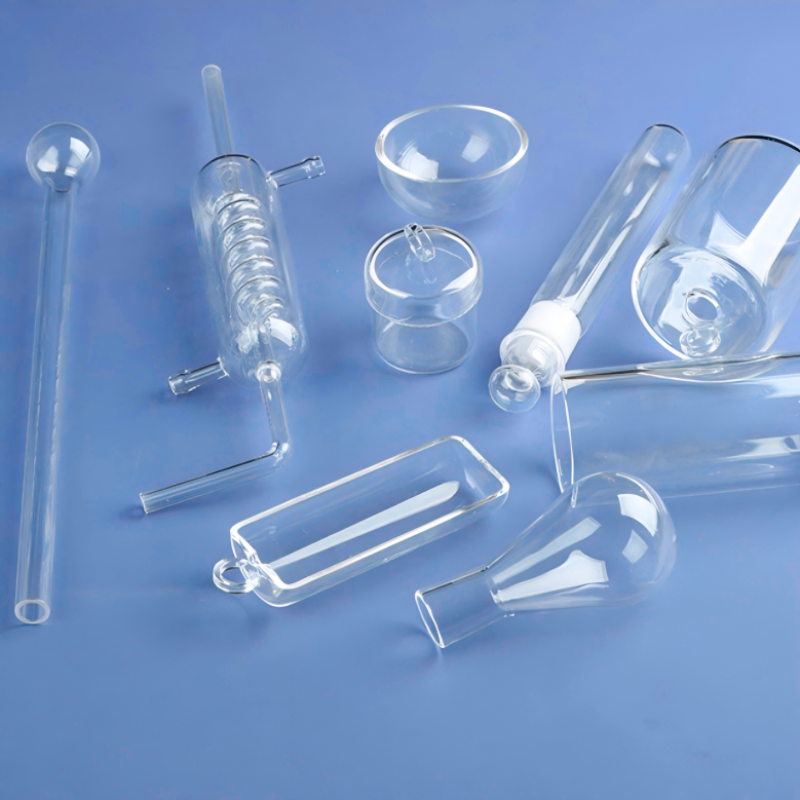
High-frequency transparent sealing rod and combustion test boat for horizontal tube furnaces operating at extreme thermal gradients.
View Details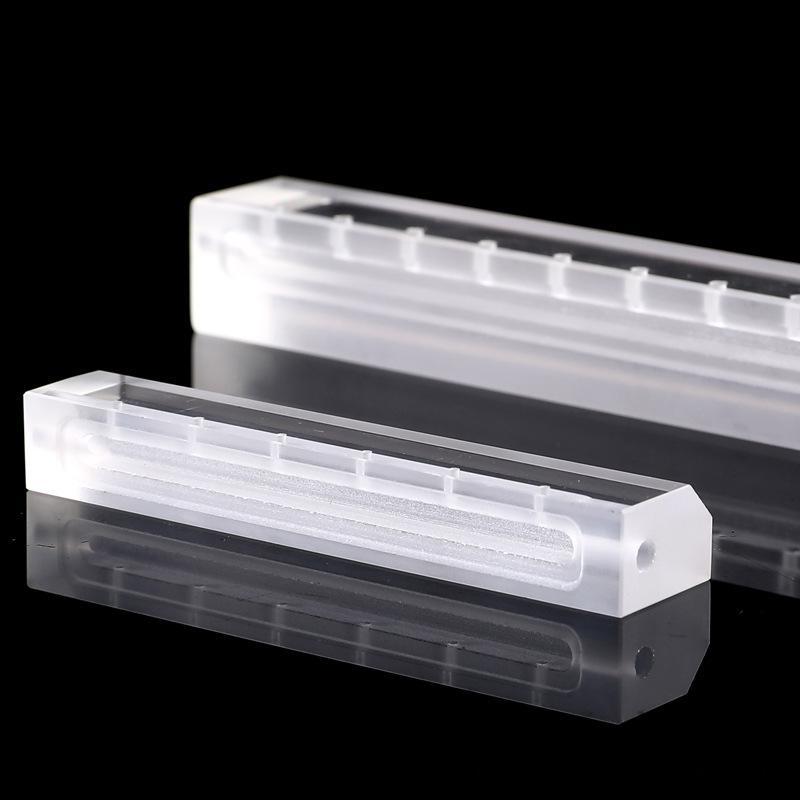
Parallel ground, double-sided polished circular inspection disks with high UV-Vis transmission for spectrometry and laser observation.
View Details
Micro-porous sintered 400-mesh quartz disc assemblies for semiconductor etching baths, aggressive acid filtration, and CVD reactors.
View Details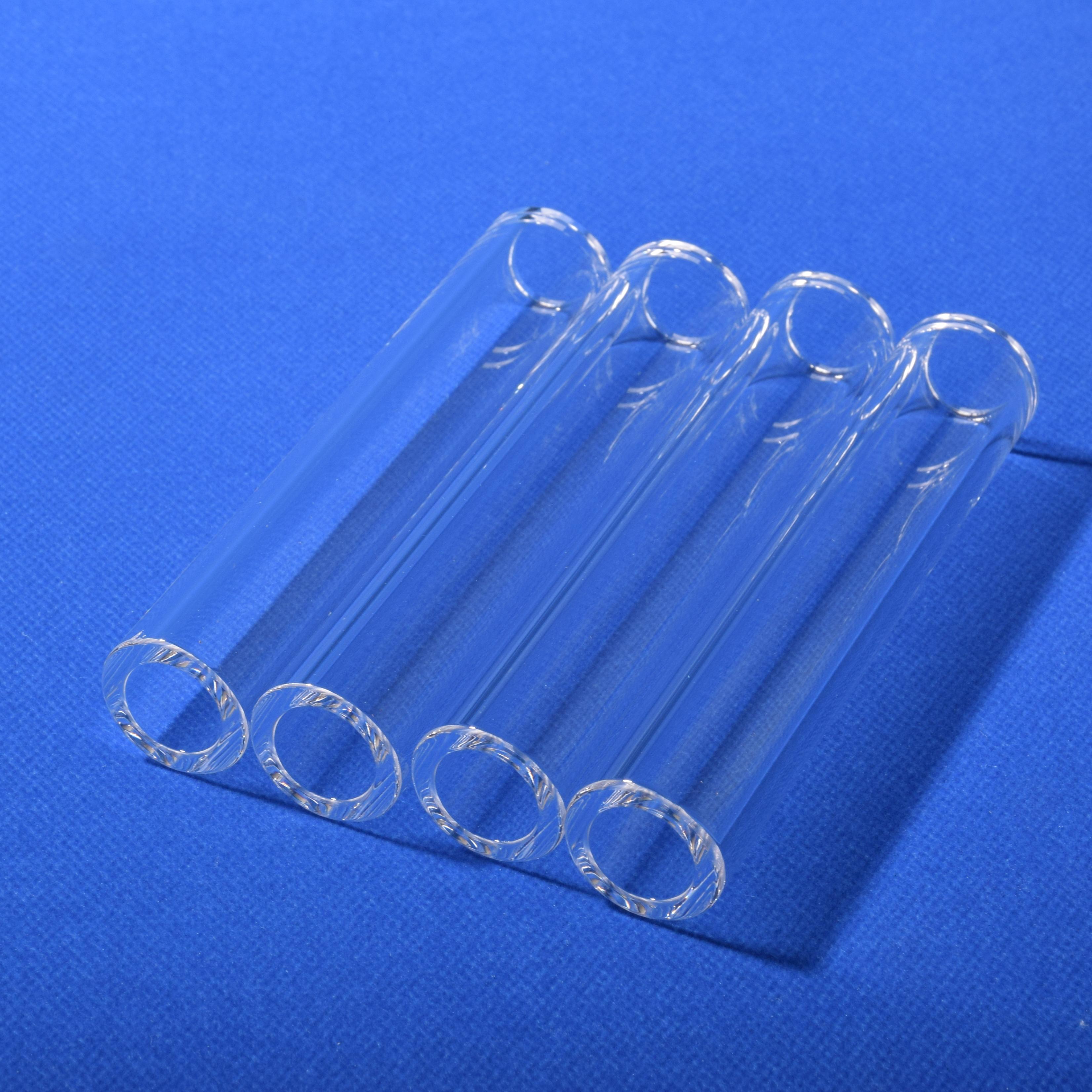
Heavy-wall transparent and translucent quartz process tube engineered for large-bore thermal diffusion, vacuum calcination, and ozone systems.
View DetailsTechnical White Paper: The Thermodynamic & Optical Integrity of Transparent Quartz Tubing
In modern industrial and academic environments across the Salzburg metropolitan area and neighboring Upper Austrian technological corridors, process reliability hinges on eliminating chemical cross-contamination and withstanding catastrophic thermal shocks. Transparent quartz tubing (fused silica) manufactured by Vulra Quartz is synthesized by fusion of naturally occurring high-purity crystalline silica sand ($SiO_2$) derived from the world-renowned Donghai geological basin. The resulting amorphous matrix exhibits an ultra-low coefficient of linear thermal expansion ($\alpha = 5.5 \times 10^{-7} \text{ K}^{-1}$), permitting components to endure thermal cycles from 1100°C directly down to 20°C ambient water quenching without micro-fracturing.
Unlike borosilicate 3.3 or aluminosilicate glass types, fused quartz retains structural rigidity at temperatures exceeding 1000°C, operating below the strain point (1070°C) and annealing point (1140°C). Our transparent tubes maintain optical clarity due to our vacuum electric fusion and precision oxy-hydrogen drawing methods, which minimize visual distortion, bubble inclusions, and striations. For advanced analytical work, hydroxyl ($OH^-$) concentrations can be controlled between low-$OH$ electrically fused grades (<5 ppm to 30 ppm) to prevent infrared absorption bands at 2.73 μm, or standard flame-fused grades tailored for exceptional vacuum bake-outs and chemical inertness against volatile acids (with the exception of hydrofluoric and hot concentrated phosphoric acid).
Localized Industrial & Scientific Applications in Salzburg
Bridging university laboratories, specialized material hubs, and clean-tech manufacturing across Salzburg, Puch-Urstein, and the Bavarian-Austrian border zone.
Academic & Nanomaterials Research
Salzburg's academic landscape—anchored by the Paris Lodron University of Salzburg (PLUS) and the Department of Chemistry and Physics of Materials—demands extreme purity for synthesis reactors, BET physisorption apparatus, and high-temperature vacuum furnaces. Our transparent quartz tubes and custom C-shaped ampoules prevent background alkali ion leaching during atomic layer deposition (ALD) and nanoparticle calcination.
Clean Energy, Photovoltaics & Hydrogen
The innovation cluster encompassing Salzburg's Techno-Z innovation centers and neighboring clean-energy technology parks requires specialized transparent quartz tubing for solar cell contact firing, pyrolysis research, and green hydrogen catalytic reformers. Fused silica tubes resist thermal degradation under aggressive forming gas environments ($H_2/N_2$) at sustained operating regimes up to 1100°C.
Alpine Environmental & Gas Metrology
Salzburg’s strategic position in the Northern Limestone Alps necessitates precision optical tubing for continuous alpine atmospheric monitoring, gas chromatography, and water quality analyzers along the Salzach river. High UV transmission down to 200 nm enables reliable photolysis, total organic carbon (TOC) analysis, and mercury vapor excitation without transmission loss.
Development Trends Driving Quartz Tubing Procurement in Western Austria
The industrial ecosystem around Salzburg and the broader Central European supply chain is undergoing profound shifts driven by three interrelated industrial megatrends:
European Semiconductor Resilience
Under the European Chips Act, tier-2 engineering suppliers across Austria and Southern Germany are expanding localized fabrication capabilities. Salzburg machine builders increasingly specify high-purity, alkali-free ($Na, K, Li \le 1.0 \text{ ppm}$) transparent quartz tubes for wafer transport fixtures, batch cleaning carriers, and mini-environment sensor ports.
Chemical Decarbonization & Green Tech
Regional commitments to climate neutrality in the Salzburg province require chemical synthesis to transition from fossil-fired heating to electric infrared and plasma-driven cracking. Transparent quartz tubing acts as the primary envelope for radiant heating elements and microwave-plasma containment, exhibiting near-zero dielectric loss.
Rapid Prototyping & Customization
Universities and high-tech spin-offs in Salzburg no longer accept lengthy 12-week lead times for catalog-only quartz items. The market demands drawing-based direct OEM fabrication from single-piece prototypes to rapid iterative batches with verified traceability and CAD-to-flame precision.
As European compliance mandates tighten around raw material certification, Austrian industrial procurement teams prioritize suppliers with authenticated upstream sand traceability, audited environmental management systems, and direct air freight channels bypassing congested transit hubs.
Physicochemical Benchmark of Vulra Transparent Quartz
Comprehensive material metrics guaranteed under certified testing protocols (ICP-MS, GDMS, and Optical Spectrometry).
| Property Parameter | Standard Metric Unit | Vulra Transparent Quartz Value | Test Standard / Engineering Method |
|---|---|---|---|
| Bulk Chemical Purity ($SiO_2$) | wt % | $\ge 99.99\%$ to $99.999\%$ | Trace Analysis by ICP-MS / GDMS |
| Density ($\rho$) | $\text{g/cm}^3$ | $2.20 \pm 0.01$ | DIN EN ISO 1183 Helium Pycnometry |
| Thermal Expansion Coeff. ($\alpha$) | $\text{K}^{-1}$ ($20-300^\circ\text{C}$) | $5.5 \times 10^{-7}$ | Dilatometer Thermal Expansion Analysis |
| Softening Point | °C | $1683 \pm 10$ | ASTM C-338 (Viscosity $10^{7.6} \text{ dPa}\cdot\text{s}$) |
| Annealing Point | °C | $1140 \pm 10$ | ASTM C-336 (Viscosity $10^{13} \text{ dPa}\cdot\text{s}$) |
| Maximum Continuous Temperature | °C | $1100$ | Static Load High-Temp Atmosphere Test |
| Peak Intermittent Temperature | °C | $1450$ | Short-term Exposure (<30 min) |
| Tensile Strength | $\text{N/mm}^2$ (MPa) | $48 - 50$ | Four-point Bending Stress Analysis |
| Refractive Index ($n_d$) | Wavelength $\lambda = 589.3 \text{ nm}$ | $1.4585$ | Abbe Refractometry at 20°C |
| Trace Impurities: Fe / Al / Ti | ppm (wt) | $\text{Fe} \le 0.2 \,|\, \text{Al} \le 14 \,|\, \text{Ti} \le 1.1$ | Glow Discharge Mass Spectrometry |
Verified Manufacturing Excellence from Donghai's Crystal Capital
Lianyungang Vulra Quartz Products Co., Ltd. combines geographic proximity to premier high-purity quartz reserves with rigorous international quality verifications. Certified by TÜV Rheinland and conforming to CE and RoHS mandates, we serve as a dedicated OEM/ODM manufacturing partner for Austrian research institutions, industrial furnace developers, and global analytical instrument builders.
On-site evaluated manufacturing premises, cleanrooms, and testing facilities confirming authenticated production lines.
Zero hazardous substances under EU Directive 2011/65/EU; certified for cleanroom semiconductor integration.
Single-roof cold diamond grinding, CNC ultrasonic drilling, fire flame-polishing, oxy-hydrogen welding, and vacuum stress annealing.
Reinforced foam isolation packing and shock-suspended wooden crates guaranteeing breakage-free delivery directly to Salzburg addresses.
Frequently Asked Questions by Salzburg Sourcing Teams
Direct technical and logistical insights regarding custom quartz procurement, European standards, delivery timelines, and operational parameters.
How are transparent quartz tubes transported safely to Salzburg to eliminate transit breakage?
We employ a battle-tested export packaging protocol designed specifically for high-aspect-ratio glass products. Every quartz tube is acid-cleaned, DI-water rinsed, sealed in protective PE film, and encased in high-density polyethylene foam sleeves. Tubes are then nestled into individual cellular corrugated dividers and placed inside multi-wall heavy cartons or ISPM-15 compliant heat-treated wooden crates. Consignments bound for Salzburg, Linz, or Graz travel via priority air freight (DHL Express, FedEx, or air cargo via Munich or Vienna airport hubs) with full insurance and tracking, maintaining a transit breakage rate below 0.1%.
What dimensional tolerances can Vulra Quartz maintain on customized transparent quartz tubes?
Standard drawing tolerances follow DIN ISO 2768 (medium to fine grades). For precision tubes, outer diameter (OD) and inner diameter (ID) tolerances are held within $\pm 0.1 \text{ mm}$ for diameters up to $50 \text{ mm}$, and $\pm 0.5\%$ of OD for oversized tubes up to $800 \text{ mm}$. Siding wall uniformity (eccentricity) is controlled under $8\%$. End cuts can be diamond-blade sliced ($\pm 0.5 \text{ mm}$ length tolerance), ground parallel, or flame-polished with smooth rounding for O-ring and vacuum flange compression fittings.
Can you fabricate quartz components directly from our CAD drawings or step files?
Yes. Our engineering team reviews technical drawings in DXF, DWG, STEP, IGES, or PDF formats. We assess thermal-stress zones, wall thickness ratios, joint welding feasibility, and provide immediate design-for-manufacturing (DFM) feedback. Prototypes for university laboratories (e.g., Paris Lodron University of Salzburg) and start-up pilot lines can be produced starting from just 1 piece without retooling surcharges.
What is the difference between standard clear fused quartz and ozone-free quartz tubing?
Standard transparent fused quartz transmits deep ultraviolet light down to approximately 180 nm, meaning the 184.9 nm spectral emission line of mercury passes through and ionizes oxygen ($O_2$), generating ozone ($O_3$). Ozone-free quartz tubing is doped with trace rare-earth elements (such as titanium) during fusion. This doping introduces a steep optical cut-off band absorbing wavelengths below 220 nm while maintaining maximum transmittance at 253.7 nm for UV disinfection and curing lamps. This prevents toxic ozone accumulation in unventilated laboratory or production spaces.
How does Vulra handle Austrian import customs duties and VAT for corporate clients?
We accommodate standard Incoterms including EXW, FOB, CIF, DAP, and DDP (Delivered Duty Paid). For DDP shipments to corporate or institutional buyers in Salzburg, all customs clearance procedures, Austrian import sales tax (EUST), and customs tariffs (under HS Code 7002.31 for fused quartz tubes) are handled seamlessly by our international carrier network, delivering right to your facility’s goods-receiving bay with complete commercial documentation and Certificates of Analysis (COA).
How should transparent quartz tubing be cleaned and prepared before high-vacuum operation?
Prior to high-temperature or ultra-high vacuum (UHV) service, quartz tubes should be wiped with electronic-grade isopropyl alcohol or ethanol to remove skin oils and dust. For thorough chemical de-greasing, immersion in a 5% to 10% hydrofluoric (HF) acid bath for 2–3 minutes followed by immediate rinsing in deionized water ($18.2 \text{ M}\Omega\cdot\text{cm}$) removes surface contaminants. Once dried, components should be handled exclusively with lint-free lint gloves. Avoid contact with bare hands, as sodium ions from perspiration cause localized surface devitrification (cristobalite crystal growth) at temperatures above 1000°C.
Request Technical Specs & Rapid Factory Quotations
Connect directly with our precision quartz glassblowing engineers. Whether you need standard OD transparent furnace tubes or complex custom quartzware fabricated to your CAD drawing, our engineering desk guarantees technical reviews and competitive pricing within 24 hours.