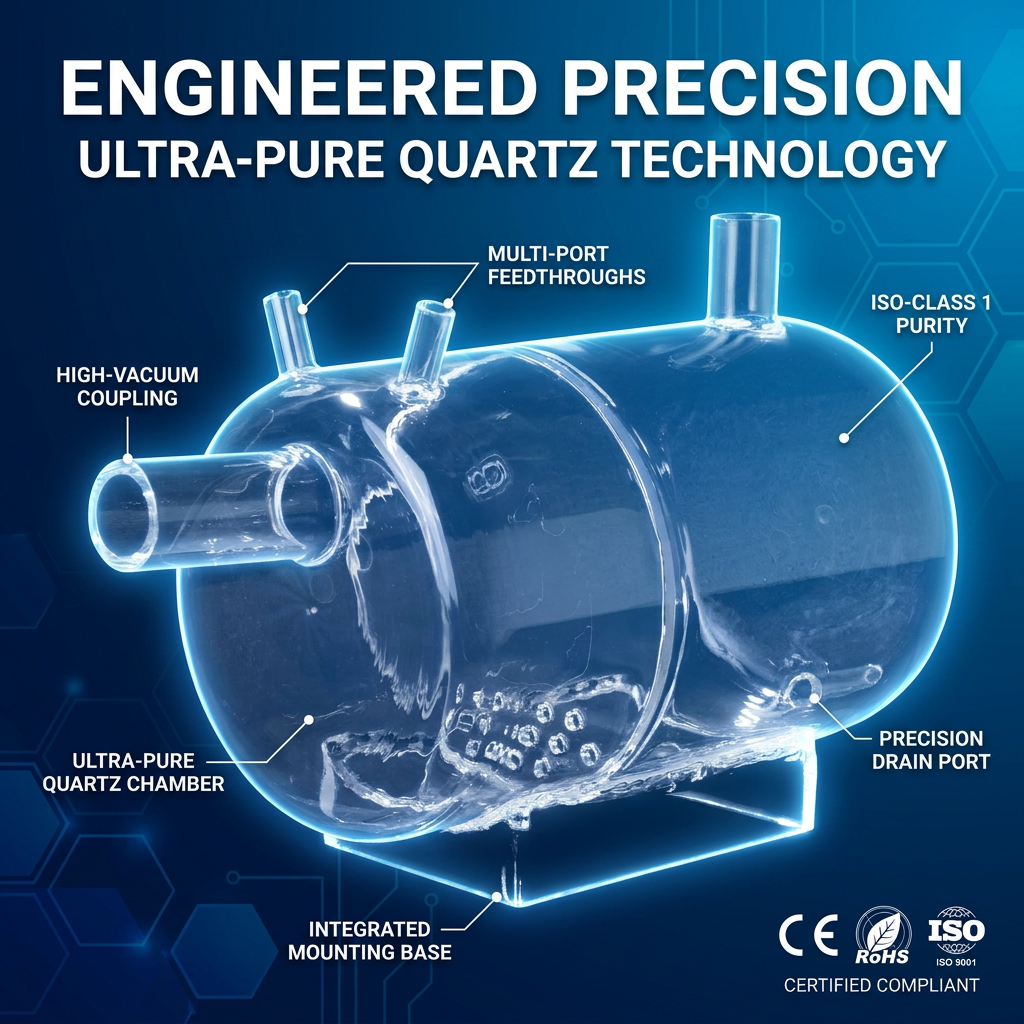
Semiconductor Grade
Customized Precision Quartz Separating Container
99.9%-99.999% high-purity chemical glassware designed for ultra-clean separation and inspection ports.
Engineered to handle extreme thermal gradients, mechanical vacuum loads, and aggressive chemical atmosphere in industrial furnace sight ports.
99.9%-99.999% high-purity chemical glassware designed for ultra-clean separation and inspection ports.
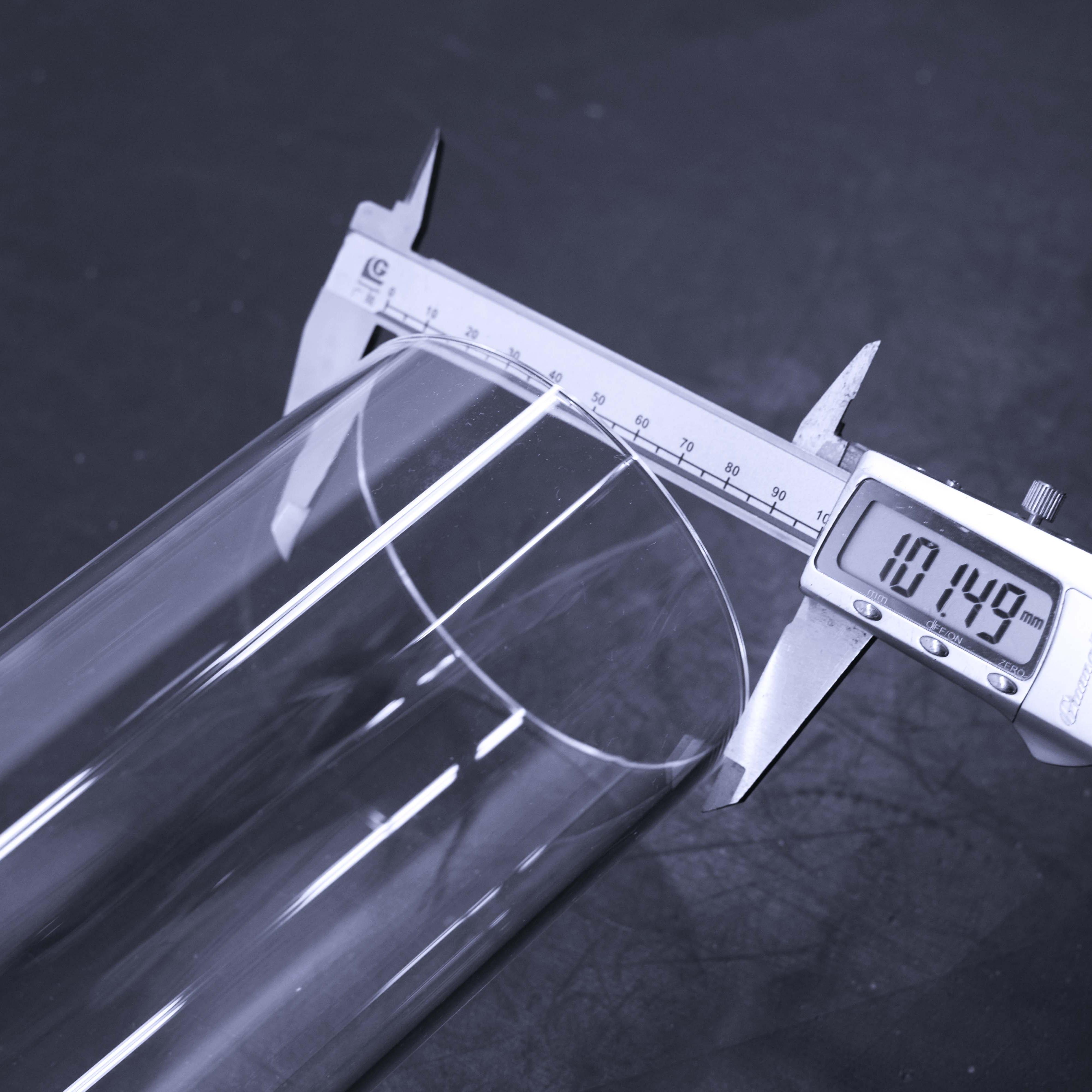
Hollow clear quartz tube with superior thermal shock resistance, bending, and customizable wall thickness.
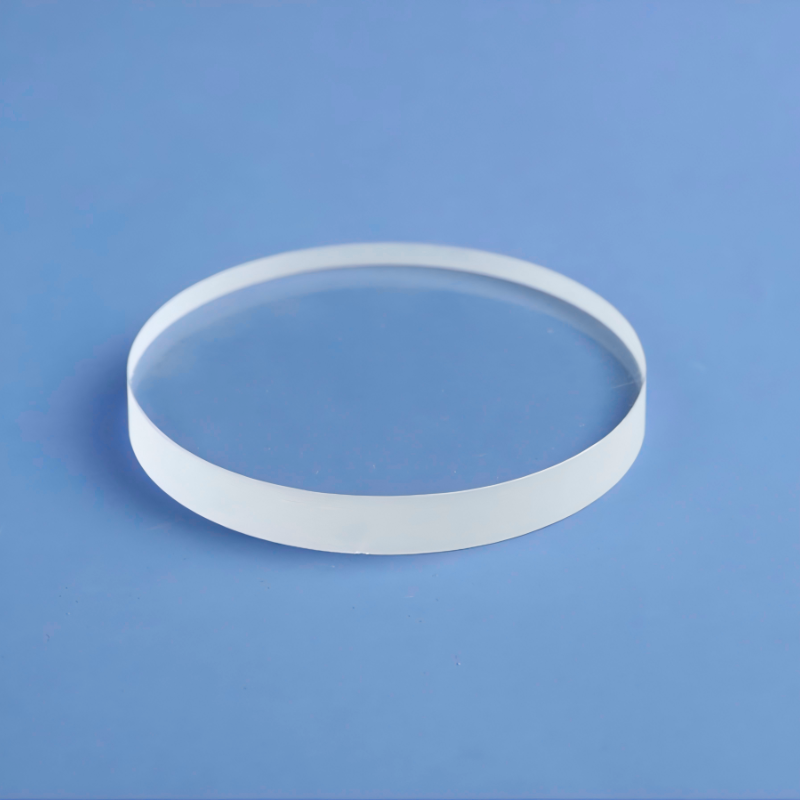
Optically polished fused silica tablets delivering unhindered infrared transmission for pyrometry optics.
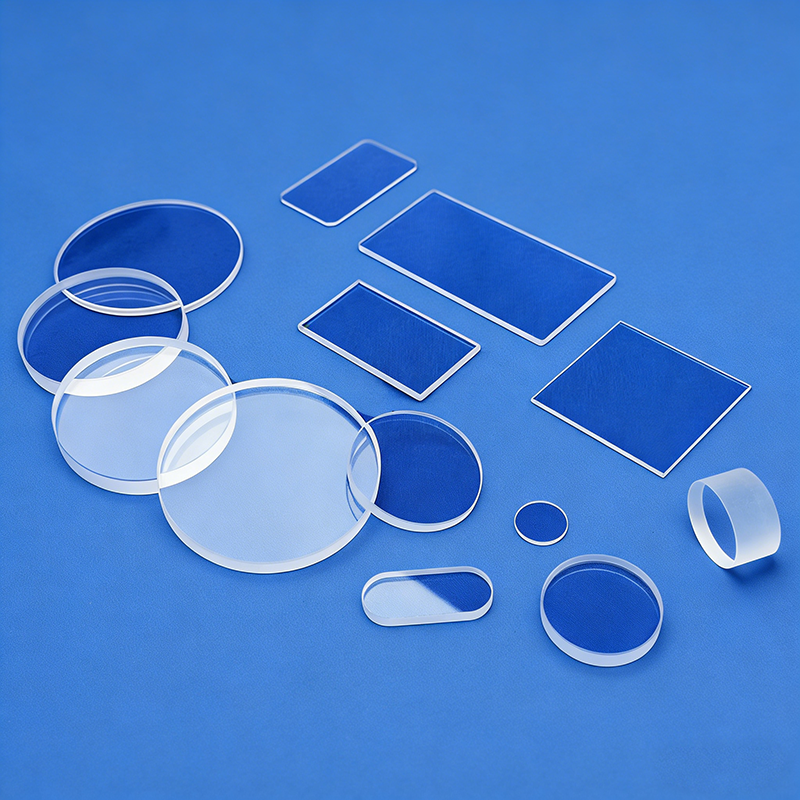
Arc-welded and laser-cut high-purity flat panels for specialized heat radiation shielding and lab isolation.
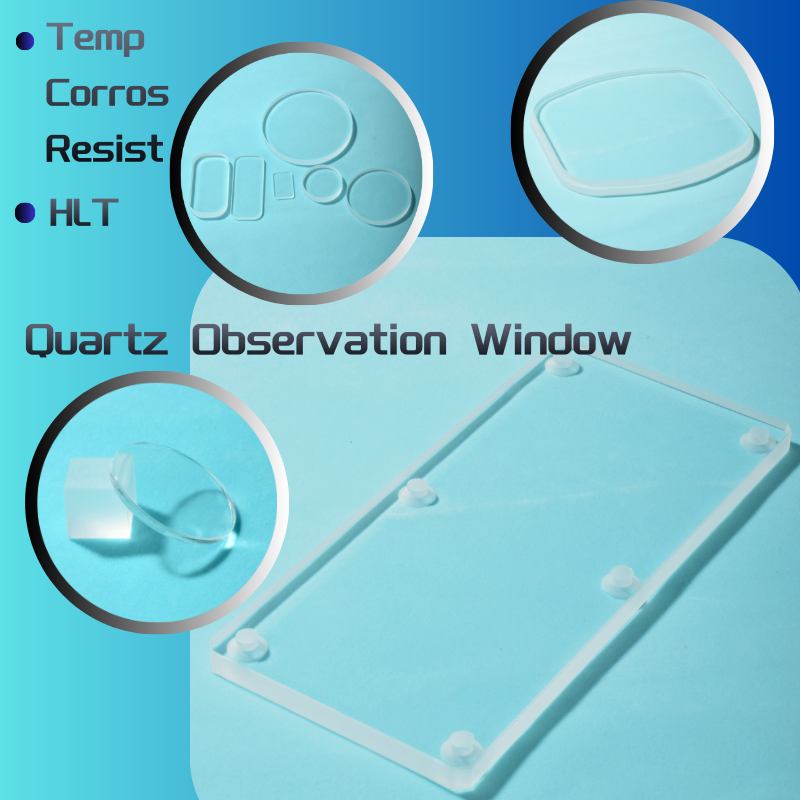
Double-sided optical polishing yielding zero wave-front distortion, perfect for thermal imaging infrared pyrometers.
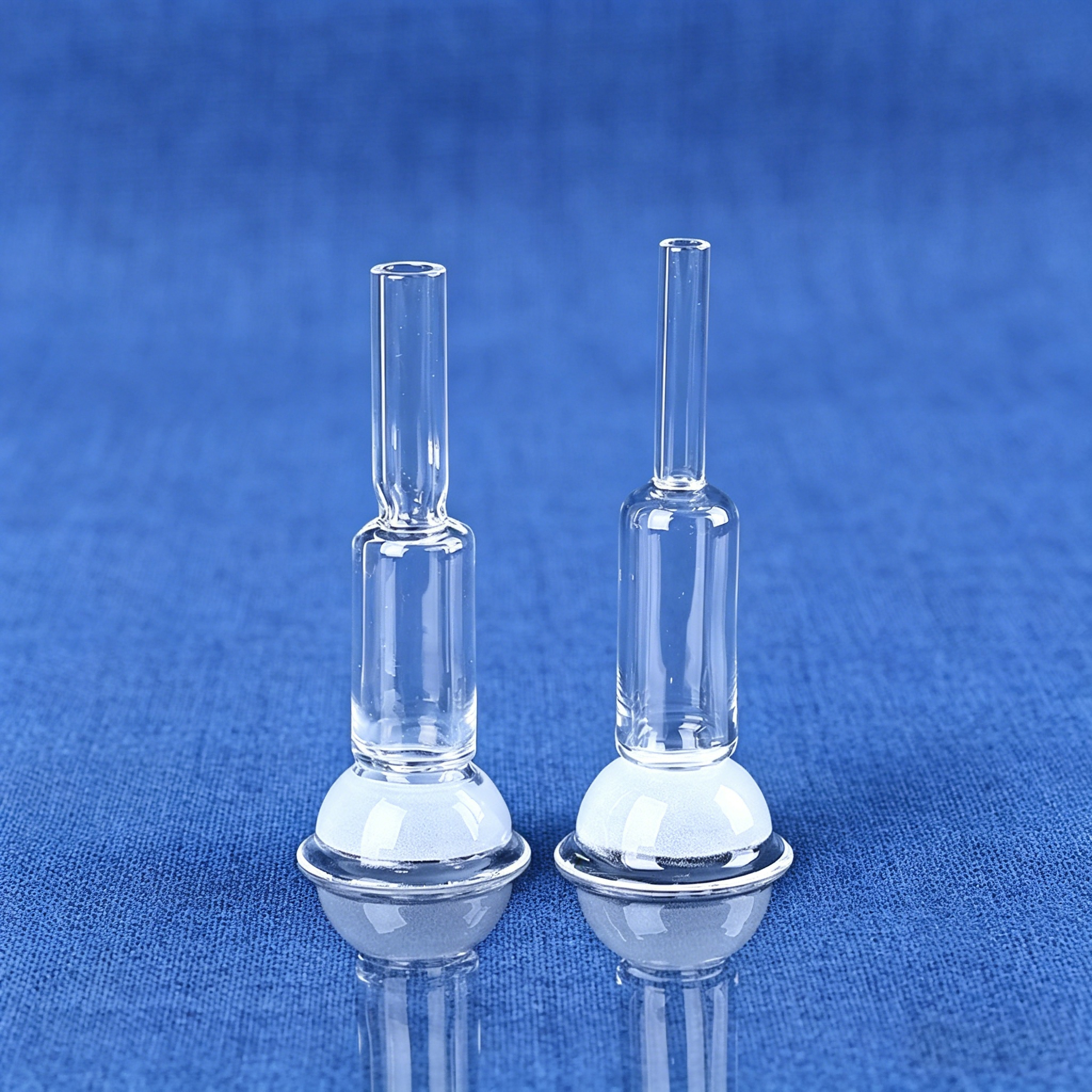
Precision welded and bent configuration rated to 1100 °C continuous service for gas adsorption and analyzer setups.
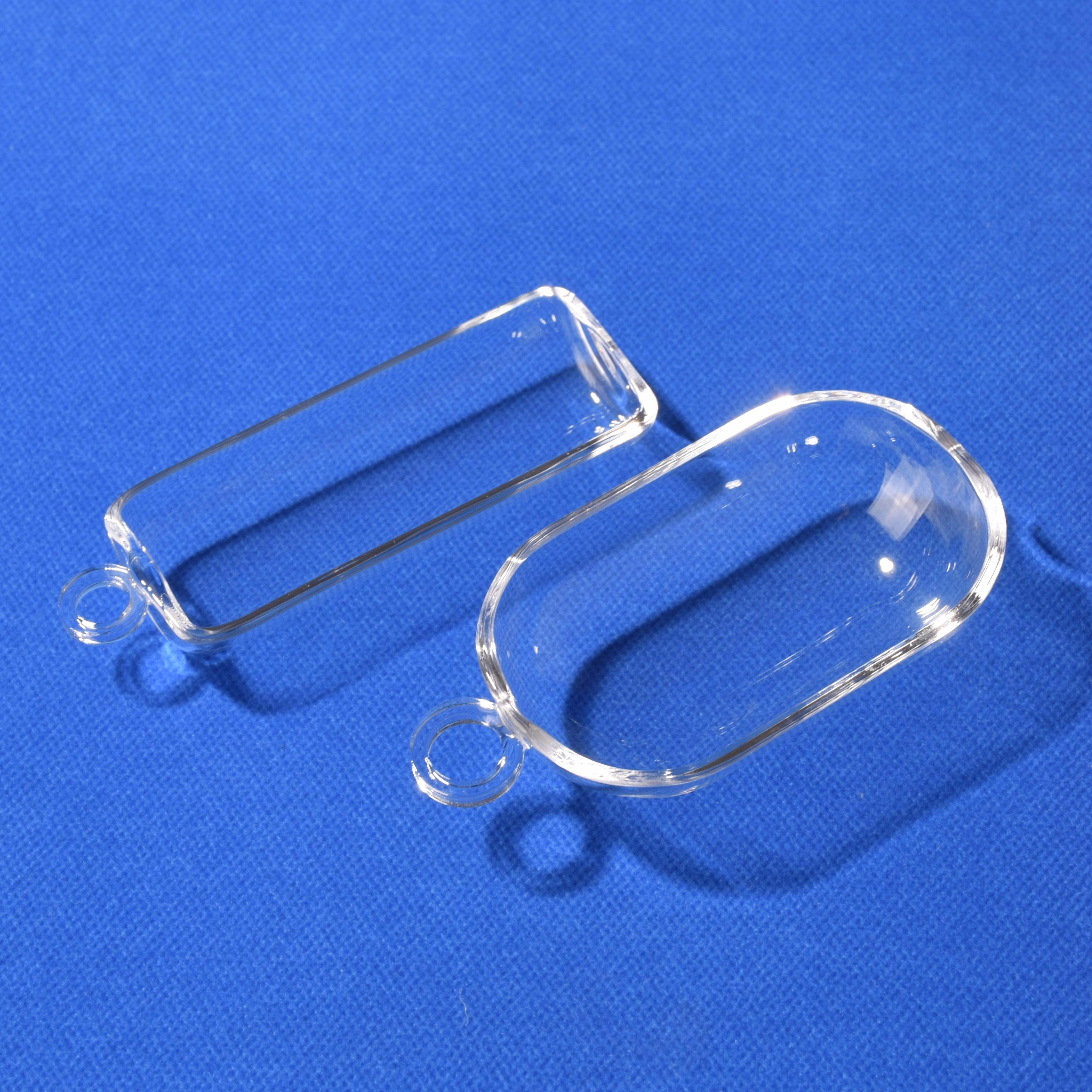
Ozone-free polished furnace tube liner engineered to retain shape integrity during aggressive vacuum firing cycles.
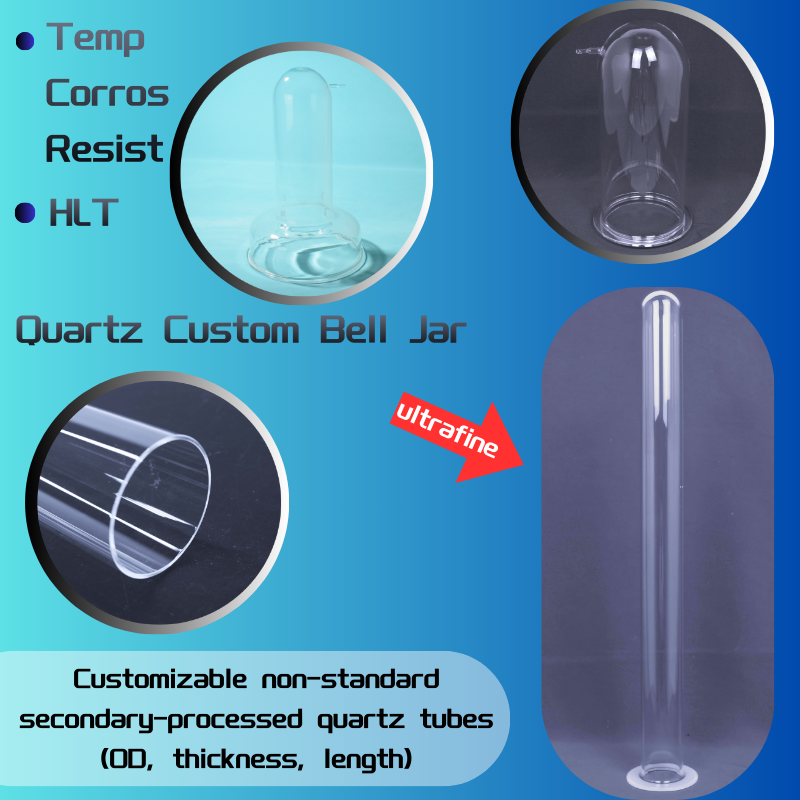
99.99% SiO₂ leak-proof vacuum enclosure providing high safety margins for continuous thermal monitoring.
A rigorous examination of optical transmittance, thermal stress resistance, and non-contact pyrometry physics in demanding processing environments.
In state-of-the-art thermal process monitoring, non-contact infrared pyrometers and thermal imaging cameras require an unobstructed line of sight into high-temperature, high-pressure, or corrosive vacuum chambers. Standard borosilicate sight glass suffers from optical wave distortion, absorption bands in critical infrared spectra (specifically between 0.8 µm and 3.5 µm), and catastrophic failure under rapid thermal shock. For precision plants in Puebla’s industrial corridors—spanning San Jerónimo Caleras, Cuautlancingo, and the Parque Industrial FINSA—fused quartz pyrometer windows serve as the indispensable isolation barrier between extreme kiln atmospheres and sensitive optoelectronic sensors.
Manufactured from synthetic fused silica or high-grade natural fused quartz (SiO₂ purity ≥ 99.99% to 99.999%), these pyrometer windows exhibit an extremely low coefficient of thermal expansion (5.5 × 10⁻⁷ /°C). This fundamental material property allows an operator to instantly subject the window to boiling conditions or rapid atmospheric quenching without inducing micro-fracturing or devitrification.
| Verified Thermal & Optical Physical Parameters | |
|---|---|
| Silicon Dioxide (SiO₂) Purity | 99.99% (Standard Fused Quartz) to 99.999% (Semiconductor Grade) |
| Continuous Working Temperature | ≈ 1100 °C (Vacuum / Inert Atmosphere: up to 1150 °C) |
| Maximum Short-Term Exposure | ≈ 1450 °C (Softening point reaches 1683 °C) |
| Spectral Transmittance Band | 260 nm (Deep UV) to 2500 nm (Near-Infrared / Short-Wave IR) > 90% |
| Coefficient of Thermal Expansion (CTE) | 5.5 × 10⁻⁷ cm/cm·°C (from 20 °C to 320 °C) |
| Tensile Strength / Compressive Strength | 48 N/mm² / > 1100 N/mm² (Permits thin high-pressure sight port design) |
| Surface Quality & Parallelism | Scratch/Dig: 40/20 to 20/10; Parallelism < 30 arc seconds |
How Tier-1 automotive foundries, ceramic autoclaves, and specialty chemical facilities deploy our optical quartz windows.
Puebla is internationally recognized as Mexico's automotive powerhouse. High-precision aluminum engine block casting, brake caliper forging, and induction hardening require single-color and ratio pyrometers mounted directly over induction ladles. Our fused quartz sight windows resist metal spatter and maintain precision emissivity readings despite severe thermal cycling.
From heritage Talavera tile manufacturing to technical electro-ceramics, tunnel kilns in Puebla operate at over 1200 °C. Standard sight holes introduce draft-induced cold spots. Quartz pyrometer windows provide hermetic containment, allowing optical thermal sensors to monitor glaze fusion and vitrification curves in real time.
Along the Puebla-Tlaxcala industrial corridor, chemical synthesis autoclaves operate under intense negative pressure or volatile organic vapor environments. Quartz windows with flame-polished edges eliminate leakage in vacuum pyrometry ports, remaining inert against strong acids, halogens, and aggressive solvent vapors.
Modernization across Puebla's industrial landscape is accelerating the demand for smart pyrometry and precision quartzware.
1. Electromobility (EV) Transition & Battery Production: As Puebla’s assembly plants scale EV manufacturing, clean-room heat treatment of lithium battery cathode precursors demands zero metallic contamination. Synthetic fused silica pyrometer windows guarantee sub-ppm impurity profiles, preventing trace ion contamination during microwave-assisted calcination.
2. Near-Infrared Closed-Loop Industry 4.0 Systems: Automated factories are moving away from manual thermocouple measurement toward automated fiber-optic pyrometers. These sensors operate at narrowband wavelengths (such as 1.6 µm or 2.2 µm). High-purity quartz windows prevent spectral absorption dips, ensuring automated process controllers receive flawless raw radiometric data.
3. Energy Efficiency and Waste Heat Minimization: Industrial furnace operators face tightening energy benchmarks. Engineered quartz observation flanges permit continuous internal IR thermography without opening combustion ports, cutting radiative heat loss by up to 18% during high-temperature dwell cycles.
Direct production control from China's crystal capital to Mexican industrial operations.
Located in the heart of Donghai's world-famous high-purity quartz reserves, guaranteeing access to high-grade natural crystal sand and synthetic precursors.
On-site inspected and authenticated custom manufacturer. CE-marked quartz product series with total compliance for international industrial standards.
Complete in-house capability: diamond core drilling, flat optical grinding, CNC chamfering, flame welding, and complete hydrogen annealing for internal stress relief.
Every window and tube is individually degreased, multi-layer foam separated, and vacuum sealed inside heavy-duty shock-absorbing export wooden cases.
Clear engineering answers regarding pyrometer window design, optical transmission, and international logistics.
Send your drawings, operating temperatures, and dimensions. Our technical team responds within 12 hours with feasibility reviews and wholesale factory quotes.