Semiconductor & Laboratory Ultra-Pure Quartzware
Engineered with 99.999% trace-level chemical purity, maximum thermal shock tolerance up to 1100°C, and sub-micron surface polishing for critical wet etching and RCA bath operations.
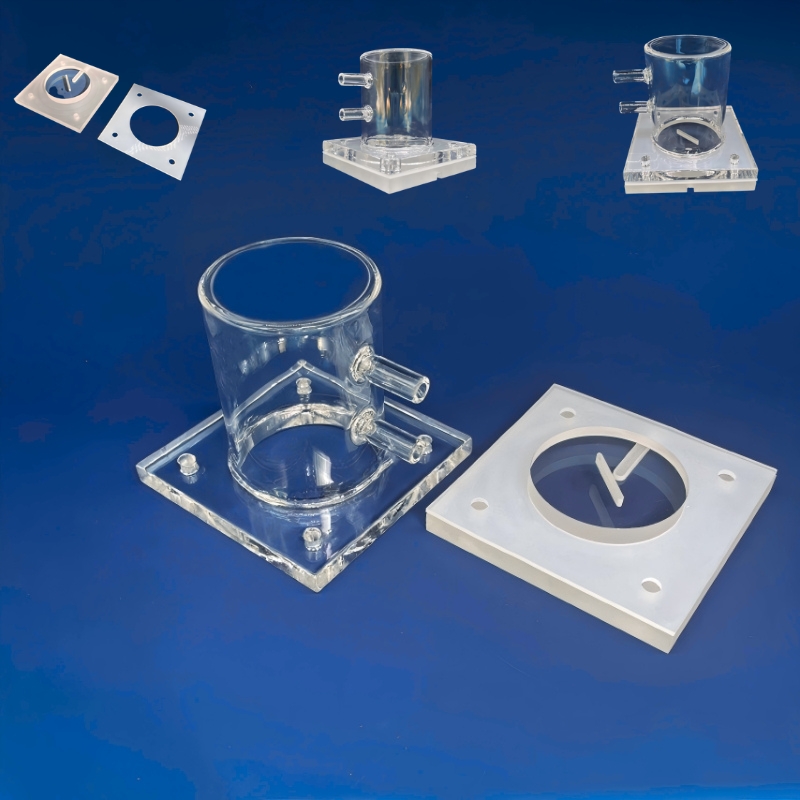
Quartz Photocatalytic Reactor for H2/O2 Production
UV-transparent, ozone-free natural fused quartz construction. Optimized for high-rate photodegradation and severe catalytic acid-flow environments.
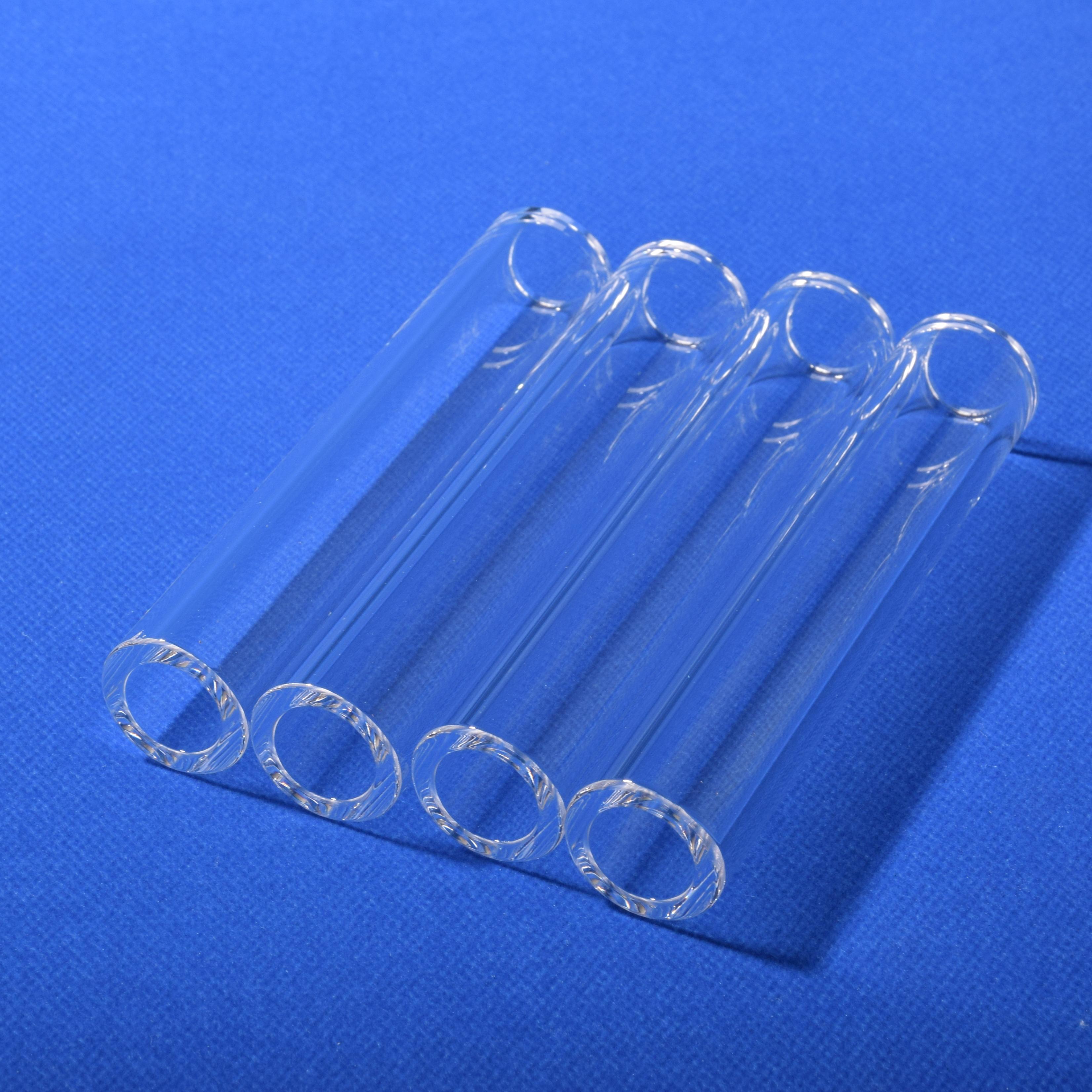
SJ-150 Heavy-Wall Polished Quartz Pipe / Tank Sleeve
Heavy-wall configuration engineered for 1100°C continuous service, exceptional thermal stability, and corrosion-free acid recirculation piping.
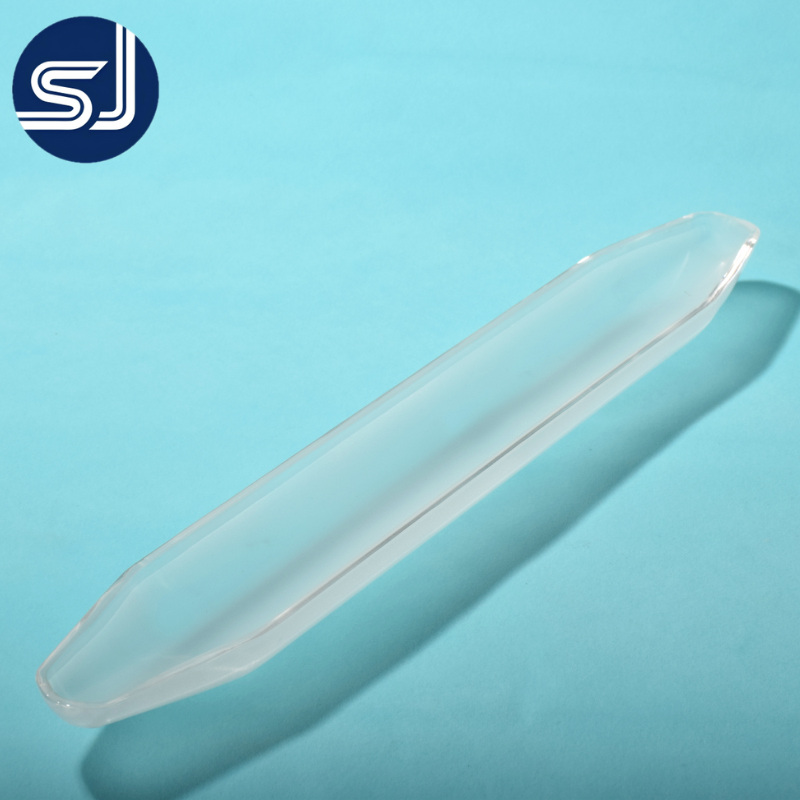
SJ-140 99.999% Precision-Polished Quartz Wafer Boat
Custom slot pitch, optical-grade surface finish (>85% transmittance), designed for high-density semiconductor wafer immersion cleaning.
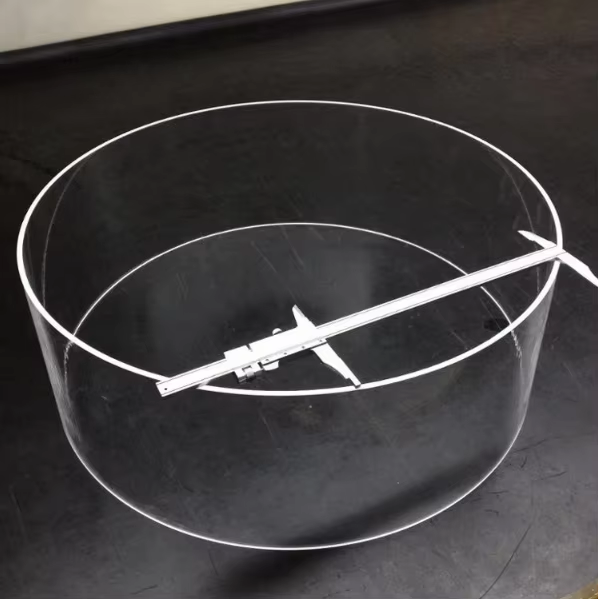
Optical Quartz & Sapphire High-Temp Tubes
High-precision bending and seam-free welding for aggressive chemical containment, sensor feedthrough sleeves, and powder sintering.
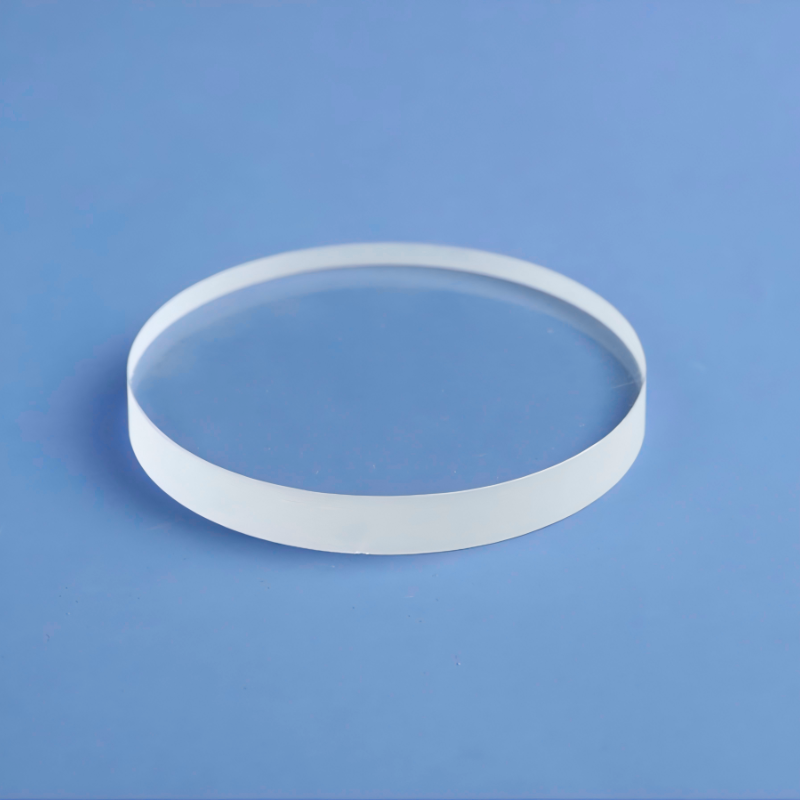
Custom Fused Silica Glass Sheets & Tank Liners
Dimensionally calibrated flat glass plates for wet bath linings, sight observation ports, and megasonic bath transducer coupling windows.
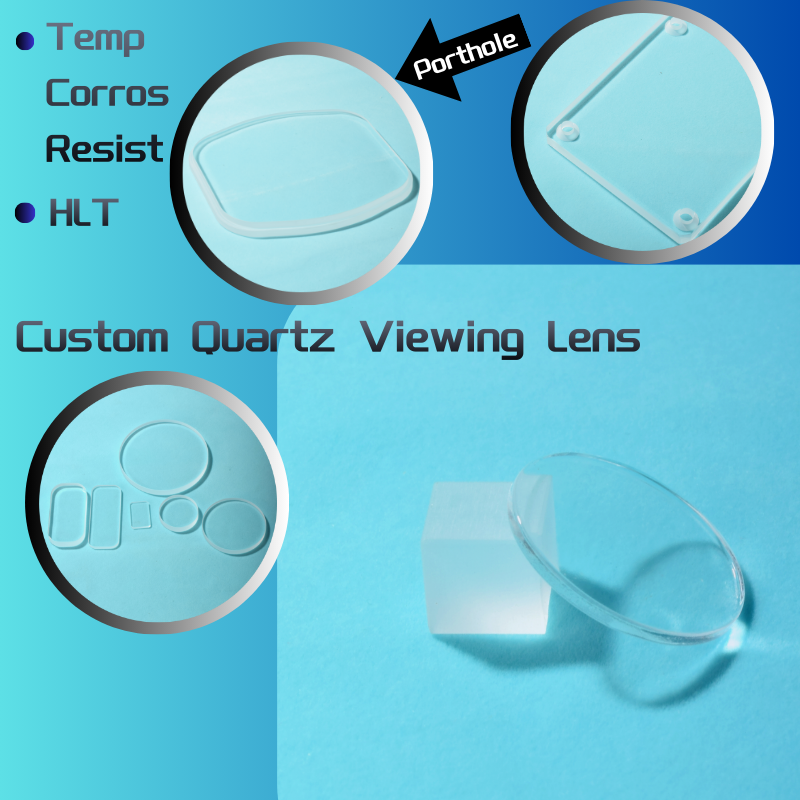
SJ-126 Ultra-Flat Natural Fused Quartz Substrates
Optically verified parallelism, zero micro-bubble structure, tailored for cleanroom substrate carriers and precision metrology mounts.
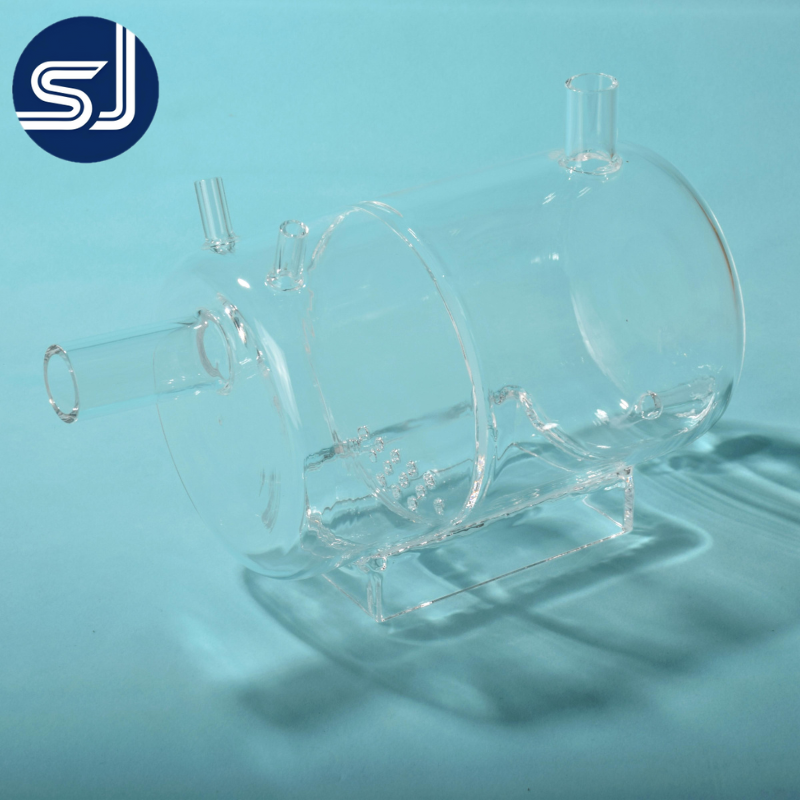
SJ-QUARTZ Acid Flow Splitting & Overflow Bottle
Monolithic glassblown manifolds for recirculating wet benches, constant temperature Piranha mixes, and laminar etching bath distribution.
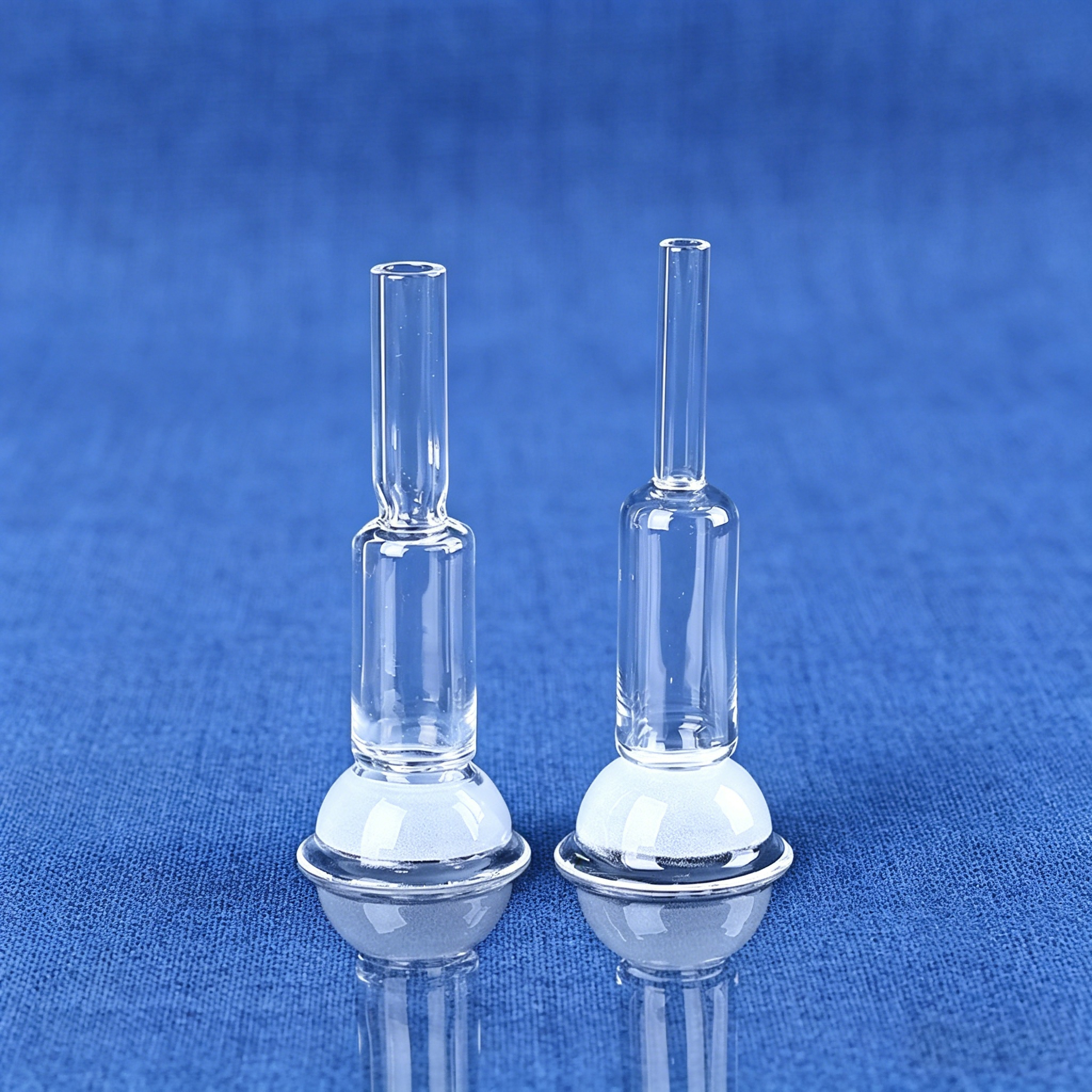
Custom High-Purity Quartz C-Shaped Analytical Tube
Formed under strict oxy-hydrogen torch control, annealed to zero-birefringence standards for cleanroom gas bubblers and analytical sensing.
Technical Specification & Engineering White Paper: Quartz Cleaning Tanks in Bristol's High-Tech Cleanrooms
In the evolving industrial topography of the South West of England—spanning the semiconductor fabrications of the Severnside corridor, the aerospace clusters around Filton and Aztec West, and the pioneering quantum computing spin-outs stemming from the University of Bristol—wet chemical surface preparation requires absolute material inertness. The standard polymeric wet-bench containment options such as PTFE, PVDF, or PFA are increasingly proving insufficient where extreme thermal gradients, aggressive acid concentrations (such as boiling Sulphuric-Peroxide Piranha SPM mixes), and megasonic cavitation fields overlap. High-purity fused silica quartz cleaning tanks have established themselves as the non-negotiable benchmark for sub-micron defect decontamination.
Cleanroom Process Insight: When operating wet etching stations with Hydrochloric Acid (HCl), Nitric Acid (HNO₃), and concentrated Hydrofluoric Acid (HF) blends, trace leaching of boron, iron, sodium, and calcium from tank walls must remain below 0.1 ppb to avert cross-wafer gate oxide breakdown in sub-28nm and compound Gallium Nitride (GaN) architectures.
1. Thermomechanical Resilience and Megasonic Acoustic Transmission
A prime engineering consideration for Bristol research facilities and production cleanrooms is acoustic wave transmission. In modern sub-micron particle stripping, megasonic transducers operating between 800 kHz and 1.5 MHz are bonded directly to the external base of the quartz cleaning tank. Standard borosilicate or fluoropolymers dampen acoustic waves, inducing parasitic thermal accumulation while severely reducing cavitation energy at the boundary layer. Fused silica displays an exceptionally low acoustic attenuation coefficient (approaching $0.05 \text{ dB/m}\cdot\text{MHz}$), permitting undisturbed cavitation wave propagation that strips particulate matter down to 10 nanometers without causing mechanical wafer fracture.
Furthermore, during rapid chemical temperature transitions—such as cycling from an ambient 20°C deionized water rinse to an exothermically spiked 130°C Piranha etch—our tanks withstand the thermal shock without micro-crack initiation. Fused quartz features an ultra-low linear thermal expansion coefficient of $\alpha = 5.5 \times 10^{-7}/\text{K}$ between 20°C and 1000°C, providing dimensional stability that keeps welded seams, corner joins, and overflow weirs perfectly intact through years of recurring thermal stress.
2. Material Comparison for Cleanroom Chemical Baths
Choosing the correct tank construction material dictates cleanroom safety, operational downtime, and bath changeout cycles. The engineering matrix below contrasts natural fused quartz with traditional alternative materials under typical Bristol cleanroom conditions:
| Performance Metric | Fused Silica Quartz (Vulra) | Polypropylene (PP) | PTFE / PFA Fluoropolymer | Borosilicate 3.3 Glass |
|---|---|---|---|---|
| Max Continuous Temperature | 1100°C (Softens at 1683°C) | 90°C | 200°C | 450°C |
| Piranha (SPM) Acid Resistance | Total Chemically Inert | Degrades / Charring Risk | Resistant (Permeation risks) | Surface leaching of Na/B |
| Thermal Expansion ($\times 10^{-7}/\text{K}$) | 5.5 (Virtually Zero) | 1500 (High Expansion) | 1000 (Very High) | 33.0 (Moderate) |
| Megasonic Acoustic Coupling | Exceptional (>98% Coupling) | Severe Dampening | Poor (Acoustic absorption) | Acceptable (Prone to cracking) |
| Metallic Leaching (Na, Fe, Ca) | < 0.1 ppb (Semiconductor Grade) | Variable (Organic leaching) | < 5 ppb (Trace metals) | > 50 ppb (Sodium rich) |
| UV Transmittance (254nm - 365nm) | > 90% (Optical transmission) | 0% (Opaque) | Translucent (Poor UV life) | < 10% (Blocks deep UV) |
3. Fire-Polished Seams, Structural Stress Annealing & Overflow Weirs
A recurring vulnerability in custom quartz tank fabrication is localized failure along structural weld boundaries. When quartz sheets are assembled into rectangular or cascade tanks, manual or semi-automated oxy-hydrogen torch welding introduces latent residual stress fields. If not rectified, cyclic mechanical loading from megasonic transducers combined with harsh acid etching causes premature stress-corrosion cracking along weld beads.
Our manufacturing philosophy addresses this through full furnace-annealing cycles. Following CNC high-speed diamond milling, edge chamfering, and precision flame amalgamation, each tank undergoes an engineered thermal cycle up to the annealing point (1140°C), holding for thermal equilibrium, and slowly descending below the strain point (1070°C). This process drops internal birefringence down to below $5 \text{ nm/cm}$, guaranteeing that the finished quartz tank installed at your Bristol facility functions with monolithic structural integrity.
Tailored Deployment Across Bristol's Industrial Sectors
Precision-matched cleaning tank geometries, recirculating wet benches, and quartz bath assemblies built specifically to meet the compliance demands of Bristol and Bath tech hubs.
Silicon Gorge & Compound Semiconductors
Bristol hosts one of the UK's most critical clusters for silicon design, compound semiconductors (GaN/SiC), and integrated photonics. Our quartz cleaning tanks are engineered for RCA-1 and RCA-2 wet benches, wafer etching carriers, and precision surface oxide removal where zero particulate generation is strictly demanded.
Filton Aerospace & Advanced Composites
The aerospace corridor centered in North Bristol (Filton, Bradley Stoke) demands strict chemical cleaning tanks for titanium, superalloy coupons, non-destructive test (NDT) specimen preparation, and optical avionics glass components requiring deep chemical baths resistant to aggressive mineral acids.
University Cleanrooms & Quantum Labs
Serving world-leading academic research at the University of Bristol's Centre for Nanoscience and Quantum Information, our bespoke quartzware provides flexible single-piece prototype fabrication (1 pc MOQ) for novel photochemical reaction vessels, electrochemical cells, and substrate degreasing tanks.
Why Bristol Procurement Managers Partner with Vulra
Direct supply-chain mastery from Donghai's world-leading natural crystal reserves to cleanroom-ready delivery throughout the United Kingdom.
Donghai Raw Material Purity
Located directly at the global epicenter of high-purity quartz refinement, our access to raw silica crystal sand ensures consistent 99.99%–99.999% purity with negligible alkaline earth metal impurities.
TÜV Rheinland Audited
Our complete plant infrastructure, material provenance, welding lathe capabilities, and quality assurance workflows have passed rigorous third-party on-site audits by TÜV Rheinland.
Bespoke CAD/CAM Geometry
From complex constant-flow cascade tanks and integrated quartz bubblers to multi-wafer carriers, our master glassblowers and 5-axis CNC machining centers convert STEP/DWG drawings into reality.
Zero-Breakage Crating
Export-grade shock-isolated custom wooden crates, dual-layer high-density closed-cell polyethylene foam, and verified air/sea freight logistics tailored for customs-cleared UK delivery.
Frequently Asked Questions by Bristol Engineers
Clear, uncompromised technical guidance covering life cycles, thermal stress, chemical compatibility, and UK customs freight coordination.
How does fused quartz react with Hydrofluoric Acid (HF) cleaning solutions?
Unlike all other common acids (HCl, HNO₃, H₂SO₄) which have zero corrosive reaction with fused silica, Hydrofluoric Acid actively digests SiO₂ to produce hexafluorosilicic acid ($H_2SiF_6$). While quartz is occasionally utilized in controlled, ultra-dilute cold HF etch steps (<2%) due to its metallic purity over polymers, we recommend specialized fluoropolymer baths or calculating controlled wall etch-rates (typically 0.5 to 2.5 µm/min depending on bath temp and concentration) when designing quartz wall thicknesses.
Can you bond megasonic or ultrasonic transducers directly to the quartz base?
Yes. Many Bristol semiconductor and cleanroom users mandate direct-bonded transducer arrays on the tank bottom. We deliver tank base plates with precision surface lapping and optical polishing (Ra < 0.2 µm) to enable bubble-free, high-adhesion bonding of piezo elements using cleanroom-grade epoxies, ensuring maximum acoustic coupling without attenuation or hot spots.
What is the standard manufacturing lead time for custom tank dimensions?
Standard custom prototype tanks (1-piece to 5-piece batches) are typically engineered, manufactured, annealed, and cleanroom-packaged within 12 to 18 business days following engineering drawing sign-off. Express door-to-door air freight to Bristol Airport or direct facility delivery via bonded carriers generally takes an additional 4 to 6 business days.
What compliance documentation is provided for UK import requirements?
Every dispatch to UK clients is supplied with complete inspection reports including Certificate of Analysis (CoA) identifying trace metal spectroscopy (ICP-MS), CE conformity declarations, RoHS compliance verification, dimensional tolerance validation reports, and full commercial paperwork aligned with UK customs import clearance.