99.999%
Max SiO₂ Purity Grade
1683°C
Softening Point Window
±0.02mm
CNC Surface Tolerance
1pc
Direct OEM/ODM MOQ
DonghaiCN
Direct Factory Origin
Engineered Silicon Dioxide Portfolio
High-Purity Quartz Hardware for Demanding Thermal & Vacuum Assemblies
Manufactured from raw crystal pegmatite in Donghai and processed with precision optical grinding, fire polishing, and multi-axis CNC machines for scientific and industrial users across Provence-Alpes-Côte d'Azur.

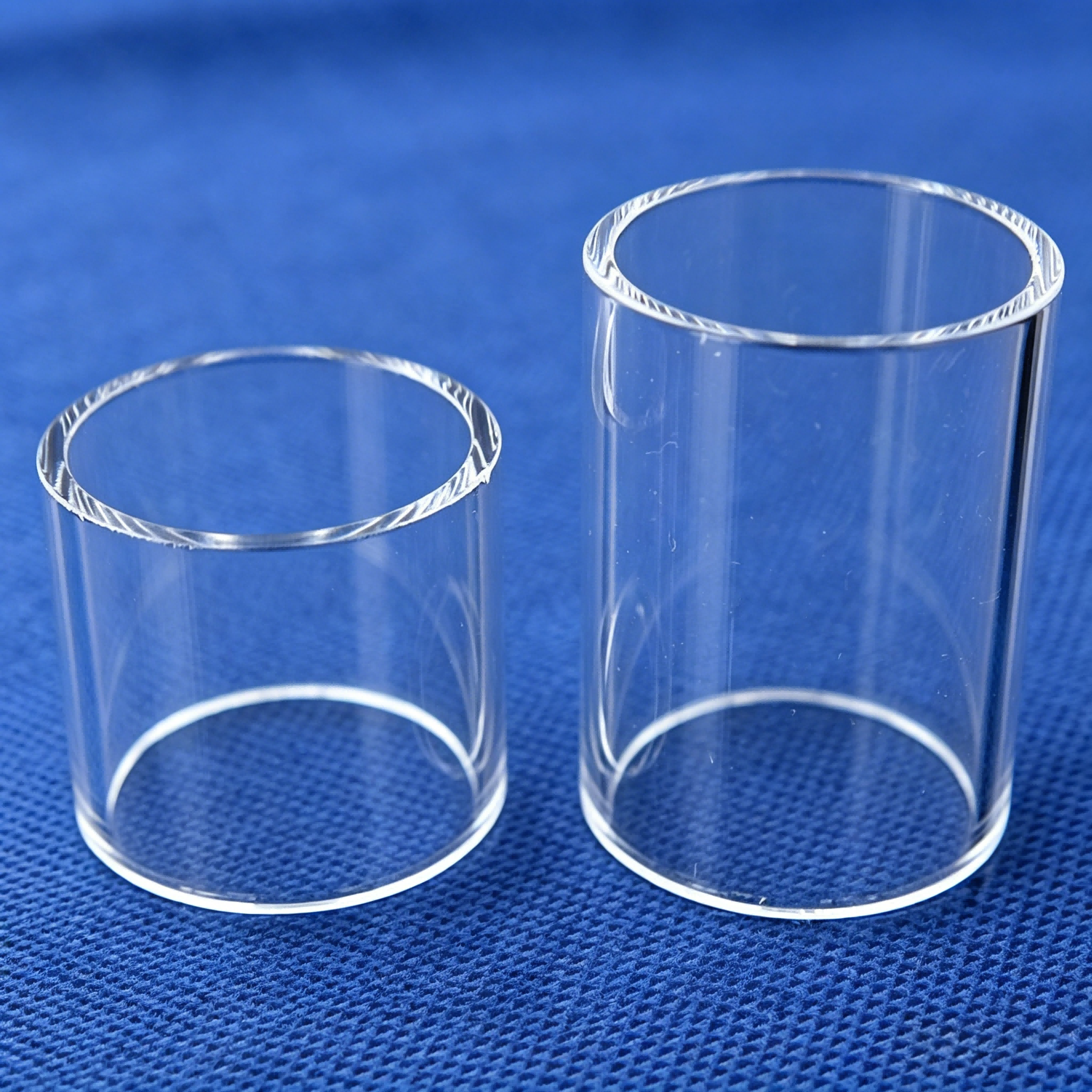
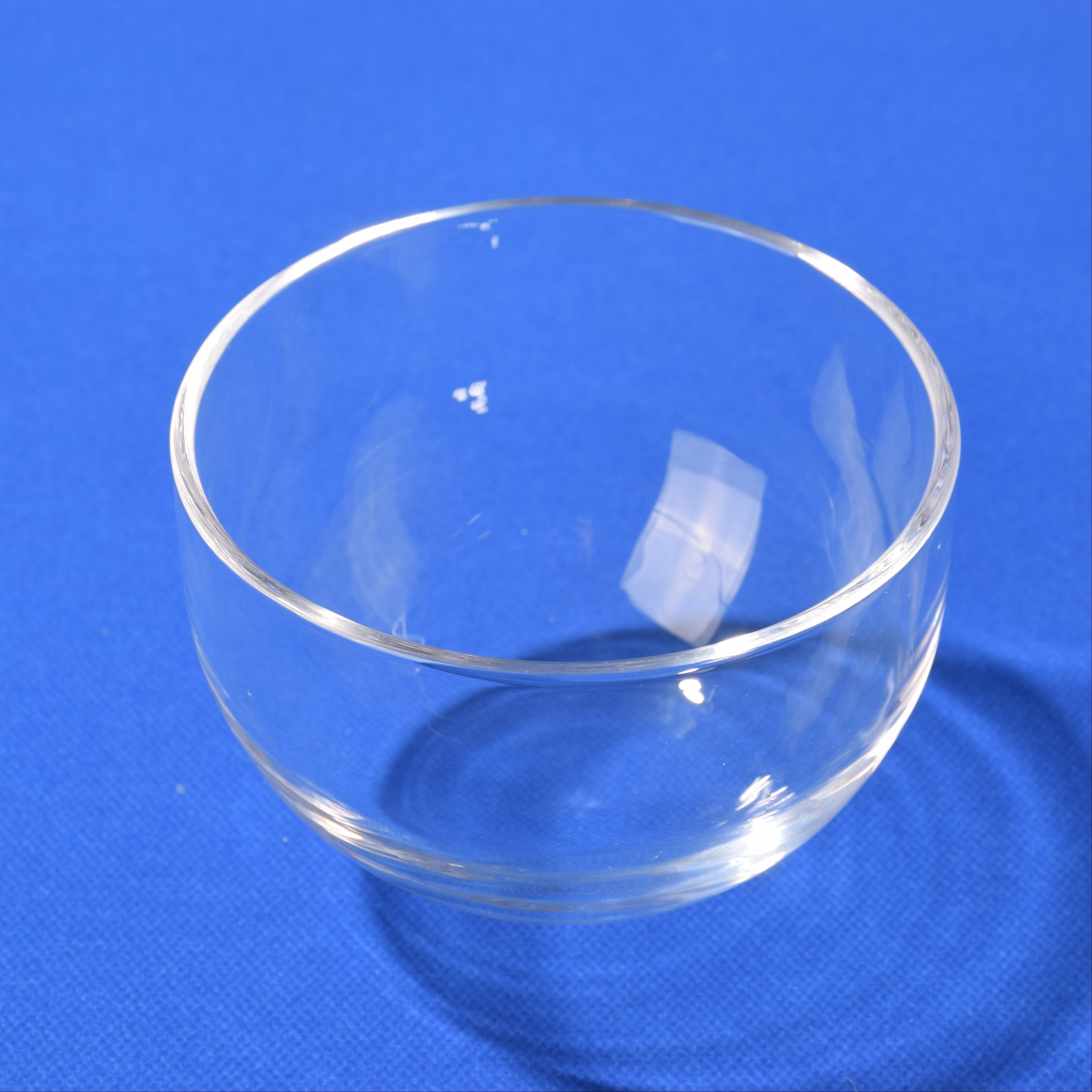
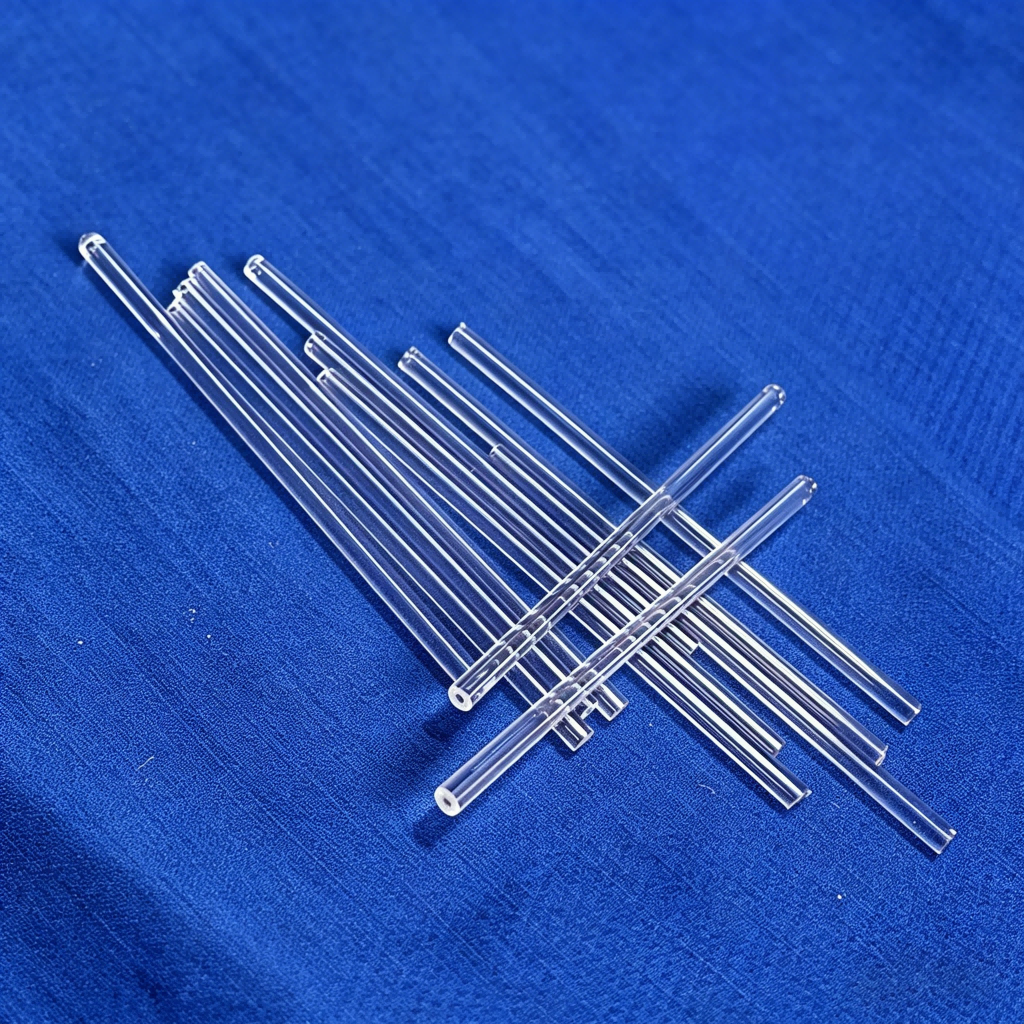
Engineering Whitepaper & Technical Analysis
High-Purity Fused Quartz Flange Rings: Critical Boundary Containment in Extreme Thermal & Corrosive Environments
A comprehensive examination of quartz flange ring fabrication, mechanical tolerances, and sealing dynamics for French industrial and research installations.
Near-Zero Thermal Expansion
Standard grade fused quartz manufactured by Lianyungang Vulra Quartz features an exceptionally low coefficient of thermal expansion (α ≈ 5.5 × 10⁻⁷ / K between 20°C and 1000°C). This allows quartz flange rings to maintain structural sealing integrity during rapid heating cycles that would instantly shatter borosilicate or cause catastrophic thermal distortion in stainless steel-to-glass transitions.
Ultra-High Continuous Operating Limit
With an annealing point of 1215°C and an ultimate softening point of 1683°C, our fused silica flange assemblies safely sustain continuous furnace chamber exposures at 1100°C, with short intermittent peaks reaching 1450°C. Controlled devitrification rates ensure prolonged campaign lifespans in high-temperature chemical vapor deposition (CVD) and thermal cracking applications.
Exceptional Chemical Inertness
Composed of 99.99% to 99.999% silicon dioxide, Vulra quartz flange rings withstand aggressive acid leaching, halogen environments, chlorine gas cracking, and hot acidic vapors. The material remains impervious to all mineral acids except hydrofluoric and hot concentrated phosphoric acid above 300°C, making it indispensable for petrochemical refineries around the Gulf of Fos.
Physical, Mechanical & Optical Properties of Vulra Quartz Flange Rings
Certified by TÜV Rheinland / In-House Metrology Lab
| Physical Parameter | Standard Testing Protocol | Vulra Standard Grade (SJ 140/210) | Semiconductor / Optical Grade (High-Purity) | Engineering Implication for Plant Operations |
|---|---|---|---|---|
| Chemical Purity (SiO₂) | ICP-OES / GD-MS Spectrometry | ≥ 99.99% | ≥ 99.999% (< 15 ppm total metallic) | Zero cross-contamination in wafer dopant chambers and ultra-trace catalysis. |
| Density | Archimedes Immersion | 2.20 ± 0.01 g/cm³ | 2.20 ± 0.005 g/cm³ | Uniform mass distribution ensures vibration damping in rotary vacuum couplings. |
| Thermal Expansion (CTE) | Dilatometry (20°C – 1000°C) | 5.5 × 10⁻⁷ K⁻¹ | 5.4 × 10⁻⁷ K⁻¹ | Virtual elimination of radial thermal strain against metal clamping collars. |
| Continuous Service Temp. | Atmospheric Furnace Soak | 1100 °C | 1150 °C (Short peak to 1450 °C) | Extended refractory envelope for thermal calcination and tubular cracking. |
| Softening Point | ASTM C338 Standard | 1683 °C | 1710 °C | Flange faces retain flatness without creep under high vacuum differential pressure. |
| Tensile Strength | Four-point bending test | 48 N/mm² (MPa) | ≥ 52 N/mm² (Micro-crack annealed) | Permits reliable torque application via elastomeric or fluoro-metallic gaskets. |
| Compressive Strength | Hydraulic crushing test | > 1100 N/mm² | > 1150 N/mm² | Absorbs heavy mechanical clamp clamping force without edge chipping. |
| Surface Flatness / Finish | Interferometric He-Ne Laser | Ra ≤ 0.4 μm (Ground/Lapped) | Ra ≤ 0.1 μm / λ/4 (Optical Polish) | Ultra-high vacuum helium leak rate tightness (< 1 × 10⁻⁹ mbar·l/s). |
| Spectral Transmittance | UV-Vis Spectrophotometry | > 85% (320–2500 nm) | > 92% (190–3500 nm Synthetic/Dehydroxylated) | Unimpaired pyrometric temperature monitoring and spectroscopy sight ports. |
Strategic Regional Integration
Engineered for Marseille's Maritime, Petrochemical, Optics & Fusion Corridors
The Métropole d'Aix-Marseille-Provence and the Grand Port Maritime de Marseille (GPMM) cluster host some of Southern Europe's most rigorous industrial operations. Our quartz flange rings provide mission-critical sealing across four key local domains.
Fos-sur-Mer Petrochemicals
In the vast refining complexes of Fos-sur-Mer, Port-de-Bouc, and Berre l'Étang, quartz flange rings serve as sight windows and reactor seals for sulfur recovery units (SRU), catalytic cracking reformers, and hot acid sampling loops where aggressive SOx, NOx, and volatile organics instantly destroy ordinary sight glasses.
CEA Cadarache & Fusion Research
Located just north of Aix-Marseille, the CEA Cadarache research center and the international ITER tokamak project demand extreme high-vacuum (UHV) diagnostic viewports. Vulra produces precision-ground quartz flange rings that tolerate localized neutron flux, high vacuum levels, and sudden thermal shifts during plasma discharge monitoring.
Rousset Microelectronics Basin
The semiconductor hub near Rousset and Aix requires silicon-compatible quartz flange adapters for diffusion furnaces, chemical vapor deposition (CVD), and rapid thermal processing (RTP). Our 99.999% pure silica components guarantee zero iron, aluminum, or alkali trace drift during 300mm wafer fabrication.
Institut Fresnel & Photonics Clusters
Marseille's CNRS laboratories, Euro-biomedical centers, and the Institut Fresnel rely on customized quartz window rings for deep-UV (DUV) laser transmission, Raman cell enclosures, and photo-electrochemical reactors. Optically finished flange faces ensure total internal reflection control and wave-front purity.
Market Dynamics & Future Outlook
Emerging Technological Trends Shaping Quartz Sourcing in Marseille
How green hydrogen infrastructure, decarbonization mandates, and high-frequency subsea data nodes are redefining fused quartz flange ring demand in Southern France.
Green Hydrogen & Electrolyzer Pyrolysis
Under the French National Hydrogen Strategy and regional Provence-Alpes-Côte d'Azur decarbonization roadmaps, industrial players across Fos-sur-Mer are deploying high-temperature methane pyrolysis and solid oxide electrolyzer cells (SOEC). These reactors operate beyond 850°C under severe hydrogen embrittlement risks. Fused quartz flange rings provide non-conductive, hydrogen-impervious insulating isolation barriers between metal reactor hulls and internal heating cores.
Subsea Cable Terminal Diagnostics
As Marseille consolidates its status as a top global subsea telecommunications landing hub with over 16 intercontinental fiber cables terminating in the port area, testing and manufacturing optoelectronic signal amplification hardware has surged. Precision-polished quartz flange rings with laser-grade parallel surfaces (flatness within λ/4) are increasingly sourced for pressure-tolerant underwater optical sensing repeaters and hermetic inspection couplings.
Decarbonized Maritime Vessel Exhaust Scrubbing
Stricter IMO 2020 sulfur limits and EU Emissions Trading System (ETS) rollouts at the Port of Marseille-Fos have accelerated the installation of continuous emissions monitoring systems (CEMS) on commercial maritime vessels. Quartz flange rings integrated into exhaust gas analyzer pipelines provide critical thermal barrier insulation, resisting hot sulfuric condensates and saline marine air simultaneously.
Direct Donghai Factory Advantages for French Procurement Engineers
Lianyungang Vulra Quartz Products Co., Ltd. is strategically situated at No. 9 Dingxin Road in the Jiangsu Donghai Economic Development Zone. Donghai County represents the global focal point of high-purity natural silica reserves and quartz refining expertise. By maintaining direct integration with raw crystal processing, our factory bypasses intermediaries to deliver unbeatable material traceability and metallurgical consistency.
Unlike standard trading operations, our dedicated manufacturing campus integrates hot flame working and precision cold diamond machining under a unified ISO-certified quality regime. Glassblowing master technicians handle complex C-shaped BET bends, multi-tube manifolds, and large-diameter vacuum flanging up to 800 mm OD.
Every flange ring undergoes rigorous multi-stage annealing in computer-controlled electric kilns at 1215°C to completely neutralize mechanical shear stresses introduced during edge grinding and CNC waterjet profiling. The result is a crack-free component capable of surviving intense thermal shocks in European pilot plants.
TÜV Rheinland Verified
On-Site Assessment & Authentication- 100% Drawing Compliance: Precision tolerances down to ±0.02 mm across bevels, bolt pitch circles, and O-ring dovetail grooves.
- CE Marked & RoHS Compliant: Fully audited toxic element profiles satisfying European Union chemical directives (No heavy metal impurities).
- Flexible Prototyping: Prototype validation runs starting from 1 piece for universities and custom pilot reactors.
- Export-Optimized Logistics: Custom shock-absorbing molded cell packaging and reinforced fumigated crates for safe delivery to Marseille-Fos Port or Marignane Airport (MRS).
Procurement Engineering Intelligence
Frequently Asked Questions: Sourcing Quartz Flange Rings in Marseille
Detailed technical, regulatory, and logistics answers addressing the primary concerns of French engineers, purchasing officers, and lab directors.
How do quartz flange rings interface with standard ISO-KF, ISO-K, and CF stainless steel flanges?
Our machine shop fabricates fused quartz flange rings matching standard NW/KF (KF16 to KF50), ISO-LF (ISO 63 to ISO 320), and ConFlat (CF) outer dimensions and taper profiles. Because quartz cannot withstand knife-edge metal gasket deformation, we grind precision Viton/FKM or fluoropolymer elastomer sealing recesses (trapezoidal dovetail or flat O-ring grooves). Aluminum or 316L stainless steel two-piece clamping collar split-rings distribute mechanical torque evenly around the quartz collar.
What documentation accompanies quartz shipments arriving in the Port of Marseille-Fos?
Every commercial delivery includes a comprehensive documentation binder: Factory Certificate of Conformity (CoC), Raw Quartz Spectrographic Purity Analysis (ICP-OES tracing metallic Fe, Al, Ti, Ca, Mg, Na), Coordinate Measuring Machine (CMM) dimensional inspection reports, and Optical Transmission Scan charts. Full CE and RoHS declaration of conformity certificates are provided for customs clearance at Fos or Marseille Marignane.
How does Vulra prevent brittle edge fractures when bolting quartz flanges to metal pipework?
We apply high-precision 45° edge beveling (chamfering of 0.5 to 1.5 mm depending on wall thickness) followed by full fire-polishing or fine micro-lapping. This eliminates microscopic micro-cracks where tensile fracture propagation begins. Furthermore, we advise engineering teams in Marseille on proper torque limiters and supply custom PTFE/graphite buffer washers that prevent localized point loading between steel bolts and the quartz shoulder.
What is the typical lead time for custom-engineered quartz flange rings to Bouches-du-Rhône?
Drawing-based prototypes (1 to 5 pieces) are generally manufactured and annealed within 7 to 12 working days. High-volume series production takes 15 to 22 working days. Air freight shipments to Marseille Provence Airport (MRS) or Nice Côte d'Azur (NCE) take 4 to 6 business days via DHL/FedEx Express. Consolidated sea container shipments directly into the Grand Port Maritime de Marseille (GPMM) require approximately 28 to 35 transit days.
Can you provide low-hydroxyl (low-OH) fused quartz for infrared pyrometric viewports?
Yes. For process monitoring across petrochemical cracking furnaces where infrared absorption bands at 2.73 μm (caused by fundamental OH vibration) interfere with optical pyrometers, we supply electrically fused quartz rings with hydroxyl content stabilized below 5–15 ppm. This guarantees uniform infrared transmission across 1.0 μm to 3.5 μm without optical attenuation.
How are fragile oversized quartz flanges packed to survive intercontinental multimodal freight?
Each quartz flange is wrapped in anti-static, lint-free PE barrier film, sealed in vacuum skin packaging, and surrounded by customized high-density, multi-layer closed-cell polyethylene foam (EPE). The core is suspended within heavy-duty double-wall corrugated cartons and anchored into reinforced, ISPM-15 compliant fumigated plywood crates equipped with 3D Impact/Tilt Indicator sensors.