High-Purity Fused Quartz & Spectrophotometer Components
Explore our industrial and laboratory quartz series engineered for extreme chemical resistance, sub-nanometer surface flatness, and thermal stability up to 1683°C. Direct factory delivery available across Mawlamyine and Mon State.

Physics of Absorption Spectroscopy: Metrology of Precision Quartz Cells
A rigorous examination of optical path length tolerances, synthetic silica transmission kinetics, molecular extinction calibration, and thermal bonding techniques for high-precision analytical chemistry.
Spectrophotometric analysis operates under the strict physical confines of the Beer-Lambert-Bouguer Law: A = ε · c · l, where absorbance (A) is directly proportional to the molar absorption coefficient (ε), analyte concentration (c), and optical path length (l). In quantitative spectrophotometry performed across analytical research centers, educational faculties, and industrial monitoring facilities in Mawlamyine, the physical integrity of the quartz cuvette represents the primary physical variable dictating measurement reproducibility. When internal path length deviates by a mere ±0.05 mm on a nominal 10.00 mm cell, analytical instruments record an intrinsic systematic error of 0.5% before sample preparation or detector noise is introduced.
Our production protocols at Lianyungang Vulra Quartz Products Co., Ltd. eliminate these systemic inaccuracies through atomic-grade thermal fusion and CNC ultrasonic cold machining. Conventional optical cells assembled with low-melting-point optical adhesives or organic sealants degrade rapidly when exposed to organic solvents such as chloroform, dimethyl sulfoxide (DMSO), methyl ethyl ketone, and aggressive mineral acids. Under tropical conditions characterized by high ambient humidity and elevated temperatures—prevalent along the Mon State coastal region—adhesive interfaces undergo hydrolytic swelling, resulting in window wedging, optical scattering, and fatal path length drift. Vulra Quartz spectrophotometer cuvettes utilize 100% monolithic fire-fused molecular cohesion, melting boundary interfaces without intermediary adhesives to withstand continuous operating temperatures of 1100°C and extreme pH environments from pH 0 to 14 (excluding hydrofluoric acid and concentrated hot phosphoric acid).
| Optical Grade Designation | Material Precursor | Usable Spectral Range | Transmission at 200 nm | Internal Path Tolerance | Primary Laboratory Application |
|---|---|---|---|---|---|
| UV Synthetic Fused Silica (JGS1) | Synthetic SiCl₄ Precursor | 190 nm – 2500 nm | > 82.0% (T%) | ± 0.005 mm | Far-UV DNA/Protein A260/A280, Enzyme Kinetics, Marine UV Nutrients |
| Optical Fused Quartz (JGS2) | Refined Natural Crystal Sand | 220 nm – 2500 nm | > 75.0% (T%) | ± 0.010 mm | Visible-NIR Routine Colorimetry, Heavy Metal Chelation, Water Testing |
| Infrared Quartz Glass (JGS3) | Low-OH Fused Quartz Sand | 260 nm – 3500 nm | > 88.0% (at 1200nm) | ± 0.010 mm | Petrochemical NIR Identification, Moisture Titration, Solvent Purity |
| Micro-Volume Fluorescent Quartz | Synthetic Suprasil Silica | 190 nm – 2200 nm | > 83.5% (T%) | ± 0.005 mm | 4-Window Fluorometry, Quantum Dot Luminescence, Molecular Biology |
Optical window flatness is certified to λ/4 (λ = 632.8 nm helium-neon laser line) with an optical surface finish compliant with Scratch-Dig 20/10 metrology standards. This ultra-flat profile prevents wavefront deformation and collimated beam divergence within modern dual-beam and diode-array spectrophotometers. Transmission profiles are documented below across deep ultraviolet, visible, and near-infrared spectra, confirming unmatched purity matrices derived from our refined raw materials extracted in Donghai, Jiangsu Province.
Spectrophotometric Applications in Mawlamyine & Mon State
Addressing the specific metrological requirements of Lower Myanmar's natural rubber production belt, estuarine hydrological surveys, agricultural commodity export processing, and regional academic laboratories.
Natural Rubber & Latex Processing Quality Control
Mon State stands as Myanmar's agricultural epicenter for ribbed smoked sheet (RSS) and concentrated natural rubber latex production. Quality testing mandates UV photometric determination of volatile fatty acids (VFA number), total nitrogen/protein content via Nesslerization at 425 nm, and antioxidant degradation analysis under aggressive hydrocarbon digestion. Vulra's fire-fused JGS1 quartz cuvettes withstand boiling nitric-sulfuric digestions without window fogging or wall etching.
Thanlwin River Estuary & Marine Ecology Surveys
Mawlamyine's strategic position on the Thanlwin (Salween) River estuary emptying into the Gulf of Mottama demands intense hydrological and biological sampling. Environmental laboratories and port authorities monitor dissolved organic matter (DOM) at 254 nm, chromophoric dissolved organic matter (CDOM), and phosphate/nitrate nutrient fluxes at 220 nm. Our standard 10 mm and extended 50 mm long-path quartz cells offer the low-absorbance detection limits needed for brackish water monitoring.
Food Safety & Agro-Fisheries Export Verification
Marine products, dried fish, and agro-commodities passing through Mawlamyine processing plants require strict toxicological and freshness verification under ASEAN export standards. Spectrophotometric assays assess histamine accumulation in scombroid fish, trimethylamine nitrogen (TMA-N) at 410 nm, and aflatoxin contamination screening using high-sensitivity 4-window quartz fluorescence cells that provide 360-degree transmission with zero parasitic autofluorescence.
Mawlamyine University Academic & Botanical Research
The science faculties of Mawlamyine University conduct fundamental chemistry, botanical extraction, and pharmacology research focused on Mon State indigenous medicinal plants. Quantitative assays isolate flavonoid structures, polyphenols at 765 nm via Folin-Ciocalteu reagent, and kinetic enzyme reactions. Vulra supplies matched pairs (±0.1% transmission match across 200–900 nm) allowing researchers to publish peer-reviewed spectroscopic data with total experimental reproducibility.
Municipal Potable Water & Industrial Wastewater Testing
With infrastructure expansion across Mawlamyine's urban zones and industrial zones, municipal water distribution and treatment facilities execute mandatory daily colorimetric testing. Standardized testing for hexavalent chromium at 540 nm (diphenylcarbazide method), residual chlorine at 515 nm (DPD method), and heavy metal traces rely on our micro-aperture black-walled quartz cuvettes, which absorb stray peripheral scatter and deliver crisp linear regression lines.
Petrochemical & Maritime Lubricant Characterization
Bunkering, coastal freight navigation, and industrial diesel generator hubs in Mawlamyine require rapid monitoring of lube oil condition, fuel adulteration, and particulate soot accumulation. Using our NIR-grade JGS3 low-OH cuvettes, maritime engineers perform direct spectral scans between 1000 nm and 2200 nm, detecting hydrocarbon oxidation signatures, glycol contamination, and moisture ingress without complex pre-titration steps.
Analytical Modernization & Metrology Trends in Mon State
How laboratory infrastructure across Lower Myanmar is advancing from analog colorimetry to automated high-throughput spectrophotometry, demanding international standard quartz consumables.
The analytical chemistry and industrial quality control sectors in Mawlamyine are undergoing a marked technological transition. Historical testing protocols across Mon State agricultural and maritime agencies relied heavily on manual visual colorimetry, low-accuracy glass test tubes, and basic visible-range (380–780 nm) optical cells. However, tightened export compliance across ASEAN trading partners, the European Union, and East Asia has made automated UV-Vis double-beam spectrophotometric screening non-negotiable for regional producers.
Three distinct trends are shaping optical procurement across Mawlamyine's testing institutions:
1. Stringent Demand for Deep-UV (190–260 nm) Transparency: Agricultural exporters must certify pesticide residue thresholds, biological oxygen demand (BOD), and trace organic impurities that possess absorption bands exclusively within the far-UV spectrum. Standard optical glass cuvettes absorb all radiation below 320 nm, making them entirely unusable. Laboratories are systematically standardizing on synthetic fused silica cuvettes (JGS1) that guarantee transmission above 80% at 200 nm.
2. Adoption of Semi-Micro and Ultra-Micro Flow Cells: High-performance liquid chromatography (HPLC) detectors and continuous-flow automated analyzers deployed in regional rubber processing institutes and marine sampling centers require internal sample volumes ranging from 50 μL down to 10 μL. Vulra's precision sub-micro quartz flow cells with black quartz masking prevent refraction artifacts, optimizing signal-to-noise ratios when testing low-concentration botanical and marine extracts.
3. Resilience Against Tropical Monsoonal Climate Degradation: Mawlamyine experiences extreme annual rainfall during the southwest monsoon season, with relative humidity routinely exceeding 90% alongside ambient temperatures above 32°C. In such harsh environments, adhesive-bonded cuvettes suffer microbial growth and optical cementing degradation. Regional procurement managers now require monolithic fire-fused quartz cells that can be repeatedly autoclaved and sterilized with hot piranha solution or aqua regia without delaminating.
Why International Labs Choose Vulra Quartz
Rooted in China's silicon capital with integrated hot and cold processing lines, TÜV Rheinland verified manufacturing standards, and precision custom drawing services.
Donghai Silicon Supply Hub
Located in the heart of Donghai County, our factory benefits from the world's most mature natural crystal sand and chemical precursor supply chain, guaranteeing ultra-low iron and aluminum impurity levels below 1 ppm.
TÜV Rheinland Audited Facility
Independently evaluated for full ODM customization capabilities, CE-marked quality compliance, and RoHS certifications across our complete series of tubes, crucibles, plates, and spectroscopic cuvettes.
Fire-Fused Monolithic Structure
We reject optical adhesives. Every analytical cuvette is bonded via thermal atomic diffusion, ensuring inert chemical performance against boiling acids, alkaline buffers, chloroform, and aggressive aromatic hydrocarbons.
Hermetic Monsoonal Export Packing
Fragile optical cuvettes ship inside individual nitrogen-sealed desiccated cases, multi-layered shock-absorbing EVA foam, and export-grade outer wooden crates designed for South Asian sea and air freight safety.
Frequently Asked Questions for Mawlamyine Buyers
Practical answers from our optical production engineers addressing cuvette selection, optical calibration, tropical storage, and logistics to Mon State.
Q What is the difference between standard fused quartz and synthetic fused silica cuvettes?
Standard optical fused quartz (JGS2) is melted from high-grade natural crystal sand and provides excellent transmission between 220 nm and 2500 nm, making it ideal for routine laboratory colorimetry and visible spectroscopy. Synthetic fused silica (JGS1) is synthesized via silicon tetrachloride oxidation, eliminating trace metal impurities to provide unmatched transparency in the deep ultraviolet range (190 nm – 2500 nm). For DNA, RNA, protein quantification (A260/A280), or deep-UV marine nitrate testing, JGS1 is strictly required.
Q How do we prevent mold, fogging, and humidity hazing on optical cuvettes in Mawlamyine?
Mawlamyine's high tropical humidity (>85% RH) can promote fungal growth and surface moisture hazing on poorly maintained optical windows. We recommend storing thoroughly dried cuvettes in a temperature-controlled desiccator cabinet with color-indicating silica gel. After each run, clean windows immediately with analytical-grade methanol or isopropanol. Because our cuvettes feature fully fire-fused joints without adhesive resins, they can also be safely baked at 110°C in a drying oven to eliminate residual moisture.
Q How does Vulra Quartz ensure optical path length consistency in matched pairs?
Every matched pair or set of 4/8 cuvettes undergoes high-precision laser interferometry and dual-beam spectrophotometer matching using pure deionized water at 200 nm, 240 nm, and 600 nm. We guarantee that transmission variance across a matched set remains strictly within ±0.1% to ±0.3%, preventing baseline drift and eliminating inter-cuvette calibration offsets during critical analytical testing.
Q What cleaning chemical protocols should be used for stubborn organic latex or protein residues?
For cross-linked natural rubber latex residues or denatured protein deposits, do not scrub optical faces with abrasive brushes. Soak cuvettes in an acid bath of 50% concentrated nitric acid (HNO₃) or fresh chromic-sulfuric acid cleaning solution for 15–30 minutes, followed by exhaustive rinsing with Type-I ultrapure water. Because our cuvettes are 100% monolithic fused quartz, they tolerate hot mineral acids without delaminating.
Q What shipping options and transit timelines are available for deliveries to Mawlamyine?
We routinely arrange international air express (DHL, FedEx, UPS) and consolidated freight routes connecting our export hub directly to Yangon International Airport or Yangon Port, followed by bonded regional forwarding directly to Mawlamyine via the Yangon–Mawlamyine Highway corridor. Typical air express delivery takes 5 to 9 business days from order dispatch, with tracking numbers provided immediately upon departure.
Q Can Vulra Quartz manufacture custom optical flow cells from customer engineering drawings?
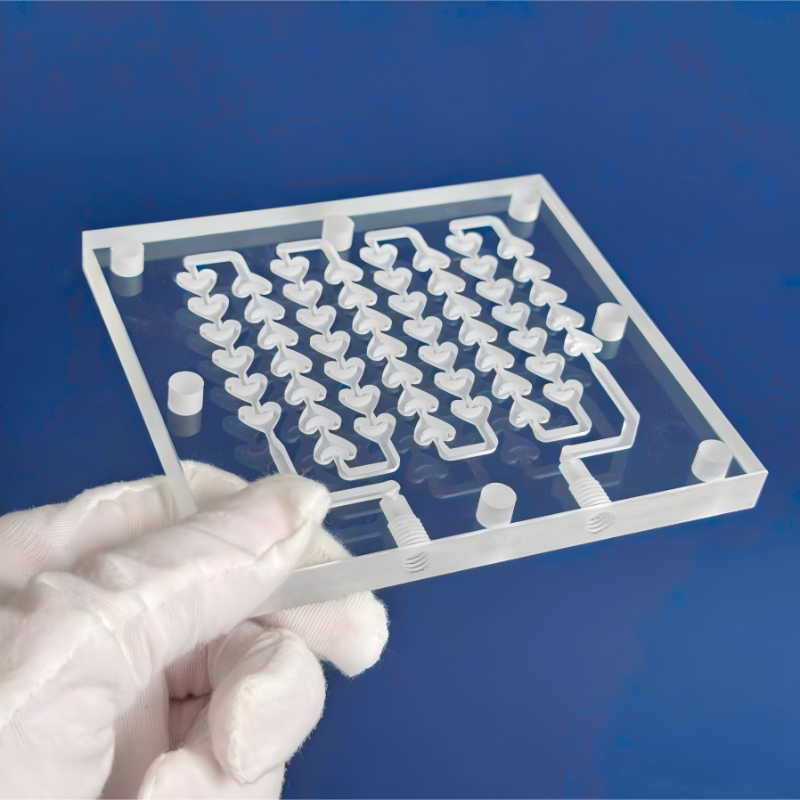
Yes. As a verified custom manufacturer, we routinely build specialized quartz components from 2D/3D CAD drawings (DWG, DXF, STP, PDF). Custom parameters include sub-micro aperture diameters, non-standard path lengths (such as 0.1 mm, 0.2 mm, 2 mm, 50 mm, or 100 mm), optical screw-thread quartz connections, and custom Teflon stopcocks for anaerobic spectrophotometry. Our minimum order quantity for custom prototypes starts from just 1 piece.
Q Do your quartz cuvettes fit standard spectrophotometer cell holders from global instrument brands?
Yes. Our cuvettes adhere strictly to international standard physical dimensions: external footprint of 12.5 mm × 12.5 mm and an overall height of 45.0 mm, with standard beam heights (Z-dimension) of 8.5 mm or 15.0 mm. They are completely interchangeable and fully compatible with spectrophotometers manufactured by Shimadzu, Thermo Fisher Scientific, Agilent, PerkinElmer, Hach, Hitachi, and PG Instruments.
Q What documentation and quality compliance certificates accompany quartz consignments?
Every commercial consignment includes a formal Certificate of Analysis (CoA) specifying SiO₂ purity (≥99.99%), batch transmission verification curves, physical dimension tolerance inspection sheets, CE conformity declarations, and RoHS compliance certificates. For critical research facilities, serialized individual transmission scan reports are available upon request prior to shipment.
Request a Technical Quotation for Your Laboratory
Whether you require standard 10mm matched JGS1 cuvettes for natural rubber QC, long-path estuarine water monitoring cells, or custom OEM flow-through quartz chips built to your drawing, our technical sales engineers are ready to support your facility in Mawlamyine.