

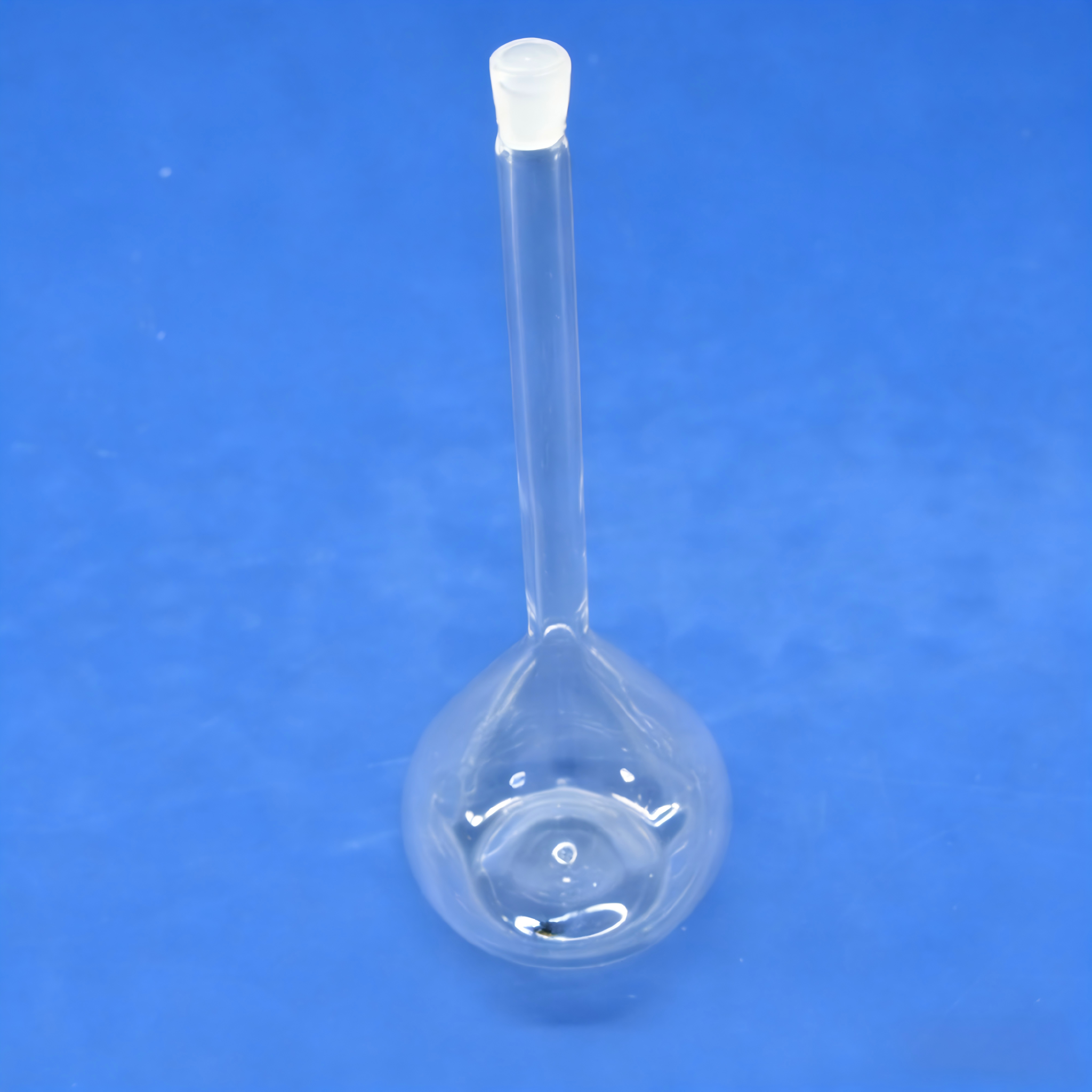
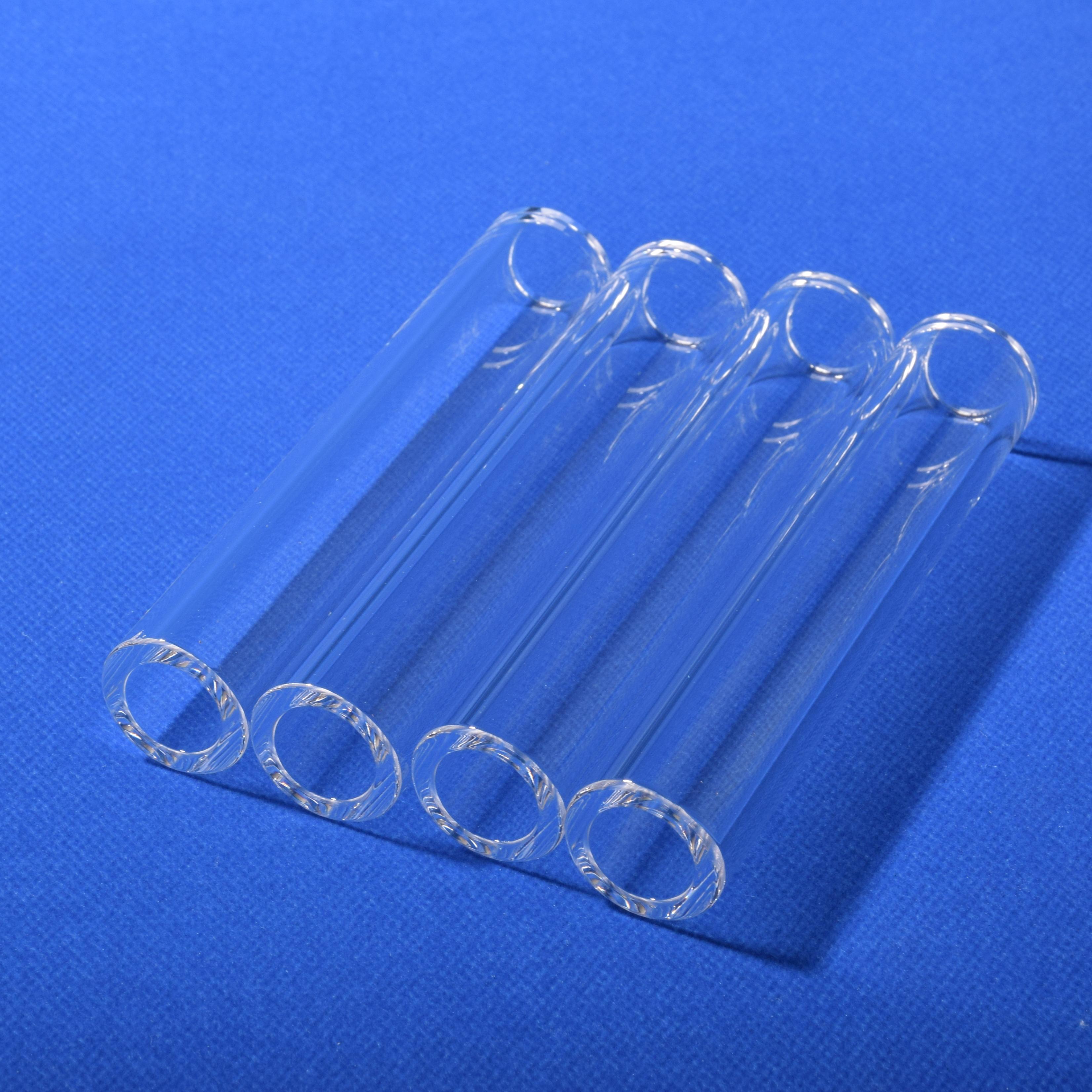
TÜV Rheinland Verified Custom Quartz Manufacturer
[email protected] English
TÜV Rheinland Verified Factory Direct Exporter

Quartz Evaporating Dish Factories & Exporter in Burgas

Precision 99.999% SiO₂ thermal evaporation vessels, circular basins, and custom-blown fused silica labware engineered for refinery catalyst testing, Black Sea environmental analytics, and Balkan chemical syntheses.

Export Catalog · Burgas Port Delivery

Precision Laboratory Quartzware & Core Evaporation Series

Engineered from natural crystal silica with unmatched optical clarity, high thermal conductance, and extreme chemical resistance to satisfy industrial and research protocols across Burgas Province.

99.999%
SiO₂ Silica Purity
1683°C
Softening Point
1100°C
Continuous Working
5.5×10⁻⁷
Thermal Expansion /K
Technical Whitepaper · Material Science Review

Engineering Dynamics of High-Purity Fused Quartz Evaporating Dishes for Critical Analytical Chemistry

When evaluating high-temperature thermal concentration, acid digestion, and trace-element residue recovery, standard borosilicate glassware (3.3 expansion glass) and ceramic porcelain basins introduce severe experimental bias. In modern laboratory protocols across Burgas, Bulgaria—spanning petrochemical hydroprocessing refineries to Black Sea ecological institutes—the requirement for contamination-free, thermally inert evaporation has solidified high-purity fused silica (fused quartz) as the benchmark standard.

1. Amorphous Molecular Integrity and Near-Zero Thermal Expansion

Fused quartz evaporating dishes fabricated by Vulra Quartz consist of non-crystalline silicon dioxide (amorphous SiO₂) exhibiting an extraordinarily low coefficient of thermal expansion (CTE) of approximately 5.5 × 10⁻⁷ K⁻¹ between 20°C and 1000°C. In real-world thermal testing, this property delivers absolute resistance to thermal shock. An evaporating basin loaded with concentrated sulfuric or perchloric acid can be heated over an open burner or inside an electric muffle furnace up to 1100°C continuously (or 1450°C short-term) and immediately quenched into ice water without micro-fracturing or catastrophic shattering.

In contrast, borosilicate glasses soften above 520°C and suffer thermal stress fractures during rapid localized cooling. Porcelain evaporation basins, while heat-tolerant, possess uneven ceramic glaze thermal profiles that trap residual solvents within microscopic surface pores, complicating quantitative gravimetric and ash determinations.

"Thermal shock resistance in analytical evaporation is directly proportional to purity. Natural fused silica with low OH⁻ content and sub-ppm metallic cation thresholds ensures that surface tension changes across dynamic evaporation interfaces will never initiate cristobalite nucleation during typical heating cycles."

2. Elemental Purity & Acid Digestion Neutrality

For analytical assays relying on Inductively Coupled Plasma Mass Spectrometry (ICP-MS) and Atomic Absorption Spectroscopy (AAS), the chemical inertness of the reaction vessel determines baseline detection limits. Vulra Quartz vessels are fire-polished to produce a mirror-grade, hydrophobic vitrified surface that eliminates sample adsorption and capillary ion retention.

Fused silica remains completely impervious to boiling aqua regia, nitric acid (HNO₃), hydrochloric acid (HCl), and sulfuric acid (H₂SO₄). Trace elemental leach testing demonstrates that under continuous digestion with 65% suprapur HNO₃ at 180°C for 24 hours, elemental contamination from our dishes remains strictly within sub-ppb (parts-per-billion) thresholds for heavy metals (lead, cadmium, arsenic) and alkali elements (sodium, potassium, calcium).

Regional Integration · Burgas Ecosystem

Industrial Application Scenarios Across Burgas Province

From the industrial petrochemical plants flanking Lake Burgas to environmental testing stations along the Black Sea coastline, our quartz evaporating ware delivers mission-critical thermal reliability.

Petrochemical Catalytic Refining

Extensively deployed in testing laboratories at the Lukoil Neftohim Burgas petrochemical complex. Essential for testing petroleum residues, ashing lube oils (ASTM D482 / ASTM D874), and analyzing catalyst carrier degradation where high-temperature hydrocarbon volatilization destroys ordinary glass vessels.

  • ASTM D482 Ash Determination
  • Zero hydrocarbon sorption

Black Sea Marine Analytics

Employed by environmental monitoring stations and oceanographic institutes in the Burgas Bay. Utilized for rapid evaporation of hypersaline seawater samples, sediment core digestion, and trace heavy metal extraction according to strict European Union Water Framework Directives.

  • Zero sodium/boron leaching
  • Saline crust thermal calcination

University Chemical Research

Selected by advanced materials research groups at Prof. Dr. Asen Zlatarov University and Burgas Free University for sol-gel polymer evaporation, inorganic perovskite crystallization, and high-frequency calcination in inorganic synthesis curricula.

  • 1-piece custom prototyping
  • Precise pouring spouts

Maritime & Port Cargo Testing

Used by SGS, Bureau Veritas, and private cargo inspection entities operating out of the Port of Burgas (Burgas East & West terminals). Crucial for rapid bunker fuel moisture/ash content testing, lubricating oil additive assays, and ship ballast water mineral profiling.

  • Rapid hotplate evaporation
  • Port authority compliance
Comparative Performance Analysis

Material Benchmark: Vulra Fused Quartz vs. Competing Labware

Clear physical, mechanical, and thermal distinctions illustrating why high-purity fused quartz outperforms borosilicate glass, porcelain, and PTFE in critical evaporation tasks.

Performance Parameter Vulra Fused Quartz Dish Borosilicate 3.3 Glass Glazed Lab Porcelain PTFE (Teflon) Basin
Continuous Maximum Temp 1100 °C 480 °C 1050 °C 260 °C
Softening / Transition Point 1683 °C 525 °C > 1300 °C 327 °C
Thermal Shock Resilience (ΔT) > 1000 °C (Direct Quench) ≈ 150 °C ≈ 200 °C Moderate (Plastic Deforms)
Thermal Expansion (CTE) 5.5 × 10⁻⁷ / K 33 × 10⁻⁷ / K 40-50 × 10⁻⁷ / K 1000 × 10⁻⁷ / K
Resistance to Boiling HNO₃ / HCl Total (No Ion Leaching) Good (Leaches Na/B) Moderate (Glaze Attack) Excellent
ICP-MS Heavy Metal Blanks < 0.05 ppb 1.0 – 15.0 ppb > 20 ppb < 0.2 ppb
Surface Micro-Porosity 0.00% (Vitrified Fire-Polished) 0.00% 0.10% – 0.50% Microporous to gases
Market Dynamics & EU Compliance

Burgas Laboratory Sourcing Trends: Transition to High-Grade Silica

How updated Bulgarian state laboratory regulations, European Green Deal circularity mandates, and supply chain modernizations are altering purchasing priorities in the South-East region.

Stringent EN ISO 17025 Accreditation

Commercial testing laboratories in Burgas are under increasing pressure to pass stringent DAkkS and BAS (Bulgarian Accreditation Service) audits. Eliminating false-positive alkali metal contamination during sample preparation has resulted in replacing traditional lab borosilicates with documented 99.999% purity quartz basins across routine analysis.

Direct Multimodal Factory Sourcing

Purchasing managers in Burgas are bypassing multi-tier Western European distribution hubs that impose 150-200% price markups. By establishing direct air/sea accounts with verified Donghai manufacturing facilities, facilities achieve faster customization times and guaranteed batch consistency delivered straight to Port Burgas or Sofia terminals.

Accelerated High-Throughput Automation

With modern robotic evaporation stations and automated robotic acid-dispensers gaining traction in industrial quality control laboratories throughout the Balkan region, strict dimensional tolerance on dish diameters, wall concentricity (±0.15 mm), and flat base stability is now non-negotiable for unattended operation.

Why Choose Vulra Quartz

Factory Direct Advantages from China's Quartz Capital

Lianyungang Vulra Quartz Products Co., Ltd. sits in Donghai County—the global center for crystal and high-purity natural silica sand—combining raw material dominance with audited European quality standards.

TÜV Rheinland Audited

Our plant facilities, legal compliance, and fabrication workshops have been strictly audited and certified on-site by TÜV Rheinland. Full traceability and authentic European CE and RoHS quality declarations accompany every export consignment.

Drawing-Based Prototyping (MOQ 1 PC)

We operate hot flame-working lathes alongside precision CNC diamond cutting and edge-polishing equipment. We can manufacture customized quartz evaporating basins, flat-bottom dishes with integrated spouts, or flanged reaction covers from customer CAD drawings starting at just 1 piece.

Thermal Annealing & Stress Relief

Every hot-worked quartz evaporating dish undergoes high-temperature computerized thermal annealing at 1150°C to systematically discharge localized residual stress from flame blowing, eliminating unexpected shatter risks during violent lab thermal shifts.

Export-Grade Cushion Packaging

Fragile quartzware is cleaned via multi-stage acid baths and deionized ultrasonic rinse, sealed in high-density dust-free polyethylene, surrounded by form-fitting high-elasticity EPE foam molds, and crated in fumigated export wooden plywood boxes guaranteed against maritime freight impact.

Procurement Intelligence

Frequently Asked Questions by Burgas Scientific Buyers

Clear, direct technical answers addressing customs clearance, temperature restrictions, dish geometry, and logistical handling for shipments destined for Bulgaria.

What is the standard delivery timeline and customs route for shipments to Burgas?
For urgent orders (1-100 pcs), we utilize express courier freight (DHL/FedEx Air Priority) which lands at Sofia International Airport (SOF) with direct road bonded transit to Burgas Customs Terminal within 4 to 6 business days. For bulk containerized consignments, sea cargo discharges directly at the Port of Burgas (Terminal East-2) within 28 to 35 transit days. All goods carry complete TARIC customs documentation (HS Code 7017.1000: Laboratory quartzware).
Can fused quartz evaporating dishes withstand hydrofluoric acid (HF) or phosphoric acid?
Like all silica-based materials, fused quartz is chemically attacked by hydrofluoric acid (HF) even at ambient temperatures, forming gaseous silicon tetrafluoride (SiF₄). Concentrated phosphoric acid (H₃PO₄) also attacks silica at temperatures exceeding 150°C. For all other mineral acids—including nitric, fuming sulfuric, hydrochloric, perchloric, and aqua regia—our dishes provide 100% corrosion resistance up to boiling points.
What geometry is preferable: Flat bottom or round bottom with a pouring spout?
Flat bottom dishes are recommended for ceramic hotplates, magnetic hotplate stirrers, and water baths because the maximized planar surface ensures uniform heat conduction without localized hot spotting. Round bottom basins are superior for open flame burners, sand baths, and mantle heaters where thermal expansion distributes evenly across radial parabolic contours. Both variants are available with fire-polished drip-free pouring spouts.
How does Vulra prevent devitrification (surface clouding) during prolonged thermal use?
Devitrification is the phase transformation of metastable amorphous quartz into crystalline cristobalite, which starts around 1150°C and accelerates in the presence of alkali surface contaminants (fingerprints, sodium salts). Our products use low-hydroxyl (< 20 ppm OH⁻) crystal feedstocks and undergo automated acid pickling. We advise end-users to clean dishes with deionized water or diluted nitric acid before heating above 1000°C to preserve optical transparency.
Can we order custom volumetric capacities not found in standard laboratory catalogs?
Yes. While standard sizes range from 20 ml up to 2000 ml (diameters 45 mm to 250 mm), our master glassblowers fabricate oversized basins up to 10,000 ml or ultra-shallow crystallization trays based on custom engineering drawings, complete with custom rim flanges, ground quartz joints, or heavy wall designs (3 to 6 mm) for vacuum evaporation chambers.
What quality and chemical composition documentation is supplied with each delivery?
Every shipment arrives with a factory Certificate of Analysis (CoA) itemizing metallic trace impurities (Fe, Al, Ti, Ca, Mg, Na, K) determined by glow-discharge mass spectrometry (GDMS), along with dimensional inspection logs and CE/RoHS conformity declarations required for laboratory quality audits across the European Union.

Order Direct From China's Leading Fused Quartz Manufacturer

Whether you require standard 100 ml fire-polished evaporating dishes or specialized custom fused silica apparatus for your refinery, research lab, or industrial facility in Burgas, our engineering team will review your specifications within 24 hours.

Contact Us