Featured Quartz Products & Custom Fabrications
Manufactured from natural and synthetic silica crystals from China's Donghai supply chain, configured for high-temperature durability, chemical inertness, and structural precision in analytical apparatus.
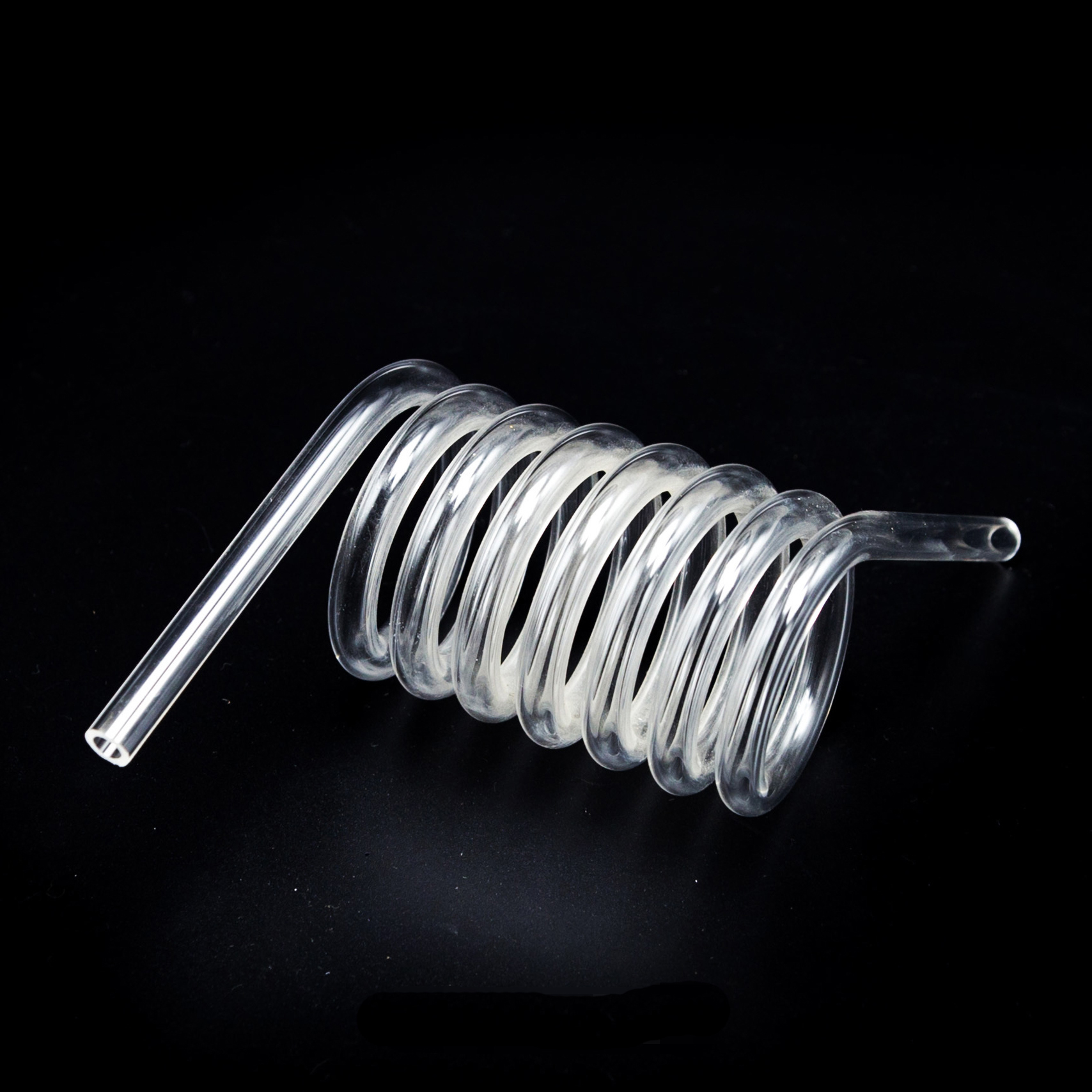
Factory Hot Sale High Purity Polished Clear Quartz C Shape Spiral/Bent/Custom Tubes Small Diameter Cutting/Welding Bending
Engineered for complex gas-flow analysis and tube furnaces. High-temperature flame-welded and stress-relieved for leak-proof analytical manifolds.
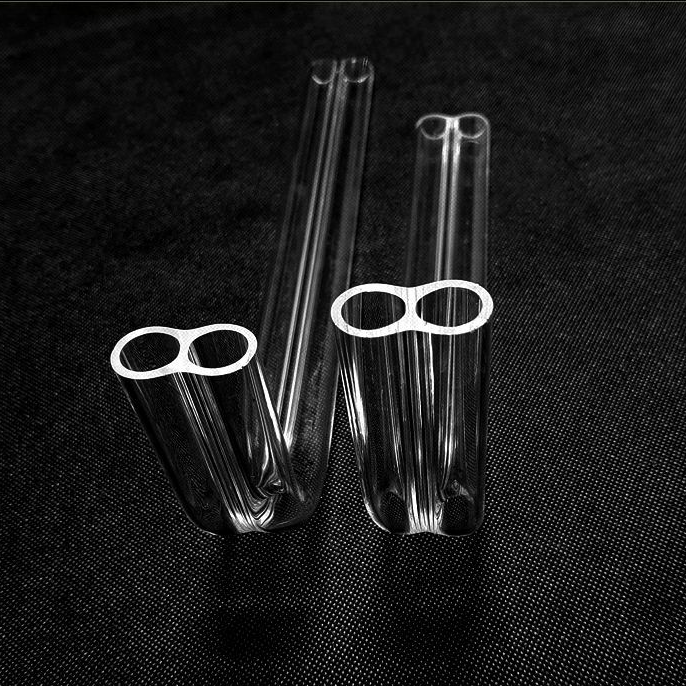
High-temperature (1100) Corrosion-resistant 99.999% Purity Ozone-Free Fused Quartz Double-tube Right-angle Elbow Bending Cutting
Dual-jacketed fused quartz configuration offering zero thermal drift and exceptional resistance to halogens and volatile acids during combustion.
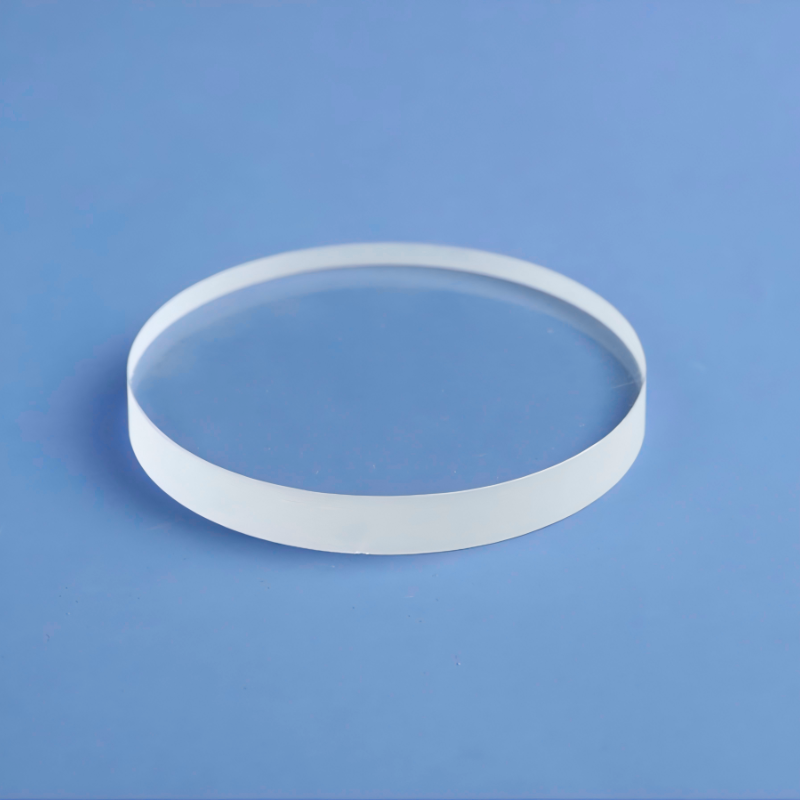
High Temperature Resistant Clear Sapphire Quartz Tablets Fused Silica Glass Sheets Customizable Sizes Polished Cutting Welding
Optically polished window substrates for combustion chamber observation ports, spectrophotometers, and laser pyrometry interfaces.
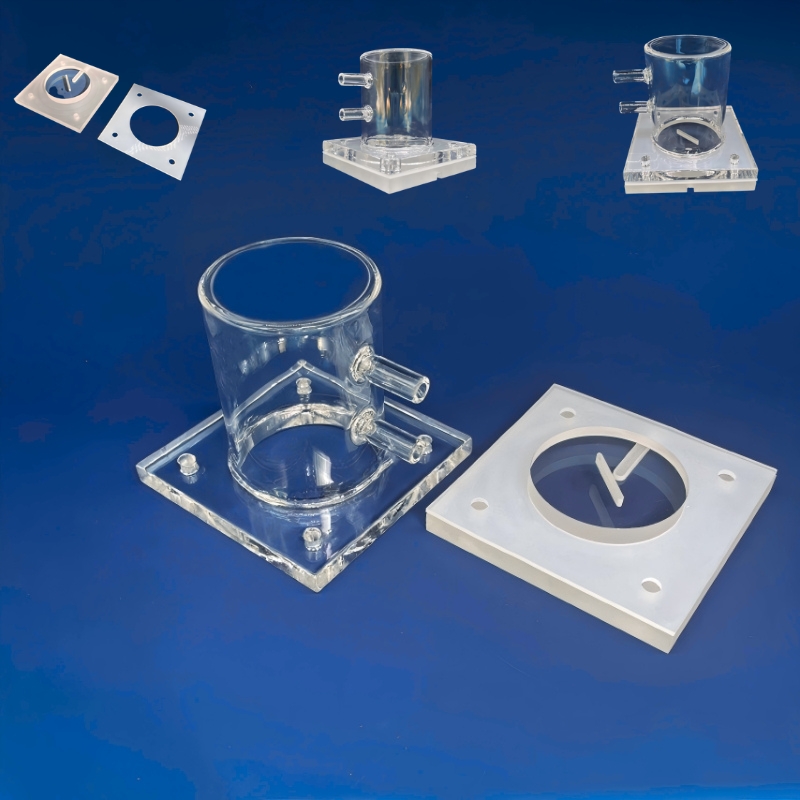
Quartz Photocatalytic Reactor Hydrogen Oxygen Production Via UV Photodegradation Ozone Free Translucent Quartz Moulding Cutting
Designed for solar-to-chemical energy experiments and hydrogen generation cells with enhanced deep-ultraviolet transmittance (>90% at 254nm).
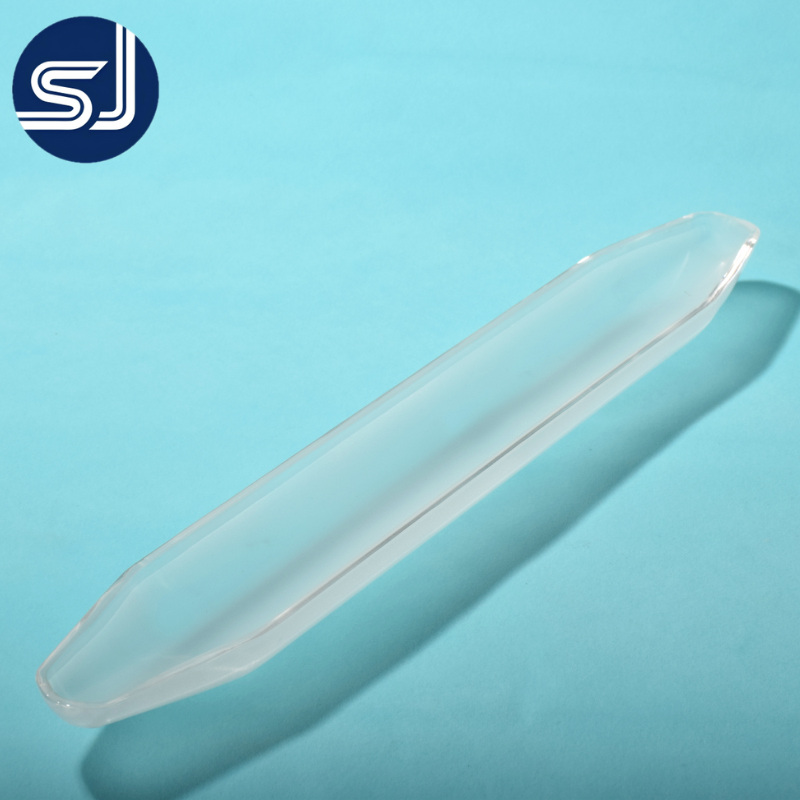
SJ 140 QUARTZ Customizable Transparent High Purity 99.9-99.999% Precision Polished Quartz Boat >85% Transmittance 1100 Lab
Our flagship combustion boat for tube furnaces, LECO-type carbon-sulfur determinators, and high-temperature catalytic sample calcination.
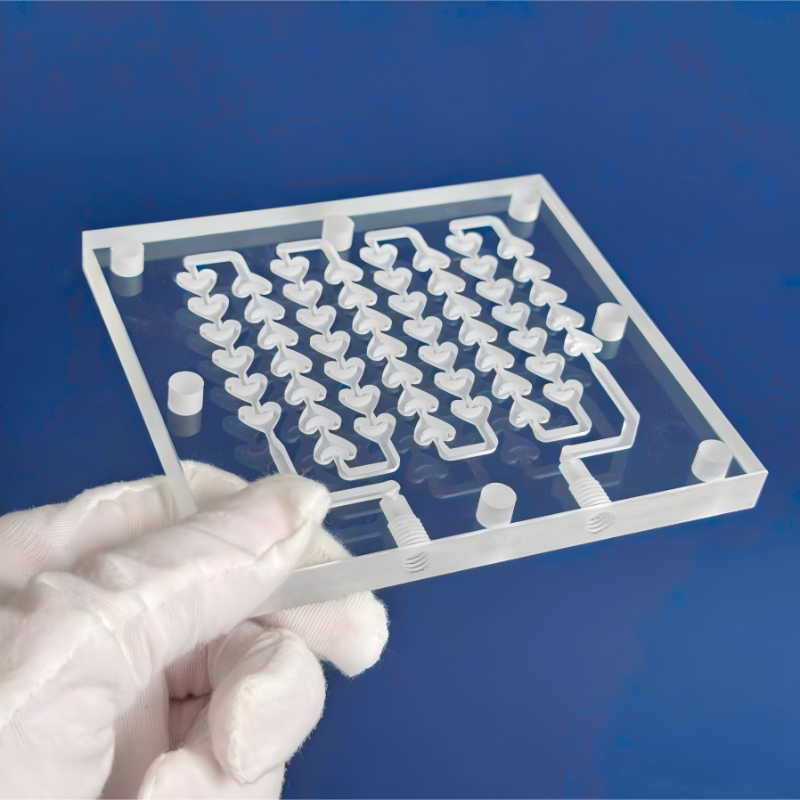
Customized High Thermal Conductance 1750C Melting Point Heat-Exchange Glass Interlayer Chips Circular Shape Quartz
Precision circular heat-diffusing quartz discs tailored for rapid thermal-cycling combustion zones, micro-reactors, and high-vacuum thermal stages.
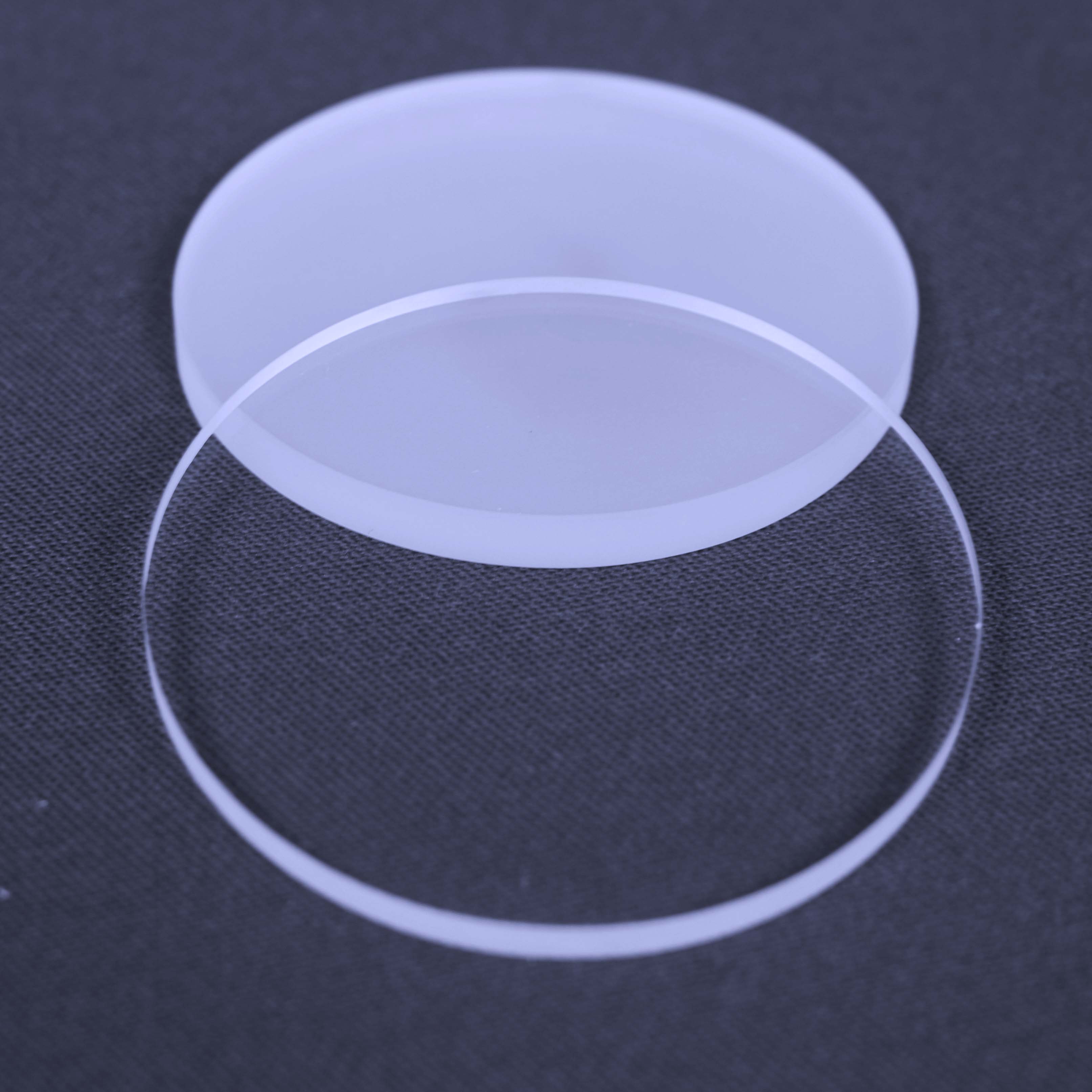
XRD Quartz Holder Test Samples High Transmittance Clear Plate Circular Shape High Melting Point Optical Grade Welding Cutting SJ
Ultra-flat, single-crystal or fused amorphous quartz plates delivering non-interfering background signals for X-ray diffraction mineralogy and metallurgy.
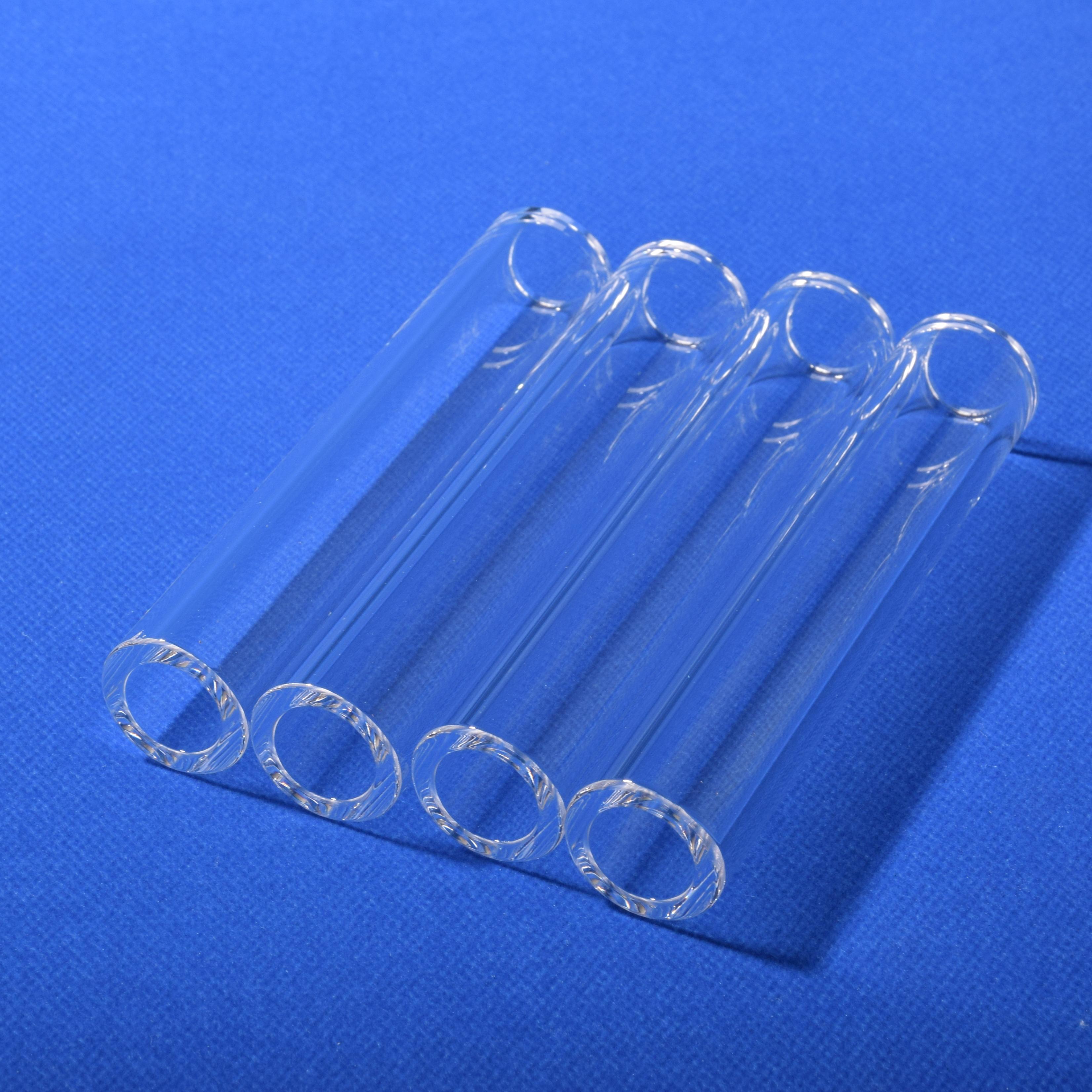
SJ 150 Translucent Oversized Thick Wall Polished Quartz Tube Heat Resistant 1100 Corrosion Resistant Ozone Free Welding
Heavy-wall outer furnace process tubes designed to house quartz combustion boats under sustained oxidizing and reducing atmospheres up to 1100°C.
1. Empirical Material Metallurgy: Why Purity Controls Devitrification Kinetics
Combustion boats deployed in quantitative elemental determination (carbon, sulfur, nitrogen, and oxygen analyzers) undergo severe thermal shocks, moving rapidly from ambient conditions to induction zones exceeding 1100°C, and occasionally enduring short-term flash cycles up to 1450°C. Under these severe kinetic regimes, the longevity and chemical inertness of a quartz combustion boat depend directly on the structural purity of its silicon dioxide matrix.
Devitrification is the phase transformation of metastable amorphous fused silica into crystalline cristobalite. This nucleates along the micro-surface whenever alkaline or metallic impurities—most notably Sodium (Na), Potassium (K), Lithium (Li), and Iron (Fe)—are present in trace concentrations exceeding 15 ppm. Cristobalite undergoes a displacive structural phase change (β- to α-phase) upon cooling past 220°C to 270°C, accompanied by a rapid volumetric contraction of nearly 3%. This sharp volumetric shrinkage creates violent microscopic shear stress, producing network microcracks, structural spalling, and eventual catastrophic failure of the combustion boat inside the furnace liner.
Furthermore, in trace-level elemental analyzers (such as Horiba, LECO CS-844, and Elementar Vario micro cube units commonly used in industrial quality laboratories), contaminated combustion boats produce anomalous blank values. Volatile alkalis and surface-bound boron will outgas under inert helium or oxygen carrier flows, distorting baseline conductivity or infrared detection cells. We eliminate this analytical interference through an exhaustive double hydrofluoric-nitric acid leaching protocol followed by 18.2 MΩ·cm deionized water multi-stage ultrasonic baths, guaranteeing absolute zero background contamination.
Physicochemical Benchmarks & Trace Impurity Profile
Certified ICP-MS and thermal dilation specifications comparing Vulra High-Purity Fused Quartz with standard commercial glass grades.
| Physical & Chemical Parameter | Vulra Standard High-Purity | Vulra Semiconductor Grade (99.999%) | Standard Laboratory Quartz | Test Standard / Method |
|---|---|---|---|---|
| SiO₂ Content (%) | ≥ 99.99% | ≥ 99.999% | 99.90% – 99.95% | Gravimetric / XRF Analysis |
| Trace Iron (Fe) Impurity | ≤ 0.2 ppm | ≤ 0.05 ppm | 1.5 – 3.0 ppm | ICP-MS (Inductively Coupled Plasma) |
| Total Alkali Metals (Na+K+Li) | ≤ 1.5 ppm | ≤ 0.4 ppm | 5.0 – 12.0 ppm | Atomic Absorption Spectrometry |
| Coefficient of Thermal Expansion | 5.5 × 10⁻⁷ / °C | 5.4 × 10⁻⁷ / °C | 5.8 × 10⁻⁷ / °C | Dilatometry (20°C – 1000°C) |
| Continuous Service Temperature | 1100 °C | 1180 °C | 1000 °C | Atmospheric Air Annealed |
| Softening Point | 1683 °C | 1710 °C | 1630 °C | ASTM C338 Beam Bending |
| Hydroxyl Group [OH⁻] Content | < 30 ppm (Dry) | < 5 ppm (Vacuum Baked) | 150 – 250 ppm | FTIR Spectrophotometry (2.73 µm) |
Málaga & Southern Spanish Application Landscapes
Precision quartz components customized to meet the demanding requirements of academic institutes, industrial research centers, and clean energy developers across the Costa del Sol and the wider Andalusian corridor.
Malaga TechPark (PTA) Advanced Materials & Microelectronics
Within Andalusia's technology epicenter at Campanillas, corporate R&D laboratories and microelectronics pilot plants require zero-outgassing fused quartzware. Our combustion boats and semiconductor-grade quartz substrate holders facilitate high-temperature chemical vapor deposition (CVD), clean annealing of thin films, and ultra-trace residue inspection where airborne cross-contamination must be totally excluded.
University of Málaga (UMA) & Central Research Facilities (SCAI)
The Servicios Centrales de Apoyo a la Investigación (SCAI) at UMA conduct cutting-edge characterization across catalysis, polymer synthesis, and earth sciences. Our optical grade XRD sample holders, zero-background transparent combustion boats, and custom quartz glass reactors serve doctoral and post-doctoral teams analyzing mineral specimens and synthesized nanostructures.
Photovoltaic Research & Andalusian Green Hydrogen Valleys
With Southern Spain leading Europe in solar thermal capacity and green hydrogen initiatives, local research consortia demand quartz vessels capable of resisting photochemical degradation. Our UV-transparent photocatalytic hydrogen reactors withstand high-intensity ultraviolet irradiation without solarization, ensuring sustained photochemical efficiency in water-splitting experiments.
Agritech, Soil & Biomass Elemental Determinations
Surrounding the Axarquía subtropical agricultural basin and Guadalhorce valley, commercial analytical laboratories perform constant elemental C/N/S assays for soil fertility and biomass combustion metrics. Vulra quartz boats withstand repeated sample ashings with aggressive alkaline biomass matrices without early devitrification or crater pitting.
Metallurgical Quality Assurance & Cement Petrography
Across the structural engineering and industrial mineral belt extending from Málaga toward Seville and Granada, heavy industries rely on our combustion boats for sulfur/carbon content verification in scrap iron, rebar alloys, and cement clinker pyrochemical testing in horizontal tube furnaces.
Environmental Monitoring & Marine Micro-Pollutant Testing
Environmental testing laboratories situated around the Port of Málaga monitor coastal sediments and industrial effluents. Fused quartz combustion boats ensure reliable high-temperature catalytic digestion of marine sediment cores, preventing silicate dissolution and false positive readings.
2. Localized Industrial Trends: Málaga's Transition into Southern Europe's Deep-Tech Hub
Over the last half-decade, Málaga has dramatically diversified beyond its historical service economy. The regional government's push, combined with aggressive investments in Malaga TechPark, has attracted international microelectronics designers, advanced materials developers, and renewable energy innovators. Most prominently, the establishment of the IMEC (Interuniversity Microelectronics Centre) second global chip research facility in Málaga signals an unprecedented influx of advanced semiconductor packaging, photonics research, and cleanroom infrastructure into the province.
This technical migration places unprecedented demands on laboratory consumables and thermal process supply chains. High-temperature process lines cannot afford downtime caused by substandard imported glass. Technicians in Andalusian labs increasingly require:
- Ultra-Trace Impurity Guarantees: Transitioning from 99.9% common labware to certified 99.999% trace-metal-pure fused silica to protect silicon wafer lots during prototype diffusion.
- Immediate Dimensional Agility: Moving away from standardized bulk catalog items toward bespoke, drawing-based OEM fabrication where combustion vessels integrate specialized baffles, multi-compartment dividers, and reinforced pull-handles for automated push-rods.
- Direct Manufacturer Traceability: Replacing third-party resellers with primary manufacturers verified by third-party auditors like TÜV Rheinland, ensuring direct batch inspection reports (COA) with documented trace elements.
Vulra Quartz directly supports this technological transformation by supplying custom quartzware with direct-from-factory logistics, eliminating intermediate markup and providing Andalusian institutions with direct access to Chinese mineral processing expertise.
Why Global Labs & Málaga Engineers Partner With Vulra
Direct from Donghai County—the world crystal capital—our fully integrated facility combines raw mineral purification with micro-machining and robotic glassblowing.
Donghai Raw Material Reserve
Situated in the heart of China's primary silica hub, we hold direct access to superior natural quartz sand deposits, ensuring uninterrupted raw material continuity and stable crystalline pricing.
Single-Piece Custom Prototype (MOQ 1)
From university doctoral thesis trials to corporate test rigs, our dedicated custom lines fabricate combustion boats, elbows, and reactors directly from 2D/3D CAD drawings without demanding high minimums.
Hot & Cold Integrated Machining
Equipped with high-precision CNC multi-axis diamond saws, ultrasonic drilling rigs, precision polishing plates, and oxy-hydrogen glass lathes under one unified roof to prevent production bottlenecks.
TÜV Rheinland Audited & CE Certified
Our company facilities and production lines have undergone rigorous on-site audit verification by TÜV Rheinland. Every product line conforms fully with EU RoHS directives and CE manufacturing guidelines.
Frequently Asked Questions for Spanish & EU Buyers
Practical answers addressing customs handling, shipping into Málaga, thermal limits, and drawing conversions.
What are the shipping routes, lead times, and customs procedures for deliveries into Málaga?
How do Vulra quartz combustion boats compare with LECO, Horiba, or Elementar OEM boats?
What specific thermal cycling protocol should be followed to maximize combustion boat lifespan?
Can you manufacture custom-dimensioned boats or reaction vessels from our CAD files?
What export packaging measures are implemented to ensure fragile quartz vessels arrive intact?
Upgrade Your Laboratory Thermal Standards Today
Whether you require standard LECO-compatible combustion boats or customized fused silica glassware for advanced research at Malaga TechPark, our technical engineers are ready to evaluate your specifications.