Engineered Quartz Plates, Tubes & Specialized Quartzware
Precision-ground fused silica plates and thermo-machined quartzware customized from engineering drawings.
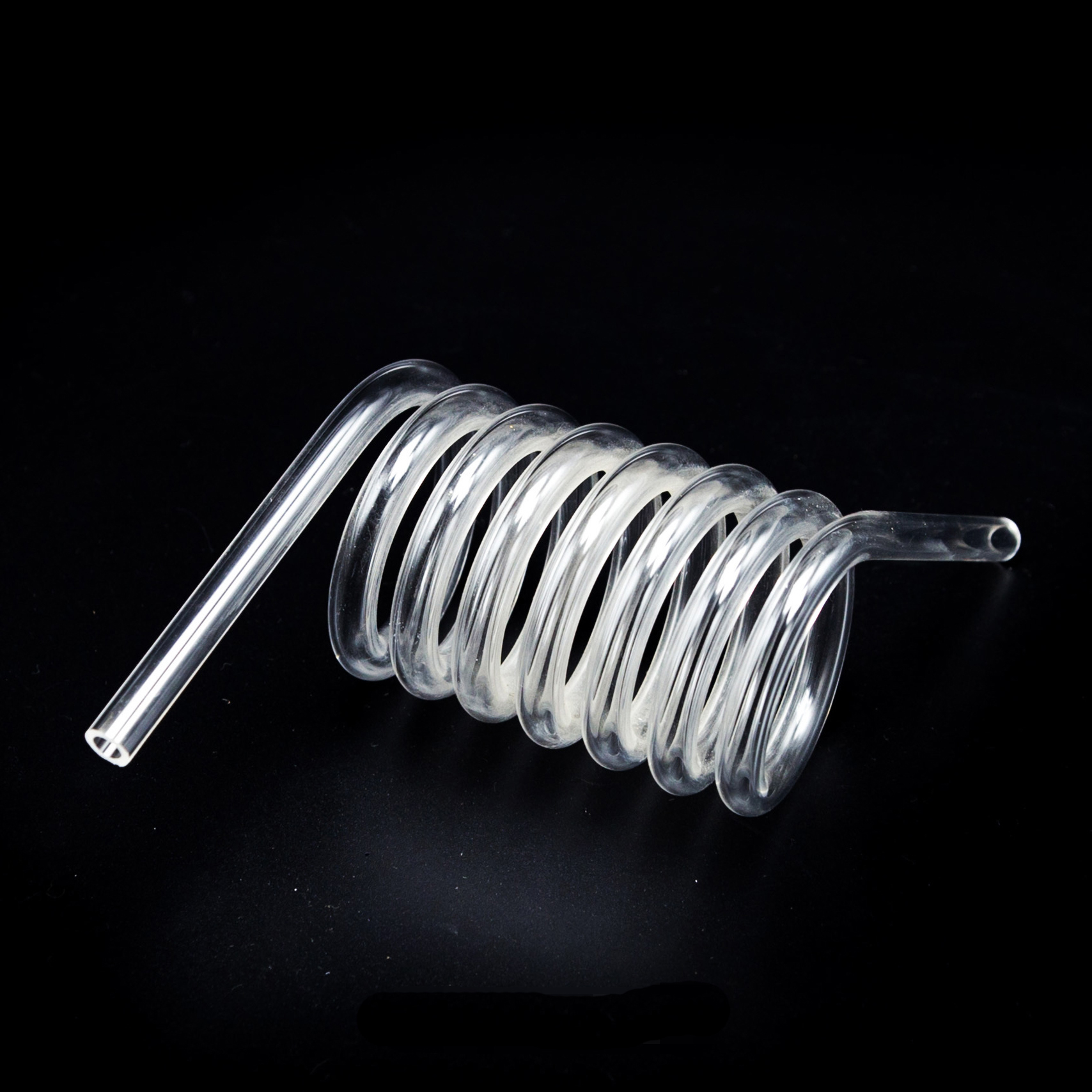
Factory High Purity Polished Clear Quartz C Shape Spiral/Bent Tubes
Bending, welding, and custom flame-polished profiles with tight tolerances for semiconductor furnaces.

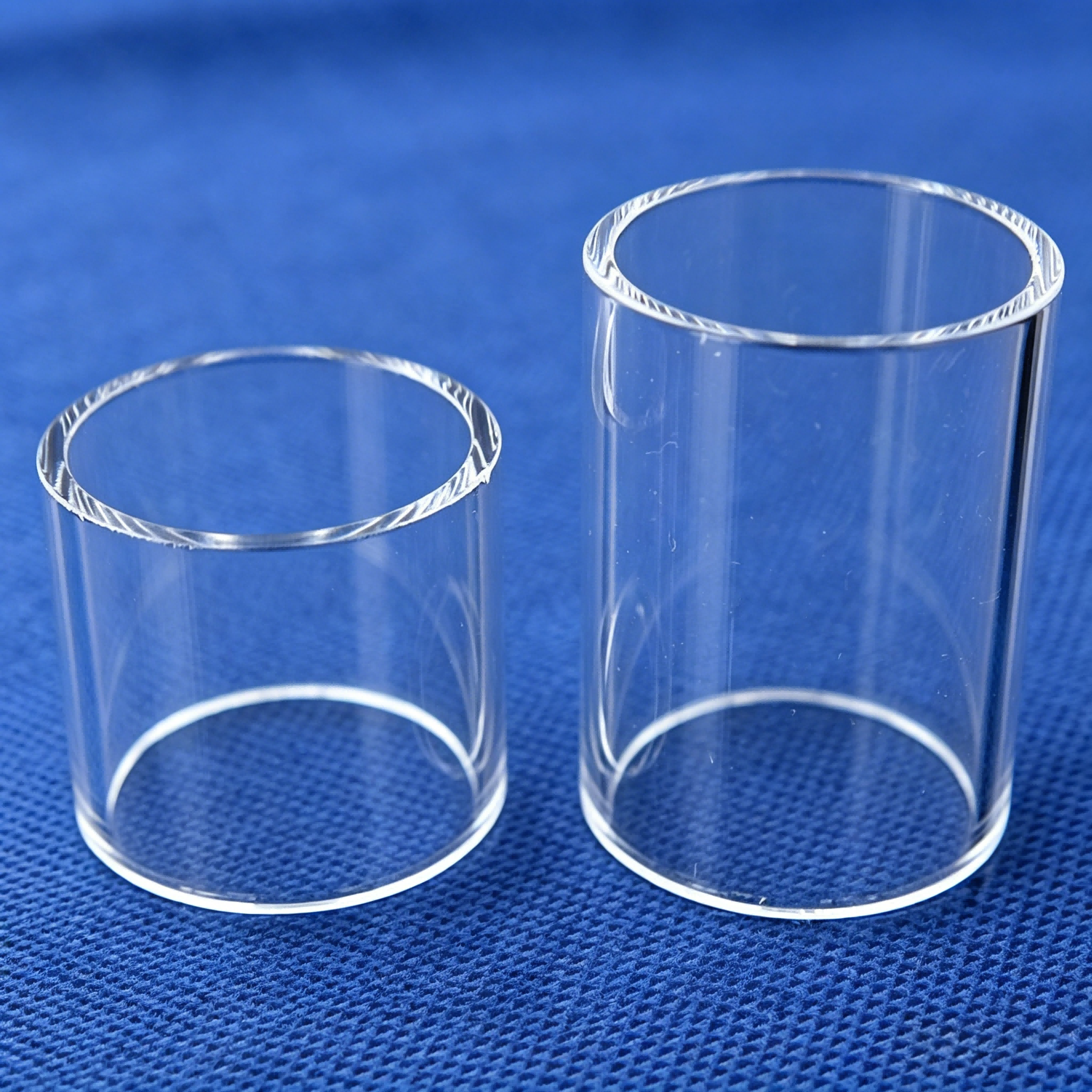
Custom Clear Fused Quartz Tube Fire Polished Silica Glass Cup SJ 226
99.999% chemical purity, thermal shock resistant up to 1100°C for chemical lab synthesis.
High Temperature Corrosion Resistant Twin Tube Quartz Glass Pipe SJ 210
Polished surface, specialized dual-channel profile for heating filaments and chemical vapour reactors.
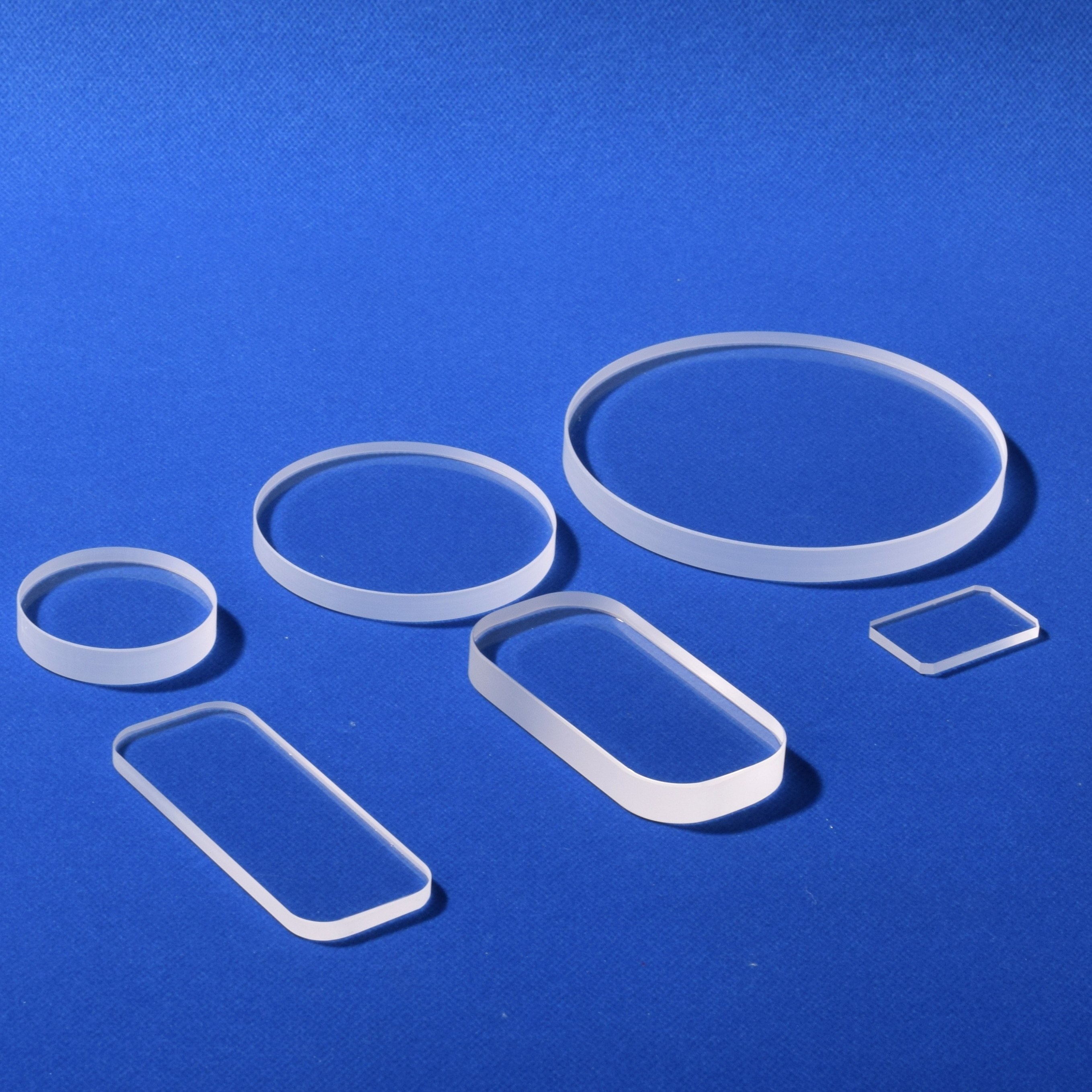
Optical High Transmittance Heat Resistant Quartz Glass Watch Window
Optical-grade surface finish, parallel CMP lapping, ideal for observation viewports and sight ports.
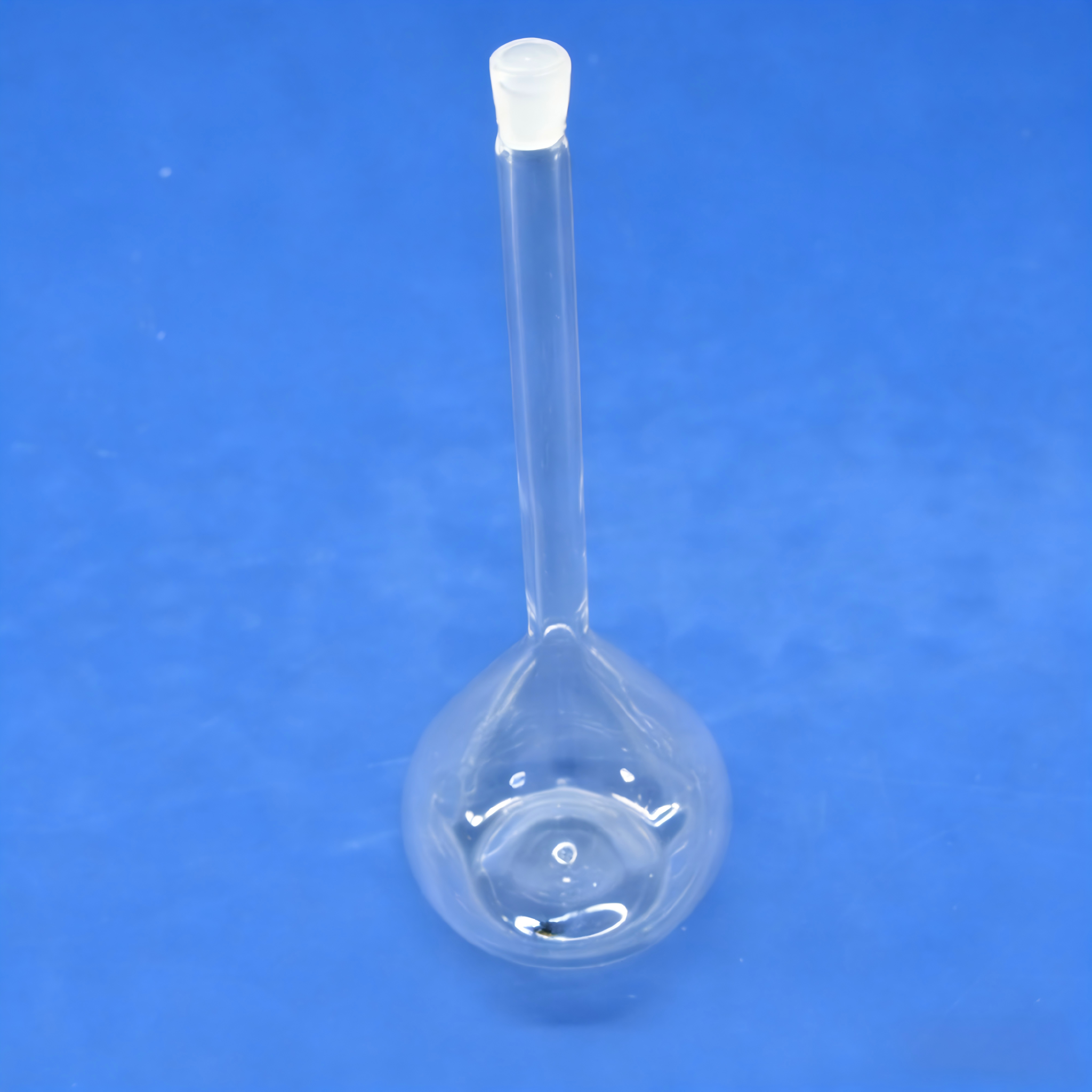
Customized High Purity Transparent Quartz Glass Lab Flask & Ampoule
Ozone-free, high thermal shock resistance for anaerobic chemical crystallization and synthesis.
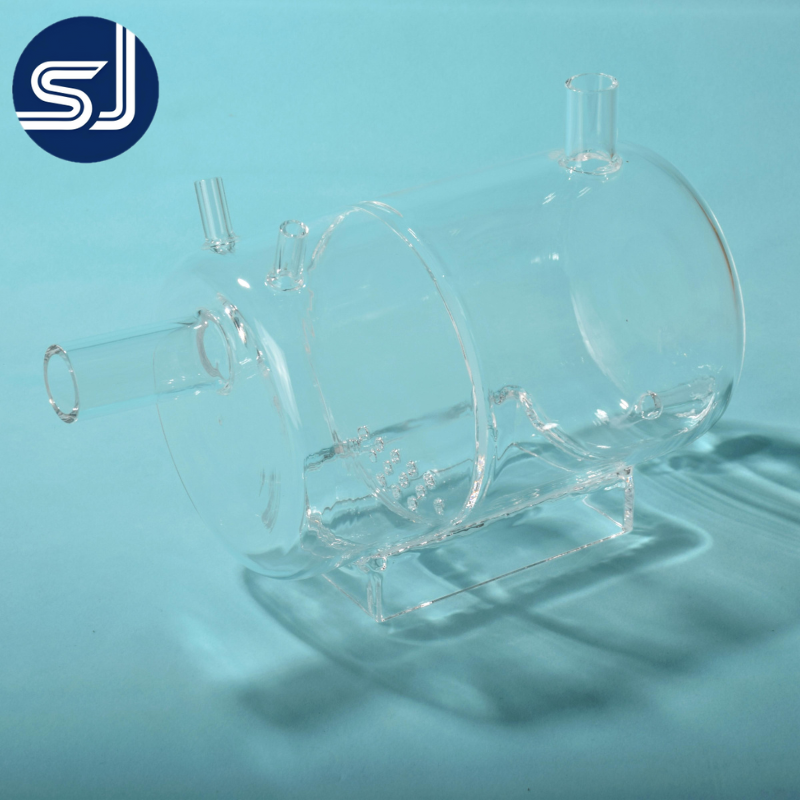
SJ QUARTZ High-Temperature Corrosion-Resistant Quartz Flow Splitting Bottle
99.99% SiO₂ chemical inertness to aggressive acids; calibrated fluidic delivery ports.
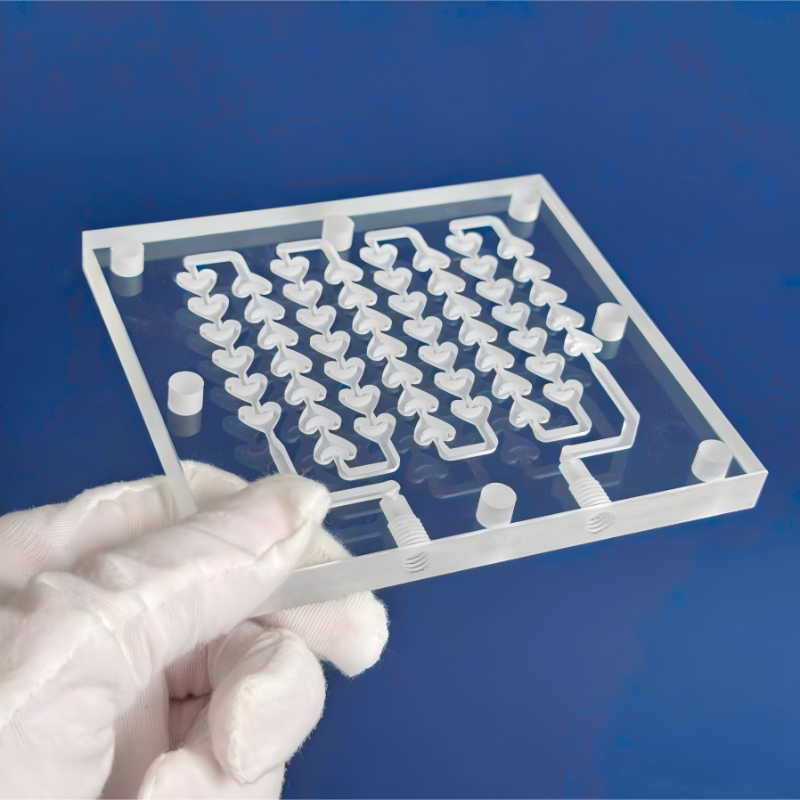
High Thermal Conductance 1750°C Melting Point Circular Quartz Chips
Precision wafer substrate discs for laser ablation, photolithography carriers, and SEM/TEM mounts.
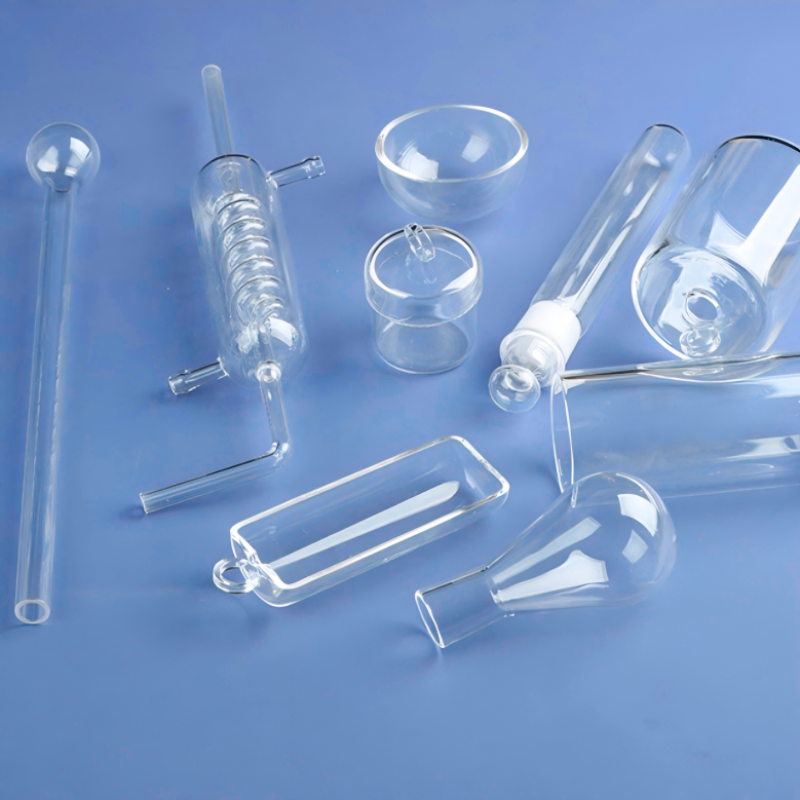
Quartz Glass Tube Plugging Rod & High Frequency Heating Test Boat
Flame-polished solid quartz rod with custom stop plugs for inert atmosphere tube furnace experiments.
Material Science of Optical Grade Quartz Plates: JGS1 vs. JGS2 vs. JGS3
A rigorous metallurgical and optical analysis for procurement teams, optical engineers, and research principal investigators in Poland.
In high-precision optical and laser fabrication, the physical performance of an optical grade quartz plate is governed entirely by the manufacturing genesis of the synthetic silica boule and its trace elemental morphology. Fused quartz and synthetic fused silica exhibit virtually zero thermal expansion ($5.5 \times 10^{-7}/\text{K}$), outstanding acoustic velocity, and extreme thermal resilience. However, selecting the incorrect optical grade for specific spectral bands—such as ultraviolet excimer laser processing, fiber laser cutting (1064 nm), or mid-infrared spectroscopy—incurs severe absorption losses, thermal lensing, and premature solarization.
1. Spectral Transmittance & OH⁻ Inclusion Physics
The fundamental distinction across our manufacturing lines centers on the concentration of residual hydroxyl ($\text{OH}^-$) ions and metallic impurities (Fe, Al, Ti, Na, K, Ca).
JGS1 (Synthetic Fused Silica / Deep UV Grade): Synthesized via chemical flame hydrolysis of high-purity silicon tetrachloride ($\text{SiCl}_4$) in an oxygen-hydrogen atmosphere, JGS1 contains virtually zero metallic trace contaminants ($< 1\text{ ppm}$ total metals). While this process introduces an $\text{OH}^-$ concentration between $800$ and $1200\text{ ppm}$, it yields flawless transmission across the deep ultraviolet band ($185\text{ nm} - 2500\text{ nm}$). JGS1 exhibits no internal bubble inclusions (ISO 10110 Class 0), zero striae, and negligible fluorescence under $254\text{ nm}$ mercury discharge lamps, making it the industry benchmark for deep-UV photolithography masks, excimer laser windows ($193\text{ nm}$, $248\text{ nm}$), and spectrophotometer cuvette windows in Polish biotech and R&D laboratories.
JGS2 (Optical Grade Fused Quartz / UV-Visible Grade): Produced by electric resistance or oxy-hydrogen gas melting of selected natural Donghai pegmatite crystal sand, JGS2 delivers outstanding mechanical strength, high structural rigidity, and optimal transmission across the visual and near-infrared spectra ($220\text{ nm} - 2500\text{ nm}$). With an intermediate $\text{OH}^-$ content ($150 - 200\text{ ppm}$) and strict bubble-class sorting, JGS2 provides an exceptionally cost-effective solution for plasma sight glasses, protective laser debris shields, optical observation viewports, and high-temperature metallurgical furnaces.
JGS3 (Infrared Grade Fused Silica / Water-Free Quartz): Fabricated via vacuum electric fusion or plasma-assisted oxidation under desiccated atmospheres, JGS3 reduces hydroxyl radical concentrations to below $5\text{ ppm}$. By eliminating the ubiquitous $\text{OH}^-$ vibrational overtone absorption dip at $2.73\ \mu\text{m}$, JGS3 guarantees high transmission across the infrared spectrum up to $3500\text{ nm}$, serving thermal imaging sensors, defense optronics, gas spectrometry cells, and high-power industrial $\text{CO}_2$ or fiber laser optics.
| Property / Characteristic | JGS1 (Synthetic UV) | JGS2 (Optical UV-Vis) | JGS3 (Infrared Grade) | Testing Standard |
|---|---|---|---|---|
| Primary Spectral Range | 185 nm – 2500 nm | 220 nm – 2500 nm | 260 nm – 3500 nm | DIN 58925 / UV-Vis Spectrometry |
| $\text{SiO}_2$ Chemical Purity | > 99.9999% (Metals < 0.5 ppm) | > 99.995% (Metals < 15 ppm) | > 99.99% (Metals < 20 ppm) | ICP-MS Chemical Assays |
| Hydroxyl ($\text{OH}^-$) Content | 800 – 1200 ppm | 150 – 200 ppm | < 5 ppm (Water-free) | FTIR Absorption @ 2.73 µm |
| Coefficient of Thermal Expansion (CTE) | $5.5 \times 10^{-7}\text{ K}^{-1}$ | $5.5 \times 10^{-7}\text{ K}^{-1}$ | $5.4 \times 10^{-7}\text{ K}^{-1}$ | Dilatometry ($20\text{°C} - 320\text{°C}$) |
| Transformation Temperature ($Tg$) | 1075 °C | 1120 °C | 1140 °C | ASTM C598 |
| Softening Point | 1680 °C | 1683 °C | 1710 °C | ASTM C338 Beam Bending |
| Surface Quality (Scratch-Dig) | 20/10 or 10/5 (Laser Polished) | 40/20 (Optical Polished) | 60/40 to 40/20 | MIL-PRF-13830B / ISO 10110-7 |
| Surface Flatness (Transmitted Wavefront) | $\lambda/10 - \lambda/4\ @ 632.8\text{ nm}$ | $\lambda/4 - 1\lambda\ @ 632.8\text{ nm}$ | $\lambda/4 - 1\lambda\ @ 632.8\text{ nm}$ | Zygo Phase-Shift Interferometry |
| Laser Induced Damage Threshold (LIDT) | > 15 J/cm² (1064 nm, 10 ns) | > 8 J/cm² (1064 nm, 10 ns) | > 10 J/cm² (1064 nm, 10 ns) | ISO 21254 Single-Shot / Multi-Shot |
Strategic Industrial Applications Across Poland's Tech Clusters
Supplying Tier-1 fabricators, academic labs, and laser machine builders across Warsaw, Wrocław, Kraków, and Gdańsk.
Laser Processing & Machine Tools (Wrocław)
Lower Silesia represents Poland's industrial nexus for CNC laser cutting and robotic welding systems. We supply high-damage-threshold JGS1 and JGS2 optical protective debris plates ($D20\text{mm} - D50\text{mm}$, AR coated at 1064 nm) that withstand intense spatter without clouding or surface micro-fracturing.
Semiconductor Packaging & CEZAMAT (Warsaw)
Warsaw's microelectronics infrastructure, centered around institutions like CEZAMAT and the Łukasiewicz Network, relies on our super-polished synthetic quartz plates ($Ra \le 0.5\text{ nm}$, parallelism $< 10\text{ arcsec}$) for UV lithography exposure masks, wafer temporary bonding, and high-frequency RF dielectric test substrates.
Synchrotron & Advanced Physics (Kraków)
Supporting the National Synchrotron Radiation Centre SOLARIS and Jagiellonian University, our custom-milled optical quartz plates and zero-bubble sample holders serve as ultra-clean substrates for X-ray diffraction (XRD), grazing-incidence analysis, and beamline monitoring ports with zero organic contamination.
Marine & Petrochemical Sensing (Gdańsk)
Poland's Baltic coast incorporates specialized maritime monitoring and chemical refineries. We engineer high-pressure circular quartz sight glasses and fluid-metering windows capable of resisting continuous salinity, steam shock at 300 bar, and nitric/sulfuric acid exposure without hazing.
Trends Shaping Poland's Industrial Quartz Procurement Landscape
Strategic structural shifts observed across the European semiconductor supply chain and Poland's domestic photonic sector.
The European Chips Act & OSAT Expansion
With landmark assembly and test investments landing in Lower Silesia (such as Intel's planned facility in Miękinia near Wrocław) and accompanying Tier-2 semiconductor suppliers expanding across Poland, domestic demand for ultra-pure optical quartz carriers, PECVD wafer boats, and inspection windows is experiencing unprecedented growth.
Factory-Direct Sourcing vs. Intermediary Markups
Polish manufacturing OEMs and academic laboratories are rapidly bypassing Western European catalog distributors. Purchasing directly from verified Chinese manufacturing plants eliminates 300% distributor premiums, secures complete drawing-based dimensional control, and compresses lead times on custom-engineered optical components.
Stringent Metrology & Cleanliness Verification
Polish procurement officers now mandate strict adherence to European norms: certified RoHS/REACH material declarations, ISO 10110 surface imperfection standards, and class 1000 cleanroom packaging to eliminate particulates before quartz plates are integrated into vacuum chambers or laser optical trains.
Vulra Quartz Manufacturing Advantages & Engineering Credentials
Headquartered in Donghai County—the crystal capital of the world—Lianyungang Vulra Quartz Products Co., Ltd. controls the complete vertical processing chain from high-purity natural silica sand refinement to precision double-sided optical planarization.
Donghai Crystal Core
Direct mine-mouth access to high-purity quartz reserves guarantees uniform raw boule consistency, zero supply disruption, and purity ratings up to 99.999% SiO₂.
TÜV Rheinland Verified
Independently audited on-site by TÜV Rheinland. Our registered manufacturing facilities, precision CNC lathes, and cleanroom packaging comply with international standards.
Hot & Cold Machining
Full in-house CNC wire sawing, ultrasonic core drilling, chamfering, double-sided CMP optical polishing, and automated lehr stress-relief annealing under one roof.
Prototyping from 1 Piece
Supportive OEM/ODM engineering policies allow Polish R&D groups, universities, and industrial machine builders to order a single custom plate before batch production.
 TÜV RheinlandOn-Site Audited
 Custom ManufacturerAuthenticated Status
 CE CompliantEU Harmonized
 RoHS & REACHHazardous-Free
Frequently Asked Questions by Polish Technical Buyers
Essential guidance covering logistics, tolerances, customs declarations, and material selection for import into Poland.