High-Purity Fused Quartz Components for Immediate Deployment
Precision fabricated semiconductor tubes, optical slide substrates, thermal boats, and reaction vessels engineered with tight dimensional tolerance (±0.05 mm) and verified ultra-low trace-metal contamination.

Material Science & Chemical Purity of Semiconductor Fused Silica
In advanced sub-micron wafer processing, epitaxial growth, plasma-enhanced chemical vapor deposition (PECVD), and atomic layer deposition (ALD), the physical enclosure is not merely a passive containment structure—it is an active boundary condition. At operating temperatures spanning 1000°C to 1250°C, any mobile ionic contaminants within the quartz lattice migrate rapidly toward the process chamber, inducing gate oxide breakdown, lattice dislocation, or severe minority carrier lifetime degradation.
Natural quartz sand mined in our Donghai source basin undergoes multistage chemical refining, hydrofluoric acid etching, and thermal chlorination to volatilize transition elements. The resultant fused quartz glass limits total transition metals (Fe, Cu, Ni, Cr) to under 1.5 ppm, with refractory elements (Al, Ti, Zr) locked firmly into the tetrahedral silica network.
| Element / Parameter | Semiconductor Grade (Standard) | High-Purity Electronic Grade | Synthetic Fused Silica (EUV/Excimer) | Impact on Semiconductor Processing |
|---|---|---|---|---|
| Aluminium (Al) | 12 – 16 ppm | 6 – 8 ppm | < 0.05 ppm | Structural network modifier; alters high-temp viscosity |
| Iron (Fe) | < 0.2 ppm | < 0.05 ppm | < 0.01 ppm | Carrier lifetime killer; optical absorption in near-IR |
| Sodium (Na) | < 0.7 ppm | < 0.3 ppm | < 0.01 ppm | Mobile ion drift; causes flatband voltage instability |
| Potassium (K) | < 0.6 ppm | < 0.2 ppm | < 0.01 ppm | Degrades dielectric breakdown voltage of SiO₂ gates |
| Hydroxyl Group (OH⁻) | < 20 ppm (Standard dry) | < 5 ppm (Electric fused) | 150 – 1200 ppm (Flame hydrolysis) | Regulates IR transmission and vacuum outgassing rates |
| Transformation Temp (Tg) | 1075 °C | 1120 °C | 1040 °C | Defines upper safe limit without thermal sagging |
At process temperatures above 1150°C, metastably frozen amorphous quartz glass exhibits a thermodynamic drive toward crystalline transformation into beta-cristobalite. This devitrification process is catalyzed exponentially by surface alkali contamination (fingerprints, atmospheric dust, airborne salt particles). Our fabrication protocols integrate Class 1000 ultrasonic acid wash cycles, followed by high-vacuum heat dehydroxylation to maximize continuous working lifespans in diffusion furnaces without micro-crystallization or micro-cracking upon cooling through the 270°C alpha-to-beta cristobalite inversion point.
Localized High-Tech Applications across Aarhus & the Central Denmark Region
As Denmark's secondary innovation capital and the focal node of Jutland's industrial corridor, Aarhus bridges advanced research institutions with high-precision manufacturing, sustainable cleantech, and next-generation power electronics. Supplying semiconductor-grade quartz components to this region requires an appreciation of specific local production environments, from university cleanrooms to harsh offshore testing installations.
Aarhus University & iNANO Center Cleanrooms
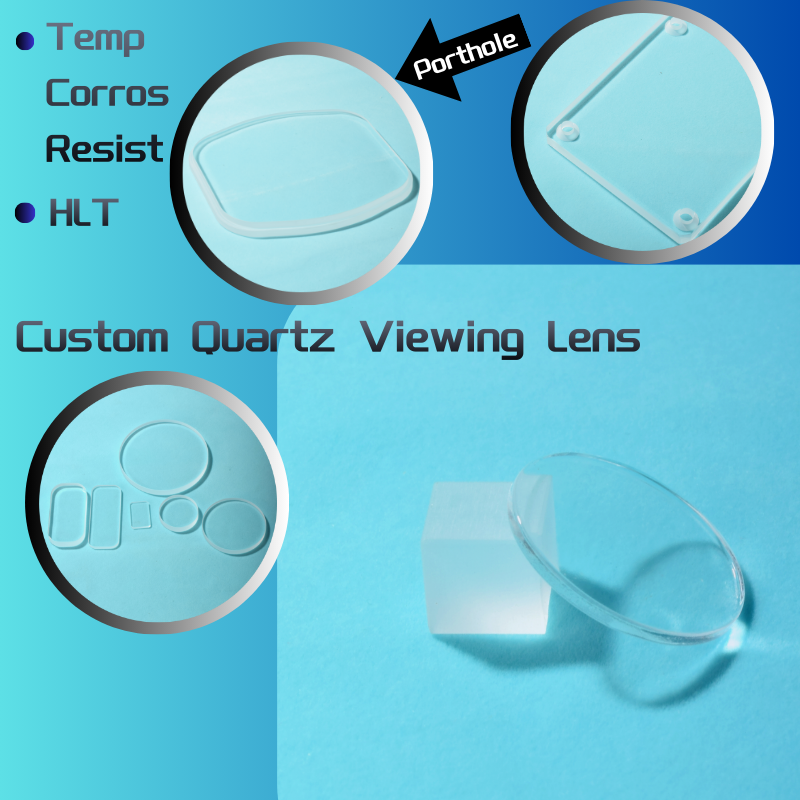
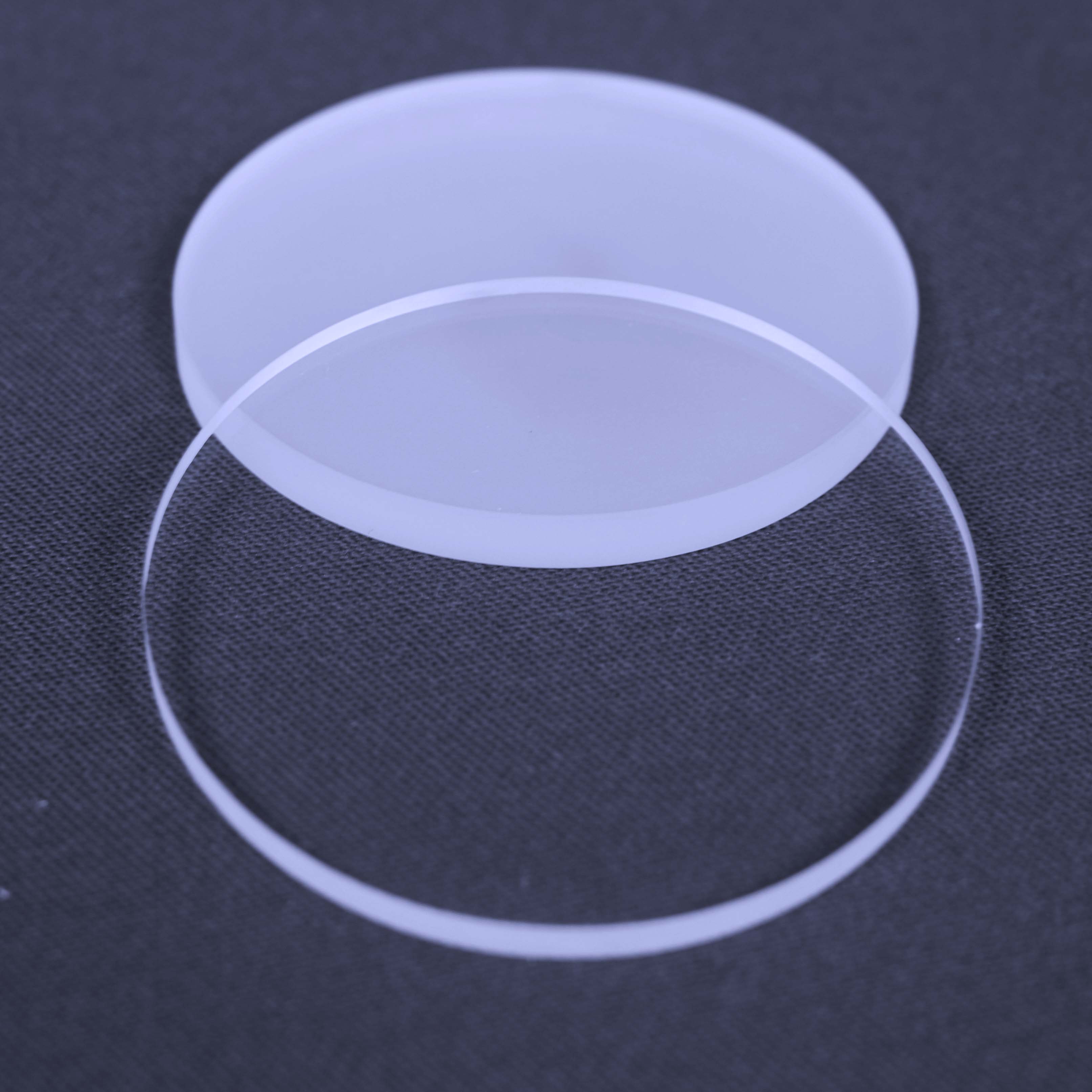
The Interdisciplinary Nanoscience Center (iNANO) and AU Department of Physics and Astronomy conduct pioneering research in 2D quantum materials, silicon nanophotonics, and atomic scale epitaxy. Our optical grade quartz slides (SJ 126), custom zero-background XRD sample plates, and clear crucible boats deliver zero-fluorescence optical clarity and near-zero thermal distortion for high-precision analytical research.
Power-to-X & Green Hydrogen Electrolysis Corridors
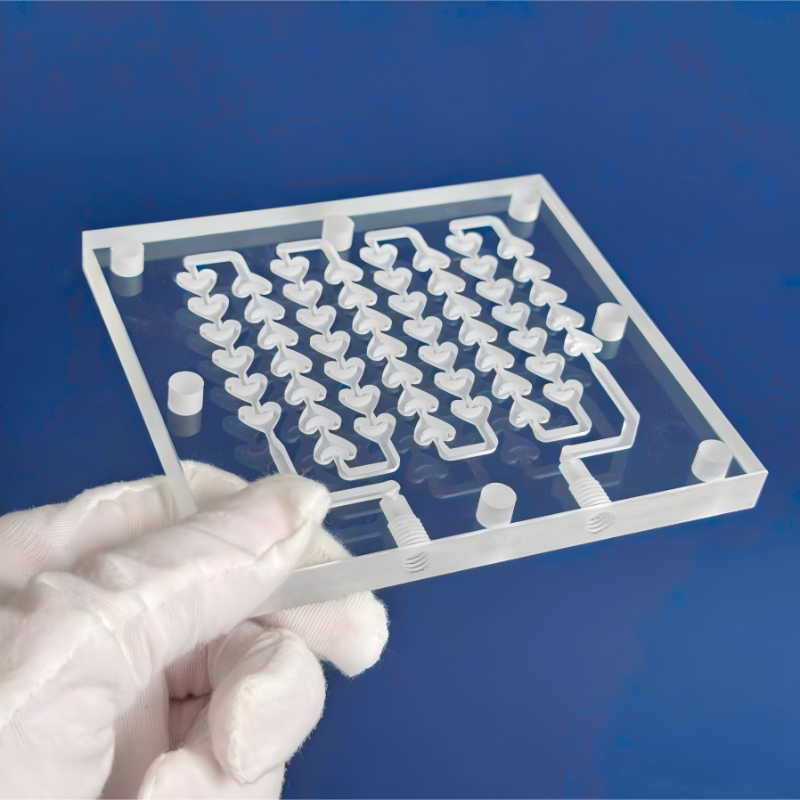
The Greater Aarhus port region is emerging as a critical nexus for Power-to-X initiatives and high-temperature solid oxide electrolysis cells (SOEC). Our thermal conductance quartz chips, heat-exchange glass interlayers, and closed-end quartz reactor tubes endure extreme corrosive steam electrolysis environments and cyclical thermal stresses reaching 950°C without degradation.
Offshore Wind Turbine Sensor Electronics & Inverters
Aarhus serves as the operational headquarters for global wind turbine giants and power conversion engineers. Wide-bandgap semiconductor devices (Silicon Carbide SiC and Gallium Nitride GaN) powering high-voltage wind turbine converters require high-temperature furnace diffusion tubes, crystal sintering boats, and quartz annealing carriers engineered to zero-sag dimensions.
Strategic Trends Shaping Quartzware Sourcing Across Denmark
Denmark's proactive alignment with the European Chips Act and aggressive national net-zero decarbonization goals have ignited a structural evolution in technical ceramics and fused silica procurement. Engineering teams in Central Jutland are moving away from rigid, long-lead catalog distributors toward agile OEM/ODM manufacturing partnerships capable of rapid iteration from single-piece prototypes to verified recurring batches.
1. European Chips Act & Onshored Pilot Lines
European initiatives to safeguard microelectronics sovereignty have spurred Danish universities and pilot lines to expand high-frequency testbeds. There is a surging demand for bespoke, drawing-based quartz parts, gas manifolds, and plasma etch chambers built precisely to European DIN/ISO tolerances.
2. Wide-Bandgap Power Semiconductors (SiC/GaN)
To support high-efficiency power inverters, Jutland fabricators are processing 150mm and 200mm SiC wafers. These processes operate at temperatures exceeding 1300°C, demanding high-purity natural fused quartz with specialized wall thicknesses to avoid mechanical collapse under vacuum.
3. Stringent Green Cleanroom Standards
Danish cleanroom operators enforce rigorous lifecycle and carbon transparency protocols. Fused quartz, with its 100% recyclable inorganic silica matrix and extended working lifetimes achieved via precision annealing, is actively replacing disposable fluoropolymers and brittle lower-grade borosilicates.
Enterprise Advantages: Donghai Provenance & TÜV-Audited Precision
Operating directly out of the Jiangsu Donghai Economic Development Zone—globally recognized as the silicon and crystal capital—Lianyungang Vulra Quartz Products Co., Ltd. controls the complete supply chain, from the raw quartz mineral crystal refining to final sub-millimeter CNC cold grinding and cleanroom vacuum packaging. We eliminate multi-tiered distributor markups while delivering audited industrial reliability.
TÜV Rheinland Verified
Full on-site audit certification confirming direct manufacturing capacity, engineering testing facilities, and verified export operations.
CE & RoHS Compliance
Every batch shipped to the European Union strictly complies with EU Directive 2011/65/EU (RoHS) and carries CE certification documentation.
Drawing-Based Prototyping
CAD, STEP, and DXF reviews conducted by senior glassblowing engineers. Feasibility, wall-thickness integrity, and thermal stresses validated within 24 hours.
Shockproof Export Logistics
Multi-layer shock-absorption foam, moisture-sealed vacuum inner sleeves, and reinforced fumigated crates guaranteed for air cargo to Billund or ocean freight to Aarhus Havn.
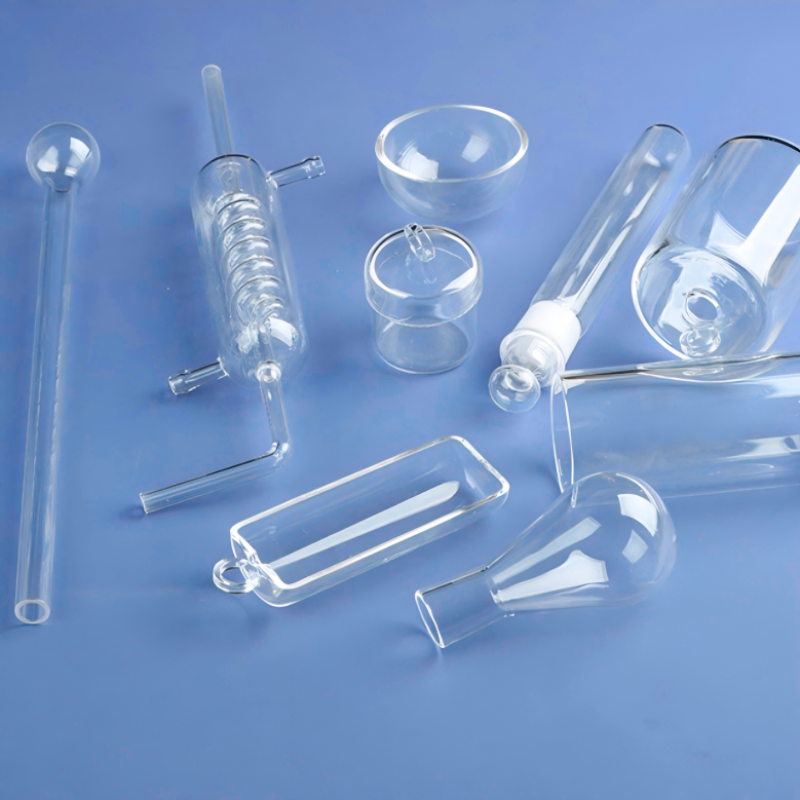
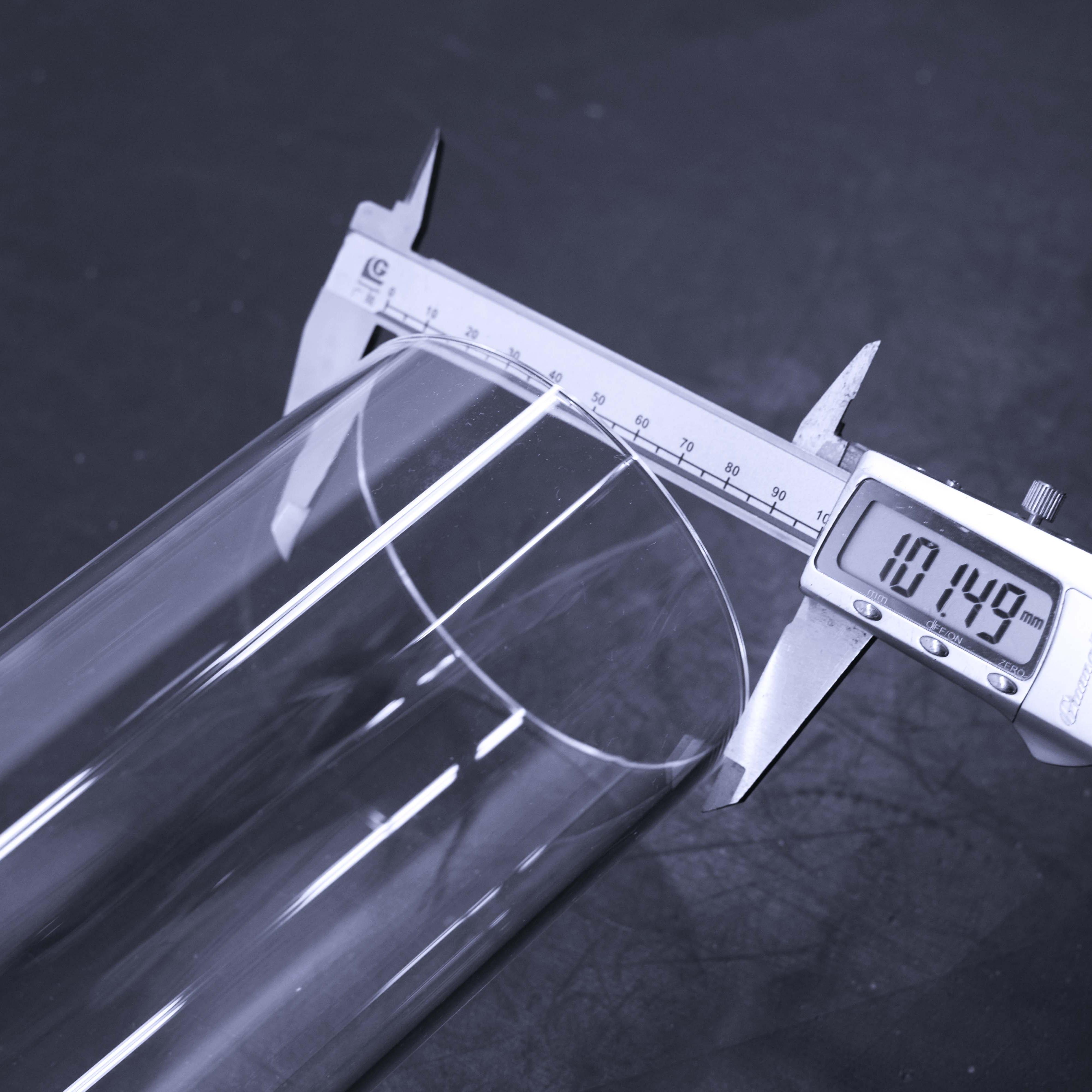
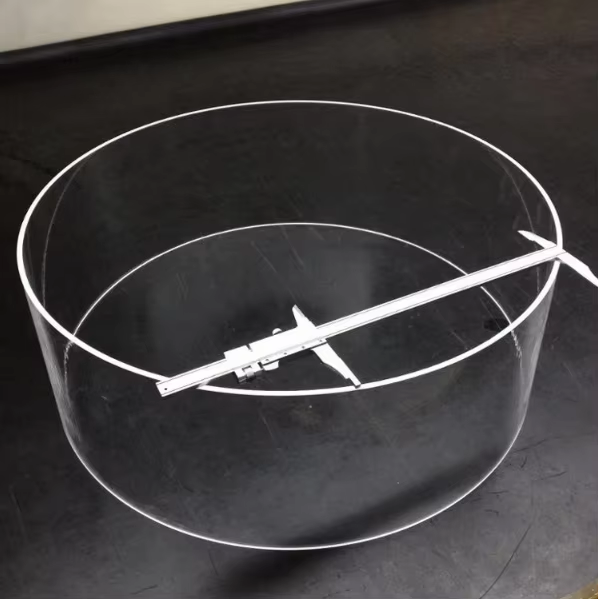
Our factory houses both state-of-the-art oxy-hydrogen thermal lathe systems for drawing, bending, and joining large-bore tubes (up to Φ800 mm) and 5-axis ultrasonic CNC diamond machining centers for slotting, micro-hole drilling, beveling, and double-sided chemical mechanical polishing (CMP). Every weld undergoes a dedicated programmable thermal annealing cycle at 1150°C in clean electric ovens to eradicate localized residual hoop stress, eliminating unprovoked thermal fractures during rapid heating phases in your equipment.
Aarhus Procurement FAQ: Technical, Customs & Supply Chain Guide
Clear, factual answers addressing EU customs clearance, Danish import protocols, quality inspection methodologies, and logistics schedules for purchasing managers and laboratory technicians across Aarhus and Central Denmark.
What are the exact logistics transit schedules and customs processes into Aarhus, Denmark?
We maintain streamlined logistics corridors connecting our manufacturing plant directly to Jutland:
- Express Air Courier (DHL/FedEx Priority): 4 to 6 business days transit directly to your facility in Aarhus, Skejby, or surrounding tech parks via Billund Airport (BLL) or Copenhagen (CPH).
- Air Freight Consolidations: 7 to 10 days for bulk laboratory consignments, cleared via Danish SKAT customs brokers.
- Direct Ocean Container Freight: 28 to 35 days direct transit to Aarhus Havn (Port of Aarhus)—the largest container terminal in Denmark—ideal for heavy furnace tubes, raw quartz tubing, and volume batch deliveries.
All export shipments are accompanied by complete commercial invoices, HS Code classification declarations (typically TARIC 7002.31 for quartz tubes, 7017.10 for laboratory quartzware), Certificate of Origin (CO), and formal packing lists for zero-delay Danish import clearance.
How does your factory ensure fragile quartz arrives without micro-cracks or stress fractures?
Quartz glass failure during transit is almost always caused by inadequate dampening of high-frequency vibrational shock. Our export protocol mandates a three-tier protection architecture:
- Individual Cleanroom Sleeving: Each component is chemically washed, dried with Class 100 DI nitrogen, and heat-sealed in clean antistatic polyethylene to prevent surface abrasions.
- Custom High-Density EPE Cushioning: Components are set within custom CNC-contoured expanded polyethylene foam profiles, ensuring no contact with exterior container walls.
- Plywood Casing with Shockwatch Indicators: Heavy tubes, crucibles, and boats are enclosed in rigid, fumigated plywood export crates fitted with visual TiltWatch and ShockWatch impact sensors to assure transit accountability.
Can we procure small batch or single-piece (MOQ 1) customized quartz components for research prototypes?
Yes. We recognize that academic cleanrooms such as Aarhus University's iNANO and advanced start-up pilot facilities frequently require one-off prototypes or low-volume batches (1 to 5 pieces) to validate novel reactor geometries or optical chambers. We accept 2D PDF drawings or 3D STEP/DXF models with an MOQ of 1 piece on all custom crucibles, boats, plates, and machined tubes.
How do you verify trace metal purity and validate dimensional compliance before export?
Every production lot is subjected to dual-stage quality control. Dimensional compliance is mapped using high-precision optical coordinate measuring machines (CMM) and laser micrometers with resolutions down to ±0.005 mm. Purity certification is validated through ICP-MS lot testing, measuring parts-per-billion levels of iron, aluminum, sodium, and potassium. A formal Certificate of Analysis (CoA) and Dimensional Inspection Sheet accompany every delivery.
What is the operational distinction between natural fused quartz and synthetic fused silica?
Natural Fused Quartz: Melted from refined natural quartz rock sand (SiO₂ ≥ 99.99%). It features an elevated softening point (1683°C) and superior viscosity at high temperatures, making it the premier choice for diffusion tubes, wafer boats, high-temperature furnace liners, and infrared heaters.
Synthetic Fused Silica: Synthesized by flame hydrolysis of chemical gas precursors (e.g., SiClₔ). It achieves exceptional metallic purity (total metal < 0.1 ppm) and near-perfect optical transmittance down to the deep ultraviolet spectrum (193 nm DUV/EUV). It is recommended for excimer laser optics, semiconductor photolithography masks, and spectrophotometric window applications.
Can your custom quartzware tolerate direct water quenching from 1000°C without shattering?
Yes. Because our fused quartz possesses an extraordinarily low coefficient of thermal expansion (α ≈ 5.5 × 10⁻⁷ / °C between 20°C and 1000°C), it generates virtually no internal thermal gradient stress during rapid cooling. A standard clear quartz tube or boat heated uniformly to 1100°C can be dropped immediately into cold room-temperature water without fracturing, provided it has been properly stress-relieved in our annealing ovens.