High-Purity Fused Quartz Components
Engineered for extreme thermal environments, semiconductor processing, and optical transmission applications across Southeast Asia.
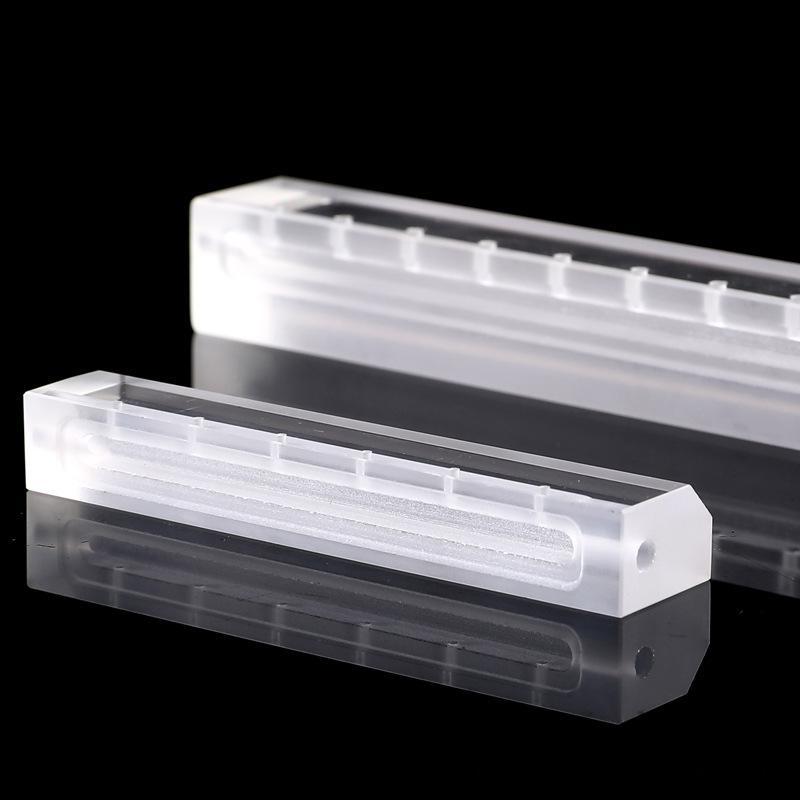
Clear Quartz Testing Sheet Ultra-thin Optical Grade Circular Shape SJ Brand Model SJ 077 High Thermal Conductance Welding
View Details →
Custom Clear Fused Quartz Tube With/Without Handle Fire Polished Hand-blown Silica Glass Drinking Cup SJ SJ 226 99.999% Purity
View Details →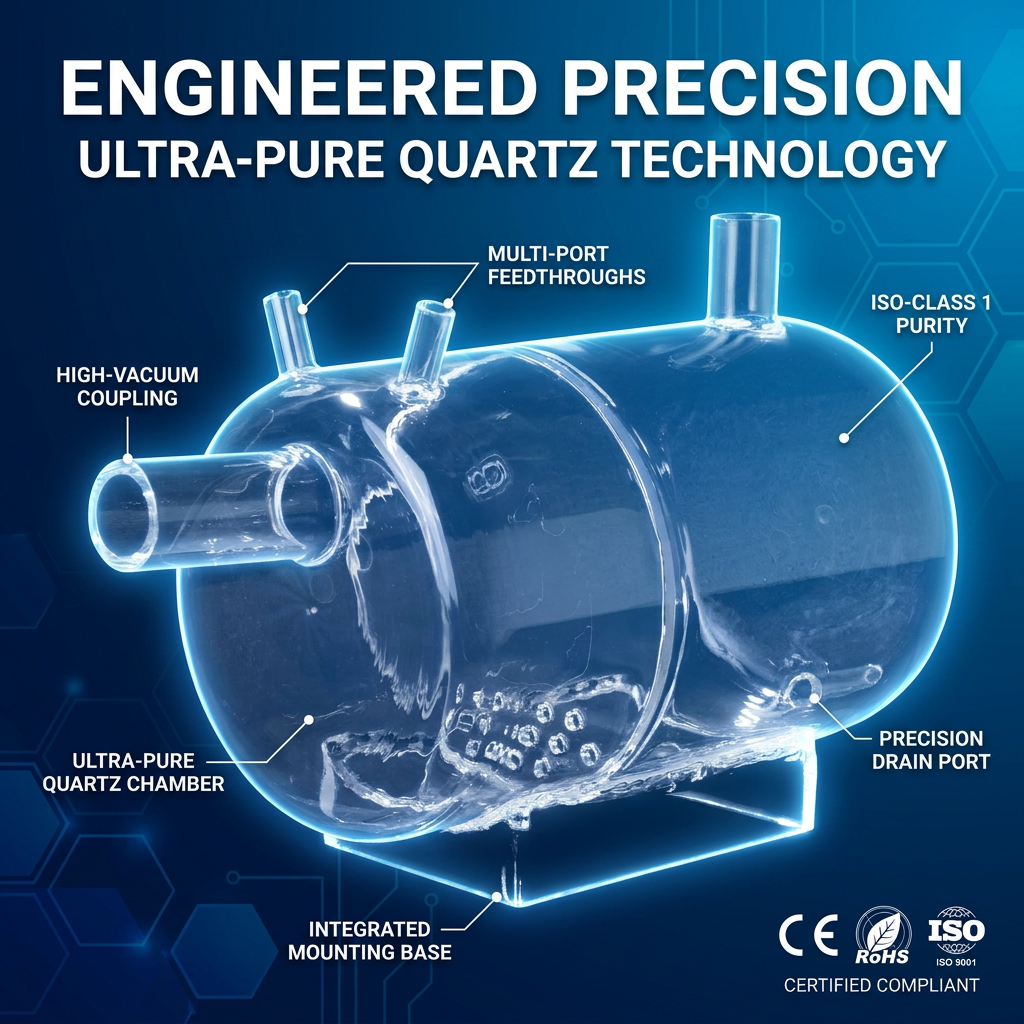
Customized Precision Quartz Separating Container Semiconductor Grade 99.9%-99.999% Purity Quartz Glassware High-Purity Chemical
View Details →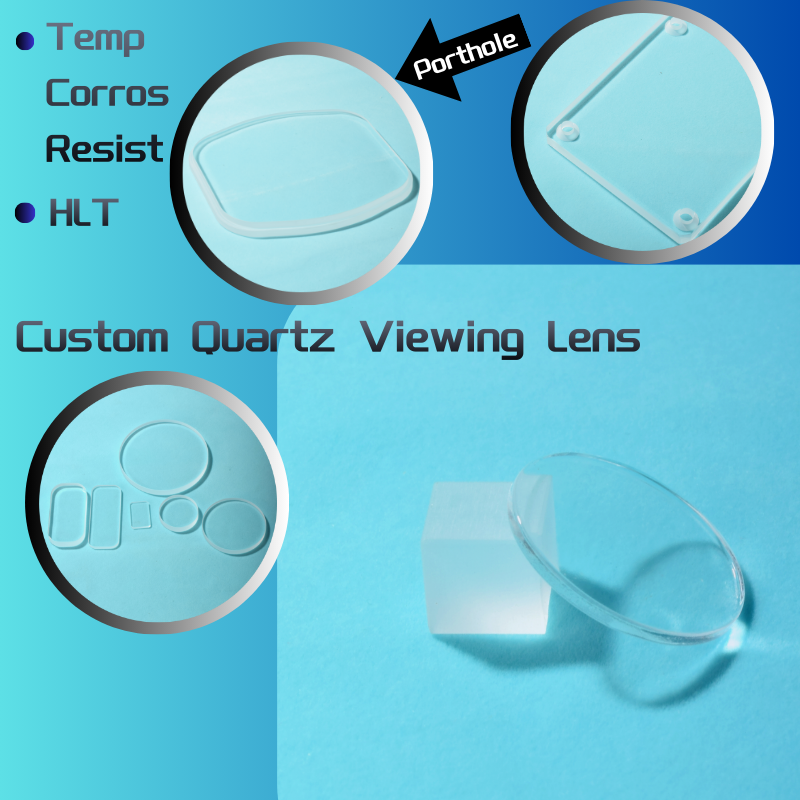
SJ SJ 126 Natural Fused Quartz Square Thin Glass Slide Optics-High Transparency Precision Laboratory Use High Purity Cutting
View Details →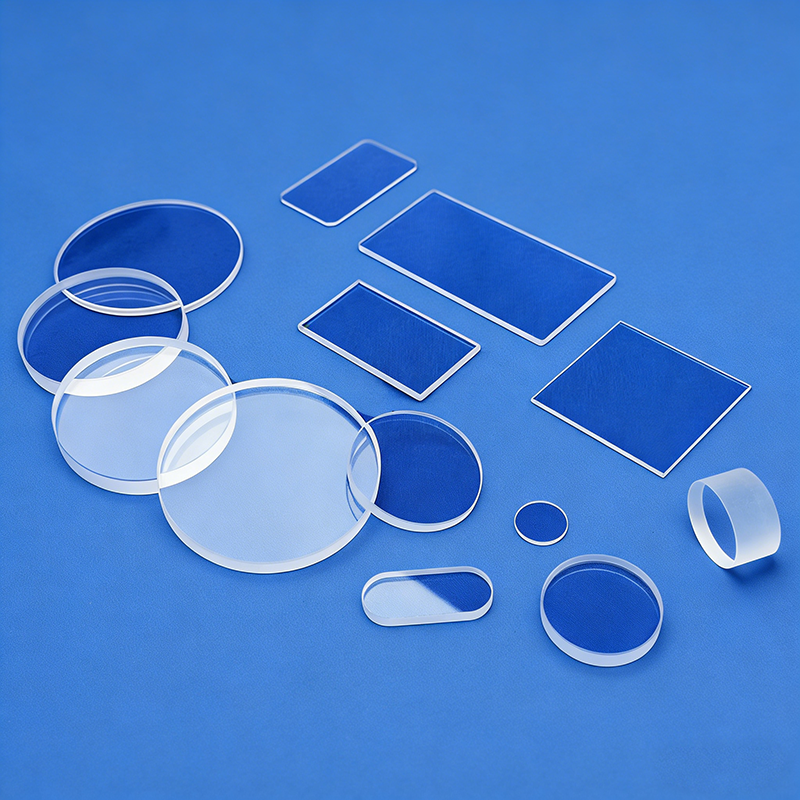
SJ QUARTZ Customized Translucent Natural Fused Quartz Arc-Welding Cutting Services Industrial Lab Applications High Purity Flat
View Details →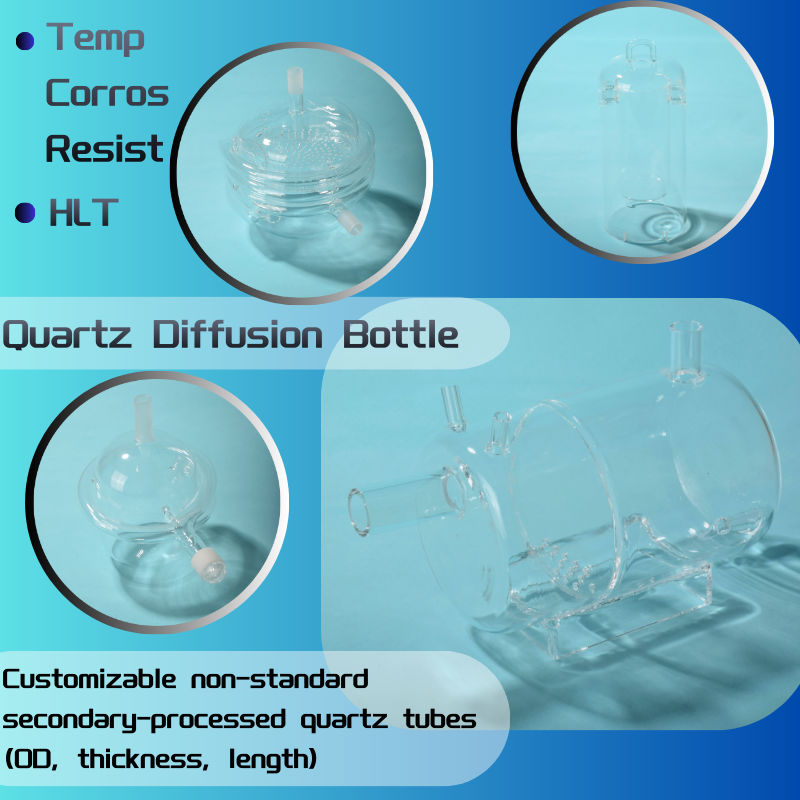
SJ 135 Custom High Purity Clear Quartz Tube Condensers Separatory Funnels Waste Jars Purification Units Semiconductor Grade High
View Details →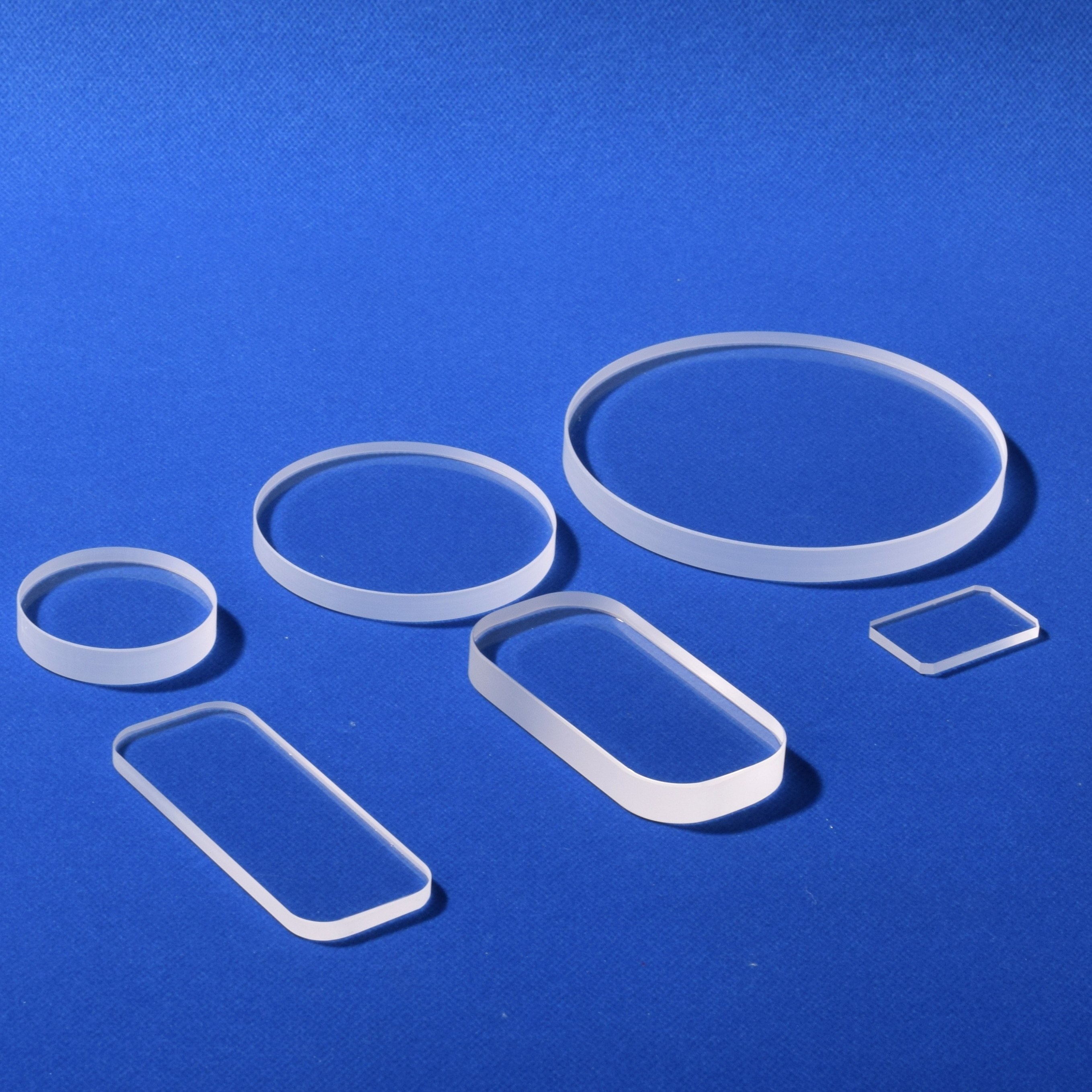
Sophisticated Technology High Transmittance Customized Heat Resistant Transparent Quartz Glass Watch Window High Insulation
View Details →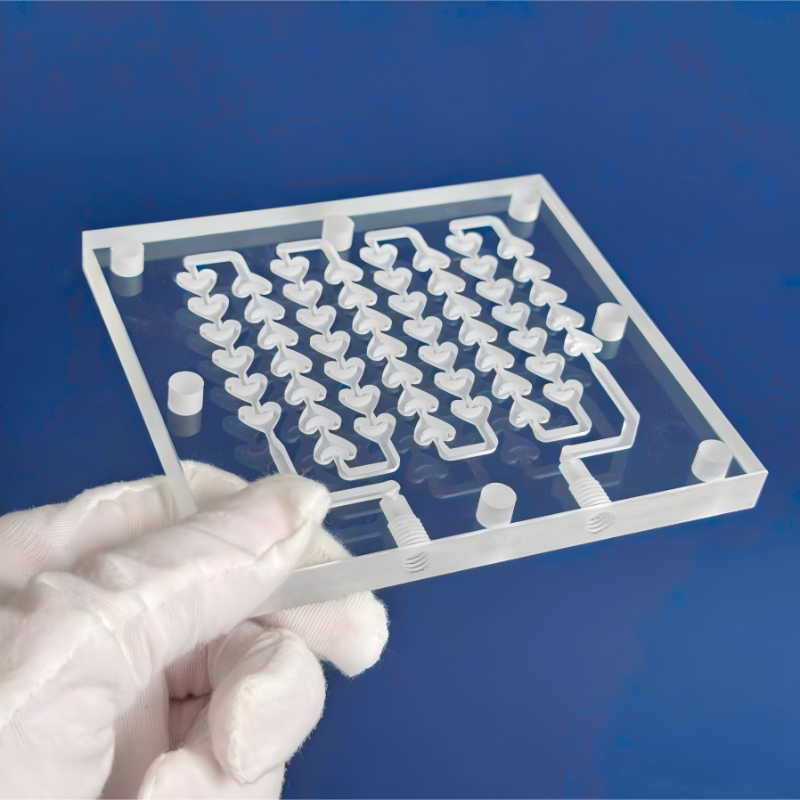
Customized High Thermal Conductance 1750C Melting Point Heat-Exchange Glass Interlayer Chips Circular Shape Quartz
View Details →Engineering Fundamentals of Infrared Fused Quartz Plates
A comprehensive examination of optical transmission spectrums, thermal-mechanical resilience, and structural purity for Laotian industrial procurement specialists.
In modern high-temperature industrial manufacturing and optical analytical setups, standard borosilicate and soda-lime glasses fail rapidly due to thermal shock, structural devitrifcation, and severe optical absorption in the infrared spectrum. Fused quartz—manufactured by melting ultra-high-purity natural silica sand ($\text{SiO}_2 > 99.99\%$) or chemically synthesized precursor compounds—stands as the definitive material solution for demanding thermal, optical, and chemical environments.
For industrial plant engineers, research laboratory managers, and original equipment manufacturers (OEMs) in Laos, selecting the optimal infrared quartz plate requires an understanding of three key material metrics:
Infrared Spectral Transmittance
Infrared quartz plates offer high transmittance ($>90\%$) spanning Near-Infrared (NIR: 780 nm – 1400 nm), Mid-Infrared (MIR: 1400 nm – 3000 nm), and Far-Infrared wavelengths. Surface anti-reflective (AR) coatings can further optimize efficiency for specific laser and sensor wavelengths.
Extreme Thermal Resilience
With an extremely low linear coefficient of thermal expansion ($5.5 \times 10^{-7} / \text{K}$), fused quartz withstands rapid thermal cycling. Plates heated to $1000^\circ\text{C}$ can be quenched in cold water without catastrophic cracking or stress-induced fracturing.
Chemical Inertness & Hardness
Fused quartz is chemically resistant to almost all acids (including nitric, sulfuric, and hydrochloric acids) at ambient and elevated temperatures, with HF and hot phosphoric acid being the only exceptions. It holds a Mohs hardness rating of 7.0.
| Physical / Optical Property | Standard Clear Fused Quartz | Infrared-Grade Fused Silica (IR-OEM) | Synthetic Fused Silica (UV-Grade) |
|---|---|---|---|
| $\text{SiO}_2$ Chemical Purity | 99.99% | 99.995% – 99.999% | 99.9999% |
| Hydroxyl ($\text{OH}^-$) Content | 150 – 400 ppm | < 5 ppm (Vacuum Fused) | 800 – 1000 ppm |
| Optical Transmission Range | 260 nm – 2500 nm | 250 nm – 3800 nm (FIR Enhanced) | 185 nm – 2200 nm |
| Continuous Working Temp. | 1100 °C | 1150 °C | 950 °C |
| Softening Temperature Point | 1683 °C | 1710 °C | 1600 °C |
| Thermal Expansion Coeff. ($20\text{--}300^\circ\text{C}$) | $5.5 \times 10^{-7} / \text{K}$ | $5.4 \times 10^{-7} / \text{K}$ | $5.7 \times 10^{-7} / \text{K}$ |
Localized Application Scenarios Across Laos
How customized infrared quartz plates drive technical efficiency and reliable output in Laotian economic sectors.
As the Lao People's Democratic Republic expands its industrial infrastructure, modernizes agricultural processing, and leverages its strategic position along the Belt and Road Initiative (including the China-Laos Railway logistics corridor), the demand for high-performance processing components has grown substantially. OEM/ODM infrared quartz plates are crucial across several key Laotian industries:
Cassava & Agricultural Processing Drying
Laos is a major regional producer of cassava starch, dried fruit, and refined agricultural commodities (concentrated in Champasak and Vientiane provinces). Far-infrared radiator setups utilizing coated quartz plates deliver targeted thermal energy directly to organic matter, evaporating moisture rapidly while preventing surface scorching and reducing electrical energy consumption by up to 30%.
Mining & Mineral Analysis Labs
With extensive copper, gold, bauxite, and potash extraction operations (such as Sepon, Phu Kham, and various mining hubs across Khammouane and Xieng Khouang), mining quality-control laboratories utilize chemically inert quartz digestion plates, crucible trays, and spectrographic optical windows for acid digestion and x-ray fluorescence (XRF) sample preparation.
Hydropower & Solar Power Infrastructure
To support Laos' vision of becoming the "Battery of Southeast Asia," high-voltage substations, transformer stations, and solar photovoltaic plants utilize thermal infrared viewing windows (watch glasses) fitted into electrical enclosures. This allows thermographic maintenance crews to perform non-contact IR thermal camera inspections under full load without exposing technicians to arc-flash hazards.
Laotian Market Trends & Direct Sourcing Advantages
Analyzing key structural shifts in industrial heating and direct factory procurement logistics.
Historically, industrial processing plants in Laos relied on imported standard heating elements or indirect convection ovens that suffered from high maintenance overhead and poor thermal efficiency. Current procurement trends show a strategic shift toward direct factory procurement from specialized OEM manufacturers:
- Rapid Transition to Precision Infrared Processing: Industrial parks in Vientiane (such as the Saysettha Development Zone) and Savannakhet Special Economic Zone are replacing resistive convection units with far-infrared quartz radiant heaters for faster, controllable heating lines.
- Direct Railway Freight Logistics via Boten-Vientiane Line: The operational China-Laos Railway provides a direct land freight link from major manufacturing centers in Jiangsu, China, to Vientiane. This reduces transshipment times to 5–7 days, bypassing sea freight delays and simplifying customs clearance.
- Demand for Customized OEM Specifications: Off-the-shelf quartz glass rarely fits customized industrial machinery. Local plant managers increasingly request 1-to-1 customized drawings, including precision CNC edge bevelling, mounting holes, custom cutouts, and specialized gold or ceramic back-reflective coatings.
Custom Fabrication & Engineering Capabilities
From 1-piece prototyping to full batch production, Lianyungang Vulra Quartz Products Co., Ltd. provides drawing-verified manufacturing.
Located in Donghai County—globally recognized as the crystal capital with direct access to high-purity natural quartz sand resources—Lianyungang Vulra Quartz Products Co., Ltd. operates integrated hot-working and cold-machining workshops designed for demanding technical applications:
Cold Machining & CNC Polishing
Equipped with multi-axis CNC diamond milling centers, surface grinders, and double-sided planetary polishing machines. We achieve dimensional tolerances down to $\pm 0.02\text{ mm}$, edge chamfering, hole drilling, and surface roughness specs ($Ra < 0.2\text{ nm}$).
Reflective & Functional Coatings
To maximize infrared directionality, quartz plates can be vacuum-sputtered with 24K gold, ceramic white coatings, or anti-reflective (AR) film layers. A rear gold coating reflects up to 98% of infrared radiation forward, maximizing system energy efficiency.
TÜV Rheinland Verified Quality
As an authenticated Custom Manufacturer audited on-site by TÜV Rheinland, every production lot undergoes spectrophotometric inspection, polariscopic strain checking, dimensional validation, and vacuum-sealed shockproof packaging.
Frequently Asked Questions for Sourcing in Laos
Practical technical guidance for Laotian plant managers, engineers, and international sourcing representatives.
1. What is the difference between standard clear quartz plates and specialized Infrared (IR) quartz plates?
2. How do you package fragile quartz plates to ensure zero breakage during transit to Laos?
3. What is the minimum order quantity (MOQ) for custom-engineered prototype plates?
4. Can you manufacture infrared quartz plates based on custom CAD drawings or physical samples?
5. What temperature limits apply to quartz plates operating in continuous thermal processing furnaces?
6. How does ordering directly from Donghai, China benefit buyers operating in Laos SEZs?
7. How should industrial operators clean and maintain infrared quartz plates to preserve transmission?
Request a Custom Engineering Quote for Laos
Submit your custom specifications, CAD drawings, or operational requirements. Our technical team will review thermal stress feasibility, material grade requirements, and provide a competitive factory-direct quote within 24 hours.
Send an Inquiry