Featured Industrial & Laboratory Quartz Components
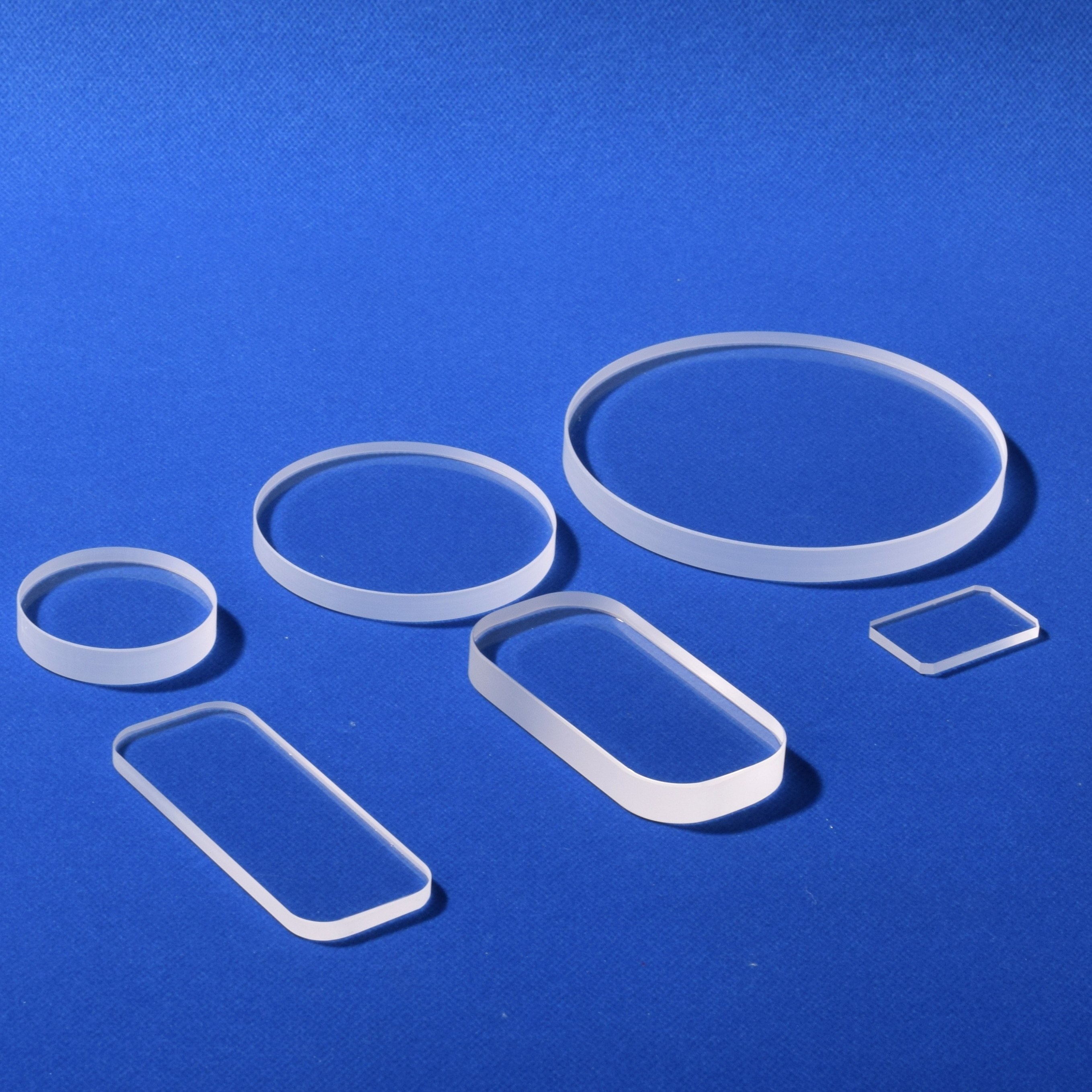
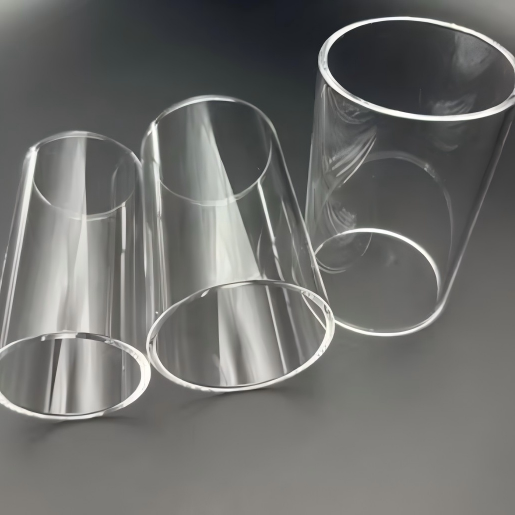
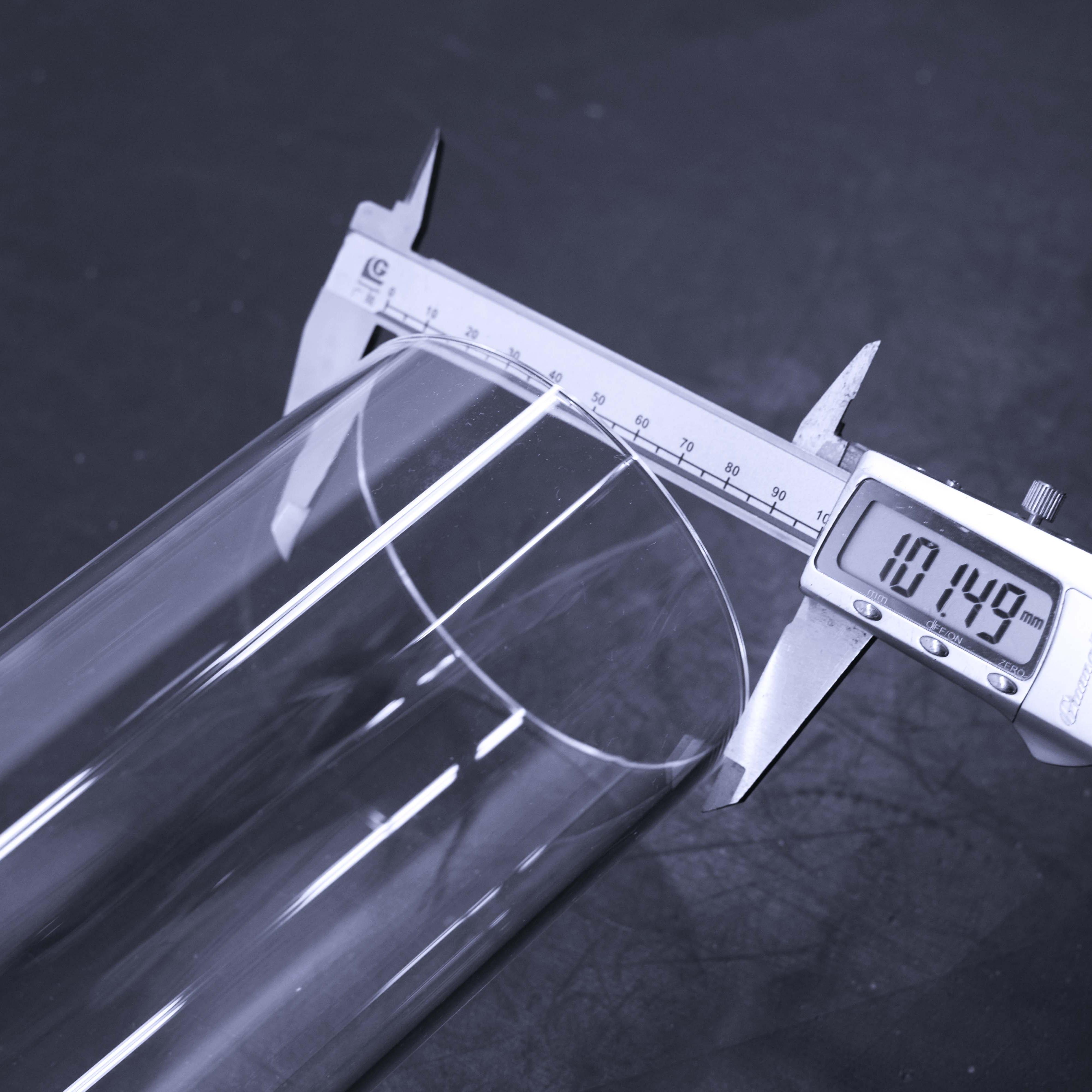
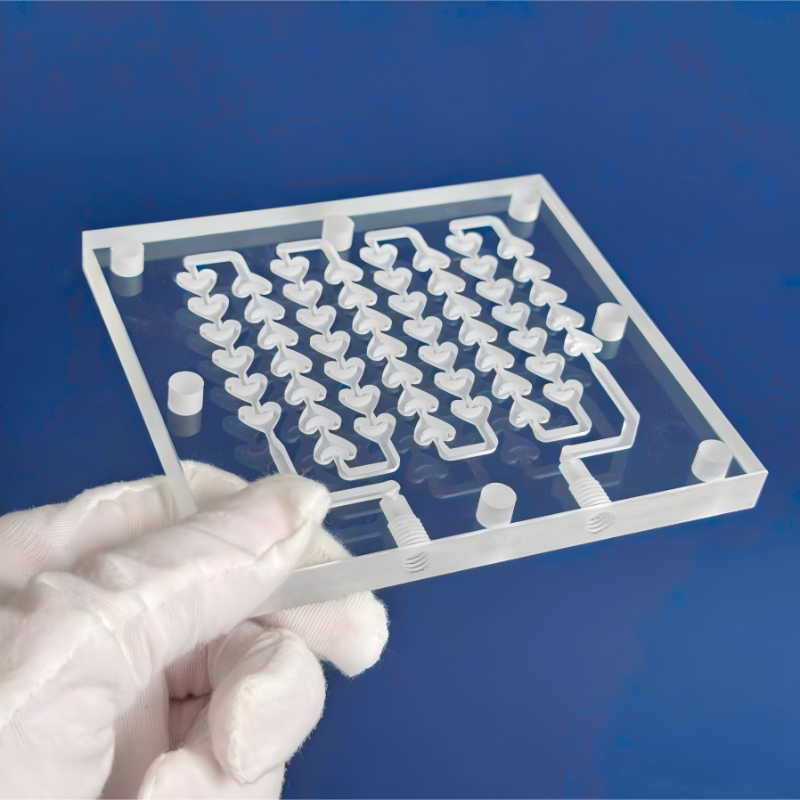
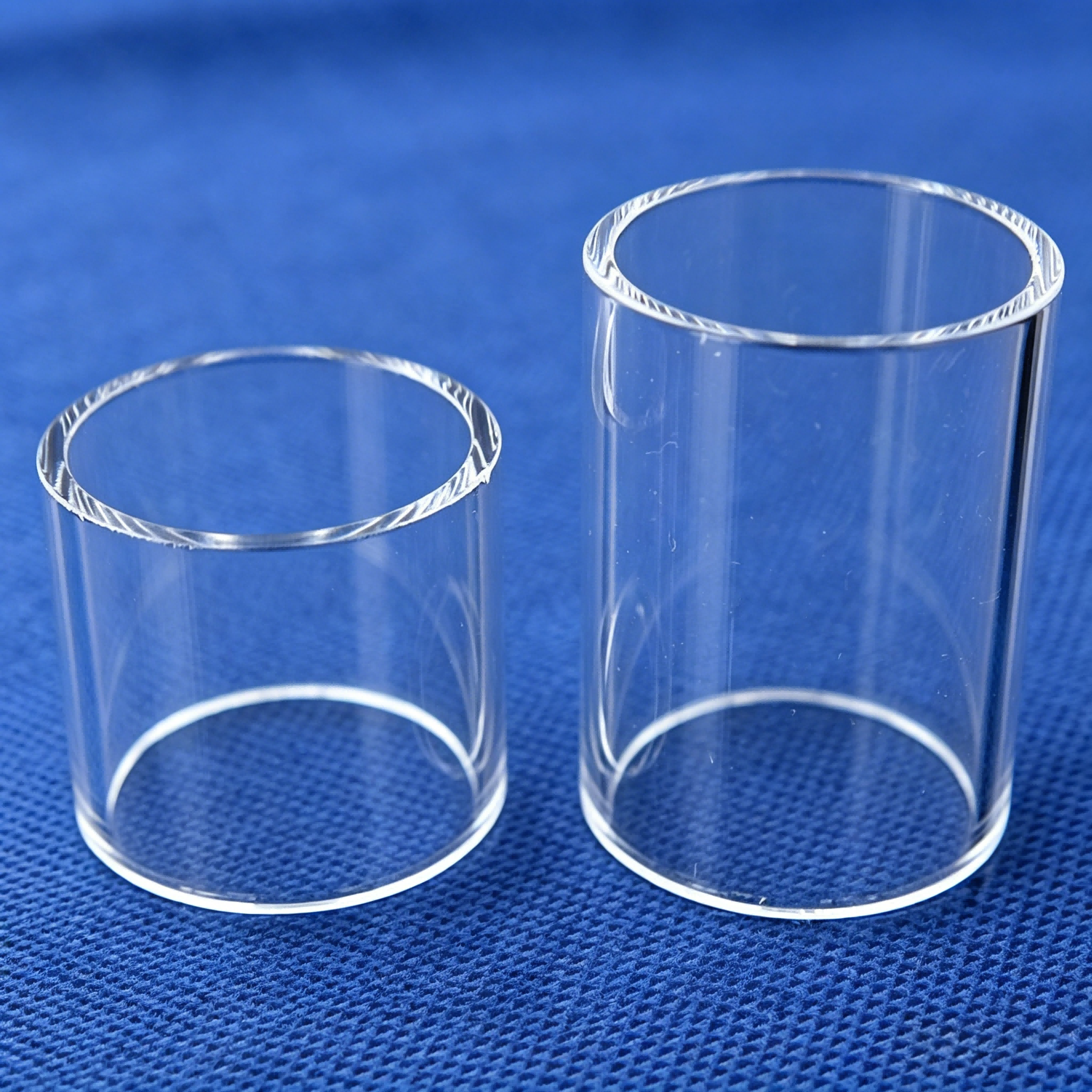
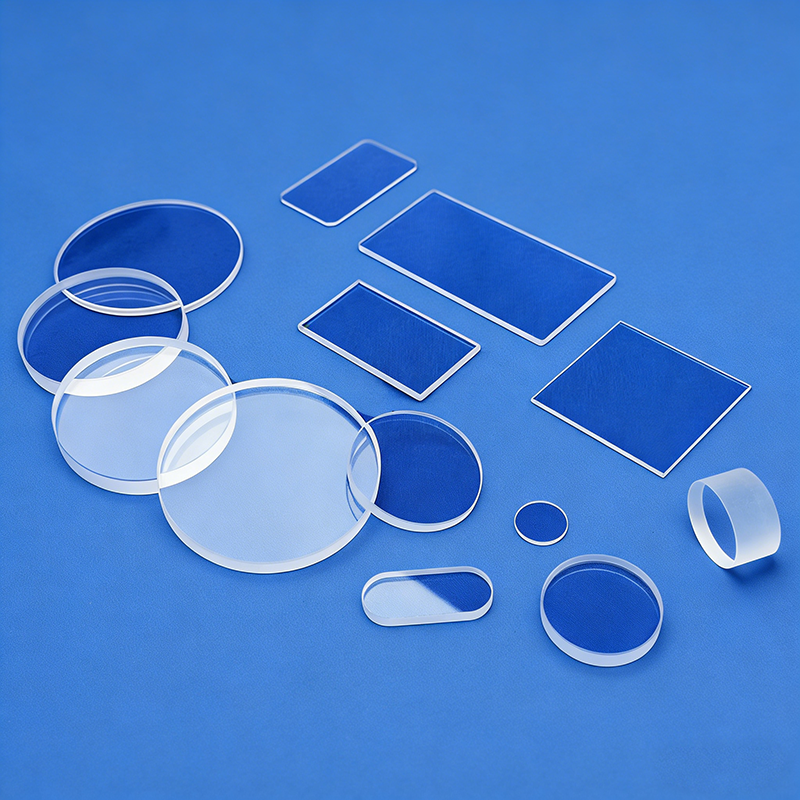
Direct OEM/ODM quartz solutions manufactured from high-purity natural silica sand (SiO₂ ≥ 99.99% to 99.999%). Custom fire-polishing, CNC slicing, bending, and pinching tolerances compliant with Austrian and European DIN/ISO standards.
Thermodynamic & Optical Integrity of Halogen Envelopes
A comprehensive evaluation of chemical purity, devitrification kinetics, and hydroxyl control required for halogen regenerative cycle lamps and high-output industrial infrared emitters.
The Halogen Cycle & Wall Chemistry
Halogen heating elements function via a closed chemical cycle where evaporated tungsten reacts with halogen halides (Br₂, I₂) forming tungsten oxyhalides. For this reversible equilibrium to persist without envelope darkening, the quartz inner envelope must operate reliably between 250°C and 900°C without releasing alkali metal contaminants (Na, K, Li). Our envelopes maintain alkali content below 1.5 ppm, preventing early crystallization and filament sagging.
Hydroxyl (OH⁻) Group Management
The presence of hydroxyl groups directly lowers the softening point of fused silica and provokes envelope deformation under positive internal halogen gas pressure. Vulra Quartz utilizes multi-stage vacuum thermal dehydroxylation to decrease OH⁻ concentrations below 20 ppm (or < 5 ppm for high-efficiency vacuum models), shifting the effective strain point upward and prolonging lamp life in 24/7 continuous industrial thermoforming tunnels.
Devitrification Kinetic Suppression
Prolonged thermal exposure above 1000°C causes meta-stable amorphous silica to transition into crystalline cristobalite, leading to localized micro-fractures during cooling cycles. By utilizing Donghai natural crystal sands with total metallic contamination < 15 ppm and fire-polishing all cut surfaces under clean hydrogen atmospheres, our halogen envelopes demonstrate remarkable structural stability over 5,000+ continuous operating hours.
| Physical / Chemical Property | High-Purity Fused Quartz (Vulra Standard) | Synthetic Fused Silica (Optical Grade) | Borosilicate Glass 3.3 (Standard Lab) |
|---|---|---|---|
| SiO₂ Purity Level | ≥ 99.99% – 99.999% | ≥ 99.9999% (Chemical Precursor) | Approx. 80.5% (with B₂O₃, Na₂O) |
| Softening Point (Dilatometric) | 1683 °C | 1600 °C – 1650 °C | 825 °C (Unsuitable for Halogen) |
| Continuous Service Temperature | 1100 °C (Short peaks 1350°C) | 1150 °C | 450 °C – 500 °C max |
| Thermal Expansion (0–300°C) | 5.5 × 10⁻⁷ K⁻¹ (Zero thermal shock) | 5.2 × 10⁻⁷ K⁻¹ | 33 × 10⁻⁷ K⁻¹ (Prone to thermal fracture) |
| Spectral Transmission (Envelope) | Broadband 220 nm – 3500 nm (Near-IR optimized) | Deep-UV 180 nm – 2500 nm | Cut-off below 320 nm; Limited IR |
| Alkali Impurity (Na + K + Li) | < 2.0 ppm (Prevents tungsten cycle poisoning) | < 0.1 ppm | > 40,000 ppm (Fatal to halogen cycles) |
| Direct Vienna Application Match | Industrial IR Emitters, District Heating Pyrometry | TU Wien UV Spectroscopy, Photolithography | Non-thermal sanitary & ambient drainage |
Localized Application Scenarios across Vienna & Lower Austria
Vienna serves as Central Europe's critical engineering conduit, demanding rigorous adherence to industrial decarbonization, high-precision photonics, and automation standards.
Wien Energie Power Facilities & Waste Incineration Plants
Vienna’s pioneering district heating grids—including Simmering, Donaustadt, and the iconic Spittelau thermal plant—demand extreme reliability. Our high-temperature one-end closed quartz protective sleeves house pyrometric probes, flue-gas analyzers, and infrared flame sensors within aggressive, sulfurous combustion atmospheres up to 1150°C without devitrifying or clouding.
Industrial Infrared Drying: Aspern & Wiener Neudorf Corridors
Austrian tier-one automotive suppliers and polymer processors in Seestadt Aspern and the IZ NÖ-Süd (Industriezentrum Niederösterreich Süd) rely on our customized twin-tube quartz emitters (23x11mm and 33x15mm cross-sections). Gold-coated quartz envelopes ensure targeted short-wave directional heat for rapid paint curing, composite thermoforming, and plastic welding without thermal dissipation.
TU Wien (Vienna University of Technology) & AIT Institute
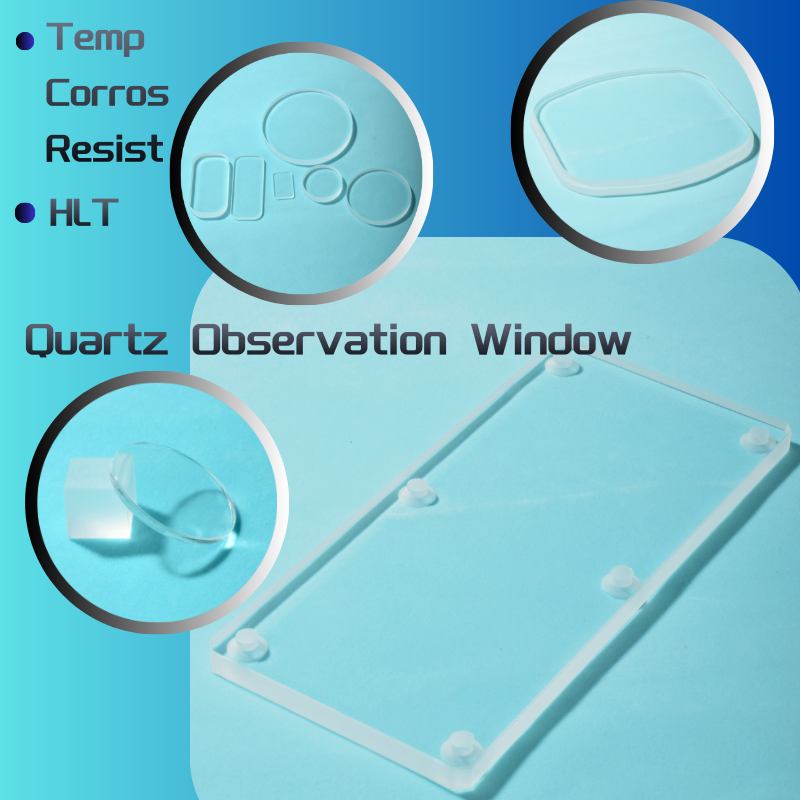
World-class research facilities across Karlsplatz, Atominstitut, and the Austrian Institute of Technology (AIT) require custom fused silica envelopes for physical vapour deposition (PVD), rapid thermal annealing (RTA), and high-vacuum spectrometry. Our drawing-based OEM service produces 1-piece custom quartz reactors featuring vacuum flanges, quartz-to-metal grading, and precision optical flats.
Vienna BioCenter & Environmental Sterilization
Occupying Neu Marx, Vienna's biotechnology hub demands high-purity synthetic and natural quartzware for analytical chromatography, XRD sample holding, and germicidal sanitization. Our ozone-free quartz tubes absorb unwanted 185 nm bands while maintaining 90%+ UV-C transmission at 253.7 nm, enabling high-flux fluid sterilization chambers without producing operator-hazardous ozone gas.
High-Speed Flexographic Printing & PCB Reflow Ovens
Within Vienna’s specialized packaging and electronic manufacturing plants in Liesing and Floridsdorf, halogen quartz emitters deliver instant radiant energy with near-zero latency. The fast thermal response of thin-wall fused quartz sleeves protects moving paper or plastic webs from scorching during unscheduled line halts, optimizing production yields under Austrian electrical safety codes.
Procurement Trends & Regulatory Frameworks in Austria
Austrian industrial procurement operates under rigorous criteria regarding energy decarbonization, product longevity, and EU legal compliance. Understanding these shifts provides procurement teams with decisive competitive advantages.
Austria’s 2030 Decarbonization Mandate
Under the Austrian Klima- und Energiestrategie (#mission2030), energy-intensive enterprises across Lower Austria and the Vienna basin are phasing out gas-fired thermal tunnels. Electric infrared heaters driven by custom halogen quartz tubes provide precision wavelength coupling directly to target materials, cutting factory carbon footprints and eliminating heat loss to surrounding ambient air.
Strict EU REACH & RoHS Harmonization
Austrian buyers (Einkaufsleiter) require uncompromised certification that components entering the domestic market contain no hazardous elements. Vulra Quartz components undergo certified ICP-OES spectrometry testing to guarantee full compliance with EU Directive 2011/65/EU (RoHS 3) and Regulation (EC) No 1907/2006 (REACH), free from restricted heavy metals, halogenated flame retardants, or phthalates.
Demand for Turnkey ODM & 3D Tolerance Fit
Austrian mechanical engineering emphasizes right-first-time assembly without secondary modification. Buyers across Vienna consistently transition toward custom-pinched, ceramic-capped, pre-wired quartz sub-assemblies. Supplying finished envelopes verified against STEP/DXF CAD models eliminates local labour-intensive fitting, directly streamlining factory production schedules.
Lianyungang Vulra Quartz: Direct Donghai Factory Authority
Headquartered at No. 9, Dingxin Road, Donghai Economic Development Zone, China—the undisputed global epicenter of silica crystal refinement—Lianyungang Vulra Quartz Products Co., Ltd. merges geographical supply-chain advantages with German-audited manufacturing discipline.
We are an authenticated Custom Manufacturer assessed on-site by TÜV Rheinland. Unlike trading intermediaries, we control the entire lifecycle from raw sand fusion, precision cold-slicing, and oxy-hydrogen hot-working to final ultrasonic DI-water deionization and programmable kiln annealing.
- TÜV Rheinland Audited Facility: Verification covers premises, legal standing, machinery, and quality management.
- Complete In-House Machine Shop: Diamond CNC edge grinders, CNC glass lathes, ultrasonic drilling, and planar interferometers.
- 1150°C Thermal Annealing Protocol: All hot-worked joints, welds, and bends undergo controlled annealing to dissipate internal polariscopic stress.
- Custom Small-Batch Flexibility: Drawing-based OEM/ODM starting from 1 piece for prototypes, scaling to multi-ton container shipments.
Vienna Buyer FAQ: Logistics, Compliance & Engineering
Transparent answers addressing international customs, technical specifications, and logistics routing to Austria’s industrial centres.
What is the typical transit duration and customs protocol from your factory to Vienna?
Can you customize halogen quartz tubes from our engineering drawings (CAD/STEP)?
How do you ensure zero mechanical breakage during long-haul transport to Austria?
What is the key functional difference between natural fused quartz and synthetic fused silica?
Are your quartz products certified for compliance with Austrian environmental and safety regulations?
What is your MOQ policy for prototypes and custom pilot runs?
Ready to Engineer Your Quartz Heating or Analytical Solution?
Connect directly with our factory glassblower technicians and material engineers. Receive technical drawing reviews, thermal stress evaluations, and formal B2B export quotations within 24 hours.