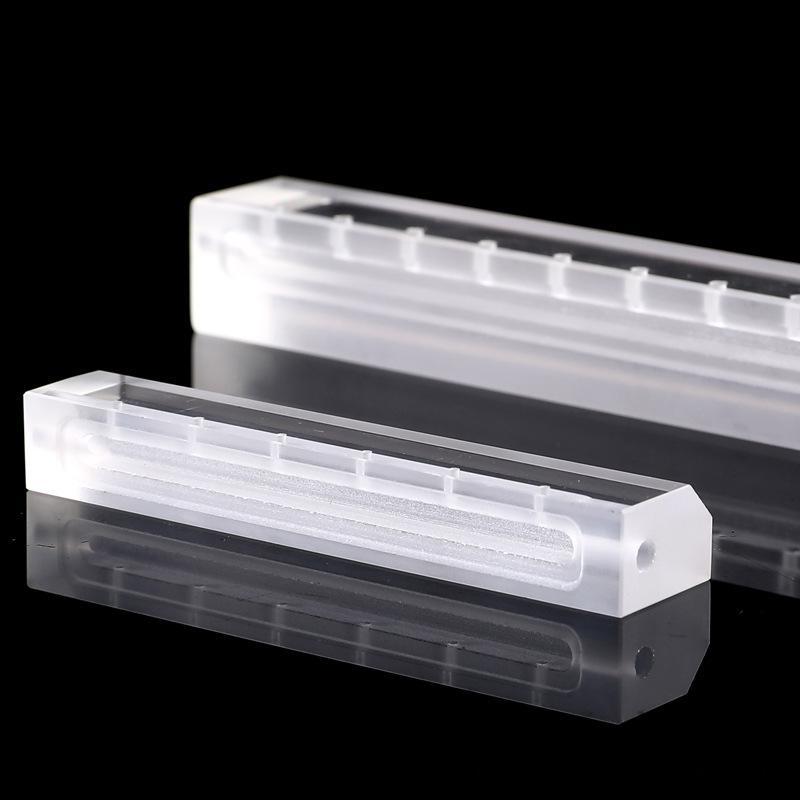
Clear Quartz Testing Sheet Ultra-thin Optical Grade Circular Shape SJ Brand
View Specifications →
SJ 130 High-Precision Negative Pressure Leak-Proof Quartz Vacuum Tube
View Specifications →
Clear Refractory Fused Quartz Crucible Bowl (1683°C Softening Point)
View Specifications →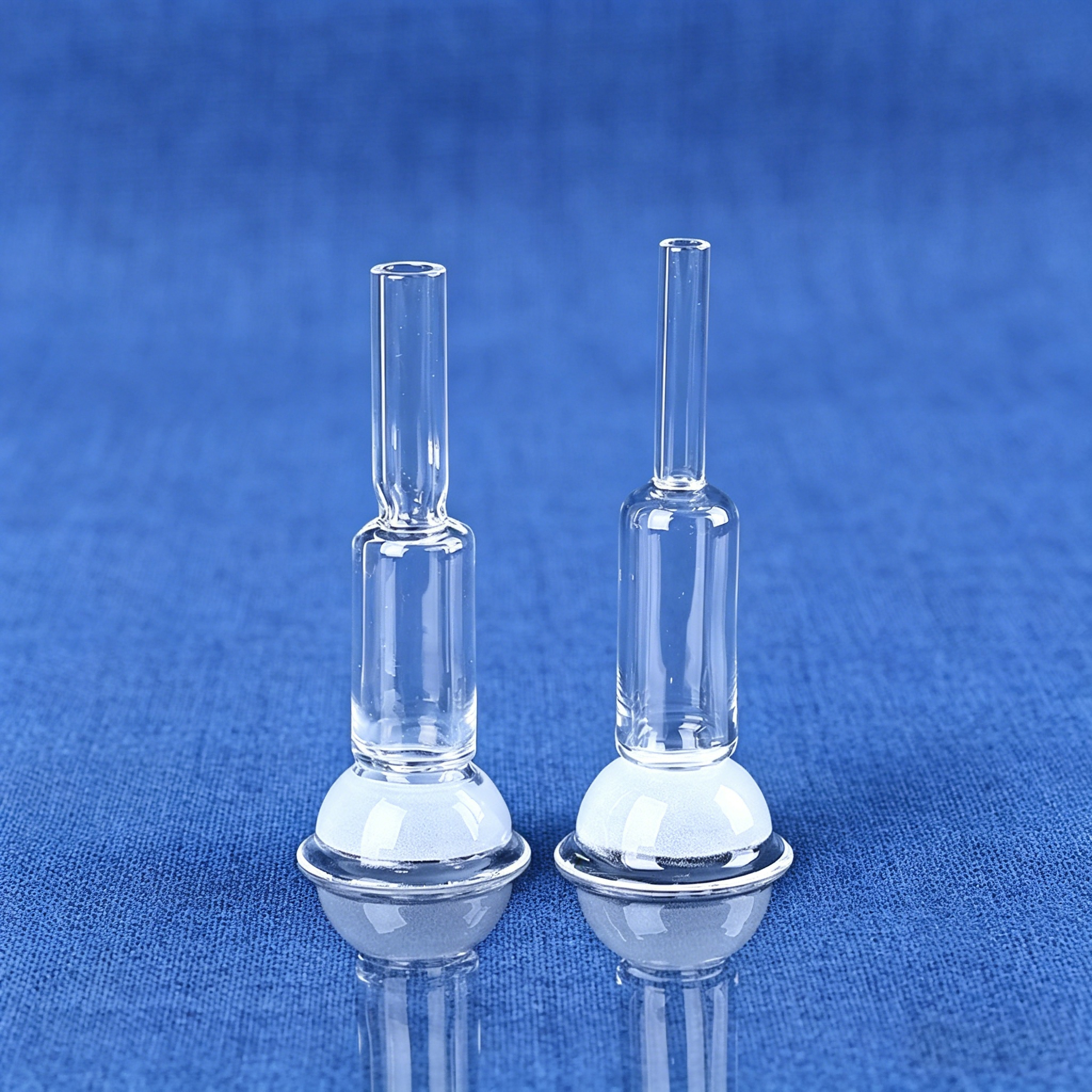
Custom High Purity Quartz C-Shaped BET Surface Area Testing Tube
View Specifications →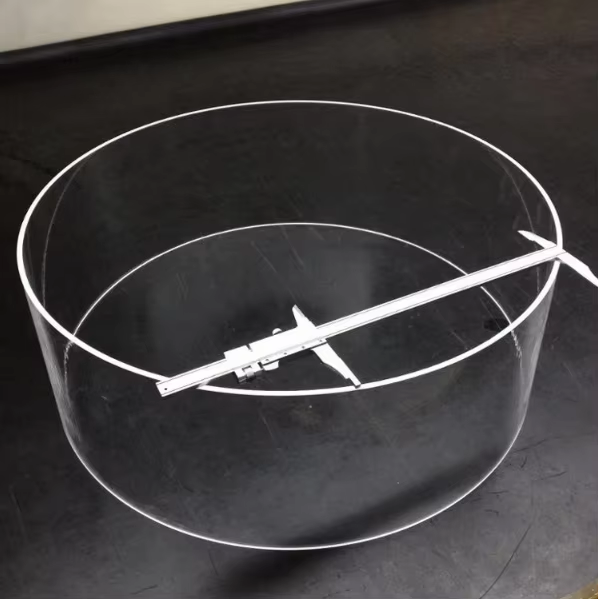
High Temperature Optical Quartz Sapphire Tubes for Powder Sintering
View Specifications →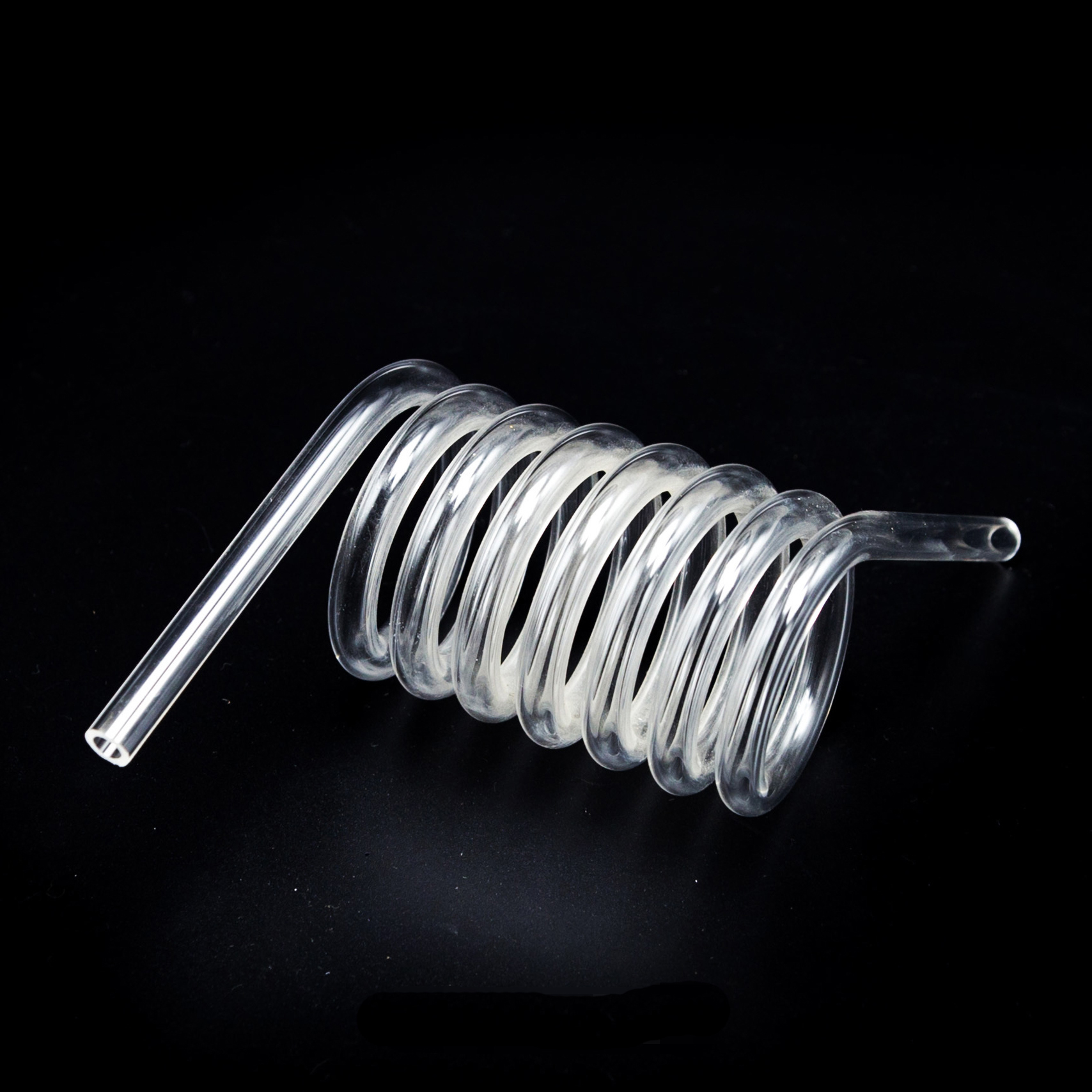
Custom Bent & Spiral High Purity Clear Quartz Micro-Diameter Tubes
View Specifications →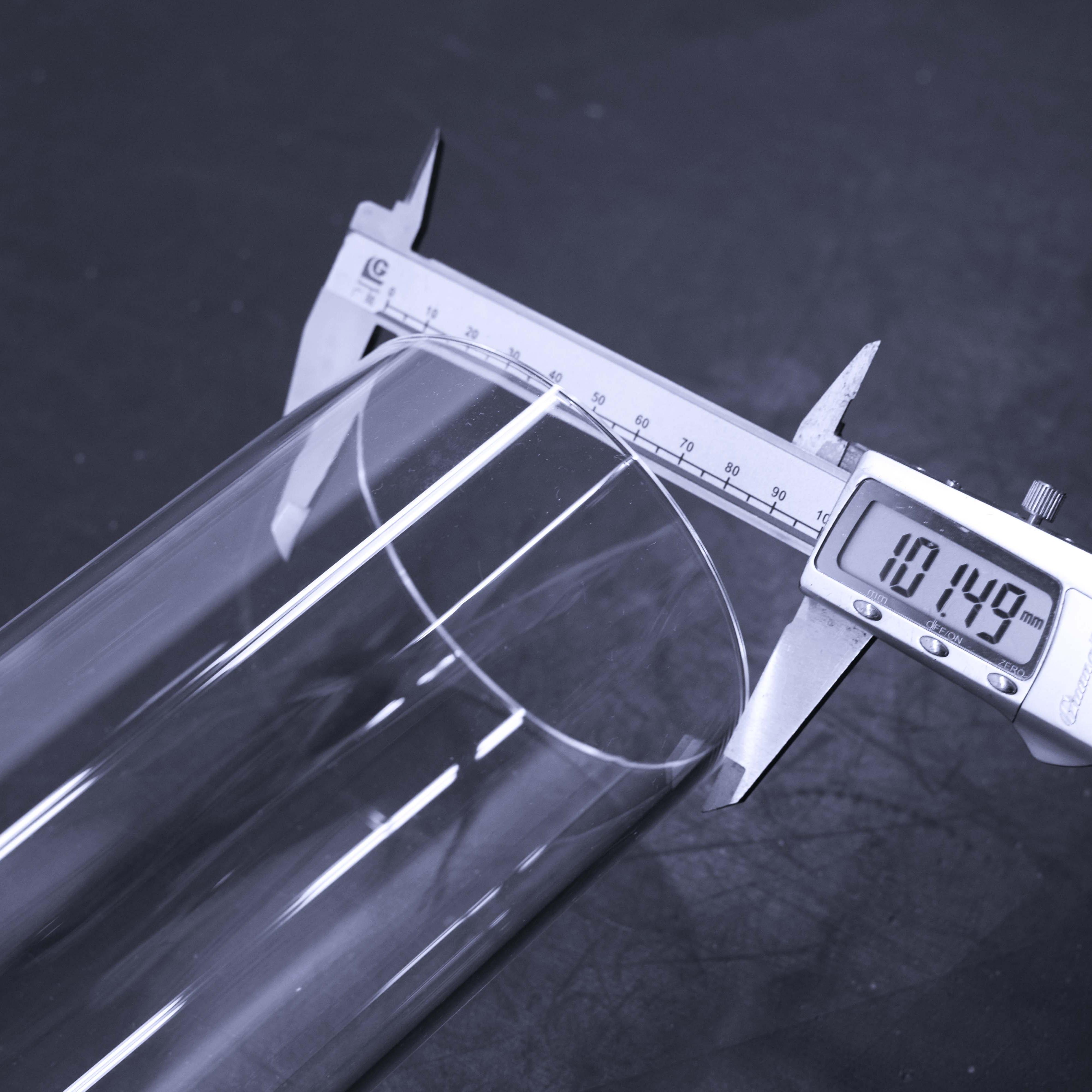
High Purity Transparent Hollow Fused Quartz Process Tube
View Specifications →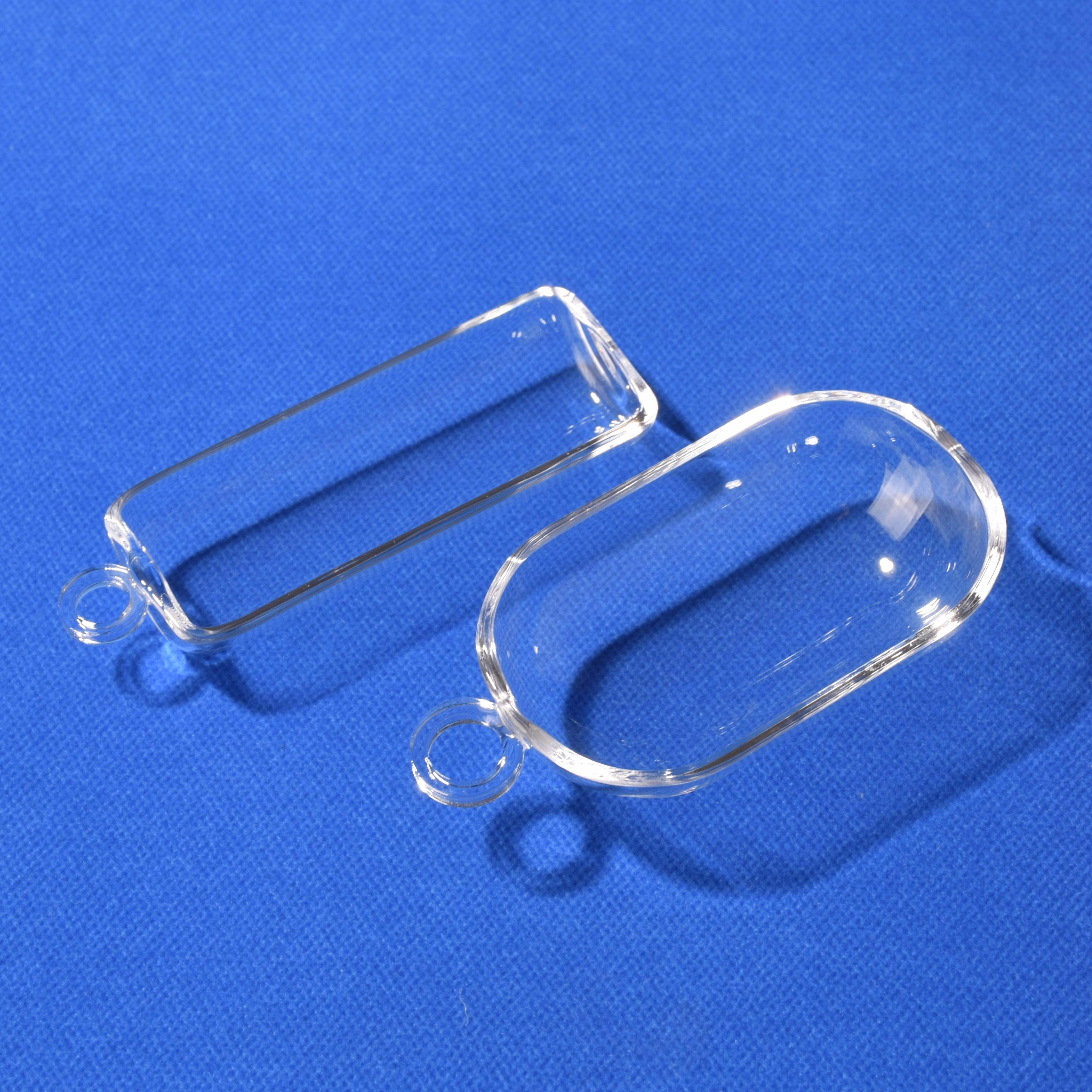
Semi-Circular Flat-Bottom Tube Furnace Quartz Carrier Boat
View Specifications →Engineering Fundamentals: Low OH Hydroxyl Control in Fused Silica
A Technical Assessment of Optical Transmission Spectrum, Viscosity Thermodynamics, and Dehydroxylation Processing
Molecular Hydroxyl Kinetics & IR Absorption
In high-purity synthesized and natural fused silica glass, trace hydroxyl groups (bound as -OH silanol pairs within the amorphous silicon-oxygen network) act as structural discontinuities. Standard oxy-hydrogen flame-fused quartz typically retains a hydroxyl concentration between 30 ppm and 200 ppm. This residual concentration causes profound fundamental vibrational stretching at the 2.73 µm wavelength, along with overtone absorption bands at 1.38 µm and 2.2 µm.
For optical instruments operating in the Near-Infrared (NIR) and Short-Wave Infrared (SWIR) spectrum—as well as industrial infrared heating elements deployed across processing plants in Guatemala City—standard quartz absorbs significant radiant energy. Low OH Quartz (<2 ppm to <5 ppm) is produced via specialized electric vacuum melting or plasma vapor dehydroxylation, completely stripping silanol impurities to maintain pristine, high-efficiency spectral transmittance up to 3.5 µm.
High-Temperature Viscosity & SAG Resistance
Beyond spectral performance, hydroxyl content directly influences the structural stability of quartz glass under extreme thermal loads. Bound -OH groups sever the continuous =Si-O-Si= siloxane matrix bonds, effectively acting as network terminators. This structural breakdown substantially reduces the viscosity of the glass at elevated temperatures, accelerating thermal sag, tube deformation, and devitrification (crystallization into cristobalite) above 1000 °C.
Our proprietary Low OH vacuum fusion manufacturing process preserves the full density of the siloxane structural network. As a result, our low-hydroxyl quartz components exhibit a higher strain point (1070 °C) and anneal point (1180 °C), delivering exceptional dimensional longevity in continuous high-temperature chemical vapor deposition (CVD), sintering, and vacuum furnace applications.
Material Science Data Matrix: Low OH vs Standard Quartz
Comparative Physical, Thermal, and Optical Parameters for Industrial Design Verification
| Material Parameter / Property | Low OH Electric Fused Quartz (SJ Grade) | Standard Flame-Fused Quartz | Synthetic Fused Silica (Type III) |
|---|---|---|---|
| Hydroxyl Concentration (OH⁻) | < 2.0 ppm - 5.0 ppm | 150 ppm - 400 ppm | 800 ppm - 1200 ppm |
| SiO₂ Chemical Purity | > 99.999% (5N Grade) | 99.99% (4N Grade) | > 99.9999% (6N Grade) |
| 2.73 µm IR Transmittance (10mm depth) | > 88.5% Transmittance | < 12.0% (Strong Dip) | < 5.0% (Total Absorption) |
| Annealing Point (°C) | 1,180 °C | 1,120 °C | 1,050 °C |
| Softening Point (°C) | 1,683 °C | 1,660 °C | 1,600 °C |
| Max Continuous Service Temp | 1,150 °C - 1,200 °C | 1,050 °C - 1,100 °C | 950 °C - 1,000 °C |
| Vacuum Outgassing Integrity | Ultra-High (No -OH Degassing) | Moderate Risk of Pressure Spike | High Moisture Release Rate |
Localized Engineering Applications in Guatemala City & Regional Corridors
Serving Advanced Manufacturing, Geothermal Energy, Agro-Industrial Analytical Testing, and Pharmaceutical Facilities
Geothermal & Thermal Power Monitoring (Amatitlán Corridor)
Guatemala’s rich volcanic geology drives extensive geothermal energy extraction along the Amatitlán and Zunil basins. Continuous subsurface optical monitoring, infrared pyrometry, and high-pressure downhole chemical sampling down stem lines demand optical quartz windows and tubes that do not blind in the infrared spectrum under high ambient thermal stress. Our Low OH quartz viewports and custom thermal protection tubes resist extreme thermal shocks while providing unattenuated IR telemetry.
Sugar Processing & Agro-Industrial NIR Spectroscopy
Guatemala’s world-class sugar refining mills (Ingenios along the Southern Coast linked to Guatemala City corporate centers) rely heavily on Near-Infrared polarimetry and spectrographic Brix testing. Standard quartz sample tubes create baseline distortion due to 2.2 µm and 2.73 µm hydroxyl absorption. Utilizing our ultra-thin optical quartz sheets and C-shaped BET tubes ensures zero instrument baseline interference, maximizing precision in sugar purity and soil nutrient analysis.
Pharmaceutical & Medical Device Sterilization Lines
Within the modern industrial zones of El Naranjo, Mixco, and Villa Nueva surrounding Guatemala City, pharmaceutical labs and medical packagers utilize intense mid-infrared flash drying and deep-ultraviolet ozone-free sterilization. Our Low OH clear quartz envelopes house high-output IR emitters with zero thermal expansion fracture risk, maintaining stable output wavelengths across millions of duty cycles.
Enterprise Strengths & Precision Manufacturing Advantage
TÜV Rheinland Audited Production Facility Delivering Drawing-Based Customization from Single Prototype to High-Volume Batches
TÜV Rheinland Verified Quality System
Lianyungang Vulra Quartz Products Co., Ltd. operates state-of-the-art electric vacuum fusion and secondary CNC precision cold-working lines in China's crystal hub (Donghai County, Jiangsu). Verified on-site by TÜV Rheinland, our manufacturing pipeline enforces ISO-level dimensional verification, stress-relief annealing, and chemical acid etching to eliminate surface contaminants prior to export.
Drawing-Based Machining & Flame Engineering
Whether you require micro-bore capillary tubing, heavy-wall refractory crucibles, or complex C-bent BET analytical tubes, our engineers work directly from STEP, DWG, or PDF technical drawings. Our cold-machining workshops handle precision diamond-saw cutting, surface lapping, optical polishing, laser drilling, and stress-free oxy-hydrogen flange welding.
Need Custom Low OH Quartzware Delivered to Guatemala City?
Consult with our senior quartz technical team. We evaluate thermal stress limits, optical transmission targets, and dimensional tolerances directly from your CAD drawings with 1-piece minimum order flexibility.
Contact UsGuatemala City Procurement & Technical FAQ
Direct Answers to Common Logistics, Import, and Material Verification Inquiries
Uncompromising Material Purity for Guatemala’s Industrial Growth
As industrial automation, geothermal energy development, and high-precision agro-testing continue to expand in Guatemala City and surrounding departments, accessing verified high-purity quartzware is essential. By partnering with Lianyungang Vulra Quartz Products Co., Ltd. (SJ Quartz), regional engineers and purchasing managers secure direct factory pricing, certified Low OH optical performance (< 2 ppm), and comprehensive technical support from prototype validation through mass production.