
The Engineering Imperatives of Large-Bore Fused Quartz in Modern Metrology
Industrial fused quartz manufacturing operates at the absolute frontier of high-temperature material science. When specifying large quartz tubes with outside diameters reaching up to 800 mm, structural integrity ceases to be a simple geometrical consideration; it becomes a delicate balance of thermal-stress kinetics, trace chemical purity, and hydroxyl radical [OH⁻] management. Natural quartz crystal sand sourced from Donghai—recognized globally as the premier crystal hub—undergoes electric fusion or oxy-hydrogen gas refining at temperatures exceeding 2000°C. The resulting amorphous silicon dioxide (SiO₂) delivers an exceptionally low coefficient of thermal expansion (5.5 × 10⁻⁷ /°C), rendering large reaction chambers impervious to devastating thermal shock when cycled rapidly from 1100°C down to ambient room temperatures.
For enterprise procurement officers and research facility directors in Nice and the broader Alpes-Maritimes region, component failure during epitaxial deposition, chemical vapor deposition (CVD), or photovoltaic diffusion processes results in catastrophic process losses. Consequently, the mitigation of trace metal contamination—specifically alkali elements such as Sodium (Na), Potassium (K), and Lithium (Li)—is fundamental. These metallic dopants act as devitrification triggers, converting the metastable glassy matrix into crystalline cristobalite at elevated working phases, which inevitably causes micro-cracking and vacuum failure. Vulra Quartz achieves trace metal profiles below 15 ppm total impurity across all primary production tubes, guaranteeing maximum campaign life in aggressive semiconductor processing lines.
| Analytical Parameter | Semiconductor Grade Fused Quartz | Optical Grade Fused Silica | Standard Laboratory Quartz |
|---|---|---|---|
| SiO₂ Purity Ratio | ≥ 99.995% to 99.999% | ≥ 99.9999% (Synthetic) | ≥ 99.99% |
| Hydroxyl [OH⁻] Content | < 5 ppm to 30 ppm | < 1 ppm (Dry) / 1200 ppm (Wet) | < 150 ppm |
| Working Softening Point | 1683°C ± 10°C | 1730°C | 1660°C |
| Continuous Operating Temp | 1150°C | 1200°C | 1050°C |
| Typical Geometrical Range | OD 50 mm – 800 mm (Wall: 3–12 mm) | Plates, Discs & Precision Prisms | OD 5 mm – 150 mm (Wall: 1–3 mm) |
Localized Industrial Applications Across the Sophia Antipolis & Nice Ecosystem
The geography of Nice, anchored by the adjacent Sophia Antipolis technology park, represents Europe’s foremost center for telecommunications, microelectronics, deep-tech research, and marine biotechnological synthesis. The application of high-precision, heavy-wall quartz tubing in this ecosystem differs substantially from conventional heavy manufacturing environments.
First, the localized microelectronics fabless and pilot-line clusters operating in Sophia Antipolis require heavy-wall fused quartz process tubes tailored for high-vacuum diffusion, horizontal LPCVD furnace setups, and wafer transport carriers. Because these facilities run low-volume, high-mix specialty wafer development (Silicon Photonics, GaN-on-Si, and Silicon Carbide power semiconductors), our drawing-based custom manufacturing eliminates the rigid requirement for mass MOQs, providing custom slotted quartz liners and flanges starting at single-unit batches.
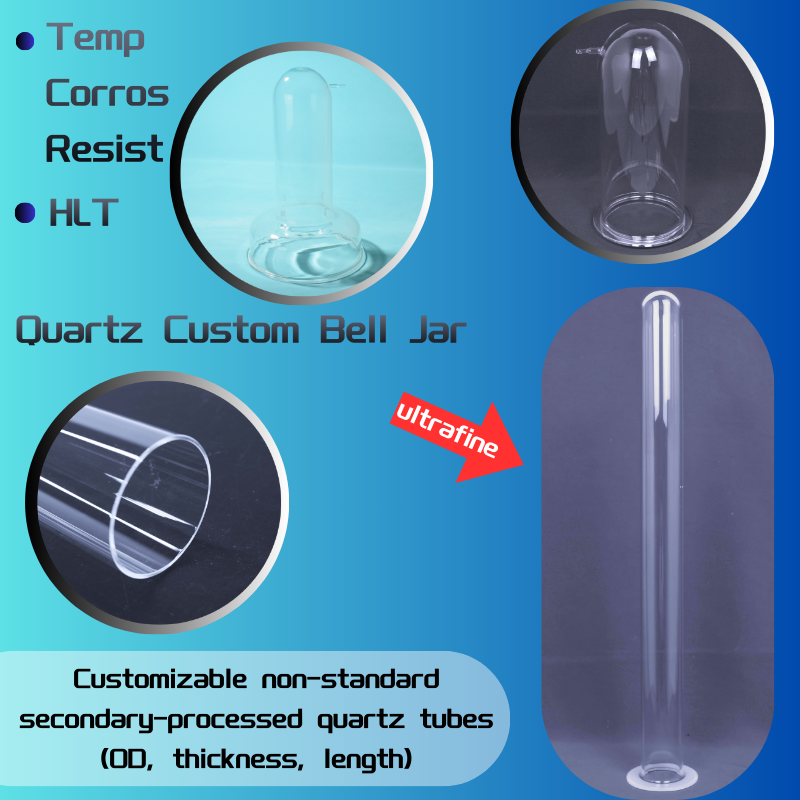
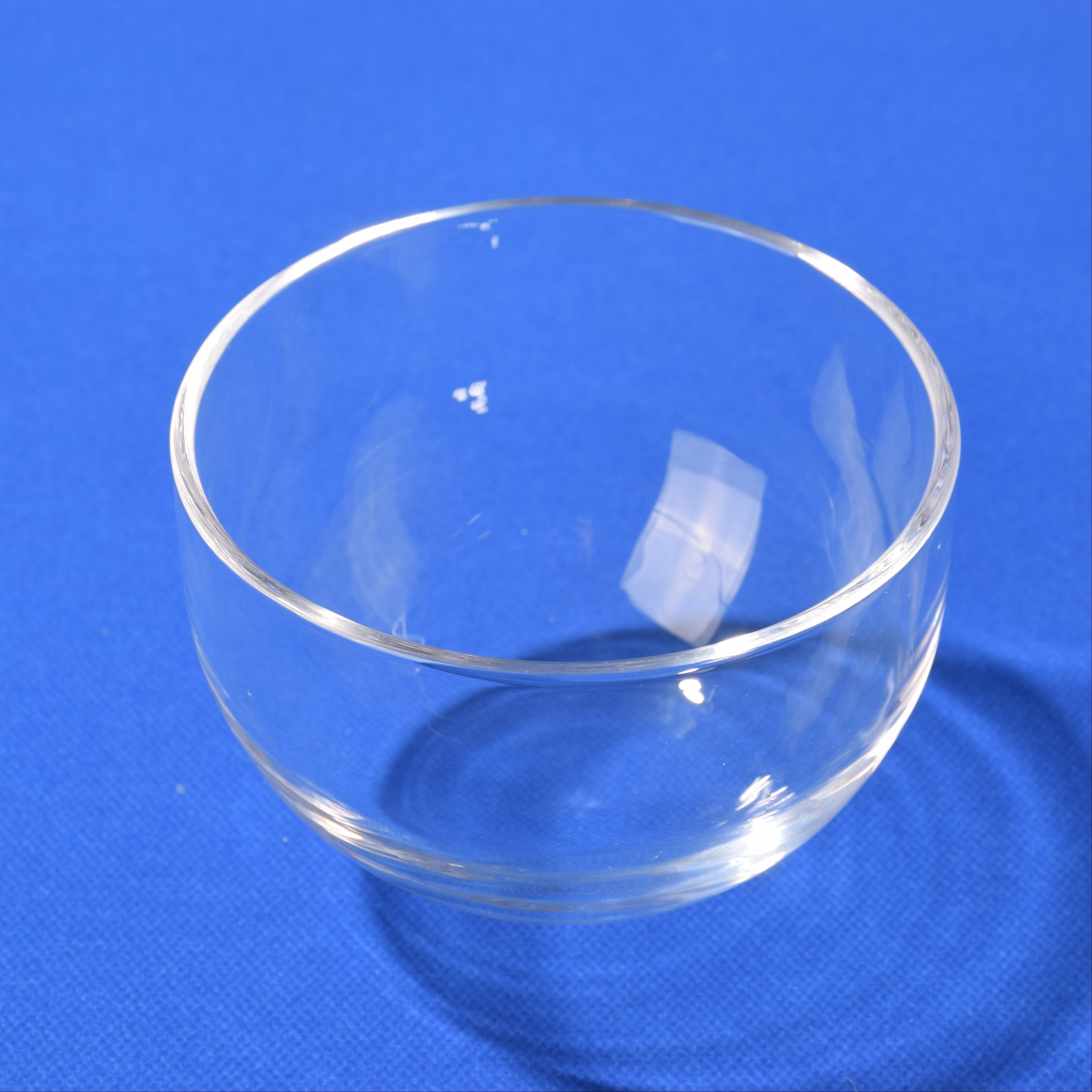
Second, research institutions connected to Université Côte d'Azur, CNRS, and localized oceanic metrology laboratories routinely deploy our specialized closed-end dome cells and quartz photochemical reactors. In photoelectrochemical water splitting and ultraviolet sterilization testing along the Mediterranean coast, solar UV simulators require optical-path quartz glassware that exhibits zero fluorescence and superior transmission across the deep-UV spectrum (UV-C at 254 nm and vacuum UV lines). Doped ozone-free tubes are equally critical within Nice analytical facilities to protect laboratory operators from toxic atmospheric ozone conversion while maintaining intense UV flux.
Regional Evolution & Trends: Côte d'Azur's Semiconductor & Clean-Tech Pivot
The industrial blueprint of the Provence-Alpes-Côte d'Azur (PACA) region is transitioning rapidly under national industrial reshoring strategies (France 2030). Sophia Antipolis and Nice are seeing escalating investments in green hydrogen catalysis, power electronics for electric transport, and next-generation telecommunication optoelectronics. This transition mandates three critical developments in high-purity glass infrastructure:
1. Sub-Millimeter Geometric Precision on Giant Form Factors: As compound semiconductor crystal growth furnaces expand to accommodate larger ingots, process tubes require tighter out-of-roundness tolerances (< 1.2%) and uniform wall thickness along spans exceeding 2.5 meters. Vulra Quartz utilizes specialized horizontal glass-blowing lathes capable of continuous thermal stabilization to eliminate optical deflection and hot-spot degradation.
2. Stringent Sustainability and Energy Efficiency: High thermal-mass operations across PACA research facilities are optimizing power consumption. High-purity quartz acts as a superior thermal barrier, reflecting mid-wave infrared radiation back into process zones, thereby reducing total kilowatt-hour draw during prolonged anneal cycles.