Precision Fused Quartz Components for High-Spec Thermal Systems
Explore our certified catalog of semiconductor-grade clear quartz tubes, custom bends, photochemical cells, and high-temperature crucibles engineered specifically for harsh thermal, chemical, and optical environments.
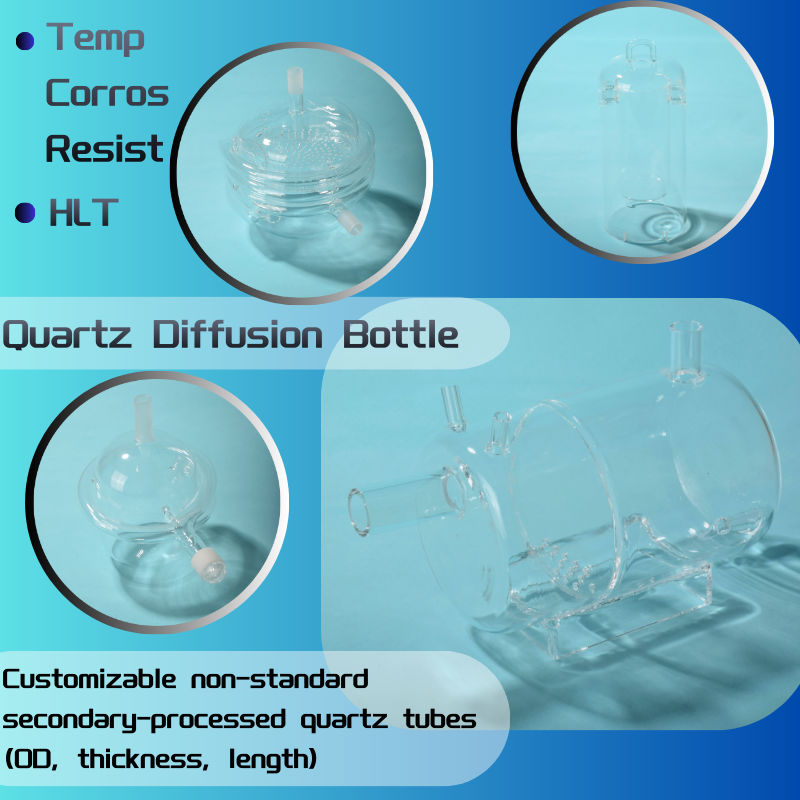
SJ 135 Custom High Purity Clear Quartz Condensers & Purification Units
Ultra-low hydroxyl (OH⁻ < 5 ppm) custom tube assemblies, separatory funnels, and high-temp acid reflux condensers for ultrapure process chemical refinement.
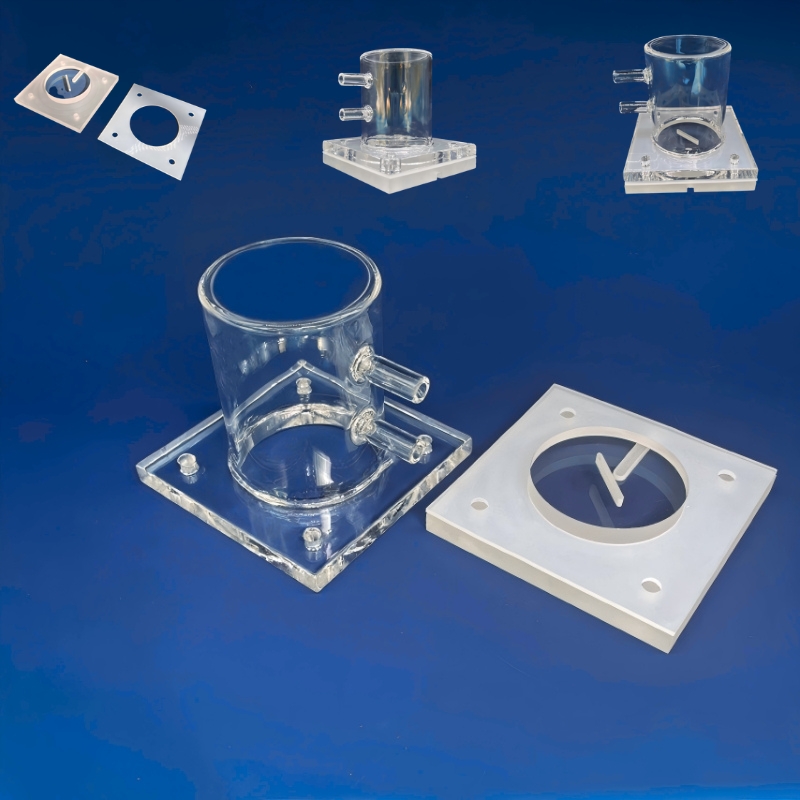
Quartz Photocatalytic Reactor for Hydrogen & Oxygen Production
Precision-molded translucent and transparent dual-chamber reaction envelopes engineered for high-flux green hydrogen synthesis and advanced UV water splitting.
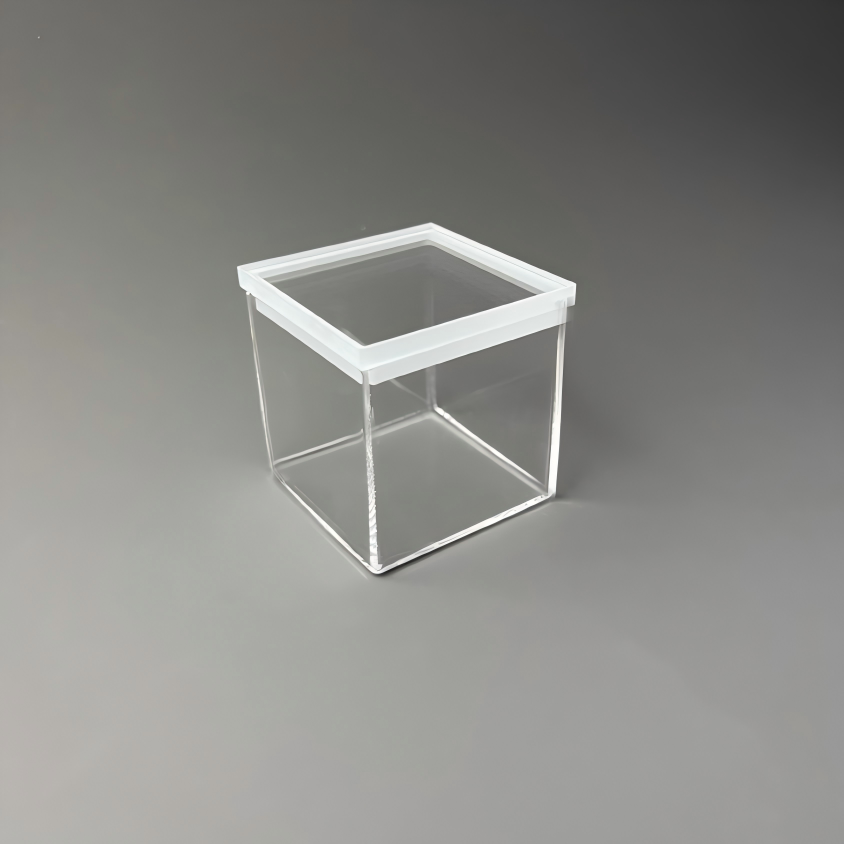
Quartz Glass Sealed Electrolytic Dome Closed-End Cell
Optically polished closed-dome fused quartz cells designed for photoelectrochemical degradation assays, vacuum electrochemical research, and inert gas sealing.
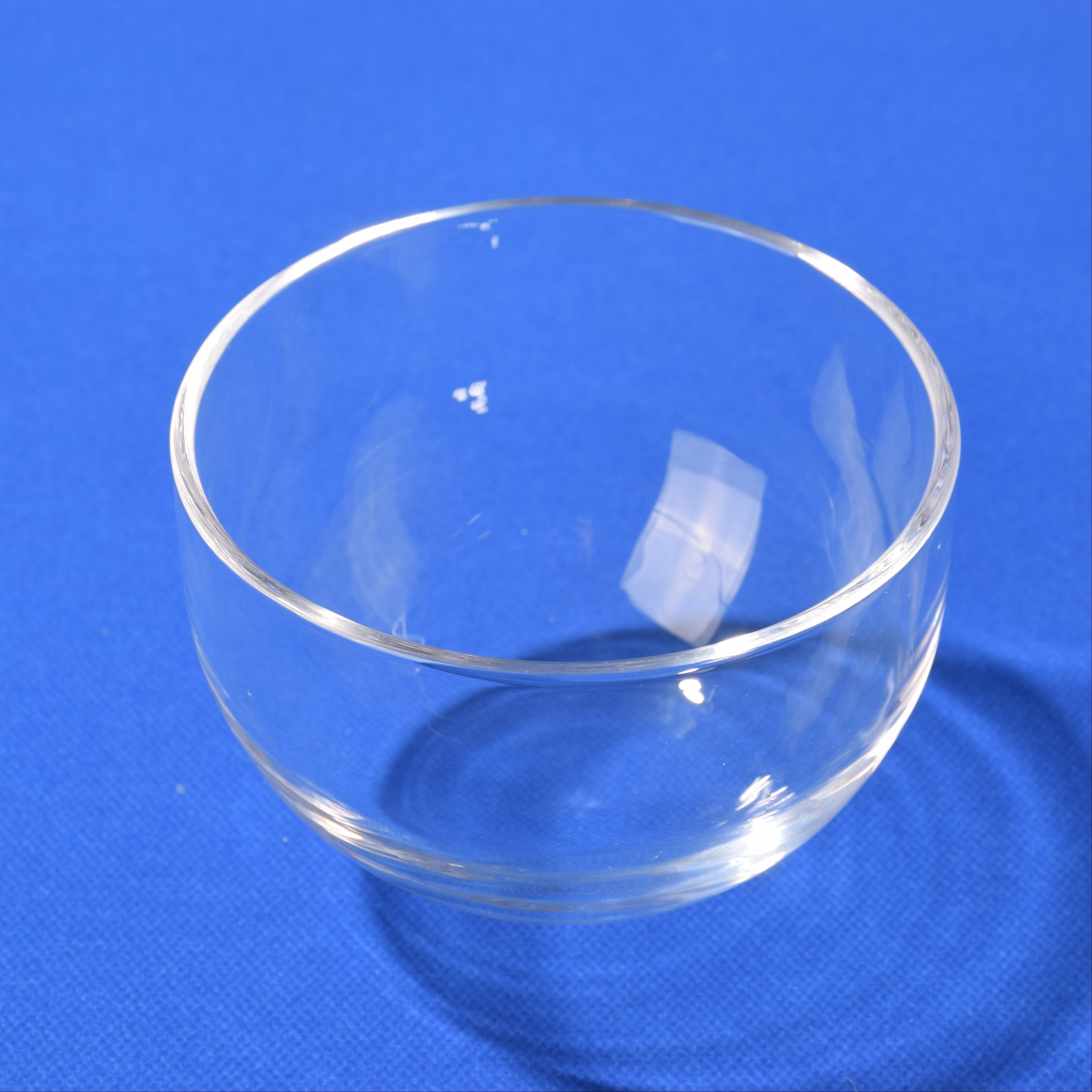
Clear Refractory Fused Quartz Crucible Bowl (Semiconductor Grade)
High-tensile refractory fused quartz crucibles capable of continuous 1100°C furnace loading and thermal cycling without structural devitrification or sagging.
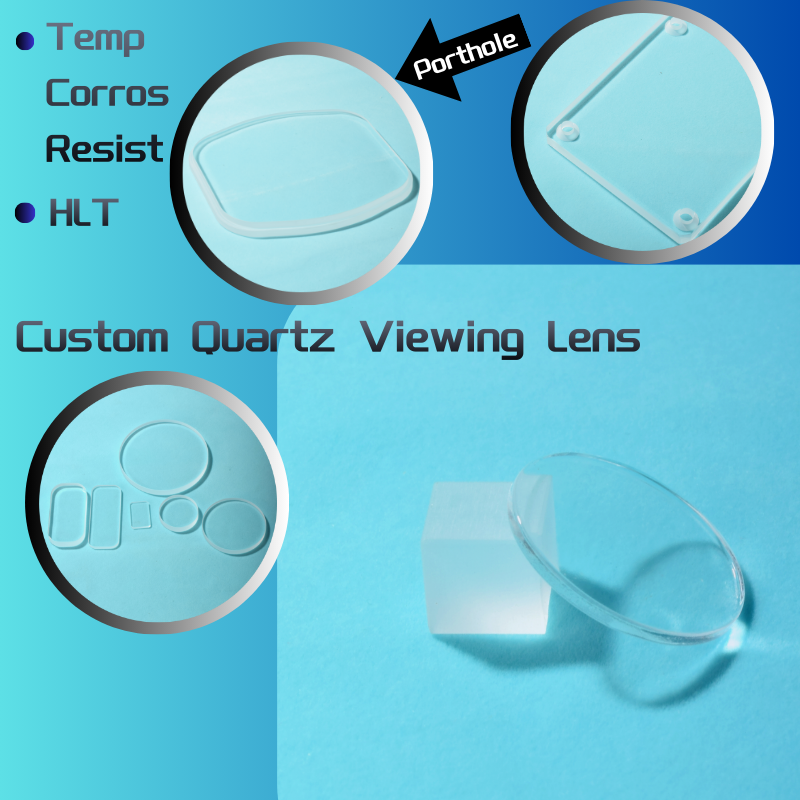
SJ 126 Natural Fused Quartz Square Thin Optical Slide
Sub-nanometer surface roughness, laser-cut square slides offering deep UV-to-NIR spectral transmission for spectroscopy, laser target substrates, and sightports.
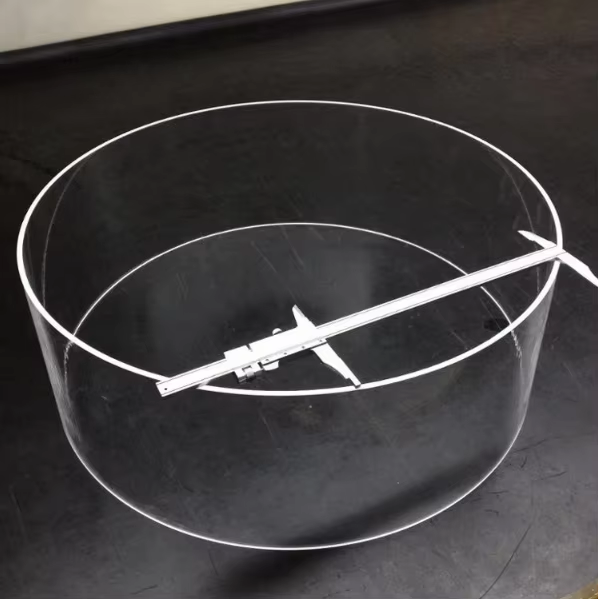
Optical Quartz & Sapphire Composite High-Temperature Tubes
Heavy-wall fused silica pipes for powder metallurgy sintering, chemical vapor deposition (CVD), and corrosive exhaust filtration at extreme working temperatures.
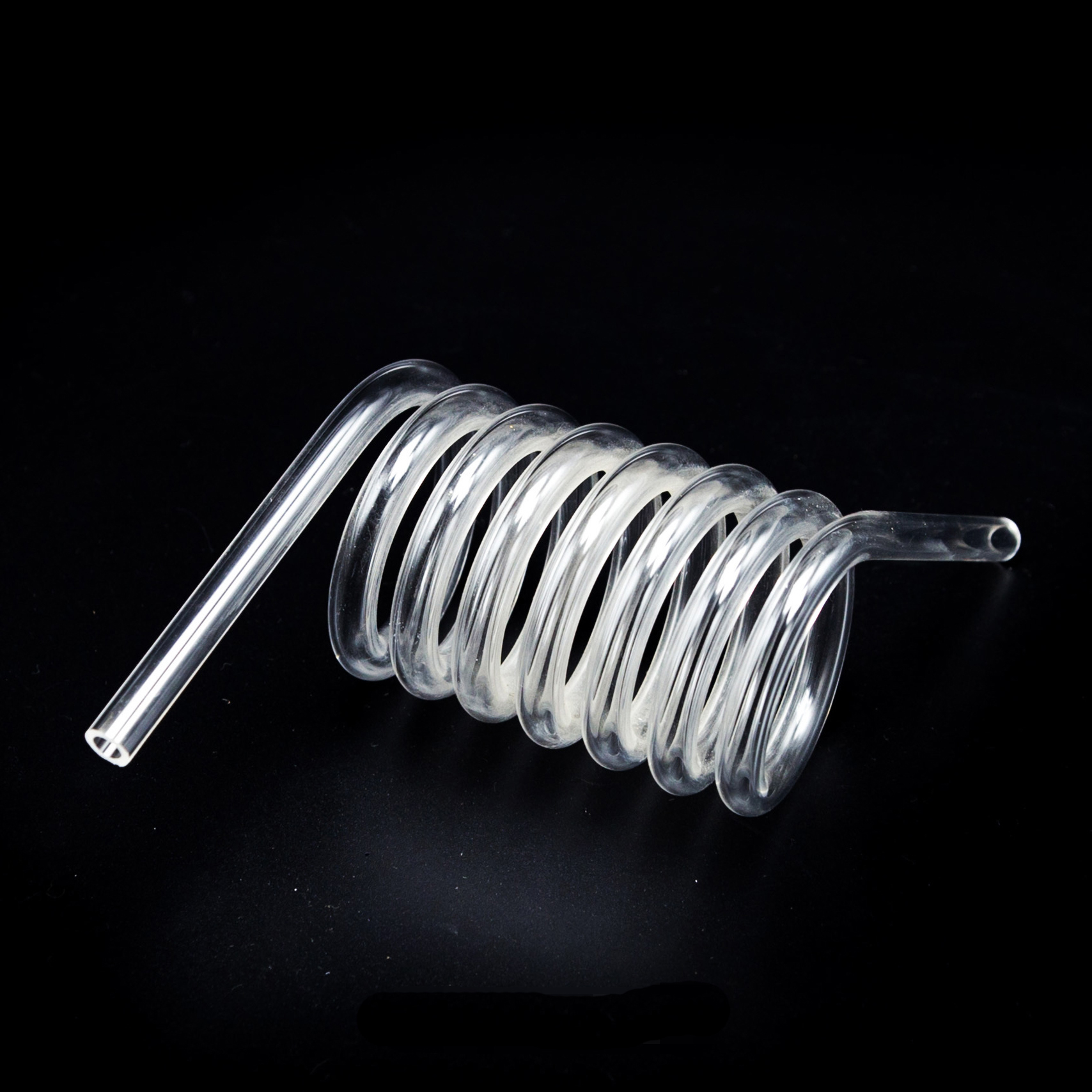
High-Purity Custom Bent & Spiral Clear Quartz Tubes
Computer-controlled flame-bent C-shape, helical, and concentric quartz coils engineered for rapid heat exchange, halogen emitter jackets, and specialized plasma tubes.
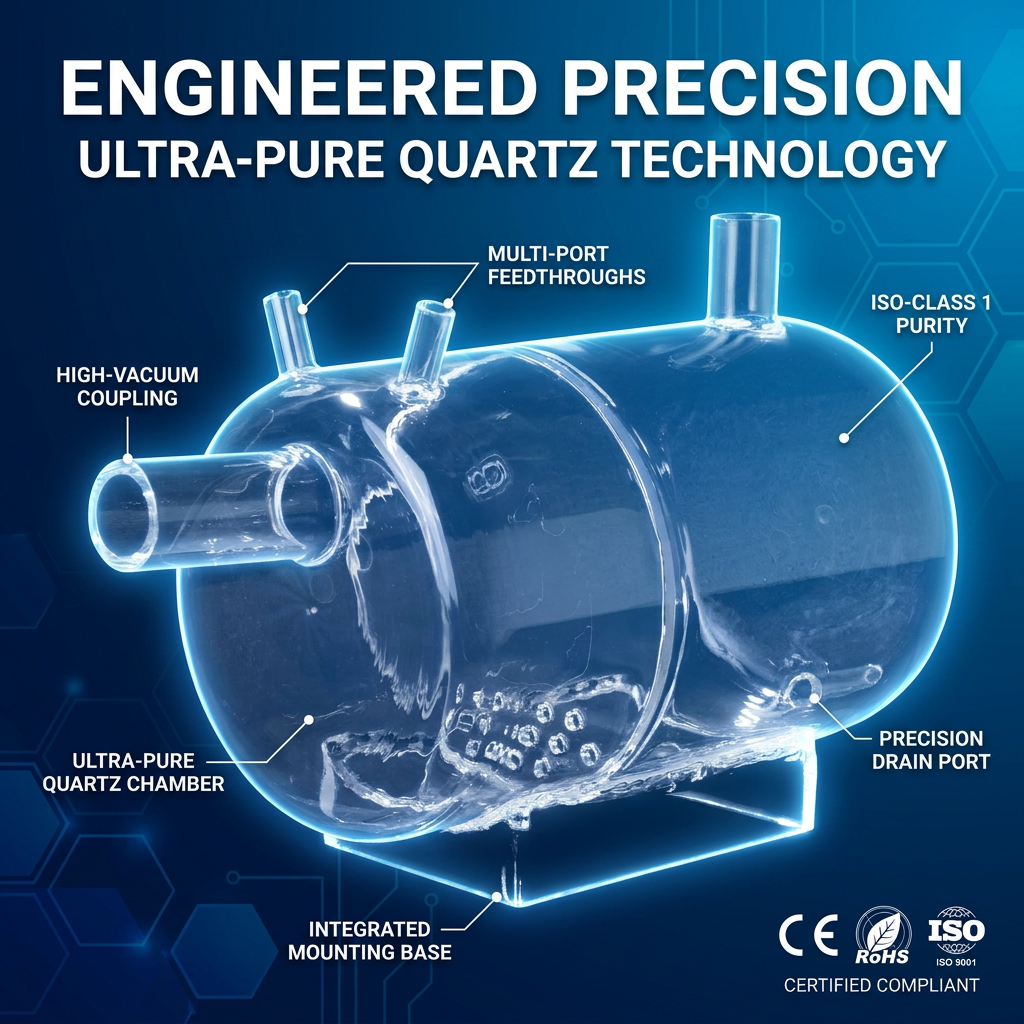
Precision Semiconductor-Grade Quartz Separating Containers
Ultra-pure acid leaching vessels and zero-contaminant phase separation columns fabricated from natural fused crystal with strict dimensional and wall-thickness tolerances.
The Physics of High-Efficiency Halogen Quartz Envelopes
In high-performance halogen emitters and industrial infrared radiant tubes, the quartz envelope is not merely a passive containment barrier—it is an active optical, thermodynamic, and mechanical component that determines element lifespan and spectral radiance.
The Regenerative Halogen Thermodynamic Cycle
Tungsten halogen emitters rely on an internal chemical equilibrium driven by halogen gases (iodine or bromine compounds) operating at inner envelope wall temperatures between 250°C and 800°C. Standard borosilicate glasses fail catastrophically under these boundary conditions due to alkali migration and thermal deformation. Our fused silica tubes maintain complete chemical inertness up to 1100°C continuous service, preventing blackening caused by tungsten deposition and extending filament life across thousands of high-temperature cycles.
Hydroxyl (OH⁻) Depletion & Dehydroxylation
Trace hydroxyl ions embedded within the quartz matrix drastically degrade envelope longevity. At temperatures exceeding 800°C, high OH⁻ content accelerates devitrification (crystallization of amorphous silica into cristobalite) and releases elemental oxygen, creating corrosive water cycles that attack the tungsten core. By utilizing electric vacuum fusion and secondary thermal dehydroxylation, we achieve hydroxyl levels below 5 ppm, ensuring mechanical rigidity and zero bubble expansion under dynamic atmospheric loads.
Thermal Shock & Expansion Dynamics
With an exceptionally low coefficient of linear thermal expansion (α = 5.5 × 10⁻⁷ K⁻¹ between 20°C and 1000°C), our fused quartz tubes survive instantaneous temperature deltas exceeding 1000°C without mechanical failure. Industrial rapid thermal processing (RTP) equipment and high-output IR emitters can be switched from cold ambient to peak irradiance within milliseconds, completely eliminating the thermal shock risks inherent in lesser glassy materials.
High-Spec Quartz Applications Across Latvia’s Industrial Sectors
From the cutting-edge photonics research clusters in Riga to automated timber processing plants in Kurzeme and Vidzeme, Latvian industry demands quartz glass that complies strictly with EU directives while delivering unwavering reliability under severe operational stress.
Advanced Spectrometry, Laser Cavities & ISSP UL Research
Latvia has emerged as a premier Northern European hub for deep-tech photonics, quantum materials, and optical sensor development, anchored by institutions such as the University of Latvia’s Institute of Solid State Physics (ISSP UL) and leading commercial laser manufacturers. Our synthetic and natural fused quartz tubes serve as low-distortion optical envelopes, laser flashlamp jackets, and vacuum chamber sightports, delivering over 92% optical transmission from 220 nm UV up to 2500 nm near-infrared.
Infrared Quartz Halogen Emitters for Veneer, Drying & Curing
Forestry and engineered timber manufacturing constitute the backbone of Latvia's industrial export economy. Automated veneer drying, wood lamination, and UV/IR coating lines require high-intensity medium and short-wave quartz halogen tubes. Our twin-tube and single-bore clear quartz jackets—custom-fitted with ceramic bases or gold reflective backing—maximize directional heat flux while withstanding ambient airborne wood dust, volatile resins, and rapid cycling.
Ozone-Free Halogen & UV Emitters for Aseptic Packaging Lines
Latvia's high-standard food processing and pharmaceutical packaging industries require aseptic barrier controls without producing hazardous indoor air conditions. We provide cerium-doped ozone-free quartz tubes that selectively absorb short-wave ultraviolet emissions below 220 nm (specifically blocking the 185 nm line responsible for atmospheric ozone generation) while delivering intense thermal radiation for thermoforming, bottle blow-molding, and cap sealing.
High-Purity Quartz Vessels for Photo-Electrochemical Reactors
In alignment with Latvia’s National Energy and Climate Plan (NECP) and EU Green Deal initiatives, Baltic research institutes are accelerating pilot studies in green hydrogen generation and photo-electrochemical CO₂ reduction. Our closed-dome quartz electrolytic reactors and tubular reaction manifolds maintain zero ion-leaching even in concentrated sulfuric or alkaline electrolyte matrices at elevated pressures and temperatures.
Comparative Specification Matrix for Industrial Tube Envelopes
Choosing the correct envelope material is critical for operational efficiency, spectral distribution, and thermal integrity. Review our material grades benchmarked against standard commercial glass.
| Material Classification | SiO₂ Purity (%) | Softening Point | Continuous Working Temp. | OH⁻ Content | Primary Industrial Utility |
|---|---|---|---|---|---|
| High-Purity Fused Quartz (Standard Clear) | ≥ 99.99% | 1683 °C | 1100 °C | < 20 ppm | Industrial IR halogen heaters, furnace process tubes, heating elements. |
| Low-OH Halogen Tube Grade (Electric Fused) | ≥ 99.995% | 1683 °C | 1150 °C | < 5 ppm | High-output halogen lamp envelopes, filament jackets, rapid thermoforming. |
| Ozone-Free Doped Quartz (Ce/Ti Doped) | ≥ 99.9% | 1660 °C | 1050 °C | < 25 ppm | Aseptic packaging, indoor radiant heaters, UV sterilization without O₃. |
| Synthetic Fused Silica (Chemical Precursor) | ≥ 99.999% | 1730 °C | 1200 °C | < 1 ppm (Dry) | Deep-UV photolithography, precision laser optics, extreme purity reactors. |
| Standard Borosilicate 3.3 (Reference Glass) | ≈ 81.0% | 820 °C | 450 °C | N/A | General chemical glassware (Unsuitable for halogen regenerative cycles). |
Meeting EU Decarbonization & Modern Supply Chain Standards
Procuring precision quartzware for Latvian and European operations requires strict regulatory alignment, verifiable quality control, and optimized logistics channels that mitigate geopolitical volatility.
Full EU Directives: CE & RoHS Compliance
Every batch of quartz tubes shipped to Latvia is manufactured to satisfy strict European Union chemical and electrical safety mandates. With CE marking and certified RoHS compliance (Directive 2011/65/EU and amendment 2015/863), our quartz products contain zero hazardous heavy metals (lead, cadmium, mercury, or hexavalent chromium). Material test certificates according to EN 10204 3.1 are supplied upon request for total transparency.
Direct Freight to Riga, Ventspils & Liepāja
Logistical predictability is vital for European OEMs maintaining lean just-in-time assembly schedules. We offer streamlined DAP Riga delivery via air express (FedEx/DHL/UPS) for prototypes and emergency spare tubes within 5–7 business days, alongside consolidated ocean container shipments via the Port of Riga for large-scale production replenishment. All fragile tubes are packaged in shock-isolated custom wooden crates designed for Baltic multi-modal transit.
Electrification of Baltic Industrial Process Heat
As Latvia accelerates the transition away from fossil fuel gas boilers toward clean electric power, industrial processors are upgrading to direct infrared radiant heating. High-efficiency quartz halogen tubes convert up to 93% of electrical energy into directed radiant heat without convective loss. Partnering with our factory allows Latvian system integrators to specify bespoke heating geometries, pinching seals, and reflector profiles directly with source engineers.
Precision Manufacturing from Donghai, the Global Crystal Capital
Lianyungang Vulra Quartz Products Co., Ltd. is situated at No. 9, Dingxin Road in the Jiangsu Donghai Economic Development Zone. As the epicenter of high-purity natural silica reserves, Donghai provides our manufacturing facilities with immediate access to uncompromised crystal sand, ensuring pure material provenance from the ground up.
As a verified manufacturer audited on-site by TÜV Rheinland, our entire production cycle—from electric vacuum melting and high-precision diamond lathe machining to acid de-alkalization and cleanroom packing—undergoes rigorous third-party inspection.
- Drawing-Based OEM/ODM: CAD, STEP, or PDF drawings reviewed within 24 hours.
- Low Prototype Threshold: Custom prototyping starting from just 1 piece.
- Tight Dimensional Tolerances: OD ± 0.1 mm, wall thickness eccentricity < 8%.
- Controlled Annealing: Zero residual strain birefringence under polariscope tests.
TÜV Verified
On-site assessed premises, technical capacity, and corporate legal standing confirmed.
1683 °C Softening
Engineered for continuous 1100°C furnace loading without sagging or micro-cracking.
OD 5 – 800 mm
Broadest dimensional drawing capability for specialized miniature or heavy furnace tubes.
5.0 / 5 Rating
Unbroken 100% on-time delivery record and flawless buyer satisfaction score.
Frequently Asked Questions: Sourcing Quartz Tubes for Latvia
Key technical, regulatory, and logistics inquiries answered directly by our chief quartz glass engineers.
What is the standard lead time for custom halogen quartz tubes delivered to Riga?
For custom engineering prototypes and drawing-based samples (1–10 pieces), production requires 5–8 working days. Express air courier to Riga International Airport (RIX) takes approximately 4–6 business days. Volume production orders (500+ units) typically ship within 14–20 days via either expedited air cargo or regular ocean freight to the Port of Riga.
How do you safeguard fragile, long quartz tubes against breakage during international transit?
We implement a comprehensive multi-tier export packaging system. Each tube is individually sealed in an anti-static dust sleeve, suspended inside closed-cell polyethylene (EPE) shock-absorbing foam profiles, and secured within heavy-duty tri-wall corrugated cartons. Shipments exceeding 1 meter in length or 30 kg are packed in fumigated ISPM-15 compliant plywood crates with internal dampening ribs.
What is the difference between standard clear fused quartz and ozone-free quartz?
Standard fused quartz transmits light across the entire spectrum from ~190 nm to 3000 nm. The 185 nm radiation reacts with atmospheric oxygen to create ozone (O₃). Ozone-free quartz incorporates trace elements of titanium or cerium dopants that sharply cut off radiation below 220 nm, preventing toxic ozone gas formation while maintaining 90%+ transmission in the active halogen infrared and visible bands.
Can you manufacture custom twin-tube or bent quartz profiles to match European machinery?
Yes. We operate multi-axis glass lathes and automated CNC flame-bending systems that reproduce standard European twin-tube profiles (including 11x23 mm and 15x33 mm formats), circular coils, U-tubes, and omega-shaped lamps. Simply supply your equipment part number or dimensional CAD drawing (DXF, STEP, or PDF) for our engineering verification.
Do your products comply with European Union customs, REACH, and RoHS documentation?
Every commercial invoice and packing list is prepared with correct TARIC/HS codes (typically 7002.31 for fused quartz tubes) for smooth customs clearance via the State Revenue Service (VID) of Latvia. We supply CE declarations of conformity and RoHS/REACH chemical safety certificates with each export batch.
Can we request custom pinch sealing or molybdenum foil feedthroughs?
Yes. For halogen emitters and high-intensity discharge envelopes requiring hermetic electrical conductor passthroughs, we perform precision flame pinch sealing utilizing etched molybdenum foils. Our pinch seals match the thermal expansion characteristics of quartz, preventing vacuum degradation or gas leakage under extreme thermal cycling.
Ready to Engineer Your Quartz Solution for Latvia?
Whether you require standard replacement halogen quartz tubes for industrial drying or customized quartzware for advanced photonics research, our engineering team in Donghai provides rapid design review, competitive factory pricing, and full EU compliance.