Core Fused Silica & High-Purity Quartzware Portfolio
Precision-melted raw materials and finished high-temperature quartz glassware manufactured to rigorous ISO tolerances for industrial furnaces, thermal analytical reactors, and Athens laboratory environments.
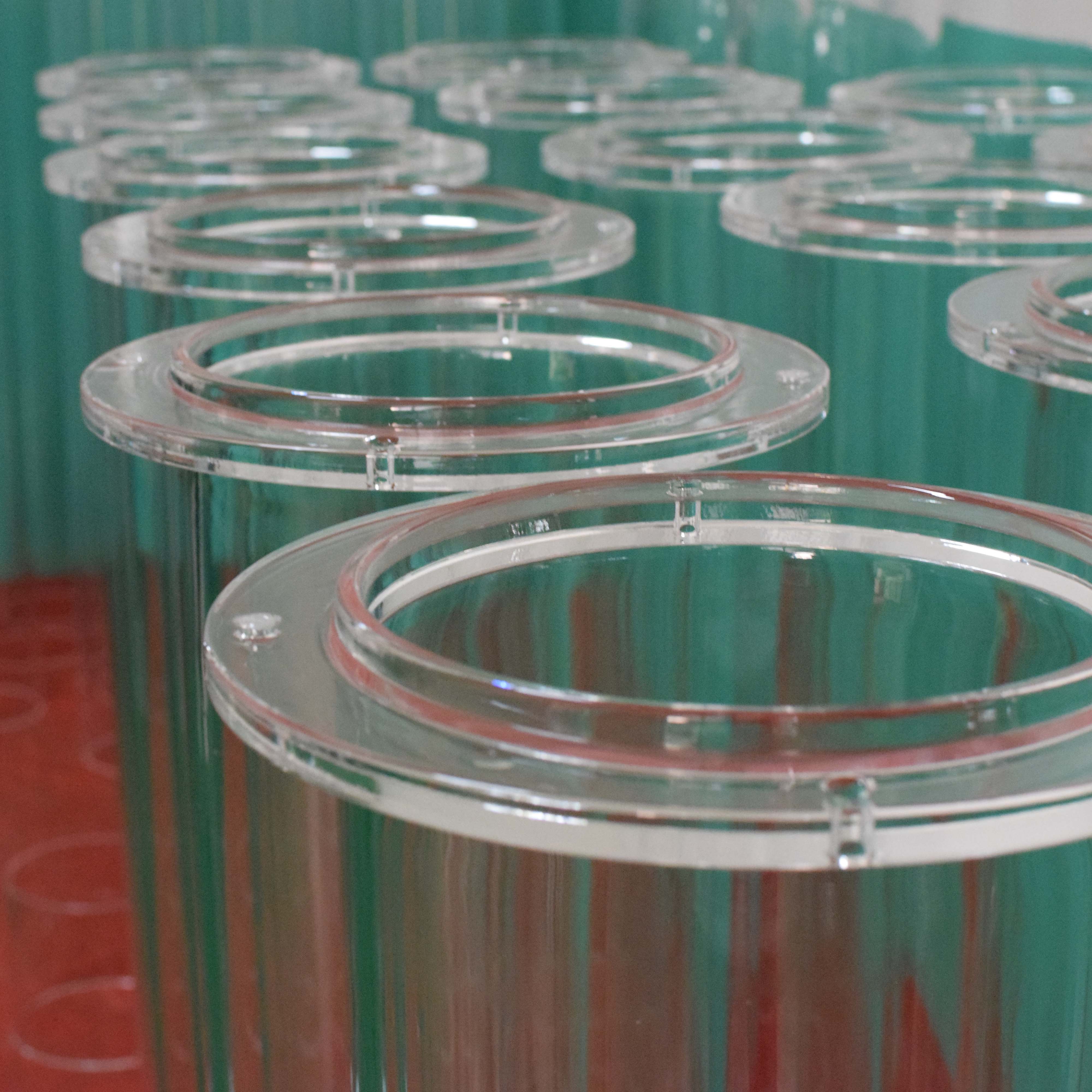
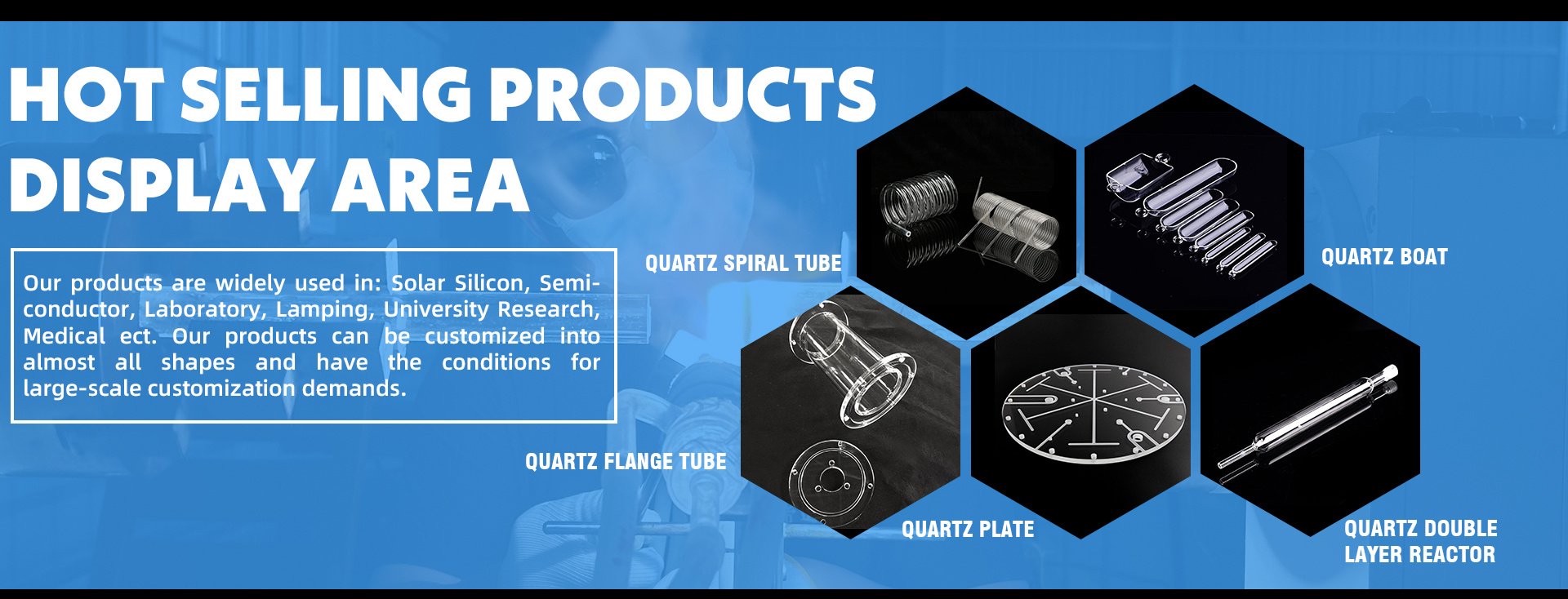
High Purity 99.999% Single Crystal Quartz Glass Tube Flange Re-feeder
Constructed from natural fused quartz crystal with precision-ground flange fittings. Designed for continuous chemical re-feeding and vapor deposition processes operating at extreme temperatures.
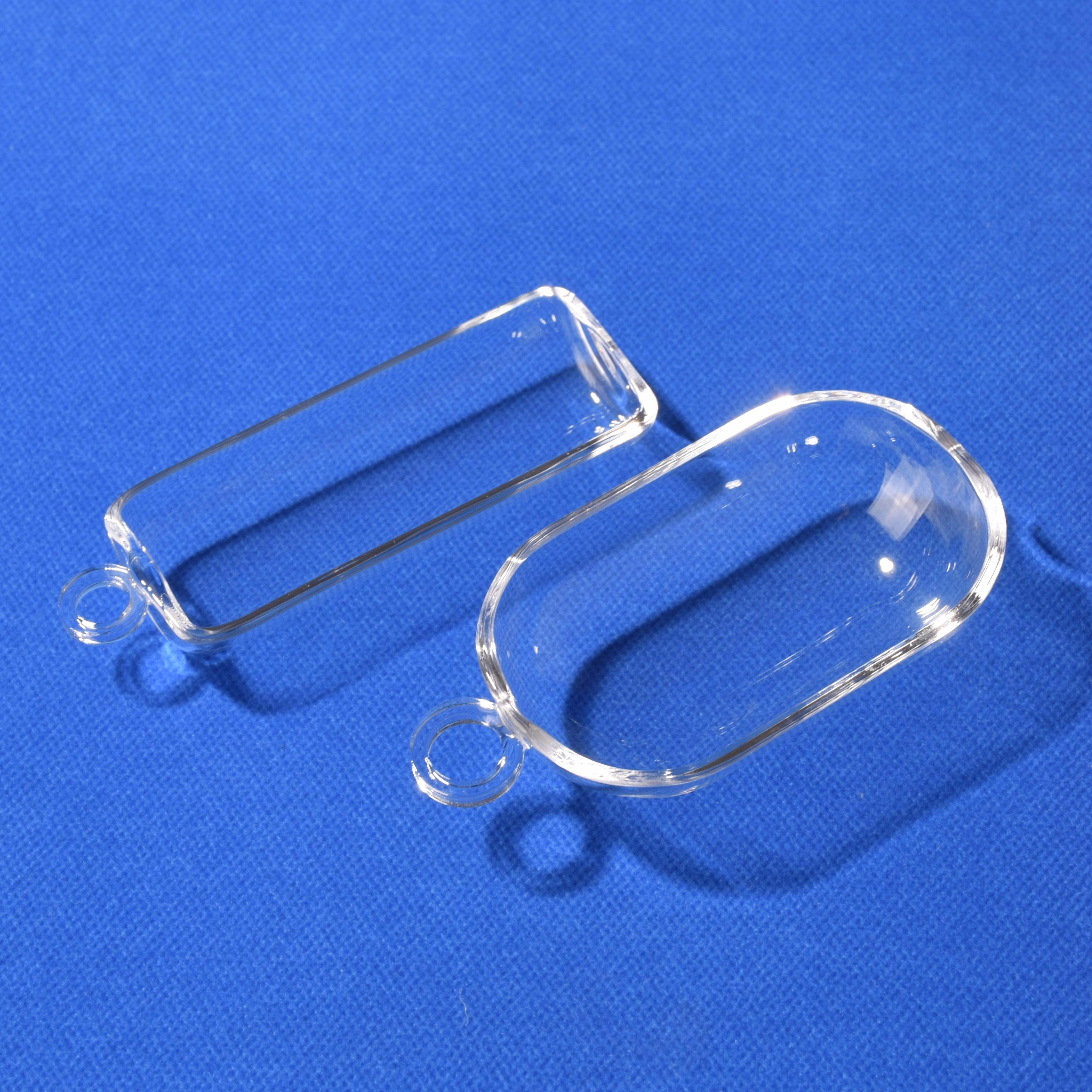
Semi-circular Flat Bottom High Temperature Resistant Tube Furnace Boat
Flat-base geometry engineered for horizontal tube furnaces across Attica metallurgy labs. Features polished, ozone-free silica glass with superior resistance to devitrification.
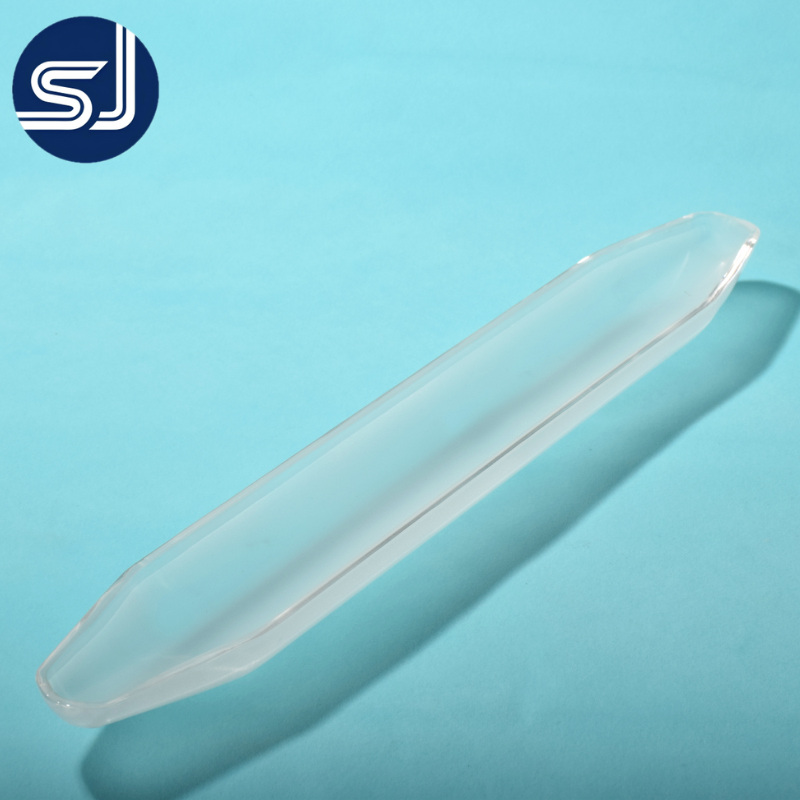
SJ 140 Precision Polished Quartz Boat for Semiconductor & Lab
Ultra-clear optical finish boat delivering over 85% UV-VIS light transmittance. CNC slotted or hollowed according to customer drawing specifications for silicon wafer and sample pyrolyzing.
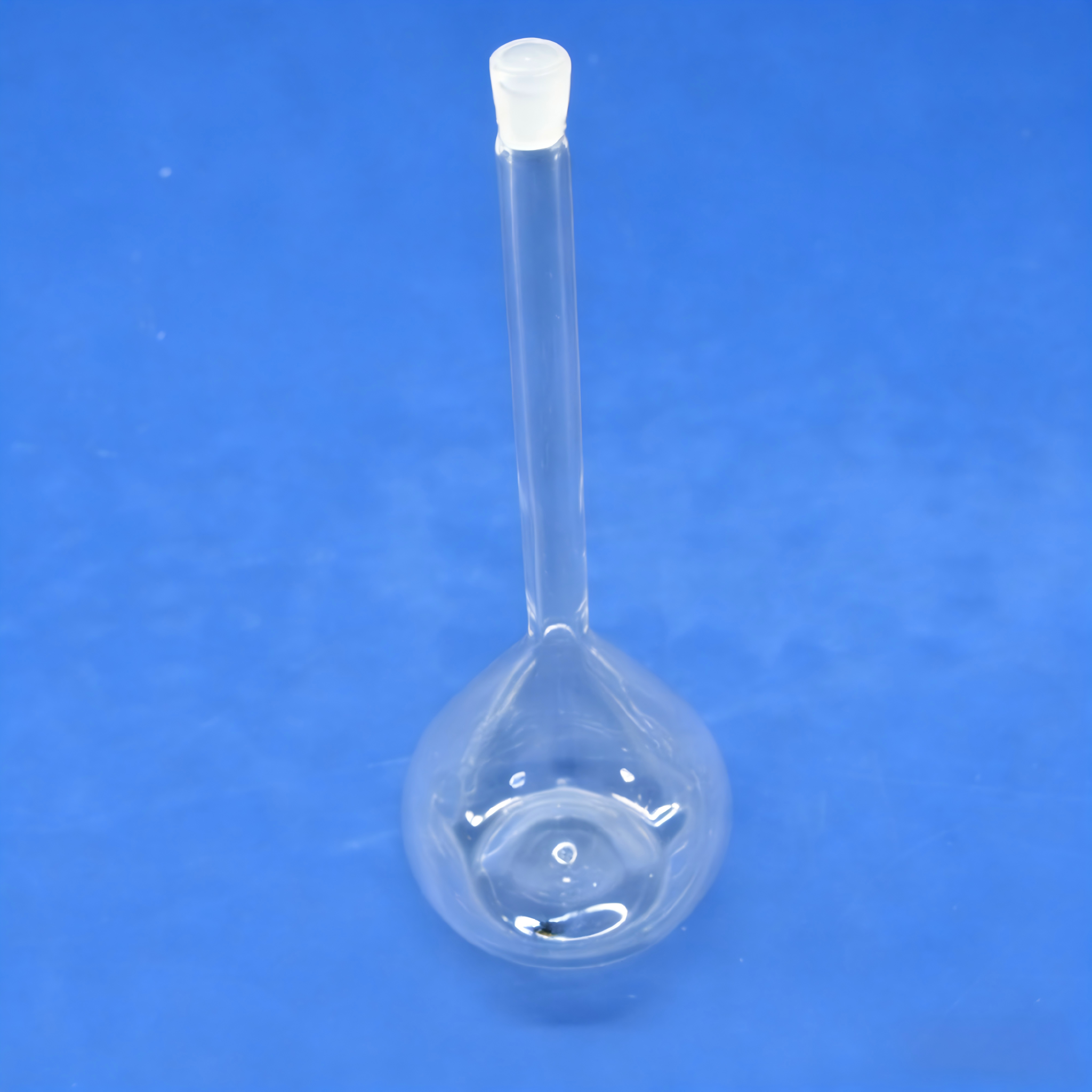
High Purity Transparent Quartz Glass Ampoule Customized Clear Flask
Vacuum-sealable quartz ampoules and customized lab flasks. Zero thermal fatigue when plunged from 1100°C directly into cold water; chemical inertness against harsh acidic reagents.
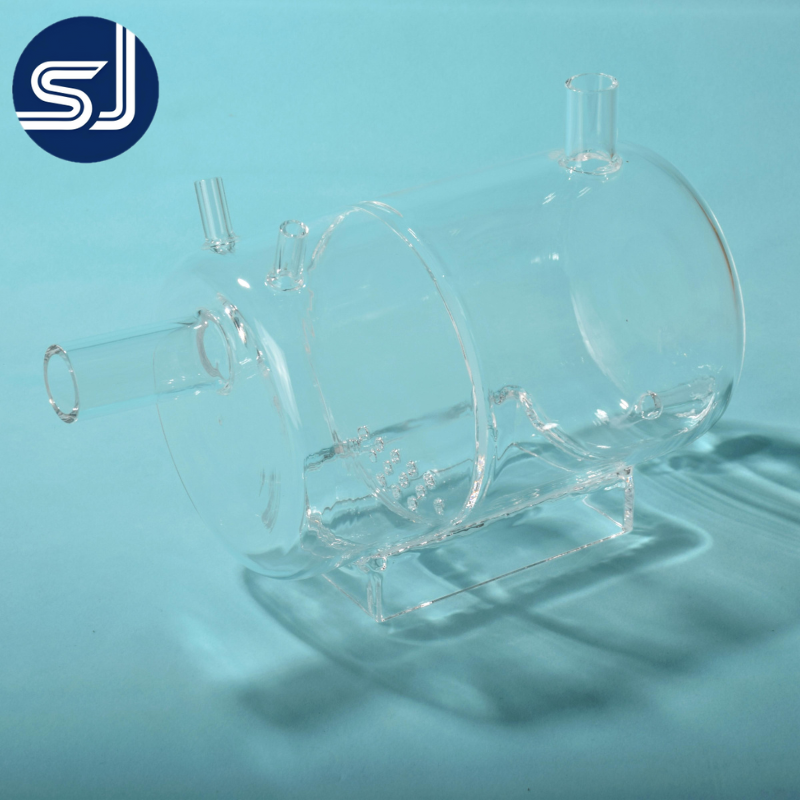
High-Temperature Corrosion-Resistant Laboratory Quartz Flow Splitting Bottle
Precision flow dividing glassware for gas-liquid separation and chromatography carrier gas routing. High hydrolytic resistance complying with Greek and EU standard laboratory metrics.
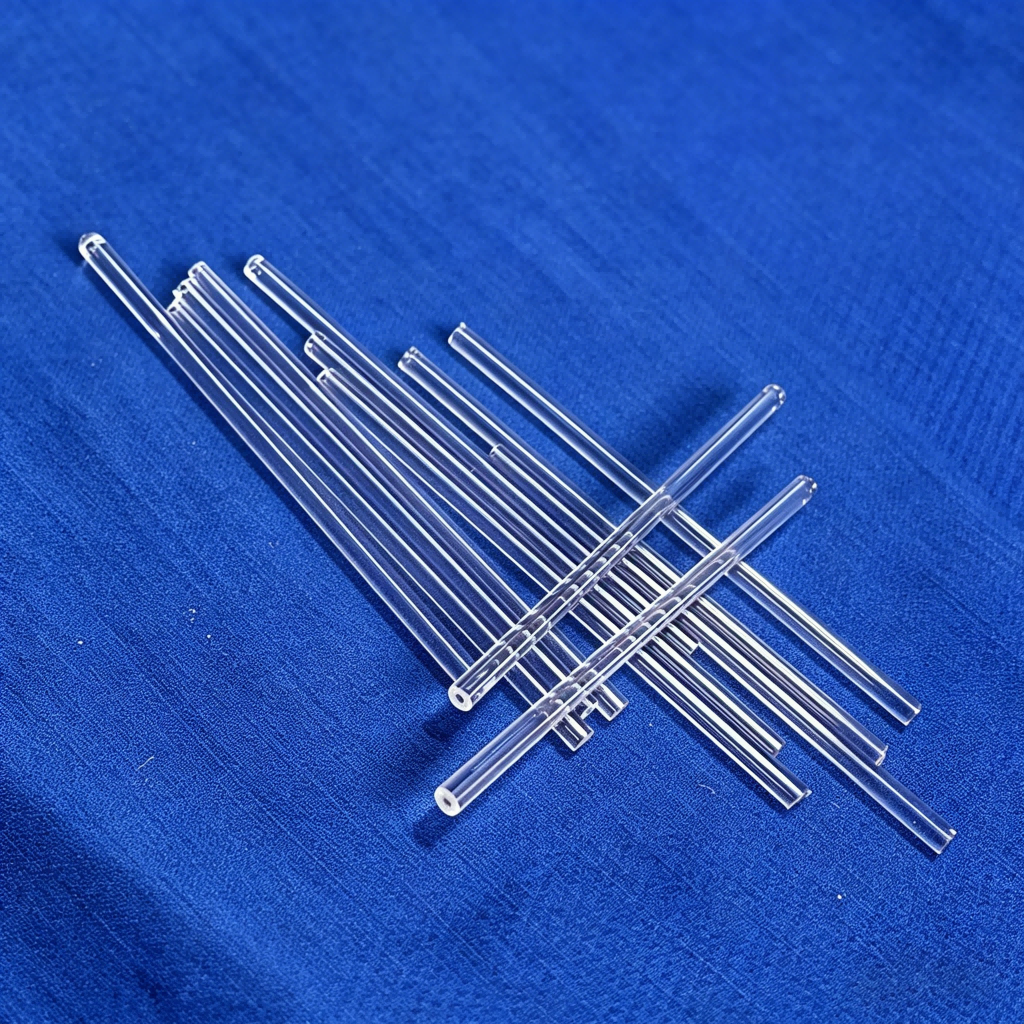
High Purity Opaque Micro Capillary Quartz Glass Tube (2–10mm OD)
Engineered for analytical exhaust routing, thermocouple protection sheaths, and furnace sensing. Low bubble density and outstanding micro-bore dimensional uniformity.
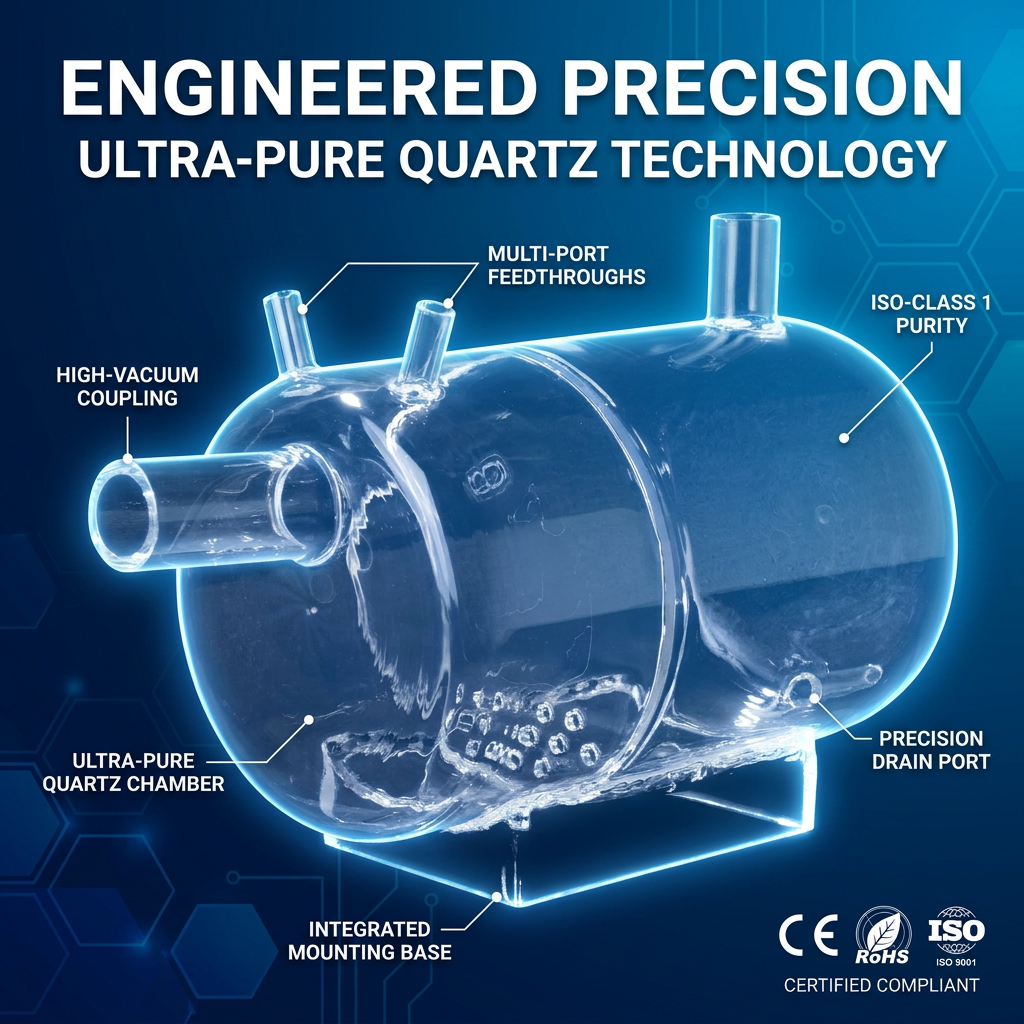
Semiconductor-Grade Precision Quartz Separating Container
Ultra-pure fused silica separation vessel featuring parts-per-billion level trace metal impurities. Indispensable for high-purity chemical processing, etching solutions, and solar ingot synthesis.
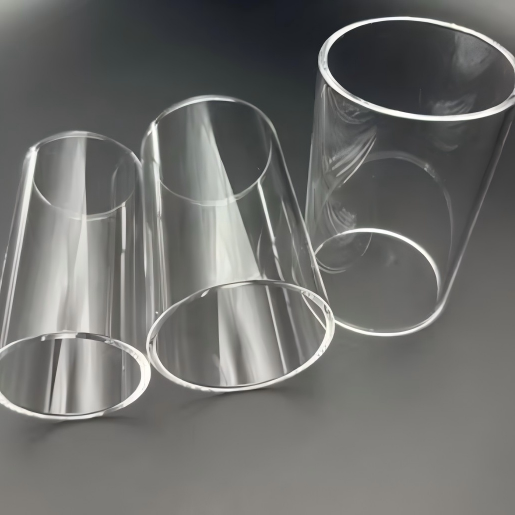
High Temperature Transparent Polished One End Closed Quartz Tube
Custom domed or flat closed-end quartz tubes produced via oxy-hydrogen flame manipulation. Ideal for pyrometer sight windows, reactor sleeves, and vacuum induction vessels.
Technical Benchmark: Electro-Fused Silica Lump & Quartz Granules
A comprehensive examination of physical chemistry, devitrification thresholds, trace elemental impurity profiles, and thermomechanical behavior for industrial procurement teams in Athens.
In high-performance industrial metallurgy, optical fabrication, and chemical reactor design, fused silica lump (often referred to interchangeably by industrial mineralogists as electro-fused quartz cullet or amorphous vitreous silica chunks) constitutes an irreplaceable foundation. Derived from top-tier pegmatitic natural quartz deposits refined in Donghai—the globally recognized epicenter of quartz processing—our fused silica lumps are created through continuous electric-arc or high-frequency induction fusion at temperatures exceeding 2000°C. This intensive thermodynamic processing collapses the crystalline lattice of trigonal alpha-quartz into a fully disordered, non-crystalline vitreous silica structure exhibiting exceptional thermal shock survival and micro-structural stability.
For industrial plants operating throughout the Athens metropolitan area—from the heavy industrial fabrication facilities of Aspropyrgos and Elefsina to specialized advanced materials research facilities at the National Technical University of Athens (NTUA)—the consistency of the amorphous phase is paramount. Residual crystalline phases (such as un-melted quartz relics or premature cristobalite nucleation sites) act as focal stress concentrators that induce rapid thermal fatigue when subjected to cyclic heating in induction furnaces, catalytic cracker vessels, or foundries. Our verified production line enforces an amorphous vitreous phase integrity exceeding 99.8%, monitored via rigorous X-ray Diffraction (XRD) spectral verification.
| Property / Specification Parameter | Vulra Fused Silica Lump (Grade A) | Commercial Metallurgical Quartz | Standard Synthetic Silica Feedstock | Industrial Relevance for Athens Plants |
|---|---|---|---|---|
| SiO₂ Chemical Purity | 99.99% – 99.999% | 98.5% – 99.2% | > 99.9999% | Prevents iron/alkali contamination in high-temp melts |
| Phase Morphology | Amorphous Vitreous (> 99.8%) | Polycrystalline / Trigonal | Fully Amorphous Synthesized | Guarantees zero thermal shock cracking during heating |
| Coefficient of Thermal Expansion | 5.5 × 10⁻⁷ cm/cm·°C | 120–140 × 10⁻⁷ cm/cm·°C | 5.2 × 10⁻⁷ cm/cm·°C | Withstands water-quench tests directly from 1100°C |
| Devitrification Onset Point | 1150°C (Accelerates at 1200°C) | Not applicable (Already crystalline) | 1200°C – 1250°C | Determines furnace campaign lifespan and tube longevity |
| Trace Fe₂O₃ Content | < 5 ppm (Semiconductor < 0.8 ppm) | > 120 ppm | < 0.05 ppm | Eliminates optical discoloration and catalytic fouling |
| Available Lump Sizing | 0–10mm, 10–30mm, 30–100mm | Coarse Raw Boulder (50–250mm) | Fine Granular Powder or Rods | Directly optimized for crucibles, mortars, and casting |
| Procurement Cost Index | Optimal Economy/Purity | Low Grade / Basic Bulk | High Premium | Maximum operational ROI for Greek foundries & labs |
Chemical purity is the critical determinant of how fused silica lump behaves under severe industrial conditions. The presence of trace alkali ions—specifically Sodium (Na⁺), Potassium (K⁺), and Lithium (Li⁺)—in quantities greater than 10 ppm disrupts the three-dimensional silicon-oxygen tetrahedral network (Si-O-Si bridging bonds). This network breakage lowers the activation energy required for devitrification, converting the metastably stable vitreous silica glass back into crystalline cristobalite at elevated working temperatures. Cristobalite undergoes a catastrophic displacive alpha-beta phase transition at approximately 220°C to 270°C, accompanied by a rapid 2.8% volume change that causes extensive micro-cracking and fragmentation of furnace liners. Our Donghai supply origin guarantees trace alkali levels below 2.5 ppm, effectively blocking this failure mechanism during prolonged thermal operations in Attica furnace installations.
High-Purity Fused Silica Lump in the Athens Industrial Basin
Strategic deployment across Attica’s metallurgical foundries, maritime industrial facilities, optical communication networks, and premier university engineering laboratories.
Thriasio Metallurgical Casting
Used as an aggregate and matrix stabilizer in investment casting shells, refractory ramming mixes, and tundish nozzles for high-grade alloy foundries in Aspropyrgos and Mandra.
Thriasio Plain ClusterPetrochemical Catalyst Support
Employed by refineries in the Elefsina-Corinth industrial strip as low-porosity, high-temperature catalytic bed bedding resistant to aggressive sulfur and halogen atmospheres.
Elefsina BasinMaritime Sight Glasses & Boiler Tubes
Heavy-gauge quartz sight tubes, boiler inspection discs, and high-pressure steam indicators for naval refitting and drydocking operations at the Port of Piraeus and Perama.
Piraeus / Perama ZoneAcademic & Research Metallurgy
Custom quartz reaction tubes, XRD specimen substrates, and tube furnace combustion boats supplied to NTUA (Zografou Campus) and NCSR Demokritos laboratories.
Zografou Research HubThe specific operational geography of Greater Athens presents unique micro-environmental challenges for industrial mineral logistics and processing. In the coastal marine industrial zone stretching from the container terminals of Piraeus westward through Drapetsona, Keratsini, and Aspropyrgos, high ambient salinity and marine atmospheric humidity can drastically degrade improperly handled mineral feedstocks. When porous or low-grade quartz aggregates are stored in humid maritime conditions, moisture adsorption onto surface silanol groups ($Si\text{-}OH$) creates significant bubbling, foaming, and hydroxyl ion ($OH^-$) generation when charged into molten steel or induction crucibles.
Vulra Quartz mitigates this localized risk by implementing hermetically sealed moisture-barrier poly-lined bulk packaging and pre-vacuum desiccant packs for all maritime container shipments entering Greece through the COSCO-operated Piraeus terminals. Whether our Athens clients utilize 10–30mm high-purity fused silica lumps as raw feedstock for synthesizing fused quartz ceramic crucibles or utilize custom-machined 800mm closed-end quartz reaction chambers for high-temperature synthesis, the chemical and physical integrity of the feedstock remains strictly uncompromised.
Macro Trends Reshaping Industrial Silica Demand in Greece
How the Greek National Energy and Climate Plan (NECP), the Mediterranean green tech boom, and EU Critical Raw Material directives are expanding the strategic requirement for certified high-purity fused quartz.
Green Metallurgy & Hydrogen Transition
As Greek metal producers in Aspropyrgos and Oinofyta transition toward hydrogen-injected electric arc furnaces (EAF), refractory materials must withstand accelerated vapor-phase reducing reactions. Amorphous fused silica lumps provide the chemical inertness needed to prevent silica reduction into SiO gas.
Photovoltaic & Microelectronic Reshoring
Aligning with EU Net-Zero Industry Act targets, Southern European supply chains are localizing solar wafer synthesis components. Athens-based engineering developers rely on high-purity fused silica furnace boats and quartz crucibles to eliminate metallic contamination during polysilicon crystallization.
Maritime Decarbonization & Scrubber Sensing
With Piraeus serving as the primary commercial shipping hub in the Eastern Mediterranean, shipyards are integrating advanced exhaust gas cleaning system (EGCS) optical sensors. These require UV-grade, ozone-free quartz tubes that endure both extreme thermal cycling and acidic exhaust condensation.
Furthermore, the European Union's Critical Raw Materials Act (CRMA) has established a renewed regulatory imperative regarding supply chain traceability, environmental carbon footprint compliance, and material safety data transparency. Greek procurement officers can no longer risk relying on unverified broker networks for mineral inputs where impurity variations can cause multimillion-euro furnace shutdowns. By partnering directly with a TÜV Rheinland-assessed manufacturing entity based in the premier Donghai quartz production corridor, Athens procurement managers secure direct factory transparency, lot-specific Inductively Coupled Plasma Mass Spectrometry (ICP-MS) purity assays, and full EU REACH/RoHS compliance certification.
Engineered in China’s Crystal Capital, Delivered to the Heart of Greece
Operating out of the Jiangsu Donghai Economic Development Zone, Lianyungang Vulra Quartz Products Co., Ltd. sits squarely at the source of the world’s most sophisticated high-purity natural silica sand reserves. We control the complete processing vertical: from raw thermal electric-arc lump fusion to advanced cold CNC diamond ultrasonic drilling, high-precision lathe flame manipulation, and controlled thermal stress-relief annealing.
- Independent TÜV Rheinland Verification: Complete physical factory, production line, and trading integrity verified on-site.
- Flexible Customization from 1 PC: Whether ordering 25-metric-ton bulk containers of sized fused silica lumps or 1 custom-drawn quartz manifold for an Athens research reactor.
- Deep Thermal Stress Relief (Annealing): Every welded and bent quartz component undergoes automated thermal ramp-down cycles to permanently eliminate polariscope birefringence stress.
- Export Crate Engineering: Poly-suspended, vacuum-sealed packaging tailored for high-humidity Mediterranean container transit directly into Piraeus Port.
Frequently Asked Questions: Athens Fused Silica Sourcing
Practical engineering, customs, logistics, and quality assurance solutions specifically addressed to commercial importers, foundry engineers, and lab managers in Attica.
01. What HS Codes and customs clearance tariffs apply when importing fused silica into Piraeus?
Fused silica lumps and cullet are primarily imported under HS Code 2506.20.00 (Quartzite, whether or not roughly trimmed or merely cut) or HS Code 3207.40.00 (Glass frit and other glass in the form of powder, granules or flakes), while finished quartz laboratory ware is cleared under HS Code 7017.10.00. Shipments clearing through Customs Office A' or E' at Piraeus typically face 0% third-country basic customs duties for mineral raw materials, subject to standard Greek VAT (24%). We supply complete commercial invoices, packing lists, and certified Certificates of Origin (COO) to ensure expedited ICISnet customs clearance.
02. How is sea transit managed to prevent moisture contamination during Mediterranean voyage?
Maritime freight from Lianyungang/Qingdao to Piraeus takes approximately 22 to 28 days via standard direct liner services. To guard against marine condensation ("container rain") and salt-air ingress, our fused silica lumps are packaged in multi-layered, UV-stabilized heavy-duty polypropylene woven bulk bags with an internal hot-extruded 150-micron polyethylene hermetic liner. Sized granulates and precision glassware are additionally packed with industrial-grade clay desiccant bags inside fumigated, ISPM-15 compliant solid timber crates.
03. What is the operational distinction between natural fused quartz and synthetic fused silica?
Natural fused quartz (such as our 99.99% SiO₂ lumps and tubes) is melted directly from high-purity natural crystal sand. It offers exceptional mechanical strength, a high softening point (1683°C), and optimal economic balance for thermal furnaces, metallurgy, and foundries. Synthetic fused silica is synthesized through chemical vapor deposition using volatile silicon precursors ($SiCl_4$), yielding virtually zero trace metal impurities and unmatched deep-UV optical transmission (190nm), but at a significant cost premium. For 95% of Athens industrial and laboratory applications, natural fused quartz is the optimal engineering choice.
04. How does your manufacturing line ensure zero internal stress in complex custom quartzware?
Any hot manipulation—such as torch welding flanges, dome closures, or bending large capillary branches—introduces severe localized thermal stress gradients. If unaddressed, these internal stresses cause spontaneous cracking under furnace cycling in Athens foundries. Vulra subjects every fabricated quartz component to electric resistance annealing ovens, ramping to 1150°C–1200°C for isothermal holding followed by micro-controlled ramp-down through the transformation range, verified under circular polariscope stress meters.
05. Can you provide custom particle sizing for refractory blending and crucible manufacture?
Yes. Beyond standard raw lump chunks (30–100mm), our Donghai plant features comprehensive secondary mechanical crushing, magnetic separation, and vibrating multi-mesh sizing. We supply tailored grain fractions including 0–1mm, 1–3mm, 3–5mm, and ultra-fine -200 to -325 mesh fused silica flours for precision investment casting slurries, ramming mixes, and technical ceramic formulations throughout Greece.
06. What is the Minimum Order Quantity (MOQ) for Athens industrial and academic clients?
We accommodate projects of all scales. Standard custom-drawn laboratory glassware, boats, crucibles, and observation windows have an MOQ of just 1 piece to allow Athens university researchers and plant engineers to conduct full-scale prototyping and thermal trials. For bulk fused silica lump and grain supplies, standard palletized trial orders start at 1 metric ton (1000 kg), scaling smoothly up to recurring 20-foot and 40-foot full container loads (FCL).