Featured Quartz Products Serving Nordic Research & Industry
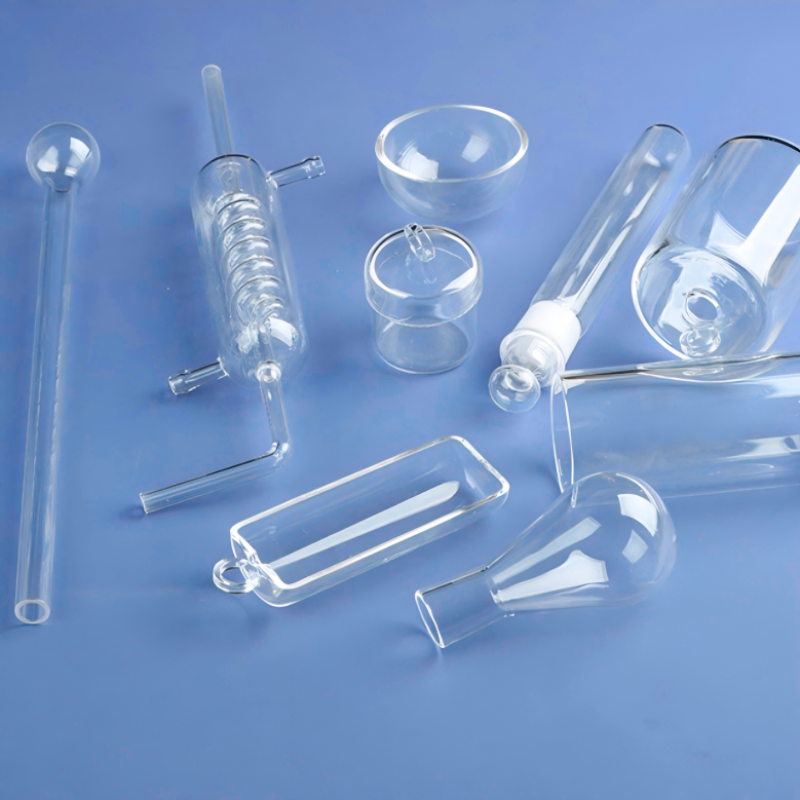
Drawing-based high-purity thermal and optical fused quartz elements direct from our integrated manufacturing center to Greater Copenhagen laboratories, cleanrooms, and OEM facilities.
Engineering White Paper: Precision Fused Quartz Discs in Nordic Advanced Manufacturing
A technical treatise on synthetic fused silica vs. natural electrically fused quartz discs, metrology standards, and material behavior in high-stress operational environments.
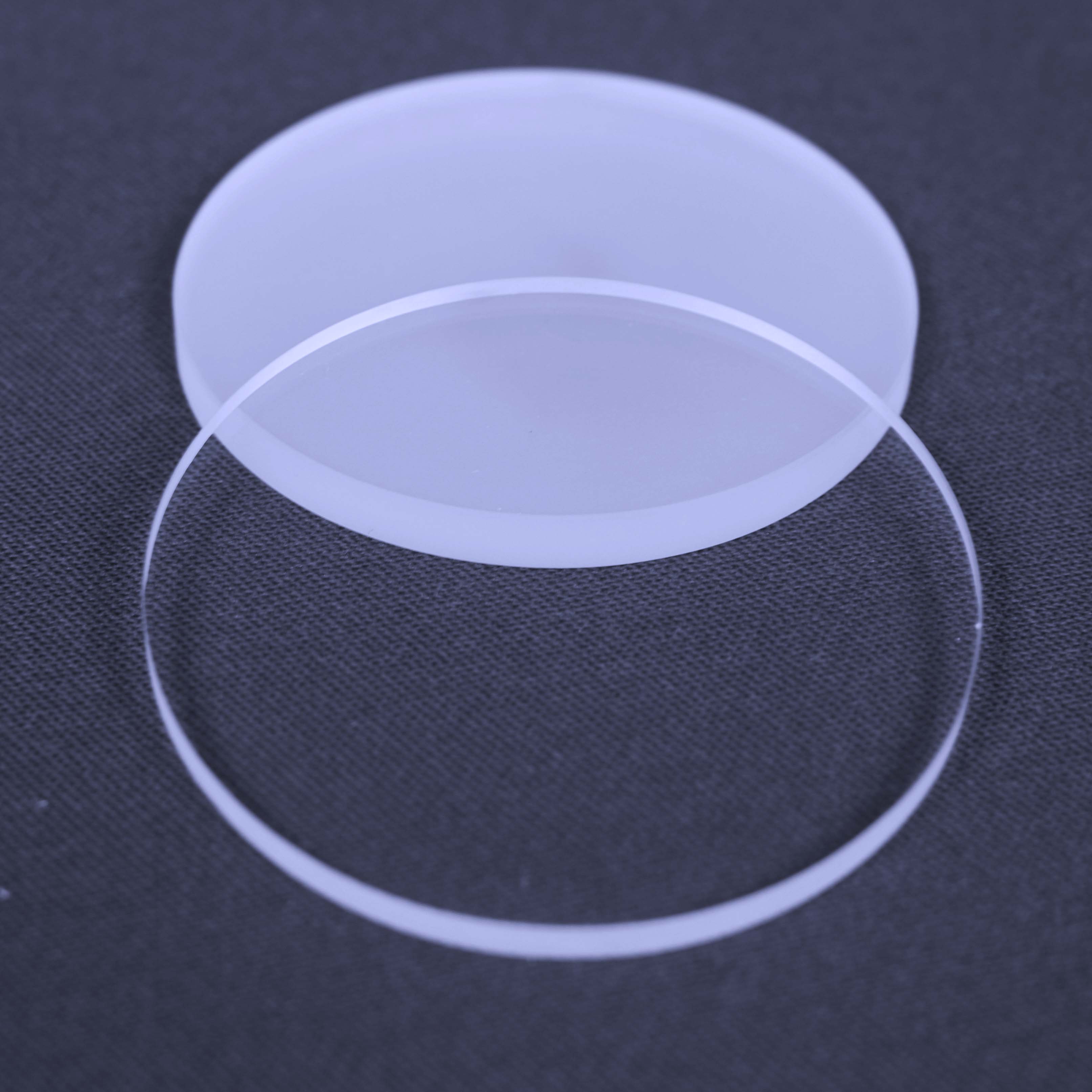
As the European transition toward quantum photonics, next-generation biotechnology, and power-to-x clean fuel technology accelerates, procurement authorities across the Greater Copenhagen area—spanning research nodes in Kongens Lyngby, biomedical clusters in Hørsholm, and specialized equipment manufacturers in Glostrup—face increasingly strict performance requirements for optical substrates and thermal sight windows. High-purity fused quartz discs represent a foundational component across these disciplines, providing unmatched ultraviolet (UV) to near-infrared (NIR) transmission, superior thermal shock resistance, near-zero thermal expansion, and non-reactive chemical stability.
When selecting a fused quartz disc exporter for Copenhagen delivery, Danish engineering procurement managers must balance three foundational optical and thermodynamic categories:
JGS1 / Synthetic Fused Silica
Manufactured through chemical vapor deposition of silicon tetrachloride ($SiCl_4$) in an oxy-hydrogen flame. Characterized by negligible metallic impurities ($< 1\,\text{ppm}$) and high hydroxyl ($OH^-$) content (typically 800–1200 ppm). Exceptionally transparent in the deep ultraviolet (DUV) range down to 185 nm without bubbled inclusions, making it the preferred choice for excimer lasers, UV-C germicidal validation, and fluorescence microscopy.
JGS2 / Natural Fused Quartz
Produced by melting premium-grade natural crystal sand in high-temperature electric arc furnaces. Features high optical clarity from 260 nm through 2500 nm, combined with excellent mechanical rigidity and thermal resilience. With an $OH^-$ content generally under 30 ppm, JGS2 discs minimize infrared absorption bands and are standard for high-temperature furnace viewports, semiconductor wafer transport discs, and general laboratory sight glasses.
JGS3 / Infrared Optical Quartz
Synthesized via vacuum electrical fusion, driving the hydroxyl level down to less than 5 ppm. This near-total elimination of the fundamental $OH^-$ absorption dip at 2.73 µm yields outstanding transmission deep into the infrared spectrum up to 3500 nm. Critical for analytical spectroscopy, pyrometric monitoring windows, and mid-IR sensor windows across Denmark's green-tech sector.
Localized Application Scenarios in Greater Copenhagen & the Øresund Region
Precision quartz discs tailored to the unique operational environments of Denmark's world-leading science and engineering clusters.
Medicon Valley Bio-Pharmaceutical Spectroscopy
The biopharma hub extending between Copenhagen and southern Sweden demands stringent bio-inert materials for analytical instrumentation, chromatography cells, and fermentation observation windows. Standard soda-lime or borosilicate glasses leach alkali ions ($Na^+$, $K^+$) into buffer solutions at elevated temperatures or extreme pH shifts, altering enzyme kinetics or protein stability profiles.
Our circular fused quartz discs, polished to MIL-PRF-13830B 20-10 Scratch-Dig, serve as zero-autofluorescence windows in dynamic light scattering (DLS), circular dichroism, and flow cytometry. Their high chemical resistance to harsh clean-in-place (CIP) chemicals, including boiling nitric and hydrochloric acids, ensures years of continuous baseline stability without optical clouding or solarization.
Quantum Computing & Photonic Cavities (NBI / DTU)
Centering around research institutes such as the Niels Bohr Institute in Copenhagen and DTU Fotonik in Lyngby, quantum communication and neutral-atom computing experiments require ultra-low birefringence optical substrates. Stress-induced birefringence in ordinary optical discs distorts photon polarization states, collapsing qubit superposition.
We supply precision annealed fused silica discs with optical retardation below 5 nm/cm, surface flatness to λ/10 at 632.8 nm, and laser-grade edge beveling. These discs operate inside ultra-high vacuum (UHV) cold-atom traps and cryogenic optical viewports, ensuring transmission fidelity for laser cooling (780 nm, 852 nm) and ultraviolet photoionization beams.
Green Hydrogen, Power-to-X & Pyrolysis Chambers
Denmark is an international pioneer in green fuels, synthetic e-methanol, and solid oxide electrolysis cell (SOEC) development. Pilot facilities throughout Sjælland and the Danish islands deploy high-temperature, high-pressure reaction chambers to validate catalytic conversion efficiency in real time.
Our heavy-wall fused quartz discs (thicknesses up to 20 mm or more, diameters up to 500 mm) serve as high-pressure optical ports capable of withstanding internal chamber atmospheres at 1000°C without mechanical creep or risk of catastrophic thermal shock failure during emergency inert gas quench cycles.
Trace Impurity Analysis & Thermal-Mechanical Baseline
Verified chemical and physical data demonstrating compliance with Danish industrial specifications and ISO cleanroom manufacturing standards.
| Parameter / Element | Standard Optical Quartz (JGS2) | Synthetic Fused Silica (JGS1) | Standard Borosilicate 3.3 (Benchmark) |
|---|---|---|---|
| SiO₂ Purity (%) | ≥ 99.99% | ≥ 99.999% | ≈ 81.0% |
| Aluminum (Al) ppm | 14 – 18 ppm | < 0.1 ppm | ≈ 20,000 ppm |
| Iron (Fe) ppm | 0.1 – 0.3 ppm | < 0.04 ppm | ≈ 300 ppm |
| Alkali Metals (Na, K, Li) ppm | < 1.5 ppm combined | < 0.05 ppm combined | > 40,000 ppm ($Na_2O + K_2O$) |
| Coefficient of Thermal Expansion (CTE) | 5.5 × 10⁻⁷ / K (20–320°C) | 5.2 × 10⁻⁷ / K (20–320°C) | 33.0 × 10⁻⁷ / K |
| Continuous Operating Temp | 1100 °C | 1100 °C | 450 °C |
| Softening Point | ≈ 1683 °C | ≈ 1710 °C | ≈ 820 °C |
| Thermal Shock Resistance | Survives 1100°C into cold water | Survives 1150°C into cold water | Cracks with ΔT > 150°C |
| Transmittance Range | 260 nm – 2500 nm | 185 nm – 2500 nm | 350 nm – 2200 nm |
Emerging Procurement Trends Across the Danish Market
Insights into regulatory evolutions, environmental mandates, and technological pivots impacting Danish scientific purchasers.
1. Direct Manufacturer Sourcing & CAD-to-Part Agility
Nordic research institutions and specialized machinery OEMs have historically relied on multi-tiered European distributors, resulting in substantial markups and lead times stretching from 8 to 16 weeks for non-catalog disc dimensions. Copenhagen laboratories are increasingly bypassing intermediaries, connecting directly with verified custom manufacturers capable of reviewing 2D/3D CAD models (STEP, DXF, PDF) and producing single-piece custom prototypes within 5 to 7 working days.
2. Stringent ESG and REACH/RoHS Traceability
Denmark maintains some of the European Union's strictest environmental accountability standards. Procurement directors within Danish university consortia and publicly traded life-science corporations require certified supplier documentation proving that all quartz glass components are 100% free of hazardous heavy metals, conflict minerals, and ozone-depleting cleaning agents. Our certified compliance with RoHS and CE standards, verified independently by TÜV Rheinland, provides Danish buyers with direct audit defensibility.
3. Demand for Sub-Nanometer Surface Roughness
With the expansion of DTU Nanolab cleanroom operations and the growth of private microfluidic diagnostic firms across Sjælland, the requirement for fused quartz discs has shifted from coarse sight glass specifications to super-polished optical wafer substrates. Applications including direct wafer bonding, ultraviolet nanoimprint lithography (UV-NIL), and atomic force microscopy (AFM) sample mounting require fused quartz discs with surface roughness $Ra < 0.5\,\text{nm}$ and total thickness variation ($TTV$) under $3\,\mu\text{m}$.
Why Copenhagen Engineers Choose Vulra Quartz
Direct supply advantages from China's premier silica basin backed by internationally audited quality management.
Direct Crystal Cluster Advantage
Located at Dingxin Road in the Jiangsu Donghai Economic Development Zone—the internationally renowned center for natural crystal and high-purity silica sand processing—Lianyungang Vulra Quartz Products Co., Ltd. controls raw material purity from the sand grain upward. We maintain zero intermediate broker inflation on pristine quartz crystal inputs.
TÜV Rheinland Assessed & Verified
International buyers cannot afford supply chain ambiguity. Our factory premises, legal credentials, high-precision hot-working glass lathes, ultrasonic drilling units, continuous annealing furnaces, and dimensional metrology inspection lines are rigorously assessed and certified on-site by TÜV Rheinland.
Unified Hot & Cold Machining
While many workshops outsource either high-temperature flame fusing or precision optical lap polishing, our Donghai facility executes both under one roof. Whether your Copenhagen project demands a 500 mm diameter ground sight disc, a double-flanged viewing port with hydrogen-welded tubes, or an array of laser-cut 0.5 mm thick microscope discs, our engineering team ensures uniform thermal stress relief through programmed annealing schedules.
Export-Grade Protective Packaging
Precision quartz discs are vulnerable to micro-chipping, surface scratching, and shock fractures during intercontinental freight. Every disc manufactured for export to Copenhagen undergoes multi-stage ultrasonic degreasing, cleanroom dust-free heat sealing, double-wall high-density cellular foam nesting, and reinforced wooden crating rated for rapid air express handling direct into Copenhagen Airport (CPH).
Copenhagen Procurement & Engineering FAQ
Actionable answers to technical, commercial, and logistical inquiries frequently raised by Danish engineering buyers.
Accelerate Your Copenhagen Quartz Sourcing Project
Connect directly with our senior quartz glass engineering team. Whether you need an immediate price quotation for prototype optical discs, custom furnace sight glass fabrication, or high-purity semiconductor substrates, our Donghai manufacturing center is ready to assist your design review.
Contact Us