Recommended High-Performance Quartzware Portfolio
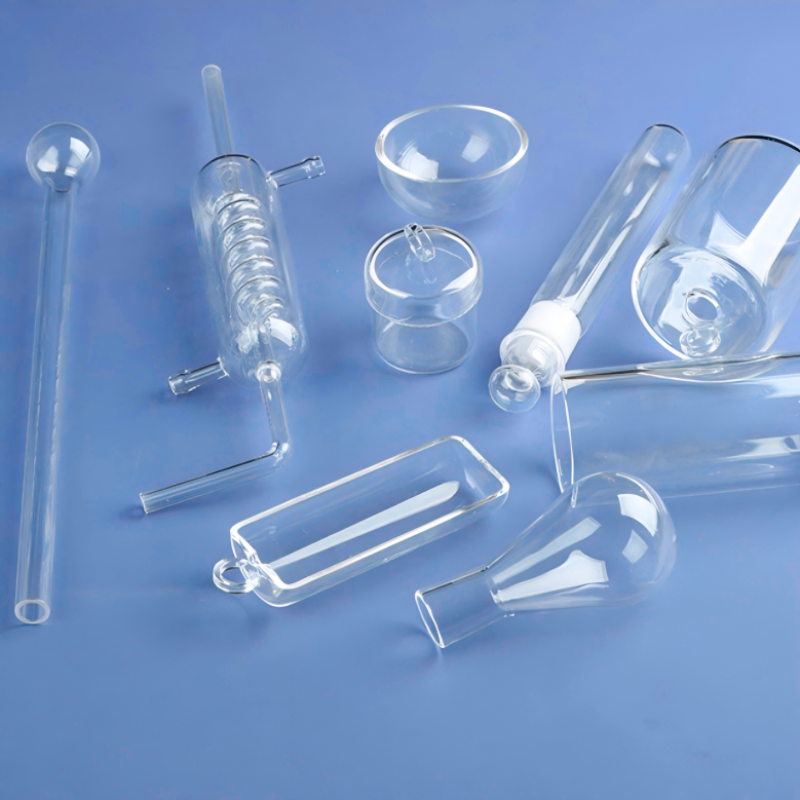
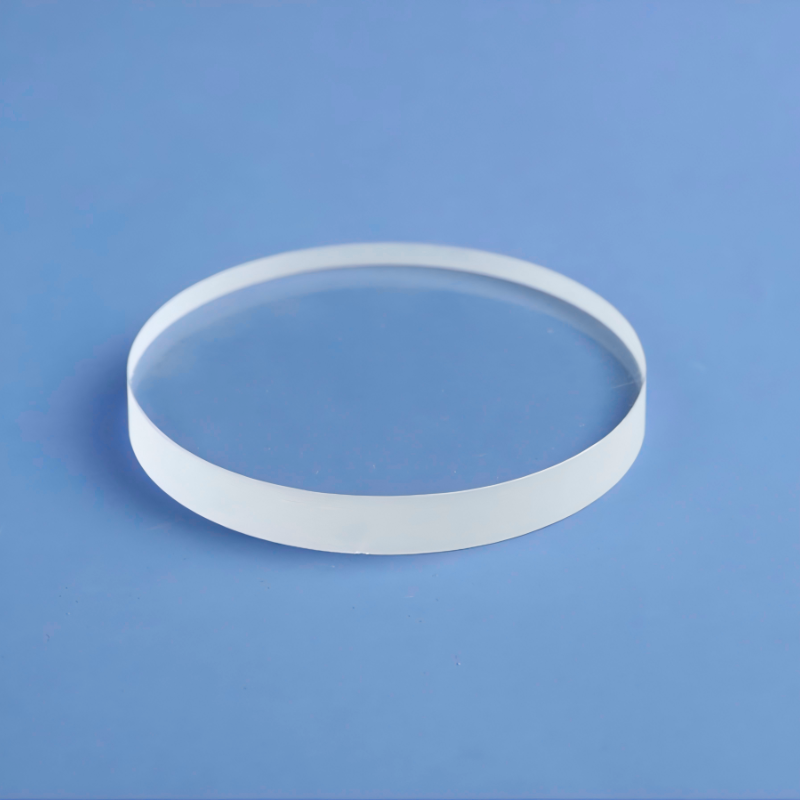
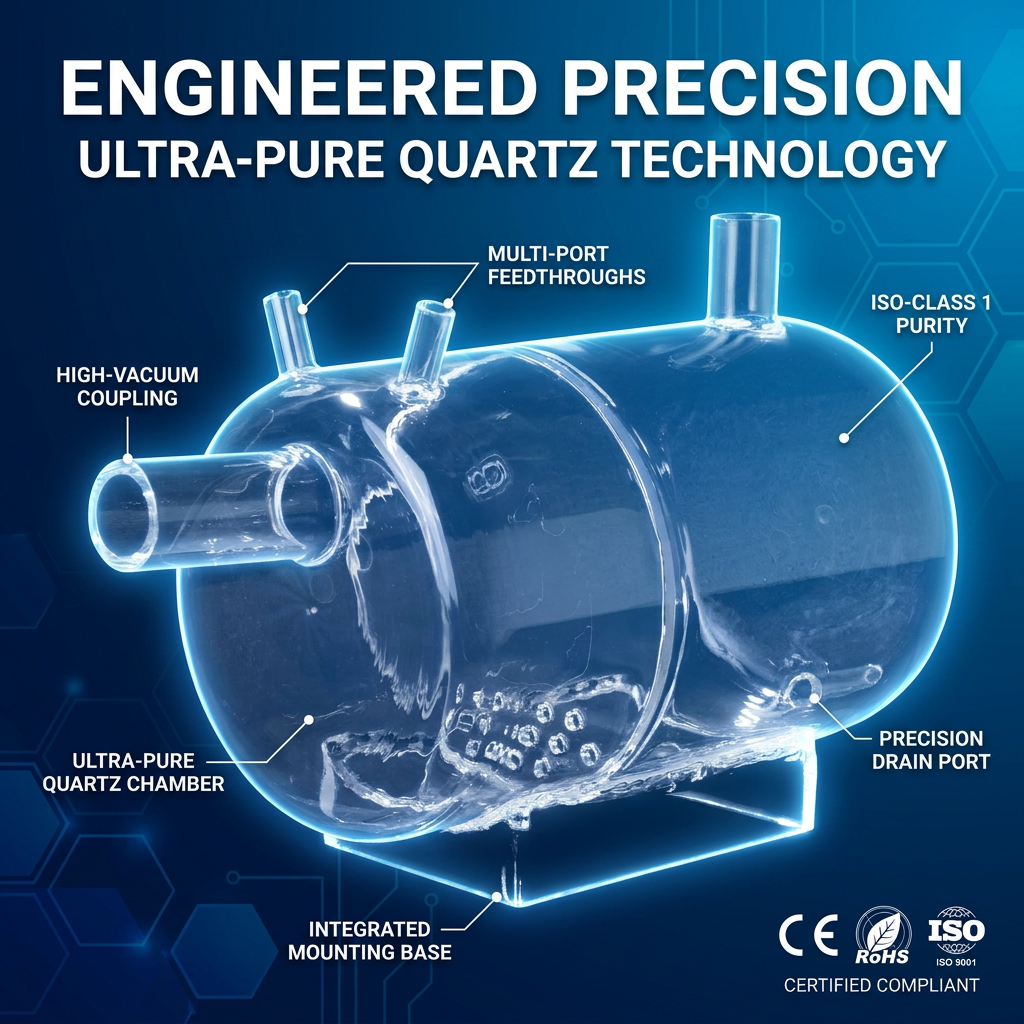
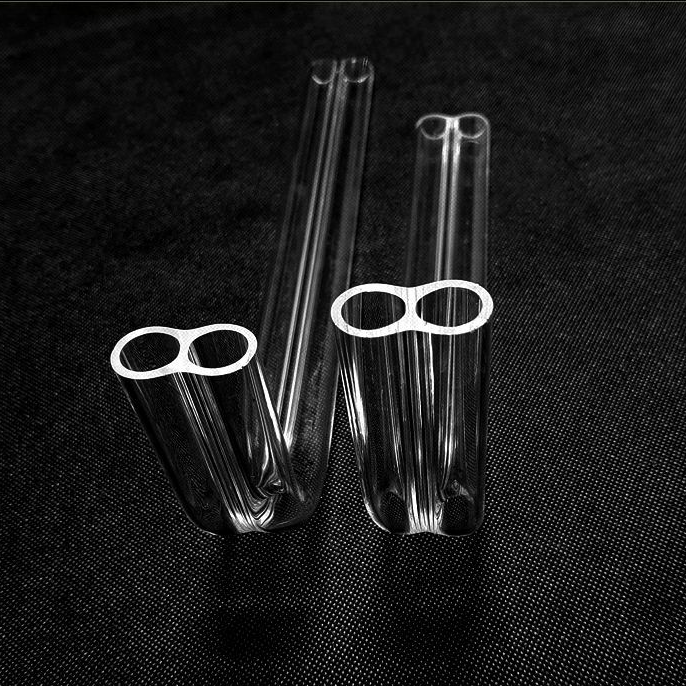
Direct from our Donghai precision manufacturing facility: fully sintered, flame-polished, and high-vacuum annealed fused quartz vessels, tubes, and test apparatus certified for severe thermal environments.
Whitepaper: Engineering Mechanics of Fused Quartz Crucible Bowls in High-Throughput Thermal Digestions
A deep-dive investigation into crystal lattice stability, thermal expansion coefficients, alkali-ion diffusion barriers, and molten flux survivability in heavy analytical environments.
In precision metallurgical, pyrochemical, and mineralogical processing, the crucible bowl is fundamentally more than a passive sample holder—it is an active thermodynamics boundary. Fused quartz crucible bowls manufactured by Lianyungang Vulra Quartz Products Co., Ltd. are synthesized by thermal fusion of high-purity natural silica sand sourced directly from the geologically enriched pegmatite veins of Donghai County, China. Unlike conventional borosilicate or lower-tier refractory ceramics, vitreous fused quartz consists entirely of an amorphous network of silicon-oxygen tetrahedra (SiO₄) without intentional network modifiers like sodium, boron, or potassium.
Thermal Resilience
Continuous thermal operation at 1100°C with short-duration excursion ceilings up to 1450°C. With an ultimate softening point of 1683°C, our bowls resist creep deformation, sagging, and sidewall thinning during aggressive calcination and induction cycles.
Chemical Passivation
Exceptional inertness against concentrated hydrochloric, nitric, sulfuric, and perchloric acids at boiling thresholds. Zero ionic leaching guarantees baseline analytical precision in ICP-MS, ICP-OES, and X-ray fluorescence trace-element quantification.
Controlled Cristobalite Kinetics
Devitrification is suppressed through rigid total-alkali contamination control (Na + K + Li < 1.2 ppm). Homogeneous fire-polishing removes micro-flaws that serve as nucleation sites for high-temperature α-to-β cristobalite transformation.
Comparative Matrix: Fused Quartz vs. Competing Crucible Materials
| Performance Vector | Vulra Fused Quartz Bowl | High-Alumina Ceramic (Al₂O₃ 99%) | Borosilicate 3.3 Glass | Pure Platinum (Pt) Labware |
|---|---|---|---|---|
| SiO₂ / Chemical Purity | 99.99% – 99.999% SiO₂ | Al₂O₃ > 99.0% | ~81% SiO₂, 13% B₂O₃, 4% Na₂O | Pt ≥ 99.95% |
| Continuous Service Limit | 1100°C – 1200°C | 1600°C – 1700°C | 450°C – 500°C | 1200°C – 1400°C |
| Thermal Shock Resilience | Immense (ΔT > 1000°C quench) | Poor to Moderate (ΔT ≈ 150°C) | Moderate (ΔT ≈ 150°C) | Immense (Ductile metallic) |
| Acid Digestion Stability | Unaffected (except HF & hot H₃PO₄) | Good (degrades in hot acids) | Moderate (boron/alkali leaching) | Excellent (attacked by aqua regia) |
| Trace Leaching Risk (ICP-MS) | Ultra-Low (< 0.05 ppm matrix interference) | High (Al, Si, Fe, Ca leach) | Severe (B, Na, K, Ba contamination) | Zero (noble metal profile) |
| Capital Replacement Cost | Economical / High Value Index | Moderate | Low (unusable above 500°C) | Extremely High (Security / Insurance) |
*Data synthesized from Vulra Quartz internal Quality Assurance testing, ISO 3585 benchmarks, and comparative ASTM C693-93 pyrochemical evaluations.
Localized Applications in the Spanish Town Industrial Corridor
Serving the strategic manufacturing belt between Kingston Wharves and Jamaica's central bauxite-mining and agro-processing heartlands.
Spanish Town stands as the vital logistical and manufacturing crossroad of Saint Catherine Parish, anchoring key transit lines between the Port of Kingston and central Jamaica's heavy extractive industries. Industrial operations within the Spanish Town Industrial Estate, along Salt Island Road, and in proximity to the bauxite transit hubs require robust pyrochemical vessels capable of withstanding both aggressive reagents and the humid, saline maritime atmosphere of southern Jamaica.
Bauxite Refining & Alumina Mineral Assaying
Jamaica's alumina refineries (such as those connected via the central transit corridors to Ewarton and Kirkvine) rely on lithium metaborate/tetraborate flux fusion at 1050°C to break down refractory gibbsite, boehmite, hematite, and rutile mineral phases. Vulra's fused quartz crucible bowls prevent cross-contamination of iron, silicon, and aluminum blanks, allowing precise XRF and ICP-OES validation of available alumina and reactive silica ratios.
Agro-Industrial Testing: Sugar, Rum & Biofuels
The historic sugarcane belt surrounding the Saint Catherine plains feeds regional distilleries and agro-industrial plants. Quality assurance protocols necessitate rigorous sulfated ash determinations at 550°C–800°C and heavy-metal testing in rum molasses fermentations. Fused quartz bowls resist the corrosive attack of molten sulfates, nitrates, and organic residues, delivering a non-stick, non-wetting surface that facilitates rapid quantitative transfer.
Environmental Monitoring & Industrial Effluent Digestion
Regulatory compliance monitoring of the Rio Cobre watershed and Spanish Town municipal drainage systems demands ultra-trace analysis of cadmium, lead, and arsenic. Aqua regia digestion and multi-acid open-vessel digests require vessels that do not leach background elements. Vulra transparent quartz bowls ensure complete light penetration, effortless inspection of digestion end-points, and uncompromised optical clarity.
Renewable Energy & High-Temperature Solar Test Benches
As Jamaica accelerates its National Energy Policy (NEP) goals for distributed solar photovoltaic and solar-thermal systems, academic and private research testbenches across St. Catherine evaluate solar-cell encapsulation materials and molten salt thermal storage fluids. Our quartz bowls serve as high-purity immersion cells and crucible boats, remaining stable under concentrated solar radiation and intense ultraviolet-C fluxes.
Modernizing Spanish Town's Industrial Sourcing Paradigm
Transforming traditional, fragmented Caribbean scientific supply models into direct-from-manufacturer, ISO-certified procurement pathways.
Historically, industrial operators and research laboratories across St. Catherine and the wider Kingston metropolitan region have procured fused quartzware through multi-tiered intermediaries in North America or Europe. This obsolete model burdened Jamaican companies with extended 12-to-16-week lead times, inflated re-export markups of 200% to 350%, and fragile quartz products packed without the structural crating needed for intermodal Caribbean transit.
Today, Spanish Town's industrial sector is executing a major modernization drive characterized by three strategic shifts:
Direct Transshipment
Exploiting Kingston Freeport Terminal Limited (KFTL)—one of the Western Hemisphere's premier container transshipment hubs—allows Spanish Town manufacturers to receive direct containerized breakbulk from Lianyungang, slicing CIF costs by over 40%.
Stringent Analytical Limits
Modernization of the Jamaican Bureau of Standards (JBS) and CARICOM regional environmental accords requires detection limits down to parts-per-billion (ppb). Laboratories can no longer tolerate the trace iron, sodium, and boron bleed-off common to worn ceramic or borosilicate vessels.
Drawing-Based Customization
Off-the-shelf catalog vessels rarely fit specialized muffle furnaces or proprietary automated fusion machines. The Spanish Town market increasingly relies on drawing-based OEM fabrication—specifying tailored lip geometries, flat or hemispherical bottoms, and dual-layer opaque/clear wall constructions.
Engineered by Vulra Quartz: Superiority from the Source
Direct from Donghai County, China—the undisputed Crystal Capital of the world—offering end-to-end hot and cold quartzware manufacturing with verified third-party credentials.
 TÜV Rheinland Assessed On-Site
 CE Compliant Quartzware
 RoHS Certified Clean
Donghai Raw Material Hub
Our plant in the Jiangsu Donghai Economic Development Zone enjoys immediate access to high-purity natural silica sand. This raw material purity eliminates unpredictable mineral inclusions and internal bubbles before melting even begins.
Hot & Cold Integrated Processing
From hydrogen-oxygen flame lathe spinning and robotic rim-welding to CNC cold diamond cutting, grinding, and optical-grade fire polishing, every crucible bowl is shaped and finished entirely under one roof.
Stress-Relief Annealing & Acid Leaching
Post-fabrication, bowls undergo multi-hour electric annealing at 1150°C to eliminate structural stresses. Afterwards, multi-stage HF/HNO₃ ultrasonic acid etching removes any trace surface metal pickup prior to cleanroom packaging.
Export-Grade Armored Crating
Engineered specifically for trans-oceanic freight to the Caribbean: each bowl is vacuum-sealed, encased in high-density customized EPE foam contours, and secured within shock-isolated wooden export crates.
Frequently Asked Questions: Spanish Town Procurement
Technical guidance directly from our senior glassblowing engineers and export logistics specialists.
How do your fused quartz crucible bowls withstand the tropical humidity and saline air of Jamaica's southern coast without premature devitrification?
Devitrification is the high-temperature recrystallization of amorphous fused silica into cristobalite, which usually begins around 1000°C–1150°C. Critically, this phase transition does not initiate spontaneously in clean bulk quartz—it requires catalyst nuclei, primarily microscopic deposits of alkali metals (sodium, potassium) or alkaline earth metals (calcium, magnesium).
In maritime regions like Spanish Town and coastal Saint Catherine, airborne sodium chloride (NaCl) aerosols can settle on crucible surfaces during benchtop storage. When heated in a muffle furnace, the sodium acts as a fierce flux, breaking the Si-O-Si bonds and triggering accelerated cristobalite growth, causing the bowl to become milky, brittle, and prone to cracking upon cooling.
Vulra Quartz mitigates this through two engineering protocols: First, our crucible bowls are treated to an ultra-dense, mirror-smooth fire-polished glaze that lacks surface micro-pores where airborne salt particles can anchor. Second, we provide all Caribbean clients with standard handling protocols recommending a periodic 10% reagent-grade nitric acid rinse followed by a deionized water flush and dry storage, ensuring an operational service life in excess of hundreds of thermal cycles.
What is the difference between transparent clear quartz and opaque fused silica crucible bowls for assaying applications?
Transparent clear fused quartz crucibles are melted under continuous high-vacuum or hydrogen-oxygen fusion to eliminate gas bubbles. This produces an optically clear vessel (>90% visible transmittance) that enables operators to visually monitor digestion vigor, precipitate formation, and colorimetric indicators without disturbing the thermal environment. Clear crucibles possess superior mechanical tensile strength (~48 N/mm²) and are ideal for analytical micro-fusions, acid digestions, and trace element testing.
Opaque (translucent) fused silica bowls contain millions of microscopic closed pores engineered into the wall matrix. These micro-bubbles act as thermal diffusion barriers, providing superior insulation and even heat distribution during large-volume bulk melts and inductive heating. Opaque bowls are slightly more cost-effective and are predominantly deployed in secondary foundry melts, bulk calcination, and heavy mineral reduction where optical clarity is unneeded.
Can Vulra manufacture custom-dimension crucible bowls based on our laboratory's proprietary CAD sketches or existing furnace racks?
Yes. As a verified Custom Manufacturer, drawing-based OEM/ODM fabrication represents more than 75% of our daily production throughput. We accept 2D PDF engineering drawings, 3D STEP/IGES models, or even dimensional sketches indicating diameter, wall thickness, overall height, corner radiuses, and base profiles (e.g., spherical round bottom, flat self-standing base, or tapered conical nest).
We routinely fabricate custom additions such as reinforced pouring spouts, ground-taper rims, flanged lips for robotic manipulator arms, and integrated thermocouple wells. Our engineering team reviews every drawing prior to production to assess wall-thickness-to-depth ratios and thermal stress points, offering free DFM (Design for Manufacturability) guidance.
What is your Minimum Order Quantity (MOQ) and how are shipments delivered to Spanish Town, Jamaica?
To support prototype validation, pilot plant testing, and specialized research, our MOQ for custom fused quartz crucible bowls is just 1 piece. Standard sized vessels and stock items generally start at 5 to 10 pieces.
For delivery into Jamaica, we manage multi-modal freight routes:
- Express Air Courier (DHL / FedEx / UPS): 5 to 8 business days transit directly to your door in Spanish Town or Kingston, ideal for urgent lab replacements and pre-production prototypes.
- Ocean Consolidated Cargo (LCL / FCL): 28 to 35 days port-to-port via Kingston Wharves / Kingston Freeport Terminal Limited (KFTL), offering massive freight savings on recurring operational inventory.
All customs documentation includes commercial invoices, packing lists with designated HS Tariff Codes (typically 7017.10 for quartz laboratory glassware), and Certificates of Origin.
How do you guarantee that high-temperature fused quartzware will arrive in Jamaica without breakage?
Vulra Quartz utilizes an export packing standard engineered for fragile scientific quartzware traversing multi-port transshipment routes. Each crucible bowl is cleaned, hermetically sealed in dust-proof antistatic PE wrapping, and nested inside custom-contoured high-density expanded polyethylene (EPE) foam cushions that absorb multi-axis kinetic shocks.
Individual foam packs are set into rigid 5-ply double-wall corrugated intermediate cartons, which are then packed inside reinforced, fumigated plywood export crates fitted with corner protectors, steel banding, and shock/tip indicator monitors. We maintain a verified shipping damage rate of less than 0.15% across all international maritime routes. In the unlikely event of transit damage, Vulra provides expedited priority remanufacture and air-freight replacement.
What cleaning and conditioning procedure is recommended prior to using the crucible bowl for the first time in trace assays?
While Vulra quartzware is delivered acid-cleaned and packaged in an ultra-clean environment, best laboratory practices for high-precision analytical assays (such as trace mineralogy or pharmaceutical ICP-MS) recommend an initial conditioning cycle:
1. Acid Soak: Submerge the vessel in a 1:1 bath of analytical-grade hydrochloric acid (HCl) or nitric acid (HNO₃) for 2 to 4 hours at room temperature to desorb any surface cations acquired during unboxing.
2. High-Purity Rinse: Rinse thoroughly with 18.2 MΩ·cm ASTM Type I deionized water.
3. Pre-Conditioning Bake: Dry the bowl in a dust-free oven at 110°C, then transfer to a muffle furnace and ramp at 10°C/min up to 900°C for 60 minutes. This eliminates residual hydroxyl (OH) groups and establishes surface chemical equilibrium before valuable production digests are introduced.
Request a Custom Fused Quartz Quote for Your Facility
Whether you require standard 50ml–500ml fused quartz crucible bowls, custom-dimension furnace boats, or engineered semiconductor glassware, our technical team will review your drawing and deliver a formal DFM assessment within 12 hours.
Get a Quote