High-Performance Quartz Heating Tubes & Engineered Components
Explore our certified catalog of high-temperature quartz double-tubes, optical slides, reaction vessels, and capillary tubes manufactured directly from 99.999% purity natural quartz crystal sand.
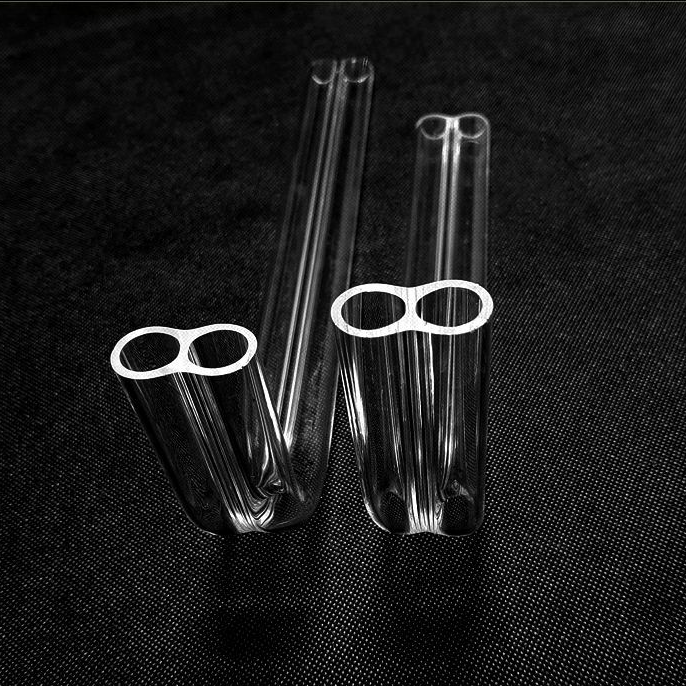
High-temperature (1100) Corrosion-resistant 99.999% Purity Ozone-Free Fused Quartz Double-tube Right-angle Elbow
Ozone-free twin-tube profile featuring precision CNC bending, high flame-fusion right-angle welds, and zero micro-stress lines for rapid thermal annealing.
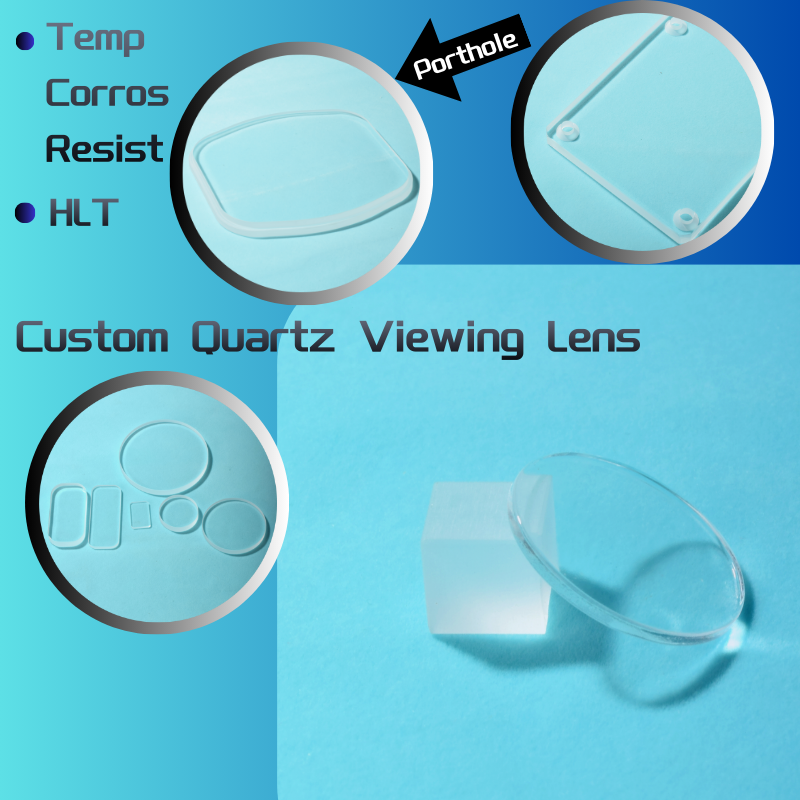
SJ SJ 126 Natural Fused Quartz Square Thin Glass Slide Optics-High Transparency Laboratory Precision Use
Micro-polished thin flat substrate for optical inspection, UV-VIS spectrophotometry, and thermal observation ports with parallel tolerances within ±0.02mm.
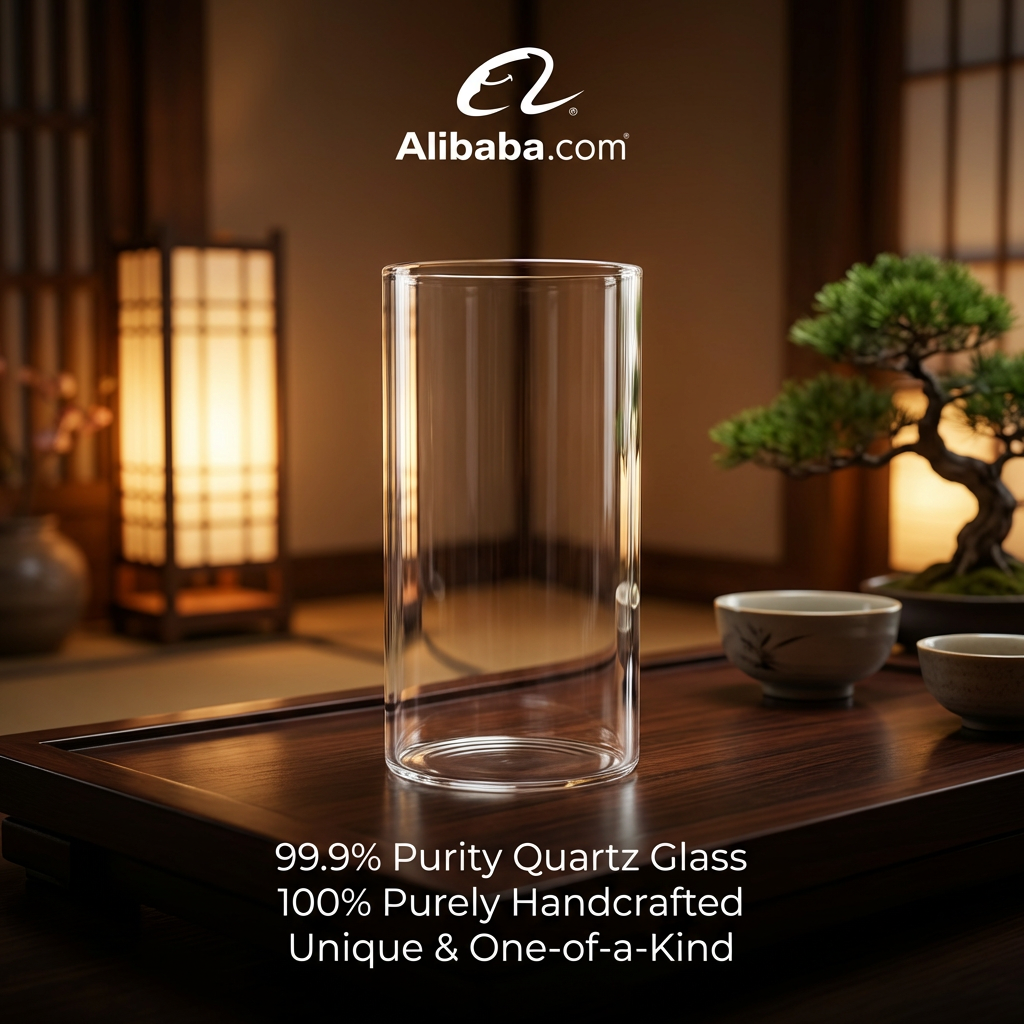
Custom Clear Fused Quartz Tube With/Without Handle Fire Polished Hand-blown Silica Glass SJ SJ 226
Hand-blown and automated lathe-shaped silica tube vessel with flame-glazed rounded edges, chemically inert to aggressive acids and thermal shock up to 1200°C.
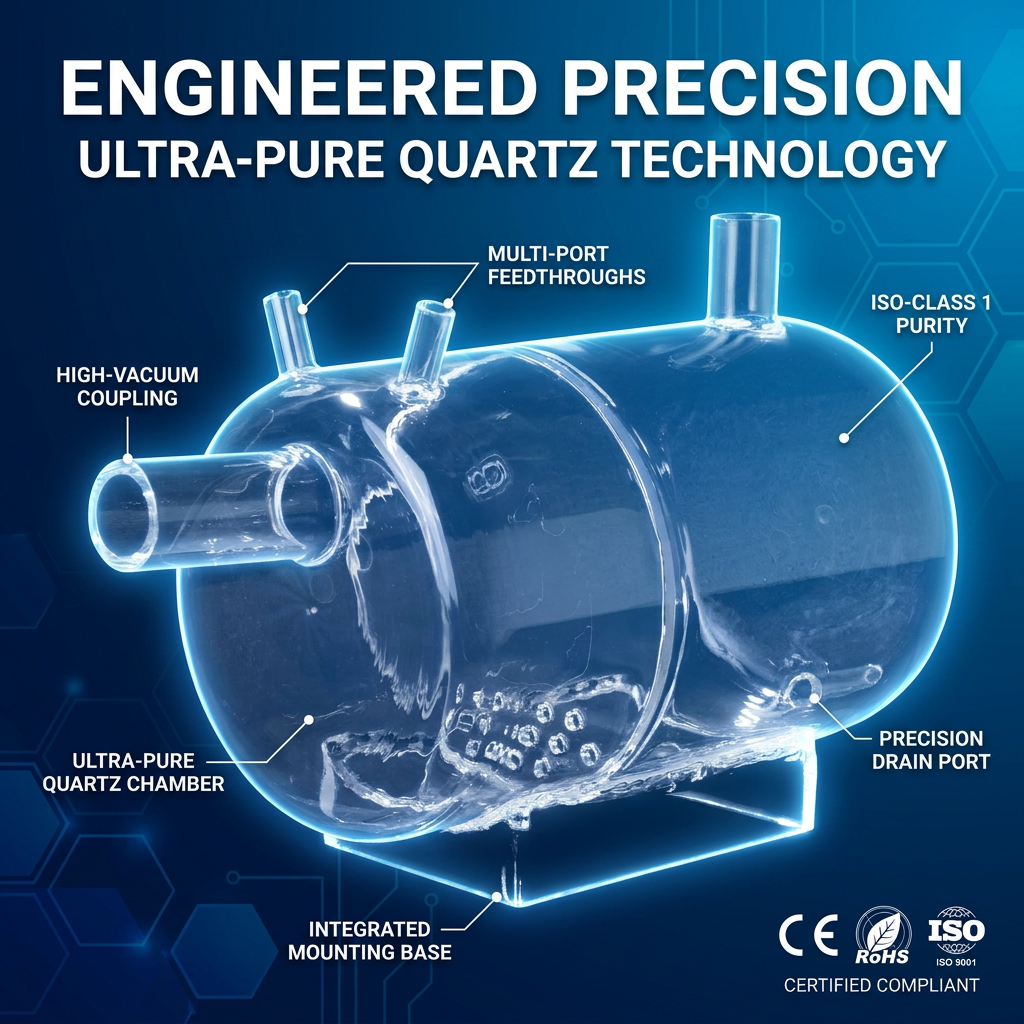
Customized Precision Quartz Separating Container Semiconductor Grade 99.9%-99.999% Purity Chemical Glassware
Engineered separation column optimized for ultra-trace chemical digestion and acidic semiconductor reagent extraction with zero trace leaching.
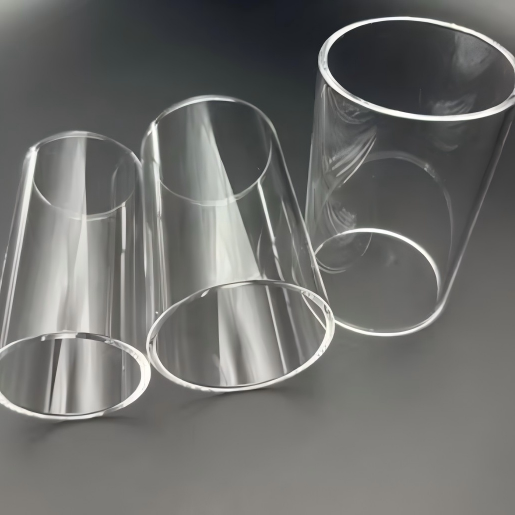
High Temperature Transparent Polished Ozone Free One End Closed Quartz Tube 5-800mm Diameter Bending Welding
Seamless hemisphere-welded closed bottom quartz tubes designed for immersion heaters, thermocouple protection sleeves, and horizontal furnace reaction zones.
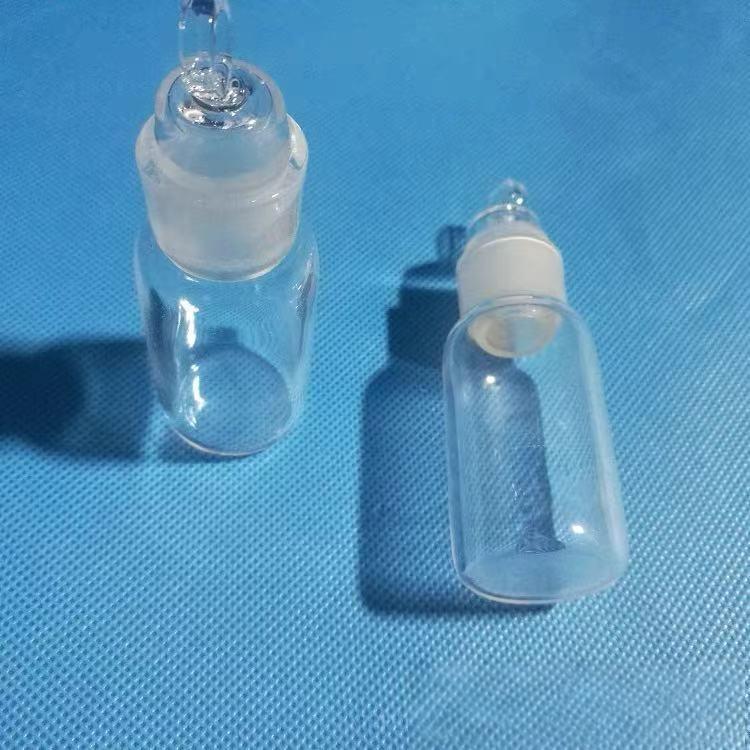
High-Corrosion Resistant High-Temperature Resistant High-Transparency Semiconductor 400 Mesh Laboratory Quartz
Sintered porous quartz disc integrated inside heavy-wall clear tubes, supporting continuous catalytic fluid filtration under aggressive thermal conditions.
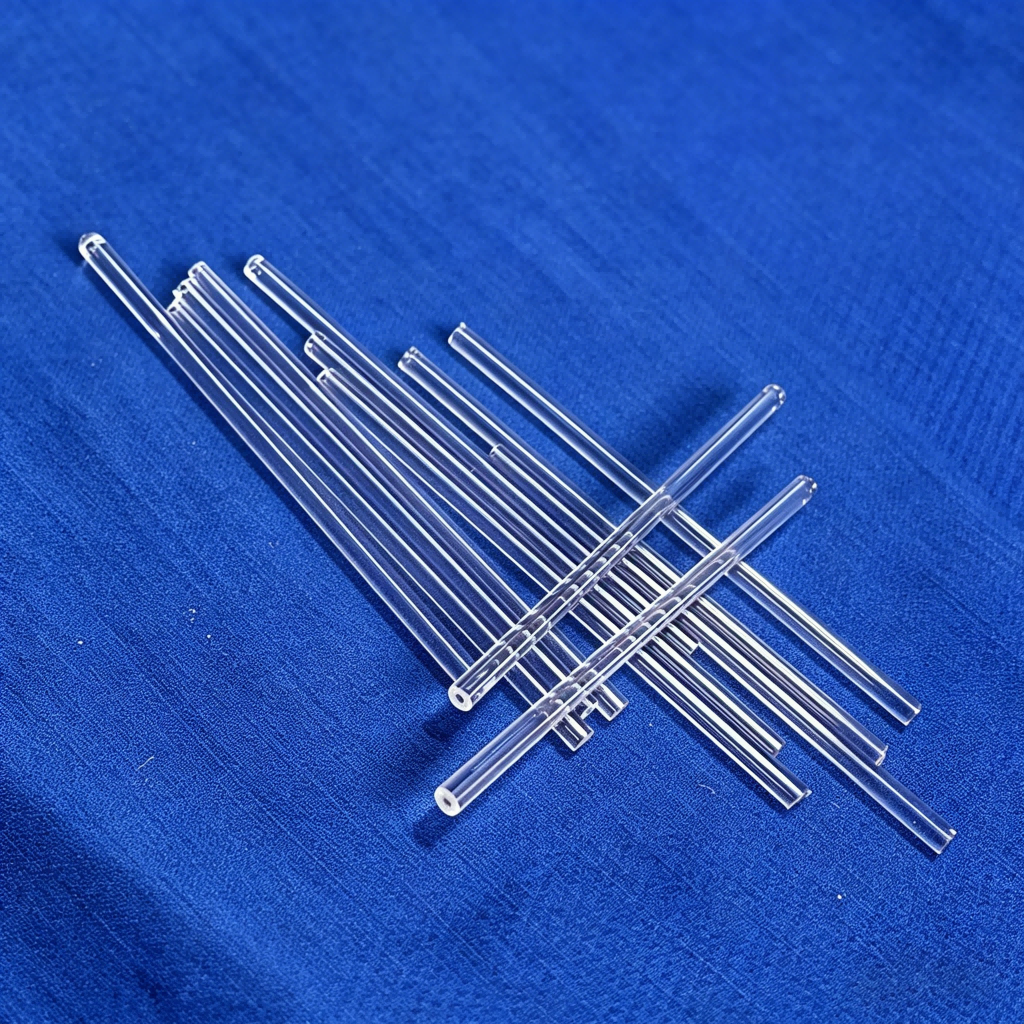
High Purity Opaque Micro Capillary Quartz Glass Tube | Laboratory Exhaust Capillary 99.9%-99.999% SiO₂
Tight-tolerance microporous capillary tubing engineered for analytical GC/HPLC exhaust, gas chromatographs, and precision high-voltage electrical insulation.
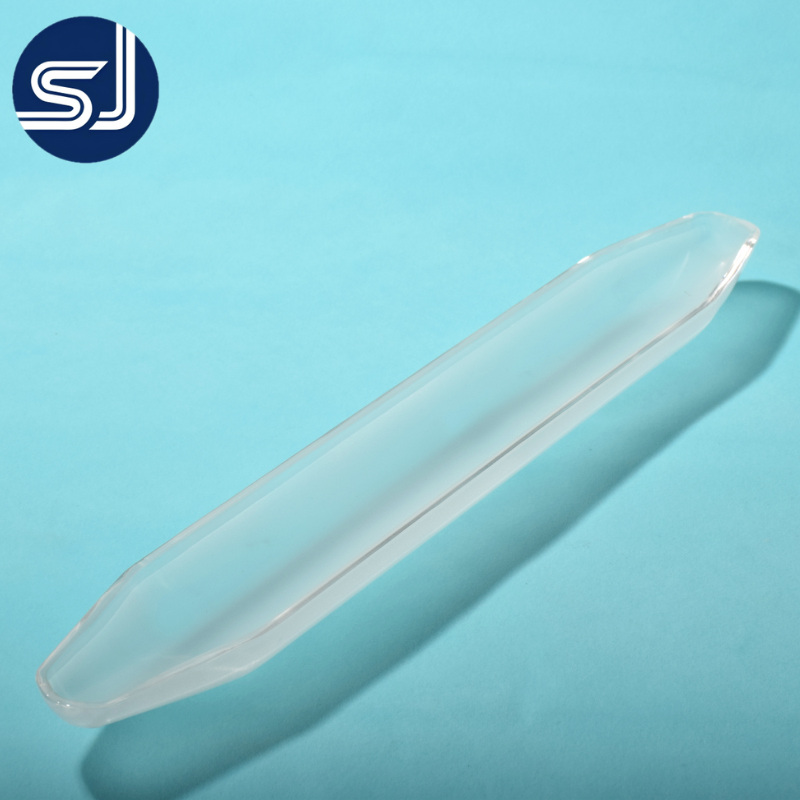
SJ 140 QUARTZ Customizable Transparent High Purity 99.9-99.999% Precision Polished Quartz Boat Lab
Multi-slotted horizontal quartz diffusion boat for semiconductor silicon wafers, featuring stress-relieved fire-polished slot walls that prevent crystal dislocation.
Engineering Excellence in Quartz Heating Tube Manufacturing
In modern high-temperature thermal processing, selecting the right partner from trusted quartz heating tube factories is a critical determinant of operational uptime, thermal efficiency, and batch purity. Whether deploying rapid thermal processing (RTP) chambers in microelectronics, twin-tube medium-wave infrared emitters for composite curing, or heavy-wall diffusion furnace liners for N-type photovoltaic cell manufacturing, industrial quartz glass (fused silica) operates at the physical limits of materials science.
Lianyungang Vulra Quartz Products Co., Ltd. stands at the nexus of mineral resource richness and high-precision mechanical fabrication. Headquartered at No. 9, Dingxin Road, within the Jiangsu Donghai Economic Development Zone, our factory operates directly at China’s crystal capital. Donghai County supplies over 70% of China’s raw high-purity natural silica sand reserves, granting Vulra uncompromised access to metallurgical-grade feedstock with native alkali metallic concentrations below sub-ppm thresholds.
99.999% SiO₂ Purity
Strictly controlled raw sands eliminating Fe, Cu, Ni, Na, Li, and K to prevent devitrification and trace ionic migration in wafer fabs.
1683°C Softening Point
High thermodynamic viscosity rating allowing continuous operating exposure at 1100°C and short-duration thermal excursions up to 1450°C.
5mm to 800mm Diameters
Comprehensive continuous drawing and electric-fusion cylinder blowing lines producing capillary tubes up to ultra-large furnace reactors.
TÜV Rheinland Audited
Independent on-site verified production facilities, CE compliant manufacturing processes, and rigorous RoHS environmental documentation.
Thermodynamic Behavior, Viscosity Phases, and Hydroxyl Control
Industrial quartz glass heating tubes are subjected to extreme thermal gradients. Unlike conventional borosilicate or aluminosilicate glasses, pure vitreous silica is composed exclusively of a three-dimensional random network of silicon-oxygen tetrahedra ($SiO_4$). This tetrahedral structure endows fused quartz with an exceptionally low coefficient of thermal expansion ($\alpha \approx 5.5 \times 10^{-7}/\text{K}$ between 20°C and 1000°C). Consequently, a red-hot quartz heating tube operating at 1100°C can be immediately submerged in ice-cold water without micro-fracturing or catastrophic shattering.
Hydroxyl ($OH^-$) Radical Concentration & Devitrification Kinetics
A primary failure mode in generic quartz heating tubes sourced from unqualified factories is premature sagging, wall bubbling, or structural crystallization (devitrification into cristobalite). Devitrification begins when the amorphous glass phase rearranges into a crystalline phase under high operating temperatures ($>1150^\circ\text{C}$). This transformation is drastically accelerated by two factors: surface alkali contamination ($Na, K, Ca$) and high internal hydroxyl ($OH^-$) content.
At Vulra Quartz, our continuous electric vacuum fusion process controls hydroxyl concentrations down to $<15\text{ ppm}$ (and below $5\text{ ppm}$ in dry-synthesized electrical grades), compared to cheap flame-melted tubes containing upwards of $150-300\text{ ppm } OH^-$. Low hydroxyl content substantially increases the high-temperature strain point, preventing tube ovalization, sagging under coil weight, and atmospheric vacuum collapse during horizontal furnace processing.
Comprehensive Material Property Matrix: Fused Quartz vs. Standard Technical Glasses
| Physical / Thermal Parameter | Vulra 99.999% Fused Quartz | Standard Commercial Quartz | Borosilicate 3.3 Glass | Transparent Polycrystalline Alumina |
|---|---|---|---|---|
| Silicon Dioxide ($SiO_2$) Content | > 99.999% | 99.90% - 99.95% | ~ 81% | 0% ($Al_2O_3 > 99.9\%$) |
| Continuous Working Temperature | 1100°C – 1150°C | 950°C – 1000°C | 450°C – 500°C | 1600°C |
| Short-Term Peak Excursion Point | 1450°C | 1200°C | 550°C | 1800°C |
| Softening Point ($\log \eta = 7.6$) | 1683°C | 1600°C – 1630°C | 820°C | 2050°C (Melting Point) |
| Thermal Expansion Coeff. ($20-300^\circ\text{C}$) | $5.5 \times 10^{-7} \text{ K}^{-1}$ | $5.8 \times 10^{-7} \text{ K}^{-1}$ | $3.3 \times 10^{-6} \text{ K}^{-1}$ | $8.0 \times 10^{-6} \text{ K}^{-1}$ |
| Thermal Shock Tolerance ($\Delta T$) | > 1100°C Instant Quench | ~ 900°C Quench | ~ 150°C Quench | ~ 200°C Quench |
| Dielectric Strength ($20^\circ\text{C}, 1\text{MHz}$) | $25 - 40 \text{ kV/mm}$ | $20 - 30 \text{ kV/mm}$ | $15 - 20 \text{ kV/mm}$ | $20 - 30 \text{ kV/mm}$ |
| Spectral Transmission (UV-VIS-NIR) | > 90% ($260\text{nm} - 2500\text{nm}$) | ~ 85% ($320\text{nm} - 2200\text{nm}$) | Cutoff below 310nm | Translucent / Low Optical Directness |
Infrared Emission Spectra: Short-Wave vs. Medium-Wave Quartz Emitters
When selecting a quartz heating tube factory for industrial drying, thermoforming, or curing systems, procurement engineers must match the emission spectrum of the quartz tube assembly to the absorption bands of the target material:
-
Short-Wave Infrared Quartz Tubes ($\lambda = 0.8 - 1.4 \mu m$): Operating at filament temperatures up to 2200°C with high penetration depth, ideal for high-speed automated coil coating, PET stretch-blow moulding, and semiconductor fast-firing furnaces.
-
Fast-Response Medium-Wave (FRMW) Tubes ($\lambda = 1.4 - 2.0 \mu m$): Perfectly balanced energy density allowing instant thermal cycling within 1 to 2 seconds, widely applied in automotive plastic welding and composite laminating.
-
Carbon Medium-Wave Quartz Heating Elements ($\lambda = 2.0 - 3.5 \mu m$): Emits radiation that matches the molecular absorption spectra of water, polymers, and organic solvents, reducing electrical consumption by up to 35% compared to ceramic emitters.
-
Ozone-Free Doped Quartz Tubes: Formulated with titanium or cerium dopants to completely attenuate deep-UV wavelengths below 220nm (preventing the conversion of atmospheric oxygen into harmful $O_3$ gas) while preserving high infrared thermal output.
Why Global OEMs Partner with Lianyungang Vulra Quartz
As a verified custom manufacturer with comprehensive on-site audits conducted by TÜV Rheinland, Vulra Quartz bridges advanced European engineering tolerances with Chinese direct supply chain competitiveness. Every drawing submitted to our engineering department is analyzed through finite element thermal analysis, ensuring optimal wall thickness ratios, joint geometry, and annealing schedules.
Dual-Track Fabrication: Hot Flame Working & Precision CNC Cold Machining
True OEM quartz glass manufacturing requires an integrated facility capable of transitioning seamlessly from high-temperature pyrochemical glassblowing to micron-level mechanical finishing. Fragmented supply chains that outsource either hot or cold processing introduce micro-surface defects, internal stresses, and uncontrolled contamination.
Oxy-Hydrogen Lathe Working
Computer-synchronized glass lathes running high-enthalpy oxy-hydrogen burners. Enables seamless tube-to-tube welding, flange fusion, and bottom-dome hermetic seals without graphite tool carbonization.
Multi-Axis CNC Cold Machining
Dedicated diamond-tool CNC centers delivering precision core drilling, bevel cutting, wafer boat slotting (down to 0.4mm slot width), edge chamfering, and face milling within ±0.05mm tolerances.
Controlled Annealing & Etching
Large-capacity computer-programmed annealing ovens holding parts at 1120°C - 1215°C to completely eliminate residual photoelastic stress, followed by class 1000 cleanroom HF chemical pickling and DI water rinsing.
Future Procurement Trends in Industrial Quartz Heating Tubes (2025–2030)
As semiconductor wafer sizes stabilize at 300mm and photovoltaic cell architectures migrate toward N-type TOPCon, HJT, and tandem perovskite cells, the demands placed upon quartz tube factories are transforming. Procurement managers must position their supply chains to align with four critical market shifts:
1. Ultra-Large Diameters & Sagging Resistance
Next-gen diffusion furnaces require quartz reaction tubes exceeding 450mm to 800mm in diameter. Factories must adopt specialized centrifugal or high-viscosity vacuum-melted silica to prevent tube deflection under heavy wafer boat loads.
2. Directional Gold & Ceramic Reflectors
Energy conservation mandates have triggered a phase-out of non-directional clear tubes. Modern buyers demand quartz heating tubes with directly fused 24K gold or nano-porous ceramic white reflective coatings, boosting forward heat flux by >75%.
3. Sub-ppb Impurity Purity Standards
Leading foundries are shifting technical specifications from 99.99% (4N) to 99.999% (5N) purity. Alkali ions ($Na^+, K^+, Li^+$) must be restricted below 0.1 ppm to avoid gate-oxide breakdown in advanced sub-3nm node semiconductor thermal equipment.
4. Traceable Batch Certificates & ESG
Global Tier-1 procurement policies increasingly reject undocumented trading intermediaries. Factories must provide full spectrometer analysis reports (ICP-MS), third-party on-site audit compliance (TÜV Rheinland), and clean electric-fusion energy credentials.
Common Field Failure Modes & Factory Audit Checklist
Procuring custom quartz components without verifying root engineering controls often leads to catastrophic downtime in downstream operations. Below is our internal engineering guide to troubleshooting quartz tube defects and evaluating supplier competency:
Quartz Failure Analysis & Preventative Engineering Countermeasures
| Observed Failure Mode | Underlying Root Cause | Vulra Quartz Engineering Prevention Protocol |
|---|---|---|
| Surface "Milky" Haze & Micro-Cracking | Devitrification: Surface contamination by alkali finger grease or airborne dust triggering cristobalite transformation above 1050°C. | Class 10,000 cleanroom final packaging; acid bath etching that removes surface micro-defects; clean handling protocols. |
| Tube Ovalization & Mid-Span Sagging | Excessive hydroxyl content ($OH^- > 100\text{ ppm}$) depressing the glass strain point below the process operational temperature. | Strict use of high-temperature vacuum-fused natural quartz; continuous verification of $OH^-$ levels via FTIR spectroscopy. |
| Welding Seam Fracture on Thermal Cycling | Unrelieved residual hoop stress along the heat-affected zone (HAZ) of manual flame joints. | Full-chamber polarized light stress analysis (polariscopes); mandatory annealing soak at 1120°C followed by controlled furnace cool-down. |
| Reflector Delamination & Flaking | Poor interfacial adhesion between external gold/ceramic backing and quartz substrate under rapid on-off cycling. | Plasma surface pre-treatment followed by high-vacuum magnetron sputtering or thermal vitrification of proprietary ceramic coats. |
Frequently Asked Questions on Quartz Heating Tubes
Direct answers from our senior materials engineers covering technical feasibility, dimensional tolerances, lifetime expectations, and export logistics.