Engineered Quartz Components & Custom Fabrication Assemblies
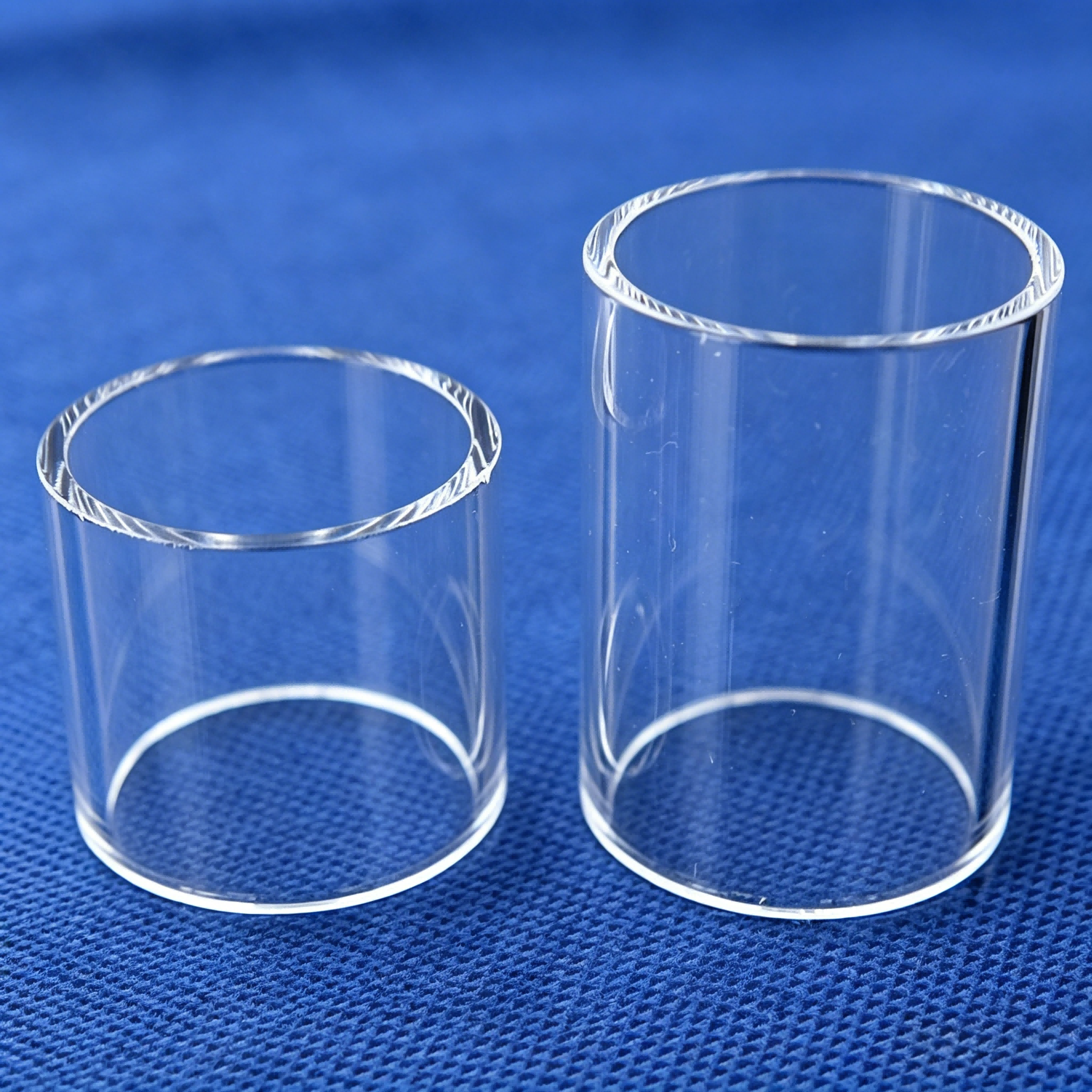
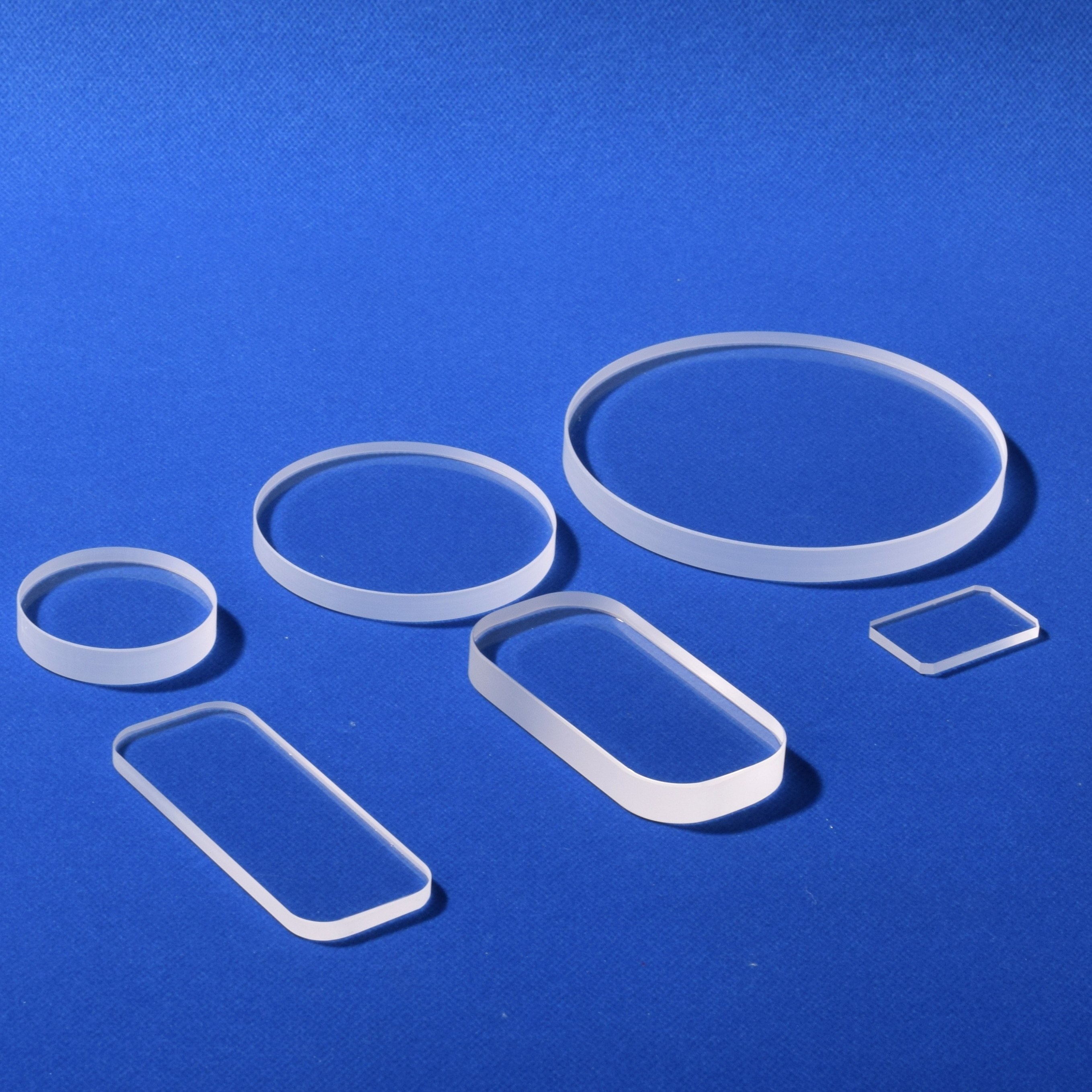
From micro-bubble opacified quartz rods engineered for radiant furnace insulation to precision-machined clear fused silica labware, every component complies with strict dimensional and spectroscopic standards.

The Physics of Opaque Fused Silica: Micro-Bubble Morphology & Infrared Shielding
Why leading semiconductor furnace builders and monocrystalline Czochralski puller manufacturers specify opaque (translucent) quartz rods over standard clear fused quartz for extreme heat containment.
Mie Scattering & Opacity Formation
Unlike transparent fused quartz which permits infrared transmission up to 3.5 μm without impedance, opaque quartz rods integrate a engineered micro-bubble matrix (average bubble diameter 10–45 μm). These gas-filled voids create catastrophic refractive index discontinuities ($n_1 = 1.458$ to $n_2 = 1.0$), triggering powerful Mie scattering across the near-to-far infrared radiation spectrum. Over 88% of radiant thermal energy is diffusely backscattered, minimizing heat escape through reactor walls.
Thermal Shock & Devitrification Shielding
Opaque fused silica maintains an ultra-low coefficient of thermal expansion ($\approx 5.5 \times 10^{-7}/\text{K}$ from 20°C to 1000°C). The cellular bubble distribution functions as an internal mechanical stress-relief boundary, inhibiting rapid crack propagation. This permits opaque rods and thermal insulation baffles to withstand violent thermal cycling (e.g., dropping from 1150°C directly into ambient water) without spalling or fracturing, outperforming crystalline alumina.
Chemical Purity & Sub-PPM Trace Metals
Synthesized from premium natural pegmatite quartz sand originating from the Donghai mineral belt, our opaque quartz material achieves total silicon dioxide ($SiO_2$) content greater than 99.99%. Alkali metals (Li, Na, K), which act as primary nucleating agents for destructive cristobalite formation at elevated temperatures, are held below 2.5 ppm total concentration via hot vacuum acid leaching and chlorination purification.
| Material Property | Standard Opaque Quartz Rod | High-Purity Semiconductor Opaque Rod | Clear Optical Fused Quartz Rod | Test Standard / Measurement |
|---|---|---|---|---|
| Silicon Dioxide ($SiO_2$) Purity | ≥ 99.99% | ≥ 99.998% (5N5 available) | ≥ 99.999% | ICP-OES / GDMS Elemental Assay |
| Bubble Matrix Density & Diameter | 1.98 – 2.08 g/cm³ (15–50 μm) | 2.10 – 2.15 g/cm³ (Controlled 10–25 μm) | 2.20 g/cm³ (Bubble-free Grade 0) | ASTM C693 Pycnometry & SEM |
| Infrared Diffuse Reflectance (1–4 μm) | 82% – 88% | ≥ 91.5% | < 8% (Directly Transmitted) | Spectrophotometry w/ Integrating Sphere |
| Maximum Continuous Operating Temp | 1100 °C | 1180 °C | 1150 °C | Static Furnace Sag Test (Isothermal) |
| Softening Point ($\log \eta = 7.6$) | 1660 °C | 1683 °C | 1710 °C | ASTM C338 Fiber Elongation Method |
| Thermal Expansion Coeff. ($20–1000^\circ\text{C}$) | $5.4 \times 10^{-7} \text{ K}^{-1}$ | $5.5 \times 10^{-7} \text{ K}^{-1}$ | $5.5 \times 10^{-7} \text{ K}^{-1}$ | Dilatometric Expansion Profiling |
| Dielectric Strength (20°C, 1 MHz) | 25 – 35 kV/mm | ≥ 40 kV/mm | 45 kV/mm | IEC 60243-1 Breakdown Testing |
Key Procurement & Technological Trends in Opaque Quartz
As global supply chains navigate advanced 3nm semiconductor fabrication nodes, massive 210mm N-type photovoltaic cell production, and green hydrogen pyrolysis, quartz procurement criteria are undergoing historic transformations.
Tightening Transition Metal Thresholds (<0.1 ppm Fe, Cu, Ni)
Historically, opaque quartz was categorized as a mechanical thermal insulator with relaxed chemical tolerance. In modern vertical LPCVD, atomic layer deposition (ALD), and silicon epitaxial reactors, radiant furnace baffles directly interact with volatile chloride precursor chemistries. Trace copper, iron, or nickel escaping through micro-porosity rapidly contaminates wafer gate oxides. B2B buyers now mandate verified ICP-MS certifications proving transition metal counts below sub-0.1 ppm levels before lot sign-off.
Precision Homogenization of Micro-Bubble Diameters
Legacy opaque silica processing yielded chaotic pore distributions ranging from 5 μm to over 200 μm, creating localized hot spots, differential thermal stresses, and machining micro-cleavage during CNC lathe facing. Next-generation plasma arc rotary fusion incorporates proprietary ultrasonic gas dispersion, achieving Gaussian distribution of bubble sizing tightly clamped between 15 μm and 30 μm. This delivers uniform thermal conductivity across large diameter rods (Ø150mm–400mm).
Hybrid Fusion Joining (Clear-to-Opaque Hermetic Welds)
Procurement teams are shifting away from multi-component mechanical clamp assemblies toward monolithic clear-to-opaque welded quartz structures. For example, furnace push-rods and thermocouple wells frequently utilize an opaque stem for radiant thermal reflection combined with a clear optical fused quartz tip for laser pyrometry inspection. Engineering suppliers must master precise oxy-hydrogen flame annealing schedules to balance the thermal expansion boundary and prevent crystalline interface fracturing.
Aggressive Decarbonization & Circular Quartz Recycling
With corporate ESG audits driving semiconductor equipment procurement, Tier-1 fabricators favor suppliers utilizing clean green-hydrogen/oxygen combustion and 100% renewable-powered electric arc furnaces. Furthermore, closed-loop reclamation programs—wherein spent opaque furnace flanges and scrap ingots are chemically etched, pulverized into ultra-pure fused silica cullet, and refused into industrial-grade thermal blocks—are becoming mandatory procurement stipulations.
Drawing-Driven Fast Prototype Cycles (1-Piece MOQ)
In pilot R&D for advanced packaging, ceramic matrix composites, and space simulation chambers, engineers cannot wait 16 weeks for massive minimum mill run quantities. The supply chain has shifted definitively toward agile custom manufacturers capable of executing precision CNC centerless grinding, ultrasonic coring, fire polishing, and multi-axis slotting directly from STEP/CAD files from a 1-piece sample to high-volume recurring monthly production.
Cleanroom Vacuum Packaging & Surface Passivation
Unprotected opaque quartz surfaces exhibit microscopic capillary activity due to open surface pores, causing them to absorb ambient moisture and organic airborne VOC contaminants during ocean transit. Modern procurement guidelines enforce multi-stage ultra-pure water ultrasonic degreasing, cleanroom Class 1000 baking, and hermetic nitrogen-flushed double-bag polyethylene packaging, guaranteeing instant furnace drop-in capability upon arrival.
Direct Origin Sourcing: The Donghai Quartz Industrial Advantage
Situated in Donghai County—the globally recognized capital of silica crystals—Lianyungang Vulra Quartz Products Co., Ltd. combines sovereign natural quartz supply security with accredited custom manufacturing facilities verified by TÜV Rheinland.
TÜV Rheinland Verified Custom Manufacturer & Export Partner
Our complete integrated industrial footprint—comprising high-temperature electric arc melting furnaces, diamond cold-cutting mills, automated centerless grinders, and Class-1000 optical cleaning lines—has passed rigorous on-site factory audits by TÜV Rheinland. Full material inspection records, CE marking, and RoHS compliance certificates accompany every export batch shipped to North America, Europe, East Asia, and the Middle East.
Frequently Asked Questions: Technical Engineering & Global Sourcing
Clear, unhedged answers to the critical metallurgical, optical, and operational inquiries posed by global procurement managers, equipment designers, and fab engineers.
How exactly does an opaque quartz rod differ in thermal performance from a clear fused quartz rod? +
While both materials share an identical chemical base ($SiO_2 > 99.99\%$) and identical linear thermal expansion coefficients ($5.5 \times 10^{-7}/\text{K}$), their optical heat transfer mechanisms are fundamentally dissimilar. Clear quartz is highly transparent across near-infrared wavelengths (0.8 to 3.5 μm), allowing radiant furnace heat to pass directly through via transmission. Opaque quartz contains tens of thousands of microscopic enclosed bubbles per cubic centimeter, creating intense internal Mie scattering. This blocks direct radiant pass-through and reflects up to 90% of infrared heat, acting as an exceptional radiant insulator that slashes thermal losses and protects sensitive outer reactor flanges.
What are the maximum continuous and peak operational temperatures for opaque fused silica rods? +
Under continuous static atmospheric loads, our opaque quartz rods comfortably operate up to 1100°C without dimensional sag or crystallization. Under peak short-term thermal cycles, they can withstand spikes reaching 1400°C–1450°C. The structural softening point begins at approximately 1683°C, with an annealing point at 1180°C and strain point at 1075°C. In deep vacuum or high mechanical cantilever arrangements, operating continuous temperatures should be designed below 1050°C or wall thicknesses augmented to forestall creep deformation.
Can opaque quartz rods be machined, cut, slotted, and ground to precise drawing tolerances? +
Yes. Despite the porous micro-structure, opaque fused quartz can be cold-worked using specialized diamond tooling. We regularly achieve dimensional tolerances of ±0.05 mm on centerless ground rod diameters, slot widths within ±0.02 mm for semiconductor wafer guides, and surface roughness down to $Ra < 0.4\ \mu\text{m}$. Following all cold cutting and drilling operations, components undergo controlled hydrofluoric acid etching and thermal fire polishing to seal exposed surface pores and remove microscopic sub-surface microcracks.
How does chemical corrosion resistance compare across harsh acids and cleaning agents? +
Opaque fused quartz is chemically inert to almost all reagents. It demonstrates absolute resistance to concentrated hydrochloric acid ($HCl$), sulfuric acid ($H_2SO_4$), nitric acid ($HNO_3$), and aqua regia, even at boiling temperatures. The primary exceptions are hydrofluoric acid ($HF$) and hot concentrated phosphoric acid ($H_3PO_4$ above 150°C), which aggressively dissolve silica. Alkaline hydroxides (such as $KOH$ and $NaOH$) will slowly attack the silica matrix at temperatures above 60°C and accelerate devitrification into cristobalite if not thoroughly rinsed prior to thermal firing.
What is the Minimum Order Quantity (MOQ) for custom-engineered opaque quartz shapes? +
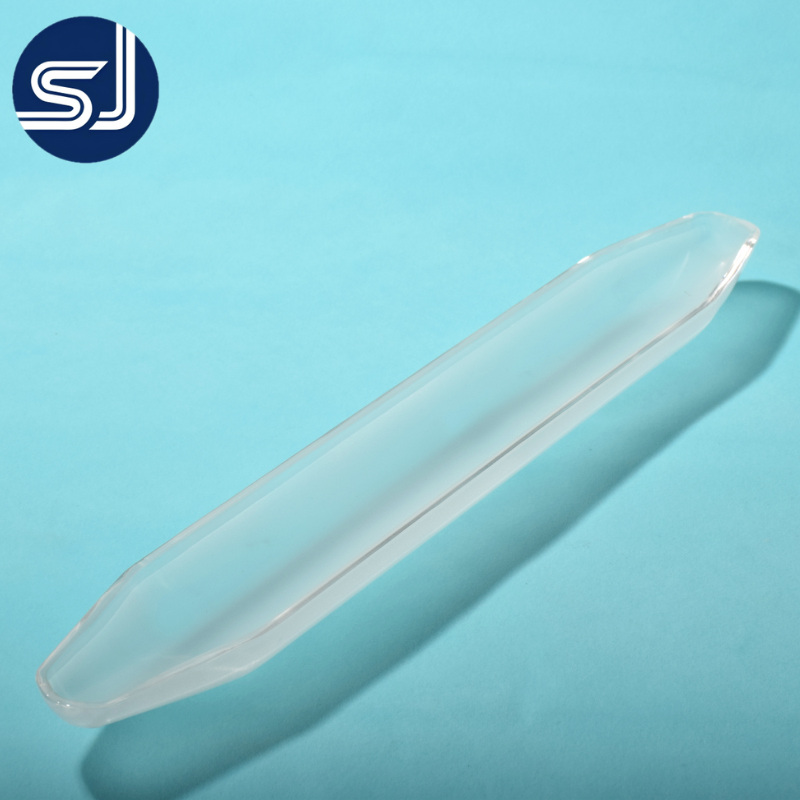
We champion rapid technological iteration: our MOQ for custom-machined opaque quartz rods, plates, baffles, and boats starts at just 1 piece for prototypes and pilot qualification builds. Standard stock diameter rods (Ø3mm to Ø100mm) carry zero minimums, while custom extruded large-diameter runs generally start from 5 to 10 pieces depending on outer tooling complexity.
What mechanisms trigger devitrification in opaque quartz, and how can it be prevented? +
Devitrification is the phase transformation of metastable amorphous fused silica into crystalline beta/alpha-cristobalite, causing micro-fracturing and structural embrittlement upon cooling through the 250°C inversion point. Devitrification is primarily catalyzed by surface ionic contamination (fingerprints, sodium, potassium, airborne dust) operating above 1000°C. It is prevented by maintaining pristine cleanroom handling, wearing nitrile gloves, washing with 5%–10% high-purity HF followed by deionized water cascading, and ensuring furnace operating atmospheres are kept dry and halogen-controlled.
Can opaque quartz rods be hermetically welded or fused to clear quartz tubes? +
Yes. Because clear fused quartz and opaque quartz possess practically identical thermal expansion curves, they can be welded together using an oxy-hydrogen or plasma torch without causing interfacial cracking. Skilled glass lathe operators preheat both sections to over 1000°C, execute the fusion weld at 1750°C–1850°C, and follow up with slow rotational annealing to eliminate residual internal hoop stresses. This technique is extensively utilized to attach opaque thermal insulating collars to clear furnace tubes and diffusion vessels.
What export packaging safeguards ensure zero transit breakage for long or heavy rods? +
Transporting fragile, heavy quartzware across global routes requires engineered packaging. Each rod is individually sealed in anti-static PE tubing, wrapped in 20mm shock-absorbing high-density polyethylene (EPE) foam, and placed inside rigid partitioned double-wall corrugated cartons. For consignments containing long rods (≥ 1000mm) or heavy diameter cylinders, these cartons are suspended within heavy-duty, fumigation-free ISPM-15 compliant plywood crates lined with impact-absorbing honeycomb panels, engineered to withstand drops, multi-axis container shifting, and customs inspections.
What documentation and verification reports are supplied with international orders? +
Every commercial delivery includes a comprehensive Quality Assurance Dossier: (1) Certificate of Analysis (COA) specifying elemental impurities via ICP-OES/MS, (2) Coordinate Measuring Machine (CMM) dimensional inspection reports certifying key drawing tolerances, (3) Certificate of Conformity for CE and RoHS compliance, and (4) Third-party TÜV Rheinland factory audit references confirming certified custom manufacturer status.
What lead time can buyers anticipate for custom drawing-based fabrication? +
Upon engineering drawing sign-off (2D PDF and 3D STEP), prototype samples are typically completed, acid-etched, and prepared for dispatch within 5 to 7 working days. Regular production volume batches (50 to 500 units) require roughly 12 to 20 working days depending on furnace firing and CNC grinding workloads. Accelerated air freight logistics options (DHL, FedEx, UPS air direct) ensure customs arrival in North America and Western Europe within 3 to 5 business days.
Ready to Optimize Your High-Temperature Furnace Infrastructure?
Send your engineering drawings, required purity specifications, or operational temperature requirements directly to our senior quartz processing engineers. We provide comprehensive DFM (Design for Manufacturability) reviews, material optimization proposals, and firm export quotations within 24 hours.