Featured OEM Optical Quartz Components & Sample Holders
Explore our core verified precision quartz components manufactured via fused silica hot-working, diamond cold-grinding, and optical-grade polishing techniques.
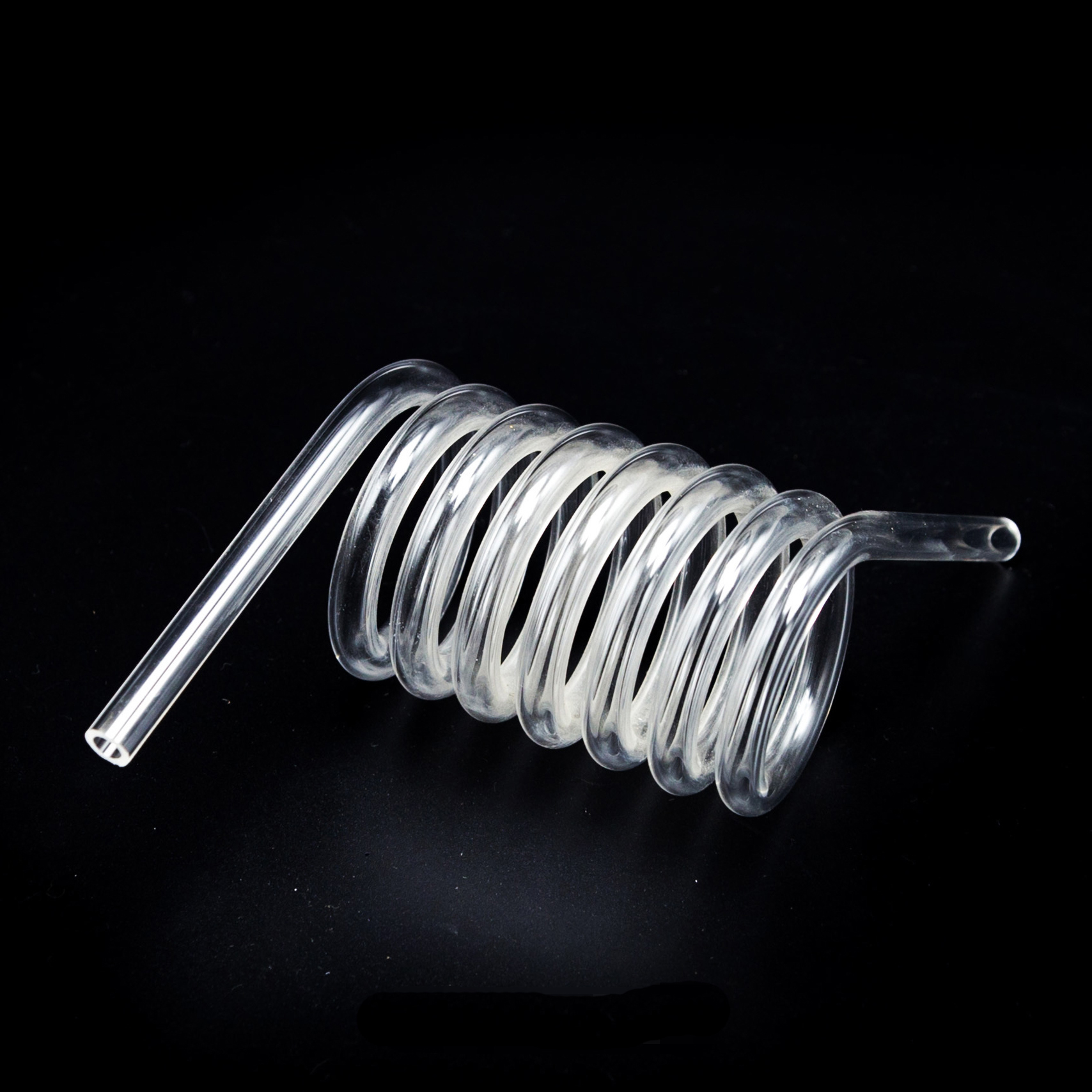
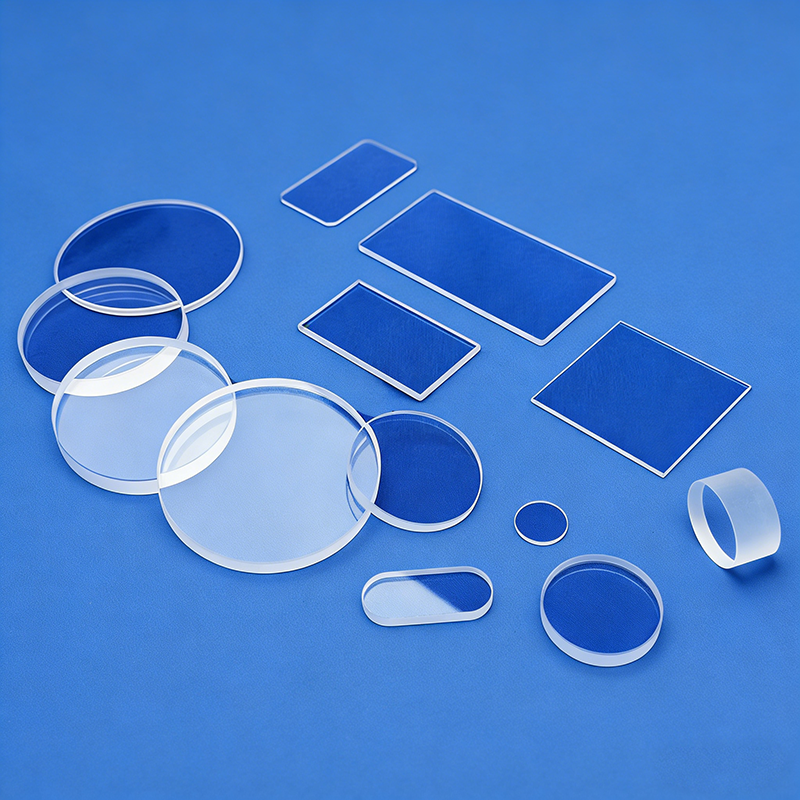
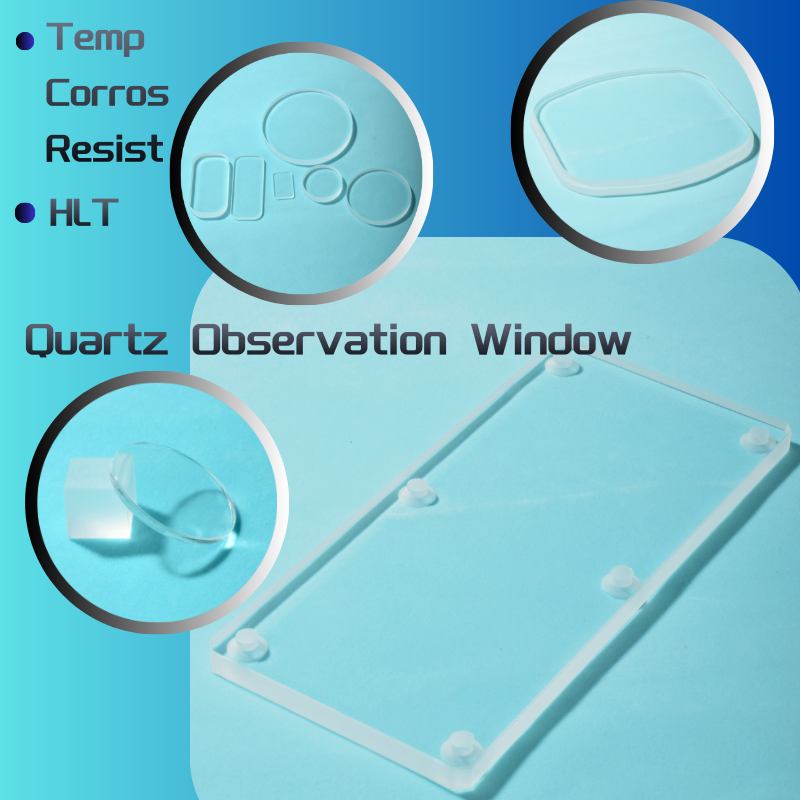
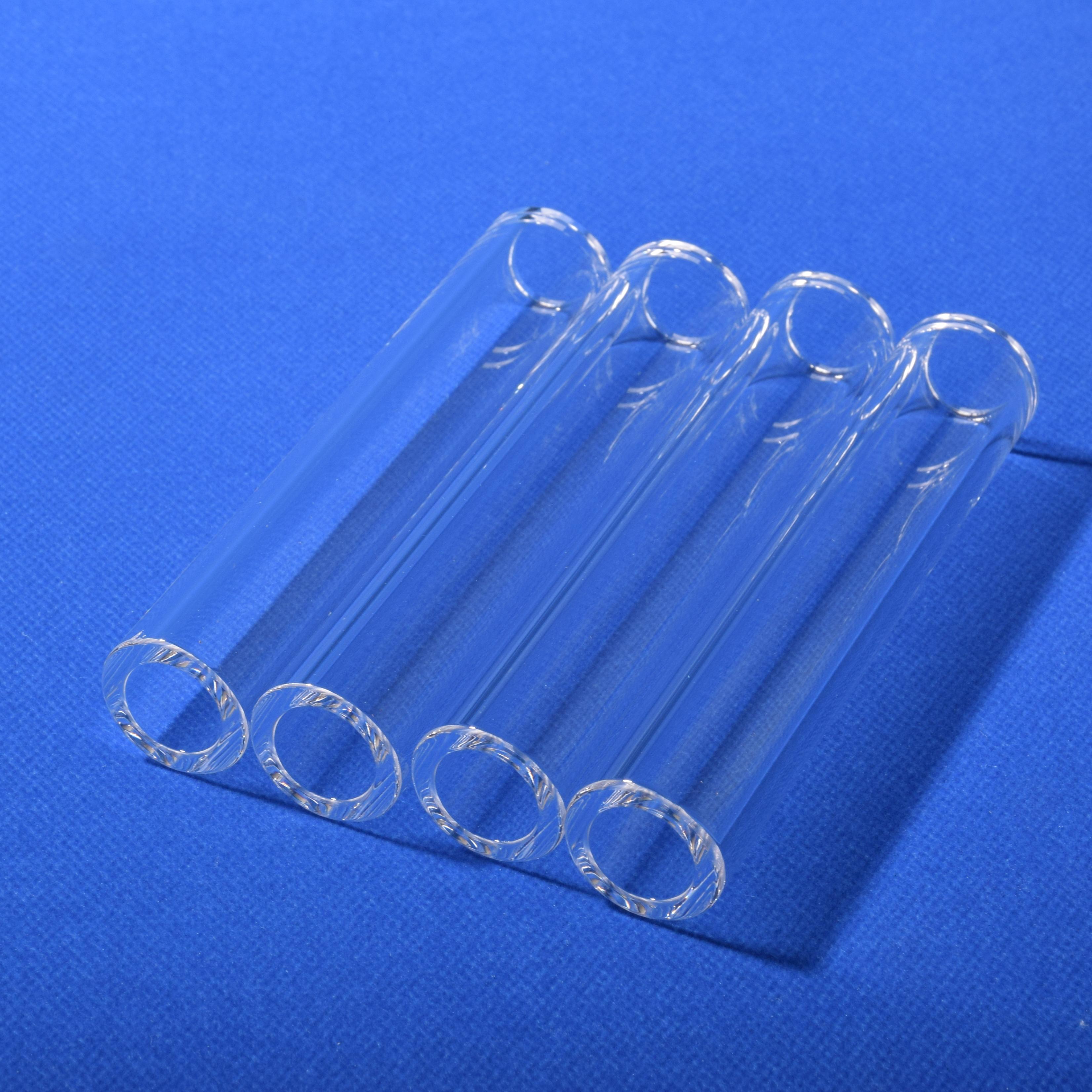
1. Technical Foundations: Material Selection & Optical Physics
In high-precision quantitative chemical analysis and molecular spectroscopy, the spectrophotometer cuvette serves as the primary optical vessel containing liquid samples. According to the Beer-Lambert Law ($A = \epsilon \cdot c \cdot L$), where absorbance ($A$) is directly proportional to molar absorptivity ($\epsilon$), sample concentration ($c$), and optical pathlength ($L$), any physical imperfection, internal thermal stress, or spectral attenuation from the cuvette material introduces critical system measurement errors.
Selecting the optimal glass or silica substrate is paramount when sourcing custom OEM cuvettes. Standard optical glass (such as BK7 or soda-lime) exhibits severe UV absorption below 340 nm due to metallic impurities ($Fe^{3+}$, $Ti^{4+}$). Precision spectroscopy requires high-purity synthetic fused silica (JGS1) or optical-grade fused natural quartz (JGS2) to ensure maximum photon throughput from the deep UV to the near-infrared spectrum.
| Material Grade | Spectral Range | Key Raw Material Source | Transmittance at 200nm | Primary Target Applications |
|---|---|---|---|---|
| JGS1 (Synthetic Fused Silica) | 190 nm – 2,500 nm | Silicon Chemical Precursors ($SiCl_4$) | > 85% (Direct UV Window) | Deep-UV Absorption, Fluorescence, HPLC Flow Cells, UV Spectrophotometry |
| JGS2 (Fused Natural Quartz) | 220 nm – 2,500 nm | High-Purity Natural Quartz Sand | ~ 65% - 75% | Standard UV-Vis Spectrophotometry, Routine Biochemical Assays |
| JGS3 (Infrared Fused Quartz) | 260 nm – 3,500 nm | Electrically Fused Low-OH Quartz | < 20% (UV Blind) | FTIR Spectroscopy, Near-IR Process Monitoring, Thermal Sensing Cells |
Engineering Insight: Direct Molecular Fusion Bonding vs. Adhesive Bonding
Conventional commercial cuvettes often employ organic epoxy adhesives to cement the four optical walls together. Under harsh solvent exposure (e.g., DMSO, acetone, chloroform, concentrated acids) or intense UV irradiation, epoxy bonds degrade, leach fluorescent impurities, and cause catastrophic delamination. As a specialized OEM manufacturer, Vulra Quartz utilizes high-temperature flame fusing and direct optical contact bonding at 1,100°C. This joins quartz components at the atomic lattice level, creating a seamless, chemical-resistant structure capable of withstanding extreme thermal shock and aggressive cleaning protocols.
2. Custom OEM/ODM Engineering & Precision Manufacturing Capabilities
To meet the exact spatial and optical constraints of modern analytical instruments—including microplate readers, double-beam spectrophotometers, and automated clinical chemistry analyzers—OEM instrument builders require tailored cuvette geometries.
Micro & Ultra-Micro Cuvettes
Engineered for rare biological samples, DNA/RNA quantification, and protein profiling. Sample volumes scaled down from standard 3.5 mL to 10 µL – 100 µL while maintaining standard 10 mm optical pathlengths via black quartz self-masking technology.
4-Window Polished Fluorometer Cells
Designed specifically for 90° fluorescence emission detection. All four vertical windows are polished to an ultra-smooth finish with optical flatness of λ/4 per inch and surface quality rating of 20/10 Scratch-Dig to eliminate stray light scattering.
Custom Flow-Through Cells
Featuring integrated capillary tubing, threaded PTFE/PEEK connectors, and bubble-free fluidic channels for continuous online monitoring, HPLC detection, and automated dissolution testing systems.
Our cold-machining facilities incorporate CNC ultrasonic drilling, surface lapping, diamond blade dicing, and sub-micron optical polishing. Every cuvette undergoes rigorous dimensional verification using laser interferometry to ensure pathlength tolerances stay strictly within ±0.01 mm (10 microns) of customer specifications.
3. Product Development Trends in Optical Cuvette Fabrication
The global market for spectrophotometry and analytical optical components is undergoing rapid evolution driven by miniaturization, automation, and extreme-environment testing. Key technological trajectories include:
A. Black Quartz Self-Masking Technology
Standard clear cuvettes suffer from internal light reflection along the side walls when narrow light beams are used. Traditional painted or coated masks peel over time when exposed to solvents. Future-proof OEM designs integrate solid black quartz wall structures co-fused directly with clear quartz windows. Black quartz absorbs all stray refracted light, dramatically improving signal-to-noise ratios (SNR) in micro-volume applications.
B. Microfluidic & Lab-on-a-Chip Integration
Spectrophotometry is shifting from macro-cuvette cuvettes to integrated quartz microfluidic flow cells. By laser-etching channels directly into fused silica wafers and thermal bonding cover plates, next-generation cuvettes allow multi-channel parallel spectroscopic analysis within a fingernail-sized footprint.
C. Specialized Anti-Reflective (AR) Coatings
To maximize light throughput at specific excitation wavelengths (e.g., 254 nm, 340 nm, or 633 nm), optical dielectric coatings are deposited directly onto exterior window surfaces. AR-coated quartz cuvettes achieve optical transmittance exceeding 98.5% at targeted wavelengths, lowering instrument detection limits for trace analysis.
4. Strategic B2B Procurement Trends in Global Markets
As global supply chains place higher value on traceability, technical reliability, and rapid prototyping, procurement managers at scientific instrument manufacturers are adjusting their sourcing strategies:
1. Shift to Direct-from-Source OEM Partnership
Bypassing third-party distributors in favor of direct communication with verified manufacturer engineering teams reduces design iteration cycles from months to days. Direct access to flame-working technicians allows real-time adjustments to custom drawings.
2. Demand for Batch Spectral Matched Cuvettes
For dual-beam spectrophotometers, buyers require cuvettes matched in pairs or sets of four with optical pathlength variations under ±0.005 mm and identical spectral transmission curves to eliminate baseline differential drift.
3. Rapid Prototyping Low MOQ Procurement
Modern instrument R&D demands flexible low-volume sample production. Top-tier suppliers now offer 1-piece prototype production for proof-of-concept testing before scaling up to 10,000+ unit OEM batch production.
5. Why Partner with Lianyungang Vulra Quartz Products Co., Ltd.
Located at No. 9, Dingxin Road in the Jiangsu Donghai Economic Development Zone, Lianyungang Vulra Quartz Products Co., Ltd. operates at the heart of China’s world-renowned crystal and quartz raw material capital. This geographic advantage affords our factory direct access to high-purity silica sand, enabling strict control over purity from raw material extraction to final optical polishing.
Verified Manufacturing Excellence & Credentials
- ✓ TÜV Rheinland Verified Supplier: On-site audit confirms verified manufacturing facilities, legal status, and full ODM/OEM production capability.
- ✓ Ultra-High Purity Assurance: Raw silica processed up to 99.99% – 99.999% SiO2 content, minimizing hydroxyl (OH) absorption bands.
- ✓ Comprehensive In-House Fabrication: Cutting, bending, flame welding, high-temperature furnace annealing, surface grinding, and CNC drilling under one roof.
- ✓ Global Certification Compliance: Products manufactured under CE and RoHS compliance standards with full material traceability reports.
6. Frequently Asked Questions (B2B Procurement FAQ)
Standard glass cuvettes (optical glass/BK7) cut off light transmission below 340 nm, making them suitable only for visible light spectroscopy (340 nm – 2,500 nm). Fused quartz cuvettes (JGS1 synthetic fused silica) transmit light seamlessly down to 190 nm in the deep ultraviolet spectrum. Quartz also provides superior thermal stability (softening point 1,683°C) and higher resistance to corrosive acids and organic solvents.
We utilize precision optical grinding fixtures and double-sided planetary polishing equipment. Every finished cuvette batch is tested using digital optical comparators and laser displacement sensors. Our standard manufacturing tolerance for optical pathlength is ±0.01 mm, and high-precision matching pairs are certified within ±0.005 mm.
Because our cuvettes are thermally fused at temperatures exceeding 1,100°C without adhesives, they can be safely immersed in aggressive cleaning solutions including nitric acid, aqua regia, chromic acid cleaning solutions, and organic solvents (acetone, methanol, DMSO). Only hydrofluoric acid (HF) and hot concentrated phosphoric acid must be avoided, as fluoride ions react directly with $SiO_2$.
Yes. Our engineering department accepts 2D and 3D CAD files (.DWG, .DXF, .STEP, .IGS, .PDF). Our technical team reviews every drawing for structural wall ratios, corner stress relief, optical window clearance, and thermal annealing requirements before initiating production.
For custom OEM designs, prototypes start at a Minimum Order Quantity of just 1 piece. This allows instrument design teams to validate mechanical fit, optical alignment, and fluid flow dynamics prior to committing to mass production runs.
Each cuvette undergoes ultrasonic cleaning, air-drying in cleanroom conditions, and individual sealing in dust-free vacuum packaging. Parts are cushioned inside high-density custom EVA foam sleeves, placed in shock-proof inner boxes, and outer-packed in wooden crates or heavy-duty export corrugated cartons designed for express air freight and sea transport.
Request a Technical Quote & OEM Consultation
Need custom pathlength cuvettes, flow cells, or optical quartz plates for your instrument project? Contact our engineering team directly for a fast response within 24 hours.