Precision Quartzware & Filter Crucible Portfolio
Engineered for aggressive wet chemical digestions, gravimetric filtration, vacuum metallurgy, and high-temperature furnace atmospheres. Available in standardized configurations or fully tailored to 2D/3D engineering prints.
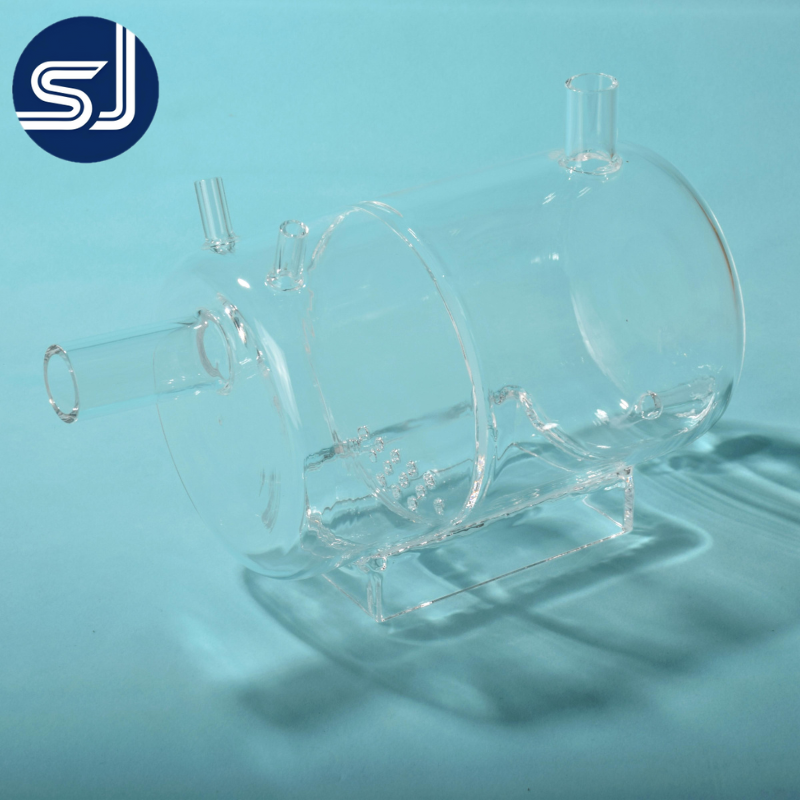

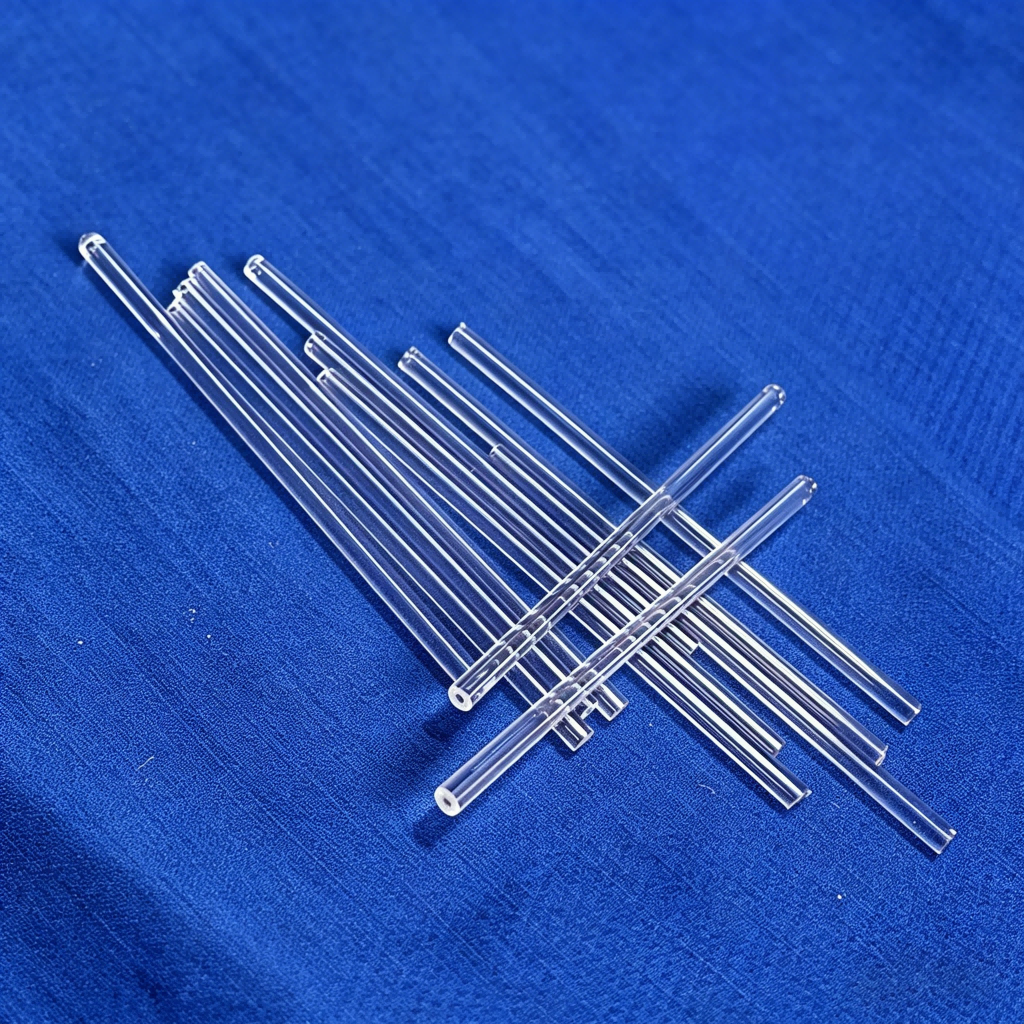
High-Purity Quartz Filter Crucible Architecture & Porosity Science
A comprehensive examination of sintered fritted disc thermodynamics, pore size distribution mechanics, and boundary micro-welding in aggressive thermal and analytical environments.
The Mechanics of Fused Silica Porous Frits
Unlike standard borosilicate filtration apparatus, a custom fused quartz filter crucible (often engineered in Gooch or cylindrical crucible form factors) integrates a porous sintered fused silica disc sealed into a high-purity amorphous SiO₂ crucible wall.
The critical performance metric of any quartz filter crucible lies in its porous fritted plate. At our Donghai facility, we produce these discs through thermal sintering of tightly fractionated spherical quartz grains. High-purity natural silica sand is classified into uniform particle distributions, pressed into precision green bodies without chemical binders, and sintered in computer-controlled electric resistance kilns just beneath the quartz transition temperature (~1250°C to 1350°C).
During this micro-fusion window, solid-state surface diffusion welds the contact points of adjacent quartz granules without collapsing the interstitial pore network. This produces a structural filtration matrix boasting exceptional mechanical rigidity, high permeation consistency, and zero trace chemical outgassing.
Why Quartz Outperforms Borosilicate in Gravimetry
Thermal Shock Resistance: Near-zero coefficient of thermal expansion (α = 5.5 × 10⁻⁷ /°C). Crucibles can be pulled directly from an 1100°C muffle furnace and quenched in ambient air or desiccators with zero micro-fracturing.
Precipitate Constant Weight: Sintered quartz retains dimensional and mass stability during repeated aggressive drying and ashing cycles. No structural mass loss from moisture desorption or borate volatilization.
Broad Chemical Inertness: Complete resistance to concentrated hydrochloric, nitric, sulfuric, and perchloric acids at boiling temperatures.
ISO 4793 / ASTM E128 Sintered Quartz Porosity Classification Matrix
The table below illustrates our standard manufacturing tolerances for sintered fused quartz discs integrated into custom OEM filter crucibles:
| Porosity Grade | ISO 4793 Equiv. | Pore Diameter Range (μm) | Dynamic Bubble Point (hPa, H₂O) | Typical Analytical & Industrial Application |
|---|---|---|---|---|
| P1 (Extra Coarse) | Grade 1 | 100 – 160 μm | 18 – 30 | Filtration of coarse crystalline precipitates; gas dispersion; support beds for catalytic columns. |
| P2 (Coarse) | Grade 2 | 40 – 100 μm | 30 – 75 | Preparative gravimetric analysis; extraction of coarse particulates; mercury filtration manifolds. |
| P3 (Medium) | Grade 3 | 16 – 40 μm | 75 – 180 | Standard analytical filtration; BaSO₄ (crystalline), AgCl gravimetry; analytical gas scrubbing. |
| P4 (Fine) | Grade 4 | 10 – 16 μm | 180 – 300 | Fine precipitate collection (BaSO₄ precipitated cold, Cu₂O); analytical semiconductor slurry filtration. |
| P5 (Ultra-Fine) | Grade 5 | 1.0 – 1.6 μm | > 1200 | Sub-micron aerosol sampling; critical bacterial retention; ultra-pure chemical reagent clarification. |
*Custom non-standard porosities, multi-layer gradient frits, and composite disc thicknesses (2.0 mm to 15.0 mm) are manufactured per client OEM mechanical drawings.
High-Purity Quartz Metallurgy & Trace Chemical Analysis
How raw crystal sourcing in Donghai, advanced chlorination roasting, and controlled oxy-hydrogen flame working safeguard crucibles against contamination in trace analytical ICP-MS and semiconductor wafer processing.
Origin in Donghai Crystal Hub
Our manufacturing base is anchored at No. 9 Dingxin Road in Donghai County—the global epicenter of raw high-purity quartz processing. Direct local access to high-grade crystalline pegmatite ensures stable grain geometry, strict raw-material sorting, and transparent batch-level mineral traceability.
Chlorination & Acid Leaching
Before sintering and disc welding, quartz sand undergoes fluidized-bed chlorination roasting at 1000°C and aggressive multi-stage acid leaching. This removes structural transition metals (Fe, Cu, Ni) and mobile alkali ions (Li, Na, K), lowering total impurity burdens below 15 ppm (Grade 4N to 5N purity).
Stress-Relieved Disc Welding
Sealing a porous sintered disc into a solid crucible cylinder is a precision thermal art. Our technicians use automated glass lathes and oxy-hydrogen micro-flames, followed by full 1150°C annealing to relieve hoop stress and eliminate devitrification nuclei along the seam perimeter.
Typical Trace Element Impurity Profile: Standard Fused Quartz vs. Semiconductor High-Purity Grade
| Element | Symbol | Standard Fused Quartz (ppm) | High-Purity 4N5 Grade (ppm) | Semiconductor / Optical 5N Grade (ppm) |
|---|---|---|---|---|
| Aluminum | Al | 14.0 – 18.0 | 6.0 – 8.0 | < 3.0 |
| Iron | Fe | 0.8 – 1.5 | 0.1 – 0.3 | < 0.05 |
| Calcium | Ca | 0.7 – 1.2 | 0.3 – 0.5 | < 0.1 |
| Sodium | Na | 1.0 – 2.0 | 0.2 – 0.5 | < 0.05 |
| Potassium | K | 0.8 – 1.4 | 0.2 – 0.4 | < 0.05 |
| Titanium | Ti | 1.2 – 1.8 | 0.5 – 0.8 | < 0.2 |
| Total Metals | Σ | < 30.0 ppm | < 10.0 ppm | < 3.5 ppm |
Low alkali content (Na < 0.05 ppm, K < 0.05 ppm) is critical: alkali ions act as network modifiers that catalyze devitrification into high-temperature cristobalite above 1000°C. Our strict control of alkali contaminants ensures superior operating life and eliminates background analyte leaching in ultra-trace heavy metal detection.
Borosilicate Glass vs. Natural Fused Quartz vs. Synthetic Fused Silica
Selecting the optimal crucible substrate depends directly on temperature limits, spectral transmittance, mechanical tension, and chemical aggression.
| Physical / Chemical Property | Borosilicate 3.3 Glass | Natural Fused Quartz (Our Standard) | Synthetic Fused Silica (OEM Custom) |
|---|---|---|---|
| SiO₂ Purity Content | ~ 81% | ≥ 99.99% – 99.999% | ≥ 99.9999% (6N) |
| Max. Continuous Working Temp. | ~ 450 °C | 1100 °C – 1150 °C | 1200 °C |
| Peak Short-Term Temperature | ~ 500 °C | 1450 °C | 1500 °C |
| Softening Point (Dilatometric) | ~ 820 °C | 1683 °C | 1730 °C |
| Thermal Expansion Coeff. (α) | 3.3 × 10⁻⁶ / K | 5.5 × 10⁻⁷ / K | 5.2 × 10⁻⁷ / K |
| Resistance to Water Quench | Fractures above ΔT = 150°C | Survives ΔT = 1100°C to 20°C | Survives ΔT = 1100°C to 20°C |
| Deep UV Transmittance (254 nm) | < 5% (Opaque in UV) | > 85% – 90% | > 92% |
| Tensile Strength | 35 N/mm² | 48 N/mm² | 50 N/mm² |
| Resistance to Boiling Conc. Acids | Moderate (B₂O₃/Alkalies leach) | Virtually Impervious (except HF/H₃PO₄) | Virtually Impervious (except HF/H₃PO₄) |
Future Procurement Trends in Quartz Filter Crucibles & Lab Quartzware
Emerging requirements across sub-2nm semiconductor lithography, green hydrogen photocatalysis, automated high-throughput analytical labs, and sustainable supply-chain compliance.
1. Ultra-Low Trace Leaching in Advanced Semiconductor Nodes
As wafer fabrication transitions through sub-2nm nodes, process chemicals such as CMP polishing slurries, wet clean solvents, and aggressive etching cocktails demand filter media with zero metal dissolution. Future procurement specifications mandate total trace metal extraction limits below 0.1 ppb (parts per billion). Fused quartz filter crucibles and fritted columns are increasingly replacing polymer and borosilicate assemblies to prevent ionic aluminum, iron, and copper cross-contamination during wafer yield qualification.
2. Photocatalytic Hydrogen Generation & Flow Interfaces
Next-generation hydrogen and oxygen production via UV/solar photodegradation requires reaction vessels combining high UV transmission (>85% across 220–380 nm) with integrated porous gas-dispersion membranes. Procurement leads are actively integrating customized quartz filter crucibles as dual-function catalyst supports and bubbling porous barriers. These assemblies withstand continuous high-intensity irradiation without solarization, UV-induced browning, or micro-cracking.
3. Robotic Automation & Tight Dimensional Tolerances
High-throughput industrial mining, environmental testing, and pharmaceutical analytical suites are rapidly deploying robotic automated sample handlers and automatic carousel furnaces. Sourcing teams are replacing manual glassware with precision CNC-machined quartz filter crucibles featuring outer diameter and rim concentricity tolerances within ±0.05 mm, flat-ground bottoms for optical sensor registration, and permanent laser-annealed QR identification.
4. Direct Factory Alliances & Complete Verification Transparency
Global supply chain resilience strategies increasingly prioritize direct manufacturer partnerships over unverified intermediary traders. Sourcing directors demand independently audited manufacturing capacity (e.g., on-site assessment by third-party certifiers like TÜV Rheinland), full traceability back to mineral deposits, drawing-to-prototype responsiveness from 1 piece, and certified RoHS/CE environmental compliance.
Why Tier-1 Labs & Semiconductor OEMs Partner with Vulra Quartz
Combining the mineral heritage of Donghai with integrated hot and cold processing, stringent quality control, and custom engineering agility from a single verified campus.
TÜV Rheinland Verified Facility
Lianyungang Vulra Quartz Products Co., Ltd. has undergone comprehensive on-site supplier assessments by TÜV Rheinland. Our production lines, legal registration, trade capacities, and export infrastructure are fully authenticated. We deliver documented peace of mind for corporate compliance and vendor onboarding.
Drawing-Based OEM / ODM from 1 PC
Whether you require a single bespoke Gooch filter crucible prototype with non-standard fritted disc porosity or recurring monthly volume shipments for analytical instrument manufacturing, our engineers review every 2D/3D print for wall-thickness ratios, weld stress relief, and thermal feasibility.
Integrated Hot & Cold Processing
Under one continuous manufacturing roof, our technicians perform precision diamond sawing, core drilling, surface lapping, precision CNC grinding, and automated lathe-based oxy-hydrogen flame welding. Every crucible is thermally annealed in computer-controlled kilns to eliminate stress birefringence.
CE & RoHS Certified Compliance
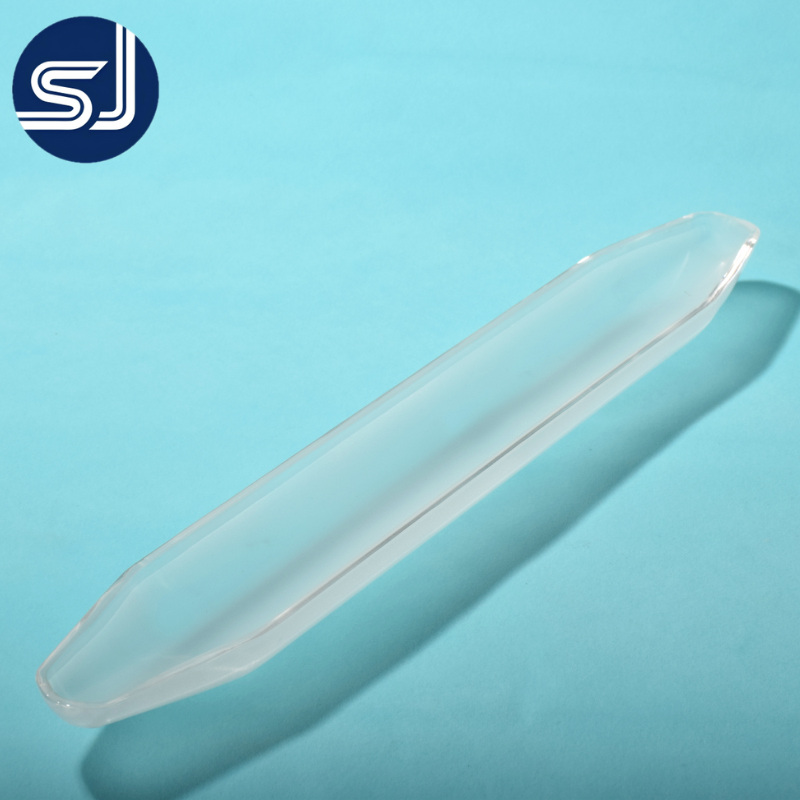
Our complete catalog of transparent tubes, quartz boats, flasks, and filter crucibles conforms to strict European Union CE marking and RoHS hazardous substance restrictions (lead, cadmium, mercury, hexavalent chromium free). Certificates and material safety datasheets (MSDS) are provided with every export shipment.
Direct Mine-to-Kiln Supply Chain
Sitting in Jiangsu Donghai Economic Development Zone gives Vulra Quartz unmatched proximity to China’s highest-grade silica supply chains. We bypass multiple distribution layers, ensuring dependable supply margins, batch chemical uniformity, and highly competitive direct-manufacturer FOB/CIF pricing.
Specialized Fragile Export Packaging
Porous quartz discs and thin-walled crucibles demand specialized export protection. Every unit undergoes multi-stage ultrasonic DI-water cleaning, individual vacuum PE-bag sealing, custom molded EPE shock cushioning, and heavy-duty ISPM-15 export wooden crating engineered for rough international transit.
Frequently Asked Questions: Sourcing Custom Quartz Filter Crucibles
Direct answers from our senior fabrication and materials engineers to address common questions regarding thermal limits, pore selection, regeneration cleaning, and custom drawing specifications.
1. What is the maximum continuous and peak operating temperature of a quartz filter crucible?
2. How do I select the right porosity grade (P1 to P5) for my analytical precipitation?
- P1 (100–160 μm): Ideal for coarse crystalline materials, coarse sludges, or as a support membrane for secondary micro-filtration beds.
- P2 (40–100 μm): Standard for rapid filtration of crystalline precipitates and heavy metal salts in mining assays.
- P3 (16–40 μm): The analytical workhorse for gravimetry; reliably collects barium sulfate (precipitated hot) and silver chloride without clogging.
- P4 (10–16 μm): Designed for fine analytical precipitates including cold barium sulfate, cuprous oxide, and sub-micron semiconductor polishing particulates.
- P5 (1.0–1.6 μm): Ultra-fine clarification, sub-micron bacterial analysis, and critical aerosol exhaust collection.
3. Can quartz filter crucibles survive rapid quenching from 1000°C into cold water?
4. How should sintered quartz filter crucibles be cleaned and regenerated after use?
- Organic residues: Soak in hot concentrated sulfuric acid with ammonium persulfate or boiling nitric acid (aqua regia). Alternatively, burn off organics in an ashing muffle furnace at 600°C–800°C.
- Metal precipitates: Digest in hot hydrochloric or concentrated nitric acid.
- Critical Warning: Never use hydrofluoric acid (HF) or hot concentrated phosphoric acid (>150°C), as they chemically dissolve SiO₂ and will permanently alter the disc pore diameter. Strongly alkaline solutions (boiling NaOH/KOH) should also be avoided for prolonged durations.
5. What causes quartz devitrification, and how do your manufacturing methods prevent it?
6. What are the differential vacuum pressure limits across a sintered quartz disc?
7. Can you fabricate crucibles directly from my 2D/3D engineering drawings?
- Crucible capacity (5 ml micro-crucibles up to 1000 ml preparative vessels);
- Fritted disc diameter, placement height, and thickness;
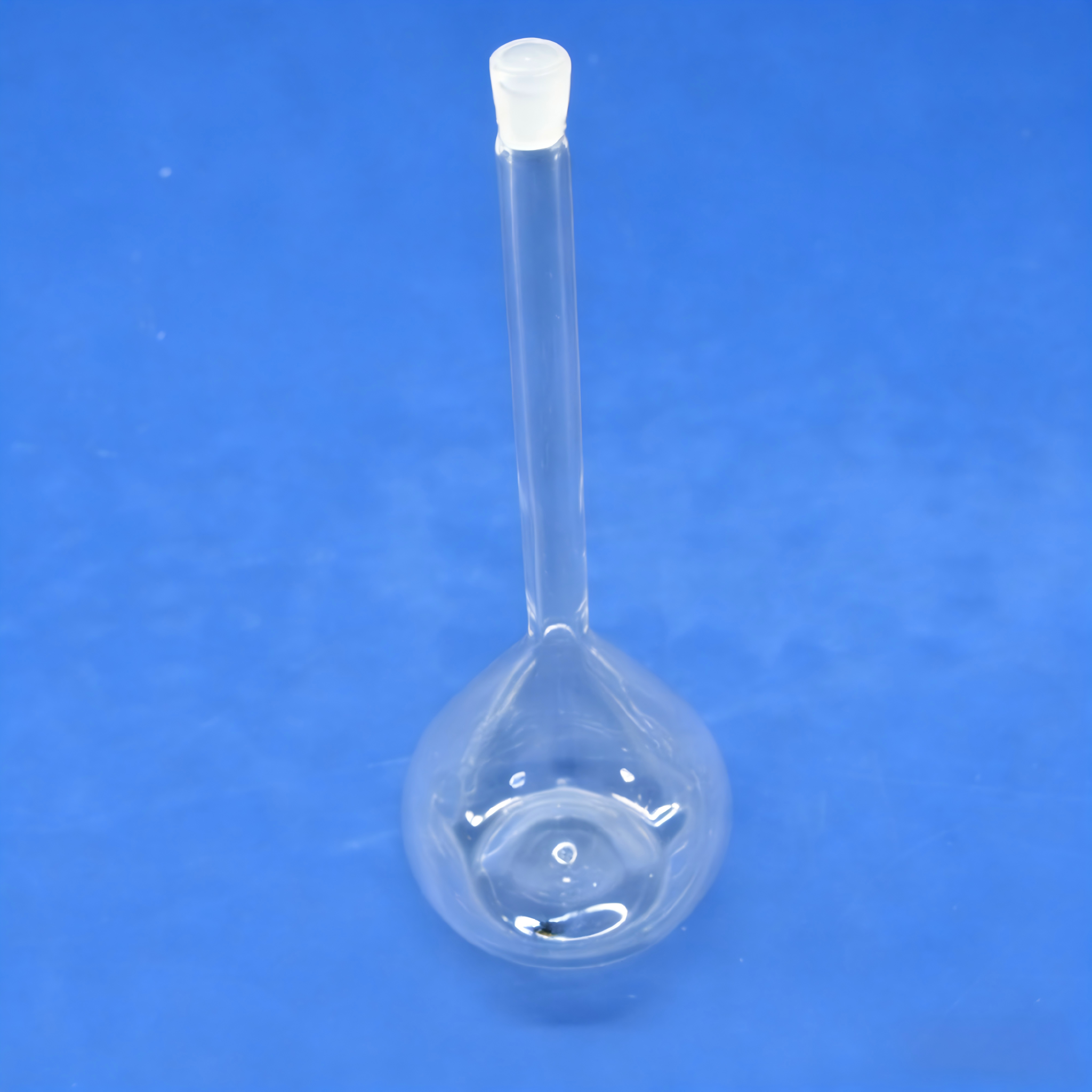
- Wall thickness, rim fire-polishing, pouring spouts, and ground glass joint fittings (e.g., standard taper 14/23, 24/40 or ISO spherical joints);
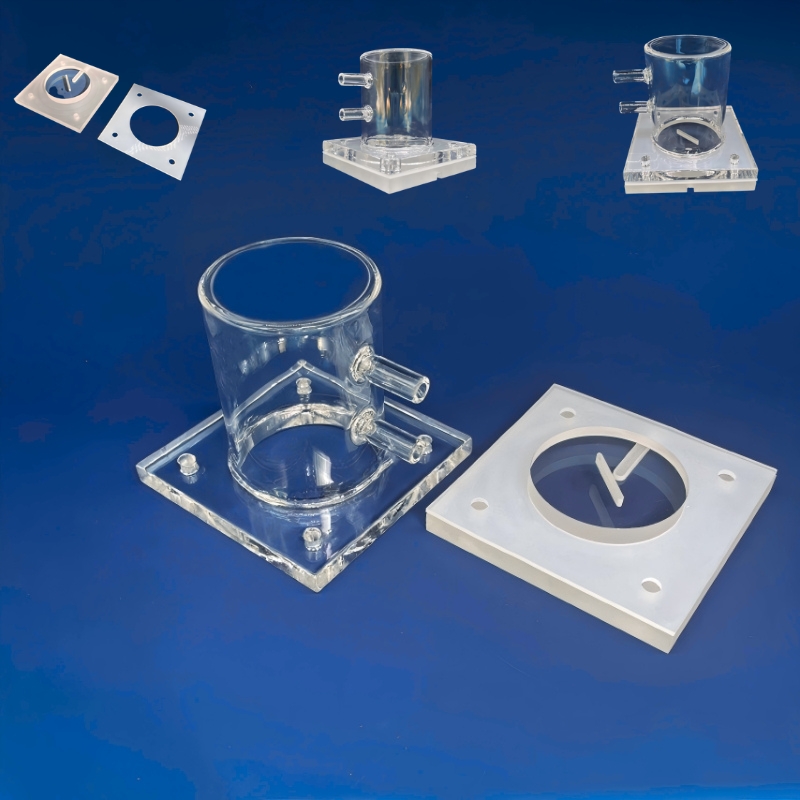
- Direct incorporation of side-arm vacuum ports or multiple internal filtration stages.
8. What is the minimum order quantity (MOQ) and sample lead time for custom items?
9. How do you prevent breakage and chipping during international sea or air transport?
10. What quality documentation and inspection reports are supplied with each batch?
Request Custom Engineering Consultation & OEM Quotation
Have a custom drawing, technical specification, or target porosity requirement? Connect directly with our Donghai technical engineering department for rapid CAD feasibility review, material grade recommendation, and official direct-factory pricing within 24 hours.