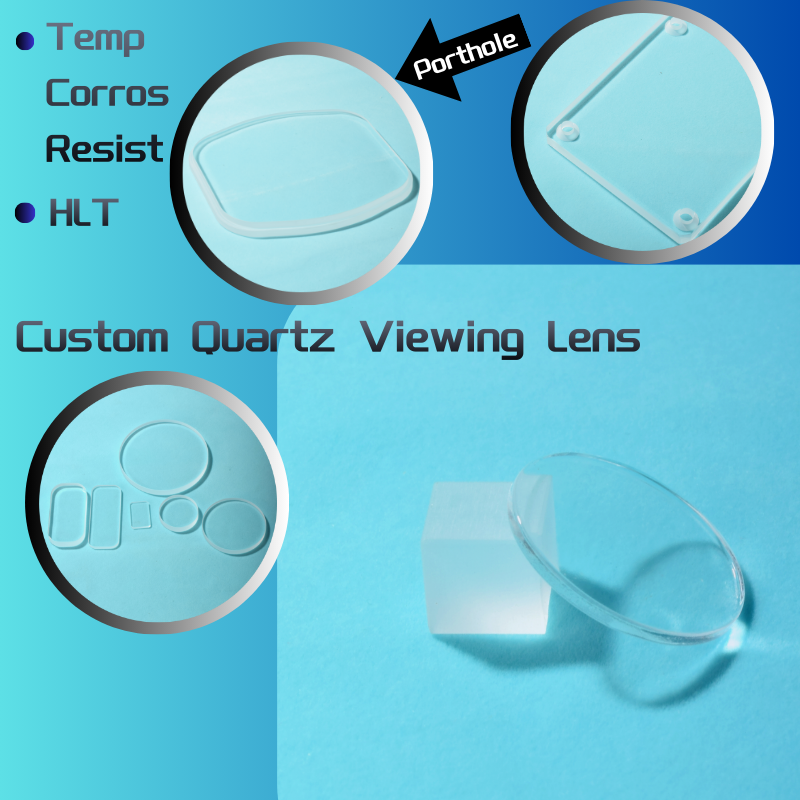
Precision Engineered Catalog
Core Quartz Thermowells & High-Temperature Optical Components
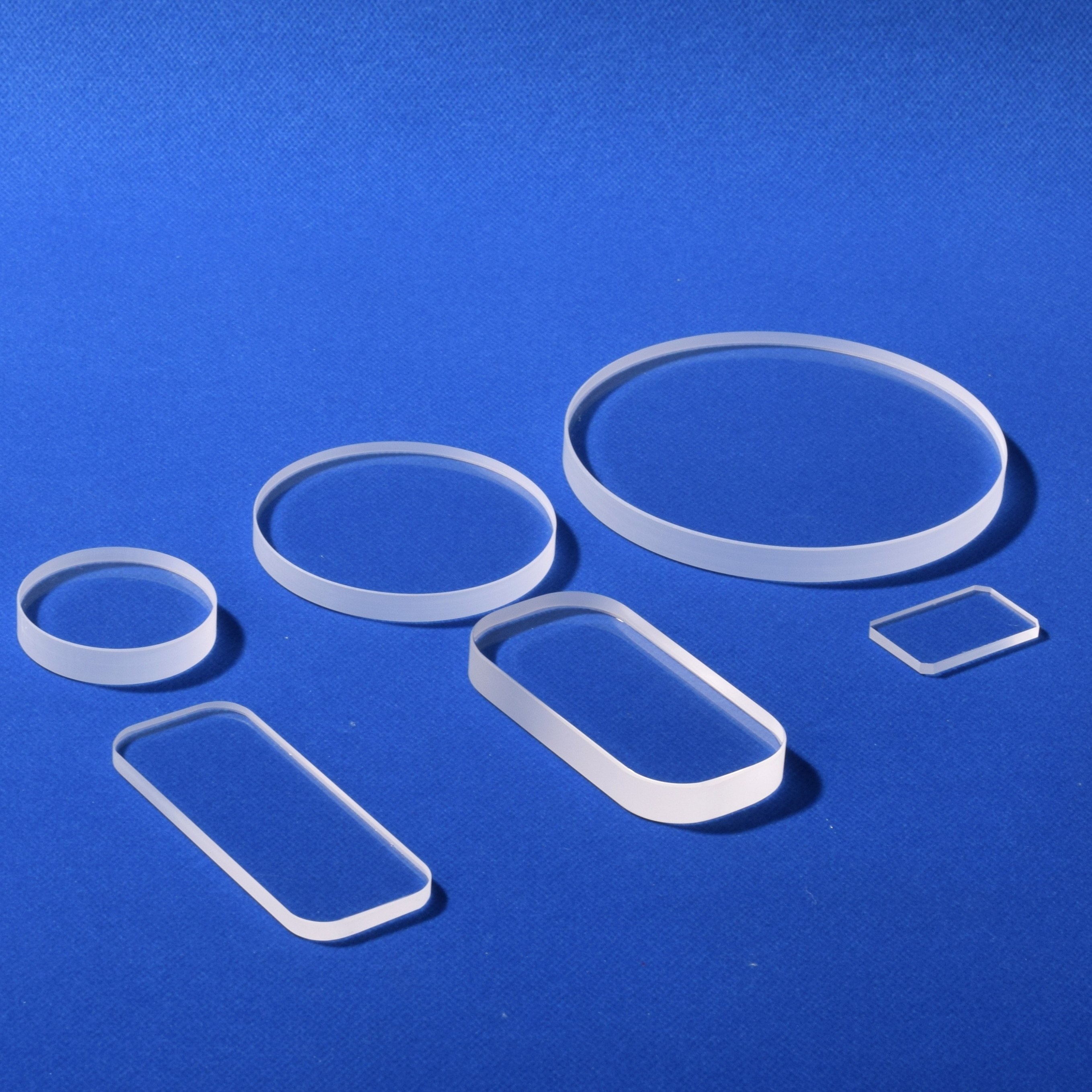
Directly sourced from Donghai—China’s silica capital—our fused quartz thermocouple sheaths, capillaries, and observation optics deliver thermal stability up to 1450°C and resistance against severe molten metal slag erosion.
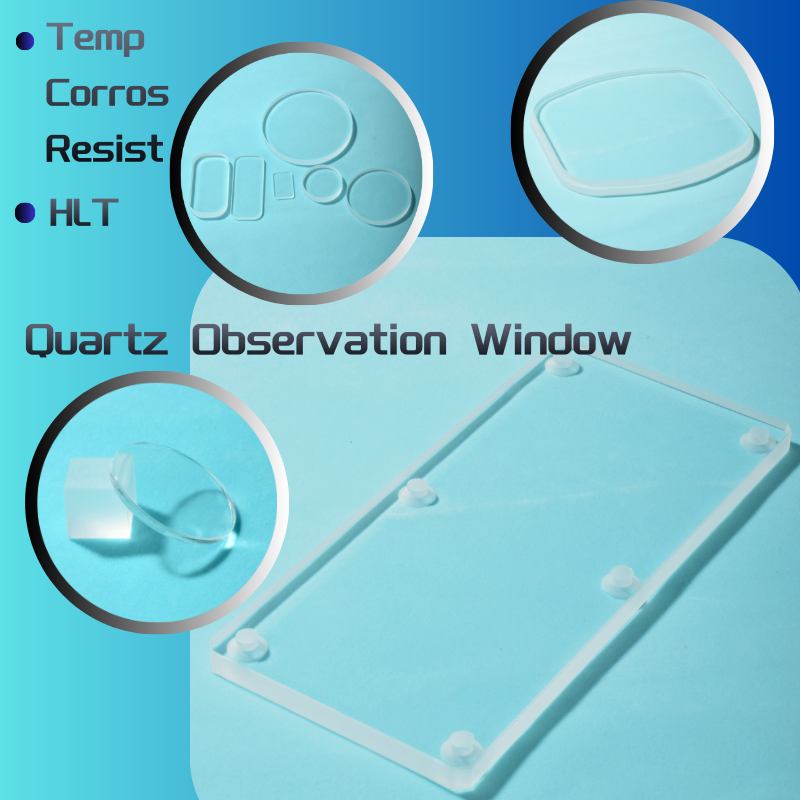
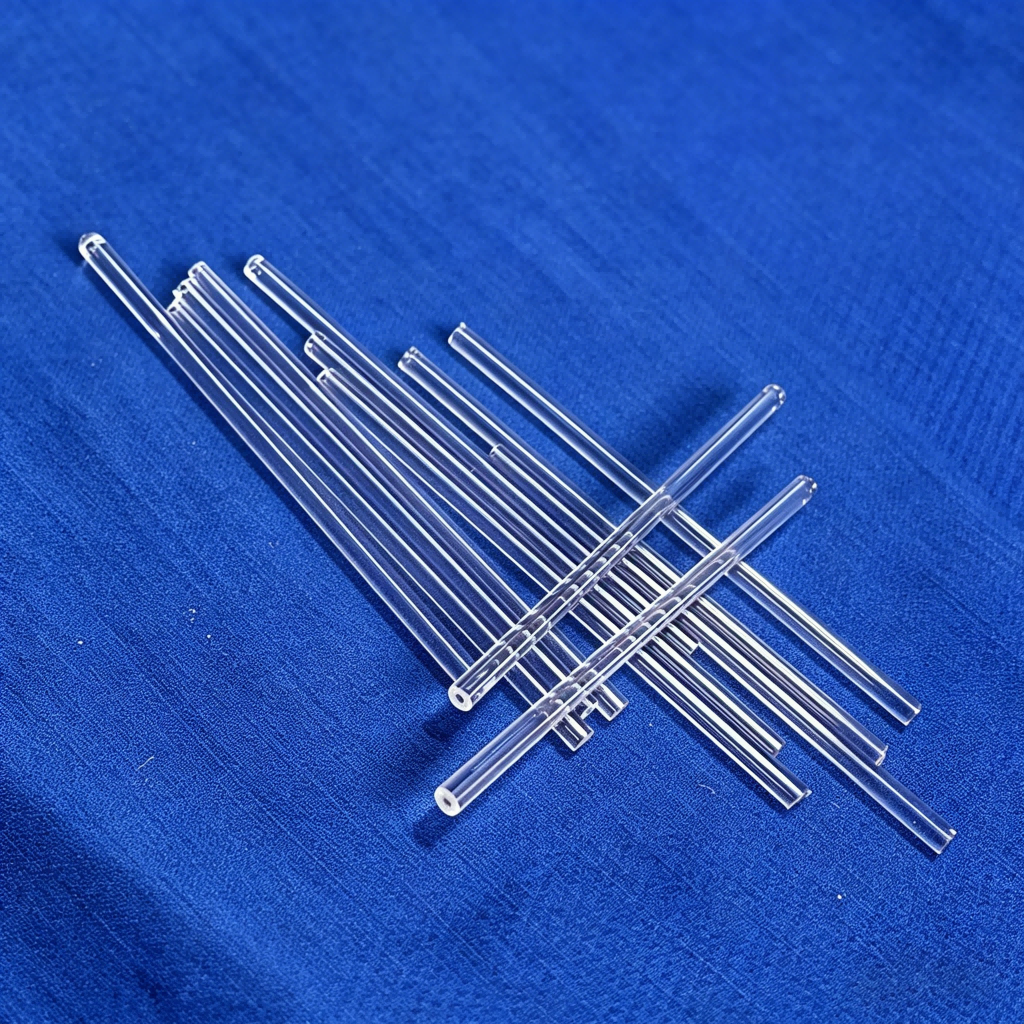
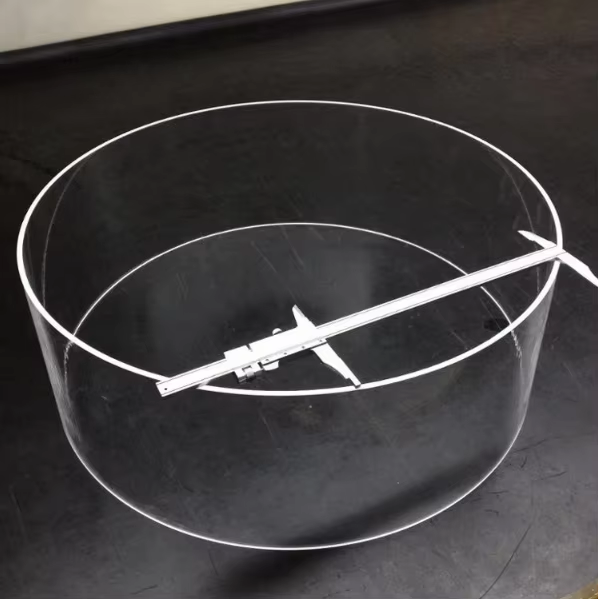

Engineering Authority & Thermodynamics
Technical Architecture of Fused Quartz Thermocouple Sheaths
In high-temperature contact pyrometry, sensor longevity is governed by the structural integrity of the outer protective envelope. Fused quartz stands out as the ultimate refractory glass due to its unparalleled near-zero thermal expansion coefficient and superior chemical inertness.
Thermal Shock Mechanics
Unlike sintered alumina ($Al_2O_3$) or silicon carbide ($SiC$), transparent fused silica exhibits an exceptionally low coefficient of thermal expansion ($\alpha \approx 5.5 \times 10^{-7} \text{ K}^{-1}$ between 20°C and 1000°C). This allows instantaneous cold-to-hot insertion into molten aluminum or hot furnace gas streams ($\Delta T > 1000^\circ\text{C}$) without catastrophic thermal stress cracking or catastrophic hoop failure.
- Thermal Shock Delta: Instant water quenching at 1100°C without fracture
- Softening Point: 1683°C (Annealing Point: 1215°C, Strain Point: 1120°C)
- Tensile Modulus: 72 GPa at 25°C with high elastic recovery
Devitrification Kinetics & Purity
At continuous operational temperatures exceeding 1150°C, amorphous $SiO_2$ undergoes phase transformation into crystalline $\beta$-cristobalite. Trace alkali metal impurities ($Na, K, Li$) significantly accelerate this devitrification process. Vulra Quartz utilizes Donghai natural crystal sands refined to $SiO_2 \ge 99.999\%$, restricting total alkali content below 1.5 ppm to arrest crystal growth and ensure prolonged tube life.
- Trace Alkali Control: $[Na^+ + K^+ + Li^+] < 1.0 \text{ ppm}$
- Hydroxyl [OH] Concentration: Vacuum baked to $< 10 \text{ ppm}$
- Extended High-Temp Service: $> 300\text{ hours continuous at } 1200^\circ\text{C}$
Corrosion & Metallurgical Inertness
In non-ferrous foundry operations, molten aluminum, zinc, and magnesium alloys rapidly dissolve metallic protection sheaths. Fused quartz resists attack from liquid aluminum alloys, acidic furnace atmospheres ($SO_2, HCl$), and halogens. Because molten metals do not wet vitreous silica under non-reducing conditions, slag adheres minimally, preventing localized flux corrosion.
- Aluminum Immersion: Zero metal wetting up to 800°C
- Acid Resistance: Fully inert to $HNO_3, H_2SO_4, HCl$ at all temperatures
- Noble Metal Isolation: Prevents platinum wire contamination in Type S/R/B sensors
| Material Specification | High-Purity Fused Quartz (Vulra) | Recrystallized Alumina (99.7% Al₂O₃) | Silicon Nitride (Si₃N₄) | Stainless Steel / Inconel 600 |
|---|---|---|---|---|
| Thermal Expansion (CTE, 20–1000°C) | 0.55 × 10⁻⁶ K⁻¹ (Ultra-Low) | 8.0 × 10⁻⁶ K⁻¹ (Moderate) | 3.2 × 10⁻⁶ K⁻¹ (Low) | 16.5 × 10⁻⁶ K⁻¹ (High) |
| Maximum Working Temperature | 1150°C (Continuous) / 1450°C (Peak) | 1700°C (Continuous) | 1200°C (Continuous) | 1100°C (Max Short-term) |
| Thermal Shock Resistance | Superior (Survives 1100°C Water Quench) | Poor (Susceptible to Thermal Cleavage) | Excellent (High Fracture Toughness) | Moderate (Thermal Fatigue / Sagging) |
| Molten Aluminum Dissolution Rate | Negligible (Non-wetting at < 850°C) | Low (Subject to Cryolite / Flux Attack) | Extremely Low (High Cost) | Rapid Catastrophic Dissolution (< 2 hrs) |
| Sensor Calibration Stability (Type S/R/B) | Optimal (Zero Alkali/Iron Vapor Drift) | Excellent | Moderate | Severe Poisoning via Vaporized Chromium |
| Custom Prototyping Cost & MOQ | Flexible Flame Lathe (MOQ: 1 pc) | High Tooling / Die Cost (MOQ: 50+ pcs) | Very High HIP Tooling Cost | Moderate Machining Cost |
Verified Manufacturing Strengths
Why Global Procurement Teams Choose Vulra Quartz
Operating directly in Donghai County—the crystal center of China—Lianyungang Vulra Quartz Products Co., Ltd. combines local geological advantages with international testing protocols certified by TÜV Rheinland.
ADVANTAGE 01
Geological Raw Material Dominance
Direct mine-to-furnace integration in Donghai grants us access to premium high-silica crystal sands, yielding fused quartz tubes with silicon dioxide concentrations reaching 99.999% and vanishingly low heavy metal trace levels.
ADVANTAGE 02
Full Hot & Cold Customization
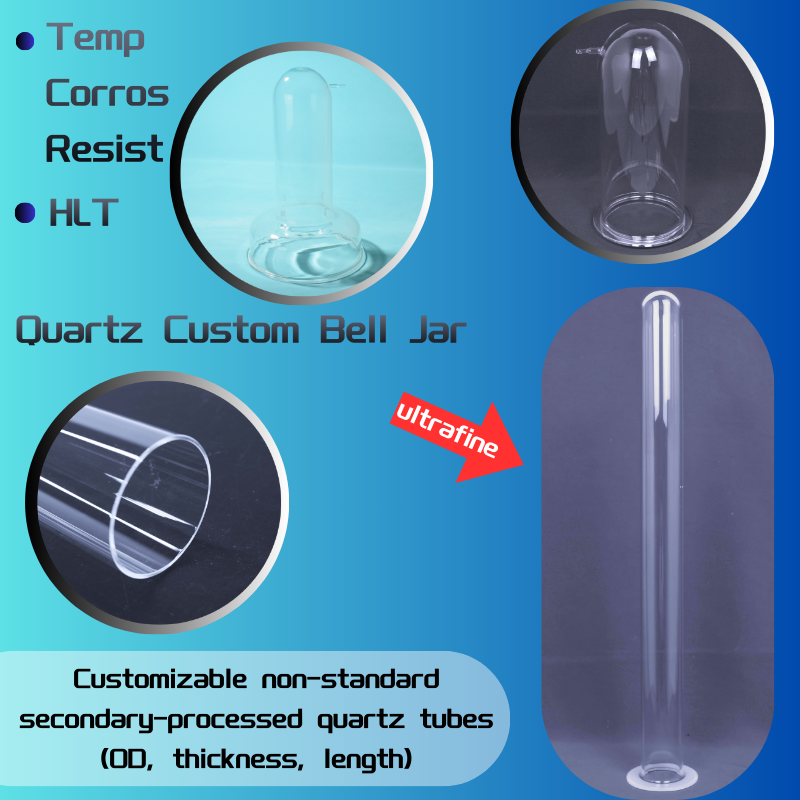
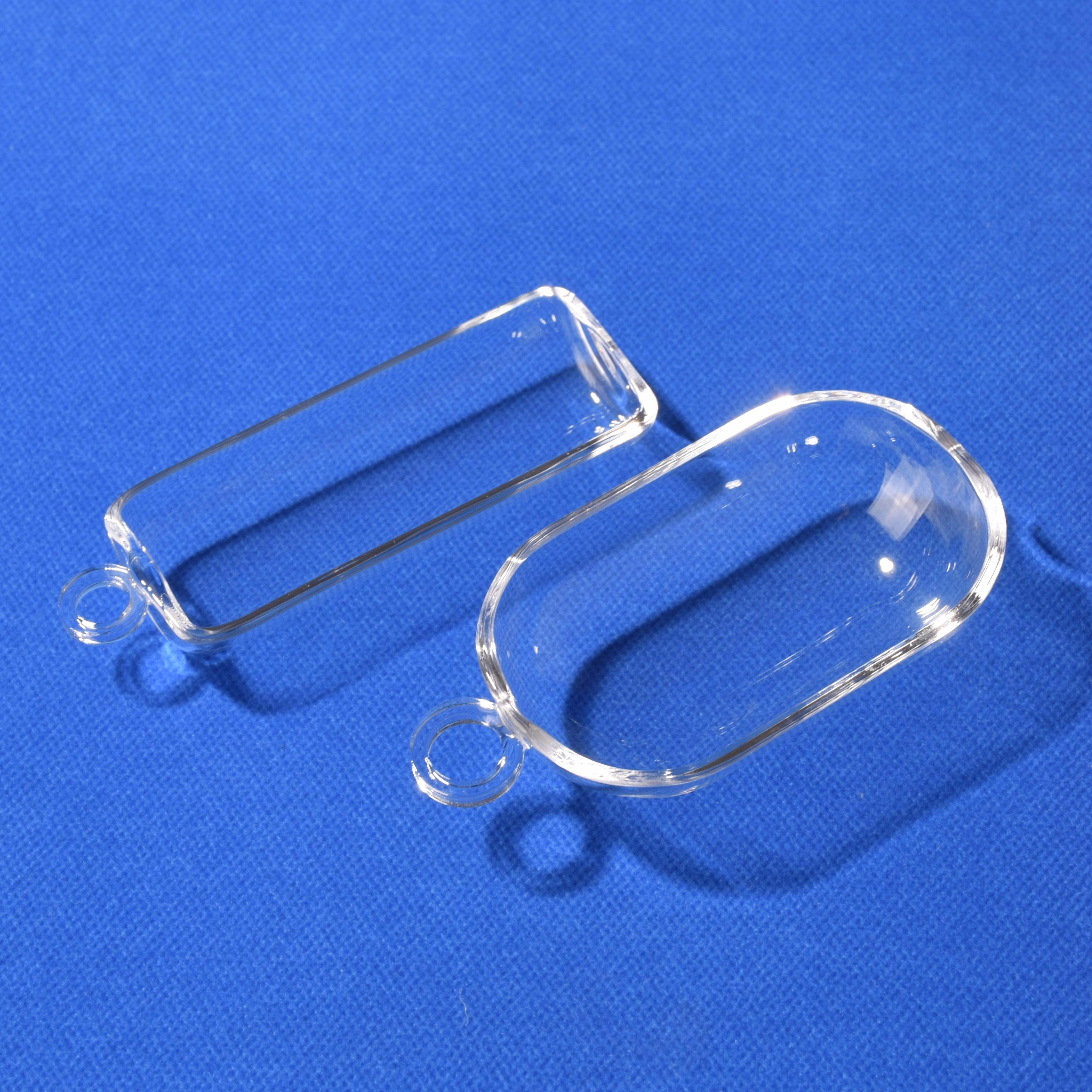
From automated oxy-hydrogen lathe bottom-sealing and hemispherical dome shaping to CNC diamond ultrasonic drilling, precision flange grinding, and fire-polishing, all processes are executed strictly in-house.
ADVANTAGE 03
TÜV Verified & Certified QA
Our complete manufacturing footprint has passed on-site supplier verification by TÜV Rheinland. Products carry full CE and RoHS conformity certificates with optical polariscope stress inspection on every batch.
ADVANTAGE 04
Drawing-Based OEM from 1 Piece
We eliminate barriers for pilot projects and laboratory equipment builders. Submit your 2D/3D technical drawings (STEP, DWG, PDF) to receive engineering feasibility validation and fast prototype dispatch from just 1 piece.
6+
Years Industry Focus
99.999%
Peak SiO₂ Purity
1683°C
Softening Point
800mm
Max Outer Diameter
Market Intelligence & Industry Horizon
Future Procurement Trends in Quartz Thermocouple Sheaths
As semiconductor fabrication nodes shrink below 3nm, photovoltaic cell producers migrate to TOPCon/HJT architectures, and metallurgical plants implement Industry 4.0 automation, the technical requirements for quartz thermowells are undergoing rapid transformation.
Trend 01: Semiconductor Epitaxy
Shift to Ultra-Low Hydroxyl (< 5 ppm OH) Synthetic Quartz
In high-temperature silicon carbide (SiC) and gallium nitride (GaN) MOCVD epitaxy chambers operating above 1300°C, traditional fused natural quartz suffers from accelerated hydroxyl outgassing. This moisture causes thermal expansion mismatch and sensor drift in Type S and Type B platinum-rhodium thermocouples. Modern cleanroom procurement is shifting toward chemically synthesized fused silica tubes exhibiting $< 5 \text{ ppm [OH]}$, virtually eliminating crystal nucleation and metallic vapor migration.
Trend 02: Metallurgical Pyrometry
Porous Opaque & Multi-Bore Composite Capillaries
Foundry temperature telemetry is evolving beyond expendable single-dip sensors. Continuous temperature logging in aluminum holding furnaces and copper tundishes demands hybrid protective envelopes. Sourcing data reveals surging demand for dual-layer sleeves featuring an opaque micro-porous silica outer barrier (engineered to impede molten slag erosion) fused over a high-density clear inner capillary tube that provides structural rigidity and gas tightness.
Trend 03: Supply Chain Verification
Automated Non-Destructive Optical Metrology
High-reliability process industries are phasing out spot-checking in favor of comprehensive dimensional validation. Leading B2B buyers now mandate 100% laser optical interferometry inspection reports showing wall-thickness concentricity ($\pm 0.05 \text{ mm}$), bubble-free inclusion classifications (DIN ISO 10110 compliance), and cross-polarizer residual thermal stress profiles before authorizing overseas container releases.
Sensor Pairing & Thermal Physics
Thermocouple Sensor Pairing & Operational Physics
To achieve accurate, non-drifting pyrometric data, furnace designers must match sheath wall thicknesses and geometries with specific sensor chemistry.
Type S, R & B Noble Metal Sensors
Platinum-Rhodium thermocouples ($Pt10Rh-Pt$, $Pt13Rh-Pt$, $Pt30Rh-Pt6Rh$) are notoriously vulnerable to embrittlement caused by vaporized iron, silica reduction, or sulfur. Vulra Quartz thermocouple sheaths are hot-flame fire-polished and ultrasonically de-alkalized, providing an ultra-clean dielectric barrier that prevents sensor poisoning and maintains calibration within $\pm 0.5^\circ\text{C}$ over extended production runs.
Response Time Optimization ($\tau_{90}$)
Sensor response lag can cause catastrophic thermal overshoots in rapid RTP (Rapid Thermal Processing) and semiconductor diffusion furnaces. By controlling closed-end dome wall thickness down to $1.0 \text{ mm} \pm 0.08 \text{ mm}$ via specialized glass lathe vacuum-assisted bottom sealing, Vulra Quartz sheaths achieve a 90% step-response time ($\tau_{90}$) under 8.5 seconds in liquid convection environments.
Differential Pressure Vacuum Integrity
In low-pressure chemical vapor deposition (LPCVD) and vacuum sintering environments, outer sheaths must withstand 10⁻⁵ mbar negative pressure differential at elevated temperatures. Our fire-polished one-end-closed quartz tubes undergo 100% helium mass spectrometer leak detection, certifying a helium leakage rate $< 1.0 \times 10^{-9} \text{ mbar}\cdot\text{L/s}$ across the sealed dome.
Knowledge Base
Frequently Asked Questions for Quartz Sheath Buyers
Clear, engineering-backed answers to the technical, operational, and logistics questions most frequently raised by international purchasing managers and pyrometry engineers.
What causes devitrification in quartz thermocouple sheaths and how is it prevented?
Devitrification is the phase transition of vitreous amorphous silica into crystalline $\beta$-cristobalite at temperatures above 1150°C. Upon cooling through 200–275°C, $\beta$-cristobalite undergoes an abrupt volume inversion into $\alpha$-cristobalite, inducing severe micro-cracking and mechanical failure. Devitrification is primarily nucleated by surface contamination—particularly alkali ions ($Na^+, K^+, Li^+$) and fingerprint oils. Vulra Quartz mitigates this through high-purity natural silica sand refining ($SiO_2 \ge 99.99\%$), strict furnace temperature ramping protocols, cleanroom hydrofluoric acid surface etching, and thermal de-alkalization, ensuring prolonged tube life in high-temperature atmospheres.
Can fused quartz tubes be directly immersed into molten non-ferrous alloys?
Yes. Fused quartz is the preferred envelope material for molten aluminum, zinc, brass, and copper pyrometry up to approximately 900°C. Because molten aluminum does not wet vitreous silica under neutral or oxidizing atmospheres, metal adhesion is minimal. For prolonged continuous immersion in molten aluminum containing active magnesium modifiers or aggressive fluoride fluxes, we recommend our specialized thick-wall opaque silica sleeves or secondary outer ceramic coating barriers to prevent silica reduction ($4Al + 3SiO_2 \rightarrow 2Al_2O_3 + 3Si$).
What is the standard wall-thickness tolerance and closed-end dome concentricity?
Our standard manufacturing line maintains an outer diameter (OD) and inner diameter (ID) tolerance of $\pm 0.10 \text{ mm}$ for tubes under 25 mm OD. For precision semiconductor sensor wells, diamond ground and flame-polished sheaths are held to $\pm 0.05 \text{ mm}$. The closed end can be shaped into a hemispherical dome, a flat optical base, or a reinforced bullet tip. Wall thickness at the apex of the closed bottom is calibrated to match the tube side wall within $\pm 10\%$, preventing localized thermal hotspots and premature mechanical failure.
How does Vulra Quartz pack fragile quartz tubes for air and ocean freight?
Fragile quartzware is packaged through a multi-tier shock-isolation system. Individual thermocouple sheaths are encased in sealed polyethylene dust sleeves, wrapped in high-density EPE foam tubing, and segregated in slotted corrugated internal boxes. For ocean and intercontinental air freight, these internal cartons are suspended within heavy-duty plywood crates lined with 30mm expanded polystyrene shock absorbers. Crates are banded with steel strapping, marked with fragile indicators, and equipped with TiltWatch and Drop-N-Tell vibration monitors upon request.
What are the lead times for custom-dimension prototypes vs. bulk orders?
Because we operate our own glass-lathe hot working and cold grinding facilities in Donghai, standard-diameter closed-one-end thermocouple tubes (OD 4mm to 30mm) can be prototyped and dispatched within 3 to 5 business days from drawing approval. Custom ground taper joints, specialized flanged collars, or multi-bore capillary tubes require 7 to 10 days for tooling setup and trial annealing. Bulk volume orders (1,000 to 20,000 units) are scheduled with rolling batch deliveries, typically shipping within 2 to 3 weeks.
Can Vulra Quartz fabricate thermocouple sheaths according to our CAD drawings?
Absolutely. Over 65% of our production is drawing-based OEM/ODM manufacturing. We accept 2D drawings (AutoCAD DWG, DXF, PDF) and 3D models (STEP, IGES). Our engineering team reviews each design for aspect ratio limits, wall thickness transitions, thermal stress points, and flame-working radii before manufacturing. We also fabricate complex assemblies including vacuum sealing KF flanges, threaded stainless steel collar transitions, and graded glass-to-metal joints.