TÜV Rheinland Verified Custom Quartz Manufacturer
[email protected] English
Direct Ultra-High Purity Fabrication (99.99% - 99.999% SiO₂)

Semiconductor Grade Quartz Glass Manufacturers & Factories for Peja

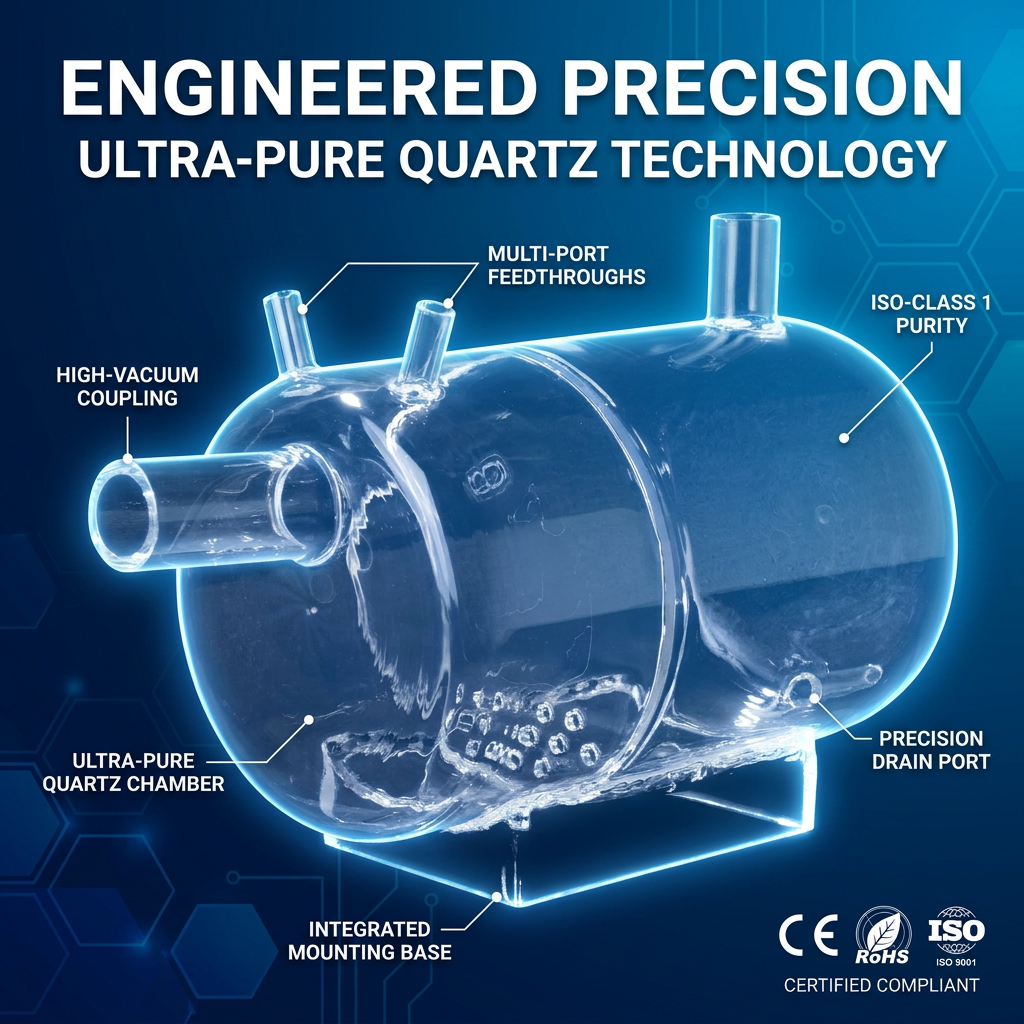
Precision thermal fabrication, optical-grade polished substrates, and custom laboratory quartzware engineered to eliminate metallic micro-contamination across high-temperature applications in Western Kosovo.

Verified Technical Portfolio

High-Purity Quartz Glass Products for Peja's Research & Industry

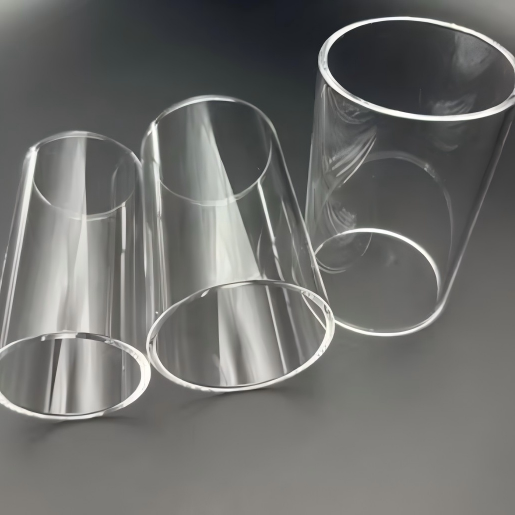
Manufactured from premium Donghai natural quartz and synthetic precursors, every component is annealed to relieve thermal stress and machined to exact geometric tolerances.

99.999%
Maximum SiO₂ Purity
1683°C
Softening Point
Ø 800mm
Max Outer Diameter
1PC
Drawing-Based MOQ
Industry Whitepaper • Material Science

High-Purity Fused Quartz Engineering: Chemical Integrity, Optical Bandgap & Thermal Kinematics

In modern microfabrication, optoelectronic prototyping, and specialized chemical syntheses, selecting structural glassware is not merely a question of dimensional stability—it is an elemental barrier against lattice-poisoning ionic migration. Semiconductor grade fused quartz is an amorphous vitreous state of silicon dioxide (SiO₂), synthesized by melting ultra-pure natural quartz sand crystals or chemically synthesized silicon tetrachloride (SiCl₄) via thermal plasma hydrolysis. Unlike borosilicate laboratory glass, which contains up to 13% boron oxide (B₂O₃) and 4% sodium oxide (Na₂O), fused quartz maintains total metallic impurity levels below 15–20 ppm, and in semiconductor-refined lots, below 5 ppm.

For scientific institutions and industrial facilities operating in and around Peja (Kosovo), transitioning to direct-from-source semiconductor grade quartz components resolves historic limitations associated with rapid devitrification, thermal stress fractures, and trace-element leaching. When thermal processing occurs at temperatures between 900°C and 1250°C—such as during chemical vapor deposition (CVD), wafer annealing, or catalyst calcination—alkali metals (Na, K, Li) in commercial glassware become mobile within the silica matrix, diffusing into the process atmosphere and irreversibly altering the electrical carrier lifetimes of semiconductor wafers or destroying the sensitivity of spectrographic measurements.

Key Engineering Metric: Fused quartz exhibits an extraordinarily low coefficient of thermal expansion (CTE) of approximately 5.5 × 10⁻⁷ /°C between 20°C and 320°C. This allows a red-hot quartz cruciform or furnace tube at 1100°C to be rapidly quenched in cold water without undergoing catastrophic structural fracture—a thermodynamic requirement for dynamic atmospheric furnace systems used across modern material laboratories in the Dukagjini region.

The Crystallographic Transition: Mitigating Devitrification Risks

Vitreous quartz is a metastable glass at ambient and elevated temperatures. When subjected to temperatures exceeding 1150°C, the random network of SiO₄ tetrahedra begins to reorganize into the crystalline high-temperature phase known as β-cristobalite. This phenomenon, termed devitrification, typically nucleates at surface micro-imperfections or around ionic contamination sites (primarily alkali cations like sodium and potassium).

Vulra Quartz integrates automated hydrogen-oxygen flame polishing and rigorous hydrofluoric (HF) acid etching to eliminate surface nucleation micro-fissures. Our components supplied to Western Kosovo research laboratories maintain continuous structural integrity up to 1100°C and withstand short-duration thermal excursions to 1450°C without crystallographic transformation, provided atmospheric cleanliness is maintained.
Localized Regional Integration

Precision Applications of Semiconductor Grade Quartz Across Peja

As western Kosovo modernizes its industrial capabilities and expands applied technical research, high-purity fused quartz plays a pivotal enabling role across key regional sectors.

Solar PV & Clean Energy Transition

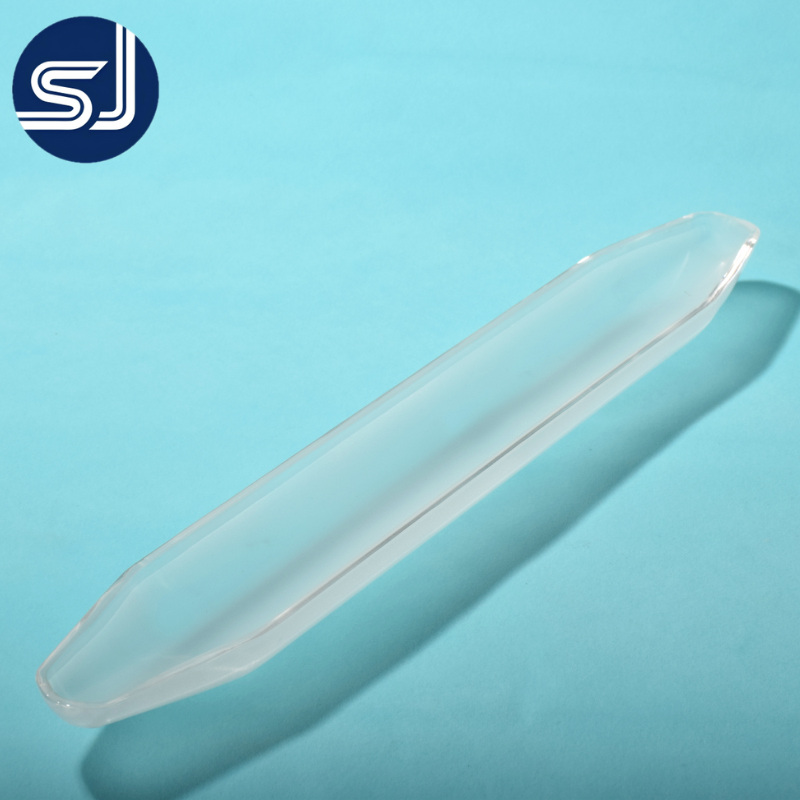
Western Kosovo is seeing substantial private and international investment in commercial solar photovoltaic projects. Our high-purity quartz boats, carrier racks, and diffusion tubes support regional photovoltaic testing, cell characterization, and silicon ingoting trials requiring strict zero-boron and zero-iron contamination tolerances.

Advanced Chemical Synthesis & Metallurgy

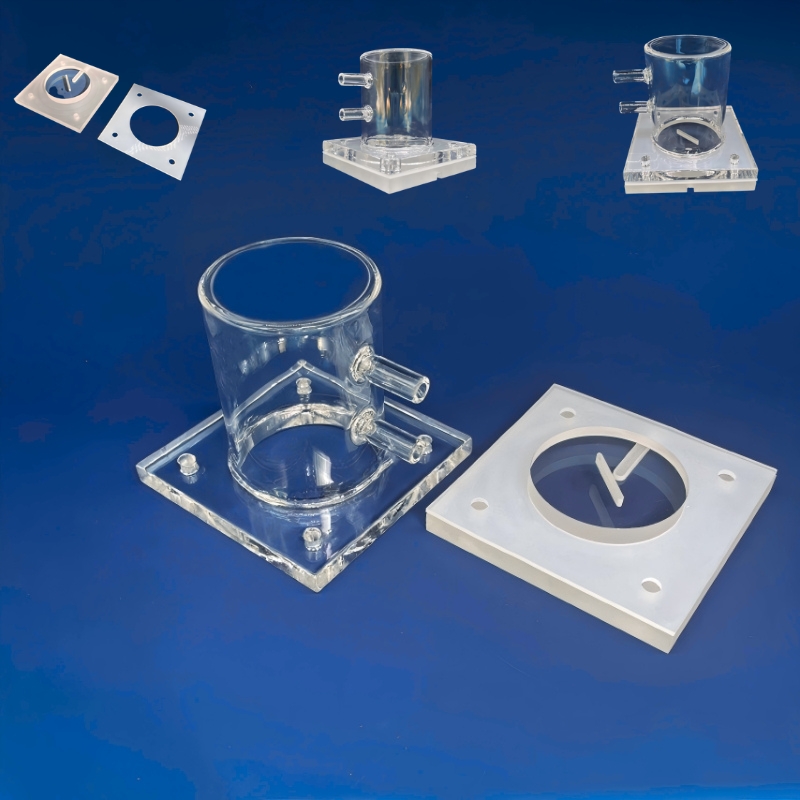
Peja's commercial and metallurgical testing laboratories utilize our quartz separating funnels, sub-boiling acid purifiers, and digestion vessels. Quartz's resistance to all acids (except hydrofluoric and hot concentrated phosphoric) prevents vessel deterioration during aggressive aqua regia digestions.

Green Hydrogen & Photocatalytic Research

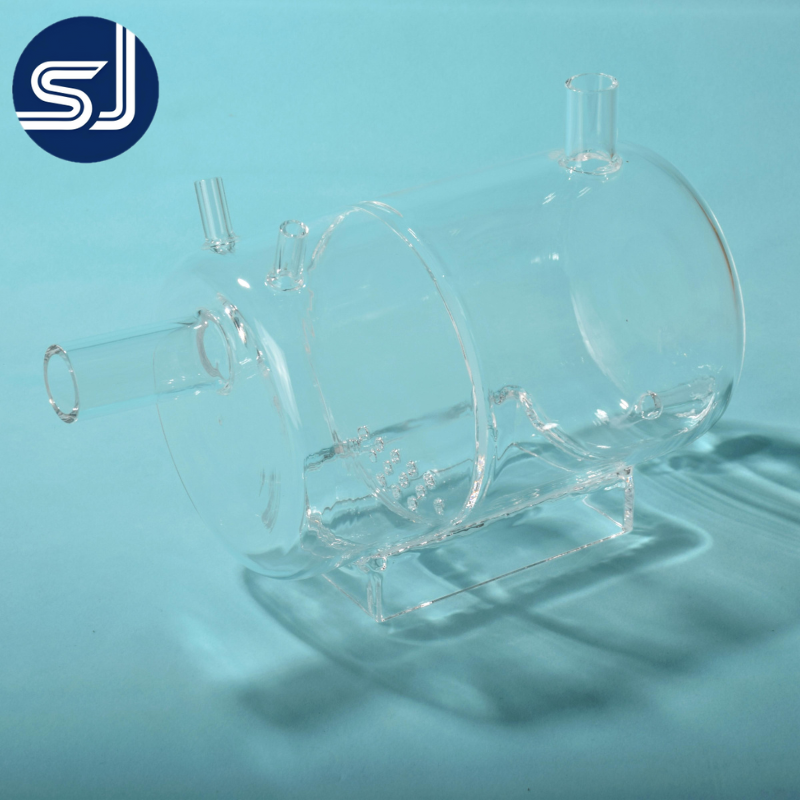
Academic institutions and sustainable energy startups in the Peja district utilize our specialized UV photocatalytic reactors for hydrogen-oxygen evolution studies. Transmitting deeply into the DUV spectrum down to 190 nm, these cells facilitate high quantum efficiency without optical degradation.

Sensor Fabrication & Microelectronics Prototyping

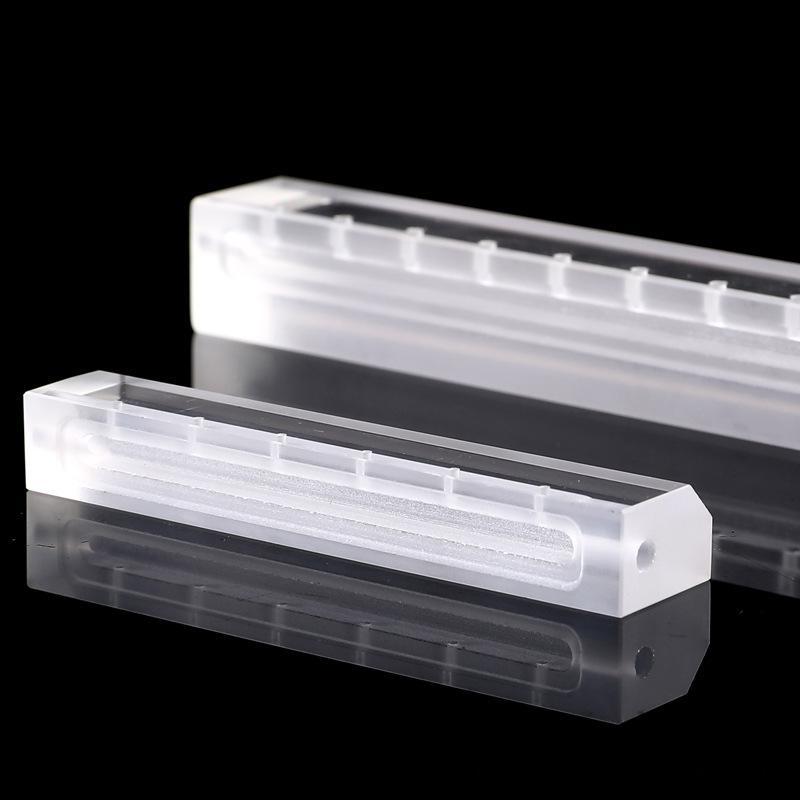
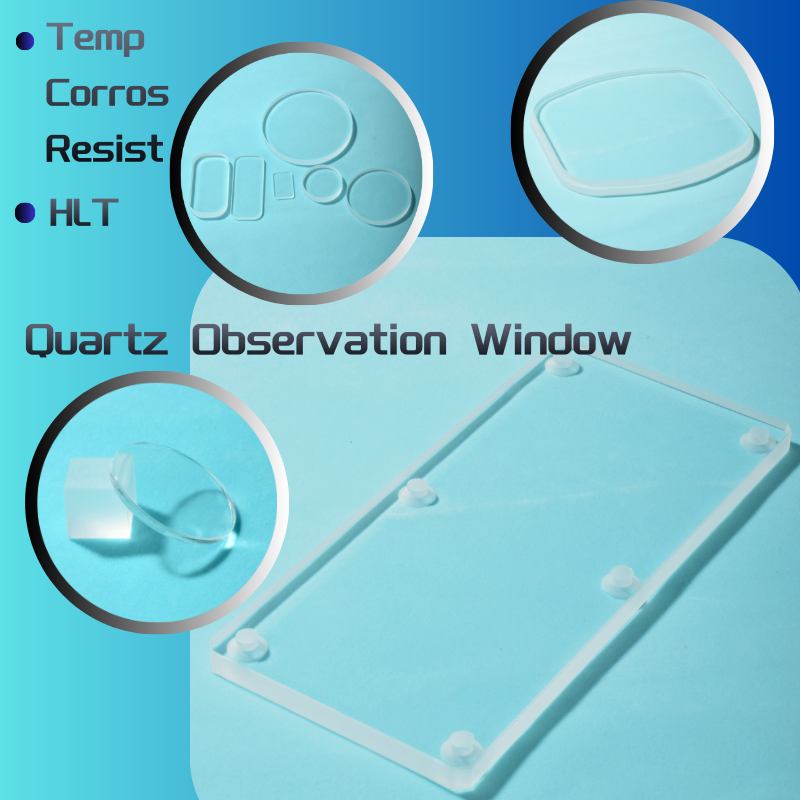
Local electronics design hubs benefit from our ultra-thin optical quartz inspection sheets and custom C-shaped tubes for precise semiconductor packaging, micro-sensor thin-film deposition, and vacuum sensor calibration.

Surface Area & Pore Analysis (BET Characterization)

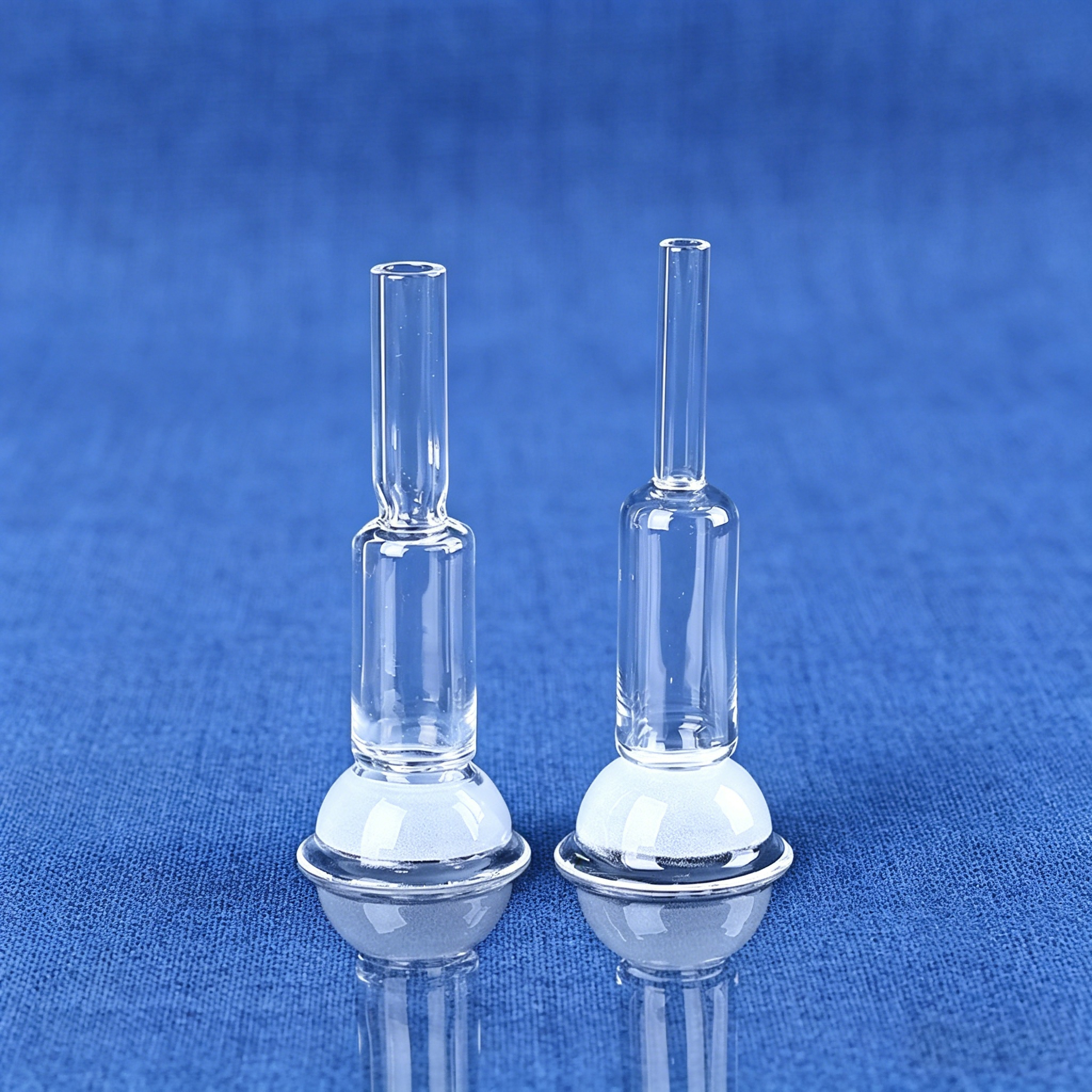
Our custom C-shaped and bulb-type BET sample tubes integrate directly into regional geological, mining, and industrial filtration laboratories in Kosovo, providing zero thermal outgassing during high-vacuum nitrogen adsorption protocols.

UV Sterilization & Food Processing Facilities

Peja has a renowned legacy in beverage, brewing, and agricultural processing. We provide heavy-duty ozone-free transparent quartz sleeves that protect high-intensity germicidal UV lamps used in commercial water disinfection lines across the region.

Strategic Market Outlook

Emerging Procurement & Technological Trends in Western Kosovo

Evaluating regional infrastructure investments, European supply chain realignments, and material evolution patterns shaping advanced manufacturing in the Western Balkans.

01

European Nearshoring Initiatives

Western Balkan manufacturing ecosystems are rapidly attracting Tier-2 and Tier-3 precision suppliers moving closer to Central European supply corridors. Local manufacturers in Peja are upgrading furnace tooling to semiconductor grade quartz to satisfy rigorous EU automotive and sensor production audits.

02

Shift from Borosilicate to Fused Silica

High-precision analytical labs across Kosovo are steadily retiring borosilicate glassware in trace element detection workflows. With inductively coupled plasma mass spectrometry (ICP-MS) becoming standard in Peja, fused quartz is now mandatory to avoid sodium, boron, and calcium background contamination.

03

Demand for Small-Batch Customization

Rather than stocking massive inventories of standardized catalog items, regional engineers in Peja demand rapid-turnaround drawing-based prototypes (1–5 pieces). On-demand cold laser cutting, CNC ultrasonic milling, and flame bench modification provide needed prototype agility.

04

Direct Factory Sourcing Models

Procurement teams in Kosovo are progressively bypassing traditional multi-tiered European distributors. Direct relationships with audited Chinese manufacturing facilities in Donghai yield 35–50% cost efficiencies while ensuring original mill test certs and third-party TÜV audit transparency.

Empirical Verification

Semiconductor Grade Fused Quartz Material Specification Matrix

Physical, thermal, mechanical, and optical parameters verified according to international standards (ASTM / ISO) for engineering compliance.

Physical / Chemical Property Typical Value (Semiconductor Grade) Standard Unit Test & Reference Method
SiO₂ Purity Ratio ≥ 99.995% – 99.999% wt % High-Resolution ICP-MS Spectrometry
Bulk Density (ρ) 2.20 × 10³ kg / m³ (g/cm³) Archimedes Buoyancy Method
Coefficient of Thermal Expansion (CTE) 5.5 × 10⁻⁷ K⁻¹ (20°C to 320°C) Dilatometric Thermal Analysis
Continuous Operating Temperature 1100 – 1150 °C Isothermal Sag Resistance Test
Maximum Short-Term Peak Temperature 1450 °C Controlled Thermal Excursion
Softening Point (Viscosity η = 10⁷·⁶ dPa·s) 1683 °C Fiber Elongation Viscometry
Annealing Point (η = 10¹³ dPa·s) 1215 °C Standard Beam Bending Viscometry
Dielectric Constant (ε) 3.75 (at 1 MHz) Dimensionless RF Impedance Analysis
Vickers Micro-Hardness 8.8 – 9.0 GPa Diamond Indenter (ASTM C730)
Spectral Transmission (Optical Grade JGS1) > 90% (from 190 nm to 2500 nm) % (10mm path) Double-Beam Spectrophotometry
Trace Element Aluminum (Al) Iron (Fe) Calcium (Ca) Magnesium (Mg) Sodium (Na) Potassium (K) Lithium (Li) Titanium (Ti) Copper (Cu)
Max Threshold (ppm) < 8.0 < 0.2 < 0.5 < 0.1 < 0.5 < 0.5 < 0.2 < 1.0 < 0.05
Why Vulra Quartz

Integrated Manufacturing Heritage from Donghai, the World's Crystal Capital

Combining world-class raw material access with strict European compliance benchmarks to serve high-technology applications across Southeastern Europe.

Vulra Quartz Manufacturing Facilities and Specialized Workshops
TÜV Rheinland Verified Production Direct Assessment • CE & RoHS Certified Lines

Geographic Mineral Advantage in Donghai

Our centralized production base in the Jiangsu Donghai Economic Development Zone gives us immediate, direct access to the world's most concentrated high-purity natural silica sand reserves, eliminating middleman material markups.

Full Hot & Cold Machining Under One Roof

We combine oxy-hydrogen glass lathe blowing, manual bench welding, and flame closing with 5-axis CNC diamond grinding, ultrasonic coring, double-sided optical lapping, and hydrofluoric acid etching.

Export-Proof Shock & Cleanroom Packing

Every piece undergoes multi-stage ultrasonic deionized water cleaning, Class 10,000 cleanroom vacuum sealing, and high-density foam suspension boxing packed into fumigated export crates built for multi-modal air and road transit to Kosovo.

Procurement Knowledge Base

Frequently Asked Questions: Sourcing Semiconductor Quartz for Peja

Direct technical and logistical answers prepared by our engineering and international customs documentation team for technical buyers in the Western Balkans.

Q What customs clearance documents are provided for shipments entering Kosovo?

We supply full international trade documentation including Commercial Invoices, Packing Lists with HS codes (typically 7002.31 for fused quartz tubes and 7017.10 for quartz laboratory ware), Certificates of Origin, Certificate of Conformity (CoC), and Material Test Reports verifying purity and thermal limits to facilitate prompt clearance at Pristina Airport (PRN) or cross-border logistics hubs serving Peja.

Q How does semiconductor grade quartz differ from standard fused silica?

Standard industrial fused silica often contains total trace metal impurities between 30 and 100 ppm, which can induce wafer contamination and premature devitrification under furnace heat. Semiconductor grade quartz undergoes additional acid washing and magnetic separation, reducing metallic contaminants to under 15 ppm (and under 5 ppm for high-spec lines), with stringent limits on iron, copper, and alkali metals.

Q What is the typical lead time for custom quartzware delivered to Peja?

For custom CAD drawing-based prototypes (e.g., slotted quartz boats, specialized C-tubes, or custom observation windows), fabrication takes 7–12 business days following drawing sign-off. Express door-to-door air freight (via DHL, FedEx, or air cargo to Pristina) typically requires 4–7 business days, enabling rapid commissioning in your laboratory.

Q How do you prevent breakage during international transit to the Western Balkans?

Quartz glass is brittle and sensitive to point-load impact. We utilize a multi-barrier packaging architecture: each item is wrapped in dust-free film, cushioned within tailored high-density polyethylene (EPE) shock-absorbing foam molds, housed in heavy double-wall master cartons, and secured within reinforced export plywood crates fitted with tip-and-tell shock indicator sensors.

Q Can you fabricate directly from our university or laboratory CAD drawings?

Yes. Our engineering division reviews standard 2D drawings (DWG, DXF, PDF) and 3D solid models (STEP, IGES). Before starting flame work or CNC milling, our senior glassblowers evaluate geometric wall ratios, weld seam stress profiles, and annealing tolerances, returning an engineering review within 24 hours.

Q What is the minimum order quantity (MOQ) for custom fabricated parts?

Unlike large-scale commodity glassmakers, Vulra Quartz supports prototypes and bespoke scientific components with a minimum order quantity of just 1 piece for most custom plates, crucibles, reactor cells, and furnace boats. This enables regional researchers in Peja to validate designs before scaling to volume batches.

Q How should fused quartz components be cleaned to prevent high-temperature clouding?

Quartz components must be handled strictly with lint-free powderless gloves. Before firing above 800°C, the quartz surface should be wiped down with high-purity isopropyl alcohol (IPA) or submerged in a 5–10% hydrofluoric (HF) acid bath for 1–2 minutes, rinsed thoroughly with deionized (DI) water, and dried in a cleanroom hood. Fingerprints deposit sodium, which accelerates devitrification.

Q Why is ozone-free quartz specified for certain UV application chambers?

Standard fused quartz transmits light down to 180 nm, which photo-ionizes atmospheric oxygen into ozone (O₃). Ozone is corrosive to delicate surrounding electronics and hazardous to laboratory technicians. Ozone-free quartz is lightly doped with titanium dioxide (TiO₂), creating a sharp optical absorption cutoff below 220 nm while maintaining maximum transmission at 253.7 nm for germicidal efficacy.

Need an Engineering Quote or Technical CAD Evaluation?

Submit your component drawings, operational temperature specifications, or dimensional requirements directly to our factory team. Our technical engineering division provides feasibility reviews, tolerance assessments, and custom CIF/DAP quotations for clients across Peja and the Western Balkans.