Specialized Fused Quartz Components for Immediate Sourcing
Explore our core export line of ultra-pure fused quartz vessels, reaction cells, and optical-grade quartz substrates engineered to meet rigorous international metrology, laser interferometry, and high-temperature laboratory standards.
Precision Optical Flats: Metrology Fundamentals & Material Selection for Tropical Maritime Climates
An optical flat is an ultra-precise optical reference surface used to inspect the surface flatness of unknown reflective parts such as gauge blocks, optical seals, mirrors, and precision mechanical faces by means of optical interference. When a reference flat is positioned in close proximity to a test workpiece under monochromatic illumination (typically helium-neon lasers at 632.8 nm or low-pressure sodium vapor at 589.3 nm), optical air-wedge interference occurs. The resultant interference bands, known as Fizeau fringes, generate a topographical contour map of the test piece where each adjacent dark fringe corresponds to an elevation differential of one-half wavelength (λ/2 ≈ 316.4 nm for He-Ne light).
In high-humidity, marine-saline, and thermally variable environments like St. Vincent and the Grenadines, standard optical glasses such as borosilicate (BK7) or soda-lime float glass experience significant internal strain and dimensional warping due to their elevated coefficient of thermal expansion (CTE ≈ 7.1 × 10⁻⁶ / K). Under solar radiance and coastal thermal swings, optical measurements taken with soda-lime flats drift drastically, producing inaccurate wavefront readings.
Lianyungang Vulra Quartz manufactures precision reference flats utilizing synthetic fused silica and high-purity natural fused quartz (SiO₂ ≥ 99.99%). Fused quartz exhibits an extraordinarily low thermal expansion coefficient of 5.5 × 10⁻⁷ / K (nearly 13 times lower than optical crown glass) across temperatures ranging from -50°C to +300°C. This guarantees that whether measurements take place in an air-conditioned laboratory in Kingstown or on-site during marine engine alignment at Kingstown Deepwater Harbour, the reference surface maintains mechanical stability without thermal curvature distortion.
Precision Flatness Classes & Dimensional Standards
Our single-surface and dual-surface reference optical flats are manufactured strictly in accordance with ISO 10110 and US Military Specification MIL-PRF-13830B, tested and validated using Zygo laser interferometers.
| Flatness Grade | Surface Accuracy (λ @ 632.8 nm) | Peak-to-Valley (PV) Error | Standard Surface Quality | Primary Engineering Application |
|---|---|---|---|---|
| Laboratory Grade (λ/20) | ≤ 0.05 λ | ≤ 31.6 nm | 10-5 Scratch-Dig | Laser cavity mirrors, astronomical interferometers, national calibration standards. |
| Inspection Grade (λ/10) | ≤ 0.10 λ | ≤ 63.3 nm | 20-10 Scratch-Dig | Gauge block calibration, high-precision mechanical seal verification, optical prisms. |
| Workshop Grade (λ/4) | ≤ 0.25 λ | ≤ 158.2 nm | 40-20 Scratch-Dig | Precision lapping validation, tooling alignment, production quality control benches. |
| Dual-Surface Master | ≤ 0.10 λ (Both faces) | Parallelism ≤ 1 arcsec | 20-10 Scratch-Dig | Simultaneous parallel checking of micrometer anvils and optical thickness gauges. |
Aspect Ratio Rigidity
Optical flats manufactured from fused silica require strict diameter-to-thickness ratios (typically 6:1 or 5:1). Vulra Quartz strictly adheres to structural thickness baselines, preventing gravitational sagging and mechanical flexure during bench handling.
Hydrophobic Acid Resistance
Saint Vincent's marine atmosphere contains elevated concentrations of sodium chloride aerosols and volcanic sulfuric gases. Fused quartz features non-porous chemical resistance against attack from HCl, HNO₃, and SO₂ vapor, eliminating haze degradation.
Protective Wooden Enclosures
Each precision quartz flat shipped to the Caribbean is housed in a bespoke, felt-lined, moisture-sealed hardwood case with desiccant packs, protecting the calibrated micro-polished surfaces from tropical moisture ingress and transit impacts.
Localized Industrial & Scientific Applications in St. Vincent & Grenadines
Precision quartz optical flats and high-temperature fused silica glassware fulfill irreplaceable roles across the technical infrastructure, environmental monitoring systems, and maritime installations of SVG.
Volcanological & Geothermal Research (La Soufrière)
The monitoring stations around the active La Soufrière volcano operated by regional seismic networks require rugged tiltmeter stations, borehole optical sensors, and infrared gas analysis spectrometer windows. Fused quartz optical flats serve as reference surfaces for calibrating interferometric laser sensors that detect ground deformation down to sub-micrometer levels. The thermal resilience of fused quartz ensures zero drift even when subjected to subterranean thermal surges and volcanic acid emissions.
Maritime Engineering & Kingstown Port Metrology
As the commercial heart of St. Vincent, Kingstown Deepwater Harbour oversees cargo handling, high-power diesel marine engines, and naval auxiliary equipment. Mechanical shaft seals, pump face assemblies, and fuel injector valves demand strict microscopic flatness to prevent catastrophic leaks under high hydrostatic pressure. Certified λ/10 quartz optical flats provide dockyard mechanics and naval engineers with immediate on-bench interference checks without requiring electronic testing systems.
Solar Energy Radiometry & Meteorological Arrays
The Caribbean Community Climate Change Centre and local renewable power installations require accurate solar radiometers, pyranometers, and UV exposure monitoring instruments. Due to fused silica's exceptional optical transmission ranging from 190 nm deep UV up to 2100 nm near-infrared (>90% internal transmittance), our optical quartz sheets and domes protect radiometer sensors against tropical storms while preventing spectral absorption anomalies.
Desalination Infrastructure & Blue Economy Metrology
Across the Grenadine archipelago (including Bequia, Mustique, Canouan, and Union Island), municipal and private reverse osmosis desalination facilities supply vital potable water. Optical flats are essential reference instruments for validating the planarity of optical refractometer prisms, conductivity sensor cells, and quartz spectrophotometer cuvettes utilized to ensure rigorous Caribbean Public Health Agency water quality compliance.
Modernization of Precision Metrology & Industrial Standards in SVG (2025–2030)
The technological landscape of St. Vincent & the Grenadines is undergoing deliberate evolution driven by the National Economic and Social Development Plan, geothermal exploration initiatives, and port digitization. In historical procurement models, regional facilities depended upon intermediary distributors across North America or Europe for precision optical components, incurring excessive lead times, markup layers, and customs friction.
Contemporary growth trends indicate three key shifts:
- Direct Factory Sourcing: Engineering projects and research laboratories in Kingstown and the Grenadines are bypassing trading intermediaries, contracting directly with certified original equipment manufacturers capable of delivering factory-calibrated test certificates.
- Resilience Against Coastal Environmental Decay: Industrial procurement specifications increasingly rule out borosilicate glass for exterior optical references, mandating high-purity fused silica (SiO₂ ≥ 99.99%) due to its resistance against saline fog, microbial etching, and thermal cycling.
- Sub-Micron Calibration Adoption: Expansion in port automation and solar research demands standardized λ/10 and λ/20 metrology standards to maintain ISO 9001 and ISO/IEC 17025 laboratory accreditations within national testing facilities.
Vulra Quartz directly supports these strategic initiatives by providing drawing-based fabrication, certified laser interferometer test reports, and dedicated air-freight logistics directly into Argyle International Airport (SVD) and Kingstown Port.
TÜV Rheinland Verified Manufacturing Strength & Engineering Provenance
Located in Donghai County—the crystal and high-purity quartz manufacturing center of China—Lianyungang Vulra Quartz Products Co., Ltd. combines advanced natural raw quartz refining with state-of-the-art CNC cold machining and hot flame working.
TÜV Rheinland Verified Facility
Our company is an on-site assessed and certified Custom Manufacturer by TÜV Rheinland. Every stage of manufacturing—from raw fused silica selection to laser interferometer verification—is strictly audited for complete quality traceability.
Purity Guaranteed: 99.99% – 99.999% SiO₂
By leveraging Donghai's world-renowned natural crystal sand reserves, our components maintain trace metal impurity concentrations below 20 ppm total, delivering peak transmittance, elevated softening points (1683°C), and flawless optical homogeneity.
Full Hot & Cold Customization (From 1 PC)
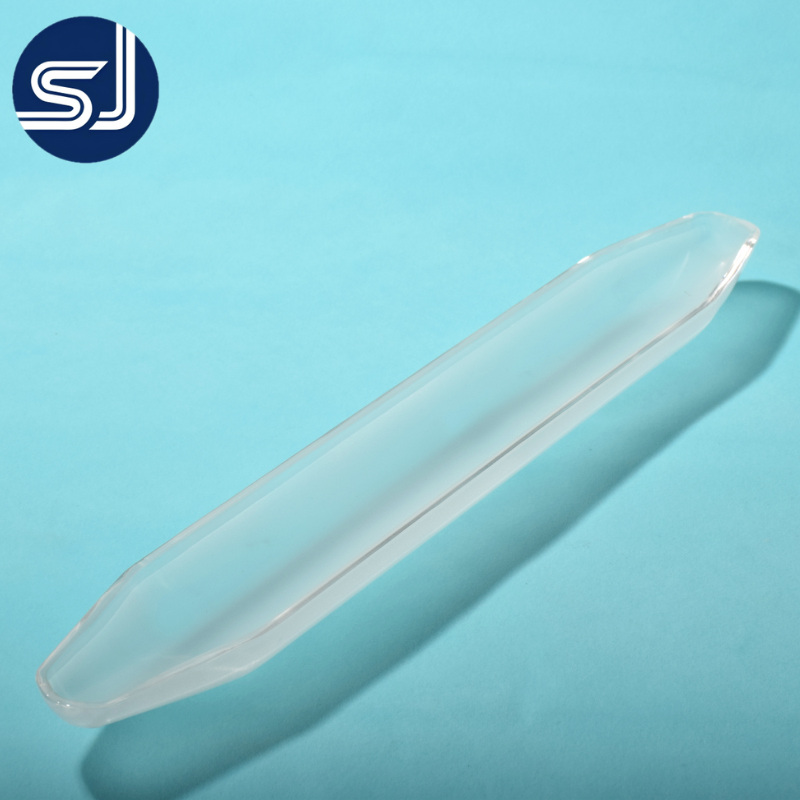
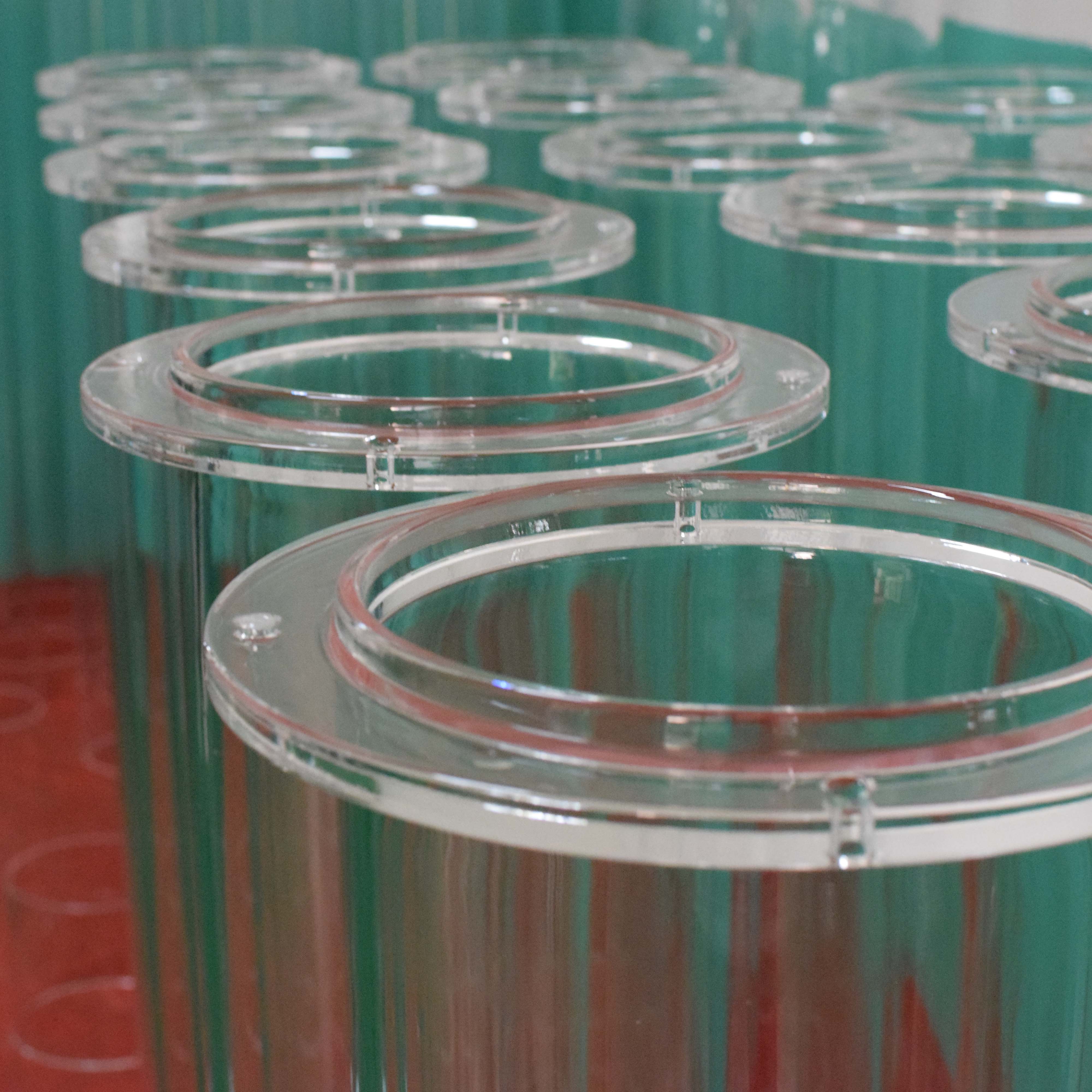
Whether you require a single 300 mm custom-thickness optical flat with edge beveling or continuous batch orders of furnace boats and flanged tubes, our factory supports drawing-based OEM/ODM from an initial minimum order quantity of just 1 piece.
Frequently Asked Questions: Sourcing Quartz Optics in SVG
Direct technical and commercial guidance for purchasing managers, scientific researchers, and port engineers importing fused quartz optics into Saint Vincent & the Grenadines.