Featured Industrial Quartz & Viewport Solutions
Drawing-based customized fused silica components, chemical isolation barriers, and inspection sight glasses manufactured to DIN 7080, ISO 10110, and high-vacuum specifications.
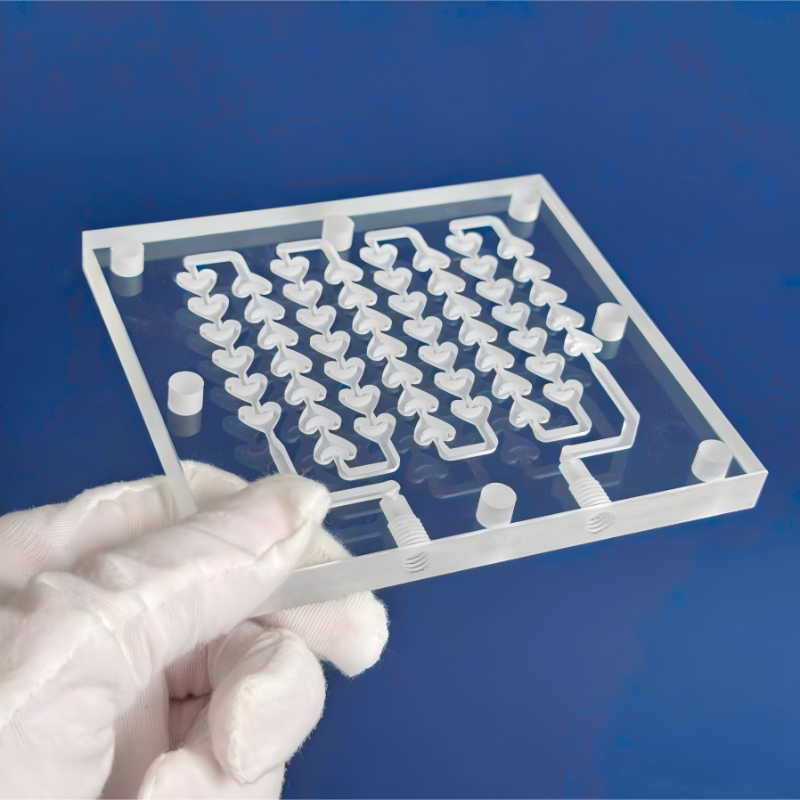
High Thermal Conductance 1750°C Melting Point Heat-Exchange Glass Chips
Circular fused quartz discs engineered for high-flux thermal exchangers and extreme heat-barrier observation. Chemically inert against aggressive condensing vapors.
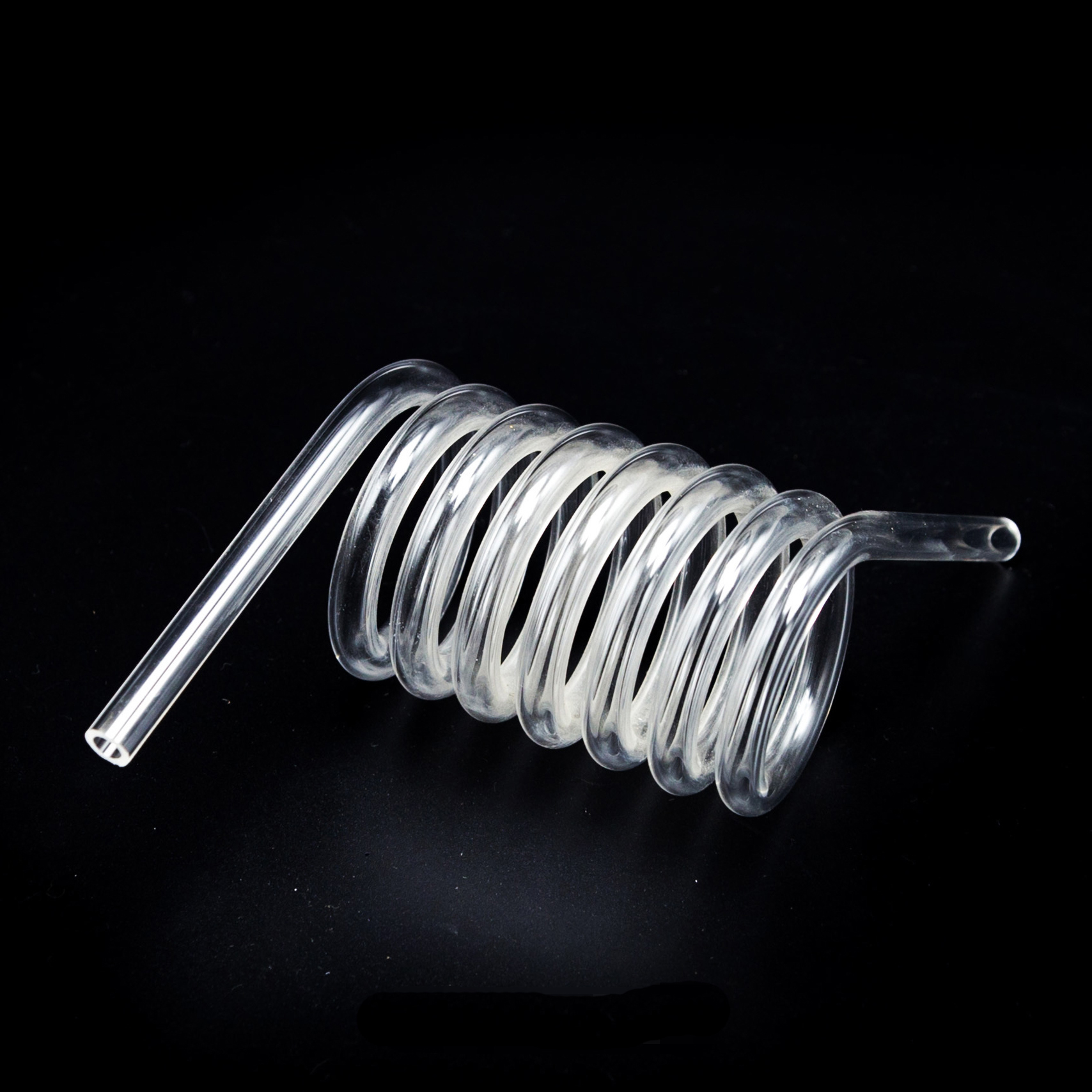
High Purity Polished Clear Quartz Spiral, Bent & C-Shape Visual Tubes
Precision-bent clear fused silica tubes designed for non-invasive fluid inspection, plasma chambers, and custom high-voltage ozone generators with zero optical distortion.
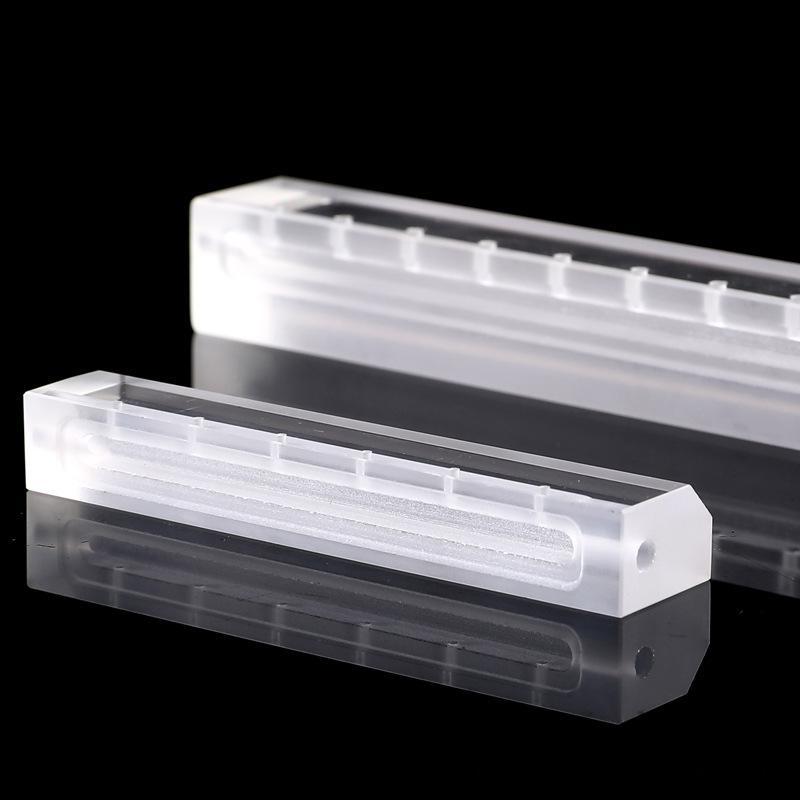
Ultra-Thin Optical Grade Quartz Testing Sheet & Spectrophotometer Windows
Model SJ 077 circular quartz testing sheets with parallelity < 30 arcsec. Provides > 92% deep-UV transmission down to 190nm for laser optics and analytical sensors.
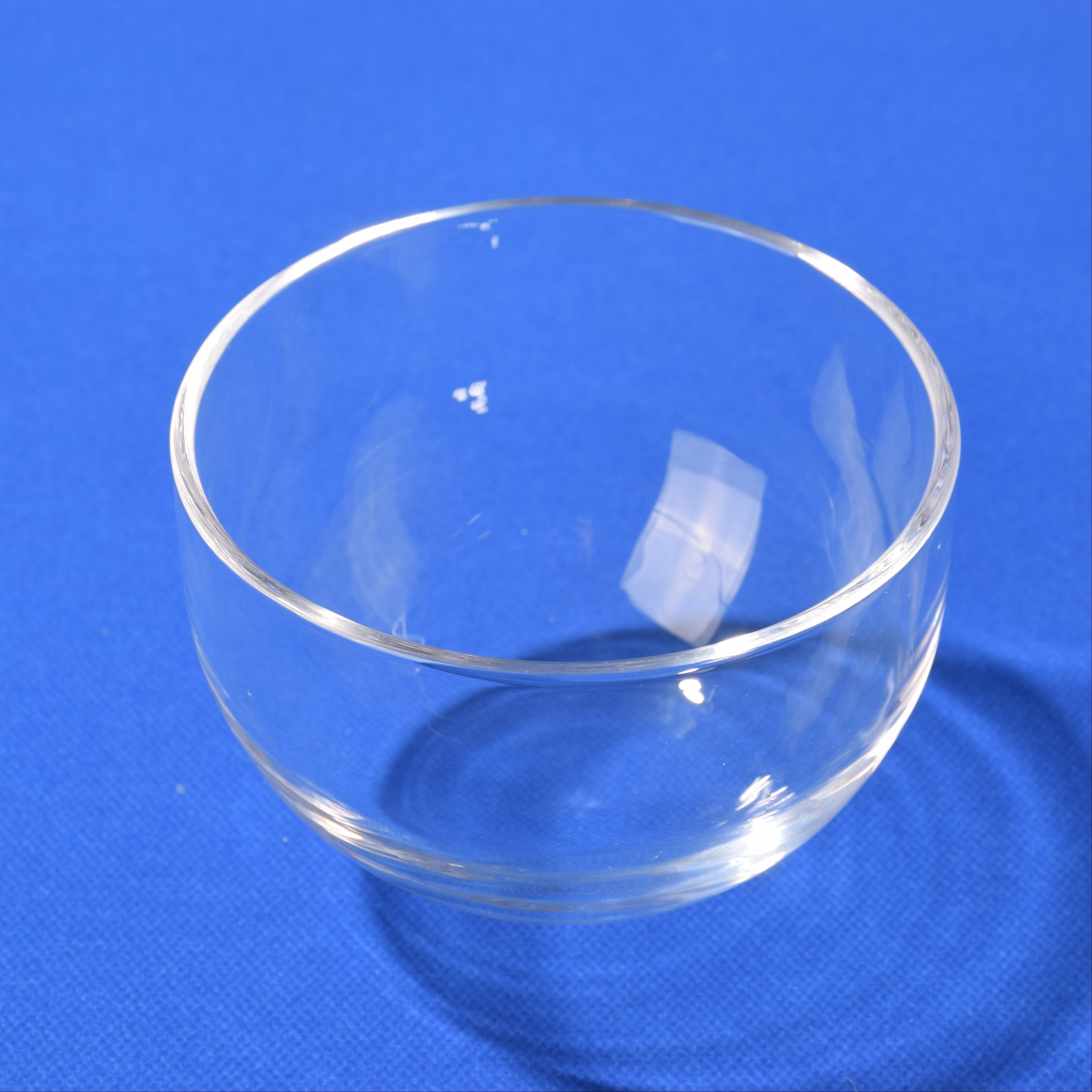
Refractory Fused Quartz Crucible Bowl 1683°C Softening Point
Semiconductor grade clear fused silica crucible bowl offering extreme resistance to thermal shock. Used for metal evaporation observation and high-temperature vacuum sintering.
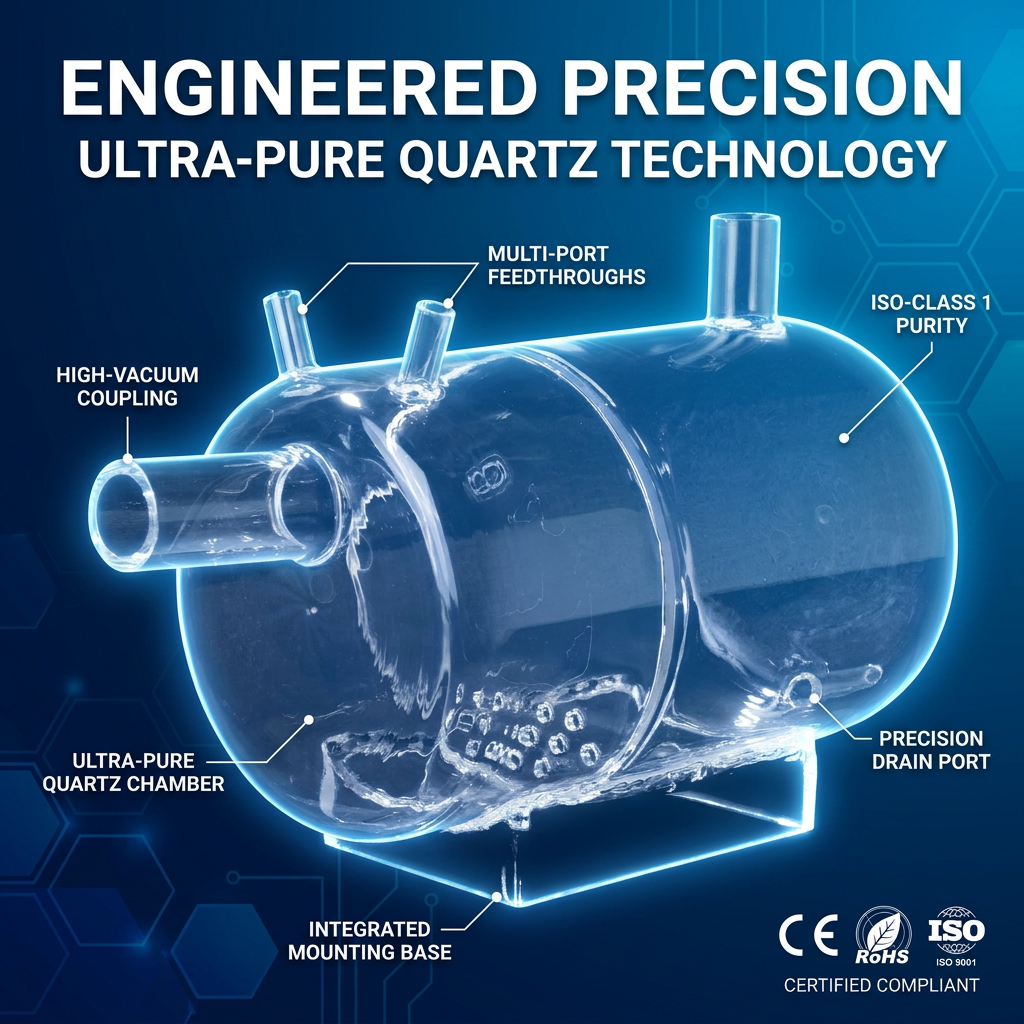
Precision Quartz Separating Chamber & Sight Cell Glassware
Custom multi-port quartz observation vessels and separators designed for ultra-pure chemical synthesis, acid-digestion inspection, and volatile solvent monitoring.
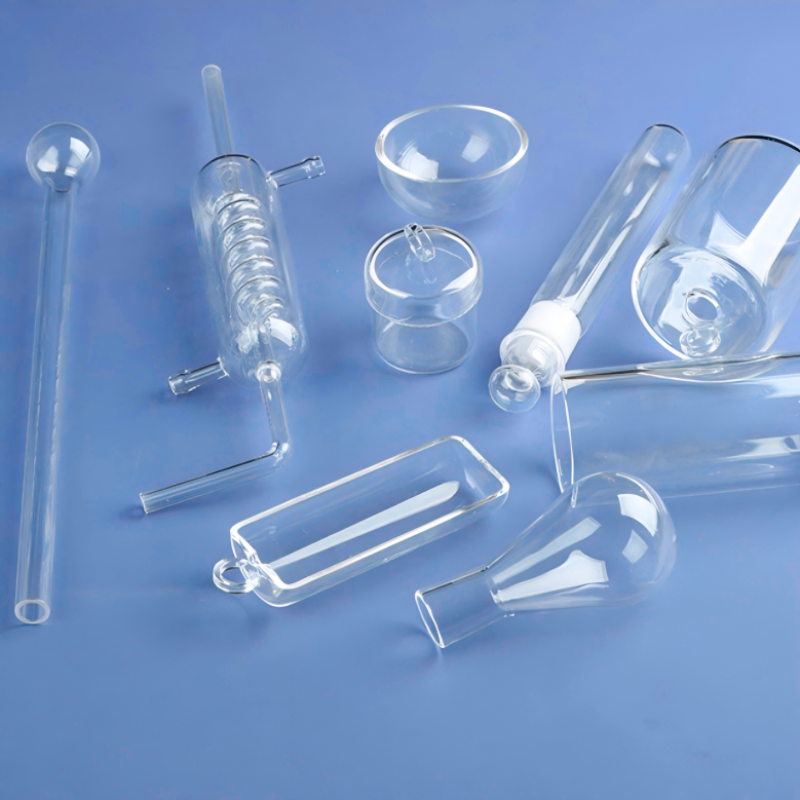
High Temperature Quartz View Tube & Furnace Plugging Assembly
Transparent polished fused silica view tubes with precision-ground flange ends. Ideal for high-frequency induction furnaces, thermal profiling, and optical pyrometer sight lines.
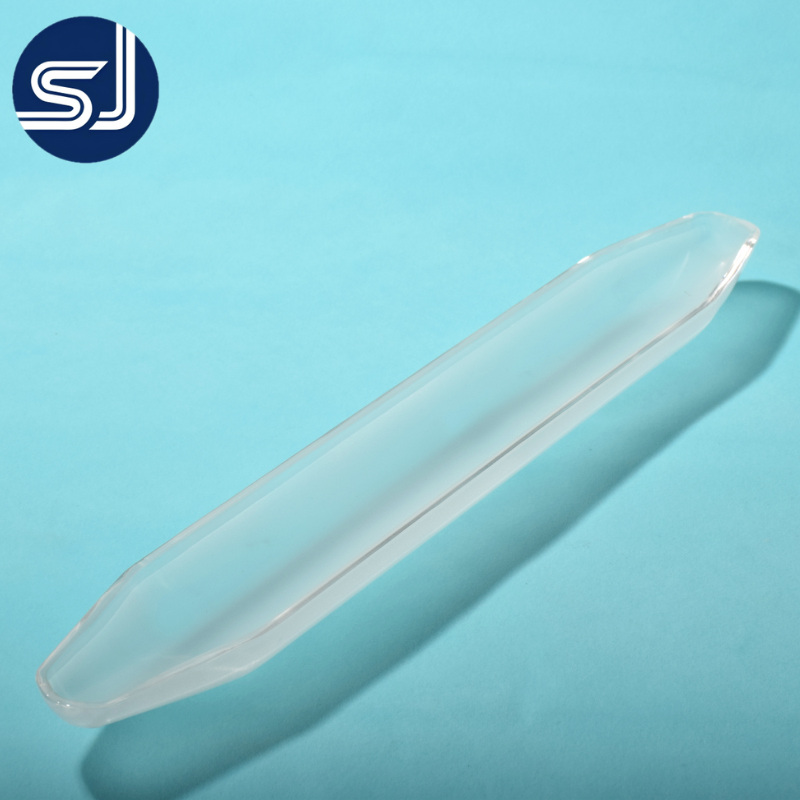
SJ 140 Transparent Polished Quartz Carrier & Optical Boat
High-purity quartz observation carrier for wafer processing and catalyst monitoring inside horizontal tube furnaces. Excellent visual clarity for optical in-situ diagnostics.
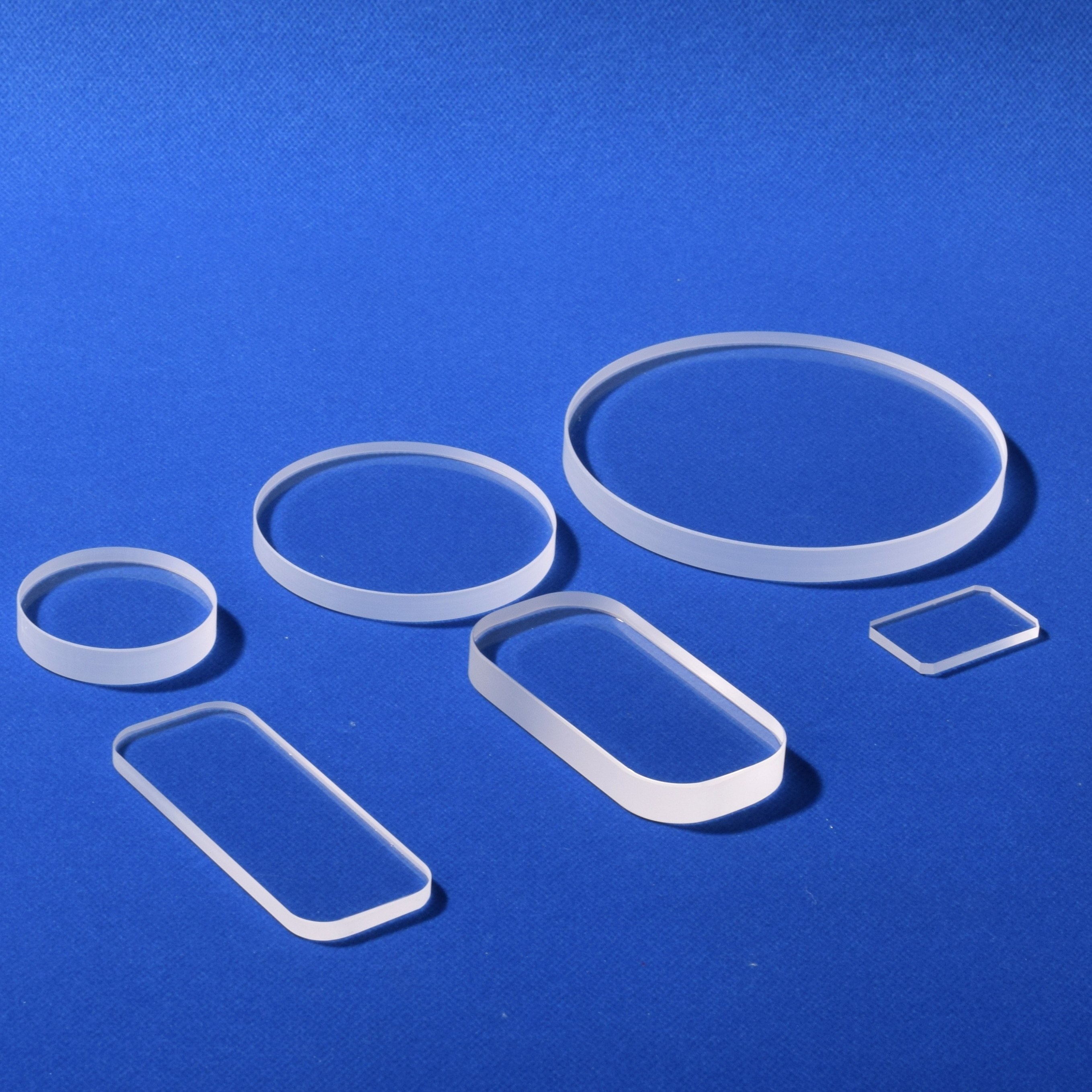
Customized Heat Resistant Quartz Watch Window & High-Pressure Sight Glass
Premium circular and square sight glass observation ports. Custom chamfering, step-drilling, and multi-layer anti-reflective coatings for reactor pressure vessels and vacuum ports.
Engineering Excellence in High-Purity Fused Quartz for Baltic Industry
In modern industrial manufacturing, optical inspection is the first line of defense for process integrity, worker safety, and thermodynamic monitoring. When industrial reactions occur at temperatures exceeding 1000°C or within pressurized vessels carrying corrosive media, standard borosilicate or soda-lime glass windows fail through thermal fracture, solarization, or chemical clouding. Lianyungang Vulra Quartz Products Co., Ltd. is a specialized Chinese manufacturer and exporter providing direct custom engineering of optical-grade fused quartz observation windows to enterprises across the Šiauliai region and greater Lithuania.
Operating from Donghai County—the globally recognized epicenter of high-purity natural silica sand processing—our production facility integrates automated raw-material refinement, vacuum induction fusing, oxy-hydrogen flame hot working, CNC diamond machining, optical double-side polishing, and computerized stress-relief annealing. Serving Šiauliai’s robust industrial ecosystem, including the Šiauliai Free Economic Zone (Šiaulių LEZ), mechanical engineering workshops, laser research facilities, and biomass cogeneration plants, we deliver custom-machined sight glasses, furnace viewports, and optical flange windows compliant with rigorous European standards.
Material Science Benchmarks: Synthetic Silica vs. Fused Natural Quartz
Selecting the optimal quartz substrate for observation ports depends on operational wavelengths, operating pressures, and thermal dynamics. Our Šiauliai engineering clients benefit from our comprehensive inventory of JGS1 (Synthetic Fused Silica), JGS2 (Optical Grade Fused Quartz), and JGS3 (Infrared Grade Fused Quartz). The fundamental mechanical and thermodynamic attributes are benchmarked below:
| Physical / Optical Property | JGS1 (Far UV Grade) | JGS2 (Optical Grade Fused) | JGS3 (Infrared Grade) | Test Standard |
|---|---|---|---|---|
| SiO₂ Chemical Purity | ≥ 99.9999% | ≥ 99.99% | ≥ 99.995% | ICP-MS Chemical Assay |
| Transmission Range | 185 nm – 2500 nm | 220 nm – 2500 nm | 260 nm – 3500 nm | PerkinElmer Lambda 950 |
| Coefficient of Thermal Expansion (CTE) | 5.5 × 10⁻⁷ / °C | 5.5 × 10⁻⁷ / °C | 5.5 × 10⁻⁷ / °C | DIN 51045 (20°C to 300°C) |
| Continuous Maximum Working Temp. | 1100 °C | 1100 °C | 1150 °C | Thermal Soak Testing |
| Short-Peak Service Temperature | 1300 °C | 1450 °C | 1450 °C | Intermittent Vacuum Chamber |
| Hydroxyl (OH⁻) Content | ≤ 1200 ppm | ≤ 150 - 200 ppm | ≤ 5 ppm (Water-Free) | FTIR Spectrometry |
| Surface Parallelism & Flatness | < 10 arcsec | λ/10 | < 30 arcsec | λ/4 | < 1 arcmin | 1λ | Zygo Laser Interferometer |
| Tensile Strength | 48 - 50 N/mm² | 48 N/mm² | 48 N/mm² | Four-Point Bending Test |
For high-intensity ultraviolet irradiation and excimer laser systems operating in Lithuanian photonics labs, JGS1 eliminates bubble entrapment and avoids the color center formation that produces darkening under deep UV. For industrial biomass boilers, glass kiln sight ports, and autoclave sight glasses around the Šiauliai municipality, JGS2 provides an ultra-reliable, cost-effective barrier that handles water quenching from 1100°C to room temperature without structural fracture.
Engineered Quartz Glass Applications Across the Šiauliai Industrial Ecosystem
Šiauliai represents a critical industrial crossroad in northern Lithuania, connecting the Baltic Sea logistics corridor through Klaipėda with Kaunas and Vilnius. The local economic base exhibits specialized demands for high-performance fused quartz observation ports, sight glasses, and custom optical viewports:
Biomass Boilers & District CHP Heating
Regional heat plants (including municipal cogeneration facilities across the Šiauliai district) utilize Vulra quartz viewports to inspect fluidized bed combustion, monitoring flame geometry and fly-ash build-up at continuous temperatures of 950°C–1150°C without risk of thermal blowout.
Šiauliai FEZ Machinery & Laser Fabrication
High-precision sheet metal fabricators and CNC laser machining systems inside the Šiauliai Free Economic Zone rely on our anti-reflective coated fused silica protective windows to shield expensive fiber laser cutting optics from particulate spatter and back-reflection.
Food, Dairy & Brewing Bioprocess Sight Glasses
Dairy processors and breweries throughout Northern Lithuania require clean-in-place (CIP) and steam-in-place (SIP) sanitary sight glasses. Fused quartz windows resist caustic soda (NaOH) washing and repeated autoclave sterilization without the clouding common to standard borosilicate.
Chemical Synthesis & Environmental Testing
Analytical testing laboratories and chemical manufacturers utilize our step-drilled, optical-grade quartz discs for autoclave viewing ports, electrochemical cell windows, and UV photoreactor cells demanding extreme resistance to aggressive acids (except hydrofluoric).
Solar Energy & Semiconductor Crystal Research
Supporting Baltic research initiatives in photovoltaic thin-film deposition and crystal growth, our high-purity quartz observation flanges and crucibles withstand reactive vapor-phase atmospheres and high-frequency induction heating up to 1450°C under vacuum.
Industrial Pyrometry & Thermal Imaging Ports
Vulra water-free JGS3 infrared quartz observation discs allow non-contact IR thermography sensors and pyrometers to accurately measure furnace interior temperatures through sealed vacuum flanges without infrared absorption notches around 2.7 µm.
Emerging Industrial Trends Shaping Quartz Demand in Northern Lithuania
The manufacturing profile of Lithuania is undergoing rapid technological upgrading. Once characterized primarily by light manufacturing and food processing, the region anchored by Šiauliai, Panevėžys, and Klaipėda is now investing aggressively into high-efficiency automation, renewable energy hardware, and laser integration:
1. Expansion of High-Power Fiber Laser Cutting: Lithuanian metal engineering contractors are migrating from older CO₂ cutting systems to high-kilowatt fiber laser heads (12 kW to 30 kW). These cutting heads require fused silica cover slides with minimal bulk absorption (< 3 ppm/cm at 1064 nm) to prevent thermal lensing, focal shift, and beam quality degradation during rapid piercing cycles.
2. Decarbonization and High-Efficiency Biomass Gasification: Under European Union green energy mandates, regional district heating utilities are retrofitting legacy combustion chambers with closed-loop gasification systems. These require high-pressure sight glasses certified under pressure equipment standards (such as EN 12150 and DIN 7080) to safely monitor pressurized synthesis gas generation at high temperatures.
3. Advanced Photonics and Optoelectronic Integration: Lithuania’s world-renowned laser and photonics sector is expanding beyond Vilnius into provincial manufacturing parks. Šiauliai’s engineering firms are partnering with laser systems integrators, demanding custom precision quartz flats, stepped circular observation windows, and metallized hermetic quartz viewing flanges for high-vacuum chambers.
Direct Factory Engineering vs. Trading Middlemen
How Lianyungang Vulra Quartz Products Co., Ltd. protects your project timelines, dimensional tolerances, and procurement budgets.
TÜV Rheinland Audited Facility
Our premises, automated lathe lines, laser measurement bays, and export credit standing are independently certified on-site by TÜV Rheinland, guaranteeing full transparency for European industrial procurement.
Rooted in China's Crystal Capital
Headquartered at No. 9 Dingxin Road, Donghai Economic Development Zone, we sit at the source of high-purity natural silica sand, securing premier ingot consistency and unmatched material pricing for our clients.
Drawing-Based 1-Piece Prototyping
We eliminate arbitrary MOQ barriers. Whether you need a single prototype viewport with stepped diameters and laser engraving or recurring monthly shipments of 5,000 sight discs, our CNC line delivers.
Full Cold & Hot Processing
Under one roof: automated cutting, CNC ultrasonic drilling, beveling, flame sealing, double-sided optical polishing (Ra < 0.5 nm), and electric annealing furnaces that completely eliminate internal shear stress.
Export-Engineered Anti-Shock Crating
Optical components are cleaned in Class 10,000 cleanrooms, vacuum-sealed in anti-static PE bags, suspended in high-density customized EPE foam inserts, and shipped in multi-ply timber crates built for Baltic transit.
CE & RoHS Conformity Assured
Every shipment to the European Union includes material purity certificates, dimensional inspection protocols, transmittance curves, and compliance documentation supporting your Pressure Equipment Directive (PED) files.
Frequently Asked Questions: Sourcing Quartz Observation Windows in Šiauliai
Technical clarity is paramount for procurement officers and plant engineers. Here are factual answers regarding material properties, logistics to Lithuania, and custom manufacturing parameters:
What are the maximum operating pressures and safety factors for your circular quartz sight glasses?
Pressure tolerance in quartz viewports is governed by the ratio of unsupported diameter to glass thickness, following DIN 7080 calculations. Quartz glass features a bending strength of ≈ 67 MPa and a tensile strength of ≈ 48 N/mm². When designing sight glasses for autoclaves or steam lines in Šiauliai facilities, we apply an engineering safety factor of at least 5× (or up to 8× for critical chemical systems). For instance, a 100 mm diameter observation disc with 15 mm thickness can comfortably operate under 10 to 16 bar depending on gasket type and operating temperature. We provide calculated pressure ratings based on your exact chamber dimensions.
Can your quartz observation windows be drilled, stepped, or manufactured with o-ring grooves?
Yes. Our CNC cold machining workshop utilizes multi-axis diamond machining centers to produce complex stepped observation windows, counterbored mounting holes, annular sealing grooves, and edge chamfers. After diamond grinding, all machined edges undergo precision chemical acid polishing or flame polishing to eliminate micro-fractures, preventing stress concentration that could lead to crack propagation under high thermal load. Send your 2D PDF or 3D STEP drawings for direct engineering review.
How does fused quartz handle thermal shock compared to standard borosilicate sight glass?
Standard borosilicate glass 3.3 has a coefficient of thermal expansion (CTE) of approximately 3.3 × 10⁻⁶ / °C and can typically withstand a maximum thermal shock of 150°C to 180°C. In stark contrast, high-purity fused quartz has an ultra-low CTE of 5.5 × 10⁻⁷ / °C—nearly six times lower than borosilicate. A Vulra quartz window can be heated to 1100°C and immediately quenched into ice water (20°C) without cracking. This property is crucial for Šiauliai biomass boilers and high-temperature kilns where cold air ingress or water spray could cause catastrophic shattering of ordinary glass.
What are the shipping options, customs procedures, and transit times to Šiauliai, Lithuania?
For urgent engineering prototypes and replacement sight glasses (1 to 50 pcs), we ship via priority air express (DHL / FedEx / UPS) arriving at Vilnius International Airport (VNO) or Kaunas Airport (KUN) with bonded customs clearance and direct courier dispatch to your door in Šiauliai within 4 to 7 business days. For bulk production orders, shipments proceed via air freight or LCL sea freight directly to the Port of Klaipėda, followed by road transfer via the A1/A9 highways (typically 28 to 35 days total transit). We provide all documentation under TARIC Code 7002.39.00 / 7006.00.90, including commercial invoices, packing lists, CE declarations, and Certificates of Origin.
How do you guarantee that optical windows arrive without surface scratches or transit breakage?
Optical surfaces are vulnerable to dust abrasion and micro-chipping during long-distance multimodal transport. Every window produced for export is subjected to ultrasonic deionized water cleaning, dried, and coated with removable protective polymer films or lens paper. Each unit is sealed inside individual anti-static pouches and nested into shock-absorbing custom cut-out EPE foam trays. The external container is a reinforced, fumigated plywood case with internal dampening barriers and exterior shock indicator labels (Drop-N-Tell / TiltWatch), ensuring zero transit damage.
Request a Technical Evaluation & Factory Quote
Need a custom dimension, high-temperature quartz viewport, or pressure-rated sight glass for your Šiauliai facility? Speak directly with our optical engineers today for material selection, thermal modeling, and rapid quotation.