Featured Quartz Components Serving Singapore Industry
Direct OEM/ODM manufacturing solutions from Donghai to Singapore. Each component is custom-machined, optically annealed, and acid-etched to meet strict SEMI F21 and ISO 14644 cleanroom standards.
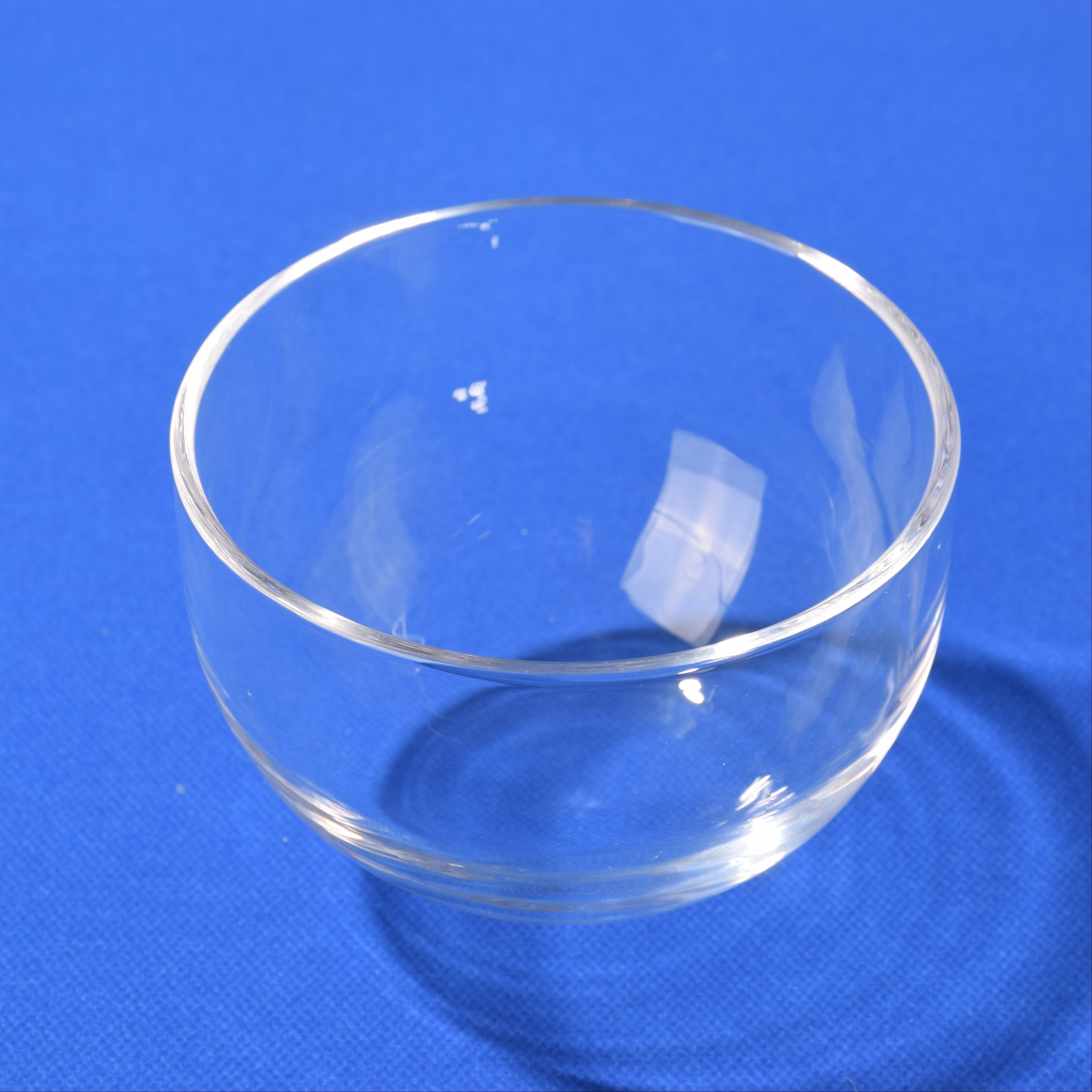
Clear Refractory Fused Quartz Crucible Bowl
SJ Brand fused quartz bowl with 48 N/mm² tension strength and a 1683°C softening point. Ideal for silicon ingot melting and high-temperature thermal calcination.
View Specifications →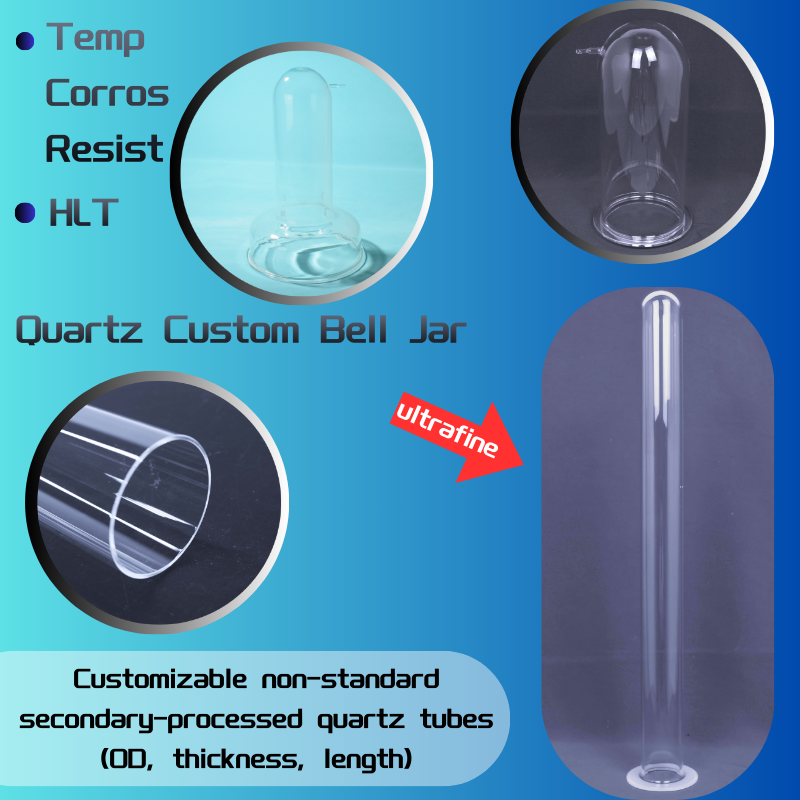
SJ 130 QUARTZ Clear Vacuum Tube
High-precision negative pressure leak-proof quartz vacuum process tube with 99.99% SiO₂ purity, precision dimensional stability, and zero outgassing.
View Specifications →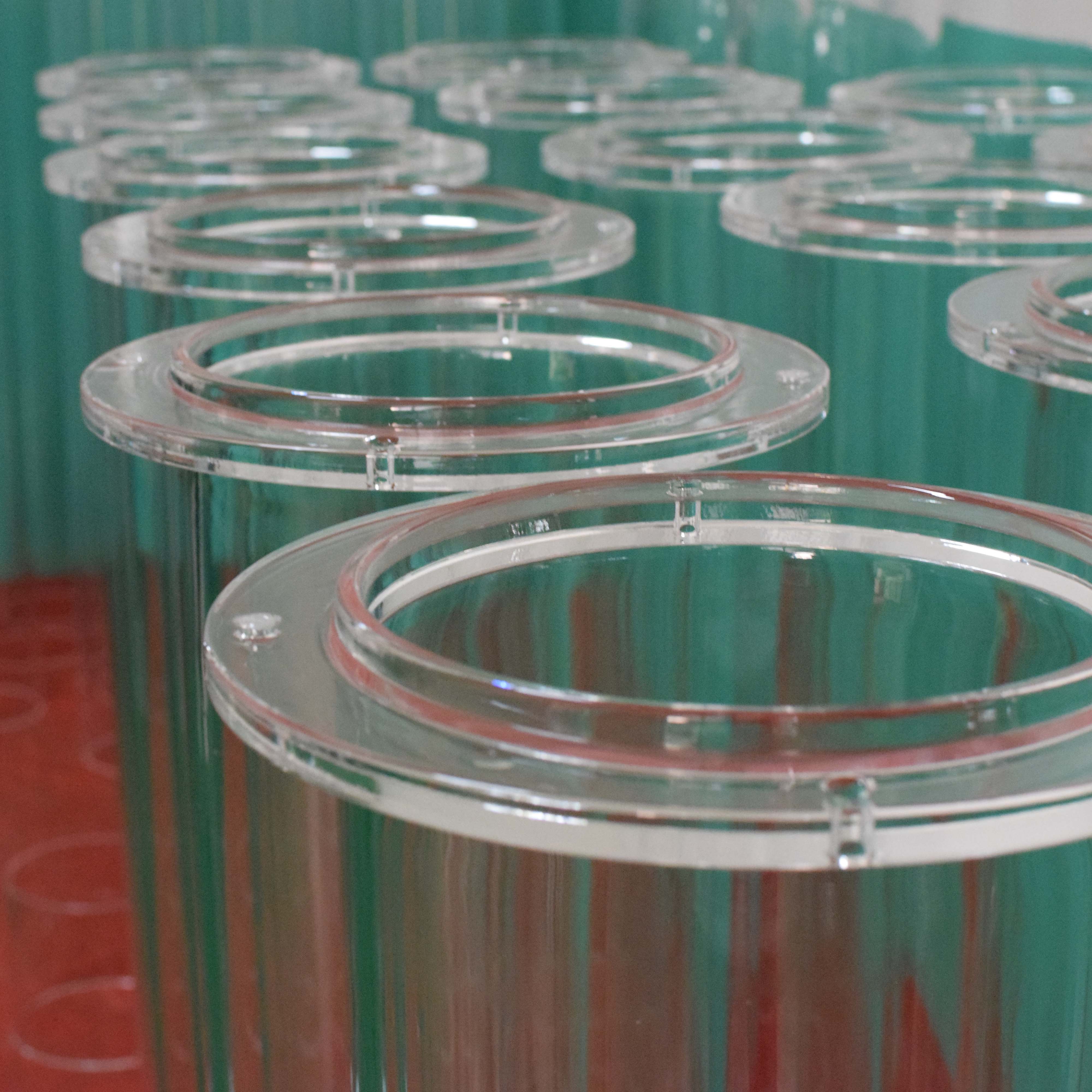
99.999% Fused Quartz Flange & Tube
Ultra-pure single-crystal synthetic quartz with custom CNC ground flanges, fire-polished re-feeder bodies, precision bending, and ozone-free properties.
View Specifications →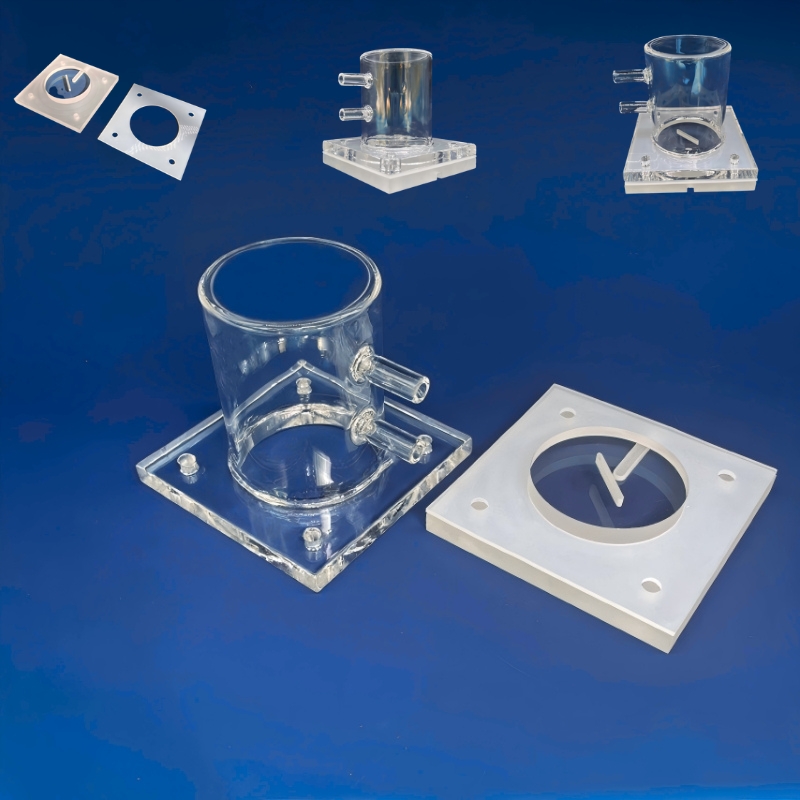
Quartz Photocatalytic Reactor Cell
Deep-UV photodegradation reactor engineered for H₂ and O₂ water-splitting catalysts. Exceptional 185nm–254nm spectral transmission with reinforced joints.
View Specifications →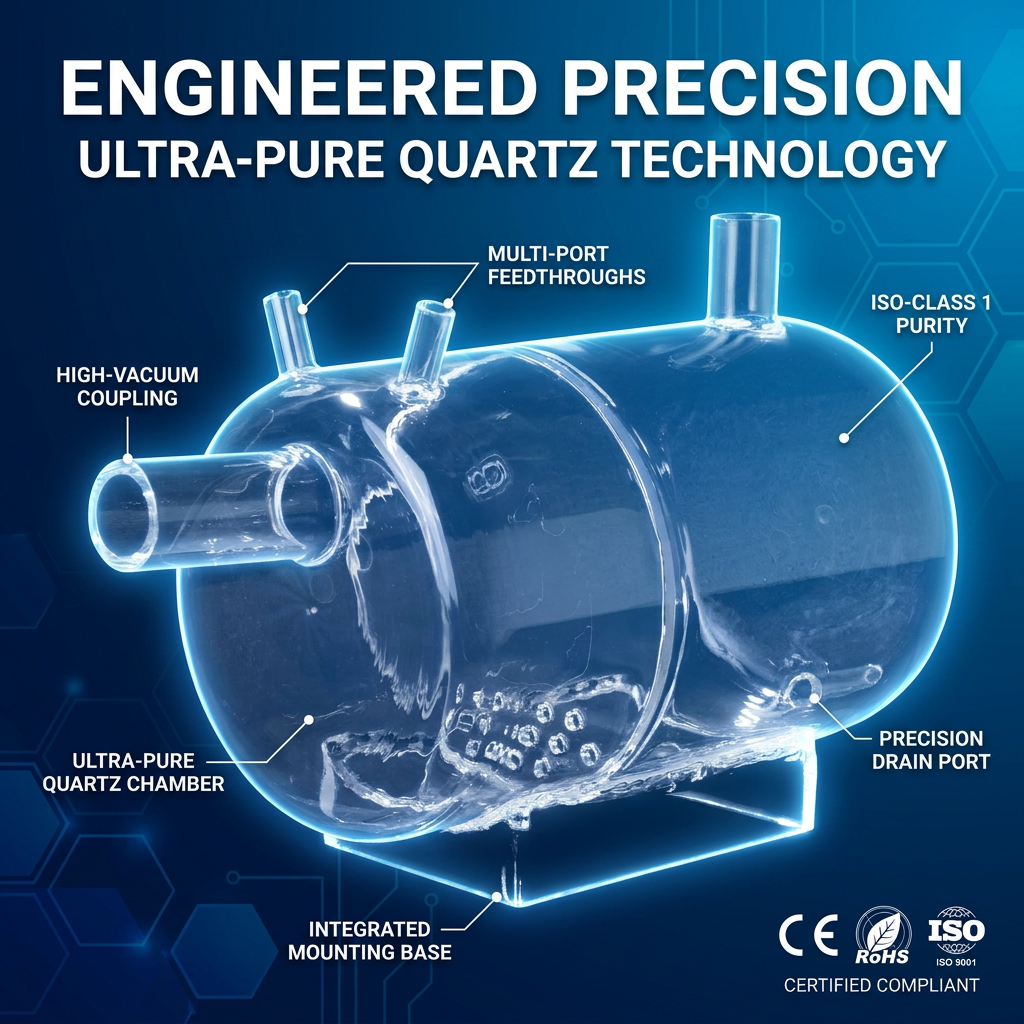
Precision Quartz Separating Container
Semiconductor-grade 99.9%–99.999% purity chemical container. Highly resistant to hot concentrated acids, aqua regia, and ultra-trace wet etching chemistry.
View Specifications →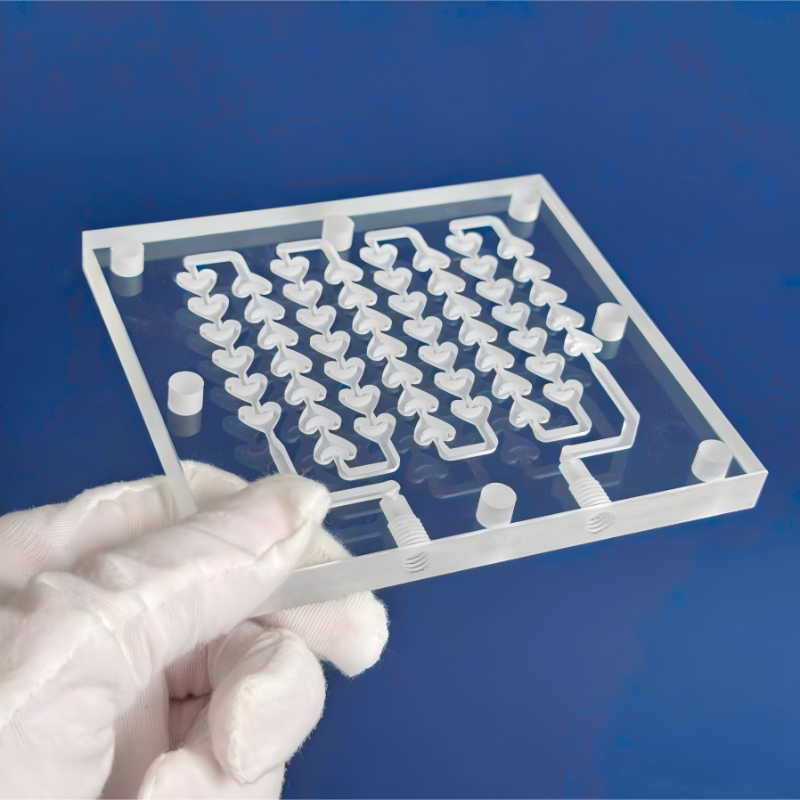
High Thermal Conductance Quartz Chips
1750°C melting point heat-exchange interlayer circular glass chips. Engineered with optimized phonon conduction paths for high-temp reactor beds.
View Specifications →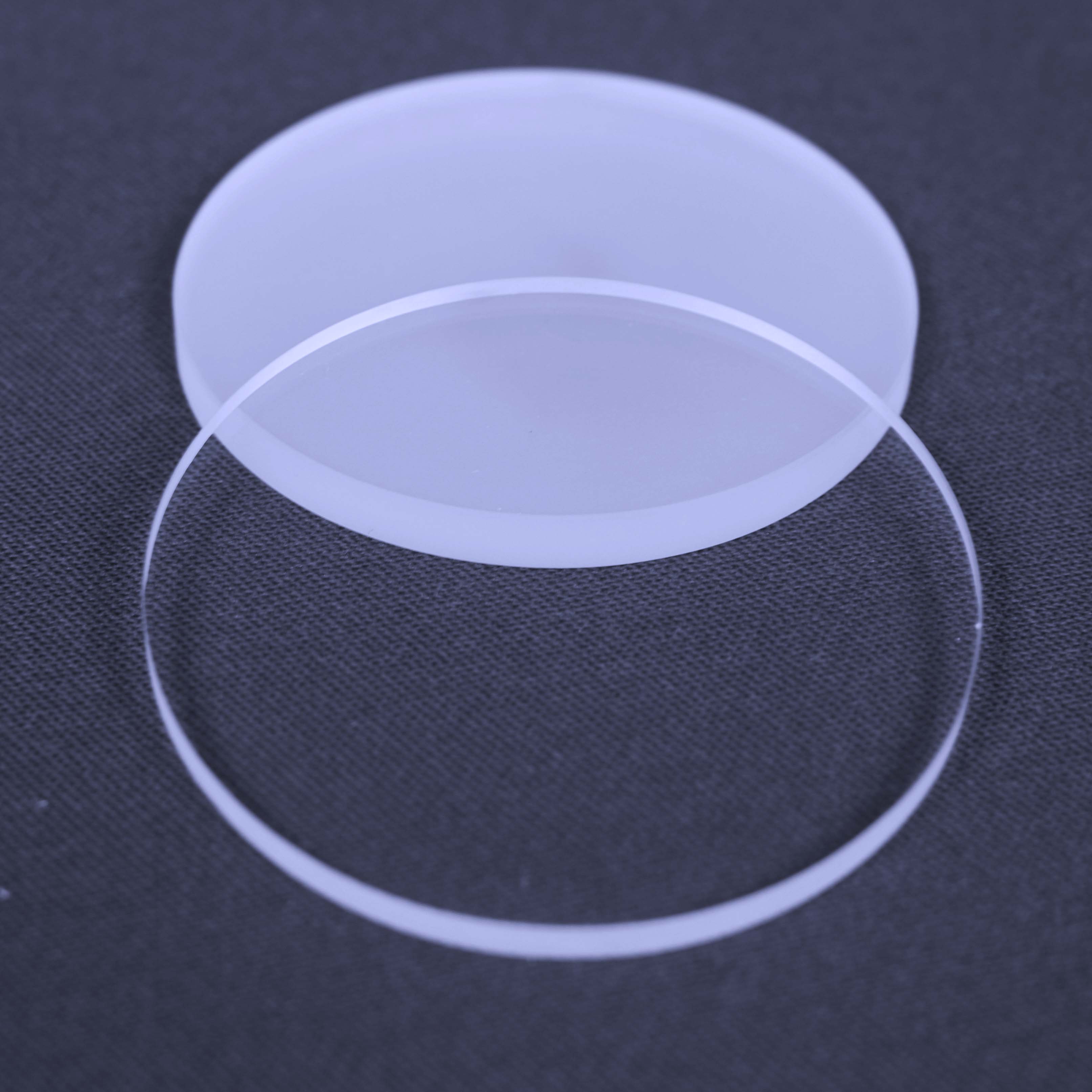
High-Transmittance XRD Quartz Holder
Zero-background X-ray diffraction sample holder. Optical-grade cut, ground, and double-side polished with absolute minimum planar deviation for crystallography.
View Specifications →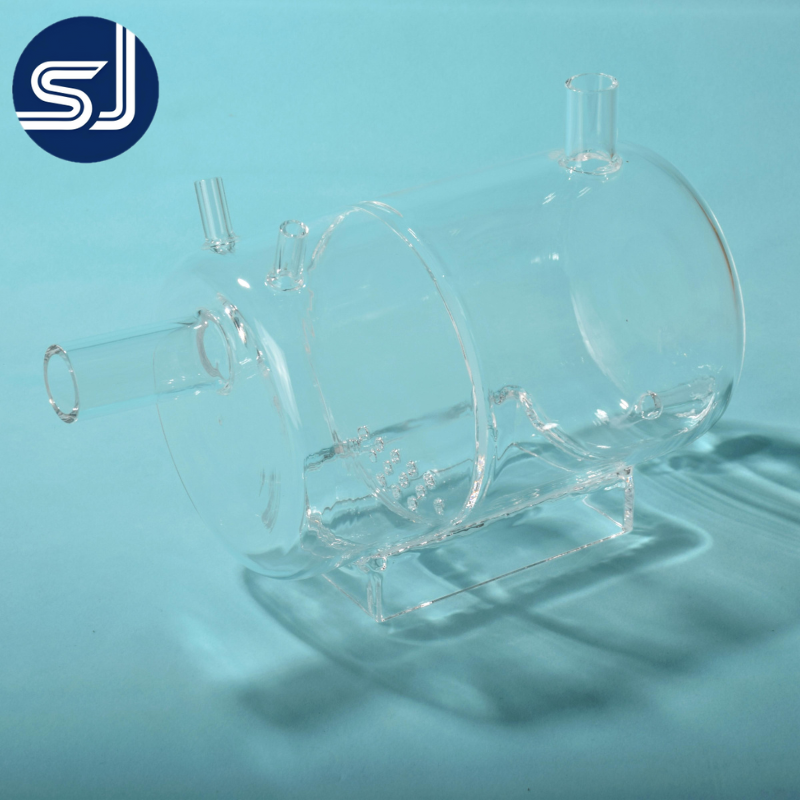
Quartz Laboratory Flow Splitting Bottle
SJ Brand corrosion-resistant 99.99% SiO₂ manifold vessel with >85% direct optical transparency, rated for 1100°C continuous service in analytical labs.
View Specifications →Precision Quartz Glass Blocks: Material Physics & Ingot Synthesis
An authoritative technical analysis of synthetic vs. natural fused quartz blocks for high-precision thermal, structural, and optical tooling within Southeast Asia’s primary semiconductor corridors.
Crystalline Sand to Amorphous Silica
The manufacturing of industrial quartz glass blocks starts with raw quartz crystal pegmatites processed in Donghai County. Electric arc and oxy-hydrogen fusion at temperatures exceeding 2000°C eliminate grain boundaries, yielding non-crystalline amorphous silicon dioxide (a-SiO₂).
- Elimination of micro-voids and granular inclusions
- Extreme structural homogeneity across X, Y, and Z axes
- Sub-ppb alkali metal contaminants (Na, K, Li < 0.1 ppm)
- Minimization of phase transitions into cristobalite
Thermal & Mechanical Resilience
Fused silica blocks possess an extraordinarily low coefficient of thermal expansion (CTE of 5.5 × 10⁻⁷ /°C from 20°C to 320°C). This imparts near-infinite resistance to catastrophic thermal shock during rapid wafer processing and high-temperature thermal cycling.
- Continuous operating endurance at 1100°C; peaks to 1450°C
- Tensile yield threshold reaching 48 N/mm²
- Strain point at 1075°C; Annealing threshold at 1180°C
- Zero structural distortion under acute temperature spikes
Optical Transmission & Homogeneity
For lithography stages, laser reference blocks, and beam splitters, optical homogeneity is maintained through controlled vacuum thermal annealing, eliminating residual internal stress birefringence ($\Delta n ≤ 5\times 10^{-6}$).
- High deep-UV transmission (>90% at 248nm and 193nm)
- Minimal optical absorption bands at the 2.73 μm OH⁻ line
- Class 0 / Class 1 bubble categorization according to DIN 58927
- Interferometer verified planar wavefront distortion (≤ λ/10)
Comprehensive Physical, Chemical & Thermal Properties Matrix
| Physical / Operational Parameter | Semiconductor Fused Quartz | Synthetic Fused Silica Block | Optical Tooling Grade | Compliance & Test Standard |
|---|---|---|---|---|
| Chemical Purity (SiO₂ Content) | ≥ 99.995% | ≥ 99.9999% (Electronic Grade) | ≥ 99.99% | GDMS / ICP-OES Certified |
| Hydroxyl Radical Content ([OH⁻]) | < 30 ppm (Standard Flame) | < 1 ppm (Dry) to 1200 ppm (UV) | < 15 ppm (Low Water Grade) | FTIR Spectroscopy (2.73 μm) |
| Coefficient of Thermal Expansion (CTE) | 5.5 × 10⁻⁷ / K (20–320°C) | 5.2 × 10⁻⁷ / K (20–320°C) | 5.5 × 10⁻⁷ / K | ASTM E228 Dilatometry |
| Thermal Softening Point | 1683 °C | 1600–1650 °C | 1670 °C | ASTM C338 Standard |
| Maximum Continuous Service Temp | 1100 °C | 1050 °C | 1100 °C | Continuous Load Testing |
| Index of Refraction ($n_d$ at 587.6 nm) | 1.4585 | 1.4584 ± 0.0001 | 1.4586 | Abbe Refractometry |
| Birefringence (Residual Stress) | ≤ 10 nm/cm | ≤ 2–5 nm/cm | ≤ 4 nm/cm | Sénarmont Polarimetry |
| Mohs Hardness / Knoop Value | Mohs 7.0 / 460 kg/mm² | Mohs 7.0 / 450 kg/mm² | Mohs 7.0 / 460 kg/mm² | ASTM E384 Microhardness |
Precision Quartz Blocks in Singapore’s Key Manufacturing Nodes
Supplying critical components to high-density wafer fabrication parks, biomedical research parks, and advanced optoelectronics facilities across the Lion City.
Semiconductor Diffusion & Wet Cleaning
Singapore’s mega-fabs (such as those in Woodlands, Pasir Ris, and Tampines) handle sub-28nm planar and FinFET architectures alongside advanced 3D NAND flash manufacturing. Fused quartz blocks serve as heavy-duty thermal baffle bases, quartz tank blocks for hot phosphoric acid etching, and structural pedestals in vertical LPCVD furnaces.
- No particulate shedding during chemical etching
- Extreme resistance to hot H₃PO₄ and dilute HF baths
- Zero outgassing within 10⁻⁸ Torr vacuum environments
Advanced Photolithography & Optical Stages
High-numerical-aperture DUV exposure tools and wafer steppers require dimensionally static optical reference blocks. Precision CNC-milled fused silica blocks exported to Singapore machinery builders act as mirror substrates, alignment prisms, and laser interferometer optical delay lines where low CTE is mandatory.
- High geometric stability across shifting fab temperatures
- Sub-angstrom surface roughness ($Ra < 0.5$ nm) polishing
- Interferometer fiducials and alignment prisms
Continuous Flow Biopharma & Analytical Glassware
Tuas Biomedical Park houses global biopharmaceutical synthesis operations. High-purity quartz blocks are bored and micro-machined to form monolithic continuous-flow reactors, chromatography detection cells, and spectrophotometer absorption blocks, remaining inert to harsh solvent flushes.
- Elimination of heavy metal ion leaching
- Autoclave resistant at elevated steam pressures
- Direct UV absorbance monitoring at 214nm–280nm
Quantum Computing & Green Energy
Researchers at the Institute of Materials Research and Engineering (IMRE), Institute of Microelectronics (IME), and university laboratories rely on custom quartz vacuum blocks for SiC/GaN epitaxial development, zero-background XRD sample holders, and photocatalytic hydrogen water-splitting reactors.
- Transparent envelope for solar simulator beams
- Non-magnetic, high RF dielectric insulation
- Rapid turnaround for custom prototype drawings
Need Custom Quartz Machining for a Singapore Facility?
From monolithic 500mm ingots to micro-drilled optical inspection blocks, our engineering team directly analyzes CAD/STEP files with complete cleanroom protocol verification.
Singapore Semiconductor & Advanced Photonics Trends
How Singapore’s National Semiconductor Strategy, the Singapore Green Plan 2030, and high-frequency compound power semiconductors are reshaping quartz glass block specifications.
Compound Semiconductor Transition (SiC & GaN)
As Singapore rapidly expands its power electronics footprint to serve regional electric vehicle (EV) supply chains, manufacturing processes require higher thermal envelopes. Gallium Nitride (GaN) and Silicon Carbide (SiC) epitaxy operate well above 1200°C. Standard borosilicate glasses fail instantaneously; only ultra-pure, high-viscosity fused quartz blocks can maintain mechanical integrity without wafer-contaminating trace boron diffusion.
Silicon Photonics & Co-Packaged Optics (CPO)
Driven by AI data centers and subsea telecommunications landing in Singapore, the shift toward optical transceivers and Silicon Photonics packaging demands quartz spacer blocks and optical micro-benches with near-zero thermal drift. Monolithic fused silica blocks offer the exact refractive index stability and mechanical flatness necessary to mount arrayed waveguide gratings and hybrid laser dies without micro-misalignment.
Singapore Green Plan 2030 Cleanroom Standards
Stringent corporate environmental targets mandated by the National Environment Agency (NEA) and Singapore Economic Development Board (EDB) require reduced fab power consumption. Advanced fused quartz heat-exchange chips and transparent furnace liners optimize thermal insulation, reducing the energy loss of continuous vertical diffusion furnaces while delivering prolonged furnace part longevity.
Why Global Tier-1 Buyers Partner with Vulra Quartz
Operating from China’s crystal capital in Donghai, Lianyungang Vulra Quartz Products Co., Ltd. combines sovereign natural quartz raw material security with TÜV Rheinland-certified manufacturing discipline.
Donghai Raw Sand Security
Directly located at No. 9 Dingxin Road in the Jiangsu Donghai Economic Development Zone. Direct integration with ultra-pure crystal sand processing guarantees steady supply chains, low raw-material trace impurities, and insulated price stability for our Singapore partners.
TÜV Rheinland Verified Facility
Independently audited on-site by TÜV Rheinland. Our fully documented ISO quality management systems ensure complete batch traceability from silica feedstock selection to dimensional coordinate measuring machine (CMM) inspection reports.
Hot Fusion & 5-Axis CNC
Integrated hot-working glass lathes and oxy-hydrogen fire stations paired with precision CNC diamond cold-machining, ultrasonic drilling, laser slicing, optical surface polishing, and annealing kilns for total stress relief under one roof.
Cleanroom Grade Export Packing
Parts undergo multistage cleanroom ultrasonic ultra-pure DI-water washing and acid leaching, followed by sealed double-layer vacuum antistatic packaging and reinforced export-ready wooden crating for safe, shock-proof air and sea transit.
Frequently Asked Questions for Singapore Buyers
Actionable answers addressing customs clearance, import tax under CSFTA, lead times to Jurong Port and Changi Cargo Complex, cleanroom unpack protocols, and technical tolerances.
? What customs documentation is required for importing quartz blocks into Singapore?
Under the China-Singapore Free Trade Agreement (CSFTA), quartz products classified under HS Code 7002 (tubes/rods/blocks) or 7017 (laboratory/industrial glassware) qualify for zero or preferential tariff treatments when accompanied by an authorized Certificate of Origin (Form E). We provide commercial invoices, packing lists with net/gross weights, and Certificate of Conformity (CoC) documents mapped to Singapore Customs TradeNet system requirements. Consignees simply manage the prevailing Singapore Goods and Services Tax (GST).
? How do you protect fragile quartz blocks against humidity and vibration during transit to Singapore?
Singapore's tropical maritime climate presents sustained high humidity (>80% RH). We employ a multi-barrier packaging system: each component is cleanroom washed, wrapped in lint-free protective film, vacuum-sealed in heavy-gauge polyethylene with active silica-gel desiccants, surrounded by custom-molded high-density polyethylene (EPE) shock absorption foam, and enclosed in ISPM 15 heat-treated plywood crates engineered to handle cargo movements via air (Changi) or sea (PSA Keppel/Tuas).
? Can you manufacture monolithic quartz blocks according to custom CAD/STEP drawings?
Yes. We specialize in custom OEM/ODM production starting from a Minimum Order Quantity (MOQ) of just 1 piece. Our engineering team routinely reviews 2D PDF prints and 3D models (STEP, IGES, DXF) from semiconductor tool builders and research institutes. We offer geometric machining tolerances down to ±0.02 mm, internal hole drilling, step grooving, double-side optical lapping, and fine grinding with specified chamfers and bevels.
? What is the standard delivery timeline for urgent quartz tooling into Singapore?
For rapid prototyping and critical fab repairs, simple machining jobs can ship within 5 to 7 business days. Complex monolithic blocks requiring high-temperature thermal annealing, fine optical polishing, and cleanroom acid leaching typically require 2 to 3 weeks. We partner with express couriers (DHL, FedEx, UPS) delivering directly to Singapore cleanroom receiving bays in 2–4 transit days, as well as scheduled consolidated air freight via Changi Airfreight Centre for heavy consignments.
? How do you verify internal stress and bubble quality in quartz blocks?
Every optical or structural block passes through a Sénarmont polariscope polarimeter to measure residual thermal birefringence, guaranteeing internal stress levels below 5 to 10 nm/cm to prevent spontaneous cracking under vacuum or thermal shock. Bubble class verification complies with DIN ISO 12123 / DIN 58927 standards, utilizing laser scattering and dark-field optical microscopy to certify bubble-free optical cross-sections for critical inspection windows.
? What is the difference between synthetic fused silica and natural fused quartz blocks?
Natural fused quartz is synthesized by electric or flame melting of high-purity natural silica sand (99.99%+ SiO₂), offering superior high-temperature mechanical viscosity, higher softening resistance (1683°C), and cost efficiency for furnace parts and diffusion boats. Synthetic fused silica is created from chemical precursors (SiCl₄), yielding zero crystalline inclusions, sub-ppb trace metals, and exceptional deep-UV transmission (>90% at 193nm), making it the chosen material for deep sub-micron photolithography and laser optics.