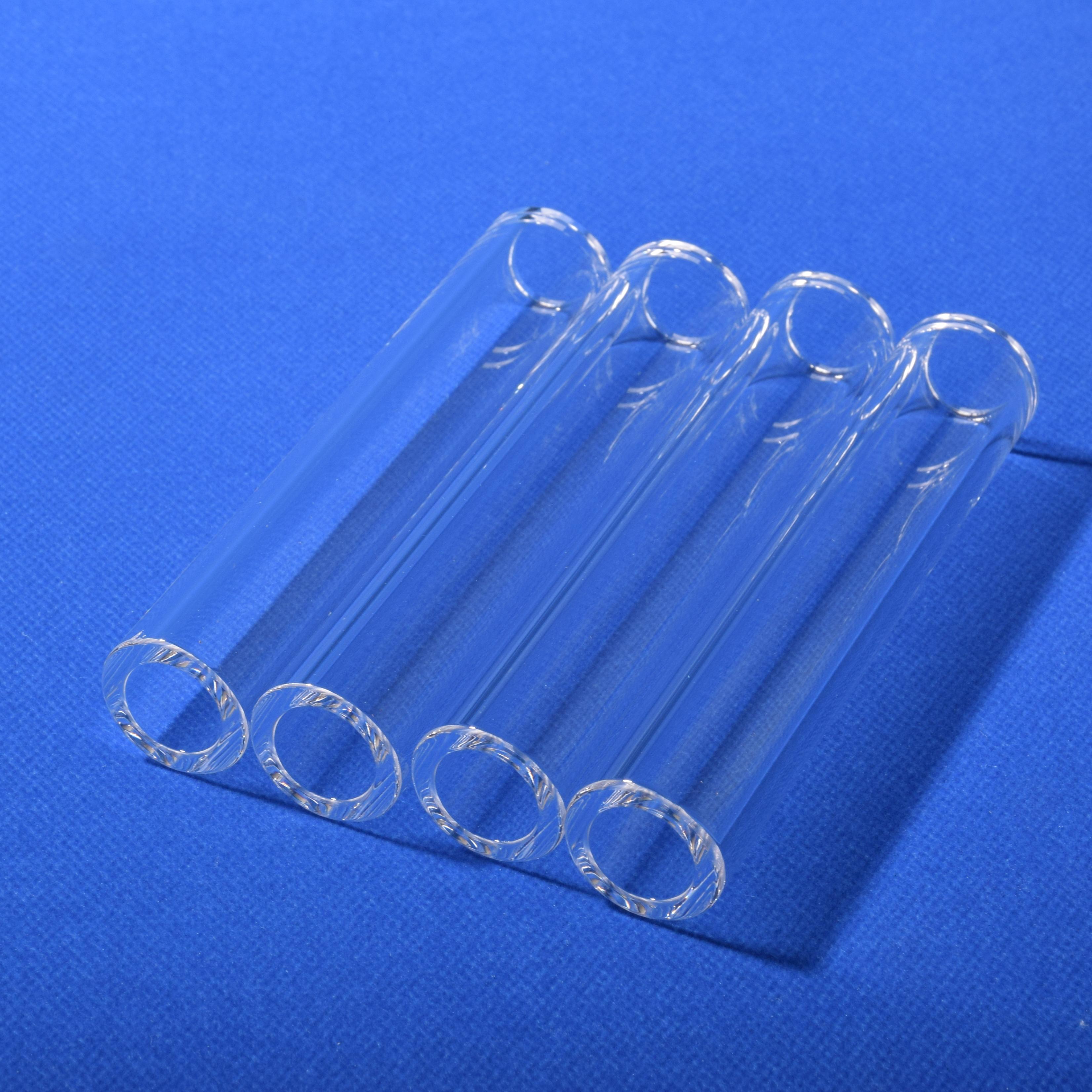
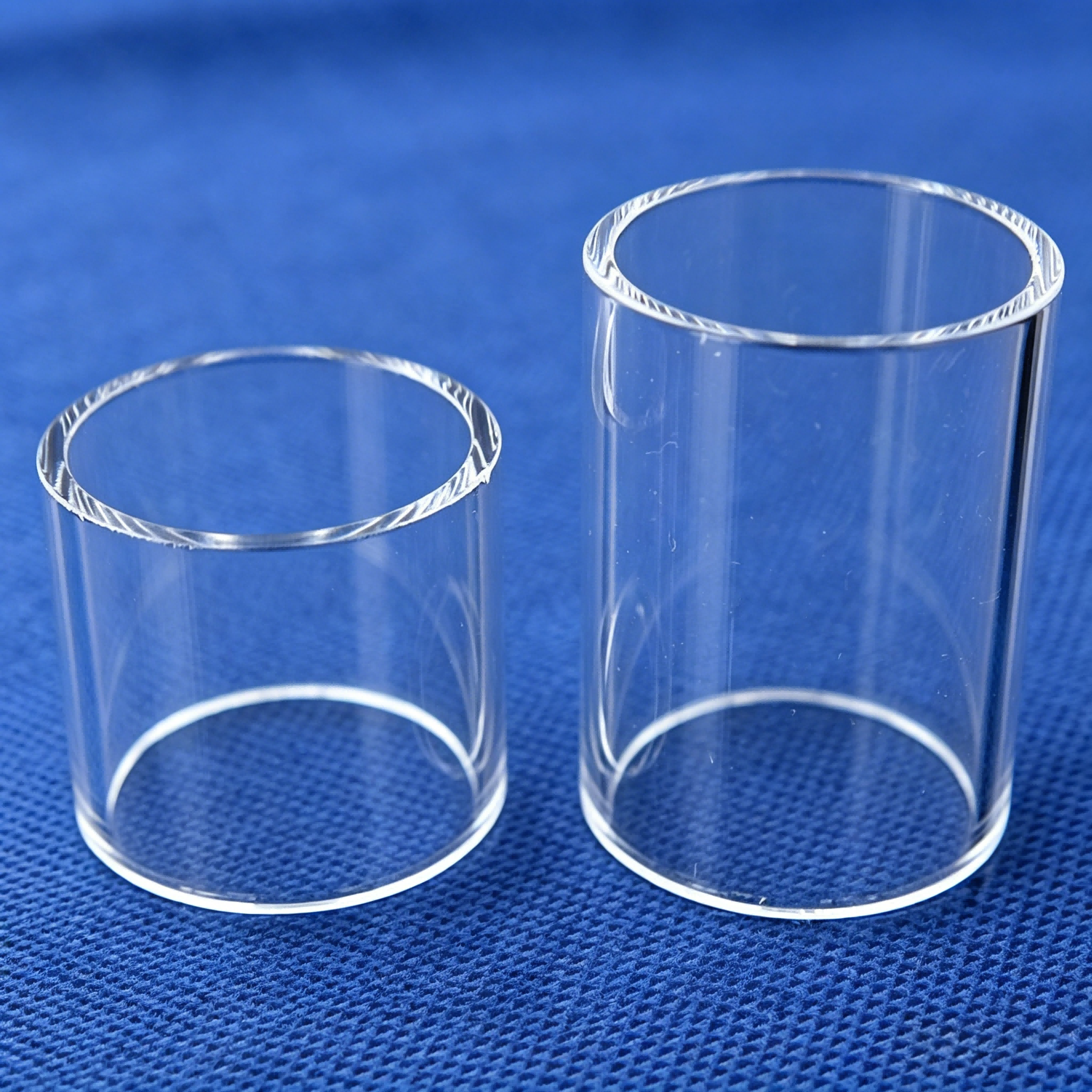
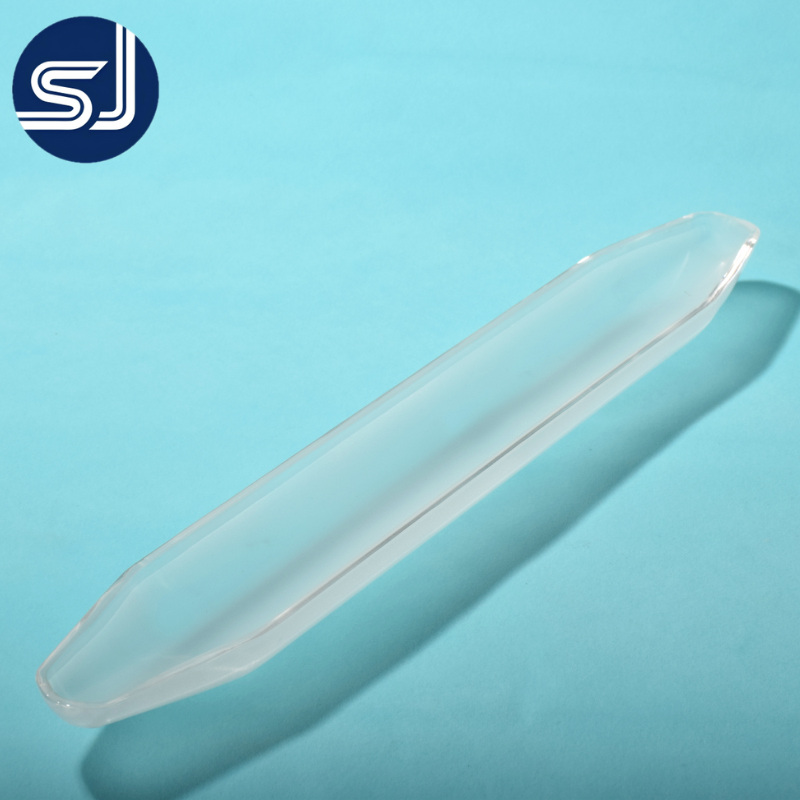
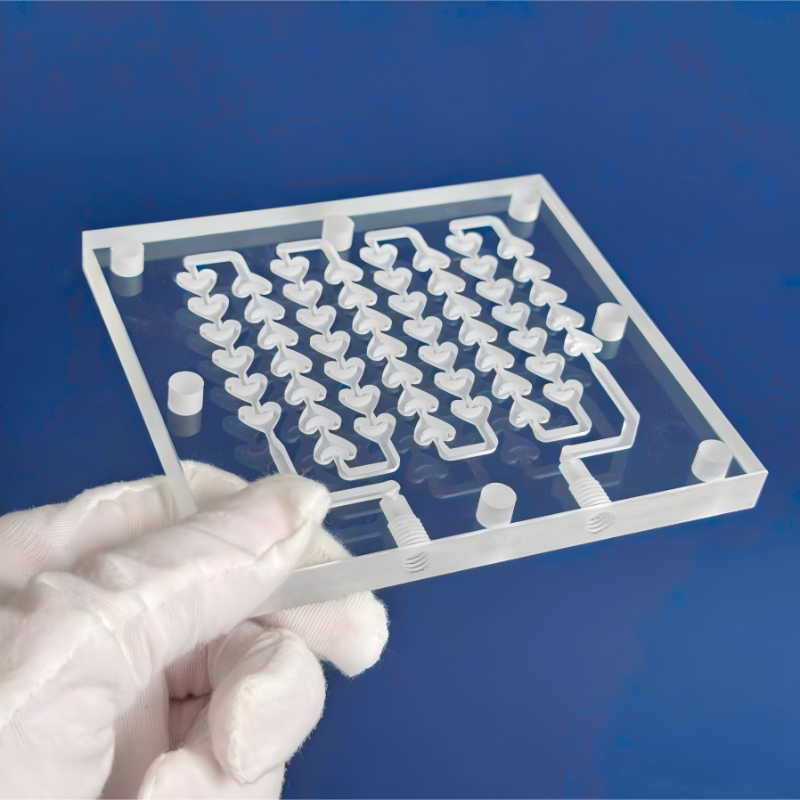
China Top Quartz Ashing Dish Factories & Exporters Serving the Basel Market
High-Purity Fused Silica Labware & Analytical Vessels Engineered for Life Sciences and Specialty Chemical Standards
Precision Laboratory Fused Quartz Portfolio
Compliant with Pharmacopoeia Europaea (Ph. Eur.) and DIN/ISO standards. Drawing-based ODM/OEM manufactured in Donghai and exported directly to Basel's life science research institutes, contract testing facilities, and active pharmaceutical ingredient (API) manufacturers.
White Paper: High-Purity Fused Quartz Ashing Technology in the Basel Tri-National BioValley
The Basel metropolitan region—anchored by the life-sciences corridor along the Rhine, extending across Basel-Stadt, Basel-Landschaft, Swiss Innovation Park Basel Area, and neighboring industrial clusters in Saint-Louis (France) and Weil am Rhein (Germany)—represents the highest concentration of pharmaceutical research, biomanufacturing, and agrochemical development in Europe. Within these regulated facilities, quantitative analytical procedures such as Residue on Ignition (ROI), Sulfated Ash determinations, Loss on Drying (LOD), and high-temperature sample digestions are cornerstones of active pharmaceutical ingredient (API) quality control and certification.
As analytical thresholds tighten under international guidelines such as ICH Q3D for elemental impurities and Pharmacopoeia Europaea (Ph. Eur. 2.4.14 / 2.4.16), the mechanical and chemical demands placed on sample combustion vessels have escalated. Traditional ceramic, glazed porcelain, and borosilicate vessels frequently introduce unquantifiable errors through trace-metal leaching, structural devitrification, and thermal micro-fracturing. High-purity fused quartz (vitreous silica) ashing dishes, crucibles, and combustion boats manufactured in Donghai, China, have emerged as the benchmark solution for Basel’s analytical chemists and laboratory procurement directors seeking uncompromised inertness, exceptional thermal shock resilience, and direct supply-chain predictability.
Material Science: Fused Quartz vs. Alternative Ashing Substrates
Vitreous silica (fused quartz) exhibits a distinct combination of physicochemical characteristics derived from its pure tetrahedral silicon dioxide ($\text{SiO}_2$) amorphous network. When assessing vessels for loss-on-ignition or acid-assisted combustion at continuous temperatures exceeding 900°C, the choice of vessel material directly dictates limits of detection (LOD) and baseline drift in downstream spectrometry (ICP-OES and ICP-MS).
Performance Characteristic
Vulra Fused Quartz (Donghai)
Technical Alumina (99.7% Al₂O₃)
Glazed Lab Porcelain
Analytical Platinum (Pt/Ir)
$\text{SiO}_2$ Purity / Base Material
99.99% – 99.999%
< 0.1% SiO₂ (>99.7% Al₂O₃)
65% – 75% Silicates
99.9% – 99.95% Pt
Coefficient of Thermal Expansion (CTE)
$5.5 \times 10^{-7} \text{ K}^{-1}$
$8.0 \times 10^{-6} \text{ K}^{-1}$
$4.5 \times 10^{-6} \text{ K}^{-1}$
$9.0 \times 10^{-6} \text{ K}^{-1}$
Thermal Shock Resistance ($\Delta T$)
> 1,100°C (Quench to cold water)
Approx. 180°C – 220°C
Approx. 150°C – 200°C
High (Subject to creep/deformation)
Trace Leaching (Fe, Al, Na, K, Ca)
< 15 ppm Cumulative Matrix
High Aluminium Extraction
Extensive alkaline earth leaching
Negligible (Risk of catalytic reaction)
Resistance to Aqua Regia / Hot H₂SO₄
Complete chemical inertness
Slow surface degradation
Glaze micro-pitting occurs
Dissolves in Aqua Regia
Continuous Operating Temperature
1,100°C (Peaks to 1,450°C)
1,600°C
1,000°C – 1,050°C
1,200°C
Cost-per-Determination Efficiency
Optimal (Low Unit Cost / Reusable)
Moderate (Prone to chipping)
Low Initial (Frequent failure)
Extremely High (Security/CapEx barrier)
Due to its extraordinarily low linear thermal expansion coefficient ($5.5 \times 10^{-7} \text{ K}^{-1}$ between 20°C and 1,000°C), fused quartz ashing dishes can withstand immediate transfer from an 1,100°C muffle furnace directly into a room-temperature desiccator without structural cracking, crazing, or dimensional distortion. This thermal resilience allows automated robotic handlers and analytical staff to drastically shorten cooling intervals during high-throughput gravimetric ash screening.
Localized Application Scenarios in the Greater Basel Area
Tailored quartzware configurations engineered to meet the operational demands of specialized chemical, pharmaceutical, and contract research workflows across the Rhine River basin.
Ph. Eur. 2.4.14 Sulfated Ash & ROI Determinations
In Basel-based active substance synthesis and excipient testing, concentrated sulfuric acid ($\text{H}_2\text{SO}_4$) is added to sample matrices prior to heating in an open flame and subsequent furnace combustion at 600°C–800°C. Standard porcelain glazed coatings deteriorate under boiling hot acid vapors, shedding micro-particles that distort balance readouts. Vulra transparent fused silica ashing dishes maintain their mirror-like finish through repeated acid digestions, ensuring zero gravimetric interference down to 0.1 mg precision limits.
ICH Q3D Elemental Impurity Sample Preparation
Before testing toxic heavy metals (Class 1 elements: As, Cd, Pb, Hg; Class 2A elements: V, Co, Ni) using ICP-MS instrumentation at laboratories in Allschwil or Muttenz, samples undergo dry ashing or wet fusion. Our 99.999% single-crystal fused quartz vessels feature background levels of Fe below 0.2 ppm, Al below 14 ppm, and non-detectable alkali metals, preventing false-positive spikes during ultra-trace quantitative evaluations.
Catalyst Recovery & Carbon Residue Testing in Specialty Synthesis
Process chemistry groups at the Schweizerhalle industrial corridor execute high-temperature carbon burnout and organometallic catalyst recovery (Palladium on Carbon, Platinum group complexes). The ultra-smooth fire-polished inner surface of our shallow ashing dishes prevents mechanical anchoring of sintered metal residues, ensuring rapid quantitative scraping and near-100% gravimetric recovery rates.
Universities and advanced polymer incubators in the tri-national borderzone rely on custom ultra-thin quartz balance pans and micro-boats. Characterized by negligible outgassing, high transmission across the infrared spectrum, and structural stability up to 1,100°C without mass loss, these micro-components ensure exceptional baseline stability in specialized kinetic combustion testing.
High-Throughput Robotic Furnace Loading Modules
Commercial contract testing organizations (CTOs) operating in the Basel BioValley utilize automated carousel systems for rapid sample combustion. Our factory provides CNC cold-machined and flame-polished quartz boats and flat dishes manufactured to strict outer dimensional tolerances (±0.05 mm), mitigating robotic arm jamming, tilt risks, and misaligned optical positioning sensors.
Macro Trends Driving Quartz Laboratory Procurement in the Basel Region
The regulatory and operational landscape across Switzerland’s pharmaceutical epicenter is changing rapidly. Procurement officers, analytical lab managers, and environmental compliance specialists in Basel are navigating three transformative trends that directly dictate the selection of quartz laboratory consumables:
1. Stringent ICH Q3D & USP <232>/<233> Enforcement
Global regulatory bodies, including Swissmedic, the European Medicines Agency (EMA), and the US FDA, have moved away from non-specific wet-chemical heavy metal limit tests (such as colorimetric sulfide precipitation) in favor of instrumented elemental profiling via ICP-MS. Because ashing remains necessary to volatilize dense organic polymers and complex bio-matrices, any leaching from combustion hardware introduces confounding variables. Basel laboratories increasingly reject traditional porcelain—where trace components easily migrate into molten mixtures—in favor of Donghai-purified fused quartzware with verified Certificate of Analysis (CoA) trace-element profiles.
2. Laboratory Automation, Digital Twin Integration, and Geometric Uniformity
Modern analytical hubs across the Rosental and Klybeck quarters are retrofitting their analytical departments with automated sample-handling systems. Automated loaders require crucibles and dishes with strict geometric consistency: dimensional tolerances, wall perpendicularity, and flat bases are non-negotiable. Hand-blown quartzware with irregular bottom profiles leads to robotic grip errors and uneven thermal transfer. Chinese manufacturing plants, such as Vulra Quartz, leverage CNC cold-machining lathes coupled with precision oxy-hydrogen flame welding, delivering identical parts from 1-piece custom prototypes to batches of thousands.
3. Sustainability, Circular Chemistry, and Reusability Economics
The Basel chemical ecosystem operates under strict environmental guidelines (cantonal green chemistry regulations and corporate Net-Zero commitments). Single-use fluoropolymer vessels or short-lived ceramic dishes generate elevated chemical and solid waste streams. Fused quartz stands out as a circular, highly sustainable material: it can be repeatedly stripped with hot mineral acids (excluding hydrofluoric acid), regenerated in muffle furnaces, and even recycled or repaired via torch re-fusion, significantly lowering total cost of ownership (TCO) and carbon footprint per determination.
Manufacturing Excellence & Supply-Chain Advantage: Why Basel Sources from Donghai
Direct from China's crystalline corridor to Switzerland’s analytical heartland: how Vulra Quartz bridges geography through engineering discipline, independent verification, and metallurgical superiority.
TÜV Rheinland Audited Facility
Lianyungang Vulra Quartz Products Co., Ltd. operates with verified factory assessments conducted by TÜV Rheinland. Legal identity, cleanroom handling spaces, processing machinery, and internal QC documentation are independently inspected and accredited, providing complete vendor transparency for regulated Swiss buyers.
The Donghai Quartz Sand Advantage
Situated in Donghai County—the crystal and silicon capital of China—our factory has direct access to high-purity hydrothermal pegmatite quartz deposits. Raw silica sand is chemically refined to remove structural inclusions, achieving 99.99% to 99.999% $\text{SiO}_2$ purity levels at source economics that European distributors cannot match.
Hot & Cold Work Under One Roof
Our workshop integrates both cold precision mechanical processing (diamond wire cutting, ultrasonic drilling, surface lapping) and advanced thermal operations (hydrogen-oxygen flame bending, automated lathe joining, fire polishing). This comprehensive setup ensures strict stress-relief annealing and dimensional accuracy.
Drawing-Based Engineering (From 1 Piece)
Whether your lab requires a bespoke 150 mm shallow ashing pan with pouring spout, a multi-well digestion tray, or replacement quartz liners for legacy muffle furnaces, our engineering team works directly from CAD/PDF drawings, manufacturing functional prototypes with an MOQ of just 1 piece.
Export-Grade Secure Packaging
Shipping delicate vitreous silica across continents requires reliable packaging protocols. Every quartz ashing dish is acid-rinsed, vacuum-sealed in dust-free film, cushioned within tailored high-density polyethylene (EPE) shock cells, and boxed in rigid reinforced wooden export cases, ensuring zero breakage upon arrival at EuroAirport Basel.
Direct, technical answers to common queries raised by Swiss pharmaceutical procurement officers, laboratory managers, and compliance teams.
How do Vulra quartz ashing dishes perform under continuous Ph. Eur. 2.4.14 Sulfated Ash procedures?
Our fused quartz ashing dishes are specifically formulated for high-acid, high-temperature combustion. When sulfurous compounds and concentrated $\text{H}_2\text{SO}_4$ are heated to fuming and subsequently converted to dry ash at 600°C–800°C, the vessel remains completely inert. Unlike porcelain, no glaze erosion occurs, preventing mechanical mass loss or alkaline metal contamination into the target residue.
What batch documentation and traceability are supplied with shipments to Switzerland?
Every shipment can be accompanied by an inspection certificate per DIN EN 10204 3.1, detailing raw-material spectroscopic purity (ppm trace elemental matrix for Fe, Al, Cu, Ni, Ca, Na, K), dimensional verification logs, and annealing certificate confirming zero residual thermal stress. This provides compliance managers with full audit-ready documentation for Swissmedic and ISO/IEC 17025 accredited laboratories.
How does fused quartz compare with synthetic fused silica for analytical ashing applications?
Natural fused quartz is manufactured from refined natural crystalline quartz sand and yields 99.99%–99.999% $\text{SiO}_2$, which is optimal for gravimetric ashing, high-temperature crucibles, and general analytical testing. Synthetic fused silica is synthesized from volatile silicon compounds ($\text{SiCl}_4$), providing superior deep-UV transmission and near-zero transition metal impurity down to the ppb level. For standard ashing, loss on ignition, and ICH Q3D screening down to ppm thresholds, high-purity natural fused quartz offers the best balance of mechanical strength, thermal endurance, and cost efficiency.
What are the key best practices to avoid devitrification of quartz dishes in Basel muffle furnaces?
Devitrification (the transition of amorphous fused silica into crystalline cristobalite) occurs above 1,150°C and is catalyzed by alkaline fingerprints, metal dust, or water droplets. To maximize service life: (1) Always handle dishes with clean, powder-free gloves or quartz/platinum-tipped tongs; (2) Clean thoroughly with dilute nitric acid and rinse with high-purity deionized water (Type 1, 18.2 M$\Omega\cdot\text{cm}$) prior to firing; (3) Avoid rapid operational cycling above 1,200°C when surface salts are present.
Can Vulra manufacture custom-sized ashing dishes to fit proprietary robotic autosampler carousels?
Yes. We regularly supply custom configurations to OEMs and testing labs across Switzerland. You can provide a 2D engineering drawing (DWG, DXF, or PDF) or physical sample specifications. We accommodate custom outer diameters, wall thicknesses (from 1.0 mm to 4.0 mm), flat-bottom designs with tight tolerances (±0.05 mm), and integrated pouring spouts or laser-etched permanent lot markings.
What are the typical lead times and customs logistics for direct shipping into Basel-Stadt / Basel-Landschaft?
For standard prototype or drawing-based orders, production typically requires 7 to 15 business days. Air express shipments (via DHL, FedEx, or air freight to Zurich ZRH or Basel EuroAirport MLH/BSL) take approximately 4 to 6 business days. All commercial invoices, EUR.1 / Origin documentation, and HS codes (HS 7017.10: Laboratory glassware of fused quartz or other fused silica) are prepared for clearance through Swiss Federal Customs (BAZG).
What is the minimum order quantity (MOQ) for custom-engineered quartz labware?
Because our production lines incorporate dedicated hot and cold customization stations, our minimum order quantity for drawing-based custom ashing dishes, crucibles, and boats starts from just 1 piece. This allows analytical development teams to evaluate fit, thermal balance, and extraction profiles before scaling up to multi-unit recurring orders.
Request Custom Fused Quartz Ashing Dishes for Your Basel Laboratory
Submit your technical drawings, dimensional specifications, or target purity requirements. Our fused silica engineers will review your thermal application, confirm manufacturing tolerances, and provide a competitive factory-direct proposal within 24 hours.