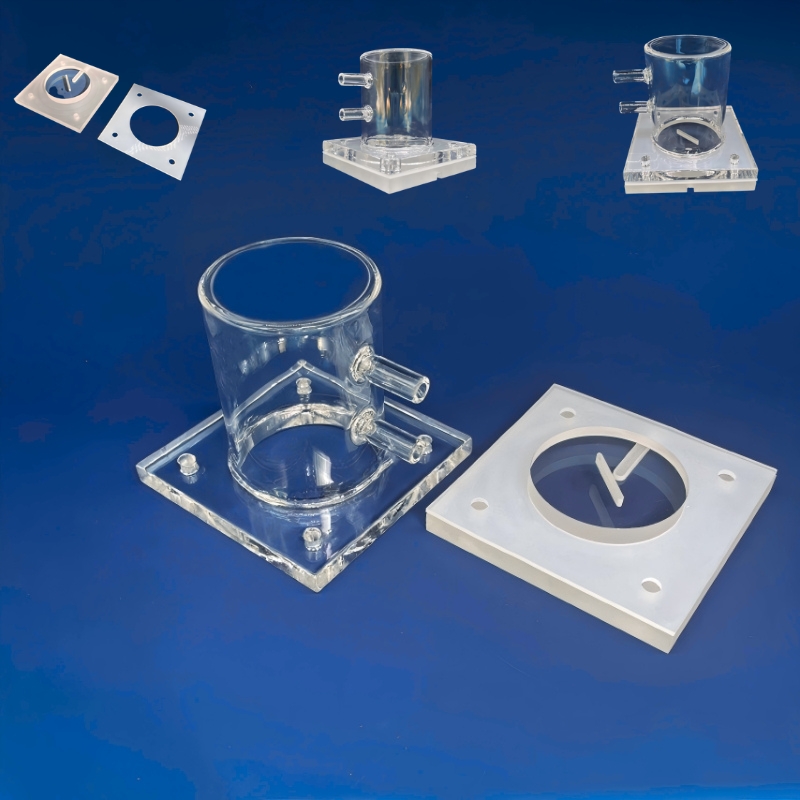
Engineered from natural crystal silica reserves in Donghai to meet tight geometrical tolerances and harsh cryogenic-to-high-vacuum degas cycles demanded by Yokohama laboratory clusters.
An engineering analysis of material purity, thermal expansion differentials, and dead-space calibration in static volumetric gas adsorption.
In physical adsorption characterization governed by the Brunauer-Emmett-Teller (BET) theory (ISO 9277 / JIS Z 8830), the sample cell is not merely a passive holder—it is an active thermodynamic boundary. Volumetric adsorption analyzers quantify sub-monolayer nitrogen, argon, or krypton gas uptake at liquid nitrogen (77.35 K) or liquid argon (87.27 K) temperatures. The measurement fundamentally relies on the precise determination of the system's "free space" or "dead volume." When high-surface-area catalysts, battery electrode active materials, and porous zeolites undergo analysis, minute variations in cell wall thickness, devitrification-induced helium entrapment, or microscopic surface desorption from the tube interior create critical systemic measurement errors.
As an established high-purity quartz manufacturer located in Donghai—China’s preeminent crystal silica processing hub—Lianyungang Vulra Quartz Products Co., Ltd. produces BET sample cells specifically tailored to eliminate vacuum degradation, sample contamination, and thermal expansion distortions. Natural quartz crystal sand is processed through precision thermal melting, transforming it into amorphous fused silica with a silicon dioxide content exceeding 99.99% to 99.999%.
During the outgassing (degassing) phase prior to physisorption or chemisorption measurement, samples are frequently subjected to temperatures ranging from 300°C to 450°C under vacuum levels below 10⁻⁵ Pa (10⁻⁷ Torr) to eliminate pre-adsorbed moisture and volatile organic compounds. Standard borosilicate glassware begins to exhibit ion migration, structural thermal stress, and elevated outgassing rates when repeatedly cycled past 350°C. In contrast, fused quartz manufactured by Vulra Quartz exhibits an ultra-low linear thermal expansion coefficient of 5.5 × 10⁻⁷ /°C between 20°C and 1000°C, providing exceptional thermal shock resistance and near-zero structural deformation when transitioning from a 400°C degas oven directly into a 77 K cryogenic bath.
| Physical / Thermal Property | Vulra High-Purity Fused Quartz | Standard Borosilicate 3.3 Glass | Engineering Metrology Impact |
|---|---|---|---|
| Silicon Dioxide (SiO₂) Content | > 99.99% – 99.999% | ~ 80.5% – 81.0% | Zero alkaline metal contamination during 450°C bakeouts. |
| Coefficient of Thermal Expansion (CTE) | 5.5 × 10⁻⁷ / °C (20–1000°C) | 3.3 × 10⁻⁶ / °C (20–300°C) | 6x lower volumetric drift across 77 K to 573 K temperature gradients. |
| Continuous Service Temperature | 1100 °C | 450 °C | Enables aggressive chemisorption reduction with H₂/CO gases. |
| Softening Point | 1683 °C | 820 °C | Immunity to wall necking or collapsing under extreme high vacuum. |
| Internal Helium Permeability | Negligible (< 10⁻¹⁰ cm³·mm/s·cm²·cmHg) | Higher due to matrix modifiers | Guarantees exact void volume calibration in helium pycnometry. |
A primary point of failure in automated gas adsorption instruments—such as those commonly deployed across Japanese research institutions—resides in the elastomeric vacuum coupling. Analytical equipment utilizes Viton, Kalrez, or Fluoro-silicone O-ring compressed quick-connect fittings (commonly 6 mm, 9 mm, or 12 mm nominal OD). Inconsistent stem wall diameter or out-of-round ovality induces micro-leaks, distorting relative pressure points ($P/P_0$) in the ultra-low pressure micropore region ($10^{-7} < P/P_0 < 10^{-2}$). Our CNC precision centerless grinding and cold-machining facilities regulate tube outer diameter tolerances within ±0.03 mm to ±0.05 mm, with stem straightness verified using laser diffraction micrometer arrays. The fire-polished lip prevents shearing or abrasion of instrument O-rings during repetitive bulb insertion and removal.
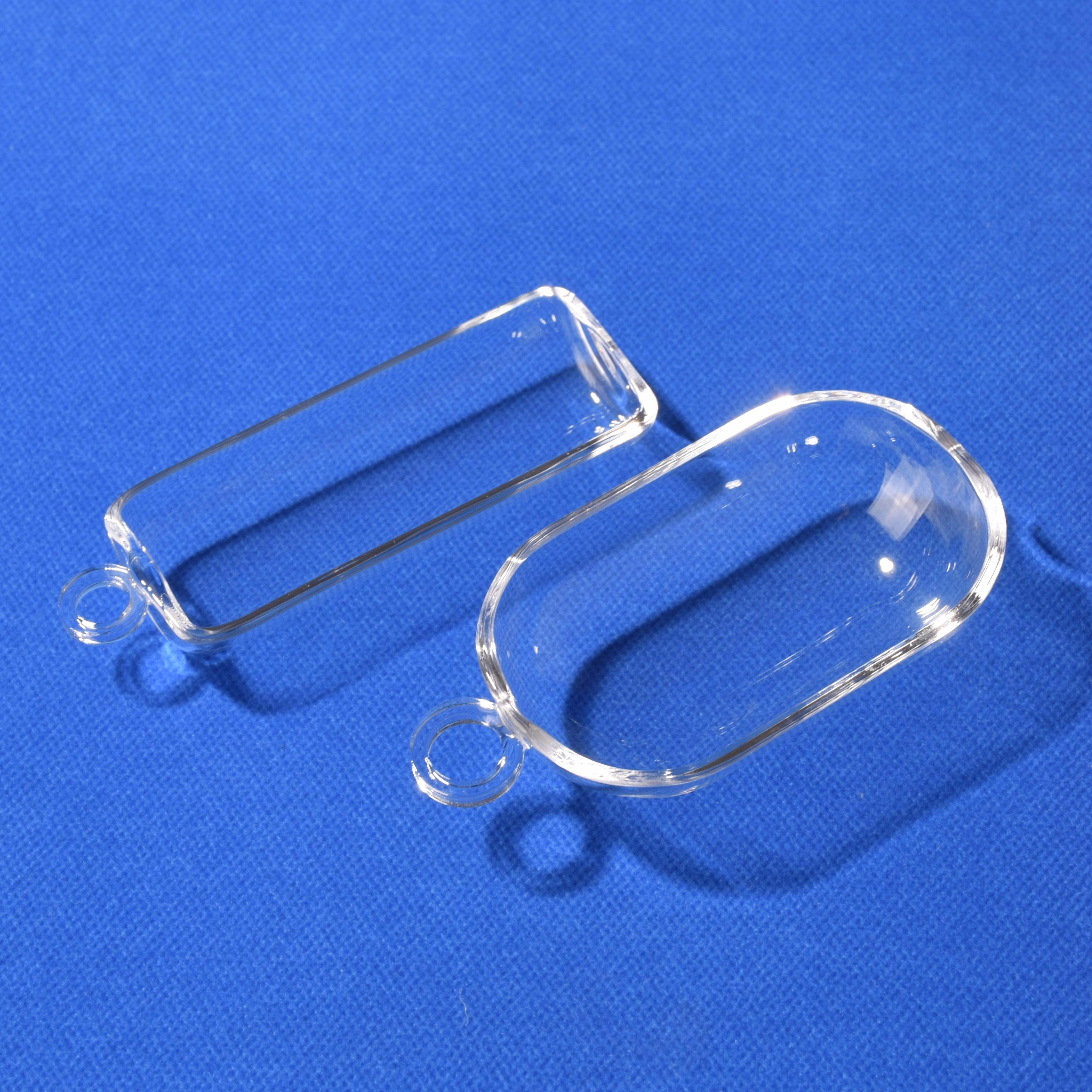
Serving world-leading advanced chemical, automotive battery, and semiconductor laboratories spanning the Keihin Industrial Belt and Minato Mirai innovation hubs.
Yokohama hosts major corporate battery innovation institutes and engineering centers driving the automotive transition. Solid-state battery researchers synthesizing high-nickel NMC, silicon-carbon composite anodes, and solid sulfide electrolytes utilize Vulra quartz BET bulb cells to quantify exact specific surface areas. Because sulfide electrolytes degrade into corrosive H₂S under trace ambient moisture, our custom vacuum-stopcock sealed quartz cells enable air-free glovebox transfer directly to the degas manifold without sample contamination.
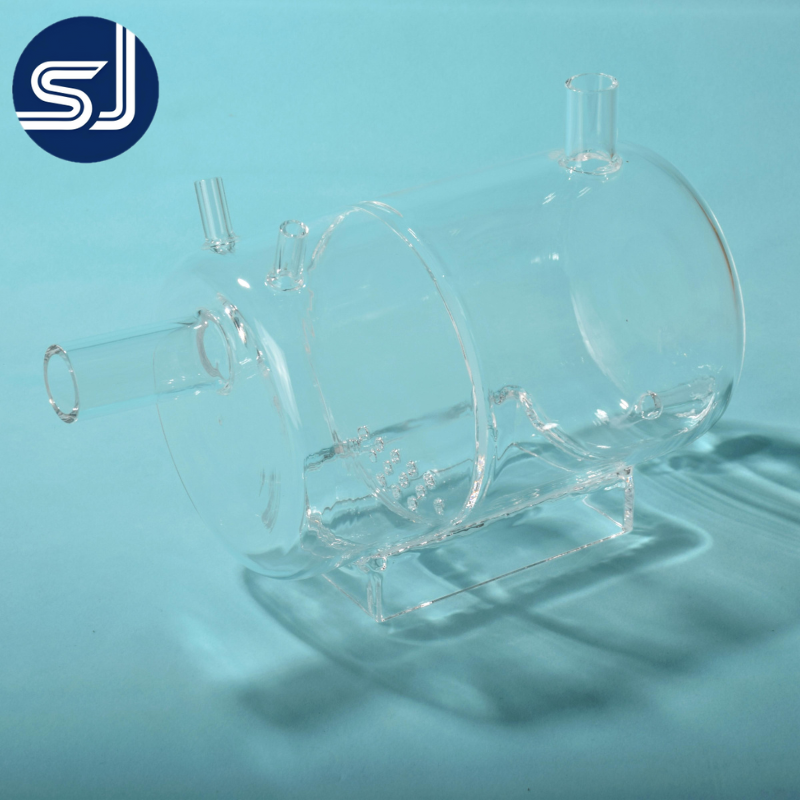
Situated within the Keihin Industrial Area, Yokohama remains a center for petrochemical synthesis and clean energy catalysis. Characterizing pore size distributions (BJH and DFT models) on supported platinum-group metal (PGM) catalysts requires active gas chemisorption (CO/H₂ titration) at elevated temperatures. Vulra’s transparent flat-bottom and U-shaped quartz reactor tubes provide extreme chemical inertness, resisting acidic attack from NOₓ and SOₓ reaction products while allowing unobstructed optical pyrometry monitoring.
Kanagawa Prefecture represents one of the dense semiconductor equipment and material development regions in Japan. For developers synthesizing synthetic silica powders, CMP slurries, and porous low-k interlayer films, even sub-ppb levels of metallic impurities (Fe, Na, K, Cu) can compromise cross-contamination checks. Vulra utilizes semiconductor-grade fused silica, subjected to multi-stage nitric-hydrofluoric acid cleanroom leaching, ensuring zero elemental background leaching during krypton physisorption tests.
Why Japanese technical procurement teams are restructuring analytical consumable supply channels toward direct certified manufacturing partnerships.
The industrial landscape in Yokohama, Kawasaki, and the broader Tokyo Bay metropolitan region is characterized by severe quality control mandates, just-in-time laboratory procurement, and stringent adherence to Japanese Industrial Standards (JIS Z 8830:2013 for surface area determination of powders by gas adsorption). In recent years, three macroeconomic and technical factors have transformed how Yokohama purchase managers source specialized quartz labware:
Traditionally, analytical research laboratories in Kanagawa purchased replacement sample tubes and heating mantles directly from European or domestic instrument agents at significant cost markups, often enduring backorders of 8 to 14 weeks. Technical teams are increasingly bypassing multi-tier brokerages, securing direct OEM partnerships with TÜV-verified manufacturers who construct quartz tubes identical to factory specifications from original technical drawings.
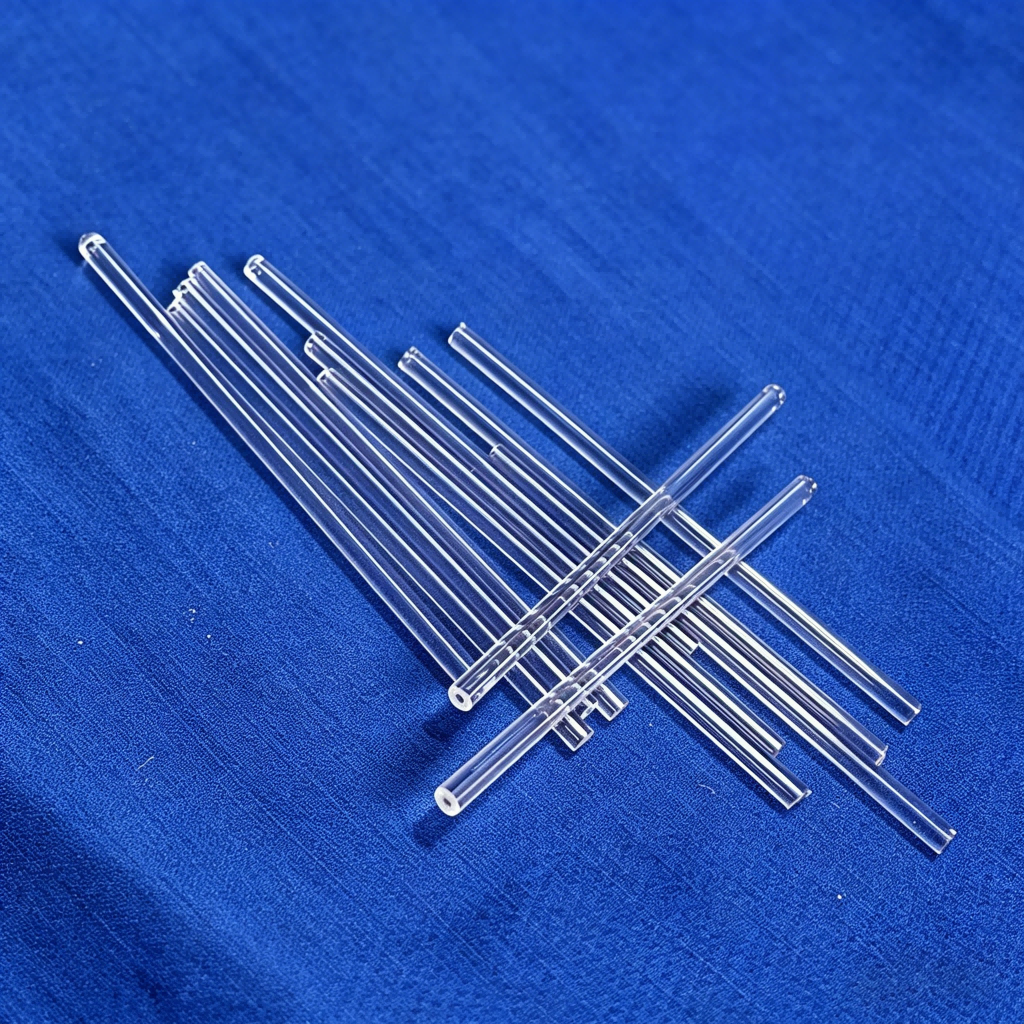
With the expansion of thin-film nanotechnology, graphene nanosheets, and MOF (metal-organic framework) research in Minato Mirai R&D facilities, specific surface areas often measure well below 1 m²/g. This requires krypton sorption at 77 K where tube void volume must be reduced using precision-fitted quartz filler rods. Vulra Quartz fabricates companion quartz displacement rods with tight outer-bore clearance (< 0.1 mm), substantially reducing measurement noise.
Proximity to major air freight gateways (Tokyo Haneda HND and Narita NRT) along with maritime access via the Port of Yokohama enables prompt logistics routes. Vulra Quartz has established standardized export protocols, packaging ultra-fragile thin-stem quartz cells in multi-layered, pre-formed EPE foam and impact-resistant outer wooden crates that completely eliminate transit micro-fractures.
Japanese corporate environmental stewardship requires strict non-hazardous verification across all consumable lab supplies. Vulra Quartz products are fully certified under CE and RoHS directives, guaranteeing that no restricted heavy metals, halogenated plasticizers, or hazardous fluxing agents are introduced during hot flame-working or anneal cycles.
Combining primary crystal resource access in Donghai with ISO-aligned thermal fabrication, certified third-party auditing, and custom engineering support.
Independently inspected on-site by TÜV Rheinland. Our corporate legal standing, production workshop lines, clean handling setups, and export facilities are fully verified.
Located in Donghai County—the global center of quartz crystal refining—giving our melt furnaces direct access to raw silica feedstock with metallic impurities < 15 ppm total.
We eliminate exorbitant prototype setup charges. Academic research labs and pilot manufacturing facilities can order single-piece bespoke configurations based directly on CAD drawings.
Equipped with glassblowing lathe benches, diamond-edge slicing machines, polariscope annealing ovens, and optical-grade chemical mechanical planarization lines under one roof.
Inductively Coupled Plasma Mass Spectrometry (ICP-MS) trace impurity analysis ensuring zero sample catalytic poisoning or thermal devitrification triggers during long degas cycles.
Detailed engineering, logistical, and compatibility guidance addressing the exact concerns of Japanese research institutions and quality assurance divisions.
Whether you require standard 6mm/9mm/12mm BET bulb replacement cells or custom-drawn quartz reaction tubes with integrated stopcocks, our technical engineering team in Donghai provides drawing verification, thermal shock analysis, and factory-direct volume pricing within 24 hours.
Get a Quote